 Hatha Yoga
Twist on Heels with Hands on Shoulders
Kundalini Yoga
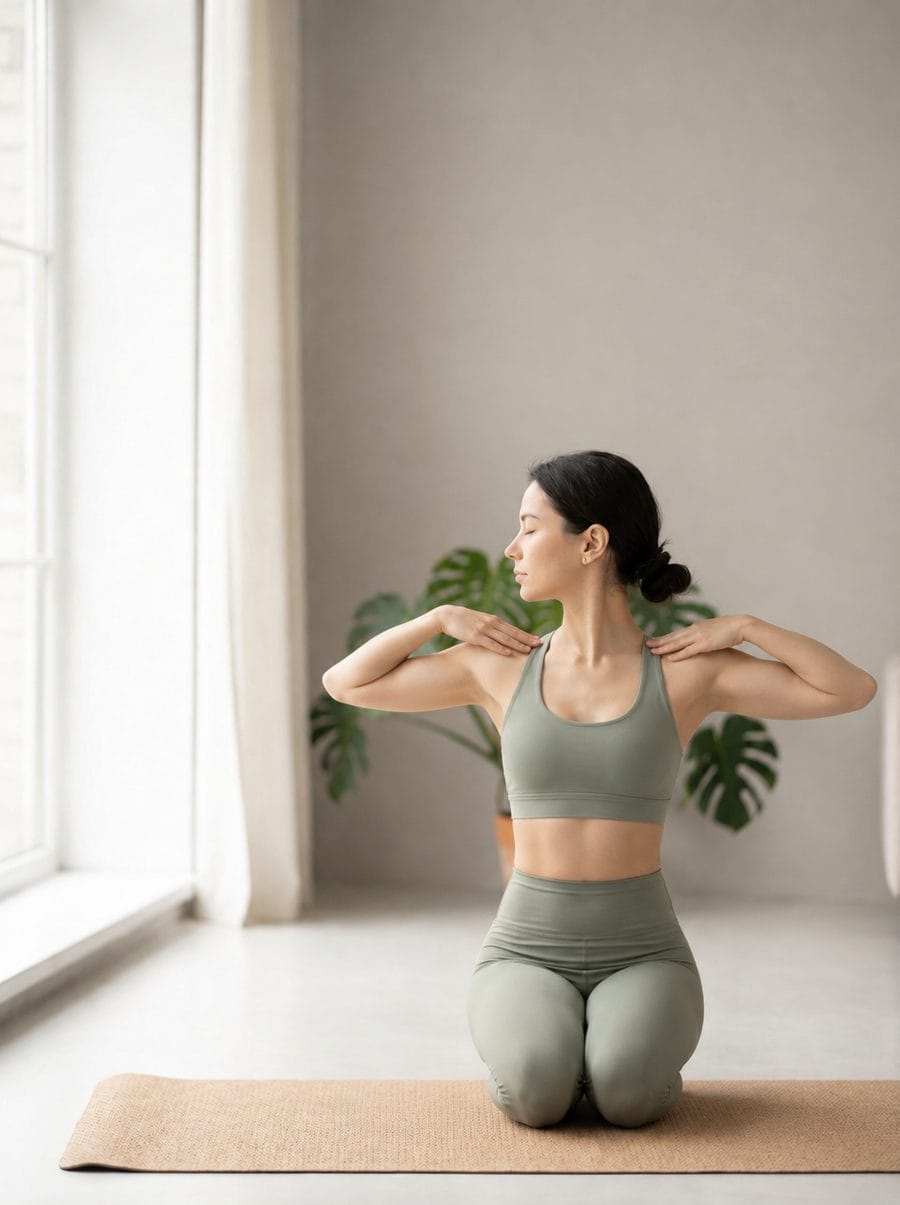
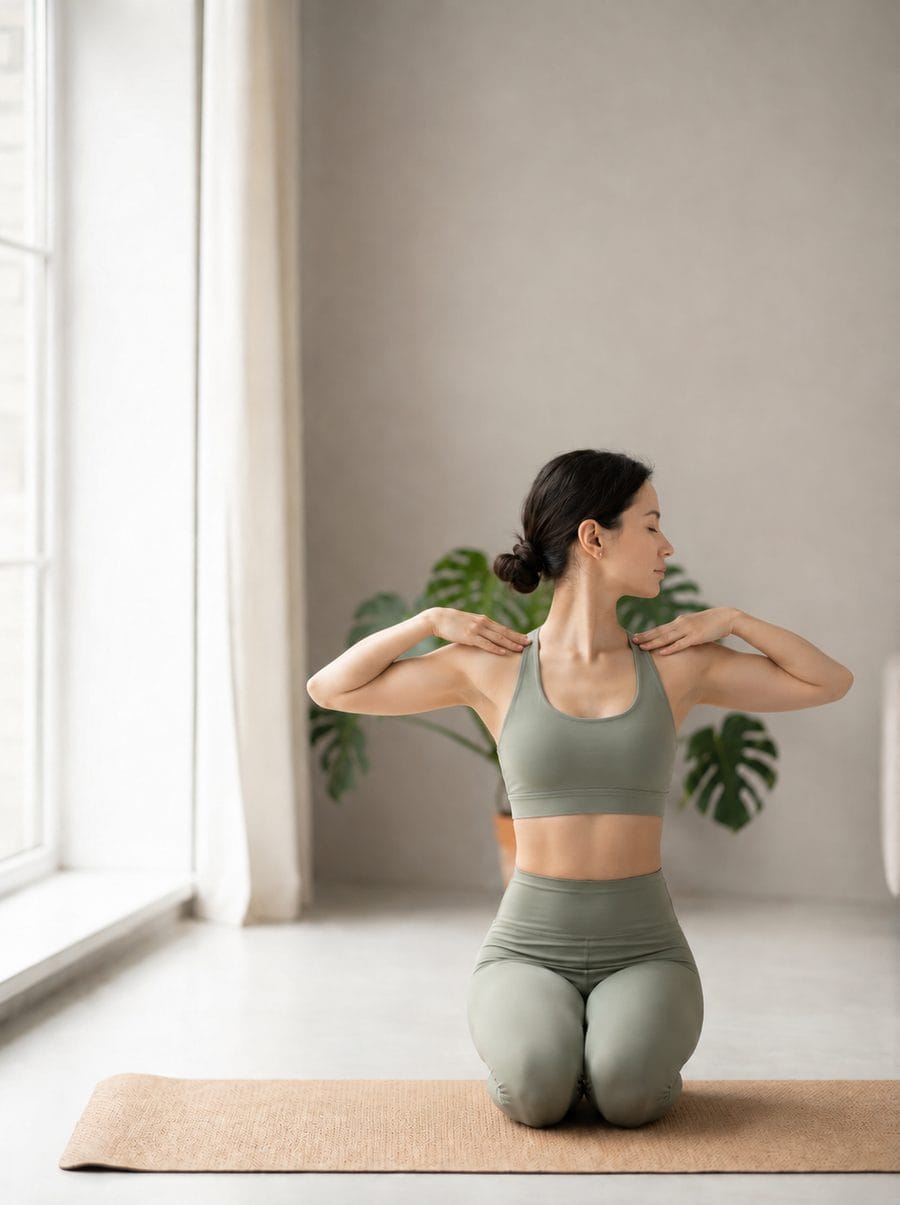
The Twist on Heels with Hands on Shoulders echoes the cross-legged twist, except that you rest on your heels. It's a level-one move, and the app uses it just once: in Spinal Flexibility it's number six of sixteen, right after the neck warm-up and after the hip circles and both spine waves.
How to do it
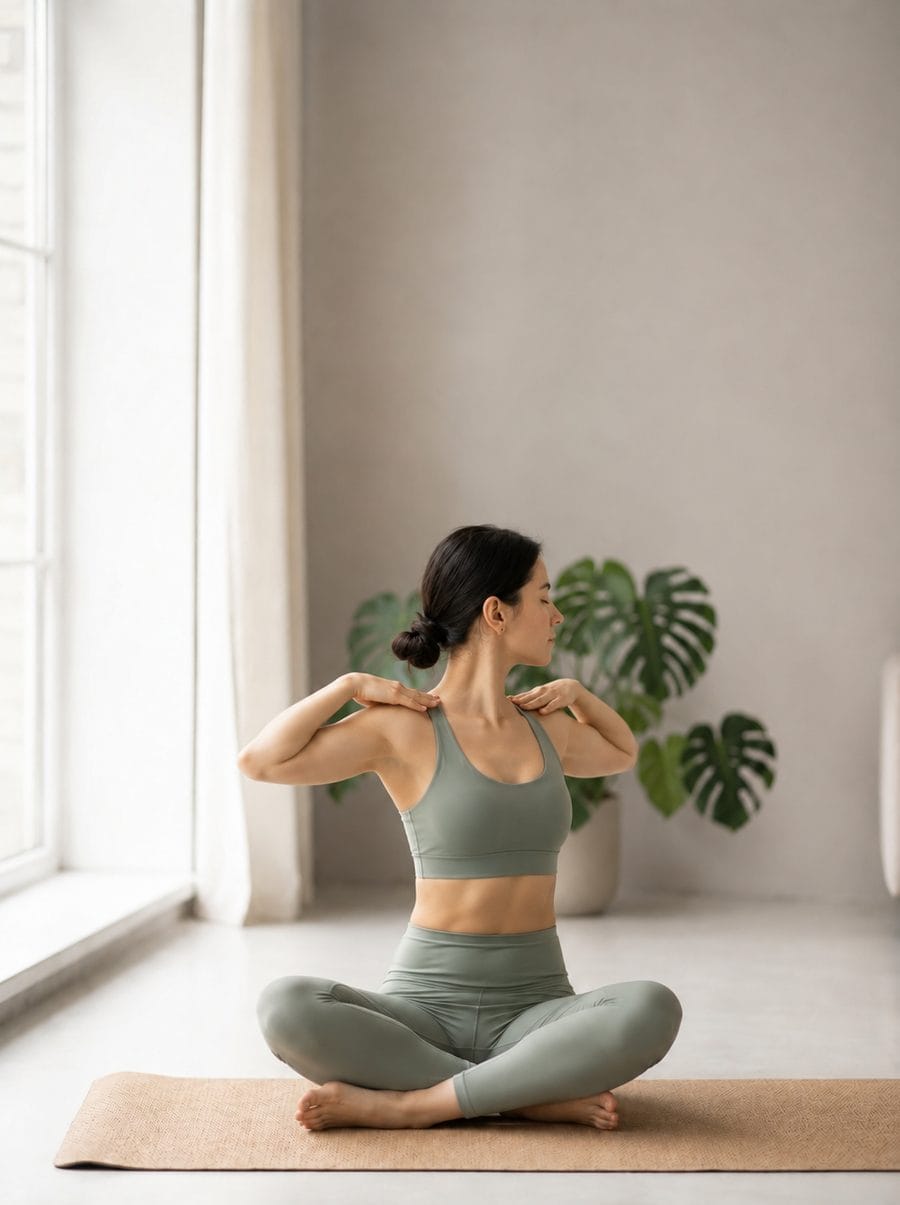
- EnterSit on your heels. Put your hands on your shoulders, fingers in front, thumbs behind, elbows at shoulder height.
- HoldInhale and twist to the left, exhale and twist to the right. Your head turns with your torso, and your pelvis stays still.
- ExitExhale and sit quietly for a few breaths.
More detail
The hands match the cross-legged version, so use that as your cue: palms on the shoulders, elbows level with them. The breath keeps its pattern too: the left turn rides the inhale, the right turn the exhale. What changes is the seat.
Resting on the heels pins the pelvis, which leaves the turn to the chest and upper back. The app attaches two conditions to this seat. A bad knee calls for a block underneath you. A herniated lumbar disc calls for a softer turn with no jerks.
The two stack up, because a block is no excuse for a rough twist.
Benefits
Loosens up the back along its full length.
In the app's wording the payoff matches the cross-legged twist: the back gets loosened along its whole length. This twist arrives after the neck warm-up, once the shoulders and upper back are already mobile, and the sequence is called Spinal Flexibility for a reason: it works through the back from pelvis to neck.
Keep it separate from the hatha Revolved Thunderbolt Pose, which sends one hand to the opposite knee. Here both hands stay on the shoulders.
Cautions
- Lumbar disc herniation — go more gently, without jerking
- Knee injuries — sit on a block
This site is for general information and is not medical advice. If you have pain, an injury, a chronic condition, or are pregnant, check with a qualified professional before practicing.
Common mistakes
- Rotating the pelvis with the chest. It stays put on the heels.
- Bouncing on the heels. Keep it smooth, one turn per breath.
- Pushing through knee pain. A block is the fix.
- Letting the elbows sag below the shoulders. They keep the chest open.
Where it appears
- Spinal Flexibility 30 min · Beginner
Similar poses
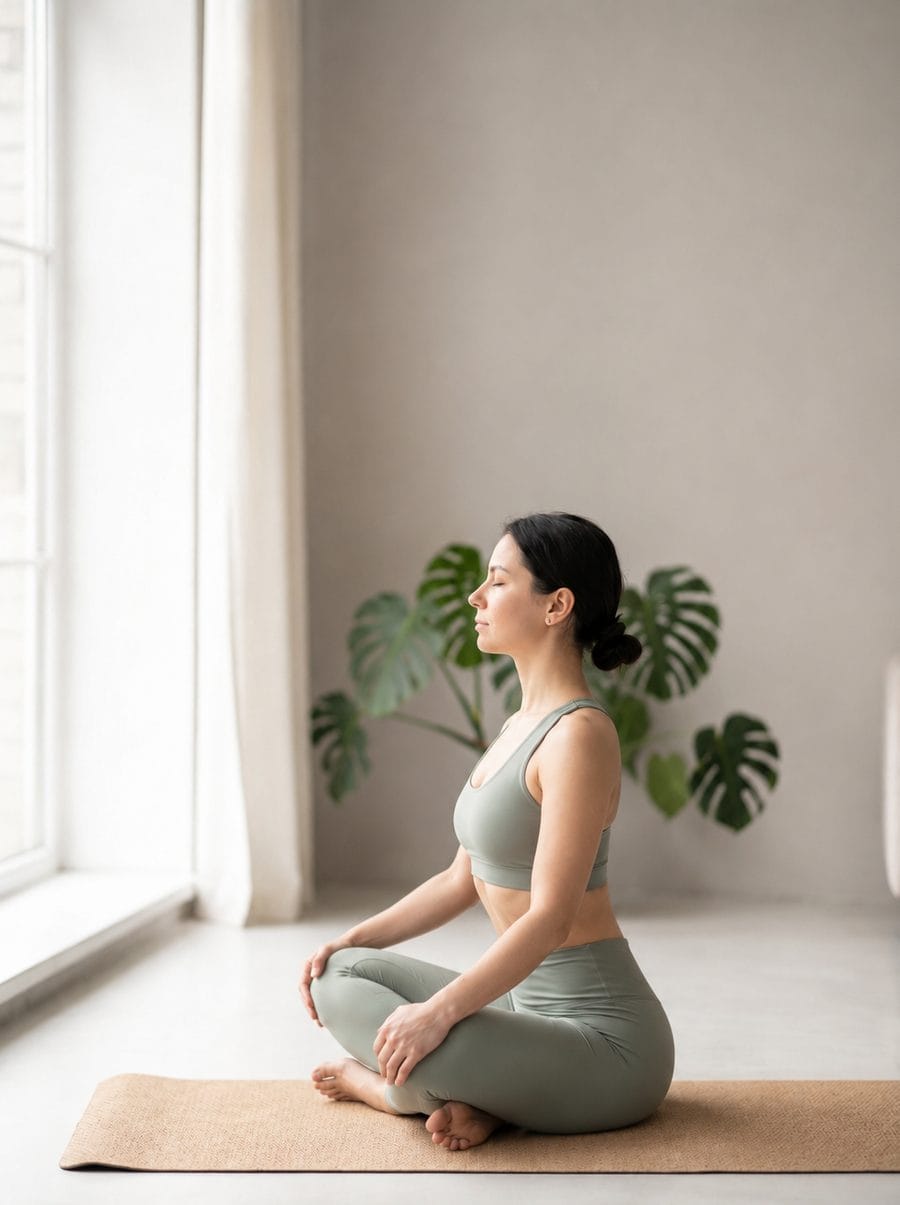
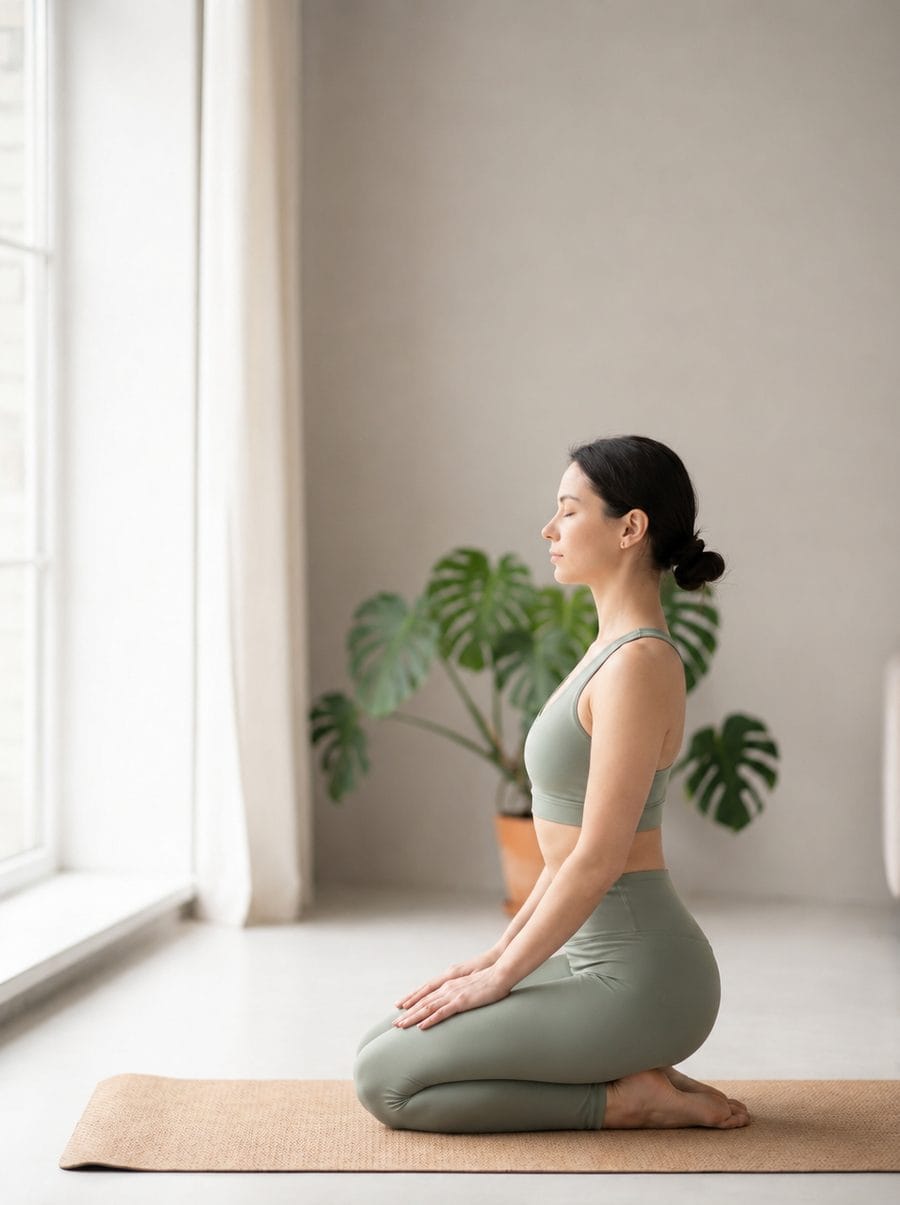
Questions
How does this differ from the cross-legged twist? Only the seat is different. Hand position, breathing rhythm, and the quiet pelvis stay unchanged. The knee precaution appears here alone.
Do I really need a block? If your knees object to sitting on the heels, yes: a block is the app's remedy. Should it still hurt, skip the movement.
Featured in
Updated: