 Hatha Yoga
Kundalini Yoga Poses: 17 Exercises and Where Beginners Should Start
Hatha Yoga editorial team · Updated · 7 min read
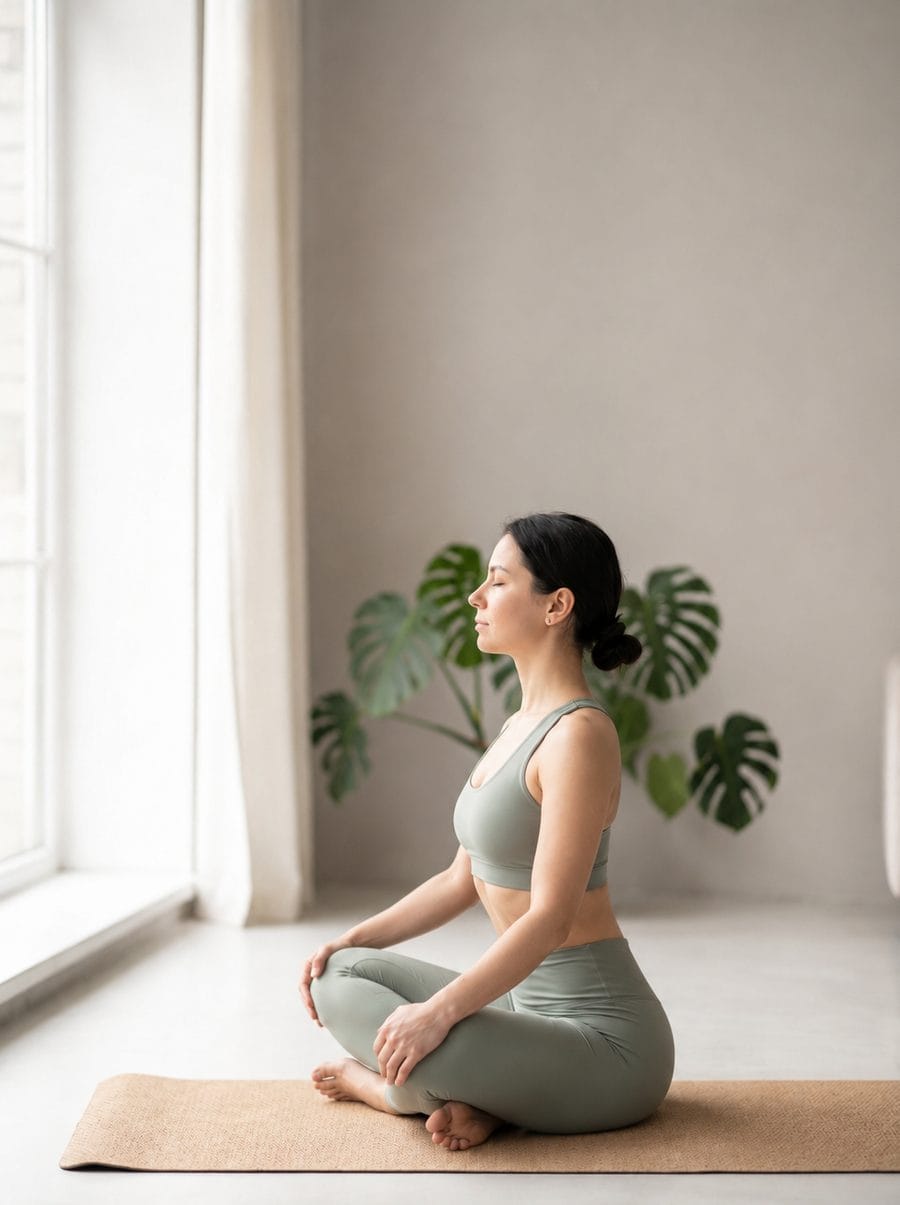
Here are all 17 kundalini yoga movements from the app's catalog: what each one looks like, what it's for, which to try first and which to save for later. At the end you'll find two short sequences for home, 10 and 15 minutes long.
If you'd first like a general picture of the style, start with our overview. This article sticks to practice.
How to start kundalini yoga
The app rates 14 of the 17 movements as beginner level. The other three are intermediate: Double Leg Lifts with Arms Up, Opening with Angled Legs and Frog Flow. Save those for later.
A few rules for your first weeks:
- Start seated. Spine waves and hip circles are the simplest to learn and hard to get wrong.
- The breath leads every movement. If you lose it, slow down until your inhale and exhale match the motion again.
- Breath of fire is optional. Early on, swap it for deep, even breathing. The app allows for this.
- Move at your own pace and never push through pain. Speed proves nothing here.
A session nearly always follows the same order: quiet sitting, warm-up, movement on the breath, stillness again, rest on your back. One movement usually lasts a minute or two, which is plenty to begin with.

Warm-up exercises: neck, shoulders, hips and sides
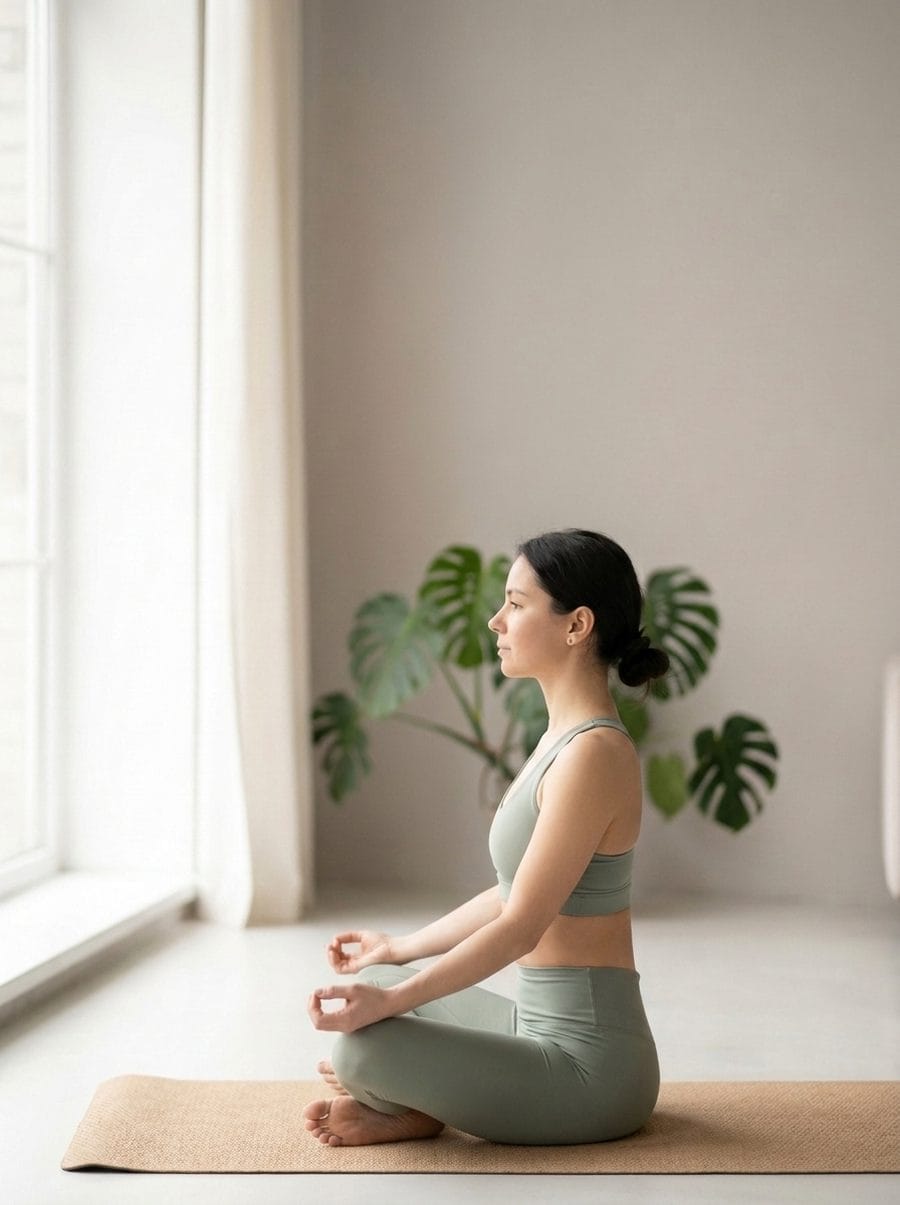
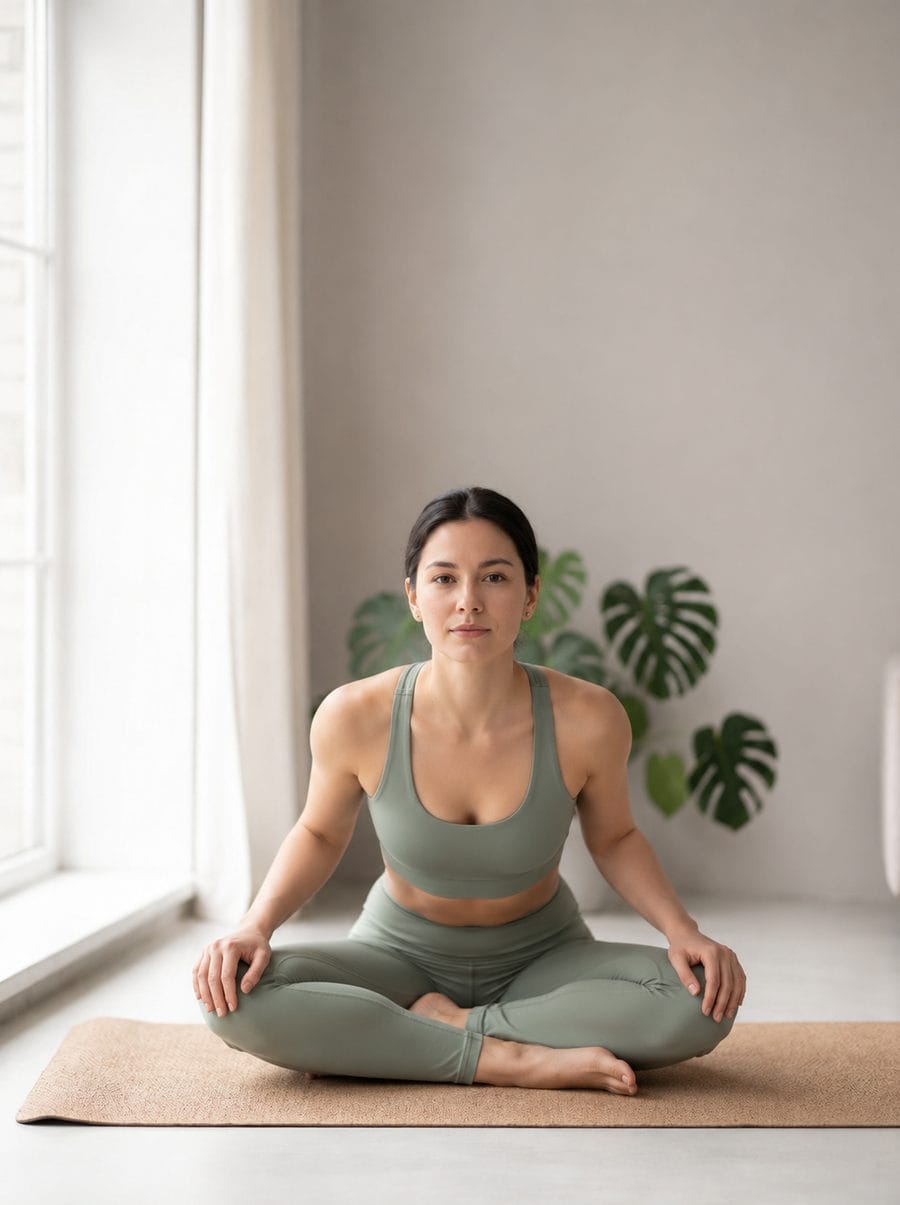
Sequences often open with Neck Warm-Up. Acute neck pain or dizziness means skipping it. Next come simple moves, sitting cross-legged:
- Shoulder Shrugs. Palms on your knees, back straight. Shoulders rise to your ears as you inhale and drop as you exhale. Eases a tight neck and shoulders.
- Seated Hip Circles. Your hips and torso trace a big circle, changing direction after about a minute. Warms up the pelvis and lower back.
- Seated Side Bends. Fingers laced behind your neck, elbows wide. Lean left on the inhale and right on the exhale. Bend from the waist without slumping forward.

Spine waves and twists
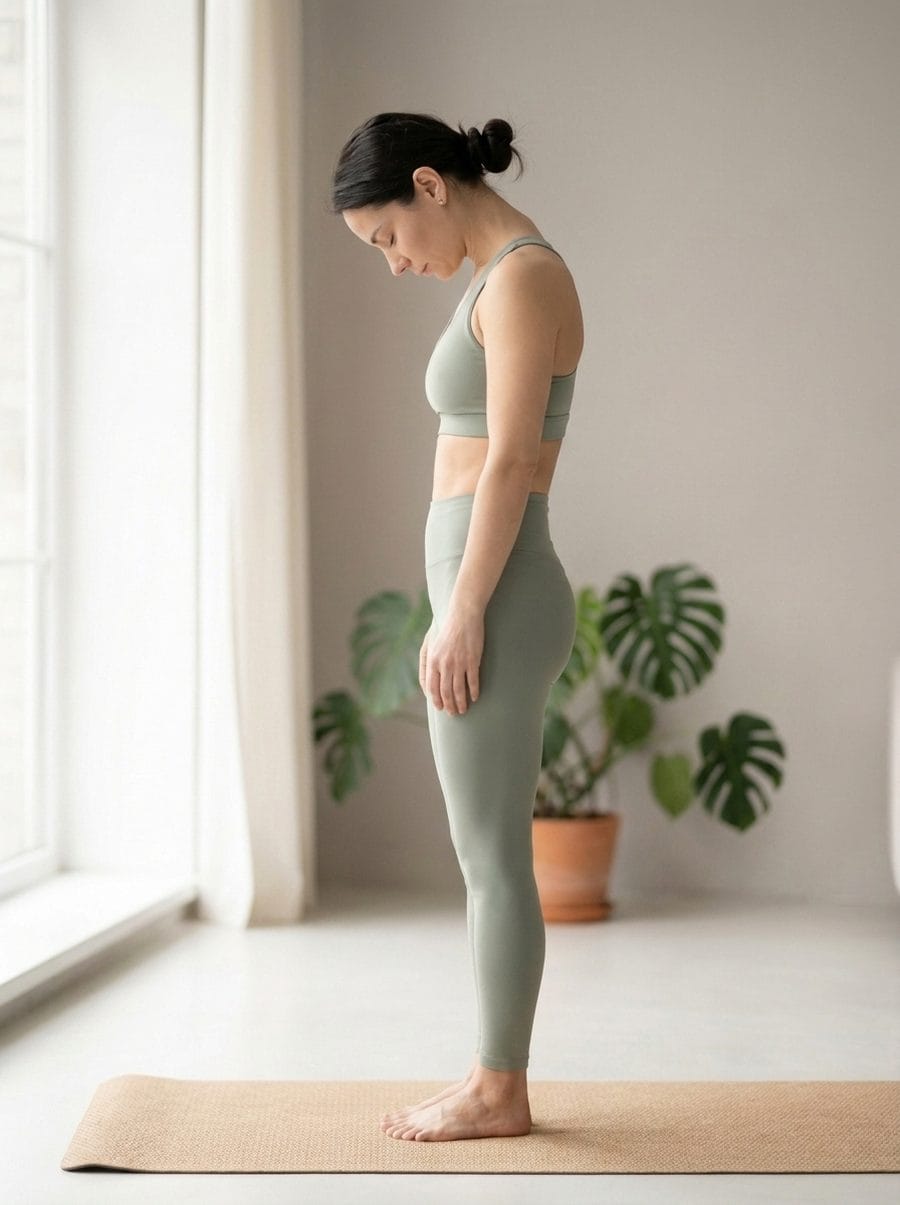
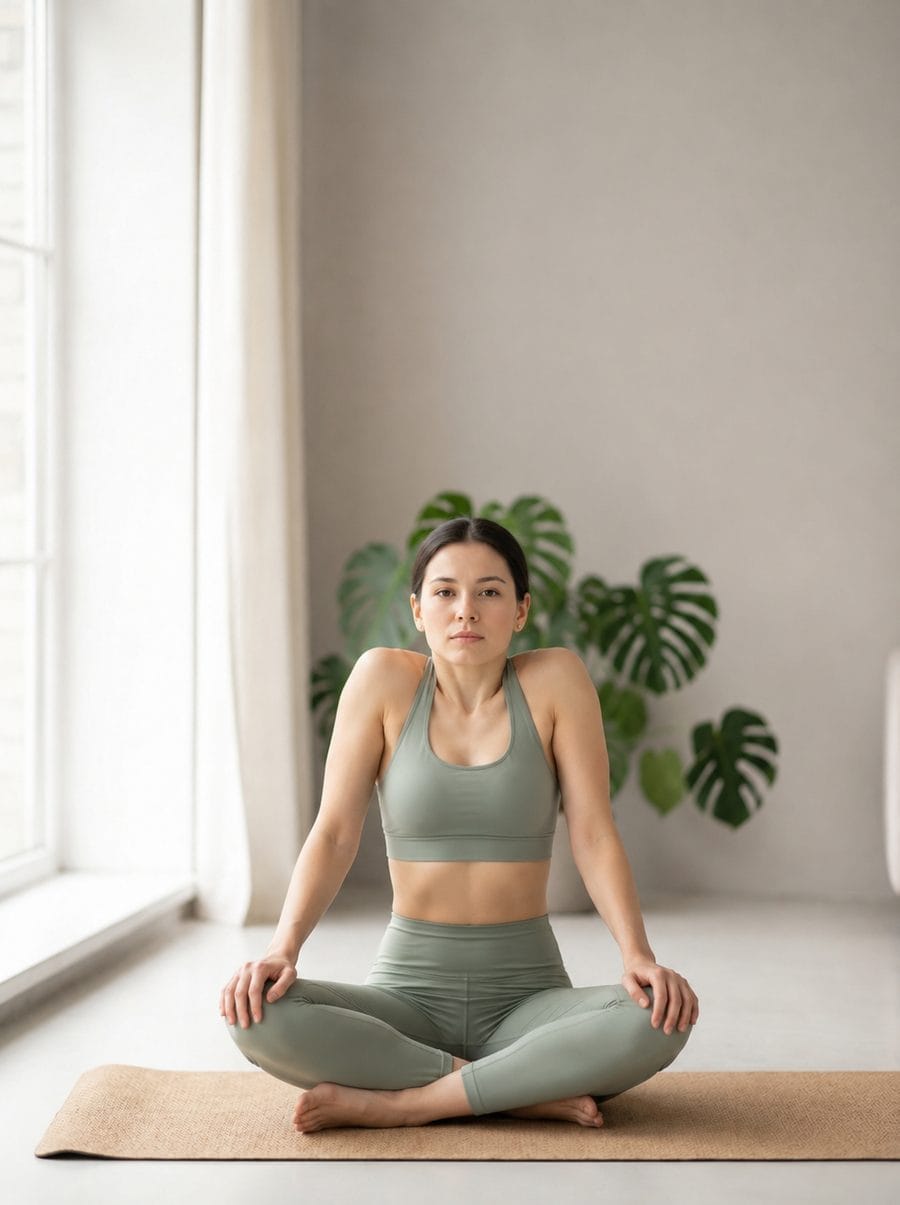
These form the base of most sequences. Begin with the first one on this list, since it's the simplest.
- Seated Spine Wave. Hold your shins. Inhale as your pelvis and chest move forward. Exhale as your pelvis tucks back and your spine rounds. Don't tip your head back.
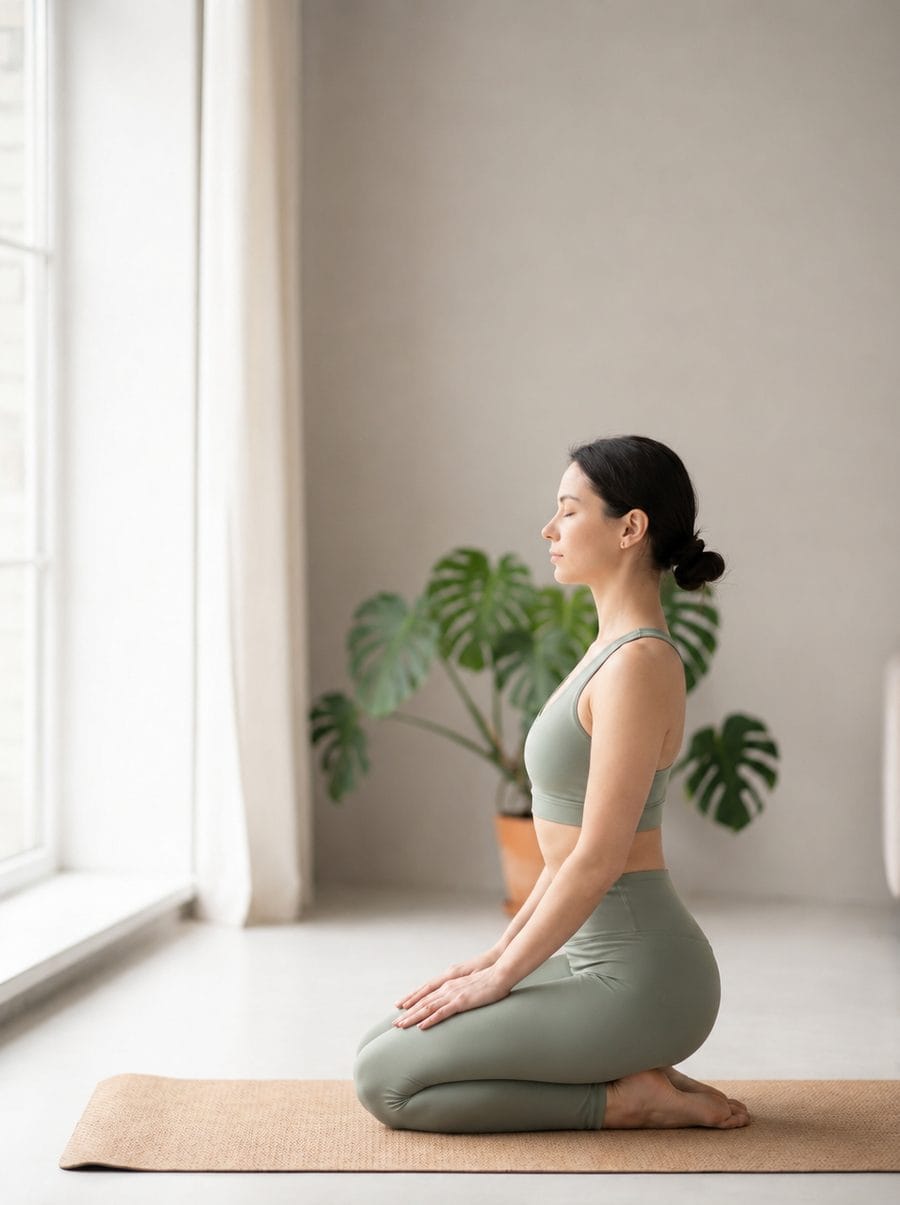
- Spine Wave on the Heels. The same wave, sitting on your heels with palms on your thighs. A block helps with hurt knees or ankles.
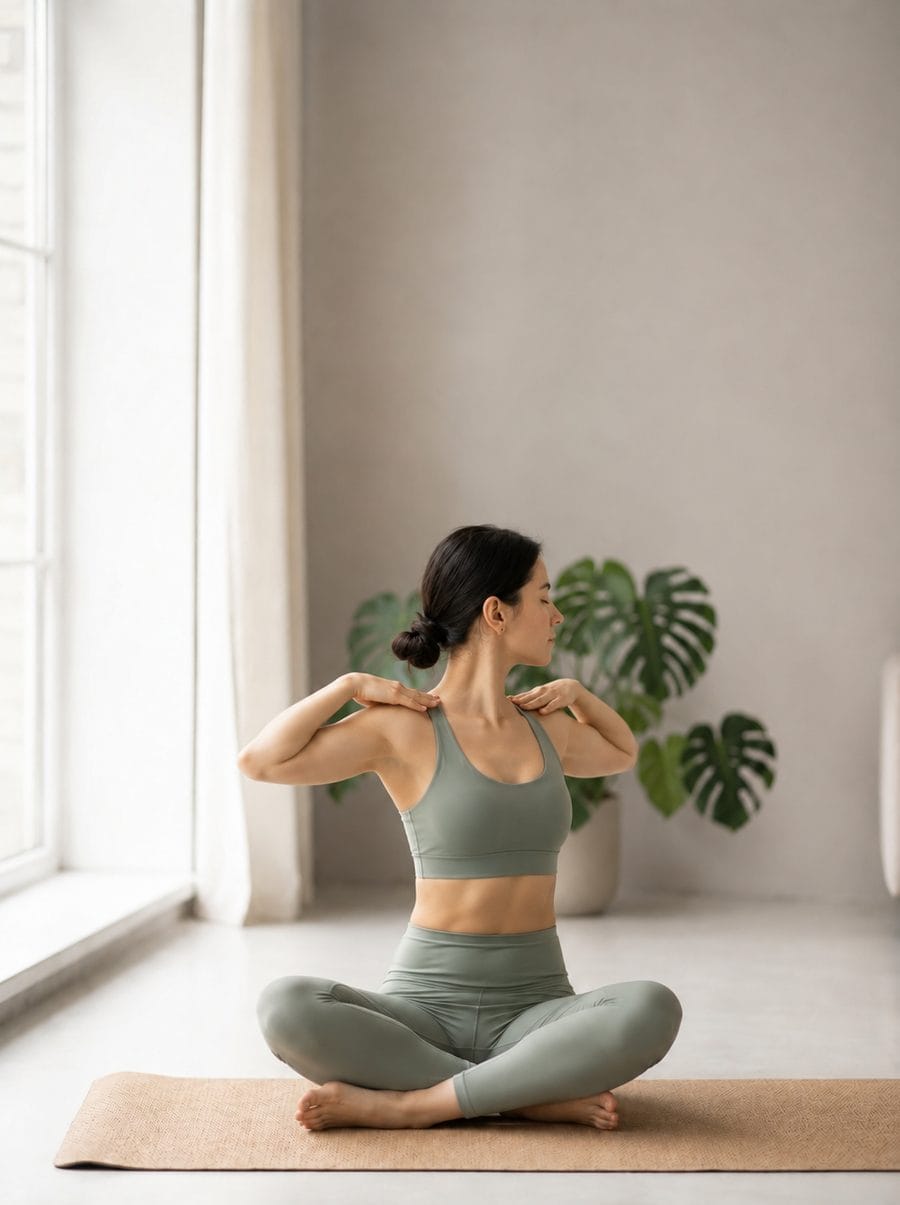
- Seated Twist with Hands on Shoulders. Rest your fingers on the front of your shoulders with thumbs behind and elbows level with your shoulders. Inhaling, you rotate left; exhaling, right. Your pelvis stays put.
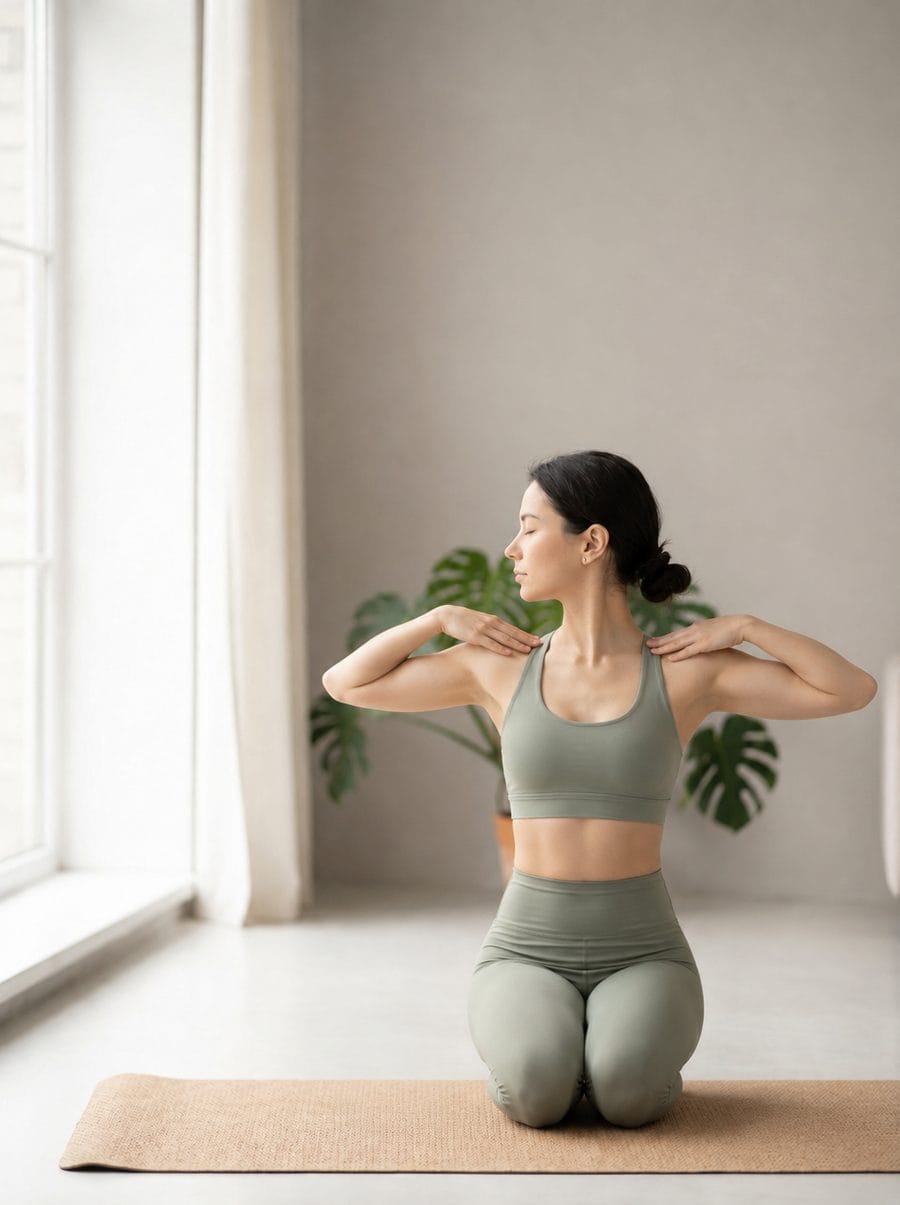
- Twist on Heels with Hands on Shoulders. The same twist on your heels. A block helps with knee injuries, and lumbar hernias call for a softer pace with no jerking.
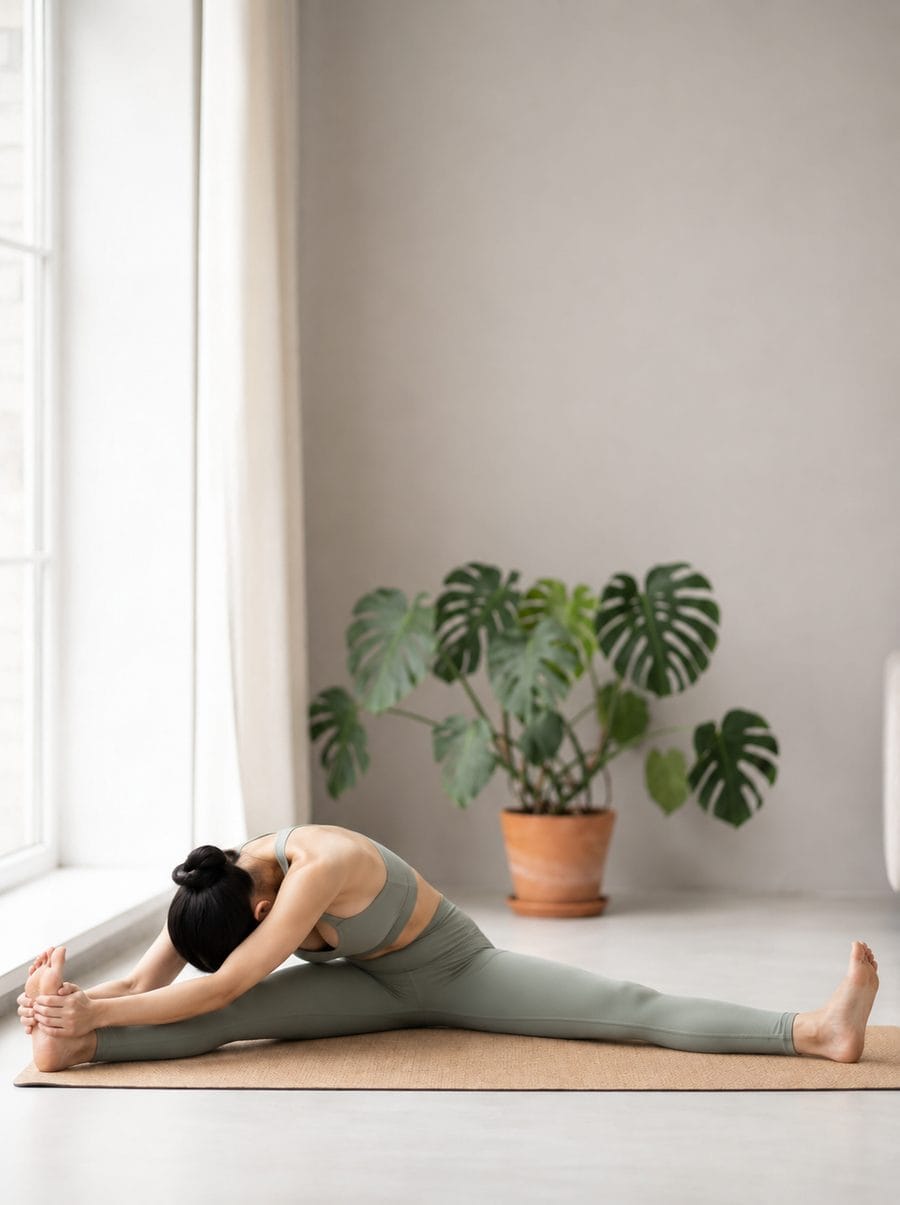
- Wide-Angle Folds to Each Leg. Legs straight and wide, one hand holding a foot or shin. Come up to center as you inhale and fold toward a leg as you exhale, hinging at the hips.
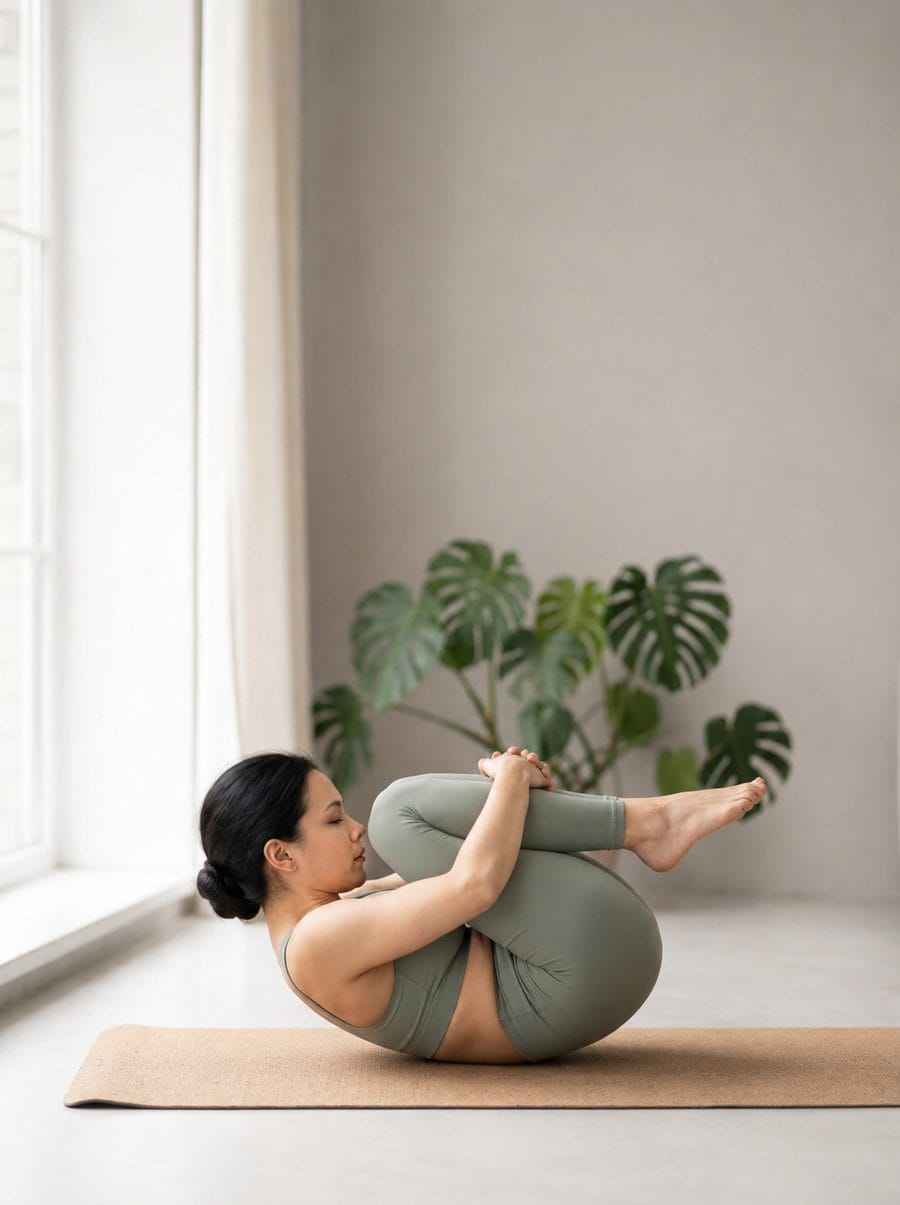
- Rocking on the Back. Lying down with your arms around your knees, roll back and forth along your spine like a rocking chair. It massages and relaxes the back. Skip it with acute back pain.
Seated holds: arms up and a mantra
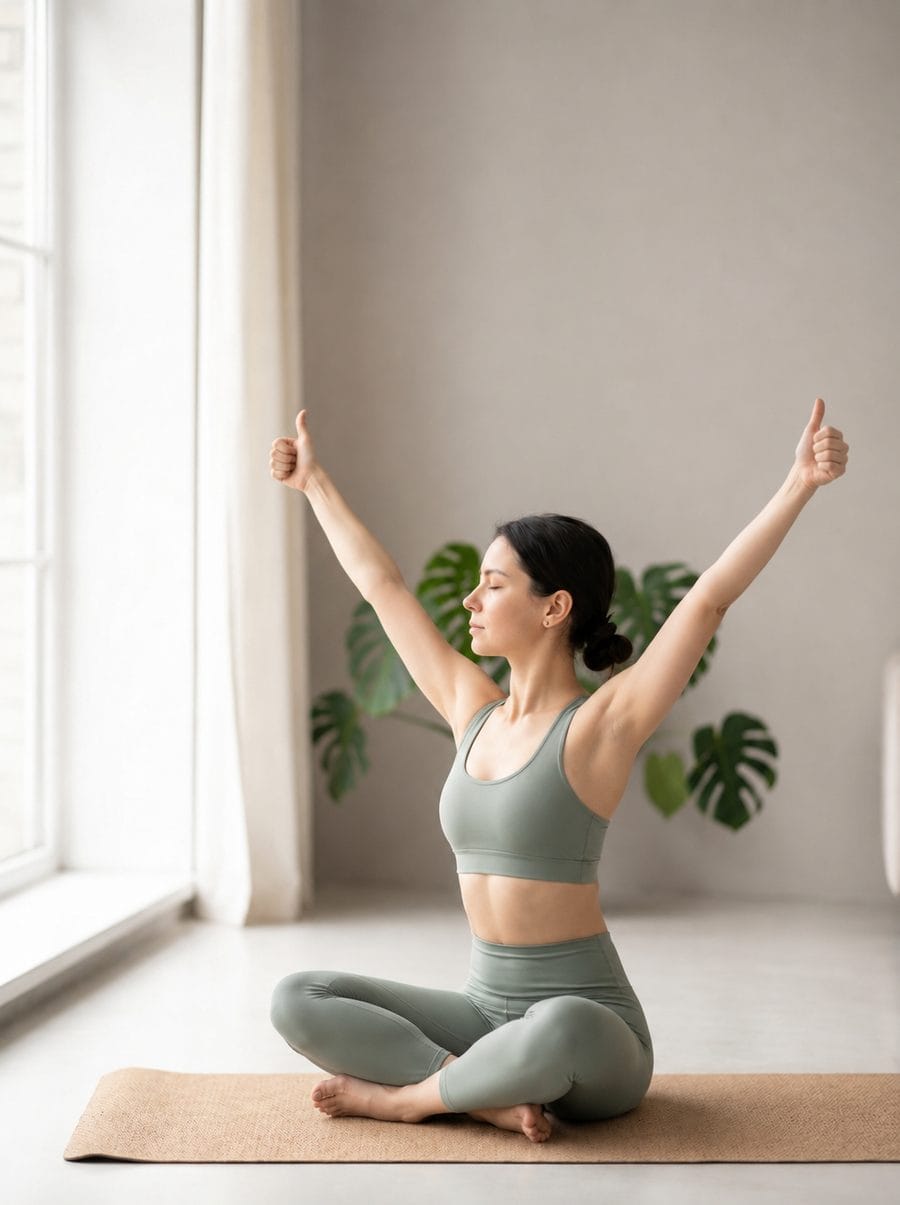
- Arms in a V. Sit cross-legged and raise straight arms up and out at sixty degrees. Fingertips press into the base of your palms, thumbs point up, eyes stay closed. You breathe with breath of fire or deep, even breaths. Choose the second until you've learned the technique. A shoulder injury rules it out. For hypertension or pregnancy, breathe calmly. The fast technique is explained in Breath of Fire.
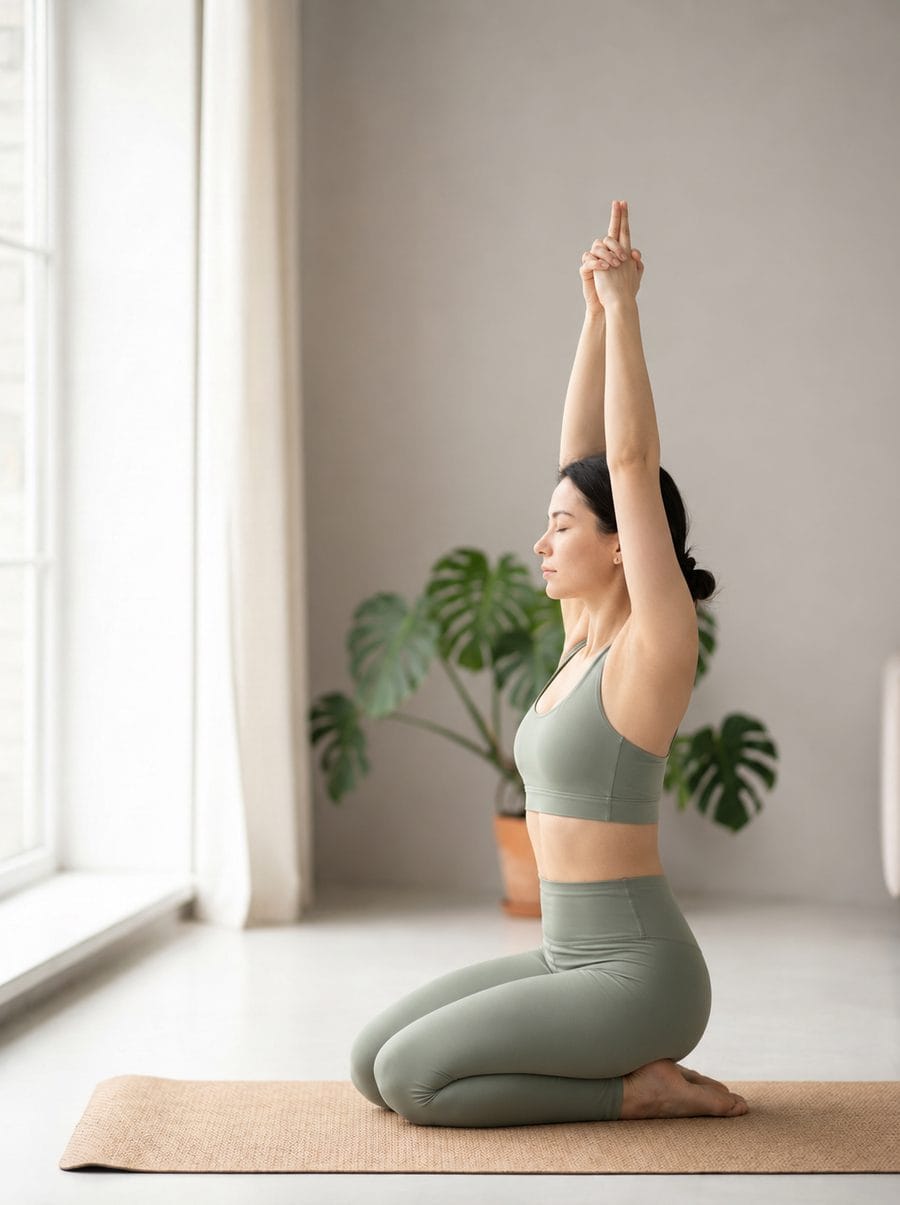
- Sat Kriya. Sit on your heels with arms stretched up by your ears and repeat Sat Nam: on Sat your navel moves toward your spine, on Nam your belly lets go. The app counts it as doable for beginners, but your belly works the whole time, so try it after your first few sessions. Start with three minutes and rest lying down for twice as long. It isn't practiced during pregnancy.
Core: leg lifts on your back
These movements are real work. Your lower back stays down.
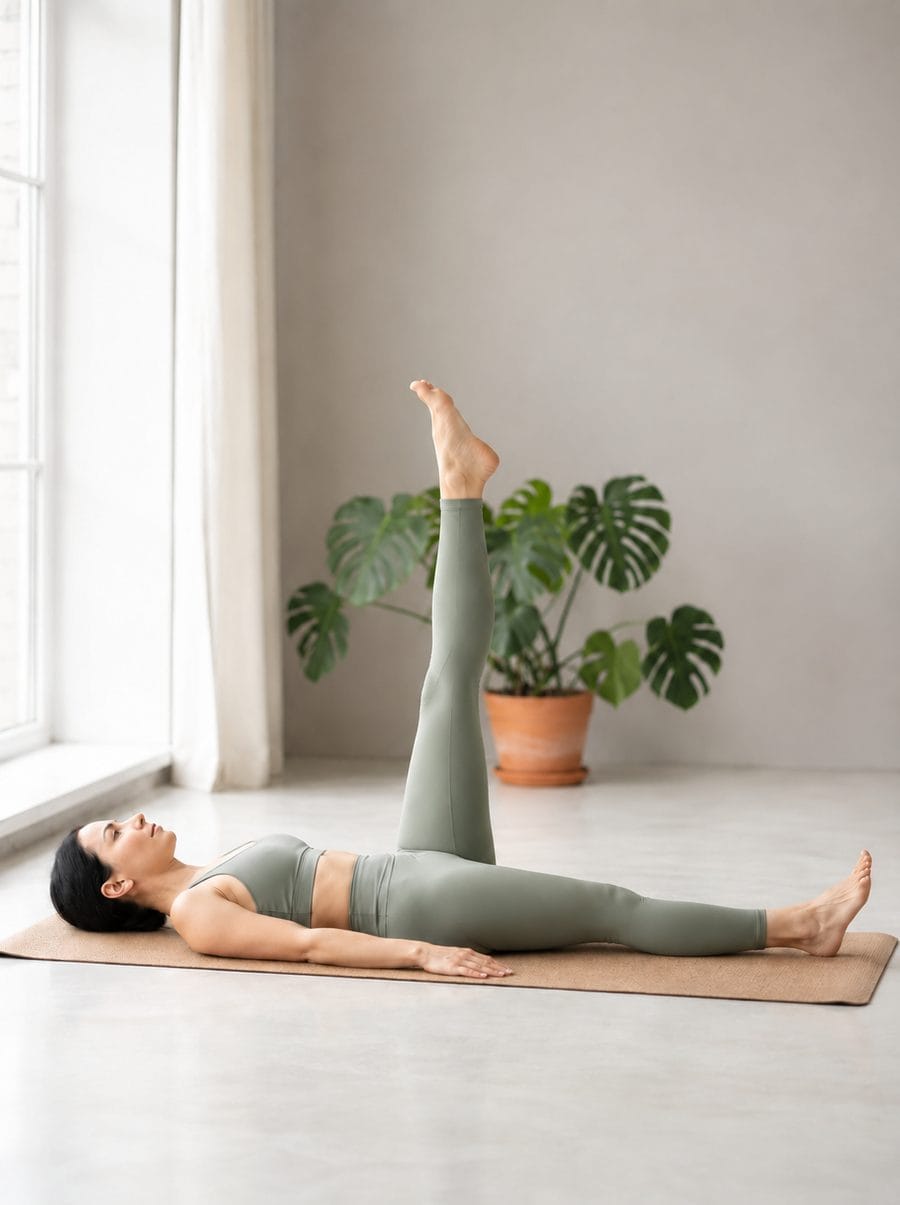
- Alternating Leg Lifts. Arms along your body. Raise one straight leg to vertical and lower it, then switch, breathing deeply. If your lower back aches, put your hands beneath your sacrum.
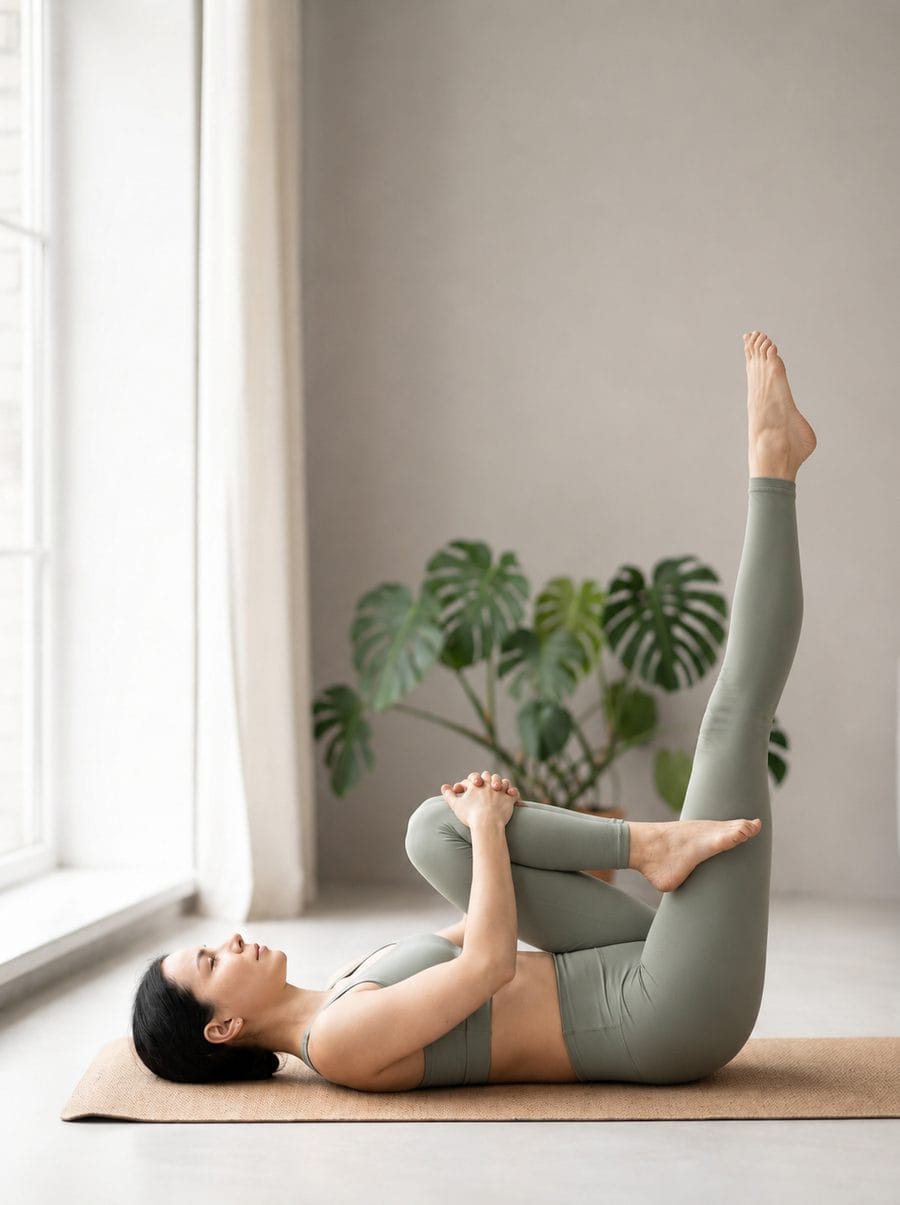
- Leg Lift with Knee to Chest. With both hands, hug one knee in. The other leg, kept straight, rises on the inhale and lowers on the exhale. With lower back pain, don't lift it as high.
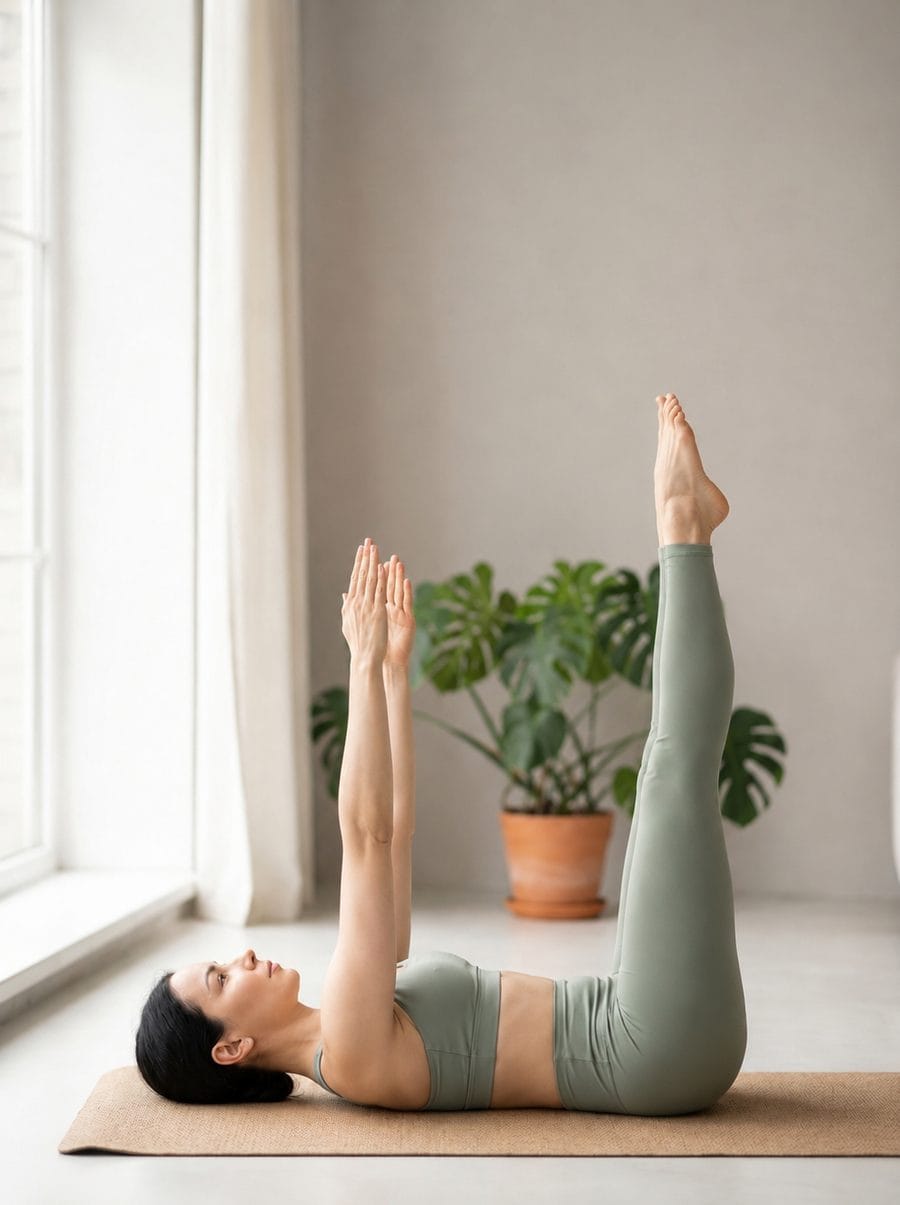
- Double Leg Lifts with Arms Up. Intermediate. Both straight legs rise together with your arms reaching up. Pregnancy means skipping it. For lower back pain, put your palms under your sacrum.
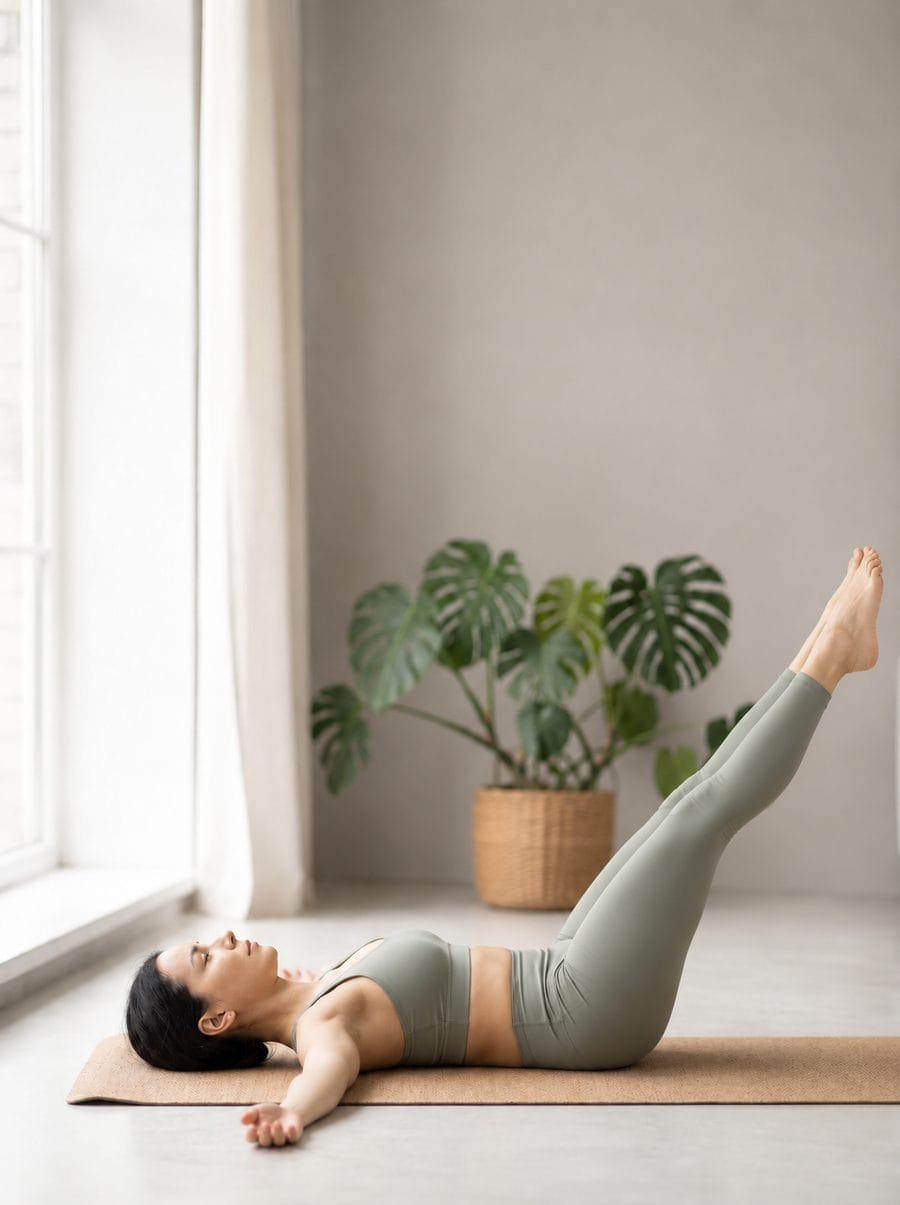
- Opening with Angled Legs. Intermediate. Starting with knees at your chest, spread your arms along the floor as you inhale and extend your legs at sixty degrees. Skip it with an aching lower back, lumbar hernias or pregnancy.
Legs: archer and frog
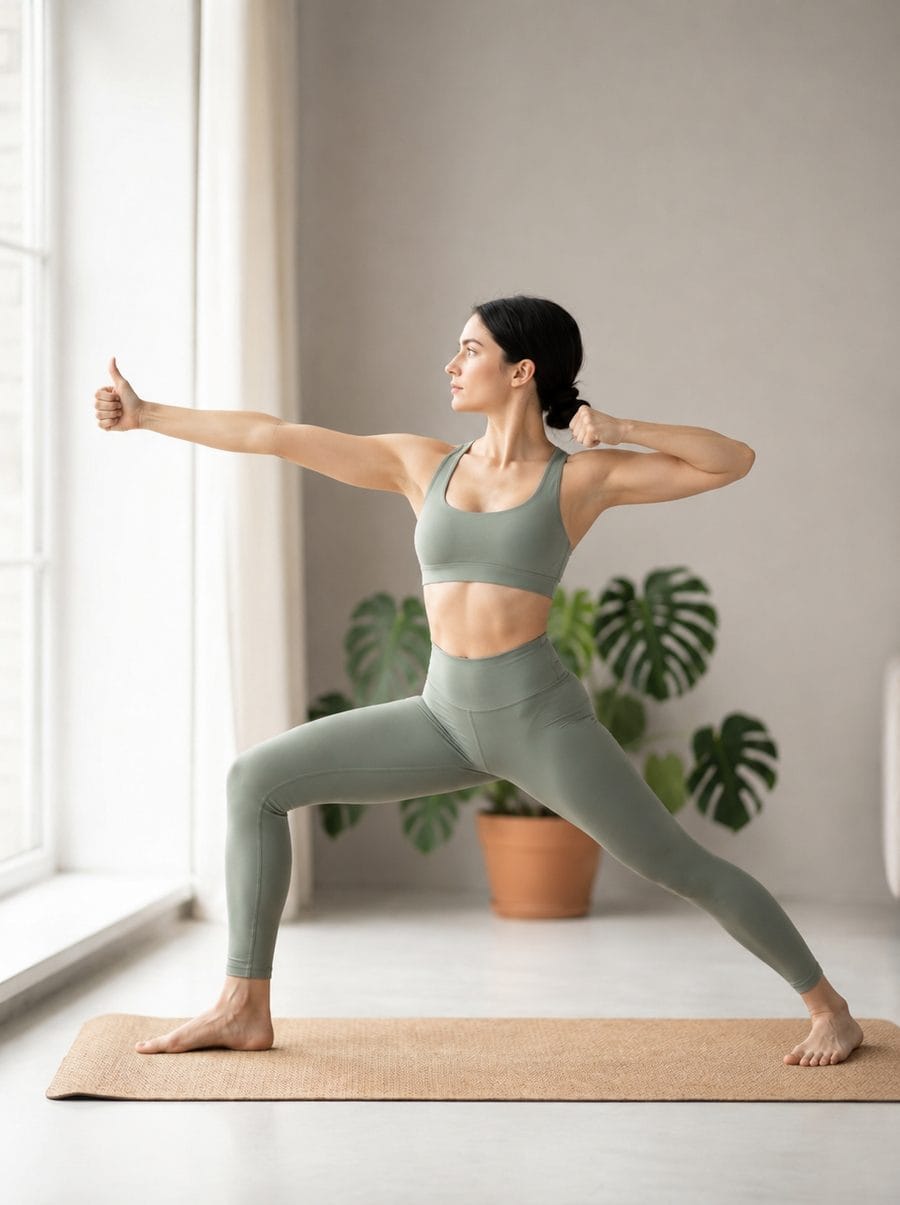
- Standing Archer. A wide lunge: your front arm reaches forward in a fist with the thumb up while the back elbow pulls behind you, as if drawing a bow. Breathe deeply and evenly. With knee injuries, make the lunge shallower.
- Frog Flow. Intermediate, and one of the best-known and most tiring moves in the style. Squat on your toes, heels touching and lifted, knees wide, fingertips down. Your hips rise and legs straighten on the inhale, and you sink back on the exhale. Injured knees or ankles mean leaving it out. If you're hypertensive, keep your head from sinking low.
Two kundalini yoga sequences for your first practice
You don't have to build a session yourself. Both of these are beginner level with nine steps each, and both finish with motionless sitting and rest on your back.
Kundalini: First Steps takes 15 minutes. It covers your neck, shoulder shrugs, a spine wave, hip circles, arms in a V with breath of fire, and a seated fold. It's a good choice for your very first time.
Kundalini in 10 Minutes takes 10 minutes, and its breath of fire is done simply sitting, with no raised arms. It works well if holding your arms up is still hard or you're short on time.
Once both feel familiar, the rest of the sequences are waiting on the kundalini yoga page, and all the movements have photos in the catalog. The classic sets are covered in Kundalini Kriya: What It Is.
Safety
Hypertension, heart disease, pregnancy, injuries and hernias are all reasons to talk to your doctor first. Swap breath of fire for calm breathing whenever you feel dizzy, and throughout pregnancy, hypertension or heart disease. Stop if you feel sharp pain or get lightheaded.
The risks, and who should take extra care, are covered in Is Kundalini Yoga Safe?.
Pose cautions in this article
- Knee discomfort — sit on a prop (Easy Pose)
- Acute neck pain (Neck Warm-Up)
- Dizziness (Neck Warm-Up)
- Shoulder and neck injuries — move more gently (Shoulder Shrugs)
- Acute lower back pain — make the circle smaller (Seated Hip Circles)
- Acute lower back pain — bend less (Seated Side Bends)
- Acute lower back pain — reduce the range of motion (Seated Spine Wave, Spine Wave on the Heels)
- Knee and ankle injuries — sit on a block (Spine Wave on the Heels)
- Lumbar disc herniation — go more gently, without jerking (Seated Twist with Hands on Shoulders, Twist on Heels with Hands on Shoulders)
- Knee injuries — sit on a block (Twist on Heels with Hands on Shoulders, Sat Kriya)
- Neck injuries — don't tuck your head under (Rocking on the Back)
- Acute back pain (Rocking on the Back)
- Hamstring injuries — bend your knees (Wide-Angle Folds to Each Leg)
- High blood pressure and pregnancy — breathe calmly, without breath of fire (Arms in a V)
- Shoulder injuries (Arms in a V)
- Pregnancy — skip this pose (Sat Kriya)
- High blood pressure — contract your belly more gently (Sat Kriya)
- Lower back pain — slide your palms under your sacrum (Alternating Leg Lifts, Double Leg Lifts with Arms Up)
- Lower back pain — don't raise your leg as high (Leg Lift with Knee to Chest)
- Pregnancy (Double Leg Lifts with Arms Up, Opening with Angled Legs)
- Lower back pain (Opening with Angled Legs)
- Lumbar disc herniation (Opening with Angled Legs)
- Knee injuries — take a shallower lunge (Standing Archer)
- Knee and ankle injuries (Frog Flow)
- High blood pressure — don't lower your head too far (Frog Flow)
This site is for general information and is not medical advice. If you have pain, an injury, a chronic condition, or are pregnant, check with a qualified professional before practicing.
Questions
Can I practice kundalini yoga alone at home? You can learn the simple seated movements on your own. It's worth showing a teacher your fast breathing at least once, because it's hard to judge your own technique. According to the US center NCCIH, learning solo carries more risk, and newcomers shouldn't force the breath.
How long should my first session be? Ten to 15 minutes is enough. There are no reliable data on the "right" frequency, so pace yourself by feel and add time gradually.
What is frog pose in kundalini yoga? A repeated lift of the hips from a squat on your toes, in time with your breath. It loads the knees and ankles heavily, so beginners do better starting with other movements.
Are the exercises different for women and men? The set of movements is the same. Limits depend on your condition rather than your sex: pregnancy, for example, rules out several movements in this article.
Sources
- NCCIH. Yoga: Effectiveness and Safety.
- Technique, levels, breathing and cautions for each movement, sequence contents: the Hatha Yoga app. More on the How We Prepare Our Content page.
Read next
- Yoga for Arthritis and Osteoporosis: How to Protect Your Joints and Bones7 min read
- Ashtanga Yoga Explained: The Series, the Breath and the Difference from Hatha6 min read
- Ayurveda Explained Simply: The Basics and a Daily Routine (Dinacharya)5 min read
- Balance Exercises: 10 Yoga Poses for Balance and Stability7 min read