 Hatha Yoga
Easy Pose
Sukhāsana
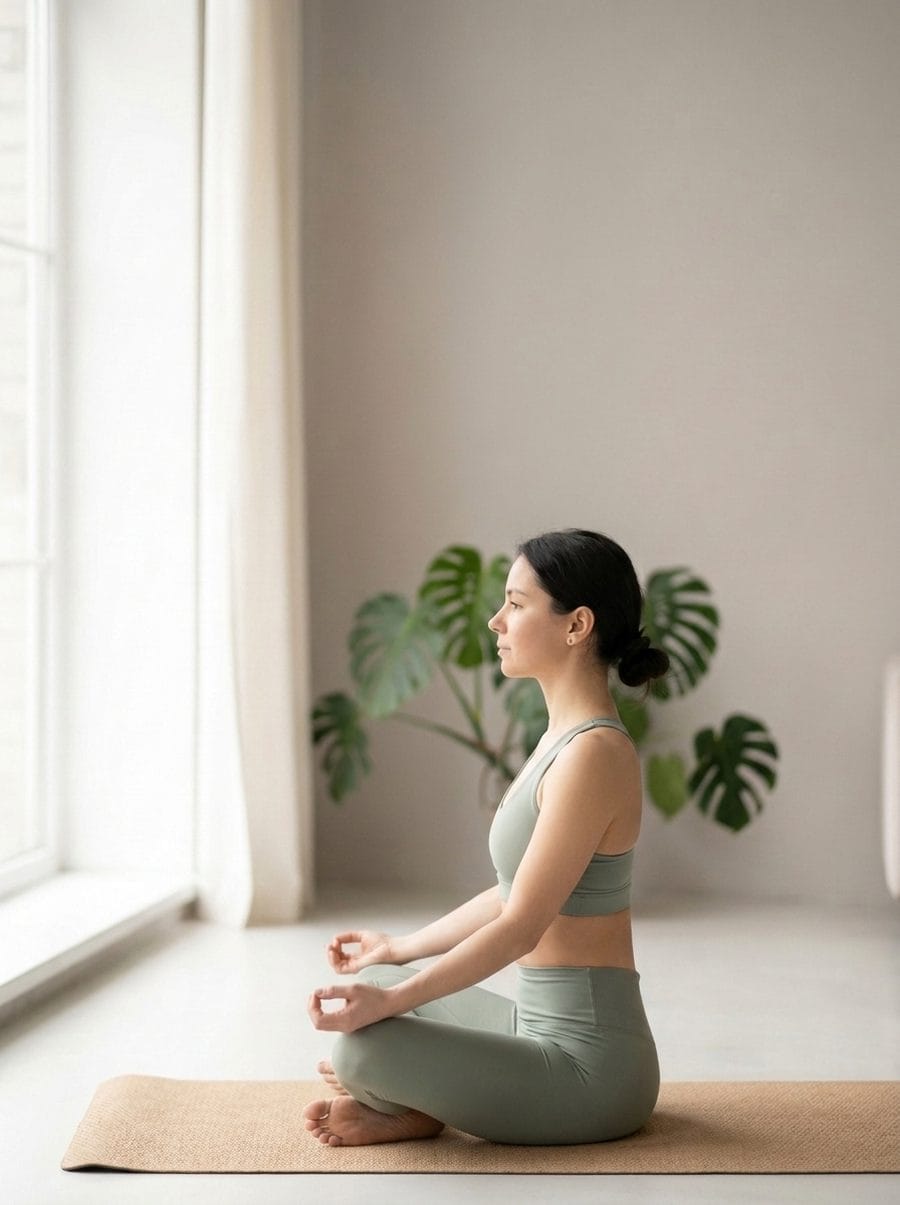
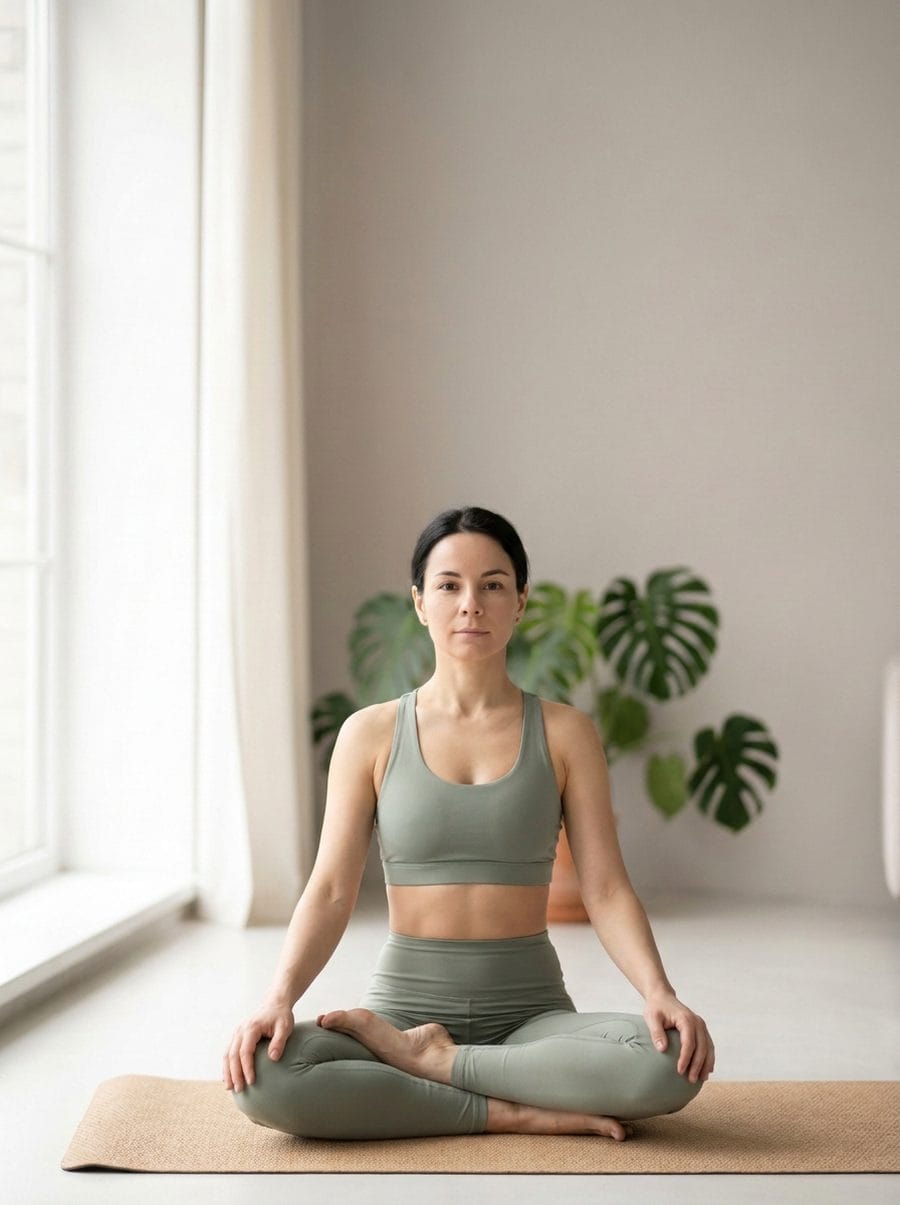
Easy Pose, or Sukhasana, is the most accessible seat in yoga: shins crossed, palms on your knees, spine tall. In Sanskrit, "sukha" means ease or comfort, and that's the whole point of the pose: sitting in a way that keeps your body from distracting you from the breath.
The app classes it as beginner and allots it 60 seconds. It features in 19 sequences. The hatha sequence Low-Energy Day spends exactly one minute here, while all 18 kundalini sequences begin with it, most of them also for one minute.
How to do it
- EnterSit with your shins crossed, each foot beneath the opposite knee. Rest your palms on your knees.
- HoldLengthen up through the crown of your head, shoulders relaxed. If your knees are higher than your hips, sit on a folded blanket. Breathe evenly and observe your breath.
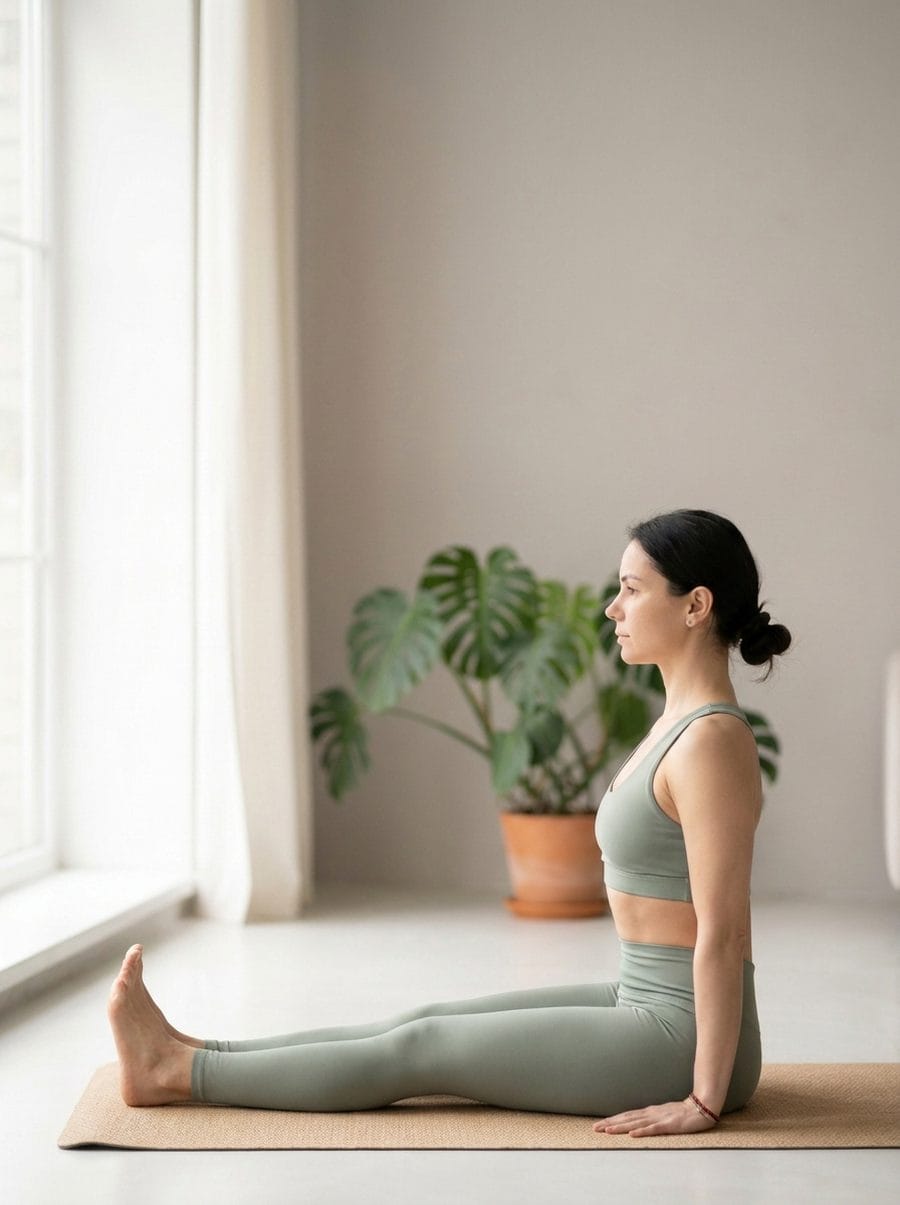
- ExitGently extend your legs in front of you.
More detail
This pose is only easy at first glance. With stiff hips, your knees ride above your pelvis, the pelvis rolls back, and you have to hold your spine up through sheer effort. That's why nearly every beginner needs something under the sit bones: a blanket, a cushion or a block.
Choose a height that brings your knees level with your hips or lower. Keep your feet beneath your knees or slightly forward rather than jammed against your groin, which gives the knees more room. Relax your shoulders and rest your hands on your thighs.
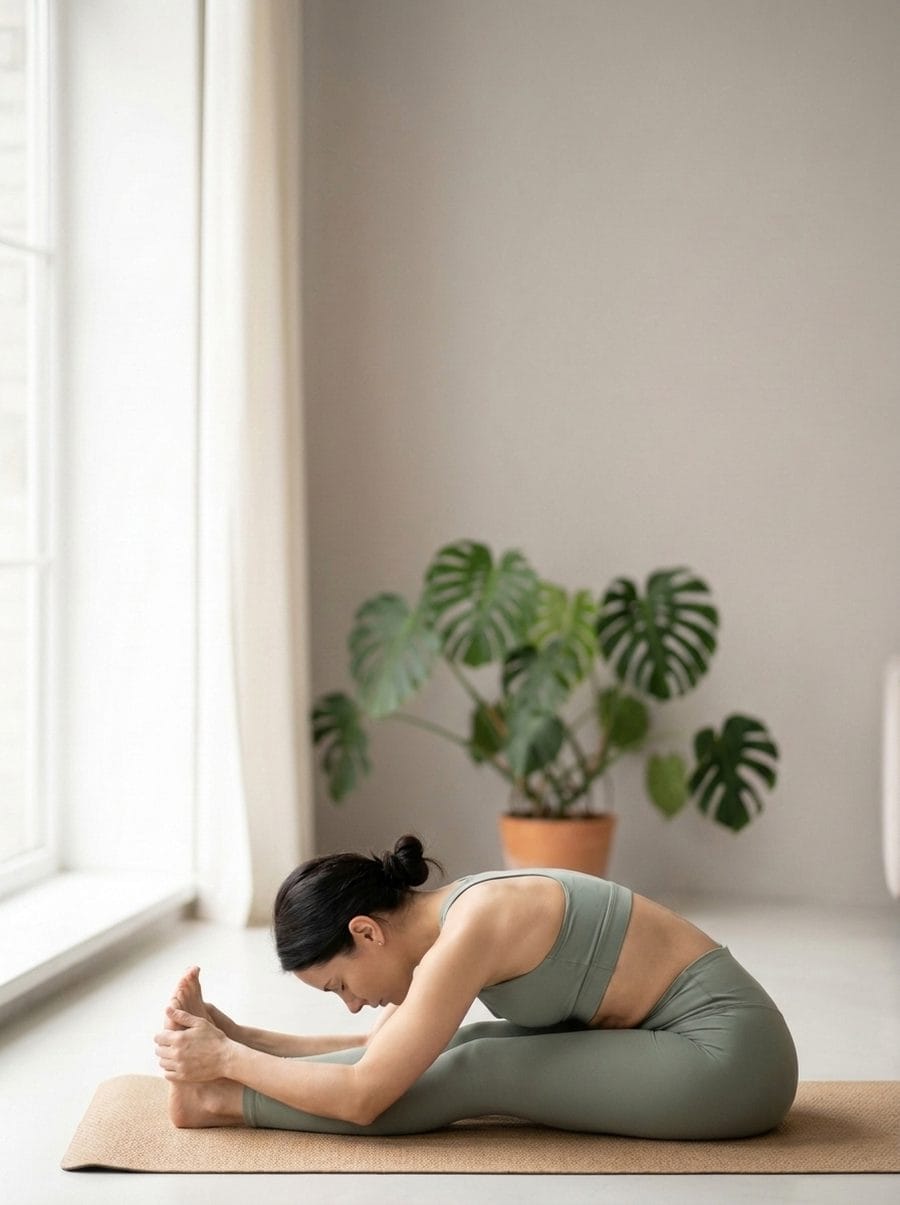
For longer sits, swap the front shin every so often. For the version that folds forward, see Cross-Legged Forward Fold.
Benefits
A basic seat for pranayama and meditation.
Sukhasana gives you a calm, stable position for watching the breath, doing pranayama and meditating. It gently opens the hips and teaches your back muscles to keep you upright without a chair back. It's a natural starting point for anyone new to seated practice.
Cautions
- Knee discomfort — sit on a prop
This site is for general information and is not medical advice. If you have pain, an injury, a chronic condition, or are pregnant, check with a qualified professional before practicing.
Common mistakes
- Skipping the cushion while your knees ride high. The lumbar spine slumps and gives out fast.
- Lifting your chin to look straighter. Reach up through the crown and let the chin drop a touch.
- Stuffing your feet deep under your thighs. It twists the knees; bring your feet forward instead.
- Always crossing with the same leg in front.
Where it appears
- Low-Energy Day 14 min · Beginner
- Kundalini: First Steps 15 min · Beginner
- Morning Kundalini 15 min · Beginner
- Kundalini: Living Spine 20 min · Beginner
- Kundalini: Clear Mind 20 min · Beginner
- Kundalini: Energy Boost 25 min · Intermediate
- Kundalini: Fire at the Center 30 min · Intermediate
- Kundalini in 10 Minutes 10 min · Beginner
- Kundalini: Stillness 15 min · Beginner
- Kundalini: Neck and Shoulders 15 min · Beginner
- Evening Kundalini 20 min · Beginner
- Kundalini: Hips 20 min · Intermediate
- Kundalini: Arms and Core 20 min · Intermediate
- Kundalini: Legs 20 min · Intermediate
- Kundalini: Strong Back 25 min · Intermediate
- Kundalini: Big Fire 30 min · Advanced
- Full Kundalini 45 min · Intermediate
- Spinal Flexibility 30 min · Beginner
- Sat Kriya 10 min · Beginner
Similar poses
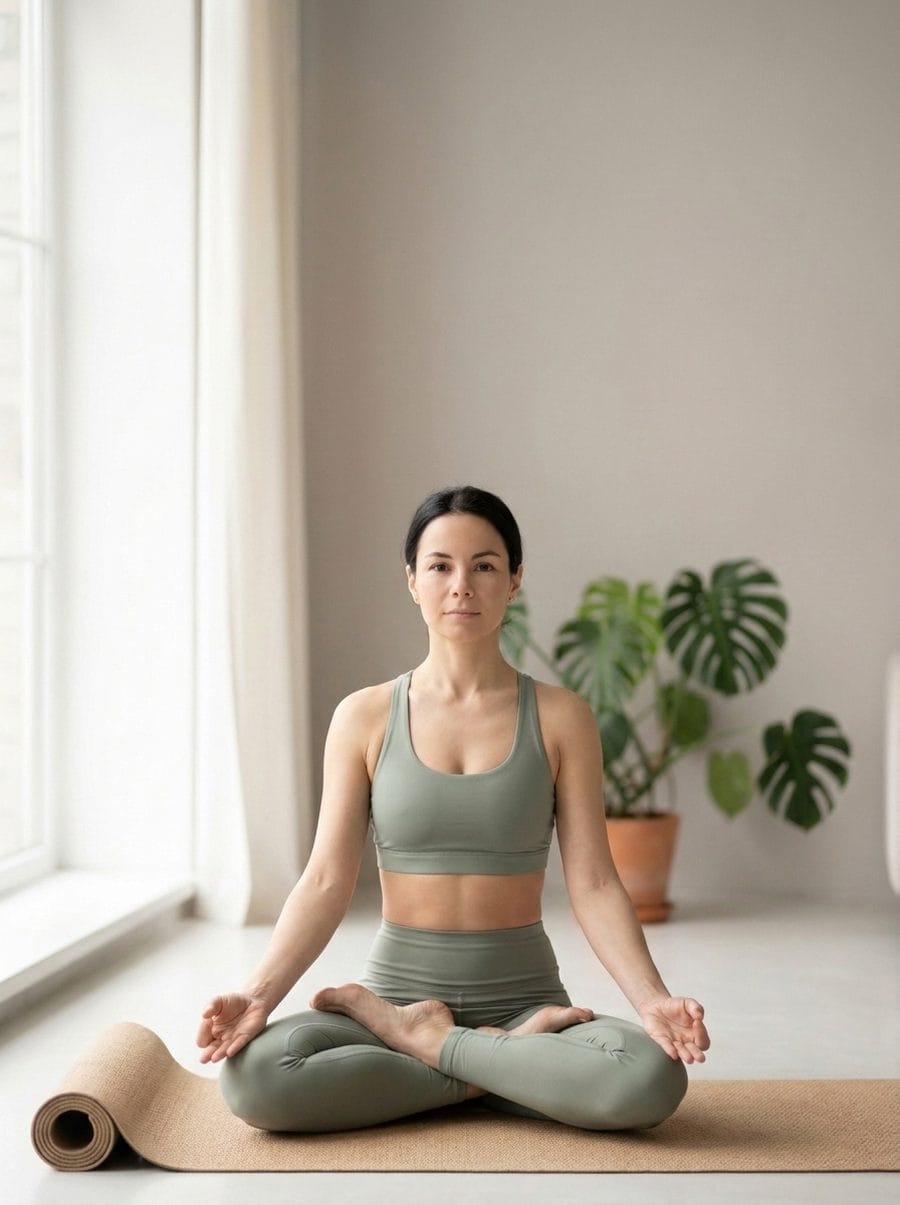
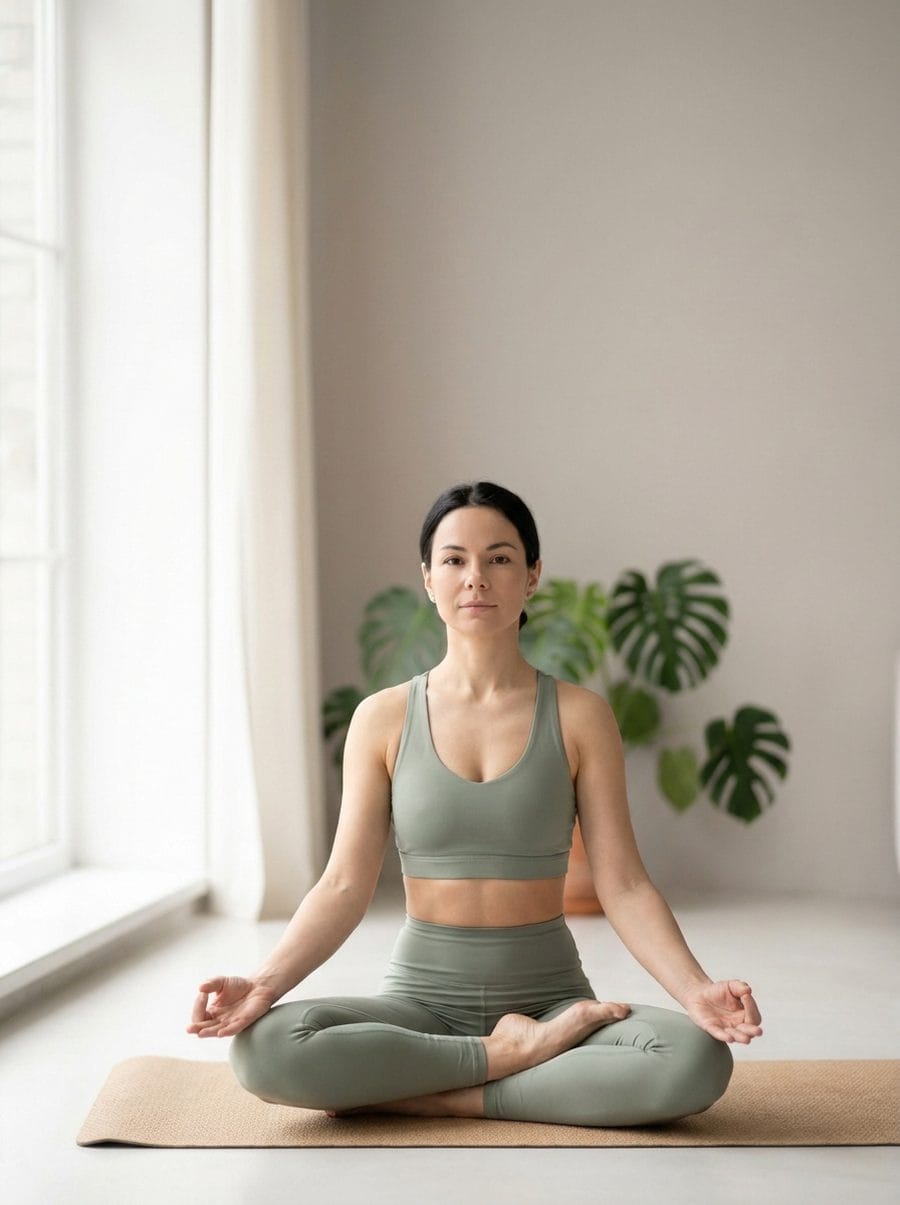
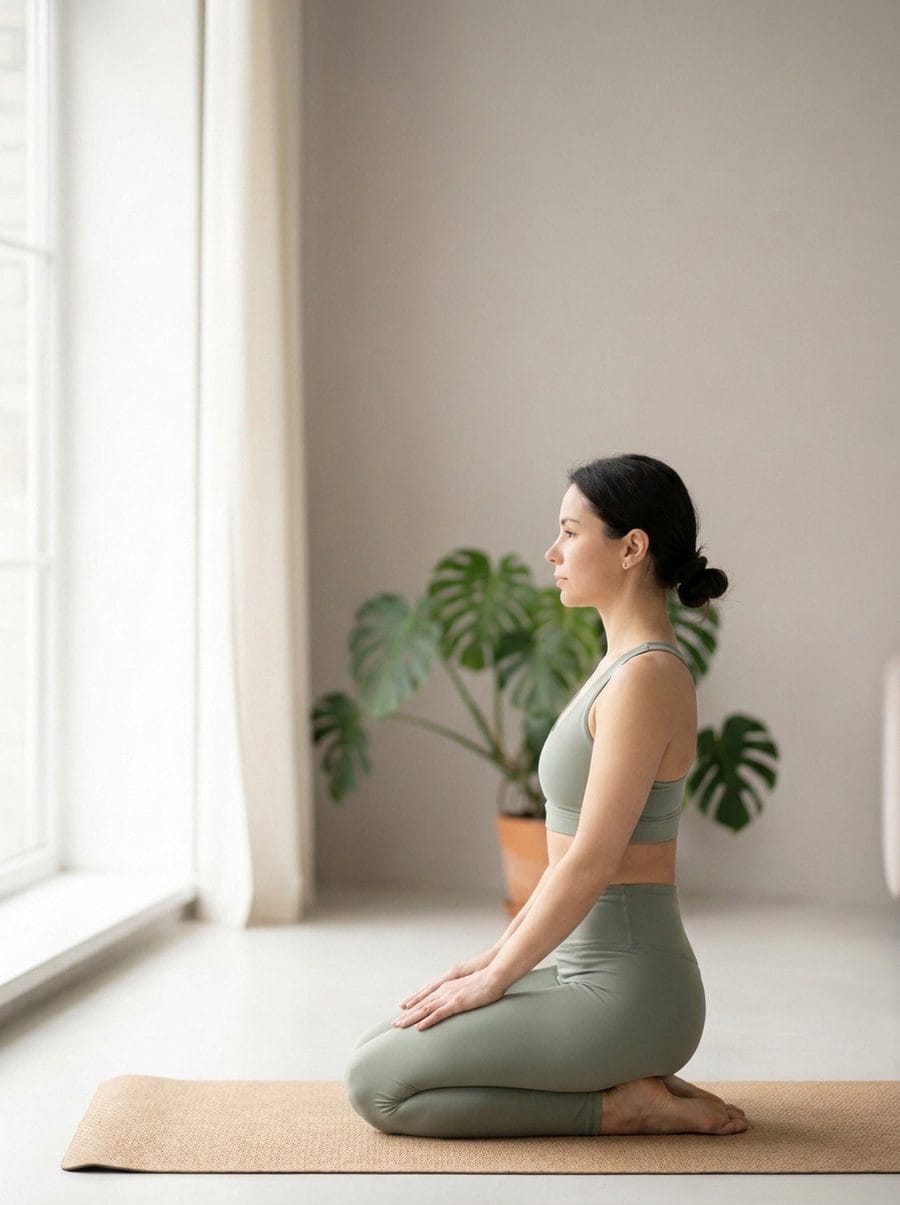
Questions
What is the easiest seated pose in yoga? Sukhasana is. You don't have to place your feet on your thighs as in Lotus Pose or gather your heels at the center as in Accomplished Pose. That's why it's the usual choice for first attempts at meditation.
What should I do if my knees hurt in Easy Pose? The app suggests sitting on a prop. The higher the support under your hips, the less your knees have to bend. If the pain stays even when you're raised up, end the pose there.
How long can I sit in Sukhasana? The app's guideline is one minute, though kundalini sequences sometimes stay longer later in the session, up to seven minutes. For meditation, extend the time little by little, as long as your back and knees stay quiet.
Featured in
- Ayurveda Explained Simply: The Basics and a Daily Routine (Dinacharya)5 min read
- Yoga for High Blood Pressure: Safe Poses, Breathing and Limits6 min read
- Fasting and Yoga: Can You Combine Them, and How to Practice Safely6 min read
- How to Choose a Yoga Mat and Which Props Are Worth Having at Home7 min read
- The Bhagavad Gita and Yoga: Karma, Bhakti and Jnana as Three Paths6 min read
- A Simple Morning Routine: 20 Minutes of Yoga, Breath and Quiet6 min read
- Postpartum Yoga: When to Start and How to Recover Safely7 min read
- Prenatal Yoga: What's Safe in Each Trimester and What to Skip7 min read
- Vipassana and Other Types of Meditation: How They Differ6 min read
- What Is Yoga Good For? Benefits and Limits According to Research7 min read
- The Yoga Sutras of Patanjali: What the Book Is About and How to Read It6 min read
- Sattvic Diet Explained: What the Yogic Diet Is and How to Keep It Balanced5 min read
- Breath of Fire in Kundalini Yoga: Technique, Cautions and Kapalabhati vs. Breath of Fire7 min read
- Kundalini Yoga Poses: 17 Exercises and Where Beginners Should Start7 min read
- Is Kundalini Yoga Safe? What We Know About the Risks and Who Should Be Careful8 min read
- Kundalini Yoga Explained: Practice, Breathwork and How It Differs from Hatha7 min read
- Diaphragmatic Breathing: How to Learn Belly Breathing8 min read
- Nasal Breathing and Breath Holding: What Yoga Really Trains6 min read
- Buteyko Breathing: What It Is and How It Compares with Pranayama5 min read
- Wim Hof Breathing vs. Pranayama: How They Differ and How to Stay Safe6 min read
- Chakras in Yoga: The Traditional Model Without the Mysticism6 min read
- Mantras and Om: Meaning and How to Chant Them7 min read
- Mudras: Key Hand Gestures and How to Use Them in Yoga6 min read
- Prana in Yoga: What It Is and What the Breath Has to Do With It6 min read
- Meditation for Beginners: How to Start Meditating at Home7 min read
- What Is Mindfulness? 7 Mindfulness Exercises for Everyday Life6 min read
- Yoga for Anxiety and Stress Relief: Poses, Breathing and an Evening Routine6 min read
- Breathing Exercises: 8 Yoga Breathing Techniques for Beginners5 min read
Updated: