 Hatha Yoga
Meditation for Beginners: How to Start Meditating at Home
Hatha Yoga editorial team · Updated · 7 min read
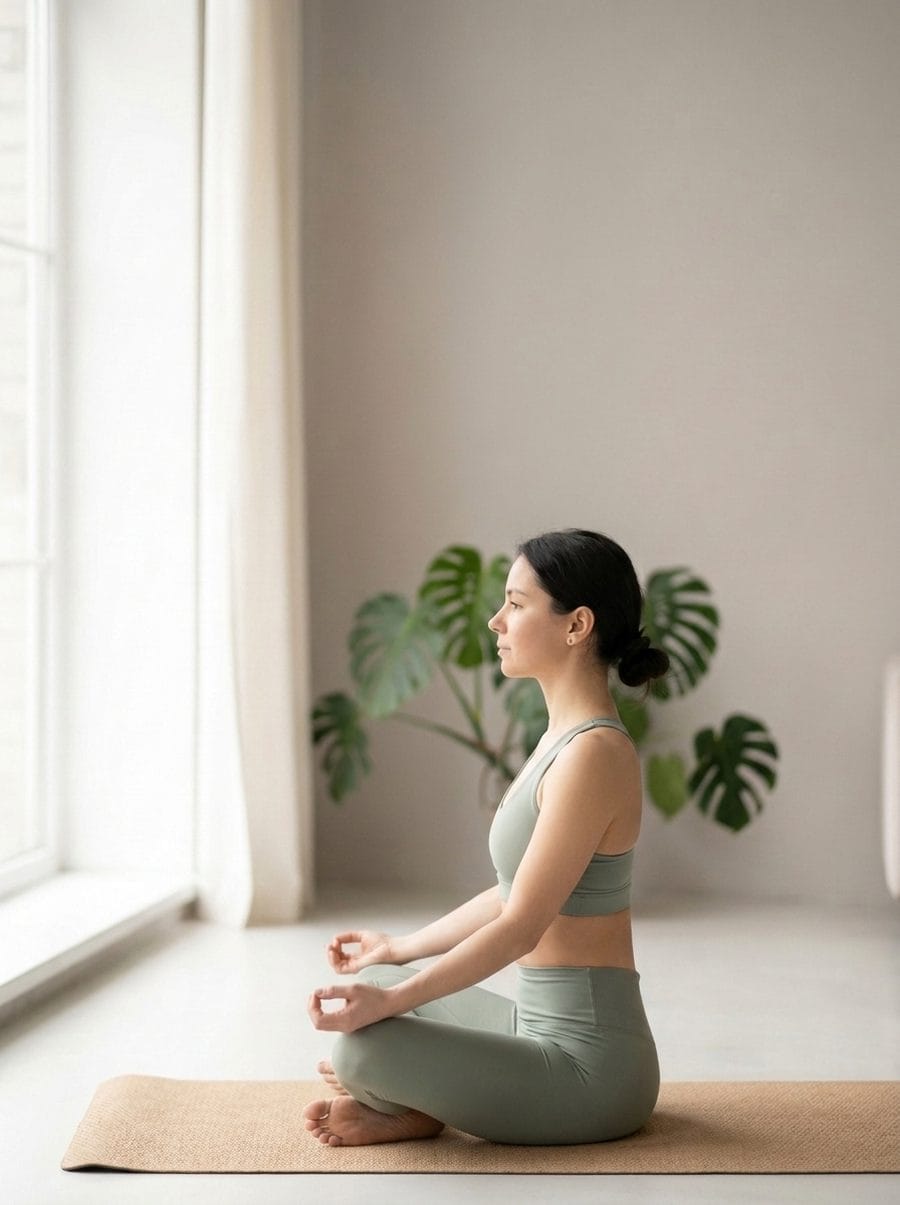
You don't need a special talent, incense or a spare hour to meditate. Ten minutes, a comfortable seat and a timer will do. This guide explains in plain words what meditation is, how to sit so your legs don't go numb, and walks you through a 10-minute practice.
You'll also find tricks for a restless mind, a plan for building the habit, and an honest note on who should start carefully.
What meditation actually is
At its core, meditation is attention training. You pick one anchor, most often the breath, and each time your attention drifts off into thoughts, you bring it back. That return is the exercise itself. If you wandered off twenty times in ten minutes and came back twenty times, the session worked.
Yoga gives meditation a precise place. In Patanjali's system, the ability to rest your attention on a single thing is called dharana, while dhyana, meditation proper, begins when attention flows on its own, steadily and without strain. As a beginner you'll spend most of your time at the dharana stage, and that's completely normal. Read more in The Eight Limbs of Yoga.
What the research says: a 2014 review pooled 47 trials with 3,515 participants. Mindfulness meditation programs produced small to moderate improvements in anxiety, depression and pain. They did not outperform medication, exercise or psychotherapy. So it makes sense to see meditation as a helpful habit rather than a substitute for professional care.
How to sit for meditation
There's just one requirement: a tall spine without tension, in a position your body can hold quietly for 10 minutes. You don't have to cross your legs into lotus. Any of the positions below works for beginners.
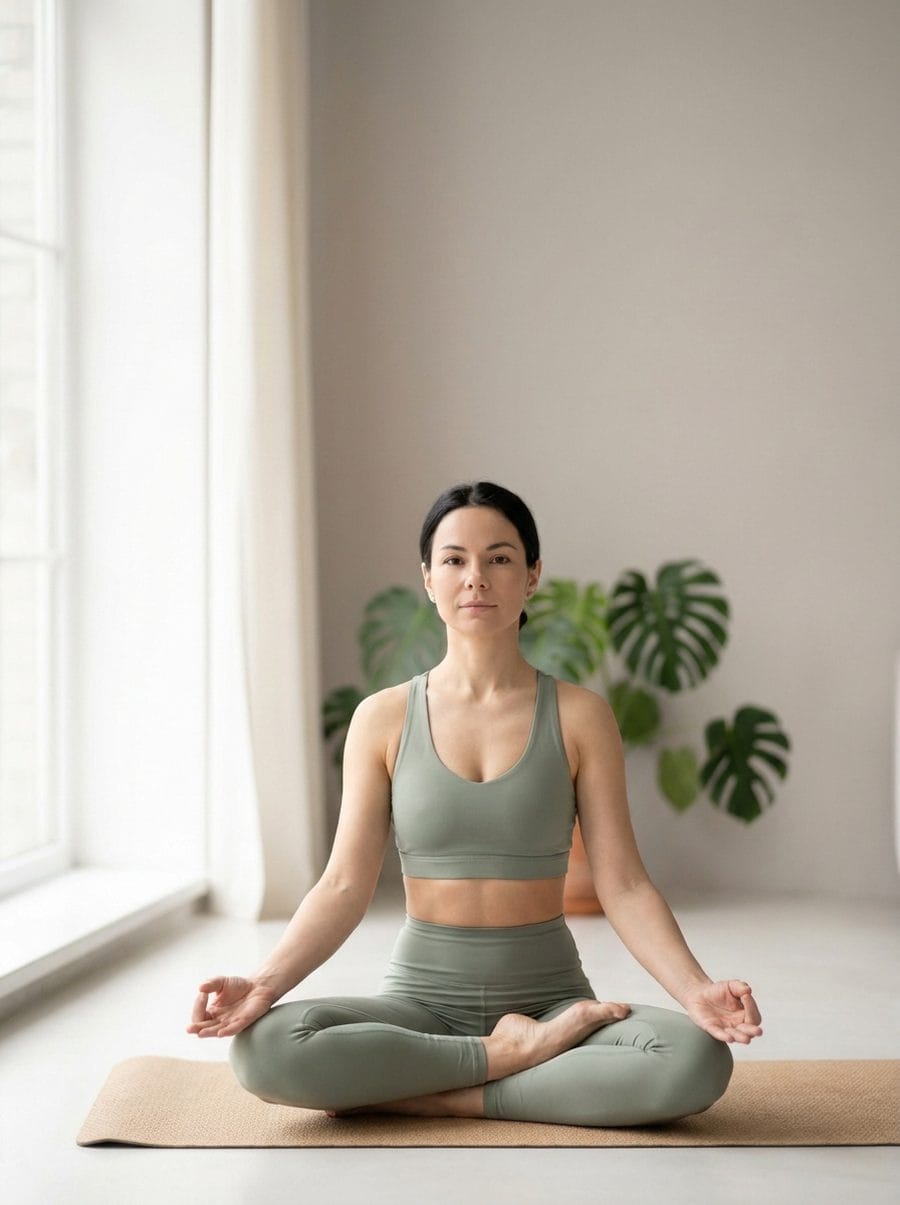
- Easy Pose. Shins crossed. If your knees sit above your hip line, raise your seat with a folded blanket or cushion.
- Accomplished Pose. One heel close to the groin, the other in front of it. The pelvis stays level, which makes long sits easier. If a knee is injured, sit on a prop to lift your pelvis.
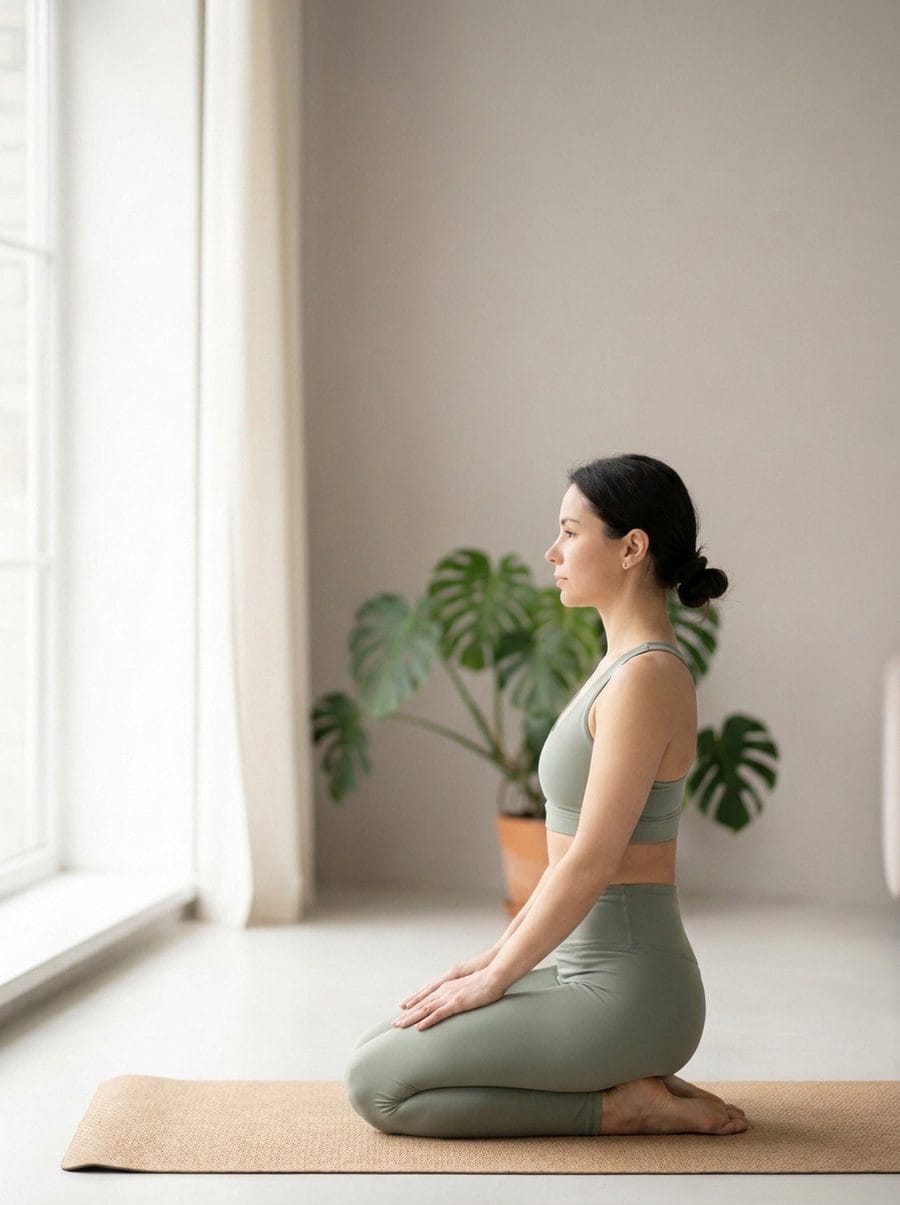
- Thunderbolt Pose. Sitting on your heels, your back lengthens almost by itself. Skip it entirely with injured knees or ankles.
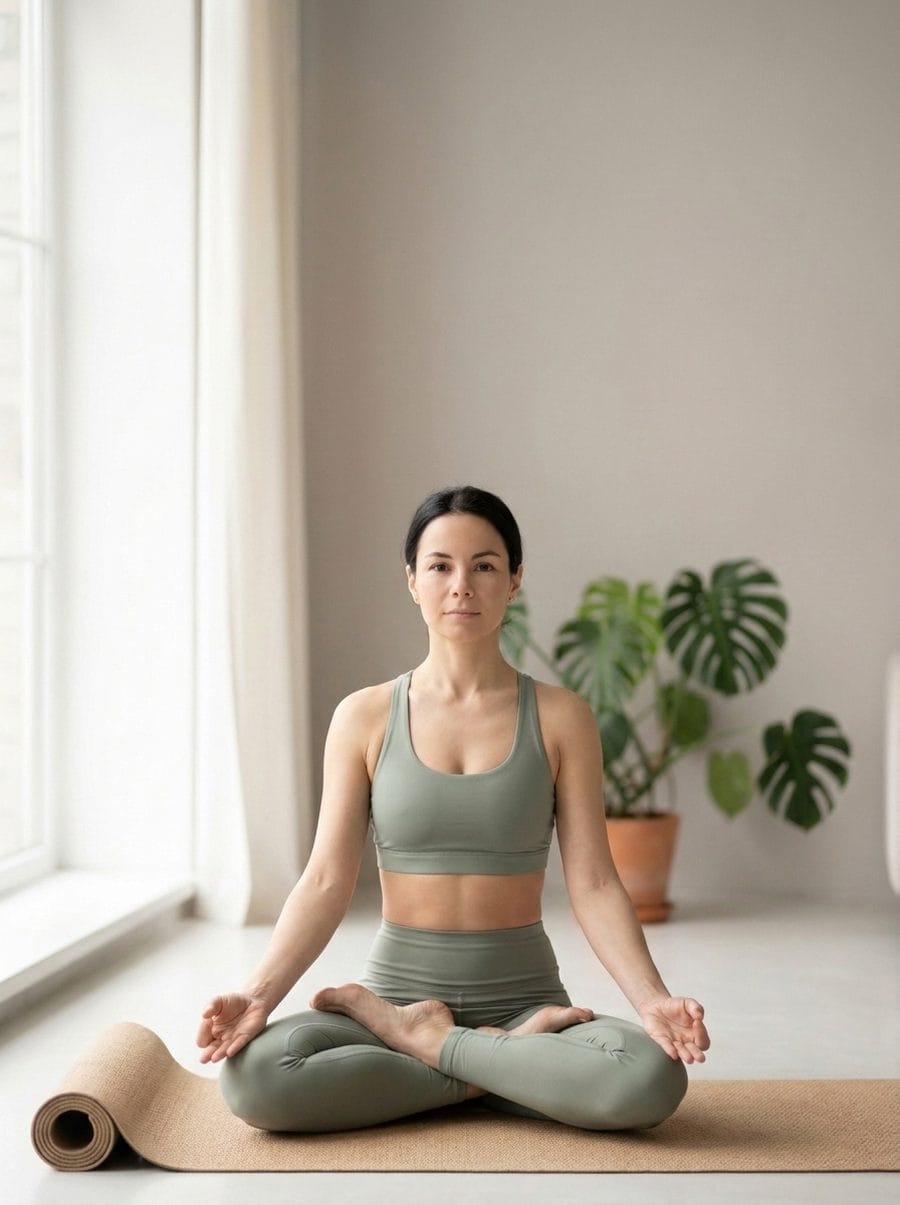
- Half Lotus Pose. One foot is placed high on the other thigh. It's a step toward Lotus Pose, but you don't need lotus to meditate. Leave Half Lotus out if you have a knee or ankle injury.
If the floor is hard on your body, perch near the edge of a chair seat with your feet flat and your back away from the backrest. You can also meditate lying down in Relaxation Pose, though it's easy to doze off that way.
Save lying down for the evening and sit up during the day.

A 10-minute meditation, step by step
Set a timer for 10 minutes with a gentle sound so you're not checking the clock. Sit down, rest your hands on your knees, and close your eyes or lower your gaze to the floor in front of you.
Minutes 1 to 2: settle in
Scan through your body. Drop your shoulders, unclench your jaw, soften your belly. Take a few slow rounds of Full Yogic Breath: breathe in for 4 counts and out for 6. Then stop steering the breath.
Minutes 3 to 8: rest on the breath
Watch the air move through your nostrils, or notice your belly rising and falling. Choose one spot and stay with it. Count your exhales from one to ten, then start again. When you lose count or catch yourself planning tomorrow's meeting, silently say "thinking" and go back to one.
No frustration needed: noticing that you drifted is exactly the skill you're building.
Minutes 9 to 10: open up and come out
Let go of counting. Take in everything at once: your whole body, the sounds in the room, the breath. When the timer goes off, don't jump up. Wiggle your fingers, open your eyes and sit for a few more breaths. Notice how you feel without grading it as a "good" or "bad" session.
What to do when your mind keeps wandering
Thoughts won't disappear, and stopping them isn't the goal. The goal is to notice that you've drifted and come back. If coming back feels hard, these tricks help.
- Shorten the sit. Five focused minutes beat fifteen minutes of fighting yourself.
- Give your mind a sound. Before the silent part, do 3 to 5 minutes of Bee Breath: a long humming exhale holds attention better than a silent one. Skip it if an ear is inflamed.
- Name what pulls you away. "Planning," "remembering," "worrying." A one-word label lets you step back from the thought.
- If you feel sleepy, open your eyes and look at the floor, straighten your spine and let some fresh air in. You'll have more energy in the morning than after dinner.
- If your body won't sit still, move first: a few minutes of warm-up calms restless legs and a stiff back.
If counting breaths doesn't suit you, sound can be the anchor instead: see mantras. And for what to do with your hands, see mudras.
Prepare your body: move before you sit
In classical hatha yoga, the poses exist to get the body ready for long, still sitting. When your back and hips are stiff, five minutes in, all you can think about is your numb legs. A short warm-up takes care of that.
The app has a 12-minute, beginner-level program for exactly this: Flow with the Breath. You loosen your neck, shoulders and pelvis, flow through standing bends and half squats, then move your spine on all fours and on your back. Every movement is tied to an inhale or an exhale, so your attention gathers before you even sit down.
It ends with almost two minutes of savasana, a natural lead-in to seated meditation. In the app, every practice comes with voice guidance and a timer.
How to make meditation a habit
- Same time, same place. In the morning after you wash up, or in the evening an hour before bed. Keep your meditation cushion where you can see it.
- Start small. Five minutes a day is plenty for the first week; then build up to 10. After a month, try 15 to 20.
- Anchor it to something you already do. For example, sit right after your morning coffee or after your evening yoga practice.
- Don't chase special experiences. Changes usually show up during the day rather than on the cushion: you catch irritation or rushing a little sooner.
To carry this awareness into everyday tasks, read our guide to mindfulness. For a bedtime version of the practice, see sleep meditation.
Safety
Meditation is generally considered low risk, but it isn't harmless for everyone. The US federal research center NCCIH cites a 2020 review in which about 8% of study participants had unpleasant effects from meditation, with anxiety and a gloomy mood topping the list.
If you feel noticeably worse during practice, stop and open your eyes. If you have a diagnosed mental health condition or a history of serious trauma, talk it over with a doctor or therapist before you start.
The seated poses have their own limits: leave out Thunderbolt Pose and Half Lotus Pose whenever a knee or an ankle is hurt, and sit in Easy Pose on a prop or on a chair. If controlled breathing makes you dizzy, go back to breathing normally. General guidelines are collected in Safety and Contraindications.
Pose cautions in this article
- Knee discomfort — sit on a prop (Easy Pose)
- Knee injuries — use a prop under your hips (Accomplished Pose)
- Knee and ankle injuries (Thunderbolt Pose, Half Lotus Pose)
This site is for general information and is not medical advice. If you have pain, an injury, a chronic condition, or are pregnant, check with a qualified professional before practicing.
Questions
How long should a beginner meditate? Start with 5 minutes a day and move up to 10 after a week or two. A short daily sit counts for more than an hour on the weekend.
Can you meditate lying down? Yes, especially in the evening. But lying down tends to slide into sleep, so during the day sitting upright works better.
How do I know if I'm meditating correctly? If you're sitting, keeping your attention on the breath and returning to it after every distraction, you're doing it right. An empty mind is not the measure.
Can meditation be harmful? Most people have no problems with it, but for some it heightens anxiety. If you feel worse, take a break and check in with a professional.
Sources
- Goyal M, et al. Meditation programs for psychological stress and well-being: a systematic review and meta-analysis. JAMA Internal Medicine, 2014.
- NCCIH. Meditation and Mindfulness: Effectiveness and Safety.
- Pose technique and cautions, program contents: the Hatha Yoga app. How we verify our texts is explained on the How We Prepare Our Content page.
Read next
- Yoga for Arthritis and Osteoporosis: How to Protect Your Joints and Bones7 min read
- Ashtanga Yoga Explained: The Series, the Breath and the Difference from Hatha6 min read
- Ayurveda Explained Simply: The Basics and a Daily Routine (Dinacharya)5 min read
- Balance Exercises: 10 Yoga Poses for Balance and Stability7 min read