 Hatha Yoga
Sleep Meditation: 10 Minutes to Relax and Fall Asleep
Hatha Yoga editorial team · Updated · 6 min read
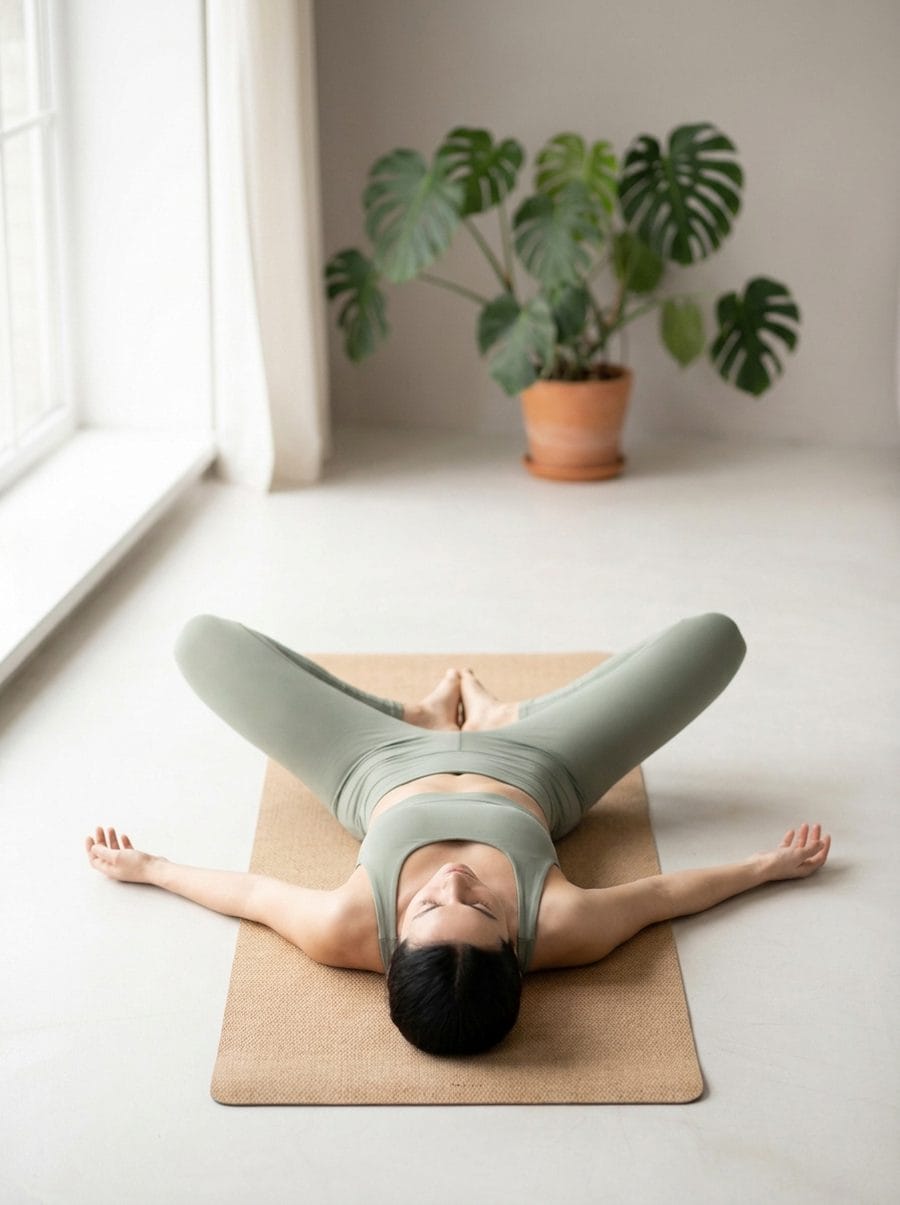
At night your mind often runs faster than it does during the day: plans, conversations, unfinished tasks. A sleep meditation helps you switch from that stream to your body and breath so sleep can arrive on its own. Inside: a step-by-step 10-minute practice for your bed, the last hour before sleep, breathing, what to do when thoughts won't let go, and an honest look at what meditation can and can't do.
How bedtime meditation differs from daytime practice
During the day, the point of meditation is to stay alert and not doze off. Before bed, it's the reverse: you hold on to nothing and gradually let go. You can meditate lying down with your eyes closed, and if sleep arrives in the middle of the practice, it did its job.
The techniques differ too. Evenings call for a slow breathing rhythm with a longer exhale, an unhurried tour of the body with your attention, and soft counting. Energizing practices such as Skull Shining Breath and breath holds belong to the morning instead. The basics of seated meditation are covered in Meditation for Beginners.
The last hour before bed: winding down
The UK's NHS advises starting to relax at least an hour before bed, keeping the bedroom dark and quiet, and staying off screens right before sleep, since they make you more alert. Meditation fits neatly into a routine like that.
A warm shower, dim lights and the same sequence of steps every evening also tell your body the day is over. The steadier the routine, the sooner it starts to work.
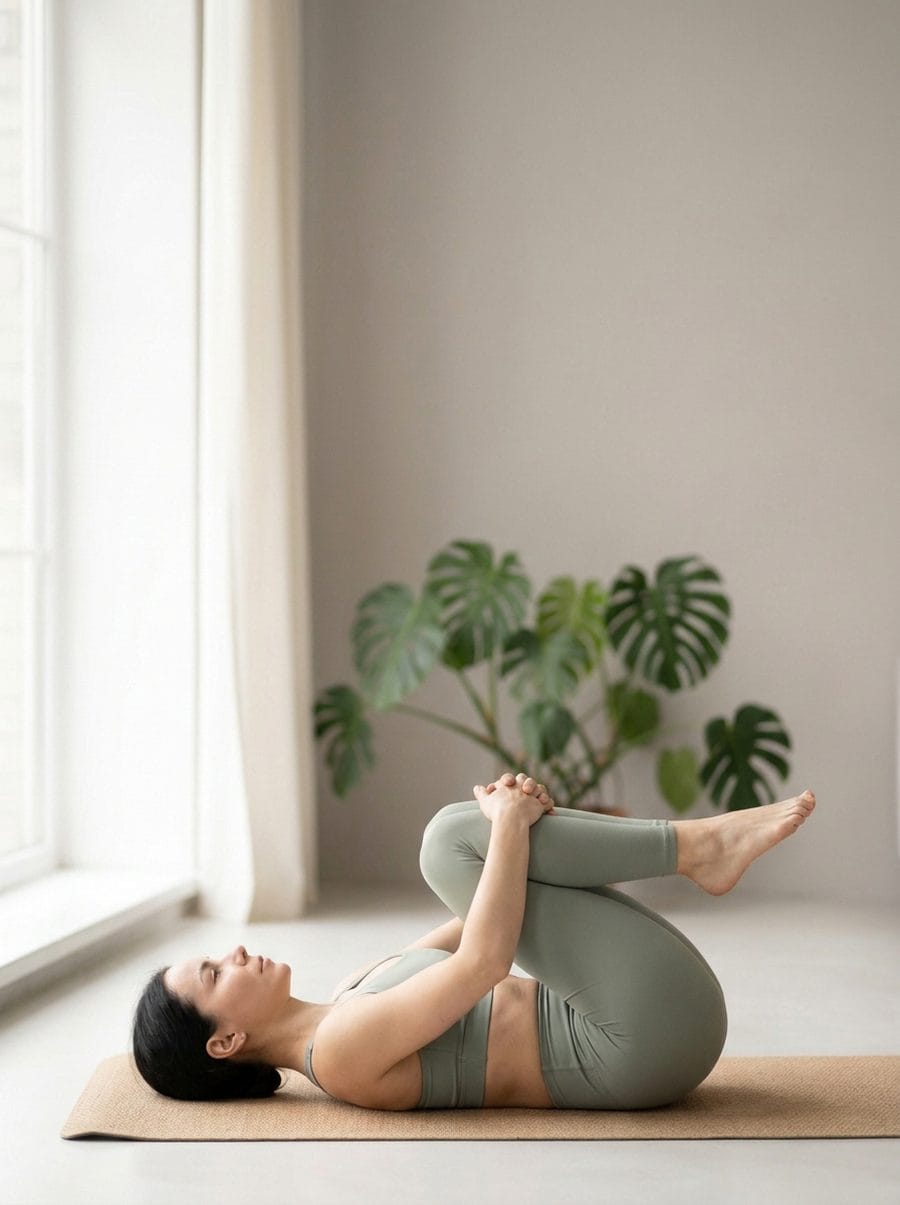
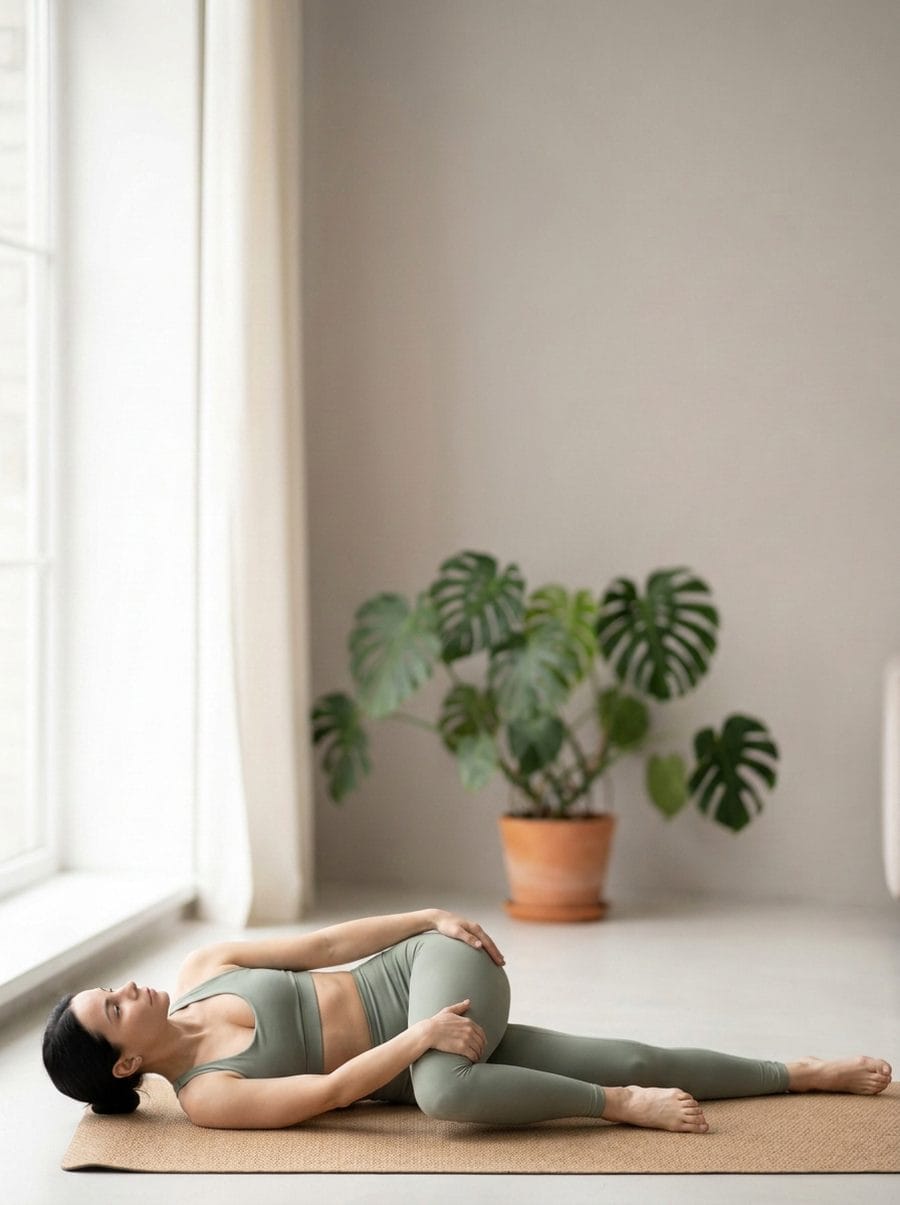
Let your body unwind first. For this, the Before Bed program in the app comes in handy. In 10 minutes you move through 6 poses on the floor and never stand up: Child's Pose, Reclining Butterfly Pose, Knees-to-Chest Pose, Supine Twist, Legs-Up-the-Wall Pose and almost three minutes of savasana.
After that, all that's left is to get into bed and begin.

A 10-minute sleep meditation, step by step
Lie on your back in bed, arms resting alongside you; a pillow under your knees is fine. It's the same Relaxation Pose, just on a mattress. Lights off, phone face down or in another room. If you usually fall asleep on your side, you can settle on your side right away with a pillow tucked between your knees: the practice won't suffer.
Minutes 1 to 2: settle in
Take five slow breaths through your nose, breathing out a little longer than you breathe in. With each exhale, imagine your body getting heavier and sinking deeper into the mattress.
Minutes 3 to 5: a quick body scan
Guide your attention upward, toes first and the crown of the head last, giving each large region two unhurried breaths. In each area, simply notice the sensations and let them soften. Give special attention to releasing your jaw, your tongue and the muscles around your eyes.
Minutes 6 to 8: let the day go
Replay the day in reverse, from evening back to morning, like a short film. Don't analyze or judge; just note each scene and let it pass. If a moment snags your attention, tell yourself "later" and move on.
Minutes 9 to 10: count and release
Count your exhales backward from 30 to 1. If you lose count, start over without irritation. If you reach one and you're still awake, just watch your breath without trying to achieve anything.

Can't fall asleep? Breathing and busy thoughts
When thoughts keep circling, an outside rhythm helps. Three techniques from the app work well here:
- Full Yogic Breath. Inhale 4, exhale 6. A palm on your belly helps you breathe lower.
- Coherent Breathing. Five seconds for each inhale and each exhale. Easy to do lying down.
- Bee Breath. A humming exhale that lasts double the inhale (4 and 8 counts). It's easier sitting up, before you lie down. Not for times when an ear is inflamed.
A few more tricks. If your head is full of tasks, write them down on paper half an hour before bed so your brain can park them until morning. Don't check the clock: counting the hours left only adds tension.
And if sleep is a long time coming, get up, sit in dim light with a book and return to bed once you feel drowsy. More techniques are collected in Breathing Exercises for Beginners.
What research says about meditation for sleep
A 2019 meta-analysis pooled 18 trials with 1,654 participants who had sleep disturbances. Mindfulness meditation improved sleep quality compared with control activities that simply filled the same amount of time. Compared with proven approaches for insomnia, however, there was no difference. The authors describe the findings as preliminary.
The practical takeaway: a sleep meditation is a good way to relax and help yourself drift off, but with real insomnia it supports work with a doctor rather than replacing it.
Safety and when to see a doctor
According to the NHS, it's time to see a doctor if changing your habits hasn't helped, sleep trouble has dragged on for months, or it affects your daily life. Another reason to get checked: a partner notices that you snore loudly and stop breathing for a few moments during sleep.
The app lists cautions for the poses. If your knees are injured, leave out Child's Pose; during pregnancy it's done with the knees spread wide. Leave out Supine Twist during an acute disc herniation. After the first trimester, Knees-to-Chest Pose works only with the legs opened wider than the belly; if that's uncomfortable, you don't need the pose.
The Before Bed program also contains Legs-Up-the-Wall Pose; glaucoma, menstruation and uncontrolled hypertension each exclude it.
Pose cautions in this article
- Pregnancy — widen your knees (Child's Pose)
- Knee injuries (Child's Pose)
- Groin discomfort — place supports under your knees (Reclining Butterfly Pose)
- Pregnancy from the second trimester onward — take your knees wider than your belly or skip the pose (Knees-to-Chest Pose)
- Disc herniation in the acute phase (Supine Twist)
This site is for general information and is not medical advice. If you have pain, an injury, a chronic condition, or are pregnant, check with a qualified professional before practicing.
Questions
Can you meditate lying in bed before sleep? Yes, in the evening that's the best option. Lie on your back or your side, whichever way you usually fall asleep, and start with slow breathing.
How long should a sleep meditation be? Ten minutes is enough. If you fall asleep sooner, that's not a mistake: the practice did its job.
What if I fall asleep halfway through? Nothing to fix. Helping you fall asleep is the whole point of a bedtime meditation. During the day it would be a problem; at night, it's the result.
Does meditation help with insomnia? Research shows better sleep quality compared with no specific approach. But insomnia lasting longer than a few weeks calls for a visit to your doctor.
Sources
- Rusch HL, et al. The effect of mindfulness meditation on sleep quality: a systematic review and meta-analysis of randomized controlled trials. Annals of the New York Academy of Sciences, 2019.
- NHS. Insomnia.
- Pose technique and cautions, pranayama rhythms, program contents: the Hatha Yoga app. How we verify our texts is explained on the How We Prepare Our Content page.
Read next
- Yoga for Arthritis and Osteoporosis: How to Protect Your Joints and Bones7 min read
- Ashtanga Yoga Explained: The Series, the Breath and the Difference from Hatha6 min read
- Ayurveda Explained Simply: The Basics and a Daily Routine (Dinacharya)5 min read
- Balance Exercises: 10 Yoga Poses for Balance and Stability7 min read