 Hatha Yoga
Ayurveda Explained Simply: The Basics and a Daily Routine (Dinacharya)
Hatha Yoga editorial team · Updated · 5 min read

Ayurveda grew up in India alongside yoga and is still one of the country's traditional health systems. Many people who practice yoga use its ideas about daily rhythm, seasons and food as a loose guide for living. Below we explain what Ayurveda means in plain terms, the core ideas it rests on, what dinacharya (the Ayurvedic daily routine) looks like, and why this site approaches Ayurveda as a tradition rather than as medicine.
What is Ayurveda, in simple terms?
The word joins two Sanskrit roots: "ayus" means life and "veda" means knowledge, so Ayurveda is "the knowledge of life." Its classic texts, the Charaka Samhita, the Sushruta Samhita and the later Ashtanga Hridayam, cover more than illness. They describe how to live day to day: when to get up, how to eat, how to move through the seasons.
The NCCIH, a research center within the NIH, describes Ayurveda as one of the oldest medical systems in the world. It combines herbal and other preparations, diet, exercise and lifestyle. On this site we focus only on the last part: the daily routine and the habits around your practice.
Ayurveda and yoga: how they connect
Yoga and Ayurveda are often called sister traditions. They share a culture, a language and many ideas, such as prana and the three gunas. Their goals differ, though. Yoga works with the body, breath and attention on the mat. Ayurveda asks how to arrange your day, meals and rest so you live in balance with nature.
That's why many hatha teachers borrow Ayurveda's sense of routine: practice early in the morning, the main meal at midday, a quiet evening.
The basics: five elements, three doshas and agni
Ayurveda describes the world through five elements: space (ether), air, fire, water and earth. Their combinations in the body are called doshas.
- Vata combines air and space and governs movement.
- Pitta combines fire and water and governs transformation and metabolism.
- Kapha combines water and earth and governs structure and stability.
Each dosha is covered in more depth, with no quizzes or diagnoses, in the doshas explained.
Another key idea is agni, "fire": the ability to digest both food and experience. The app touches on this in its description of Agnisara Kriya, a practice said to "kindle" the digestive fire.
Dinacharya: the Ayurvedic daily routine
Dinacharya means "daily routine." The classic Ashtanga Hridayam opens its advice on a healthy day with getting up early. Here's the traditional routine, translated into modern terms:
- Wake early. Tradition recommends rising before dawn, during brahma muhurta, roughly an hour and a half before sunrise. A simpler start: get up at the same time every day.
- Morning hygiene. Wash your face, brush your teeth, clean your tongue, drink some water.
- Oil self-massage. In Ayurveda this daily ritual is called abhyanga.
- Movement. The same text advises exercising at no more than half your strength. In the morning, that means a short yoga session, not a grueling workout.
- Breath and stillness. A few minutes of seated pranayama or meditation.
- Main meal at midday. Tradition holds that digestive fire peaks around noon, so dinner is light and not too late.
- Early to bed. A calm, screen-free evening and sleep before midnight.

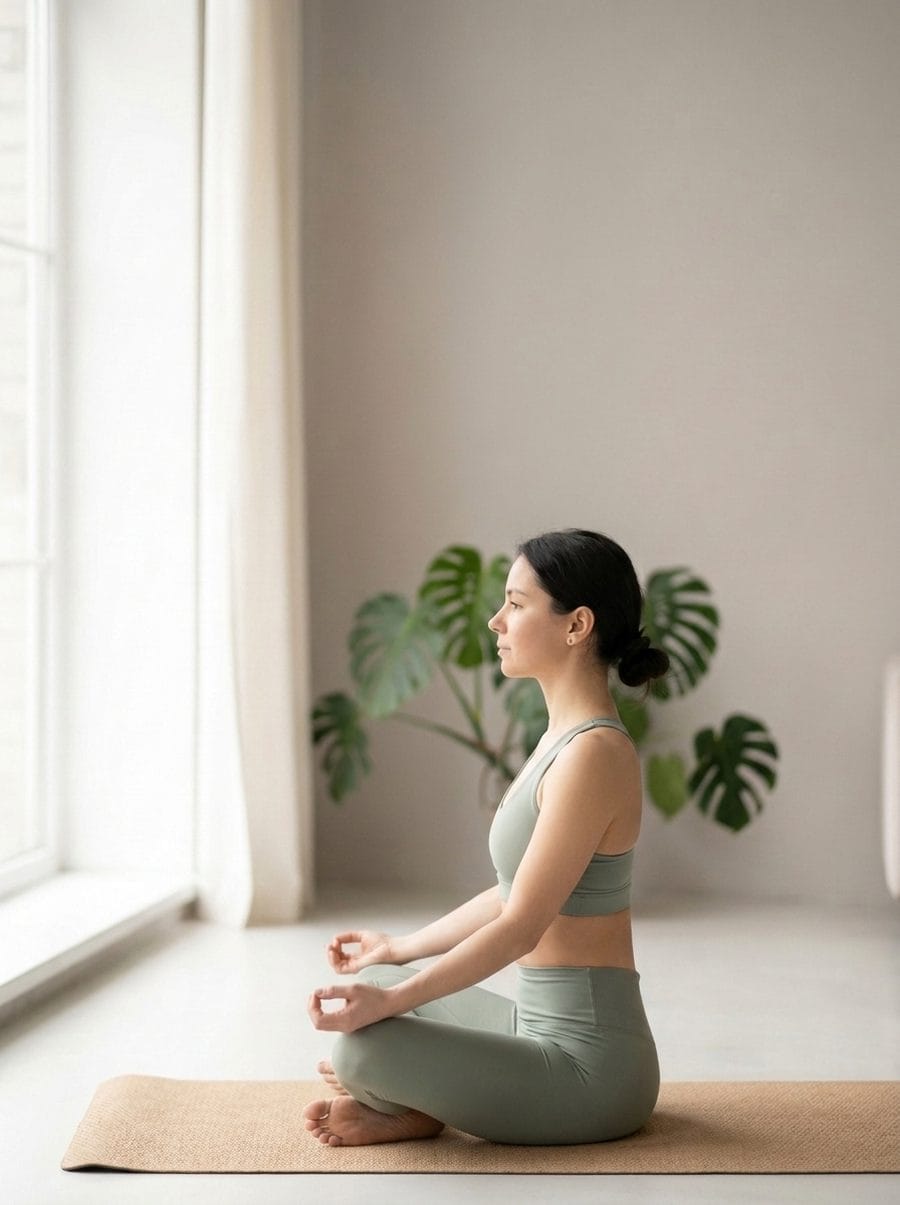
The app already bundles the morning movement into one short routine. 10-Minute Morning starts with Sun Salutation, done three times over, and then moves into seven beginner poses that sit well before breakfast.
An Ayurvedic evening
In dinacharya, evening is the time to slow down. The Before Bed routine fits: six gentle floor poses, from Child's Pose to Relaxation Pose, in 10 minutes.



You'll find more evening ideas in yoga for sleep.
Ayurvedic diet: the general principles
Ayurvedic eating isn't built on a list of forbidden foods. It rests on a handful of ideas:
- Six tastes. Sweet, sour, salty, pungent, bitter and astringent. Tradition says a regular meal includes a little of all six.
- Warm and fresh. Recently cooked, warm food is preferred.
- Hunger and timing. Eat when you're hungry, without endless snacking.
- Seasonal. Heartier food in winter, lighter food in summer.
A classic example of a simple Ayurvedic dish is kitchari: rice cooked with mung beans and mild spices. For how the ideas of sattva and moderation play out in yoga, see the sattvic diet.
What the science says
NCCIH notes that well-designed clinical trials of Ayurveda are few, and most are small. The center also flags a safety concern: some Ayurvedic preparations may contain lead, mercury or arsenic in toxic amounts. In a 2015 survey cited by NCCIH, 40 percent of people who used such preparations had elevated blood lead levels.
The takeaway is simple. A steady routine, regular meals and practice are safe and easy to understand, while powders, pills and herbal blends of unknown origin are not harmless.
Safety
Don't use Ayurveda as a reason to put off seeing a doctor. Before taking any Ayurvedic product, check with your doctor, especially if you're pregnant or breastfeeding, and tell them about every supplement you use.
Of the poses in this article, the one to watch is Legs-Up-the-Wall: it's off-limits with glaucoma, with blood pressure that's high and not under control, and while menstruating. If your knees are injured, Child's Pose is not for you. General rules are in Safety and Contraindications.
Pose cautions in this article
- Acute back pain (Cat-Cow)
- Wrist injuries — practice on your fists (Cat-Cow)
- Knee discomfort — sit on a prop (Easy Pose)
- Pregnancy — widen your knees (Child's Pose)
- Knee injuries (Child's Pose)
- Menstruation (Legs-Up-the-Wall Pose)
- Glaucoma (Legs-Up-the-Wall Pose)
- Uncontrolled hypertension (Legs-Up-the-Wall Pose)
This site is for general information and is not medical advice. If you have pain, an injury, a chronic condition, or are pregnant, check with a qualified professional before practicing.
Questions
Is Ayurveda considered medicine? In India it's one of the traditional health systems. Scientific evidence for it is still limited, so here Ayurveda is presented as cultural heritage and lifestyle guidance, not as medical care.
What's the difference between Ayurveda and yoga? Yoga is a practice: poses, breathing, meditation. Ayurveda deals with daily routine, food and the seasons. They're often combined, but they're separate systems.
How do I start with Ayurveda? Start with routine: go to bed and get up at consistent times, eat your main meal at midday, and do a short practice in the morning. You don't need herbs or preparations without a doctor's input.
What is dinacharya? It's the Ayurvedic daily routine: rising early, morning hygiene, movement, breathwork, the main meal at midday, and an early night.
Sources
- NCCIH. Ayurvedic Medicine: In Depth.
- Ashtanga Hridayam, Sutrasthana, chapter 2 (dinacharya). The classic text is paraphrased.
- Description of Agnisara Kriya, pose cautions and routine contents: the Hatha Yoga app. More on the How We Prepare Our Content page.
Read next
- Yoga for Arthritis and Osteoporosis: How to Protect Your Joints and Bones7 min read
- Ashtanga Yoga Explained: The Series, the Breath and the Difference from Hatha6 min read
- Balance Exercises: 10 Yoga Poses for Balance and Stability7 min read
- Yoga for High Blood Pressure: Safe Poses, Breathing and Limits6 min read