 Hatha Yoga
Yoga for Arthritis and Osteoporosis: How to Protect Your Joints and Bones
Hatha Yoga editorial team · Updated · 7 min read
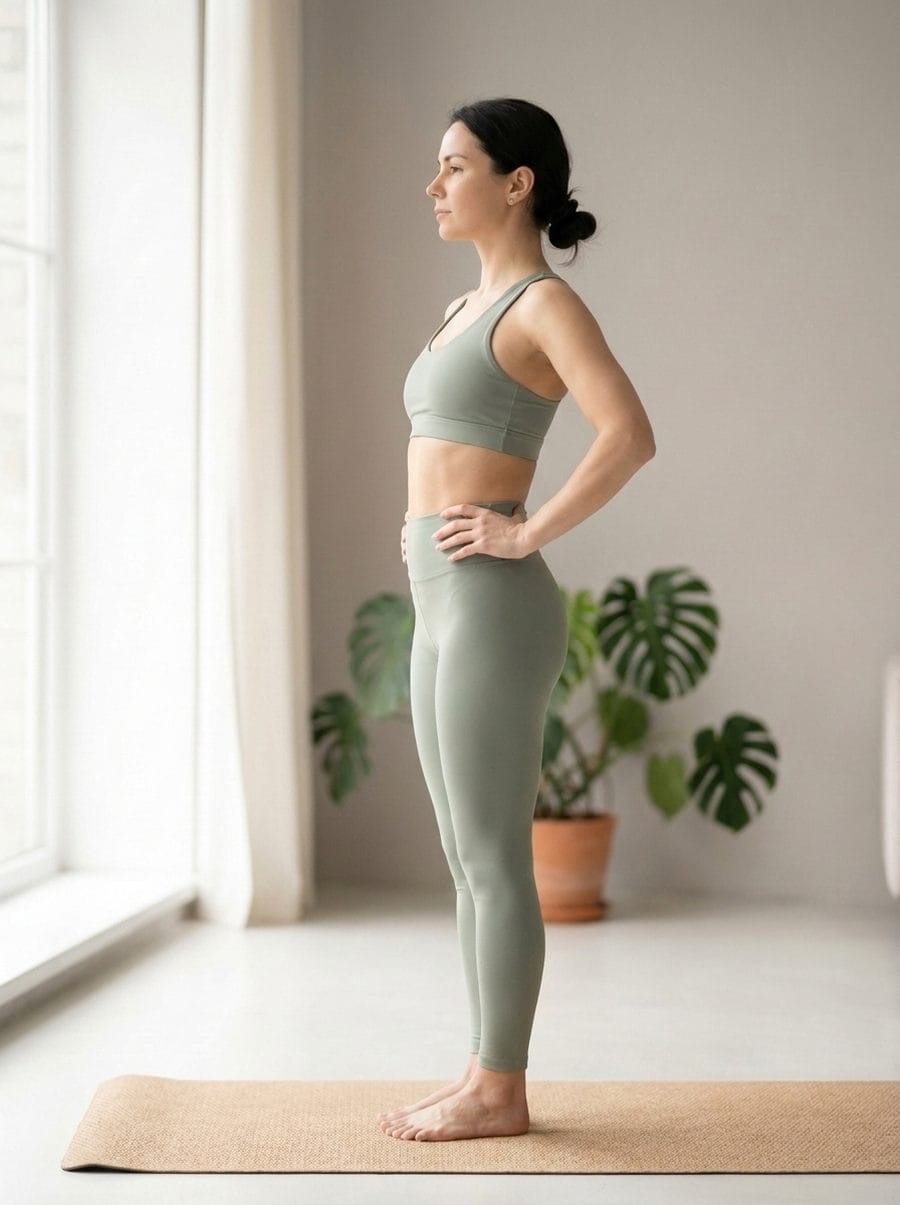
Osteoarthritis and osteoporosis both become more common after 50, and neither is a reason to stop moving. The rules differ, though: with arthritis the goal is not to overload a painful joint, with osteoporosis it's to protect the spine from deep forward bending.
Before you start, go over your plans with your doctor. Below: the research, a joint-friendly flow from the app, poses worth skipping, and symptoms that need urgent care.
Is yoga good for arthritis?
In osteoarthritis, the cartilage that cushions the ends of the bones breaks down, so the joint hurts, swells and moves less easily. Knees, hips and the small joints of the hands are affected most often. The NHS lists regular exercise among the simple measures that help with mild symptoms.
A 2019 meta-analysis pooled nine randomized trials with 640 people aged 50 to 80, mostly women and mostly with arthritis in the legs. For knee osteoarthritis, yoga eased pain and stiffness and improved function, both compared with other exercise and compared with no exercise.
Yet the authors rated the evidence as very low quality, because the results didn't hold up once possible study bias was taken into account. They found no effect on quality of life or on hand osteoarthritis, and safety was rarely reported.
Their conclusion: only a weak recommendation for yoga in knee osteoarthritis is possible for now.
Is yoga good or bad for osteoporosis?
Osteoporosis makes bones fragile, and it's often discovered only after a fracture. A 2022 systematic review, done to inform the Osteoporosis Canada guidelines, found just nine studies of people over 50 at higher risk of fracture. Certainty in the findings was very low: yoga didn't change quality of life, and results for other outcomes were mixed.
Two case series, though, described spinal fractures linked to yoga, possibly caused by excessive bending of the spine.
At the Mayo Clinic, doctors reviewed 89 cases of injuries attributed to yoga. Poses with extreme flexion and extension of the spine caused them most often. The authors advise people with osteopenia or osteoporosis to avoid extreme spinal flexion. In practice: skip any fold that curls the spine forward under load, and poses where your body weight presses down on a bent neck and upper back, such as Plow Pose or Shoulder Stand.
When to get medical help right away
Following NHS advice, get urgent help if:
- a joint is very painful after a fall or injury, you can't put weight on it, or it looks out of place;
- after an injury, the area around a joint tingles or has lost feeling;
- a joint is hot and swollen, especially with a fever or chills.
Make a regular appointment if joint pain disrupts your day or your sleep, is getting worse or returning, hasn't improved after two weeks, or morning stiffness lasts longer than half an hour. With osteoporosis, see a doctor about any sudden, severe back pain too.
How to do yoga with arthritis or osteoporosis
- No extra pain. A joint shouldn't hurt more during practice or the next day. If it does, make the movement smaller or drop the pose.
- Movement before holding. Smooth repetitions with the breath warm the joints more gently than long static holds.
- Props are smart. A blanket under the knees, a cushion under the hips, a wall within reach: the app itself suggests them for many poses.
- A long spine. With osteoporosis, hinge forward from the hips with a flat back and don't reach your forehead toward your knees.
- Balance by a wall. Balance poses build leg strength and steadiness, and a wall keeps you safe from a fall, which matters most when bones are fragile.
Yoga poses for your joints
Joint warm-up
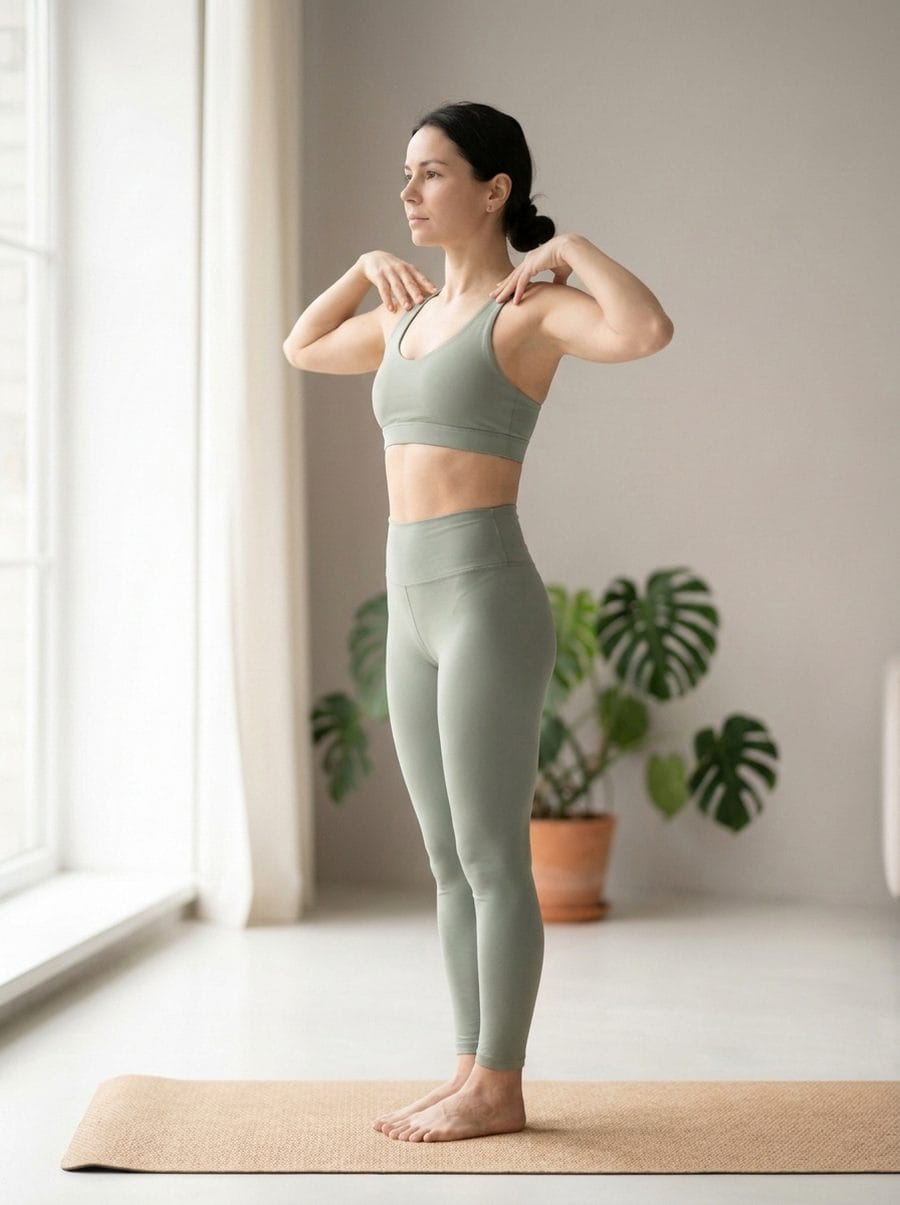
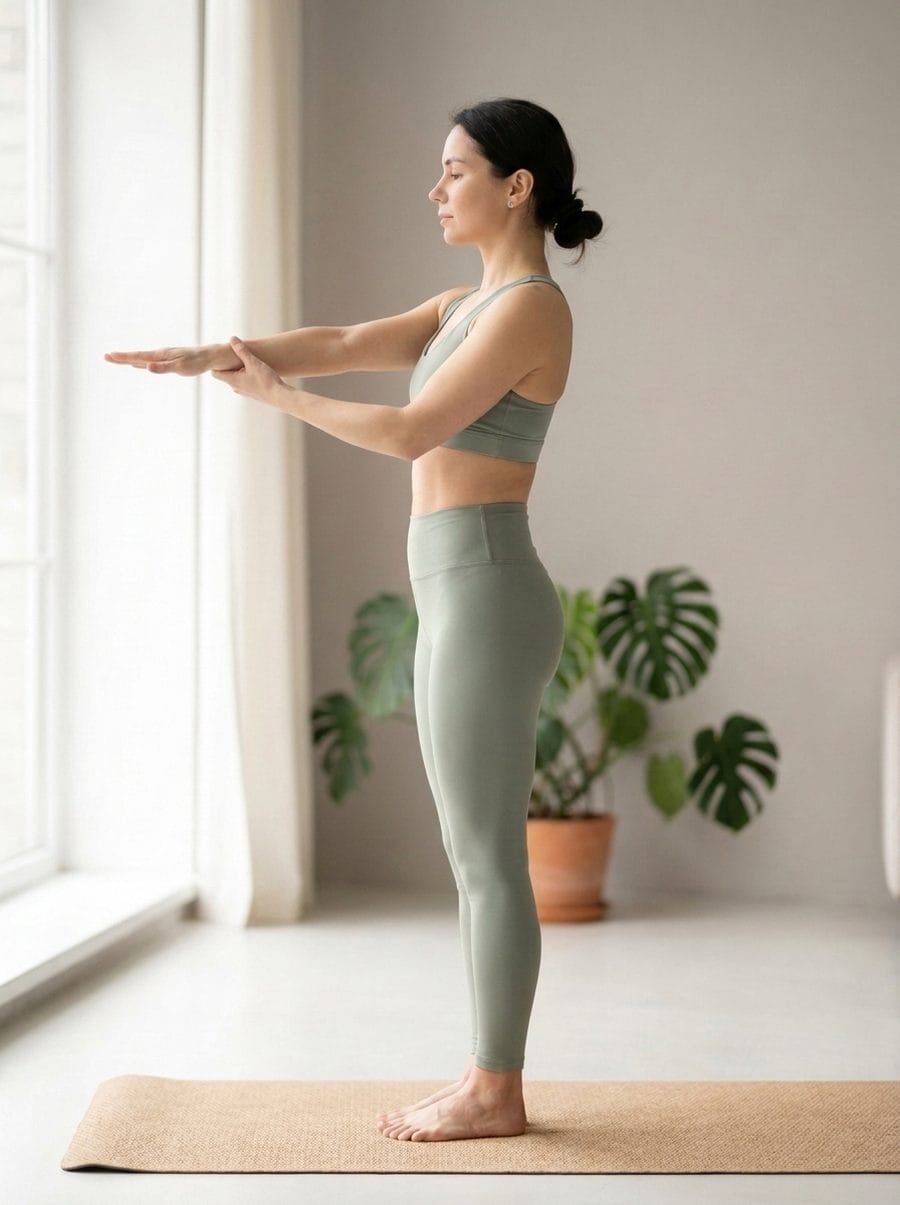
Shoulder Rolls, Wrist Warm-Up and Hip Circles gently move the shoulders, wrists and hips. Upward Salute Flow opens the chest and links movement with the inhale from the start.
Strength and balance
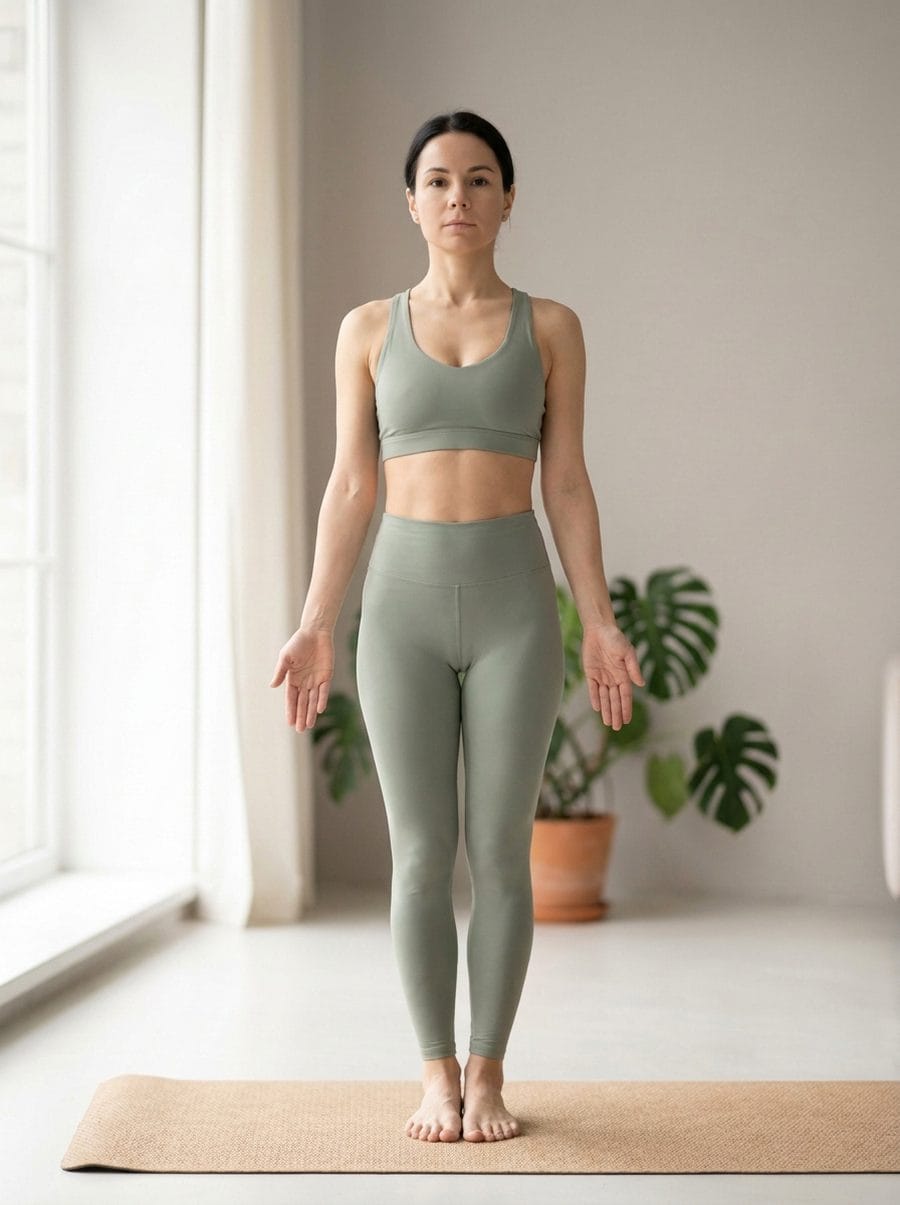
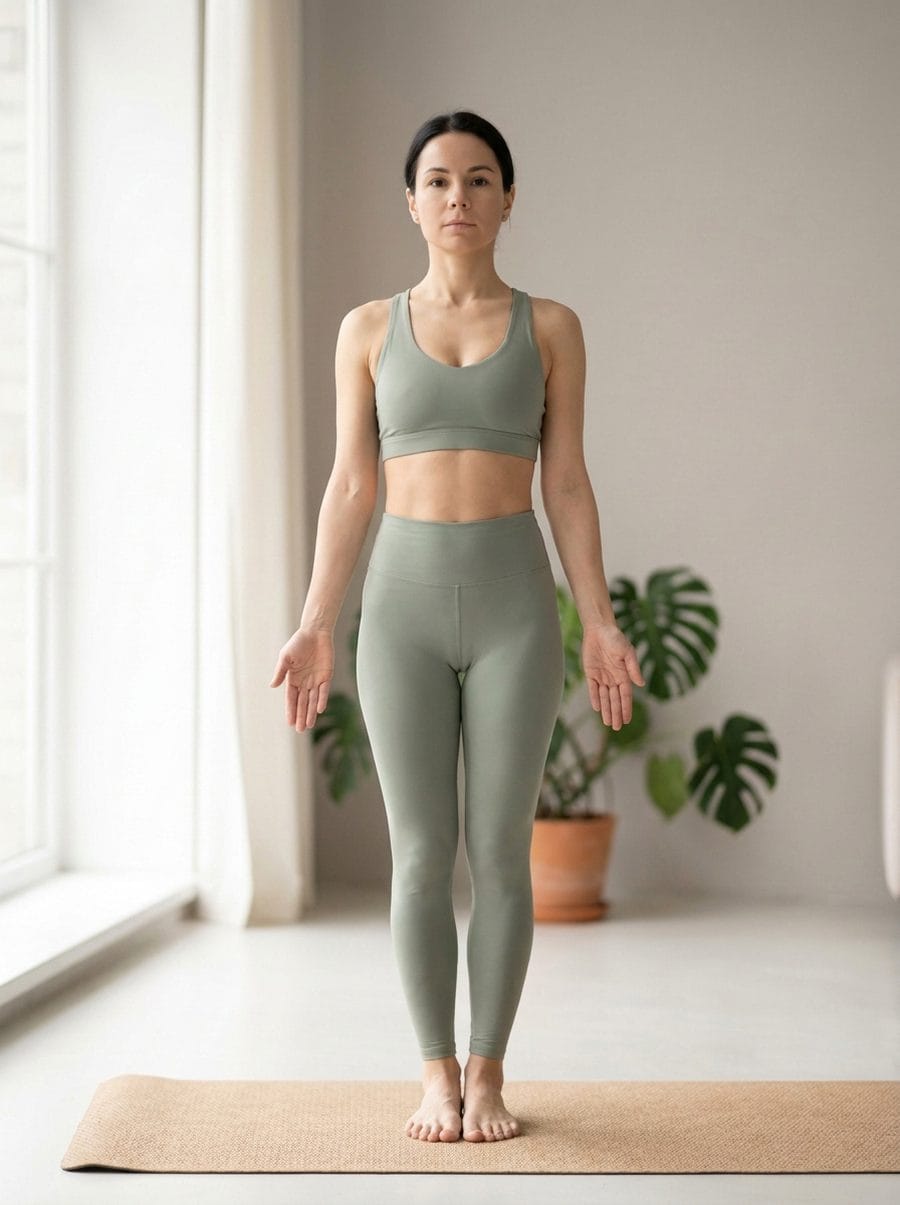
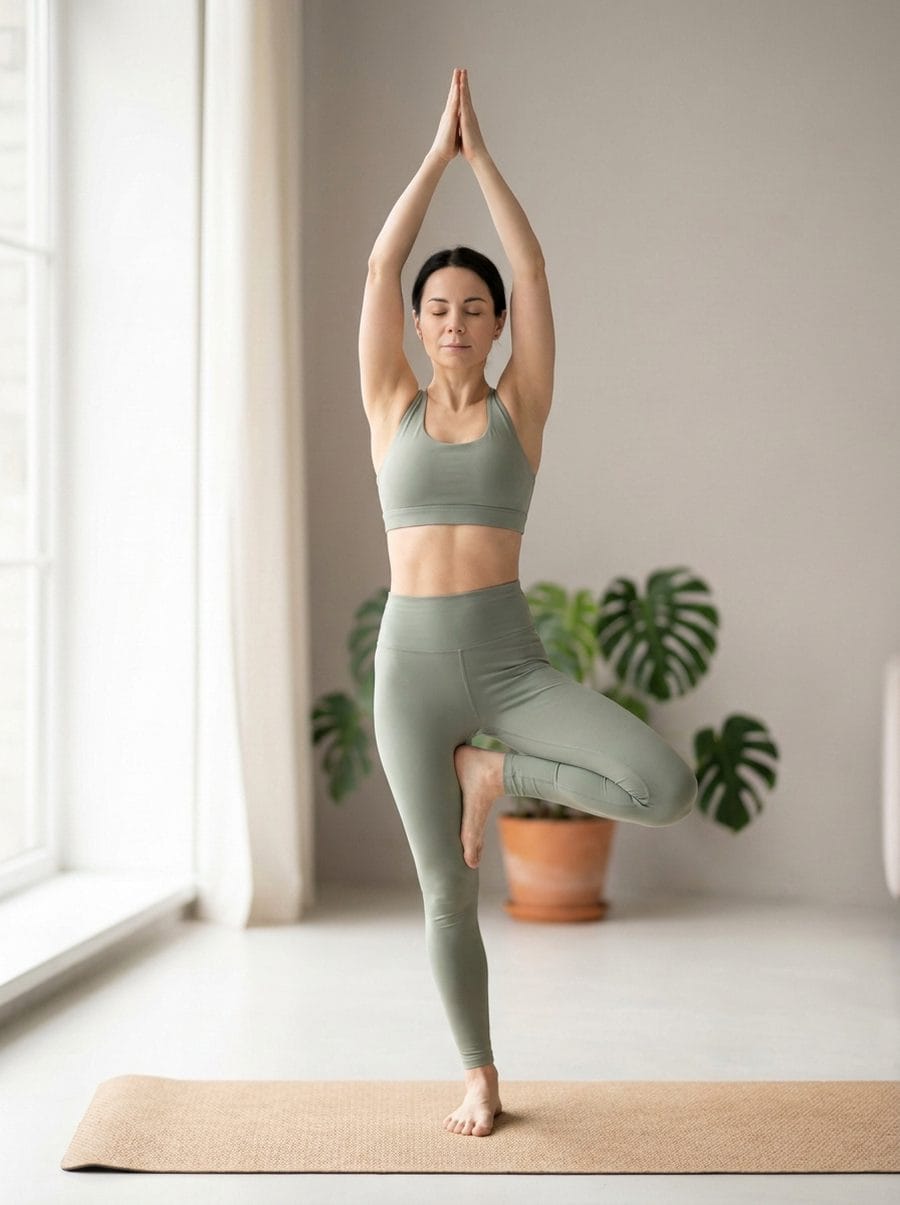
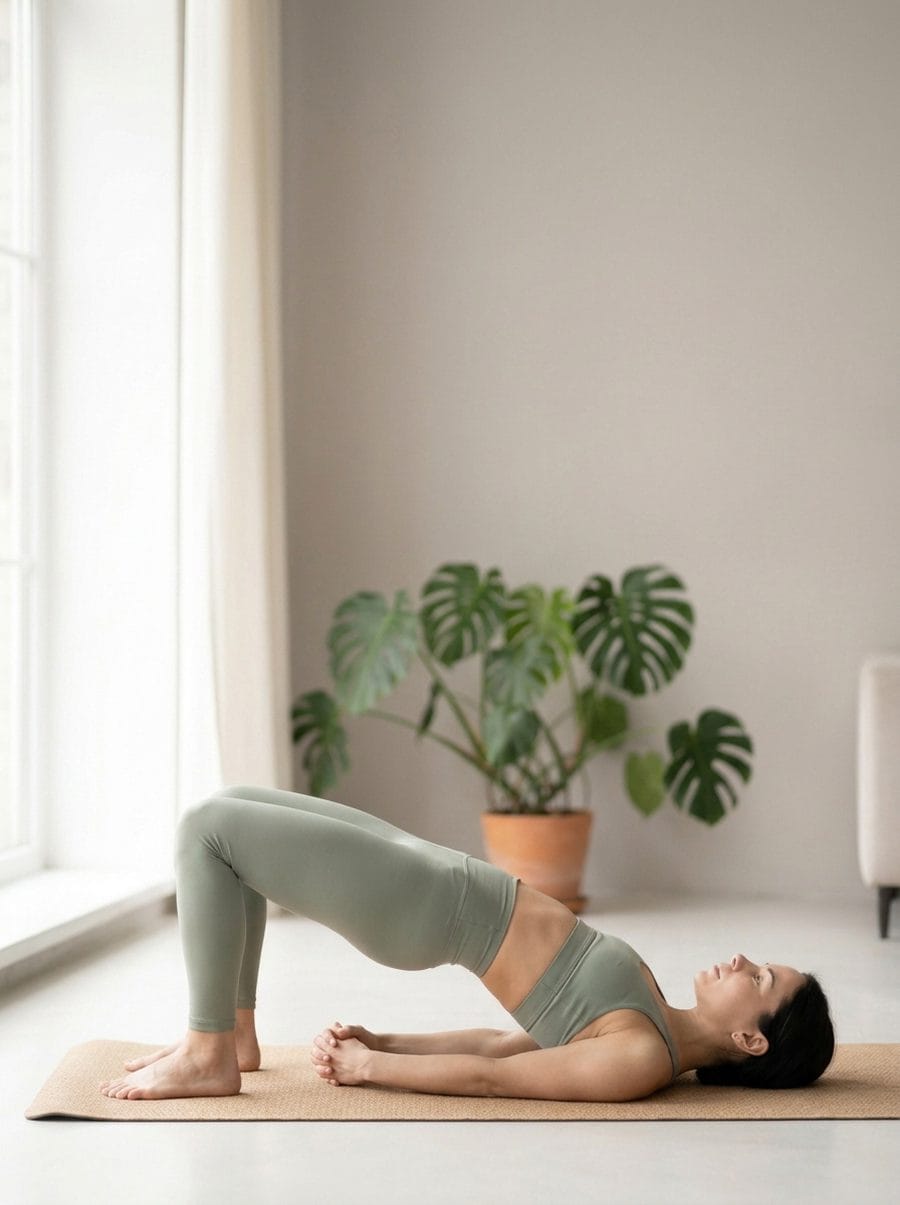
Mountain Pose teaches a steady stance, and Tree Pose trains balance; if you get dizzy, the app suggests doing it by a wall. Bridge Pose builds strength in your seat and the backs of your thighs from a lying position, with no squatting involved.
Stretching and rest
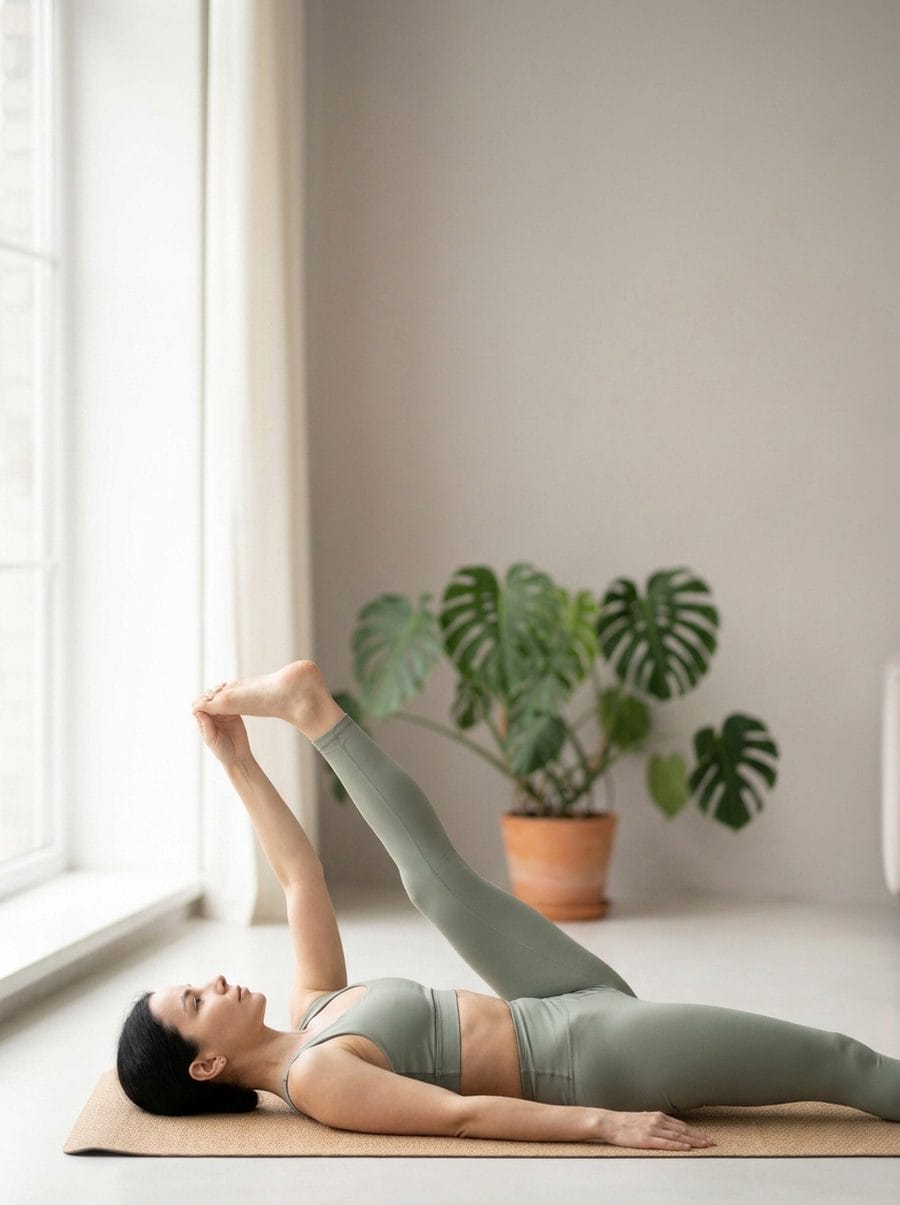
Reclining Hand-to-Big-Toe Pose gives the leg a long stretch with the spine resting on the mat; a strap helps if the back starts to lift. Relaxation Pose ends the session.

Flow with the Breath: a 12-minute joint routine
This 14-step program moves your joints and spine in rhythm with your breath: neck, shoulders, hips, an overhead reach and side bends, Chair Flow and Forward Fold Flow, wrists, Cat-Cow, rocking from all fours back to Child's Pose, a bridge, a twist, knees to chest and rest. It's a beginner-level program with no complicated poses.
- With painful knees, skip Chair Flow: in the app it carries the "knee injuries" limit with no qualifier. Pad the knees with a folded blanket for Tabletop to Child's Pose Flow.
- With osteoporosis, take out Forward Fold Flow and round your back only slightly in Cat-Cow. Keep Supine Twist Flow gentle.
- The Neck Warm-Up waits for a day free of sharp neck pain and dizziness; Side Bend Flow, for a day without acute lower back pain.
Safety: which yoga poses to skip
Arthritis and osteoporosis don't appear as flags in the app, so go by the closest limits it does list.
- Knees. If a knee hurts or swells, skip poses with a plain "knee injuries" limit: Chair Pose and Chair Flow, Child's Pose, Hare Pose, Goddess Pose, Garland Pose, Warrior I and Warrior II, Thunderbolt Pose and Half Lotus Pose. Where the app adds advice, such as a blanket or a seat on a prop, follow it.
- Hips. The app rules out Archer Pose, Vishnu's Couch Pose and Stupa Pose with hip joint injuries.
- Shoulders and hands. Upward Salute isn't suitable with shoulder joint injuries. If your wrists hurt, choose poses without weight on the hands, and do Cat-Cow on your fists, as the app suggests.
- Osteoporosis. Leave out folds that curl the back forward (Seated Forward Fold and Standing Forward Fold), Plow Pose, Shoulder Stand and Headstand. Twists and backbends stay gentle.
There's more on knees in Yoga for Knees and Feet, and general rules on the Safety and Contraindications page.
Pose cautions in this article
- Acute wrist injuries (Wrist Warm-Up)
- Dizziness — practice near a wall (Tree Pose)
- Neck injuries (Bridge Pose)
- Flare-up of lower back pain (Bridge Pose)
- Use a strap if your back lifts off the floor (Reclining Hand-to-Big-Toe Pose)
This site is for general information and is not medical advice. If you have pain, an injury, a chronic condition, or are pregnant, check with a qualified professional before practicing.
Questions
Does yoga help knee arthritis? In studies, yoga reduced knee pain and stiffness and improved function, but the quality of that evidence is very low. Yoga can be part of an exercise plan you've agreed on with your doctor.
Can yoga make arthritis worse? It can if you push through pain or hold poses that load a sore joint for a long time. Gentle, pain-free movement is the safer approach.
Is yoga safe with hip arthritis? Usually, as long as the pose doesn't hurt. Drop the three poses the app excludes for hip joint injuries, and don't force hip openers.
Is yoga bad for osteoporosis of the spine? Not if you steer clear of curled-spine folds, Plow Pose, Shoulder Stand and Headstand. Studies link spinal fractures to strong bending of the spine.
Sources
- NHS. Osteoarthritis and Joint pain. National Health Service.
- Lauche R, et al. Yoga for Osteoarthritis: a Systematic Review and Meta-analysis. Current Rheumatology Reports, 2019.
- Kim KV, et al. Effect of yoga on health-related outcomes in people at risk of fractures: a systematic review. Applied Physiology, Nutrition, and Metabolism, 2022.
- Lee M, et al. Soft Tissue and Bony Injuries Attributed to the Practice of Yoga: A Biomechanical Analysis and Implications for Management. Mayo Clinic Proceedings, 2019.
- Pose technique and cautions, and sequence contents: the Hatha Yoga app. More on the How We Prepare Our Content page.
Read next
- Ashtanga Yoga Explained: The Series, the Breath and the Difference from Hatha6 min read
- Ayurveda Explained Simply: The Basics and a Daily Routine (Dinacharya)5 min read
- Balance Exercises: 10 Yoga Poses for Balance and Stability7 min read
- Yoga for High Blood Pressure: Safe Poses, Breathing and Limits6 min read