 Hatha Yoga
Balance Exercises: 10 Yoga Poses for Balance and Stability
Hatha Yoga editorial team · Updated · 7 min read
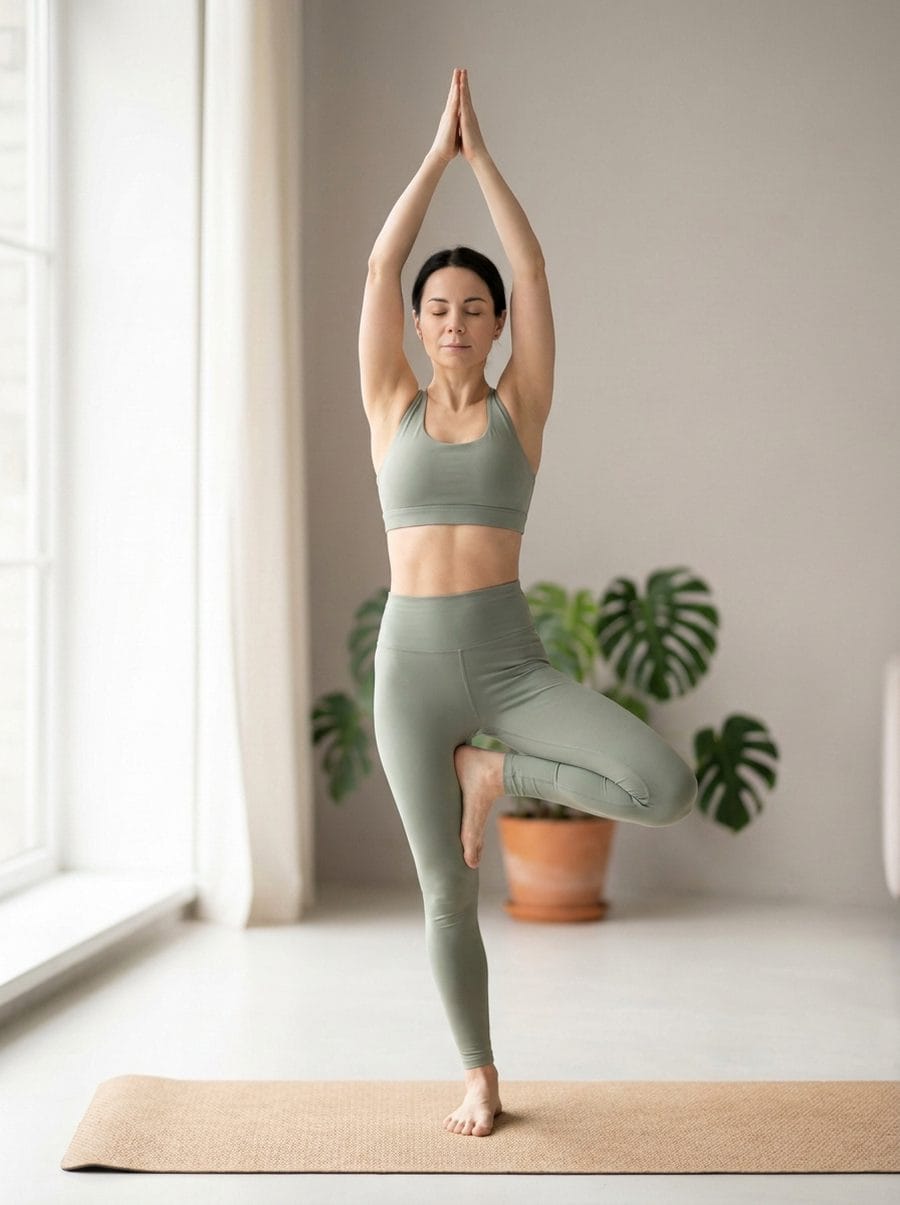
Good balance isn't just for gymnasts. It's what catches you on an icy sidewalk, on a lurching subway car or halfway up a stepladder. You train balance the way you train strength: regularly, and by making the task a little harder over time.
This guide gathers 10 yoga poses for balance, from a steady stance to Half Moon Pose, two ready-made routines of 15 and 20 minutes, and the rules that keep balance exercises at home free of falls.
Why train your balance
At least a third of people over 65 fall at least once a year. That figure comes from a 2019 Cochrane review that pooled 108 trials with more than 23,000 participants aged 60 and up. In those trials, balance and functional exercises cut the rate of falls by roughly a quarter, and the authors judged the certainty of that finding to be high.
Does yoga help improve balance? The evidence is thinner. A 2016 meta-analysis (6 trials, 307 people over 60) found that yoga brought a small improvement in balance and a moderate one in mobility. Whether that prevents falls, the authors couldn't say.
A 2026 review of 21 studies was even more cautious: after a statistical correction, the benefit for balance in motion was no longer significant, and no clear effect turned up for standing still on one spot.
The practical takeaway is simple. Yoga balance poses are one way to train balance, and progress comes from doing them often and making them gradually harder, not from any single magic pose. In Britain, the NHS advises adults over 65 to do activities for strength, balance and flexibility on at least two days a week.
What keeps you balanced
Your body stays upright using three channels. Your feet feel the ground, your eyes check the horizon, and your inner ear tracks the position of your head. Leg and trunk muscles correct every tilt as it happens, so balance work trains your legs and your attention at the same time.
- The whole foot. Spread your weight between the heel, the inner ball of the foot and the outer ball of the foot. Don't grip with your toes.
- One fixed point. Pick a spot in front of you that doesn't move. When your eyes wander, your body sways after them.
- An engaged core. Draw your belly in slightly and let the top of your head reach toward the ceiling.
- Steady breathing. Holding your breath makes you rigid, and you lose balance faster.
First Balances: a 15-minute routine for beginners
If even Tree Pose leaves you wobbling, begin with the First Balances program. It packs 16 poses into 15 minutes, and your base narrows step by step: first your feet are wide apart, then close together, then you're down to one leg.
- Warming up the legs. Hip Circles, Chair Flow and Forward Fold Flow.
- Two feet. Warrior I Flow, High Lunge, Warrior II and Reverse Warrior teach you to hold your center with different stance widths.
- One foot. Standing Knee-to-Chest Balance, Half Tree Pose and the full Tree Pose.
- Rest. Staff Pose, Seated Forward Fold, Bridge Pose, Knees-to-Chest Pose and Savasana.
The app rates the program as intermediate overall, but most of its poses are level 1.
10 yoga poses for balance
The poses run from easy to hard. The app's base hold for them is 20 to 30 seconds, and you do the one-sided poses on both legs.
The foundation: a steady stance
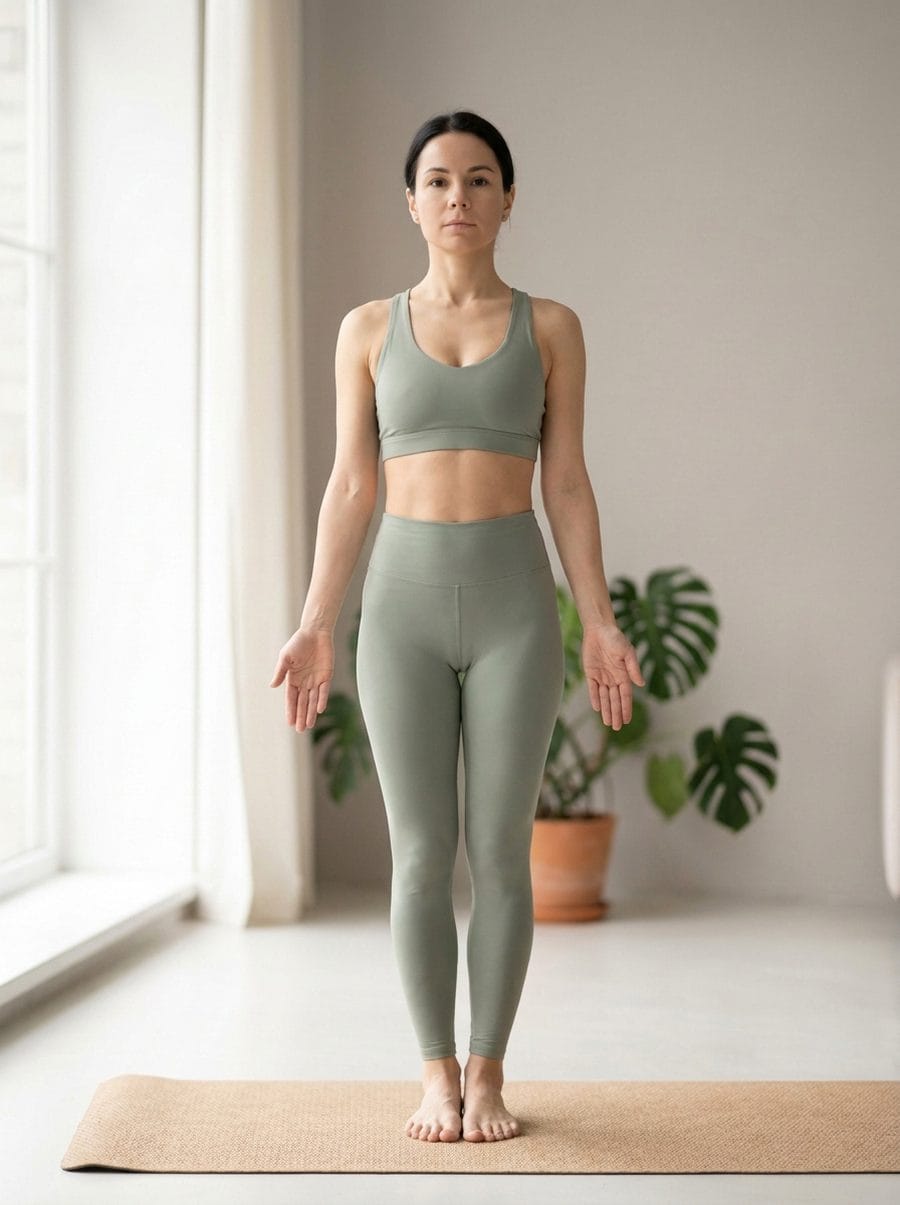
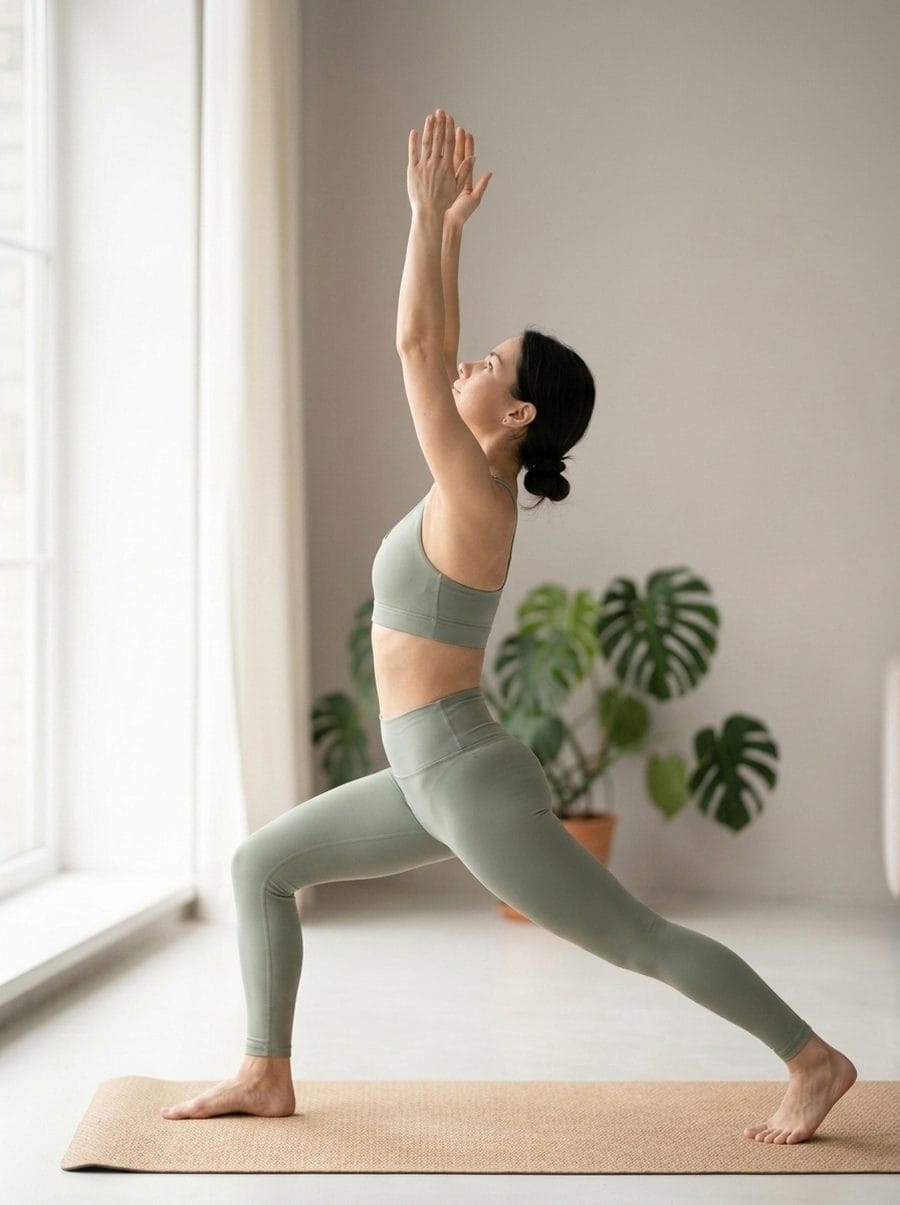
Mountain Pose looks simple, yet it's where you learn to put weight through the whole foot. High Lunge narrows your base from side to side. Half Tree Pose is your first time on one leg, and you can keep the toes of the other foot on the floor.
One leg: Tree Pose and the steps toward it
In Tree Pose, your foot rests on the inside of the thigh or the shin, never on the knee. Press the foot into the thigh and the thigh back into the foot: those two opposing pushes are what hold the pose.
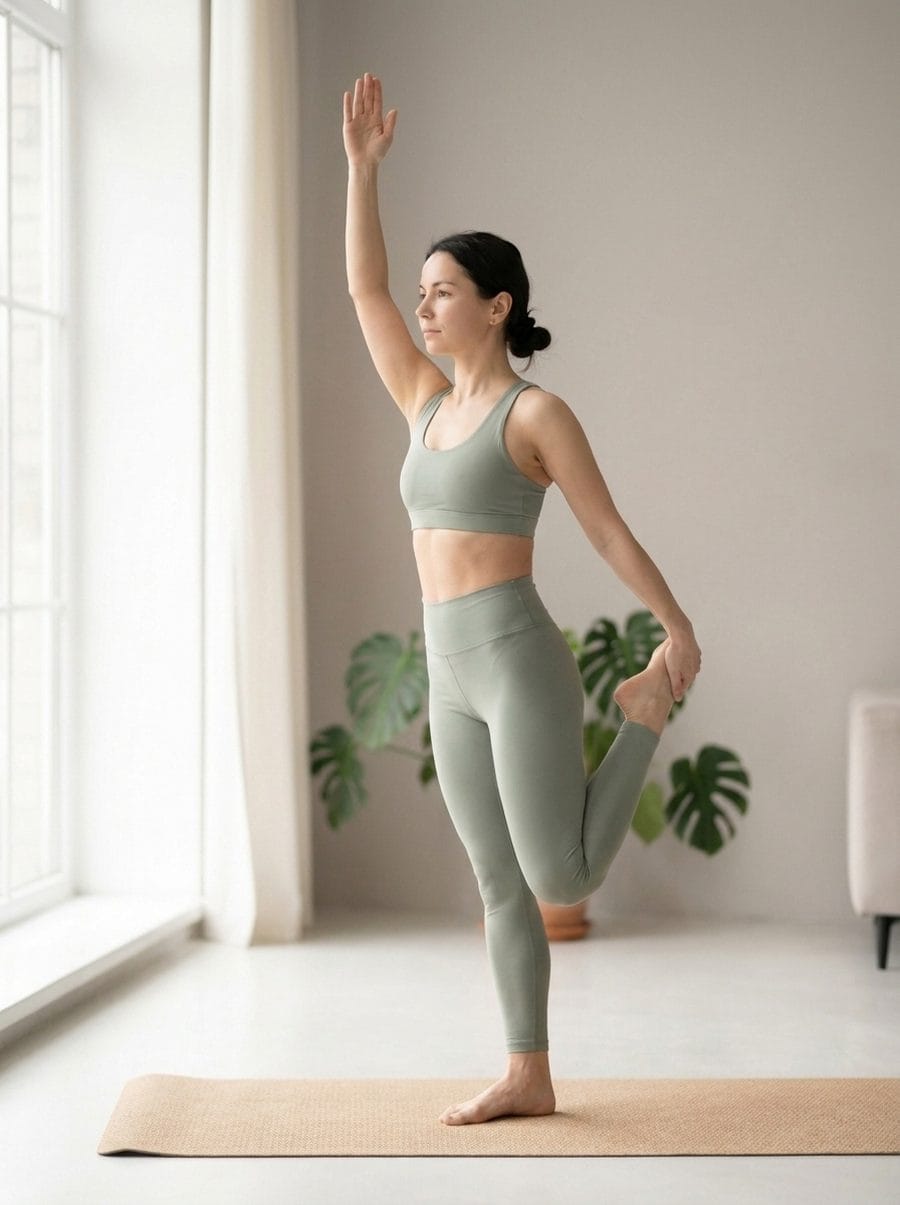
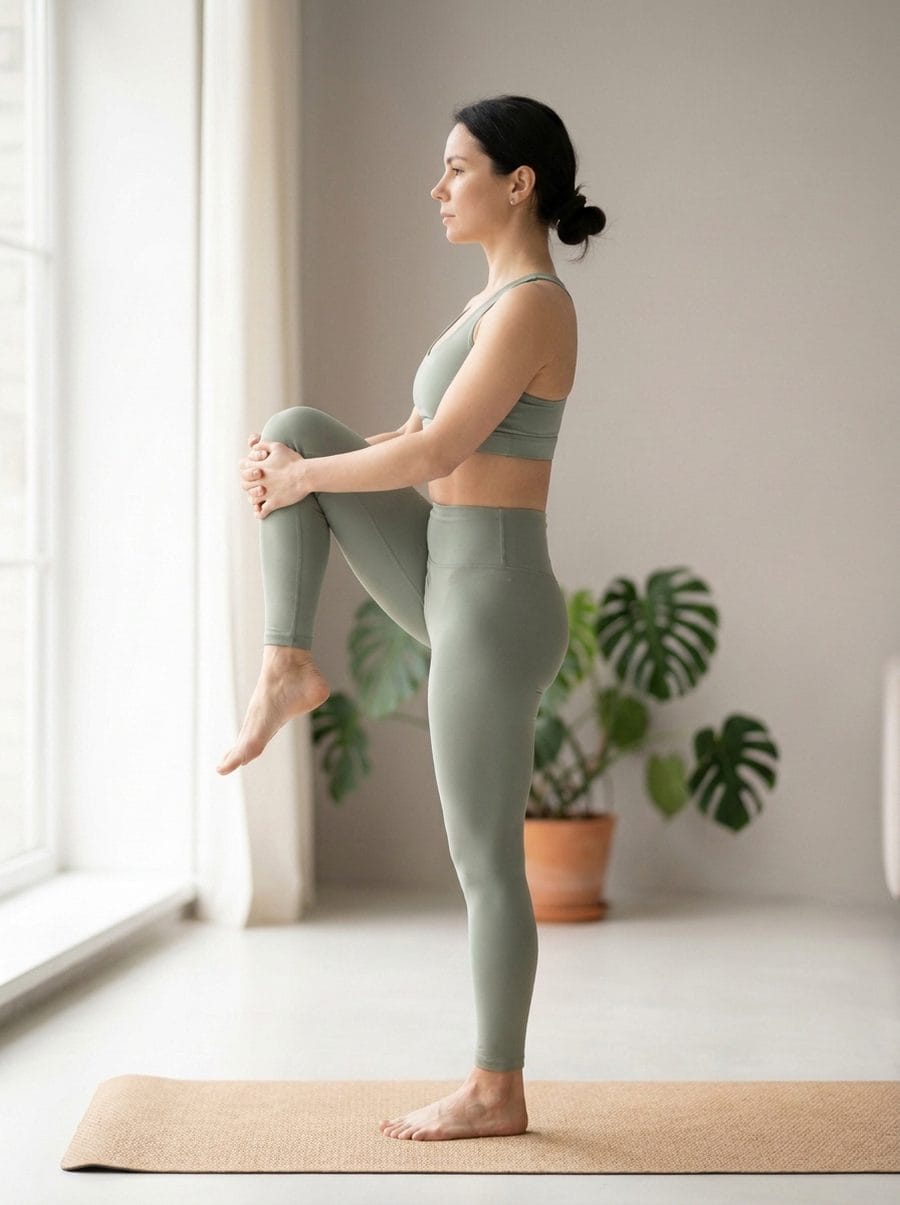
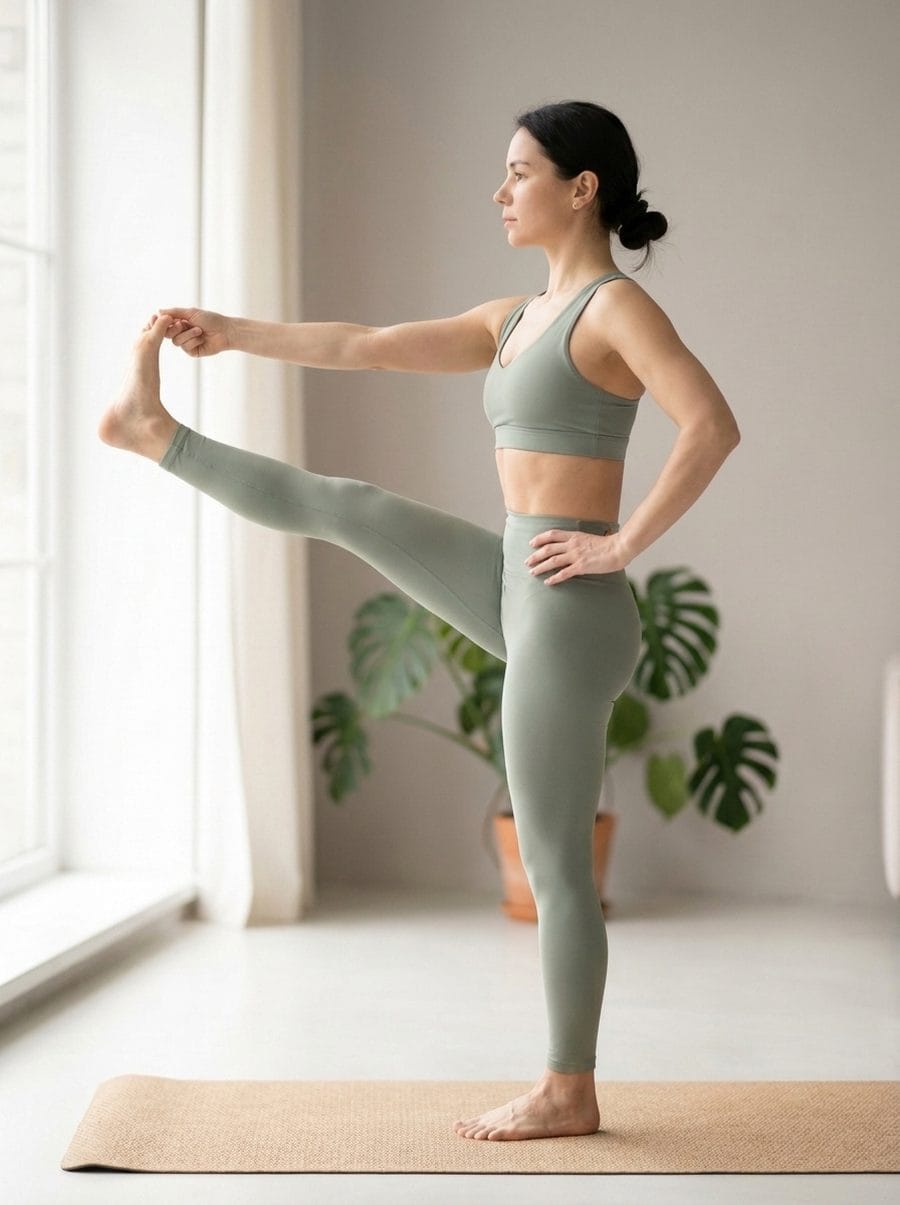
Standing Knee-to-Chest Balance and Extended Hand-to-Big-Toe Pose get you used to standing while the other leg is lifted in front. If tight hamstrings won't let the leg straighten, keep the knee bent.
Advanced balance poses
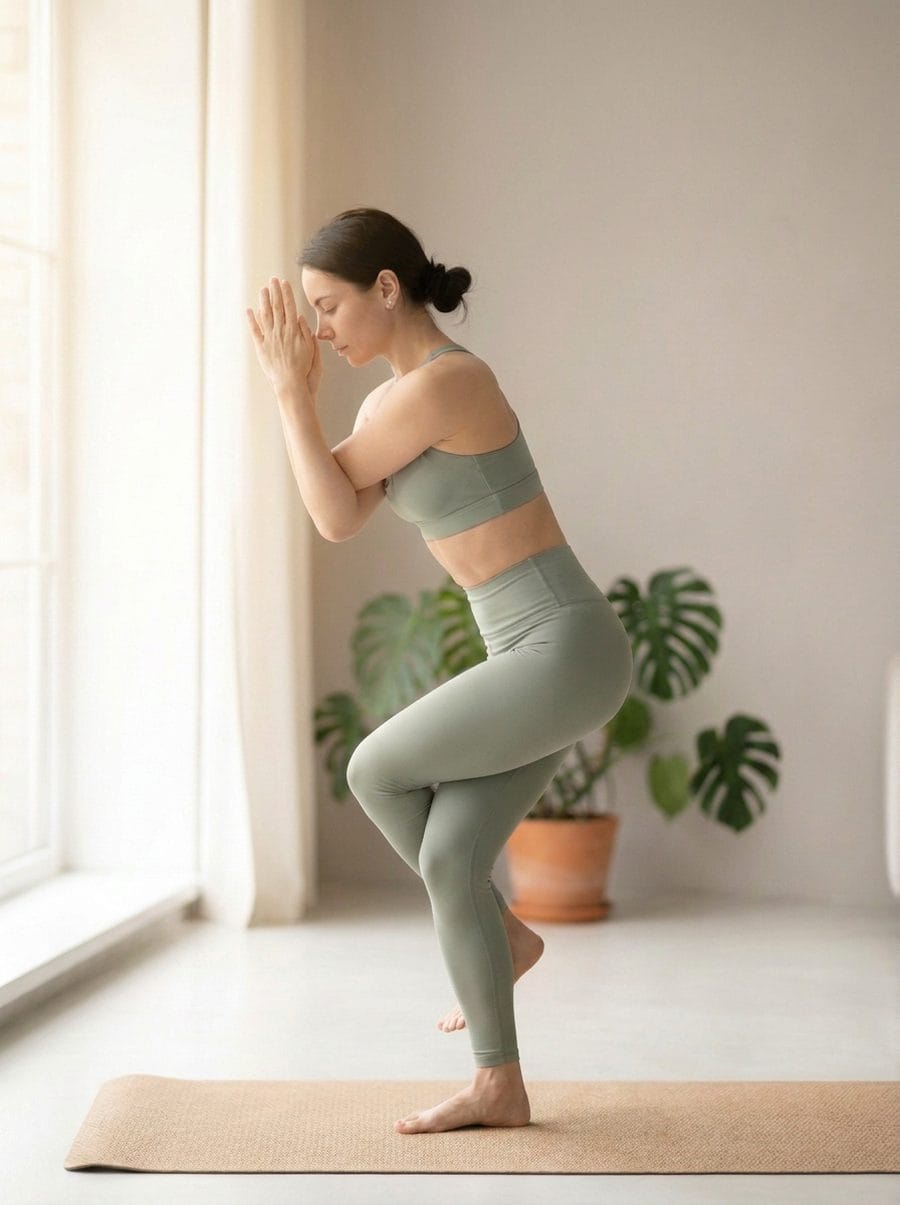
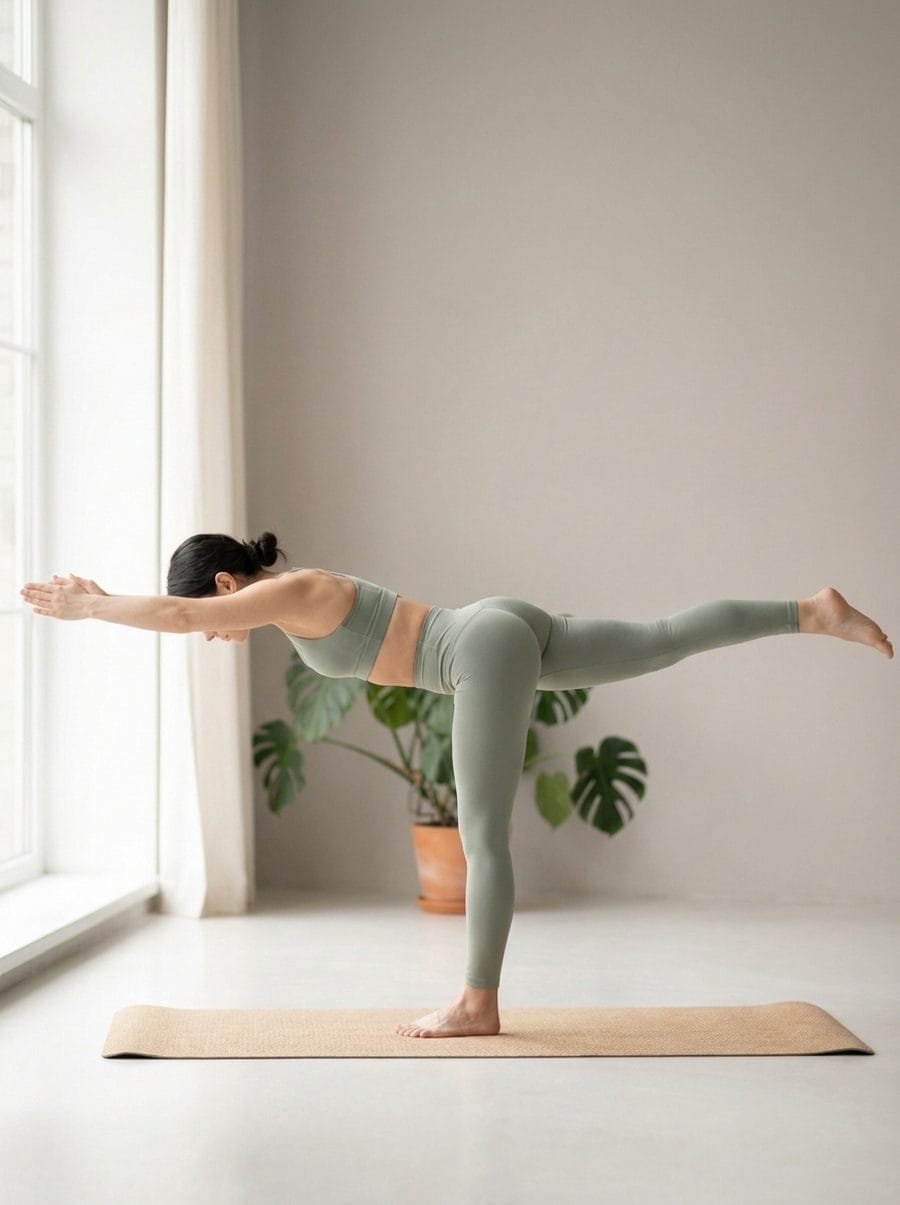
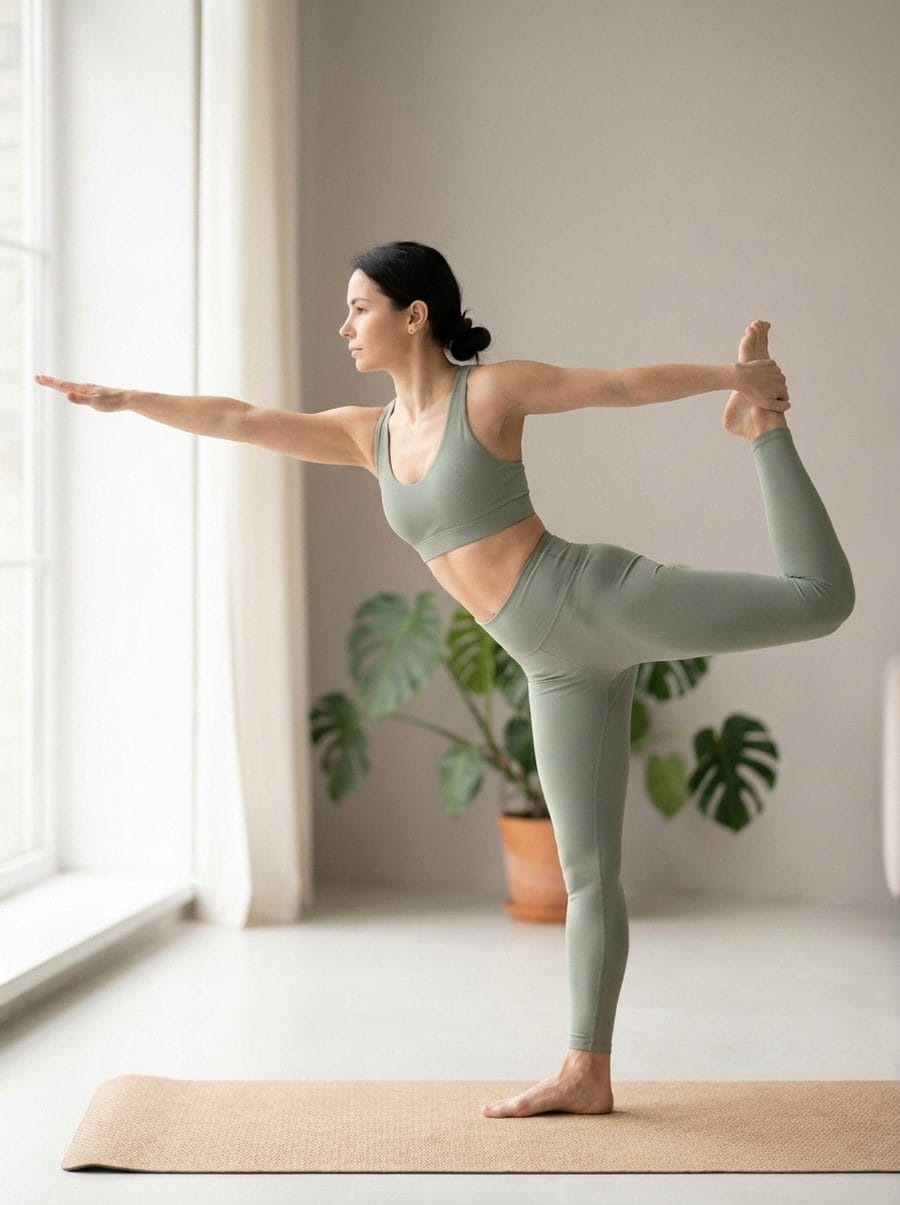
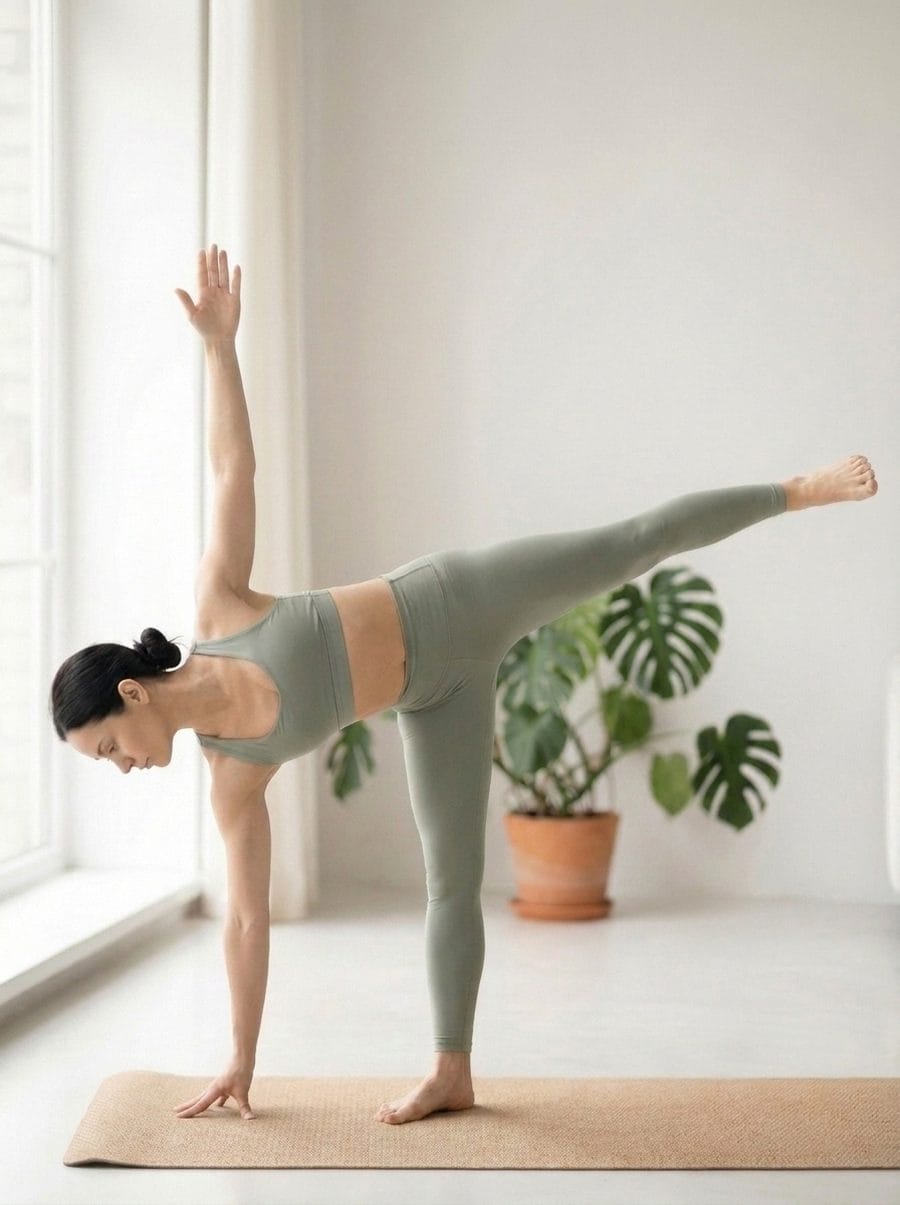
In Eagle Pose, arms and legs cross and wind around each other, leaving you a very narrow base. In Warrior III, your torso and lifted leg stretch into one line parallel to the floor. Dancer Pose adds a backbend, and Half Moon Pose turns the pelvis open to the side.
All four are level 2 poses, so move on to them once Tree Pose feels solid on both legs.
Balance & Focus: a 20-minute balance yoga sequence
When Tree Pose is steady, step up to the Balance & Focus program. After two rounds of Sun Salutation, six balances follow in a row: Tree, Eagle, Extended Hand-to-Big-Toe, Warrior III, Dancer and Half Moon. Standing Forward Fold and Child's Pose give your standing leg a rest, and the practice ends with almost five minutes in Savasana.
For a short balance warm-up, try the Equilibrium flow: Tree Pose and Boat Pose in a loop, timed to your breath. Balancing on your hands, like Crow Pose, has a program of its own: Arm Balances: Path to Crow.
How to make balance exercises harder
- Start at a wall. Stand side-on to a wall and brush it with your fingertips whenever you tip. Leaning on a wall still leaves your muscles plenty to do, so going back to it is nothing to be embarrassed about.
- Then go without support. Keep your hand close to the wall without touching it.
- Raise your arms. Lifted arms move your center of gravity higher, which makes the pose harder to hold.
- Come out slowly. Lower the lifted leg with control instead of dropping it. Control on the way out is balance training too.
You can also practice standing on one leg away from the mat, while you brush your teeth or wait for the kettle. Those minutes don't replace a routine, but they get your body used to balancing every day.
Balance and safety
Clear the space around your mat and move anything with sharp corners out of the way. Practice barefoot on a surface that doesn't slip.
- Dizziness. Skip Half Moon Pose and Standing Knee-to-Chest Balance, and practice Tree Pose with a wall beside you.
- Blood pressure. With high blood pressure, skip Warrior III. With low blood pressure, skip Half Moon Pose.
- Injuries. Skip Dancer Pose with a shoulder or lower back injury, and Standing Knee-to-Chest Balance with a knee or ankle injury. In Eagle Pose with a knee injury, don't hook your foot behind your shin.
If your balance has gotten worse suddenly, you feel dizzy for no clear reason, or you've started tripping and falling more often, see a doctor first. Changes like these can be linked to the inner ear, blood pressure or medications. For the full set of general precautions, see Safety and Contraindications.
Pose cautions in this article
- Balance problems — keep your hands on your hips (High Lunge)
- Balance disorders — stand near a wall (Half Tree Pose)
- Dizziness — practice near a wall (Tree Pose)
- Knee and ankle injuries (Standing Knee-to-Chest Balance)
- Dizziness (Standing Knee-to-Chest Balance, Half Moon Pose)
- Hamstring injuries — keep your knee bent (Extended Hand-to-Big-Toe Pose)
- Knee injuries — don't hook your foot behind your shin (Eagle Pose)
- High blood pressure (Warrior III)
- Balance problems — use a support (Warrior III)
- Shoulder and lower back injuries (Dancer Pose)
- Low blood pressure (Half Moon Pose)
This site is for general information and is not medical advice. If you have pain, an injury, a chronic condition, or are pregnant, check with a qualified professional before practicing.
Questions
How can I improve my balance at home? Stand on one leg for half a minute every day, at a wall to begin with. On two or three days of the week, add the First Balances routine, and once Tree Pose is steady, move on to Balance & Focus.
What are the best yoga poses for balance for beginners? Mountain Pose, Half Tree Pose, Tree Pose and Standing Knee-to-Chest Balance. They're level 1 or 2, and all of them work well next to a wall.
Why can't I balance on one leg? The usual culprits are wandering eyes, weight on the edge of the foot and holding your breath. A difference between your right and left leg is normal. If you're suddenly much less steady than before for no visible reason, see a doctor.
How often should I do balance exercises? Short one-leg stands can be a daily habit, and a full routine suits two or three sessions weekly. For adults over 65, the NHS recommends strength, balance and flexibility work on at least two days a week.
Sources
- Sherrington C, et al. Exercise for preventing falls in older people living in the community. Cochrane Database of Systematic Reviews, 2019.
- Youkhana S, et al. Yoga-based exercise improves balance and mobility in people aged 60 and over: a systematic review and meta-analysis. Age and Ageing, 2016.
- Guo P, et al. Effects of yoga on lower-extremity muscle strength, balance, and quality of life across diverse older adult populations: a systematic review and meta-analysis. Experimental Gerontology, 2026.
- NHS. Physical activity guidelines for older adults.
- Pose technique, levels and cautions, and sequence contents: the Hatha Yoga app. More on the How We Prepare Our Content page.
Read next
- Yoga for Arthritis and Osteoporosis: How to Protect Your Joints and Bones7 min read
- Ashtanga Yoga Explained: The Series, the Breath and the Difference from Hatha6 min read
- Ayurveda Explained Simply: The Basics and a Daily Routine (Dinacharya)5 min read
- Yoga for High Blood Pressure: Safe Poses, Breathing and Limits6 min read