 Hatha Yoga
Standing Knee-to-Chest Balance
Ardha Utthitahasta Pādāṅguṣṭhāsana
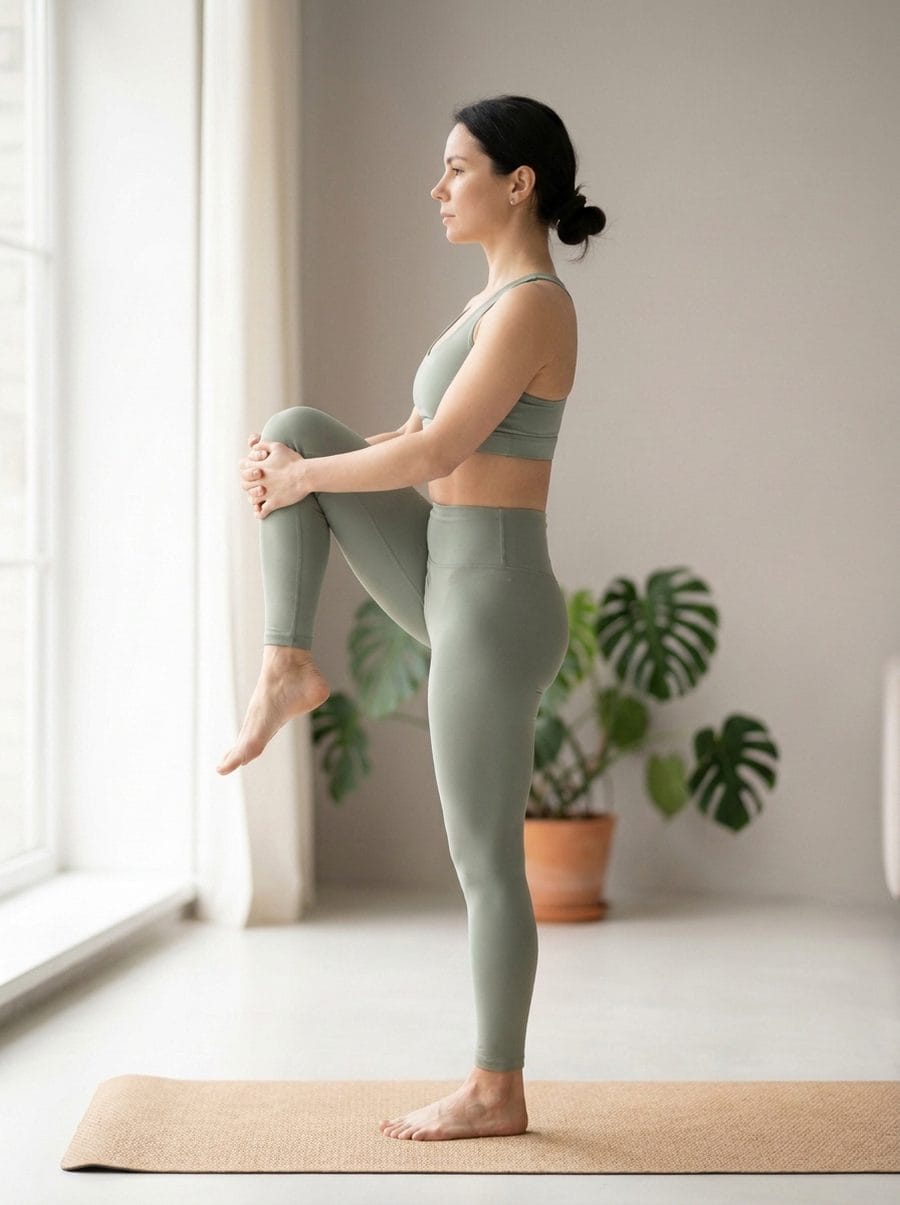
Standing Knee-to-Chest Balance, or Ardha Utthitahasta Padangushthasana, is about the most intuitive one-legged pose there is: you stand tall and use both hands to draw the other knee up toward your chest. It's rated intermediate. In the First Balances sequence it opens the run of single-leg poses, at 25 seconds per side, followed by Half Tree Pose and then full Tree Pose.
How to do it
- EnterStanding, shift your weight onto one leg. Bend the other knee, wrap your hands around your shin, and draw the knee up.
- HoldKeep your standing leg straight, with your weight spread across the whole foot. Lengthen your spine up, draw your shoulder blades down, and fix your gaze on one point.
- ExitLower your foot to the mat and switch sides.
More detail
Before you lift a leg, spend a moment in Mountain Pose and notice how your weight spreads across the foot: heel, base of the big toe, base of the little toe. Move all of your weight onto the standing leg first, and only then let the other foot leave the floor.
Hold the shin a little under the knee and bring the knee to your chest, not your chest to the knee. The standing leg is straight, but don't lock that knee. Rest your gaze on a fixed spot at eye level, six to ten feet ahead.
While balance keeps slipping away, stand sideways to a wall: one hand holds the knee, the other palm touches the wall.
Benefits
Trains balance, opens the hips, and prepares you for balance poses.
The pose trains balance, since your standing foot and lower leg keep making tiny corrections. The hugged knee gently stretches the glute and the back of the bent leg's thigh, and a spine reaching upward builds the habit of an upright torso over a single support.
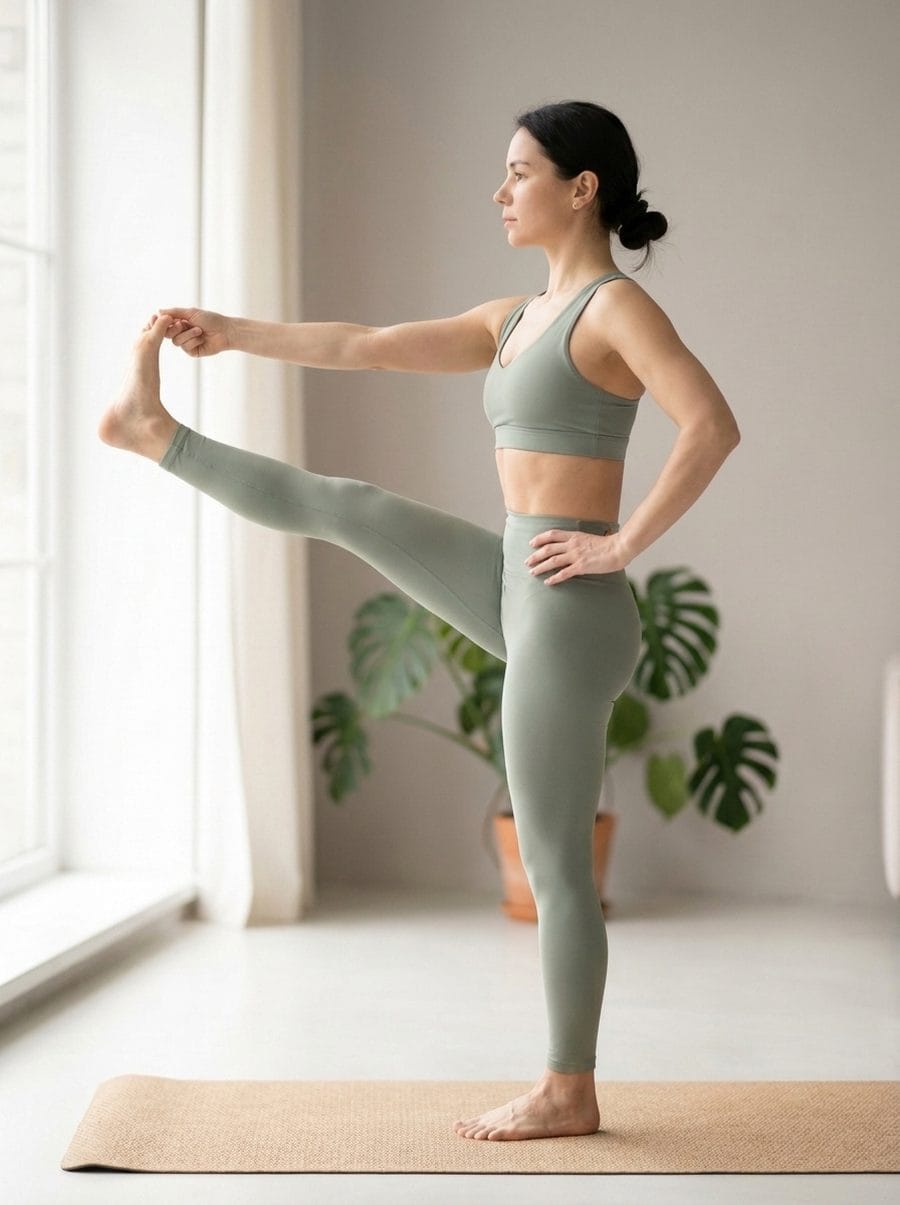
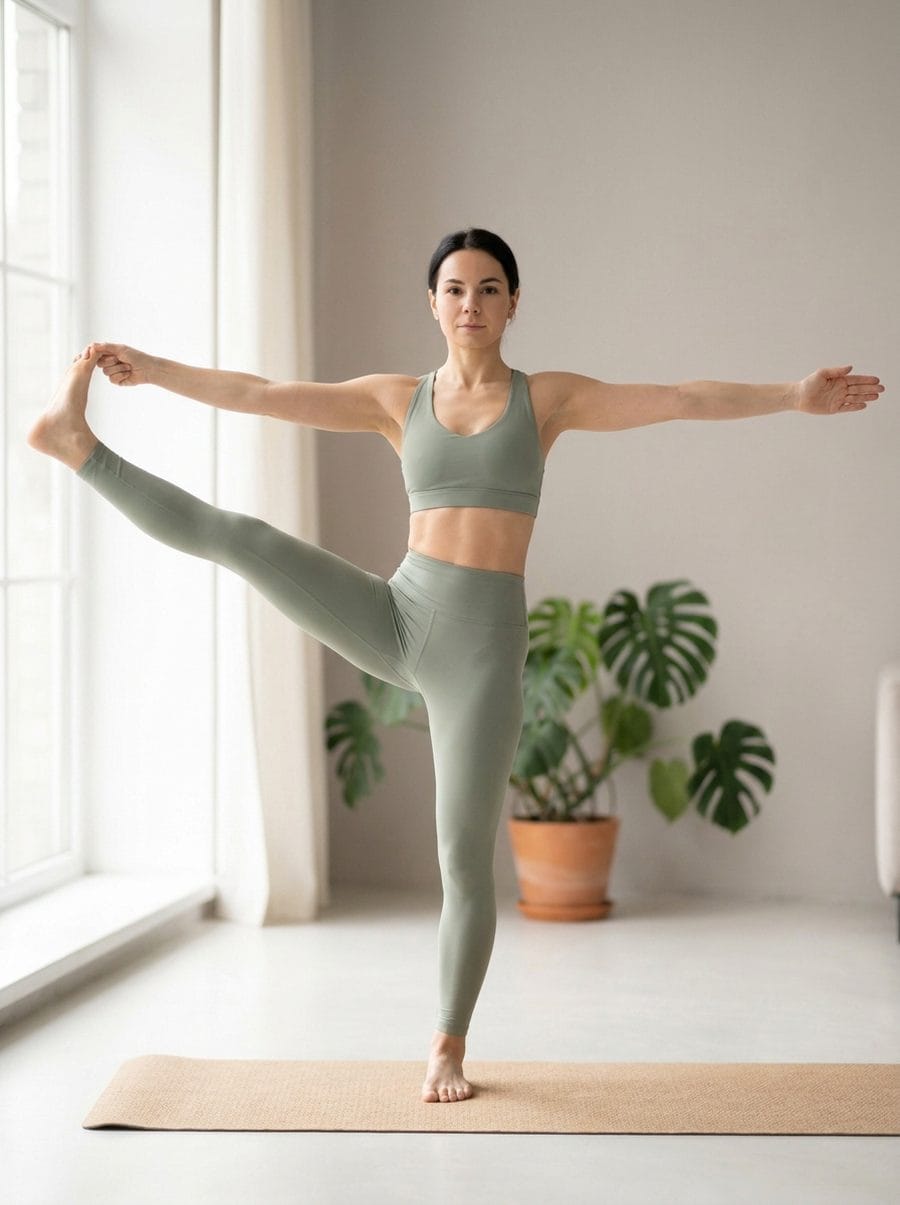
From here the path leads to harder balances such as Extended Hand-to-Big-Toe Pose, where the leg straightens out in front of you.
Cautions
- Knee and ankle injuries
- Dizziness
This site is for general information and is not medical advice. If you have pain, an injury, a chronic condition, or are pregnant, check with a qualified professional before practicing.
Common mistakes
- Leaning your chest down toward the knee. Your back stays vertical and the knee rises to meet it.
- Jutting your hip out over the standing leg. Hips stay level, pelvis right above the foot.
- Hiking your shoulders as your hands pull the knee. Shoulder blades down, neck free.
- Letting your eyes wander around the room. A still point ahead steadies you better than any effort.
Counterpose
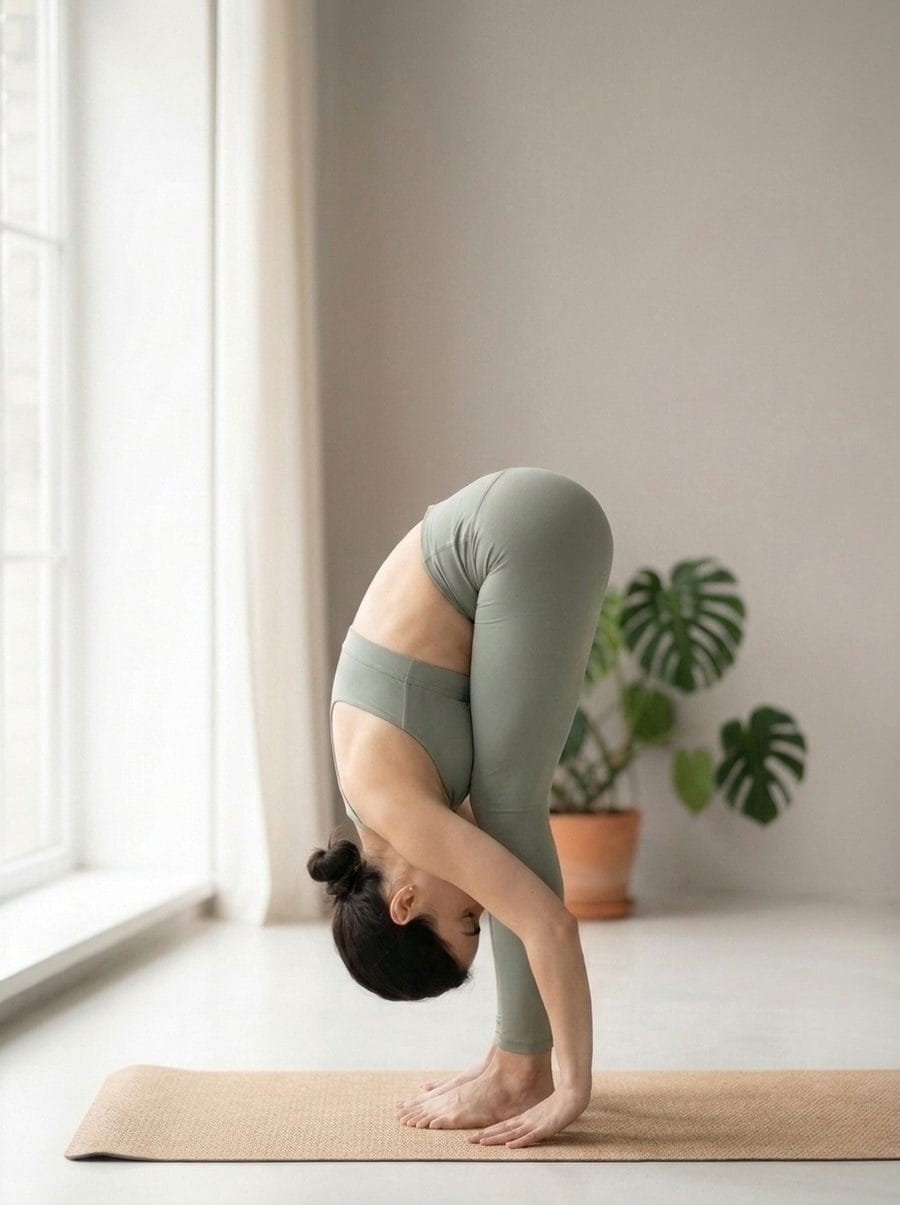
Where it appears
- First Balances 15 min · Intermediate
Similar poses
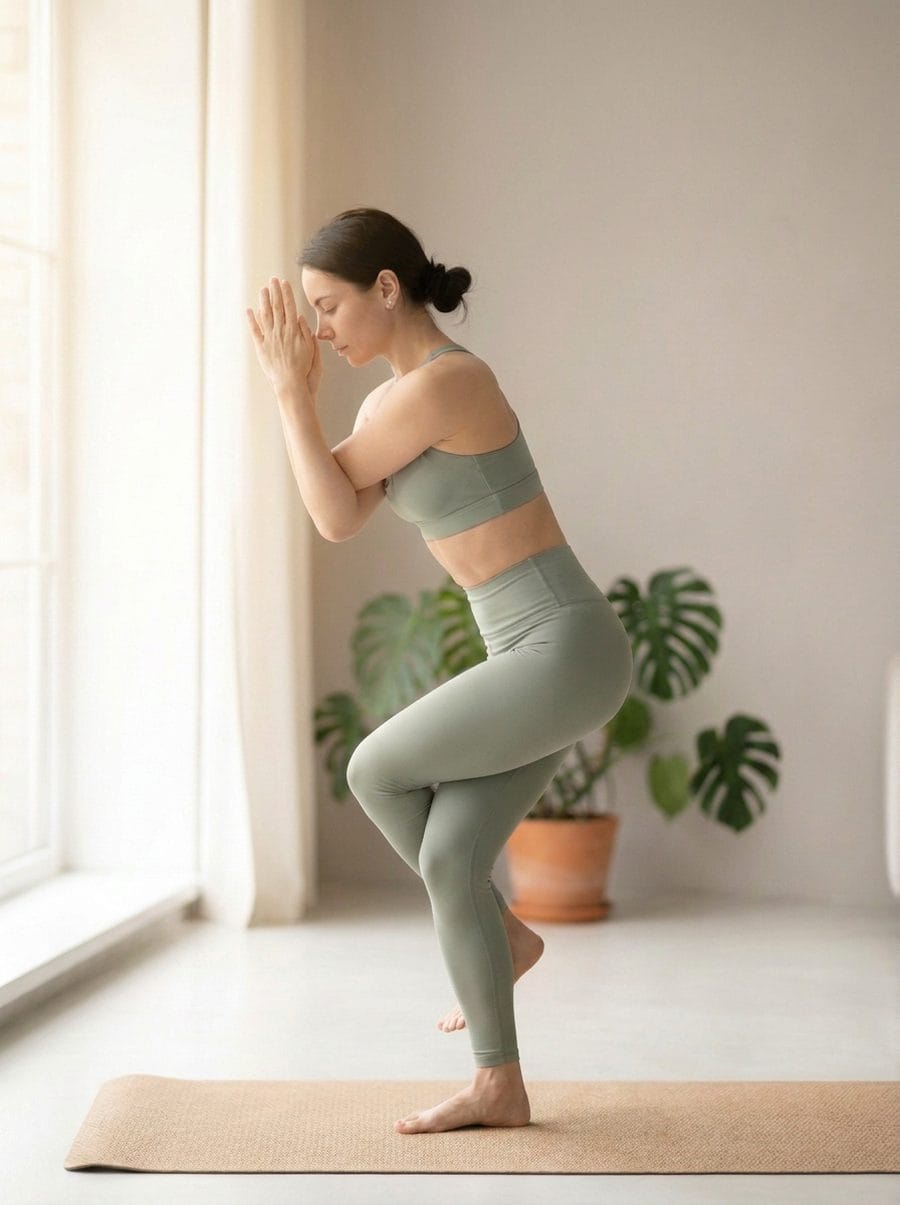
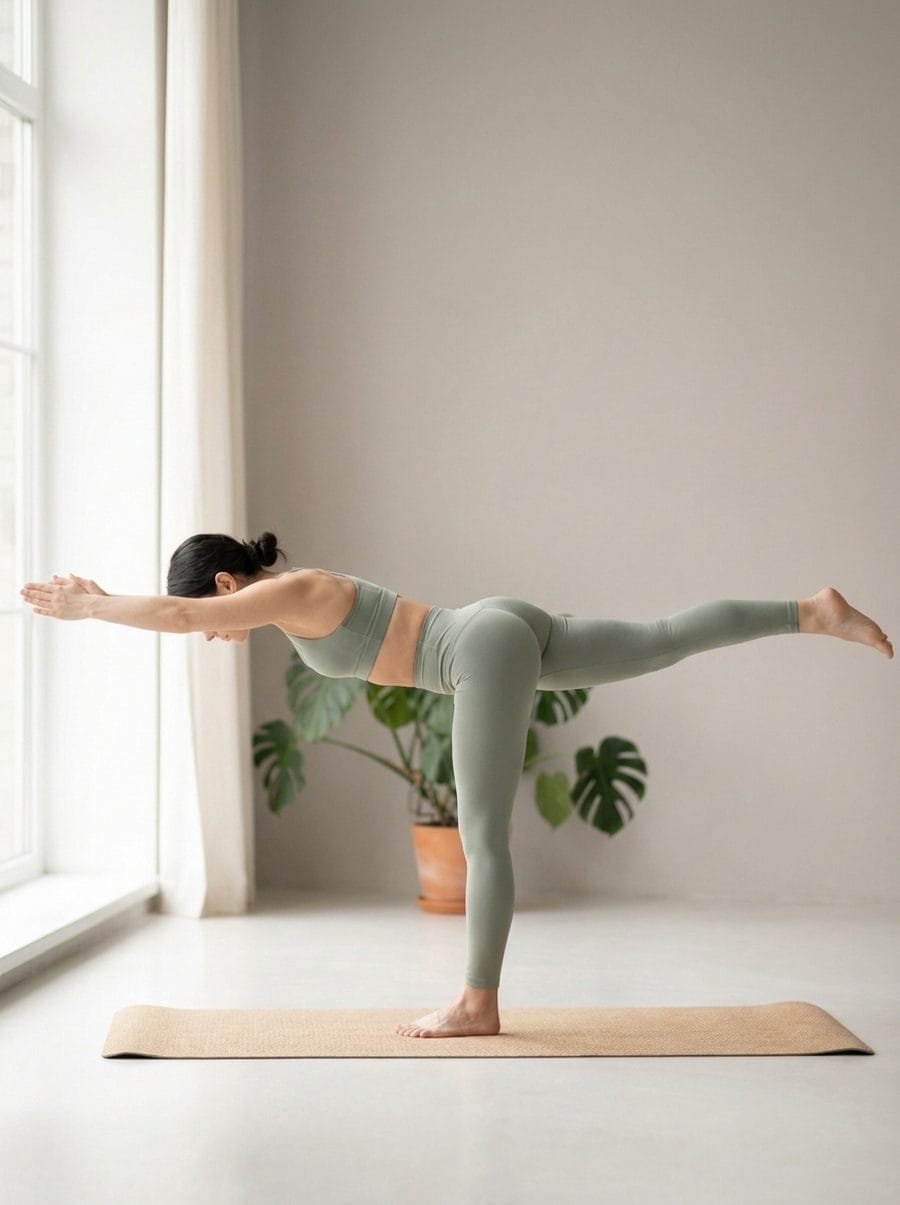
Questions
Who should avoid Standing Knee-to-Chest Balance? Knee or ankle injuries and dizzy spells are both reasons to leave this pose out.
How do I stop falling out of Standing Knee-to-Chest Balance? Start by a wall, keep your eyes on a single spot and don't rush to lift the foot: let your weight transfer completely to the standing leg first. A short pause in Mountain Pose before each round also helps.
What does Ardha Utthitahasta Padangushthasana mean? "Ardha" is half, "utthita" extended, "hasta" hand, and "padangushtha" big toe. It's the half, preparatory version of the pose in which your hand holds the big toe of a leg extended forward.
Featured in
Updated: