 Hatha Yoga
Standing Forward Fold
Uttānāsana
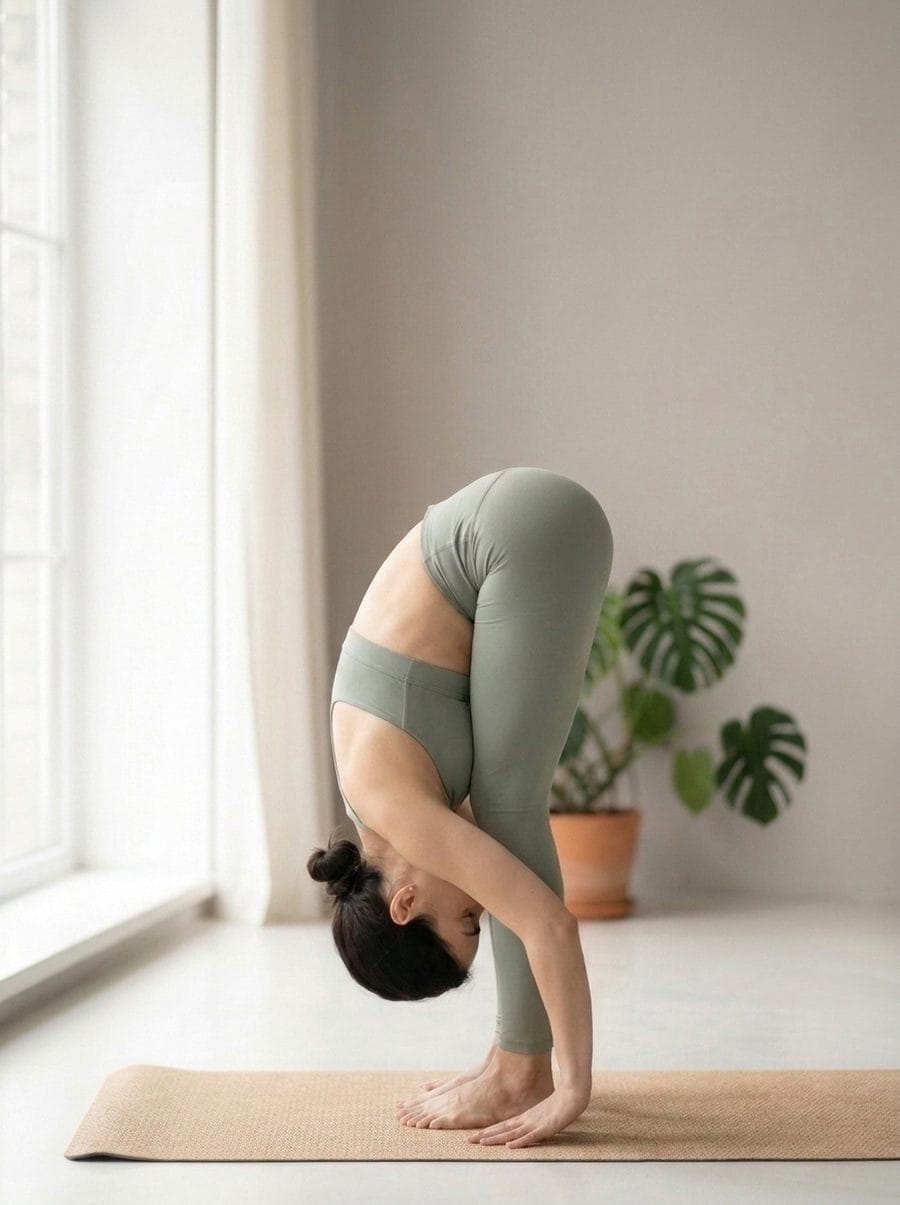
Uttanasana, or Standing Forward Fold, is one of the basic poses in the standing part of a session. The name joins the Sanskrit "ut" (intense) and "tan" (stretch): it's a pose of strong lengthening along the back of the body.
Your torso hangs down, your head is lower than your hips, and your weight stays over your feet. In the app the fold is part of 10 sequences and 4 warm-up flows, where it links standing poses with poses on your hands.
How to do it
- EnterFrom standing, exhale and fold forward from your hip joints, letting your torso hang freely. You can bend your knees slightly.
- HoldRelax your neck and back, and let your head hang freely. Shift your weight slightly forward, toward the balls of your feet. With every exhale, bring your belly closer to your thighs.
- ExitBend your knees and slowly roll up, one vertebra at a time.
More detail
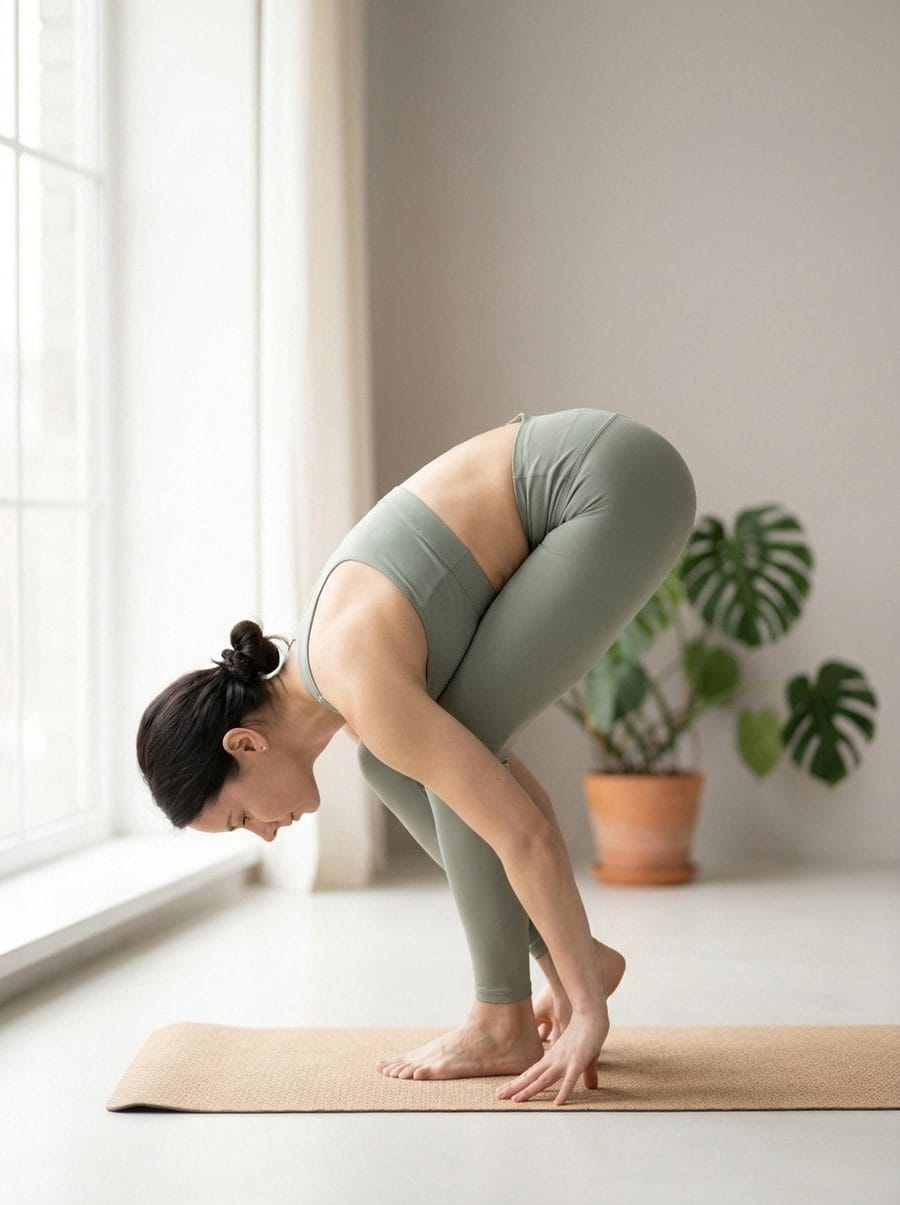
Bend at your hip joints, not at your lower back. Rest your palms on the bony points at the front of your pelvis and fold: those bones should move forward and down together with your torso. If your hamstrings won't allow it, bend your knees enough that your belly rests on your thighs.
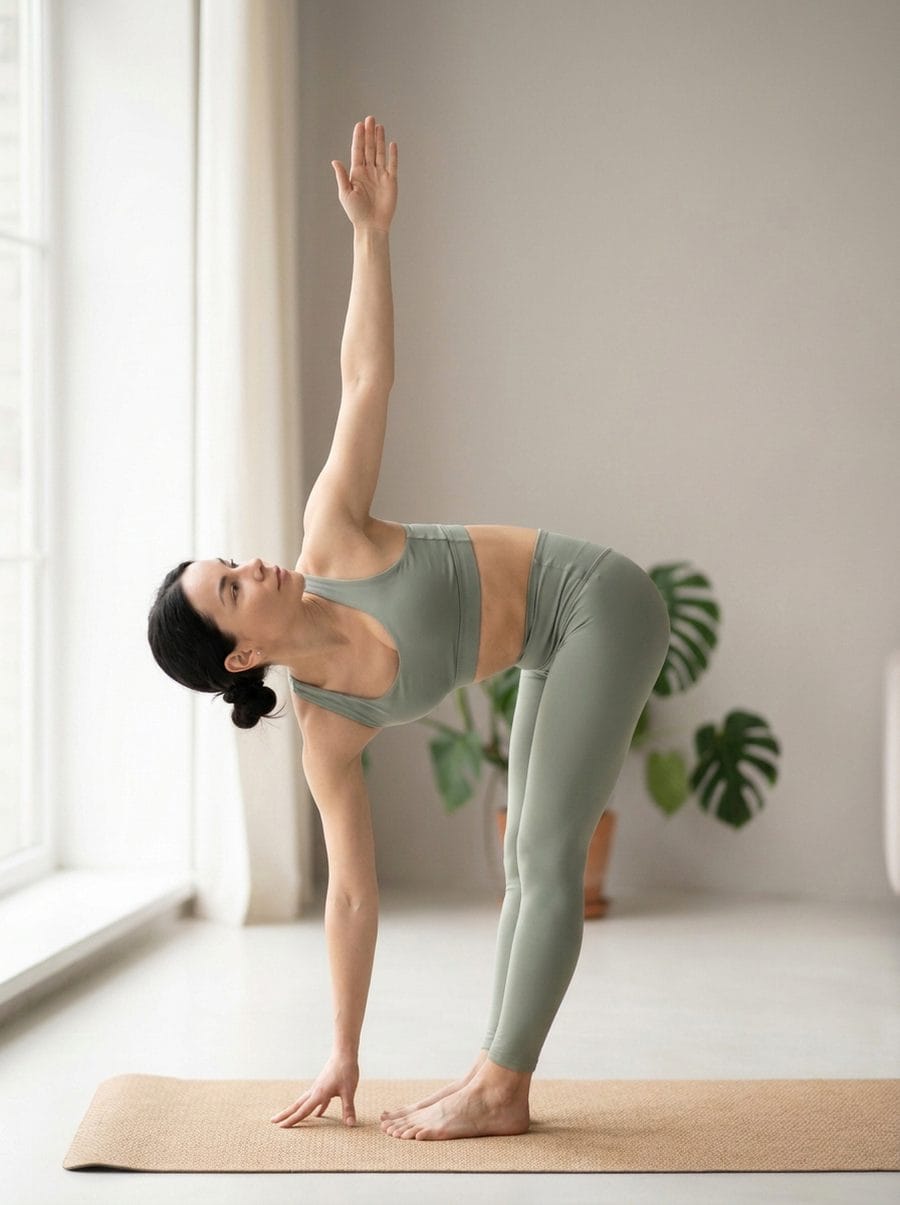
You can set your palms on blocks, or hold opposite elbows and sway from side to side. Hinging from the hips is easy to practice in Half Forward Fold with a flat back, and Forward Fold Flow warms your legs up beforehand.
Benefits
Stretches the backs of the legs and calms the mind.
The fold lengthens the entire back line of your legs, from calves to sit bones, along with the long muscles beside your spine. Your head hangs freely and your exhale is long, which gives the pose a calm feel: after balances and standing poses, it's a good place to even out your breathing and let your neck go.
Cautions
- High blood pressure
- Lumbar disc herniation — bend your knees
This site is for general information and is not medical advice. If you have pain, an injury, a chronic condition, or are pregnant, check with a qualified professional before practicing.
Common mistakes
- Rounding your back just to get your forehead to your knees. Think belly to thighs, not head to legs.
- Locking your knees. Keep them soft, and bend them if you feel a pull behind the knee.
- Pushing your hips far behind your heels. Hips stay over your feet, weight toward your toes.
- Snapping up to standing. Rise slowly with bent knees so you don't get dizzy.
Modifications & variations
Where it appears
- First Practice 15 min · Beginner
- 10-Minute Morning 10 min · Beginner
- Healthy Back 15 min · Beginner
- Balance & Focus 20 min · Intermediate
- Deep Stretch 25 min · Intermediate
- Express Warm-Up 5 min · Beginner
- Post-Workout Legs 20 min · Intermediate
- Toward the Splits 25 min · Intermediate
- Arm Balances: Path to Crow 20 min · Advanced
- Knees & Feet 15 min · Intermediate · voice-guided in the app subscription
- Warm-up: Big Round The classic round: standing — arm support — belly-down — standing
- Warm-up: Gentle Wave No strength peaks — a beginner-friendly start
- Warm-up: Back Line Stretch and strength for the back of the body on five levels, from a standing fold to Bridge Pose
- Warm-up: Core Focus Core in every plane — Boat Pose, Locust Pose, and twists with no load on the wrists
Similar poses
Questions
Who shouldn't do Uttanasana? The app gives two limits: high blood pressure and lumbar disc herniations. With high blood pressure, skip the pose; with a herniation, fold only with bent knees. If you're not sure, discuss the pose with your doctor.
How long do people usually stay in the fold? The app's pose card suggests 30 seconds. In sequences it goes up to 75 seconds, for example in Post-Workout Legs, which opens with this fold.
What if my hands don't reach the floor? Bend your knees or put your palms on blocks. Once the basic fold feels familiar, try Revolved Forward Fold.
Updated: