 Hatha Yoga
High Lunge
Aṣṭa Candrāsana
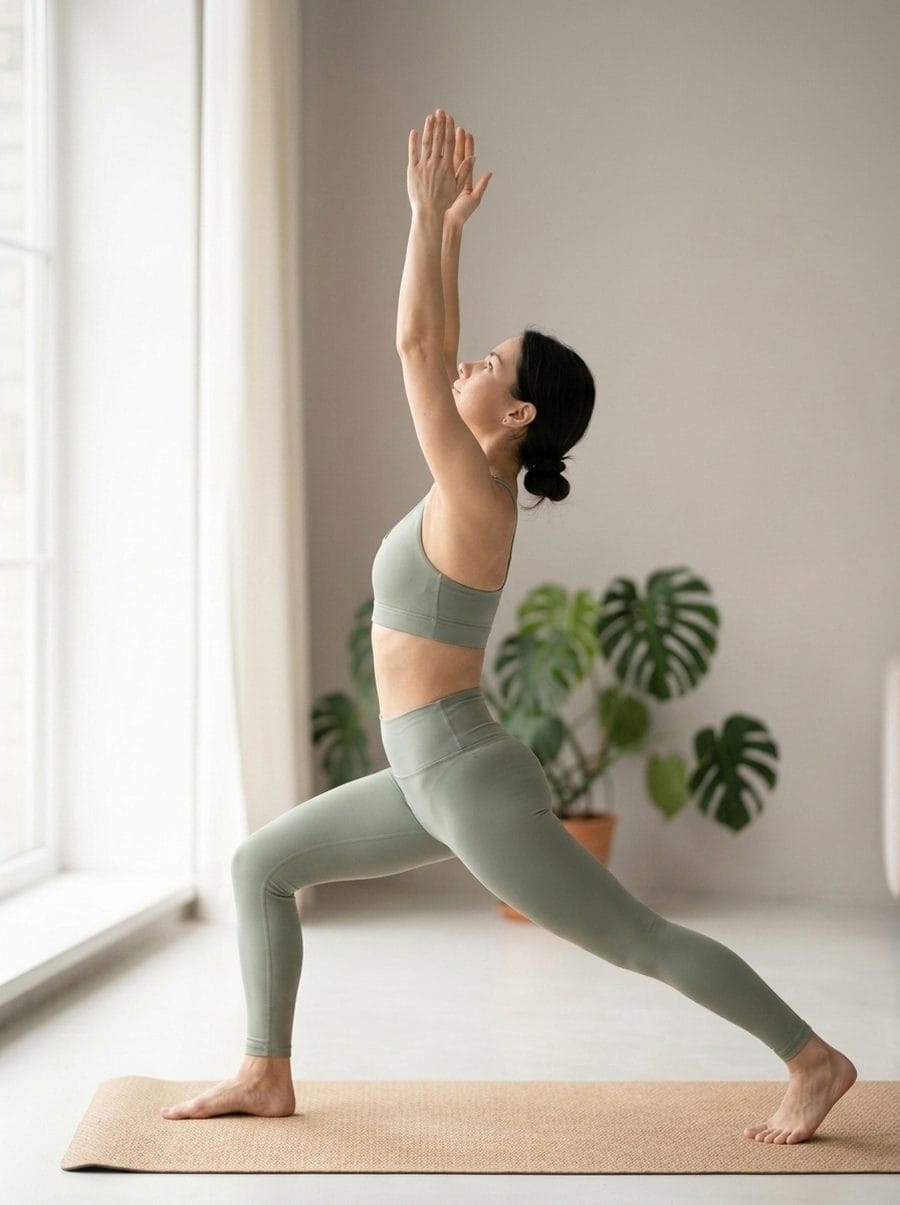
Ashta Chandrasana, or High Lunge, is a strong standing pose: front knee bent, back leg straight with the heel lifted, arms reaching up. "Chandra" means moon, which is why it's sometimes called Crescent Lunge. It's beginner level. High Lunge is part of 4 sequences in the app, including First Balances and Splits: Advanced Path, and lasts 30 to 40 seconds per leg.
How to do it
- EnterFrom standing, step one foot back and stay on the ball of your back foot, heel lifted. Front knee bent, arms reaching up.
- HoldYour back leg is straight and active, like a taut string. Hips face forward, torso upright, belly lightly engaged. Don't sink into your lower back.
- ExitExhale, lower your arms and step your back foot forward.
More detail
Step your back foot far enough that, as the front thigh nears horizontal, the knee lines up over your ankle instead of overtaking your toes. The back heel lifts toward the ceiling, your weight rides on the forefoot, and the back knee stays straight.
Leave hip-width between your feet, like standing on two train tracks; on a tightrope line, balance gets much harder.
Aim your hip points forward and let the tailbone drop a touch so the lumbar curve doesn't collapse. Raise your arms only once your legs feel steady. If balance is a struggle, the app suggests keeping your hands on your hips, which makes it easier both to stay up and to feel where your pelvis is.
Benefits
A strong lunge with balance: a foundation of vinyasa and a prep for Warrior I.
The lunge works your front thigh and glutes, switches on your core and lengthens the groin of your trailing leg. Balancing on one forefoot trains stability. The pose is one of the building blocks of vinyasa and a good lead-in to Warrior I. Sequences tend to place it next to Low Lunge and Side Lunge.
Cautions
- Balance problems — keep your hands on your hips
This site is for general information and is not medical advice. If you have pain, an injury, a chronic condition, or are pregnant, check with a qualified professional before practicing.
Common mistakes
- Front knee drifting past your toes. Lengthen your stance.
- Bent back leg. Reach back through your heel and straighten the knee.
- Lumbar spine collapsing, ribs flaring. Gently firm your abs and lengthen your tailbone down.
- Feet on one line. Widen them to hip-width.
Where it appears
- First Balances 15 min · Intermediate
- Path to Lotus 30 min · Advanced
- Splits: Advanced Path 35 min · Advanced
- Deep Backbend 35 min · Advanced
Similar poses
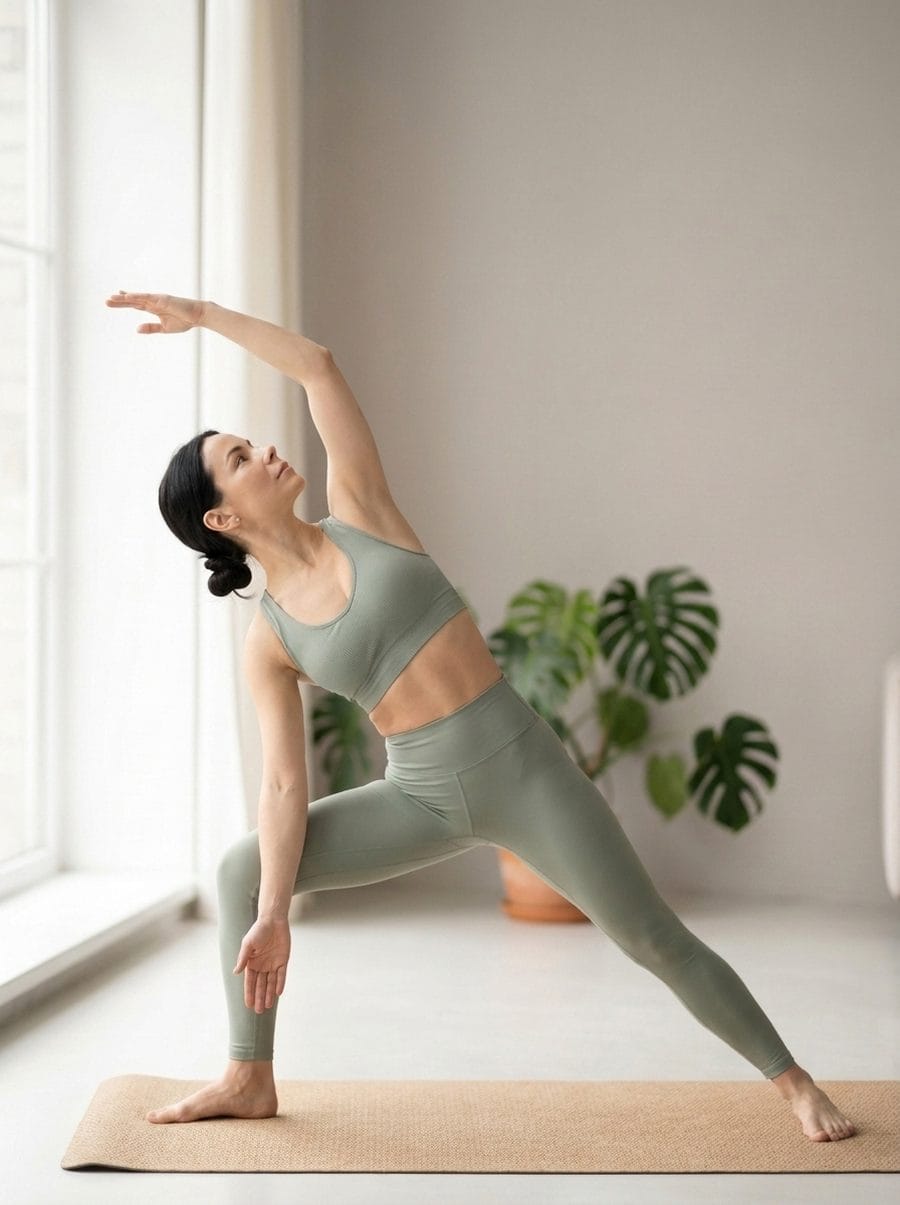
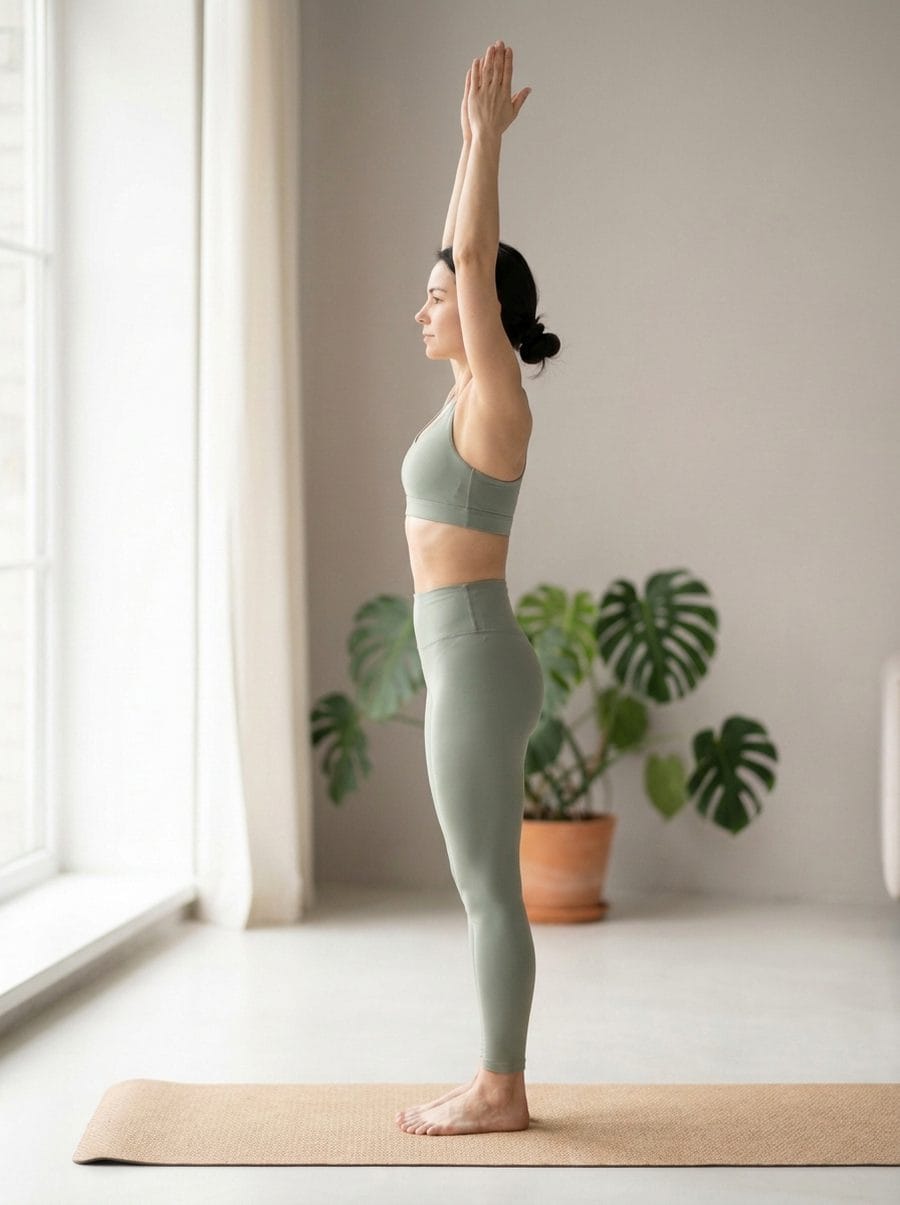
Questions
What's the difference between High Lunge and Warrior I? Warrior I plants the whole back foot, turned out at an angle. High Lunge keeps that heel lifted and the foot pointing forward, which makes it simpler to square your hips to the front leg.
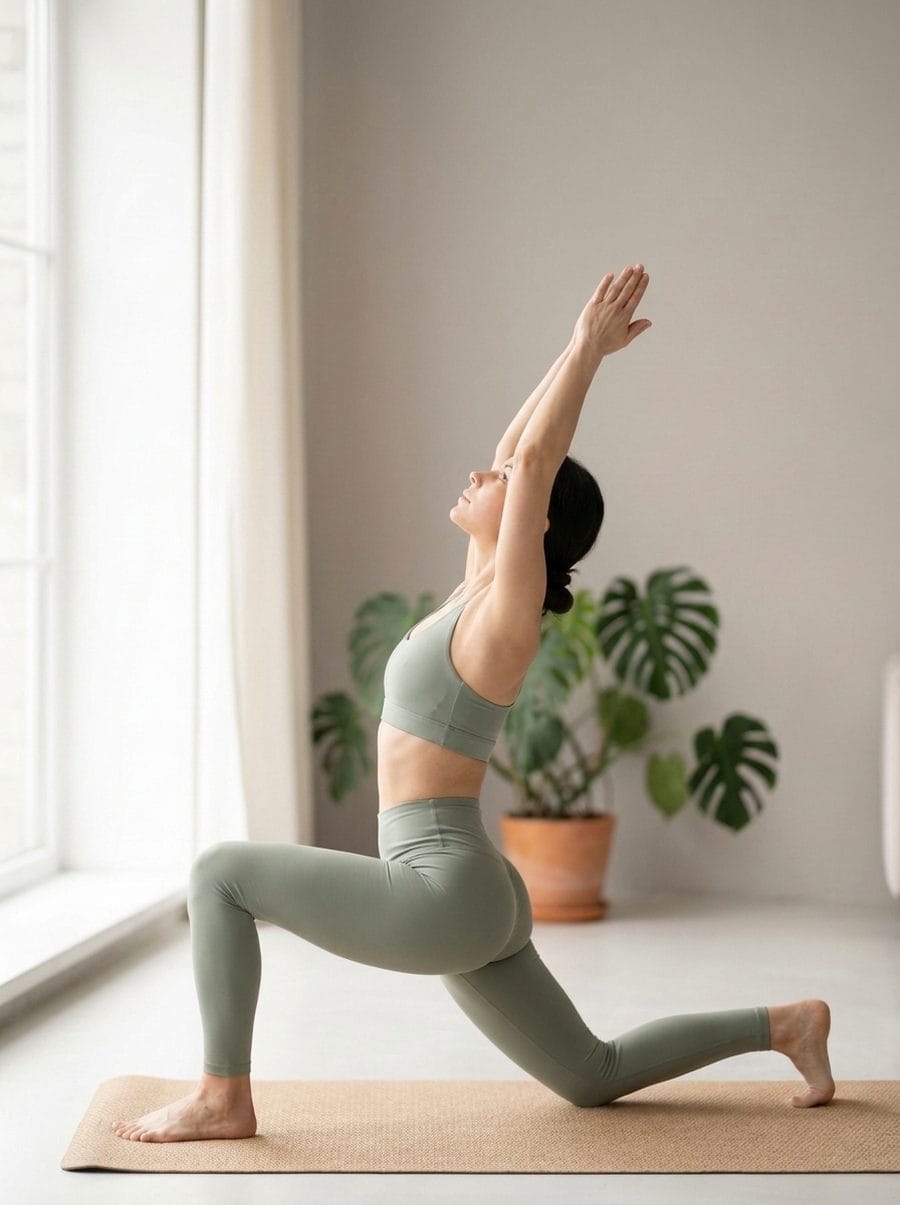
Ashta Chandrasana vs Anjaneyasana: how do they differ? In Low Lunge, or Anjaneyasana, the back knee is down on the mat and the chest lifts into an arch. High Lunge asks for more leg strength and balance.
Featured in
Updated: