 Hatha Yoga
Warrior I
Vīrabhadrāsana I
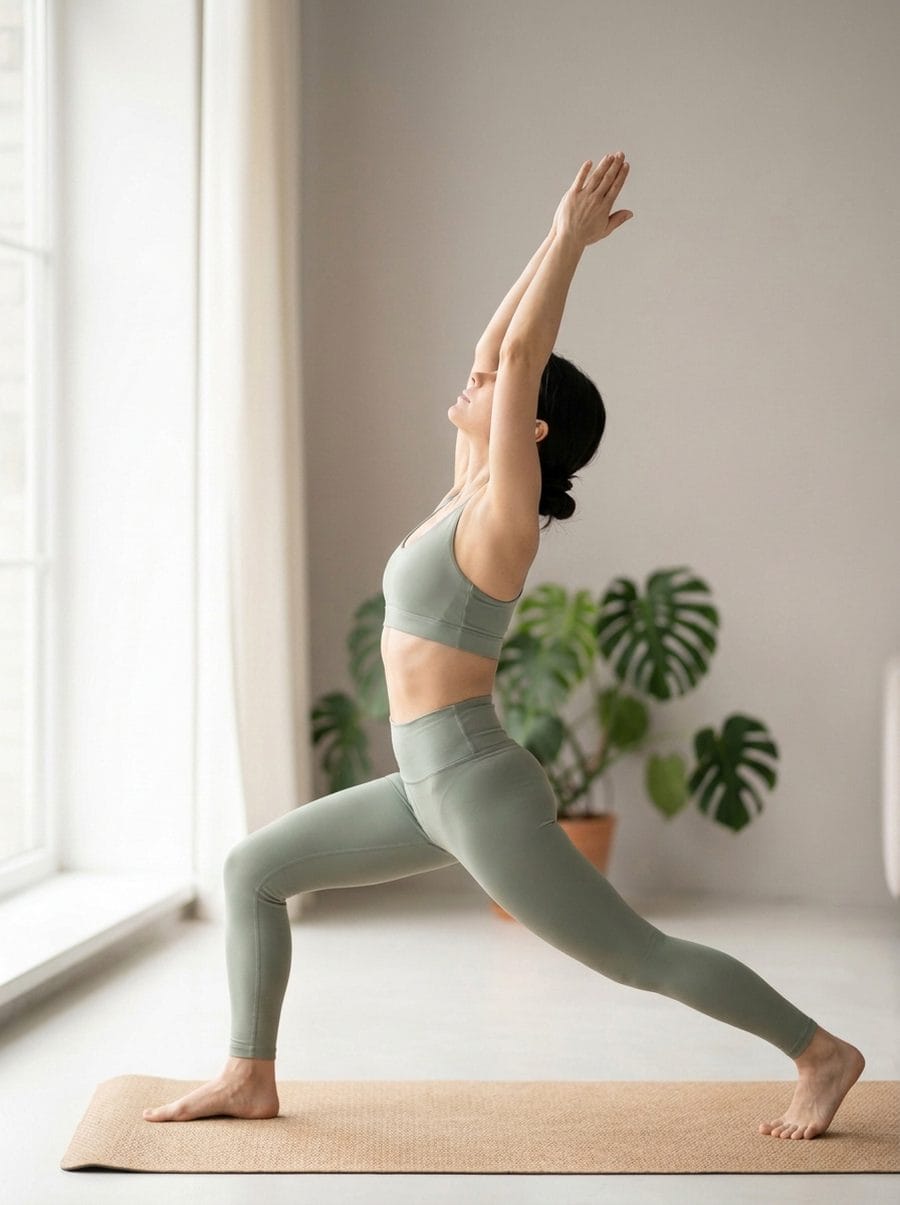
Warrior I, or Virabhadrasana I, is a deep lunge with the hips and chest squared to the front of the mat, back heel down and arms reaching overhead. Beginners can practice it. Five app sequences include Warrior I, and in all five Warrior II comes next.
It also opens the Full Morning sequence and the Warrior's Path flow.
How to do it
- EnterTake a big step back. Bend your front knee to a right angle and turn your back foot out to forty-five degrees. Your hips face forward. Inhale, raise your arms.
- HoldPress the outer edge of your back foot into the floor and reach your arms up. Keep your front knee directly over your heel. Gaze forward or up at your palms.
- ExitExhale, lower your arms and step your back foot forward.
More detail
The hard part is your pelvis: it has to face forward while your back leg pulls it the other way. So don't line your feet up on a tightrope; set them hip-width apart, like train tracks. Angle your back foot out about forty-five degrees and press its outer edge into the floor.
Bend your front knee toward a right angle, with the knee staying over your heel. Knee sliding past your heel? Lengthen the stance. Back heel lifting off the floor? Shorten it. Your hip points reach forward like a car's headlights, and your ribs don't flare.
Raise your arms shoulder-width apart while keeping your shoulders down. High blood pressure? Then the app suggests resting your hands at your waist. A shallower lunge works fine for beginners.
Benefits
Strengthens the legs, opens the chest and hips.
Warrior I strengthens your legs and opens your chest and hips, especially the front of the back-leg hip. The pose card also lists core work: your core keeps your torso upright so your lower back doesn't sag.
Cautions
- Knee injuries
- High blood pressure — you can keep your hands on your hips
This site is for general information and is not medical advice. If you have pain, an injury, a chronic condition, or are pregnant, check with a qualified professional before practicing.
Common mistakes
- Hips turned out to the side, as in Warrior II. Draw the front hip point toward the front of the mat.
- Feet on one line. Set them hip-width apart.
- Knee shooting past your toes. Lengthen the stance and keep the knee over the heel.
- Arching your lower back. Tailbone down, belly drawn in.
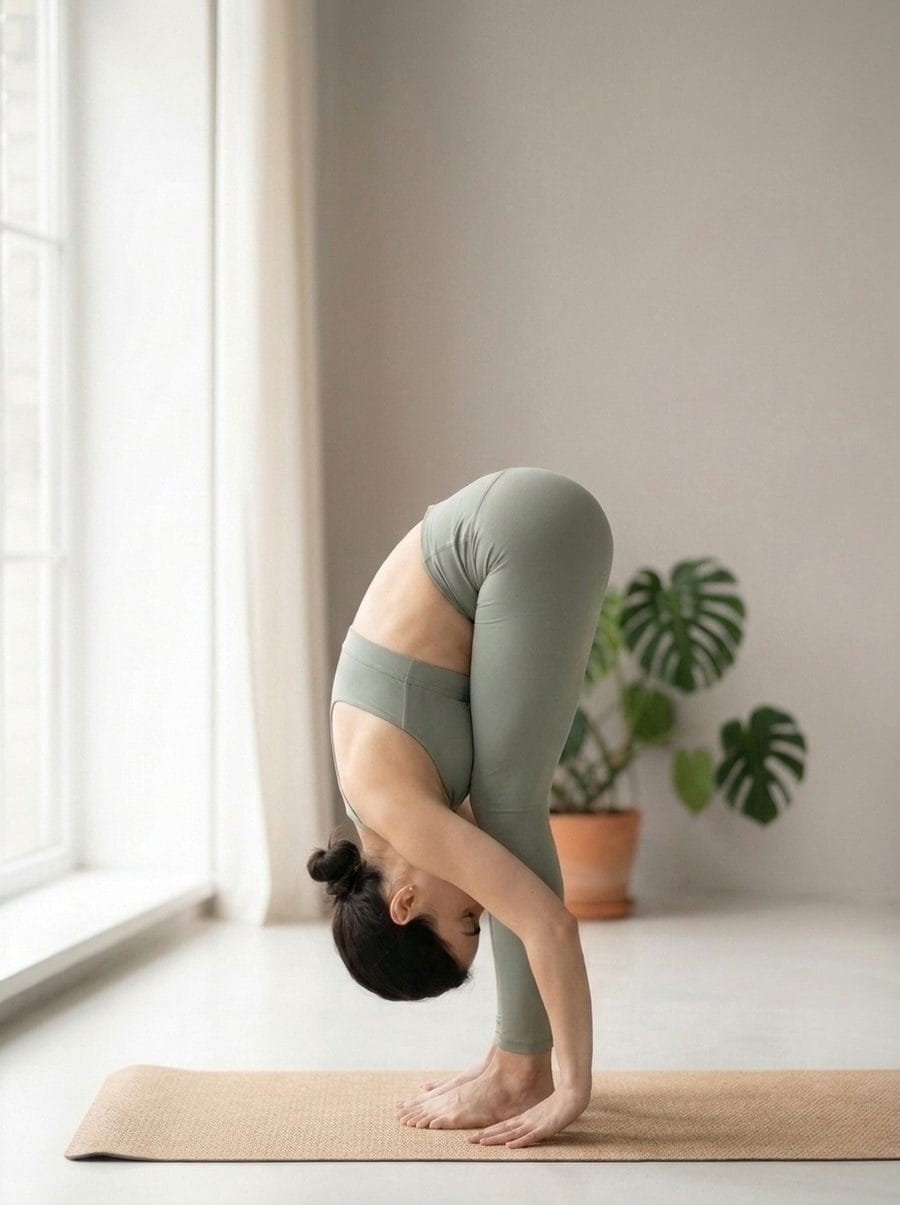
Counterpose
Where it appears
- Full Morning 20 min · Intermediate
- Strength & Tone 25 min · Intermediate
- Classic Full Practice 50 min · Intermediate
- Energy Boost 15 min · Intermediate
- Advanced Intensive 35 min · Advanced
- Warm-up: Warrior's Path Warrior strength across three body levels: the warrior is one step, not the whole round
Similar poses
Questions
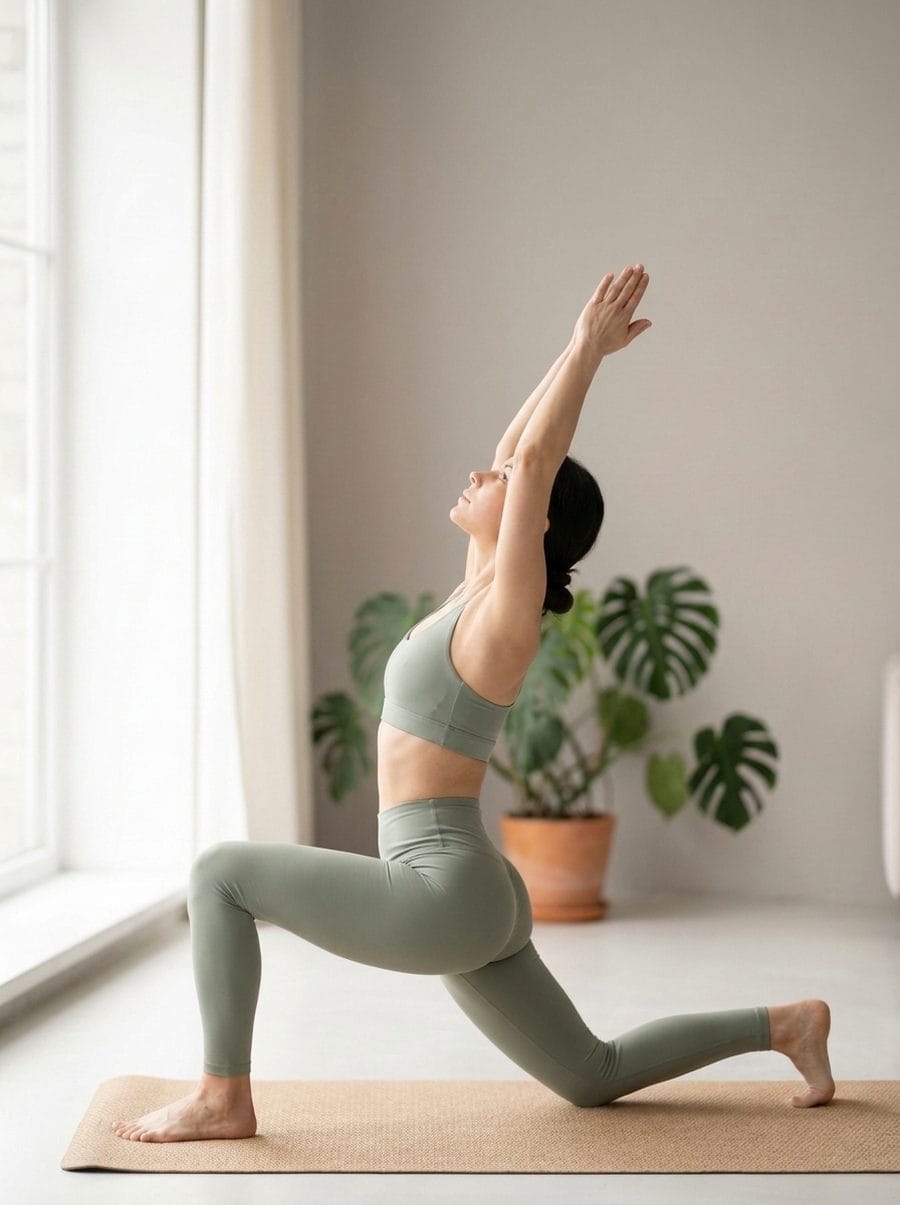
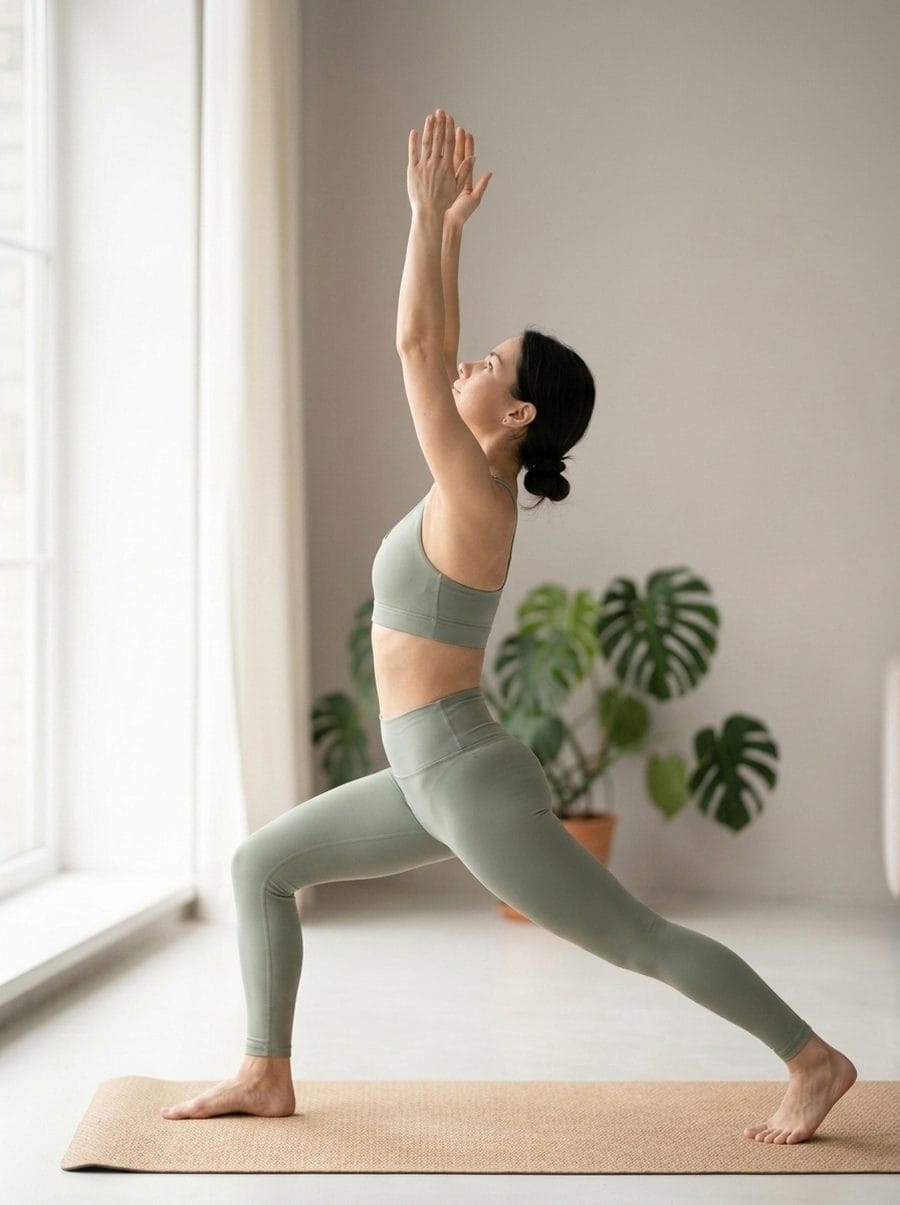
Warrior 1 vs. High Lunge: how do they differ? In Warrior I your back heel is down and the foot is angled. In High Lunge the back leg stays on the ball of the foot with the heel lifted.
Who should avoid Warrior I? An injured knee means leaving Warrior I out. High blood pressure still allows it, with your hands parked at your waist rather than raised.
How long should you hold Warrior I? The card sets 30 seconds per side, and sequences run from half a minute to a minute, with the longest hold in Strength & Tone.
Featured in
- Yoga for High Blood Pressure: Safe Poses, Breathing and Limits6 min read
- Yoga for Strength: Poses for Strength and Tone, Including Legs and Glutes6 min read
- Hatha vs. Vinyasa: The Difference and Which One to Choose6 min read
- Yoga for Weight Loss: An Honest Look at Calories, Habits and Sleep8 min read
- Morning Yoga for Beginners: 10- and 20-Minute Sequences5 min read
Updated: