 Hatha Yoga
Morning Yoga for Beginners: 10- and 20-Minute Sequences
Hatha Yoga editorial team · Updated · 5 min read
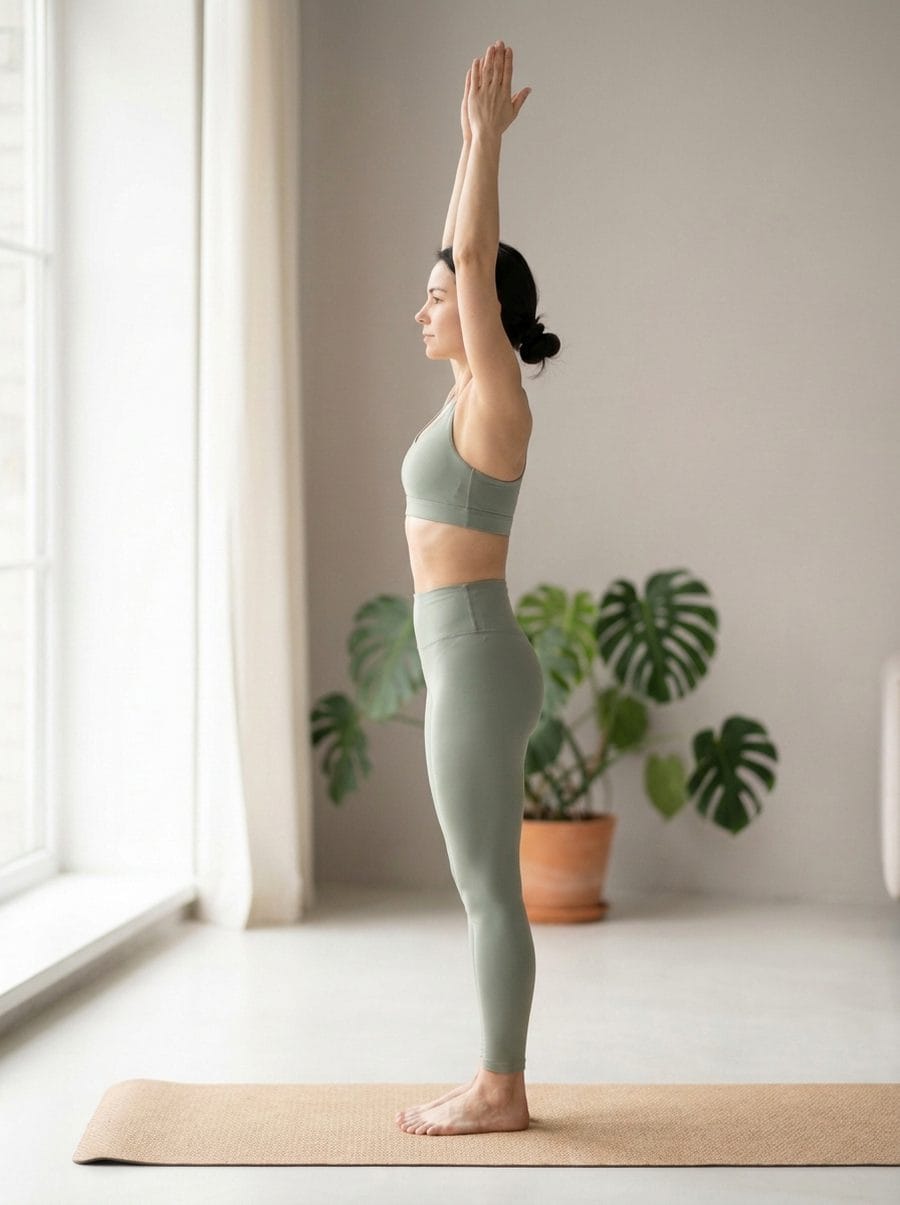
Morning yoga isn't about setting flexibility records. Overnight your body cools down and gets stiff, and your mind hasn't fully clocked in yet. Ten minutes of calm movement gets your blood flowing, straightens out your back and tunes you in to the workday better than a second cup of coffee.
Below you'll find a 10-minute and a 20-minute morning yoga routine, the poses they're made of, and tips on fitting practice into your morning.
Why your body feels stiff in the morning
You hardly move during the night, so your muscles and joints are less mobile in the morning than in the evening. That's normal, but it means a morning session should open more softly: no deep forward folds or splits in the first minute.
Lengthen and warm up first, then move on to standing poses that wake up your legs and core, and close with a short rest that lets the calm settle in.
10-minute morning yoga
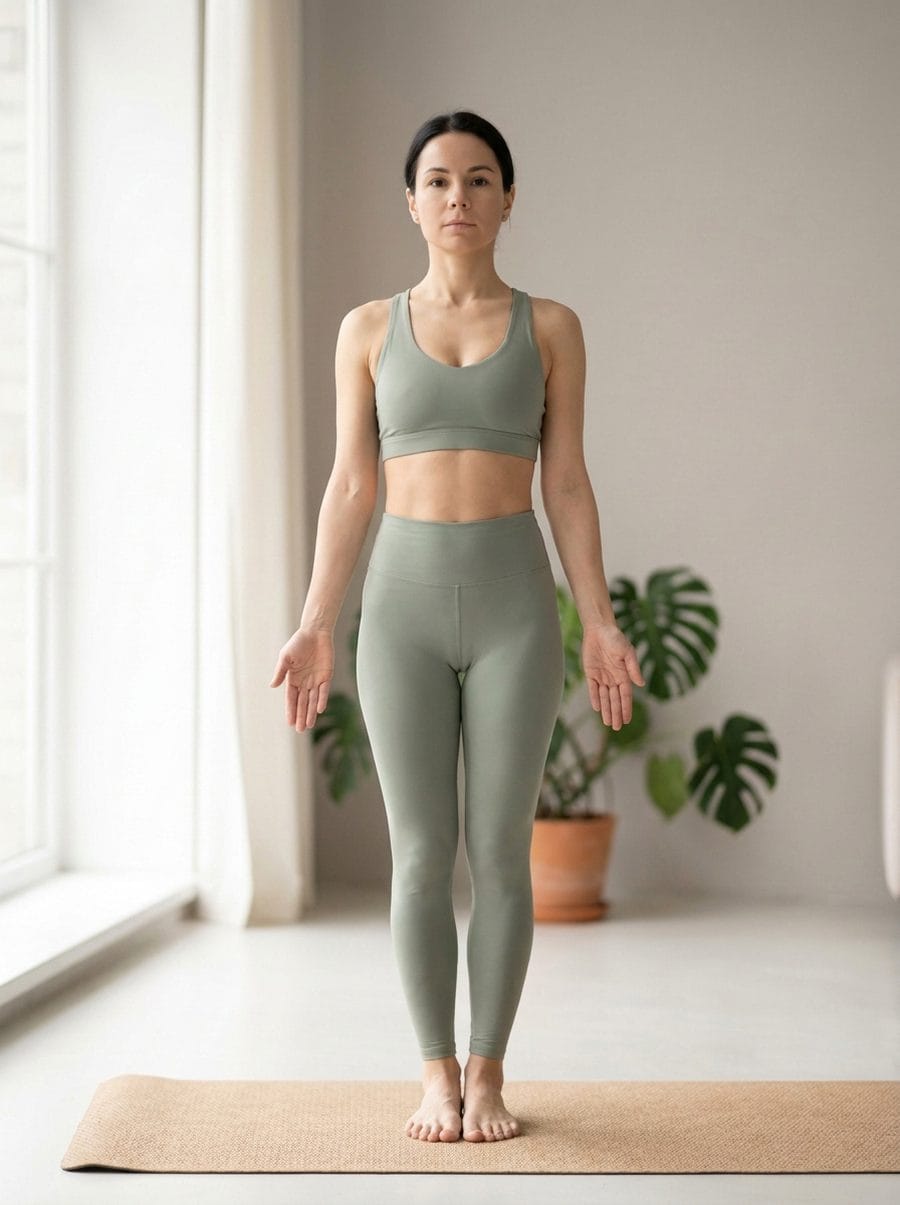
If you're short on time, start with the 10-Minute Morning routine. Three rounds of Sun Salutation come first, and then seven calm, beginner-friendly poses follow: Mountain Pose, Upward Salute, Standing Forward Fold, Downward-Facing Dog, Cobra Pose, Child's Pose and Relaxation Pose (Savasana) to finish.
The Sun Salutation rounds warm your body from head to toe, and after that comes an unhurried wave: from Mountain Pose you raise your arms, fold forward, step back into Downward Dog, bend softly into Cobra and rest in Child's Pose. If the rounds still feel hard, start with a single one and take it slowly.
10 morning yoga poses
Wake up your back
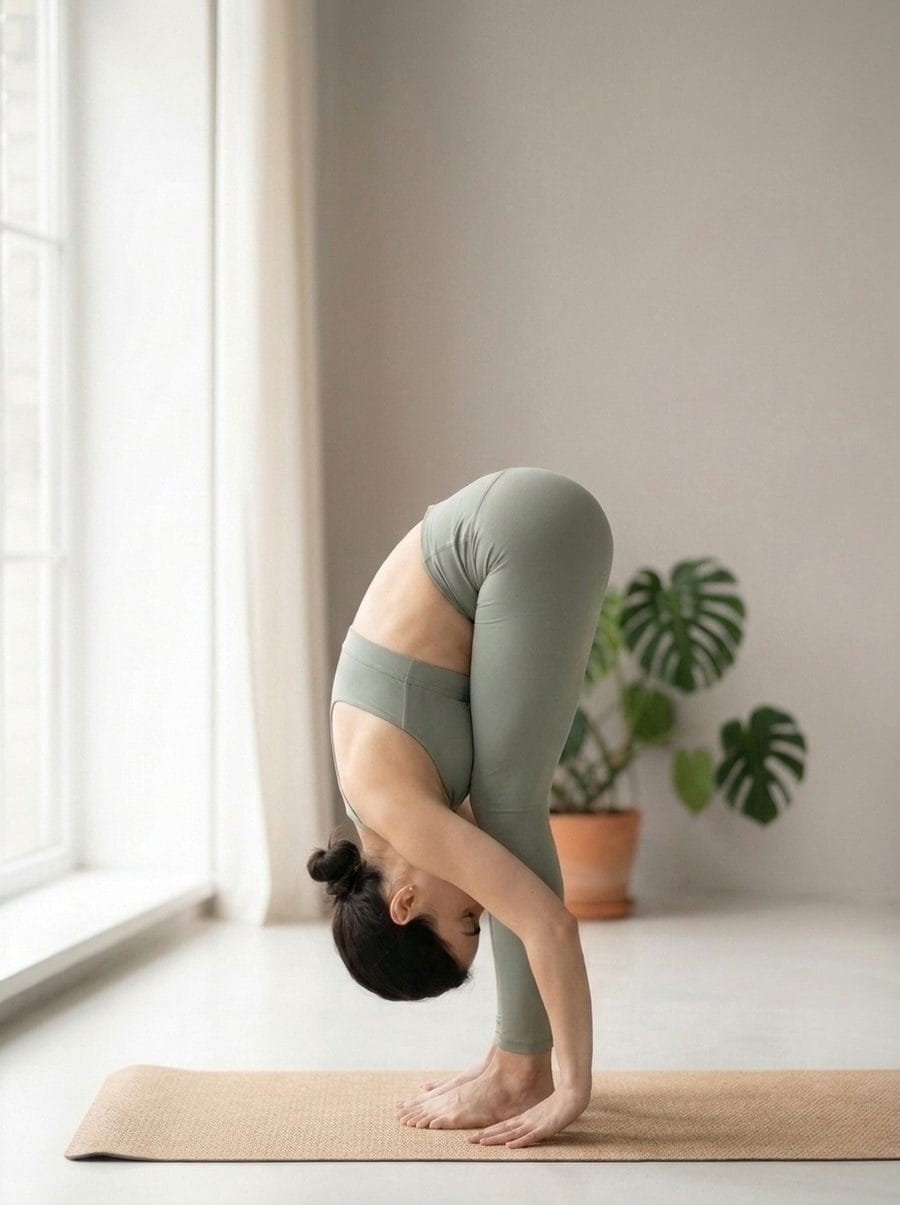
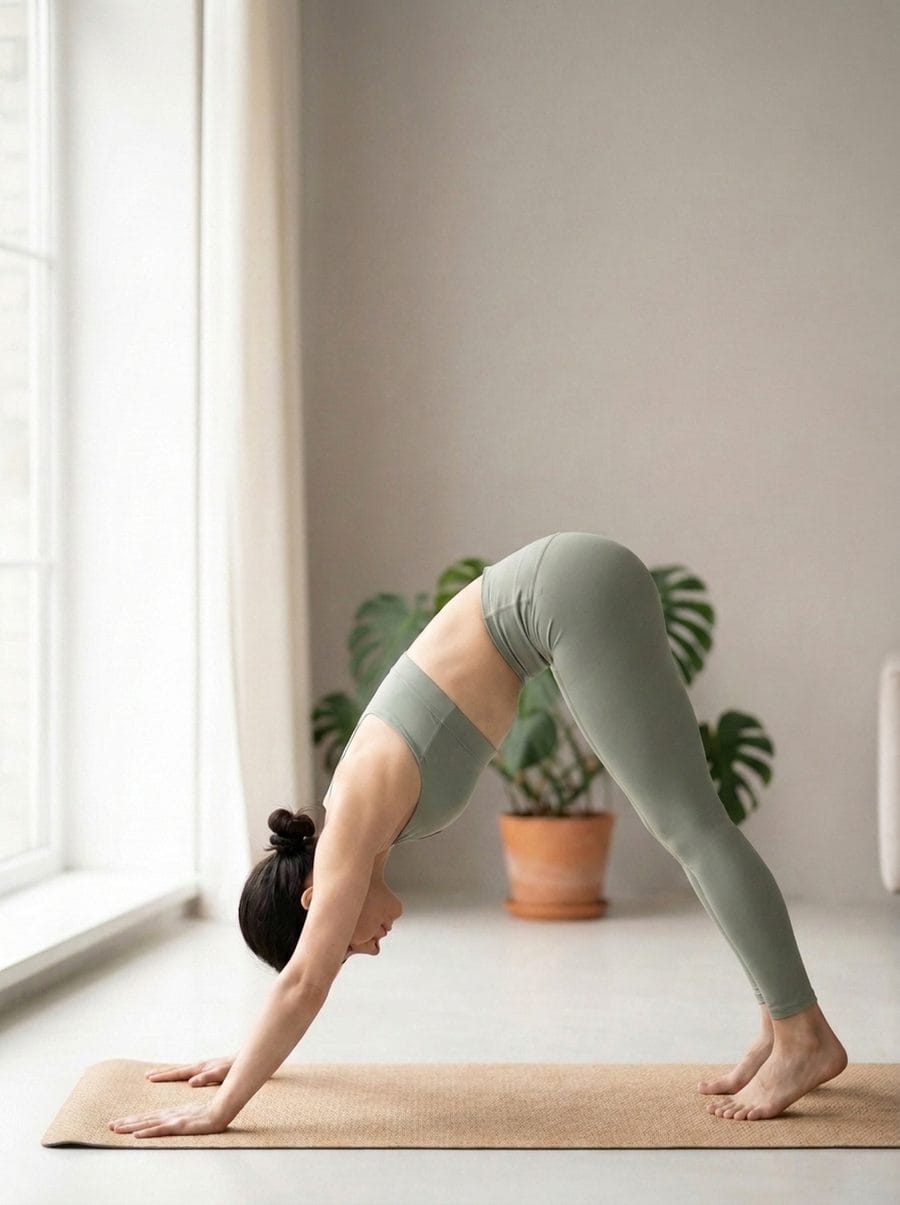
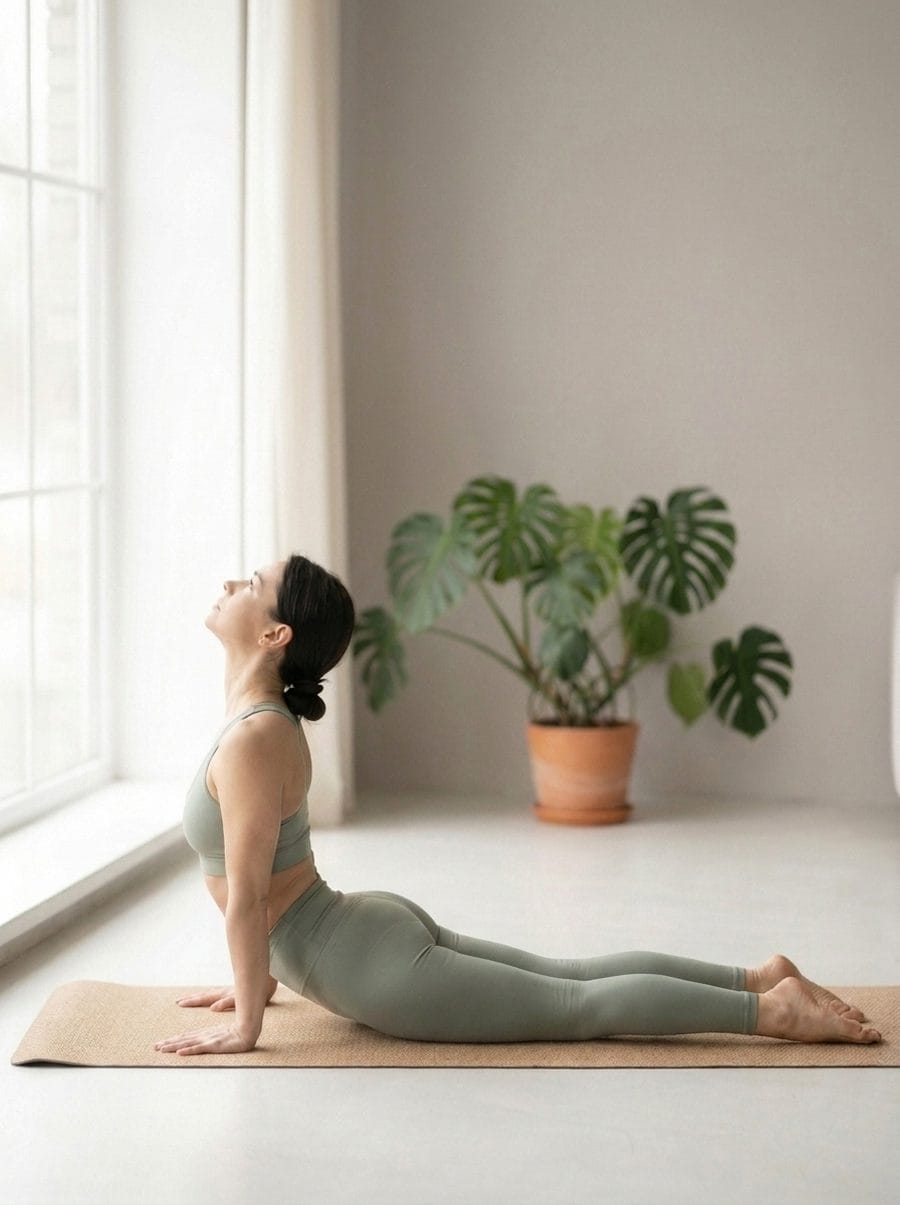
Upward Salute opens your chest after a night spent curled up. Standing Forward Fold together with Downward-Facing Dog stretches everything along the back of your body, from your heels up to your neck, and Cobra Pose takes the spine into a careful backbend.
Soft, bent knees are fine in both folds, because your muscles are still short first thing in the morning.

Switch on your legs and balance
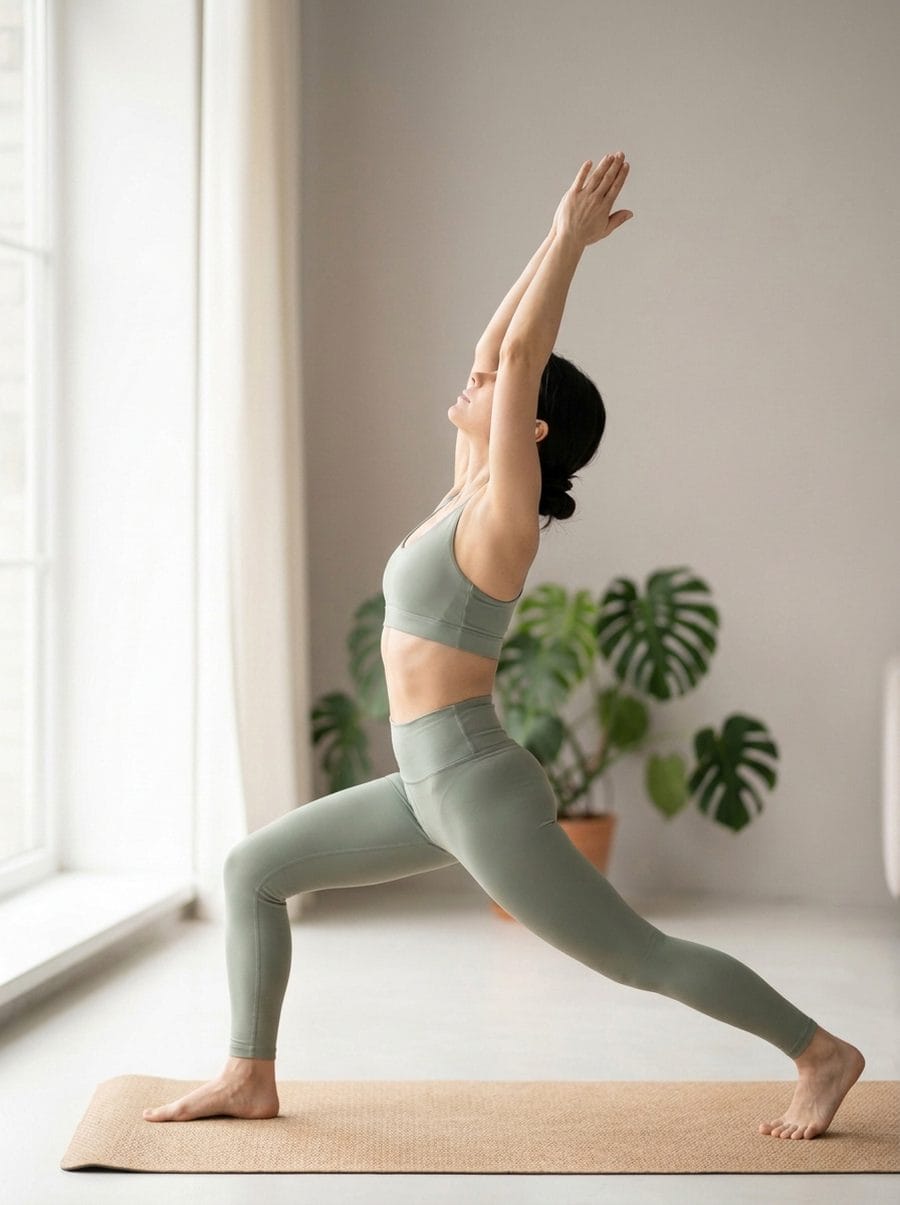
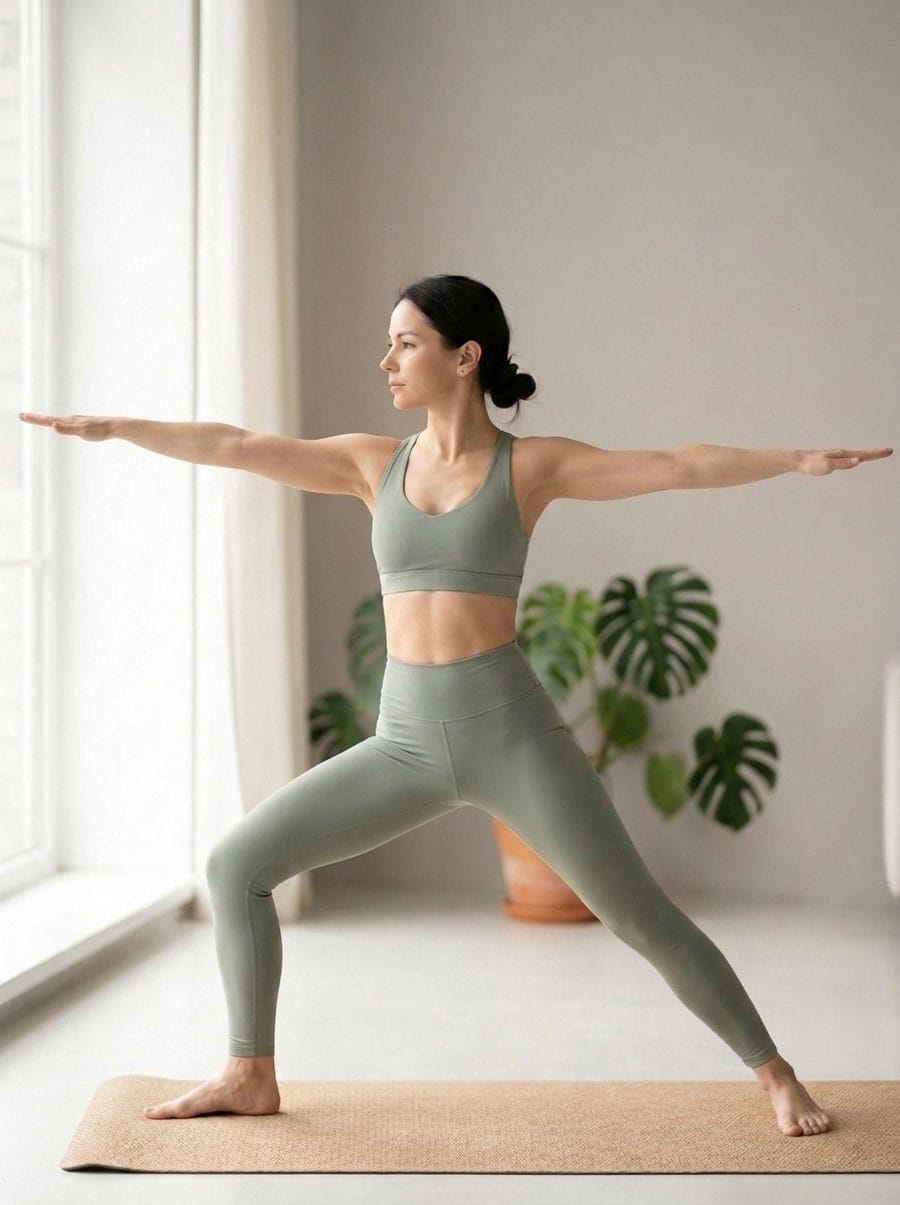
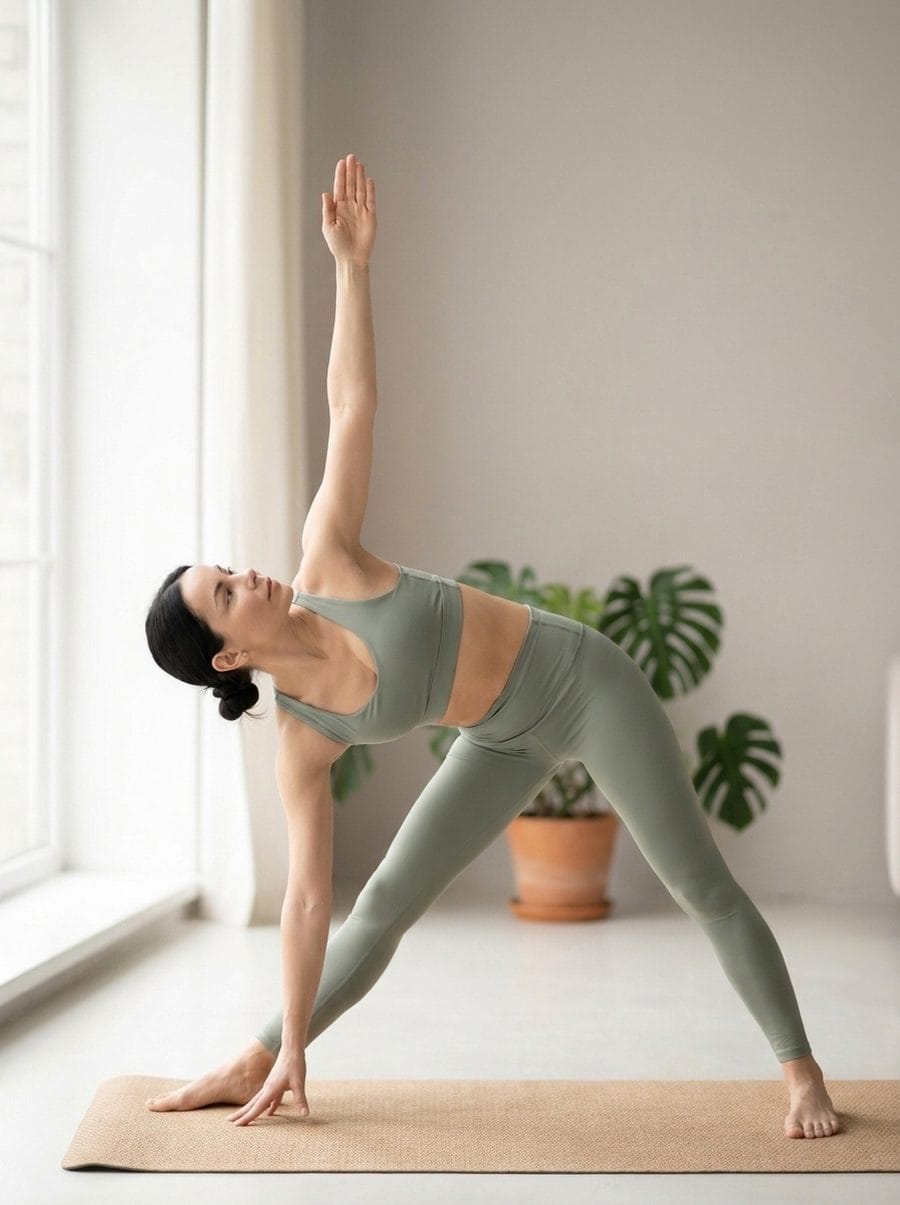
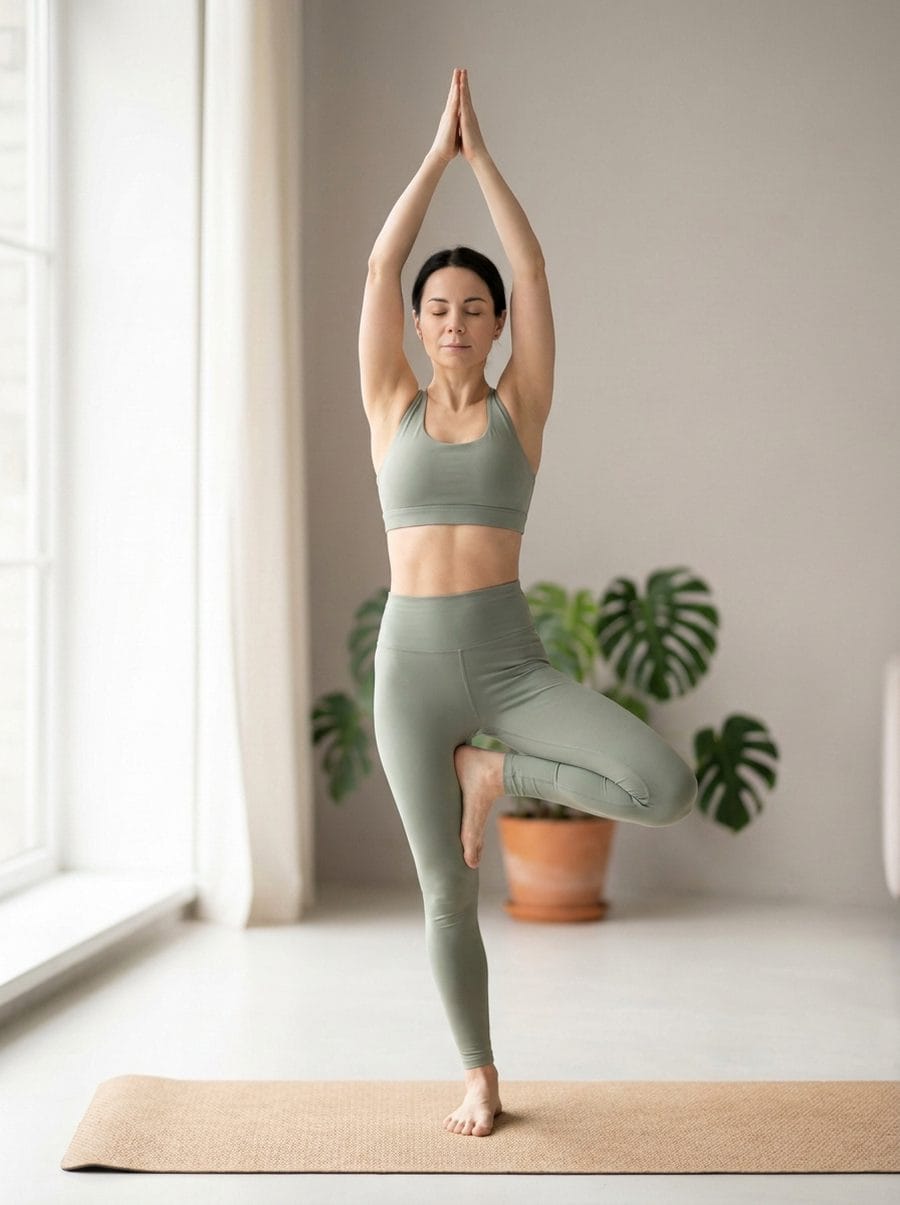
The Warriors and Triangle Pose take more strength, so they're a good fit for your second week of practice. They build strong legs, open your hips and wake you up nicely. Tree Pose trains balance and focus. If you feel wobbly in the morning, do it next to a wall.
20-minute morning yoga routine
When ten minutes starts to feel too short, move up to the Full Morning routine. It's an intermediate program with four rounds of Sun Salutation, standing poses (the Warriors, Triangle and Tree), Plank and a backbend, and a seated forward fold and a twist at the end.
For days when you need an extra lift, there's the 15-minute Energy Boost: three rounds of Sun Salutation, then Chair Pose, the Warriors, Side Plank, Boat Pose and Camel Pose. It's more dynamic and needs a body that's already warm, so it suits the time about half an hour after you wake up better than the moment you get out of bed.
Sun Salutation as a morning ritual
Sun Salutation was designed as a morning practice: 12 positions strung together by the breath warm up your entire body in a couple of minutes. Begin with two or three slow rounds and add one more each week. The meaning and technique are covered in Sun Salutation: Meaning and Technique.
Tips for practicing yoga in the morning
- On an empty stomach, or after a glass of water. Keep a full breakfast for after practice.
- Wake up first. Get up, wash your face, move about the house for a few minutes, and only then unroll your mat.
- Ease in. Keep the first poses shallow, with soft knees whenever you fold forward.
- Breathe through your nose. Smooth and calm, with no holding. There's more on breathing in poses in Breath in Practice.
- End with a short Savasana. One or two minutes lying down keep you from leaping off the mat straight into the morning rush.
Safety
- High blood pressure. Replace Standing Forward Fold with Upward Salute, keep Downward-Facing Dog short and come out of it slowly. In Warrior I, you can keep your hands on your hips.
- Lumbar disc herniation. Keep your knees bent in every forward fold and skip Cobra Pose, since the app rules it out for a herniated lumbar disc.
- Knee injuries. Skip Warrior I, Warrior II and Child's Pose.
- Lower back pain flare-up. Skip Triangle Pose until the flare-up settles. With low blood pressure you can do it, but come out of it slowly.
- Dizziness. Practice Tree Pose with a wall within reach.
- Other limits. Skip Downward-Facing Dog if your wrists or shoulders are injured or you have glaucoma, and Upward Salute if a shoulder joint is injured. Cobra Pose is skipped in pregnancy and whenever a peptic ulcer flares up.
The general rules are collected in Safety and Contraindications.
Pose cautions in this article
- Shoulder joint injuries (Upward Salute)
- High blood pressure (Standing Forward Fold)
- Lumbar disc herniation — bend your knees (Standing Forward Fold)
- Wrist and shoulder injuries (Downward-Facing Dog)
- High blood pressure — don't stay in the pose long (Downward-Facing Dog)
- Glaucoma (Downward-Facing Dog)
- Lumbar disc herniation (Cobra Pose)
- Pregnancy (Cobra Pose)
- Flare-up of peptic ulcer disease (Cobra Pose)
- Pregnancy — widen your knees (Child's Pose)
- Knee injuries (Child's Pose, Warrior I, Warrior II)
- High blood pressure — you can keep your hands on your hips (Warrior I)
- Flare-up of lower back pain (Triangle Pose)
- Low blood pressure — come out slowly (Triangle Pose)
- Dizziness — practice near a wall (Tree Pose)
This site is for general information and is not medical advice. If you have pain, an injury, a chronic condition, or are pregnant, check with a qualified professional before practicing.
Questions
How many minutes of yoga should I do in the morning? 10 minutes is plenty to start with. After a couple of weeks you can go up to 15 or 20 minutes if your mornings allow.
Can I do morning yoga every day? Yes, the gentle 10-minute routine works well as a daily practice. Alternate the more intense days with quieter ones.
Is morning yoga better than morning stretches or exercise? A short yoga session already counts as a good morning workout: it warms up your joints, lengthens your back and switches on your muscles. If you'd rather do a classic warm-up, have a look at Morning Stretches.
Is it better to do yoga in the morning or at night? Morning practice energizes you, while evening practice calms you down. Choose the time you can keep up regularly, and for evenings there are poses for sleep.
Sources
- Pose technique and cautions, and the contents of the morning routines: the Hatha Yoga app. How we check our texts is explained on the How We Prepare Our Content page.
Read next
- Yoga for Arthritis and Osteoporosis: How to Protect Your Joints and Bones7 min read
- Ashtanga Yoga Explained: The Series, the Breath and the Difference from Hatha6 min read
- Ayurveda Explained Simply: The Basics and a Daily Routine (Dinacharya)5 min read
- Balance Exercises: 10 Yoga Poses for Balance and Stability7 min read