 Hatha Yoga
Morning Stretches: 10 Minutes for Your Joints, Back and Muscles
Hatha Yoga editorial team · Updated · 4 min read

A good morning routine shouldn't leave you tired. What it should do is wake up your joints, straighten your back after a night in bed and get your muscles working a little, so the day starts with a feeling of lightness.
All you need is 10 minutes and a simple order: joints first, then the spine, then stretches and a couple of strength moves. Here is that morning stretch routine step by step, put together from yoga exercises.
The 10-minute morning stretch routine at a glance
- Joints, 2 minutes. Neck, shoulders and side bends.
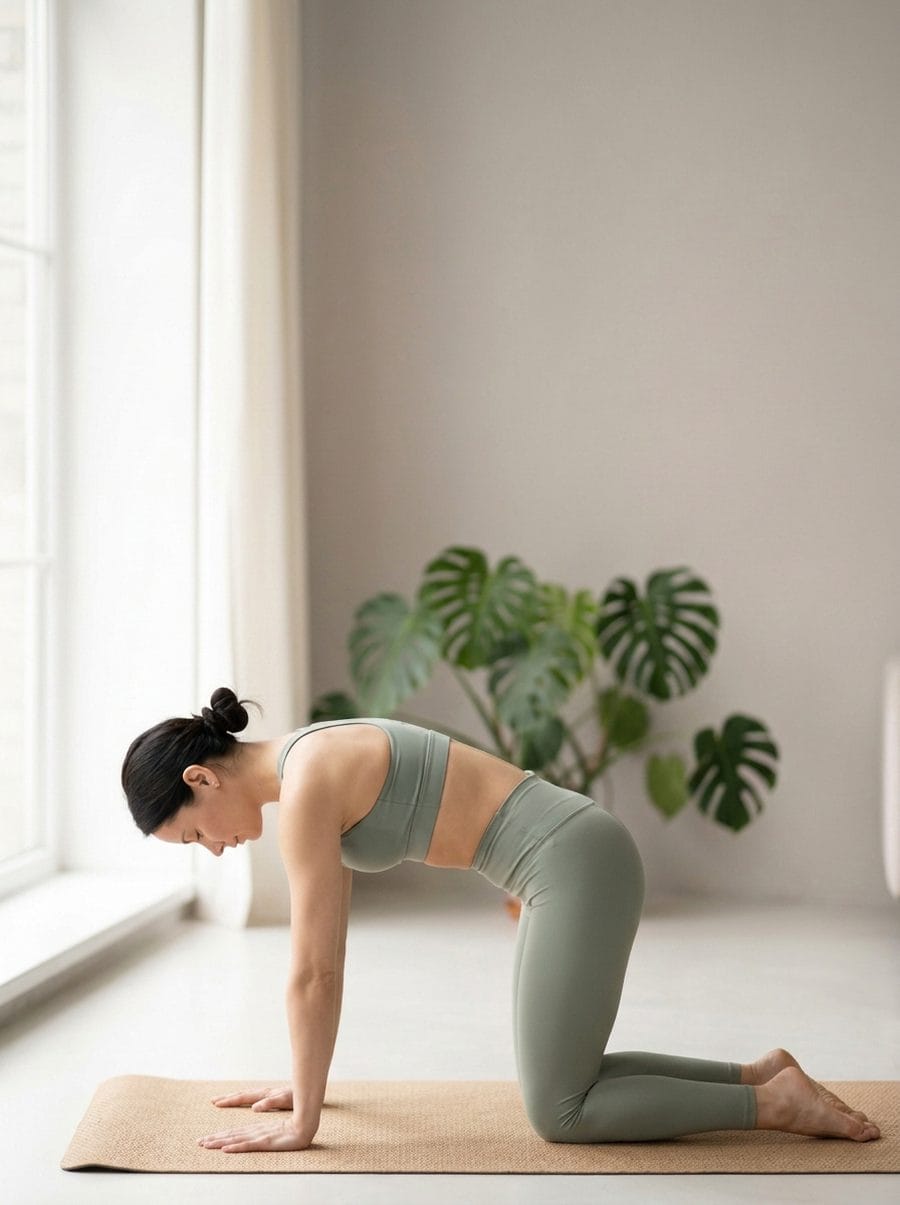
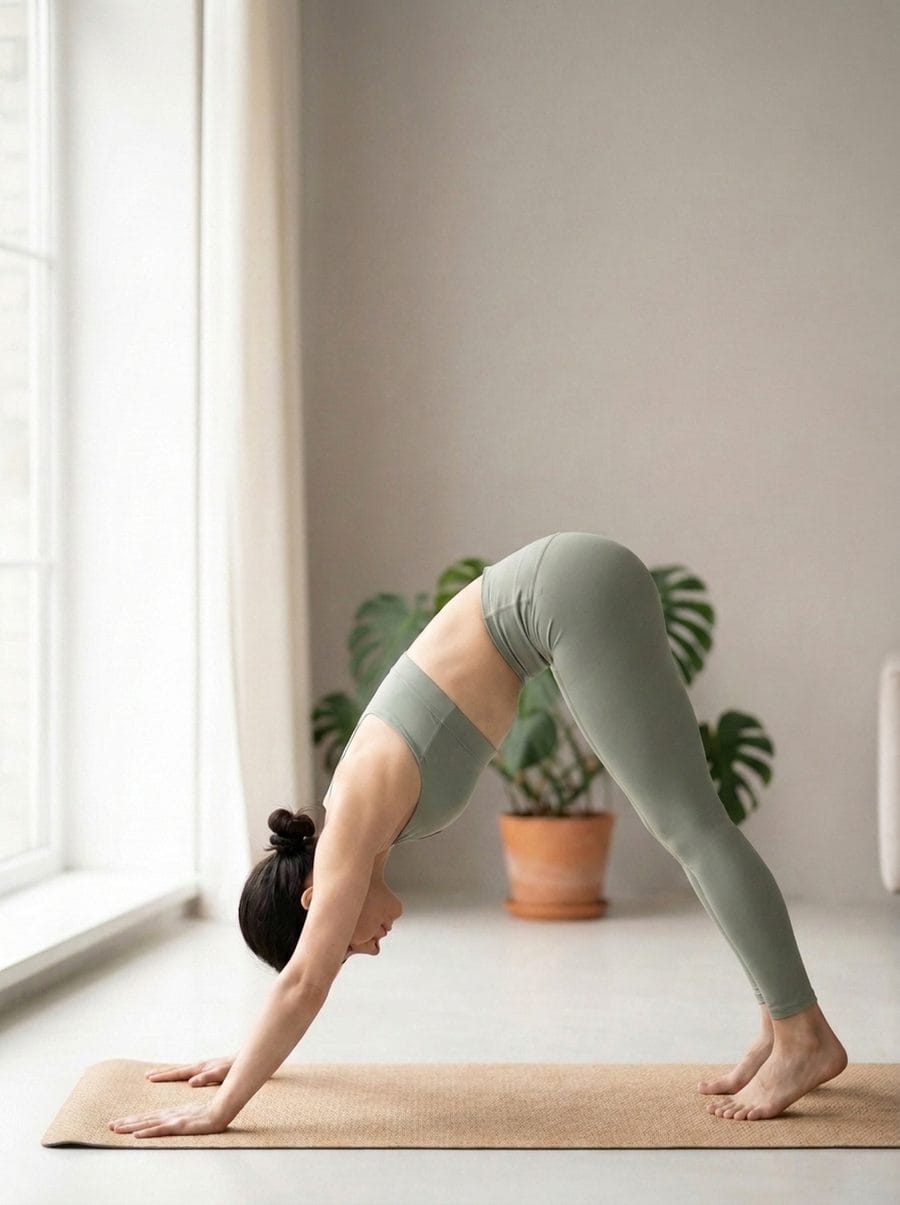
- Spine, 2 minutes. Cat-Cow and Downward-Facing Dog.
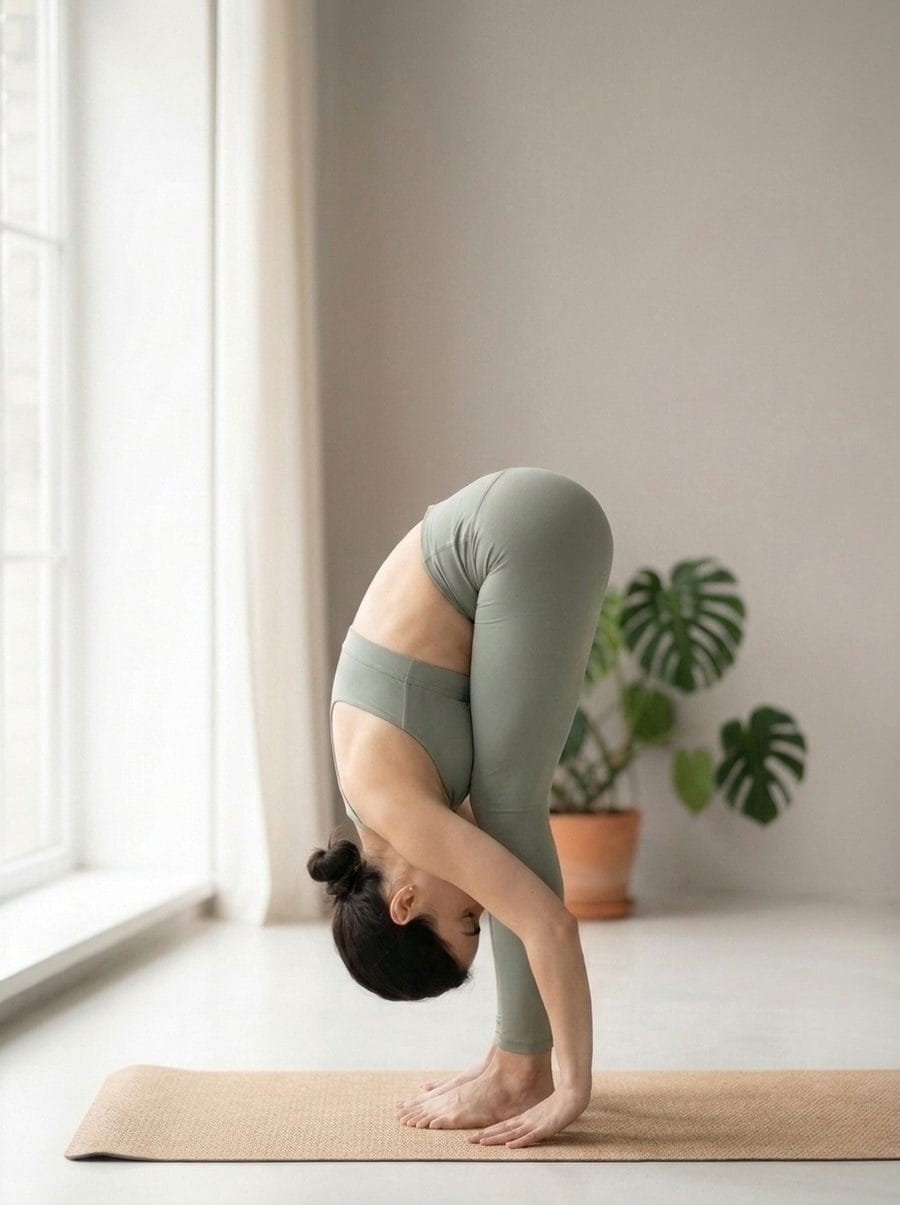
- Stretch, 2 minutes. Standing Forward Fold with soft knees.
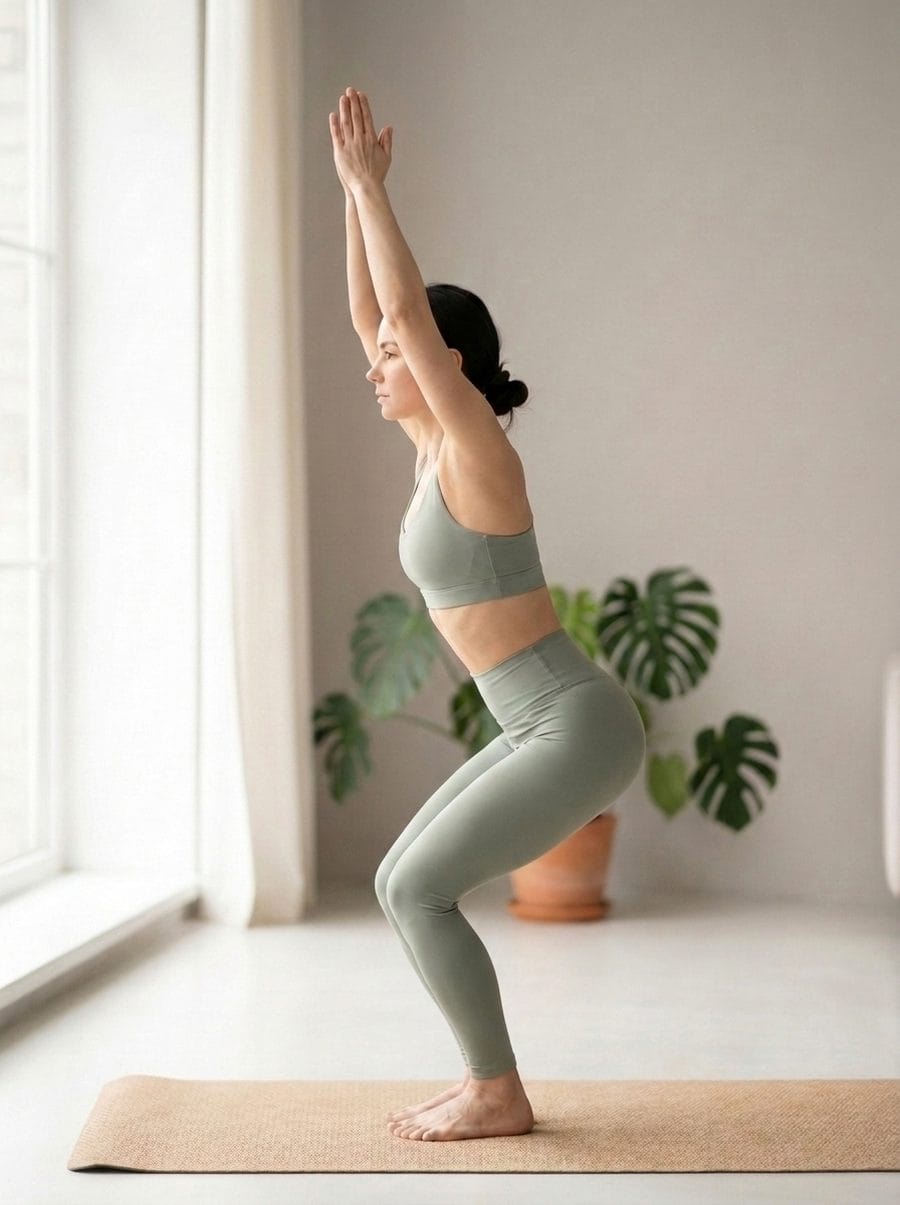
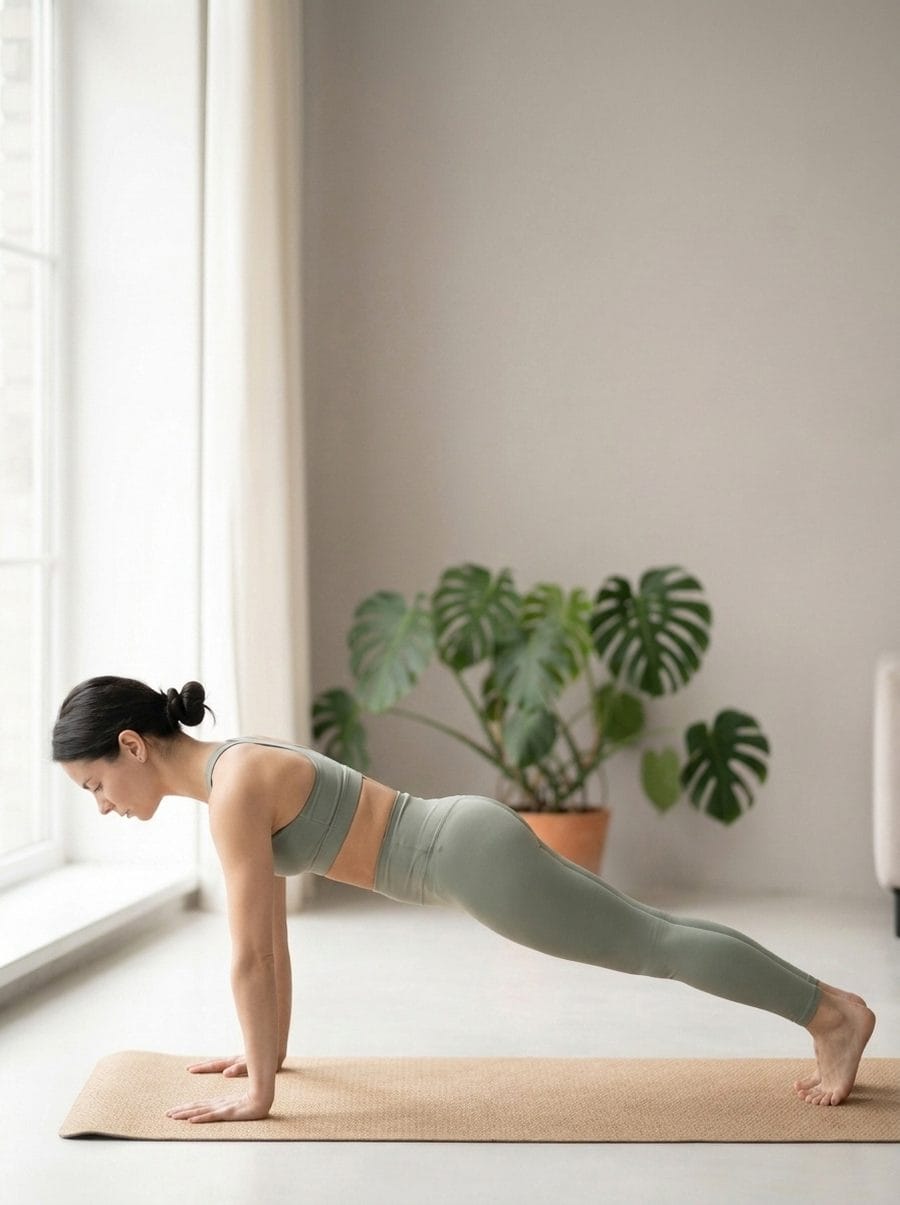
- Strength, 2 minutes. Chair Pose and Plank Pose, 20 to 30 seconds each.
- Energizing finish, 2 minutes. Two slow rounds of Sun Salutation, or one minute of standing quietly in Mountain Pose with even breathing.
If your morning is really tight, keep just the first three steps. Together they make up the ready-made 5-minute Express Warm-Up routine.
Morning exercises at home, step by step
Joint warm-up
Work from the top down. Slow head circles loosen a neck that's stiff from the pillow, and shoulder rolls warm up your shoulder girdle. Side bends from Mountain Pose wake up the muscles along the sides of your torso. Keep every movement smooth and free of jerks, and continue until you feel warm.
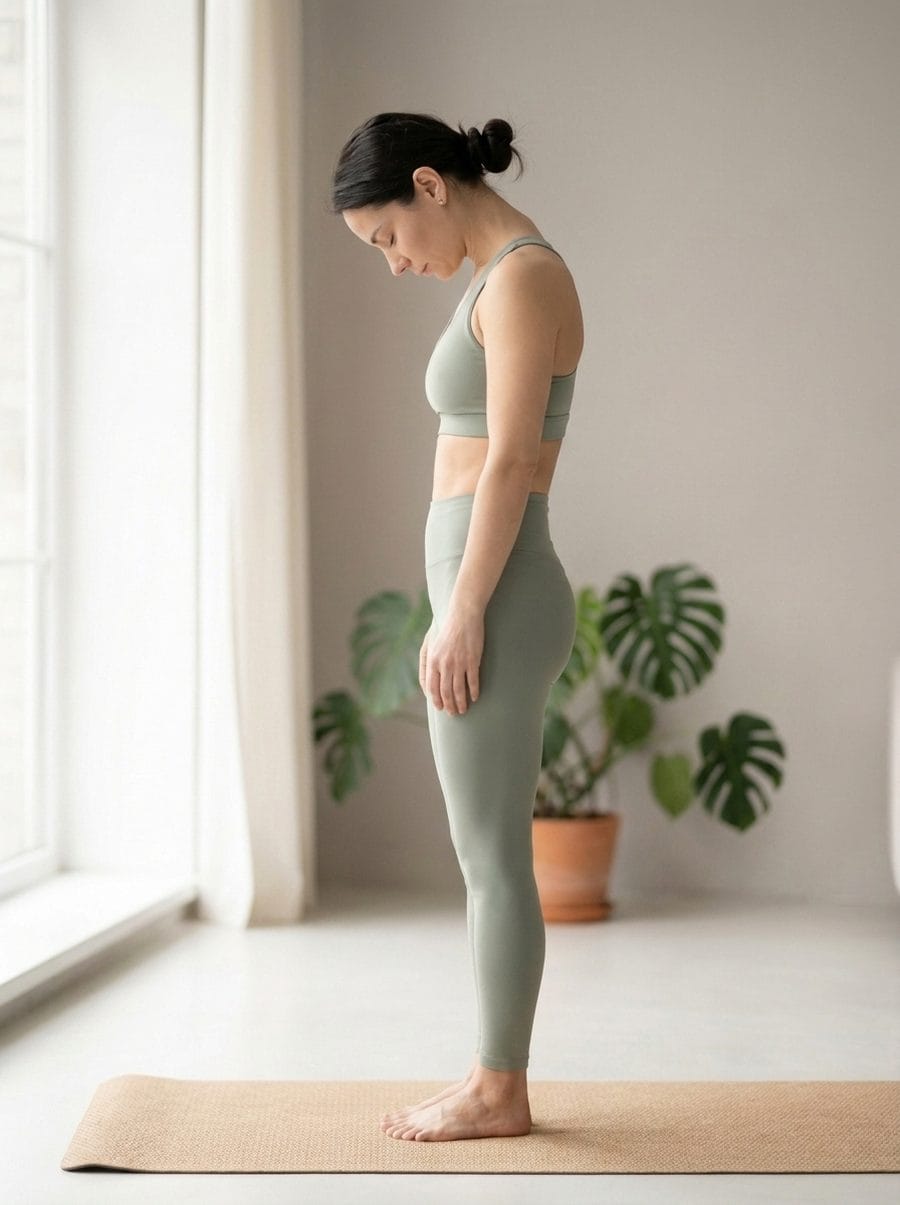

You'll find more joint exercises in the Warm-Up section.
Back stretches
In Cat-Cow your back arches on each inhale and rounds on each exhale, and little by little your spine comes back to life. Downward-Facing Dog stretches the entire back side of the body, heels to the back of the head, while Standing Forward Fold gives your legs a mild stretch.
Your muscles are still short in the morning, so don't hesitate to bend your knees.
A little strength
These two poses switch on your legs and core and leave you feeling awake. Start with 20 seconds and add 5 seconds every week.
Want more? Turn it into morning yoga
Once the routine becomes a habit, it's easy to grow it into a full morning practice. The 10-Minute Morning routine opens with three Sun Salutation rounds and moves on to calm poses, standing and lying down. The 10- and 20-minute morning routines are covered in detail in Morning Yoga.
There's a version in motion, too: the Morning Boost round, five poses you repeat in a loop, moving with your breath. It's intermediate and wakes you up well once your body is used to some effort.
Rules for your morning stretch routine
- Start with a glass of water. A full breakfast comes after your routine, not before it.
- No sudden movements. Jerks and bouncing forward folds in the morning can easily leave your back feeling uncomfortable.
- Breathe through your nose. If you get out of breath, slow down.
- A little every day. Five to ten minutes a day gives you more than half an hour once a week.
- Open a window. Fresh air wakes you up faster than any exercise.
Safety
- Neck Warm-Up. Leave it out if your neck hurts acutely or you feel dizzy.
- Side bends. Skip Mountain Pose with Side Bend during acute lower back pain.
- Cat-Cow. With a wrist injury, practice it on your fists. Skip it if your back hurts acutely.
- Plank Pose. With a wrist injury, hold it on your forearms. With diastasis recti, skip it.
- Chair Pose. Skip it with a knee injury or when lower back problems flare up.
- Downward-Facing Dog. Skip it with wrist or shoulder injuries or glaucoma. With high blood pressure, keep the hold short.
- Standing Forward Fold. Skip it with high blood pressure. When a lumbar disc is herniated, fold with bent knees.
More in Safety and Contraindications.
Pose cautions in this article
- Acute neck pain (Neck Warm-Up)
- Dizziness (Neck Warm-Up)
- Acute lower back pain (Mountain Pose with Side Bend)
- Acute back pain (Cat-Cow)
- Wrist injuries — practice on your fists (Cat-Cow)
- Wrist and shoulder injuries (Downward-Facing Dog)
- High blood pressure — don't stay in the pose long (Downward-Facing Dog)
- Glaucoma (Downward-Facing Dog)
- High blood pressure (Standing Forward Fold)
- Lumbar disc herniation — bend your knees (Standing Forward Fold)
- Knee injuries (Chair Pose)
- Flare-up of lower back problems (Chair Pose)
- Wrist injuries — practice on your forearms (Plank Pose)
- Diastasis recti (Plank Pose)
This site is for general information and is not medical advice. If you have pain, an injury, a chronic condition, or are pregnant, check with a qualified professional before practicing.
Questions
How long should a morning stretch routine be? 5 to 10 minutes is usually enough. That's long enough to warm up your joints and feel awake without being tired before the day even starts.
Morning stretches or yoga: which is better? A short yoga session is a morning routine in itself. It has the same joint warm-up, stretching and strength poses, only with attention on your breathing.
Should you stretch right after waking up? It's better to wait a few minutes: get up, wash your face and drink some water. Your body will already be waking up, and the exercises will come more easily.
Do I need morning stretches if I work out in the evening? Yes. A morning warm-up doesn't replace your workout and doesn't get in its way either. Its purpose is to shake off the stiffness left over from sleep.
Sources
- Exercise technique, cautions and the contents of the routines: the Hatha Yoga app. More about how we check our texts on the How We Prepare Our Content page.
Read next
- Yoga for Arthritis and Osteoporosis: How to Protect Your Joints and Bones7 min read
- Ashtanga Yoga Explained: The Series, the Breath and the Difference from Hatha6 min read
- Ayurveda Explained Simply: The Basics and a Daily Routine (Dinacharya)5 min read
- Balance Exercises: 10 Yoga Poses for Balance and Stability7 min read