 Hatha Yoga
Chair Pose
Utkaṭāsana
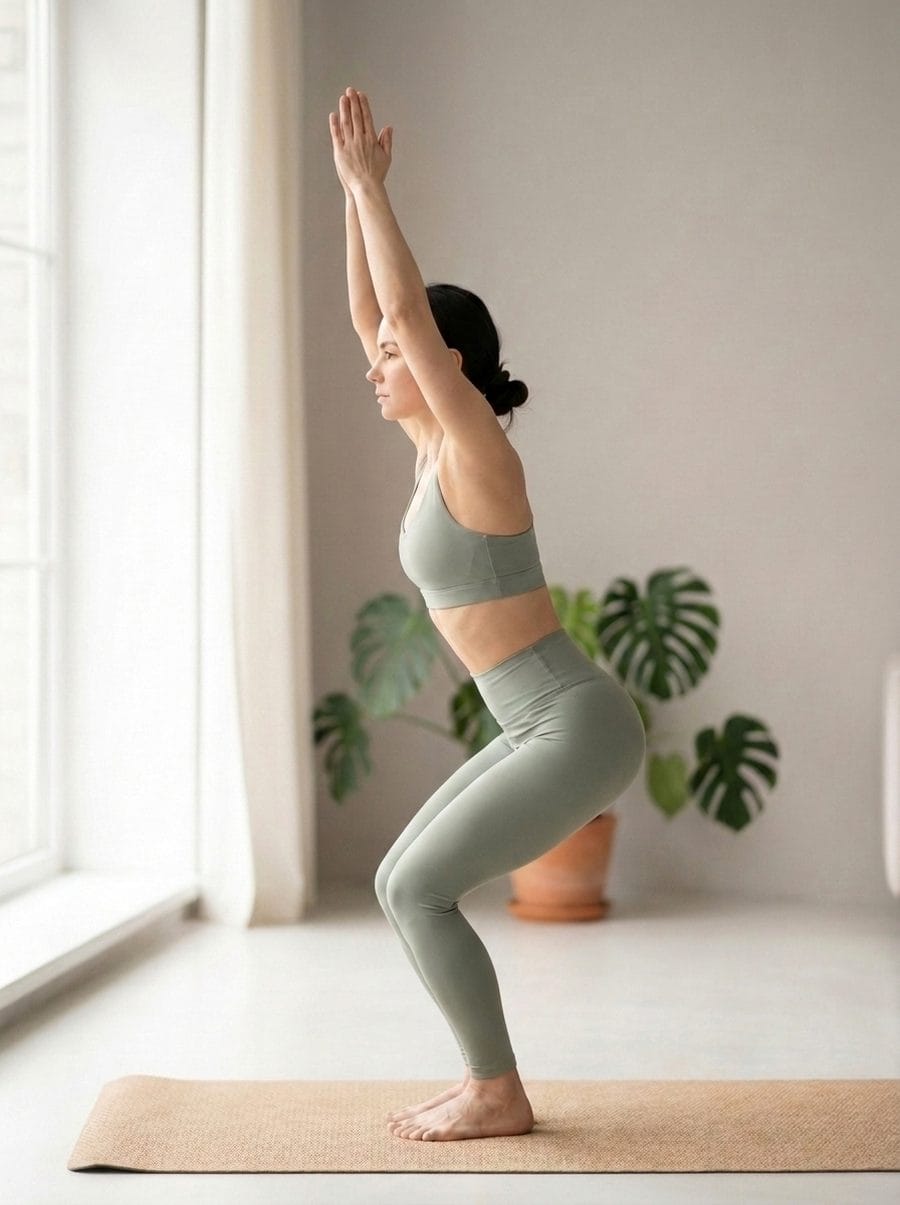
Utkatasana, or Chair Pose, is a strength-building standing pose: your knees bend and your hips move back and down as if you were sitting on an invisible chair. The Sanskrit "utkata" is translated as "powerful" or "fierce," and your legs really do work at full capacity here.
In the app the pose appears in 4 sequences, and three of them, including Strength & Tone, open with it. It's also part of 4 flows.
How to do it
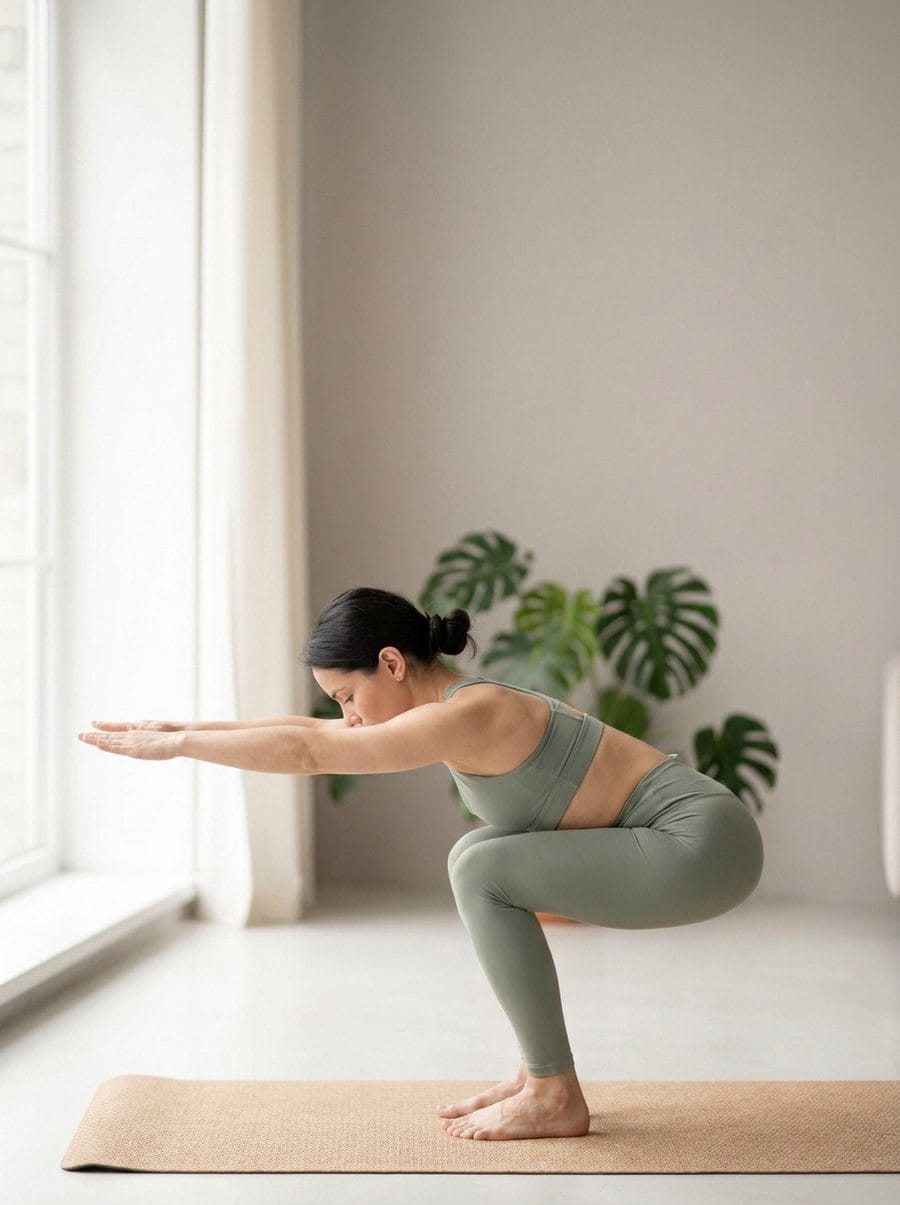
- EnterFrom Mountain Pose, bend your knees and send your hips back and down, as if sitting into a chair. Reach your arms up or forward.
- HoldWeight in your heels, knees behind your toes. Tailbone slightly tucked, belly engaged. Breathe evenly, even as your legs work hard.
- ExitInhale, straighten your legs and lower your arms.
More detail
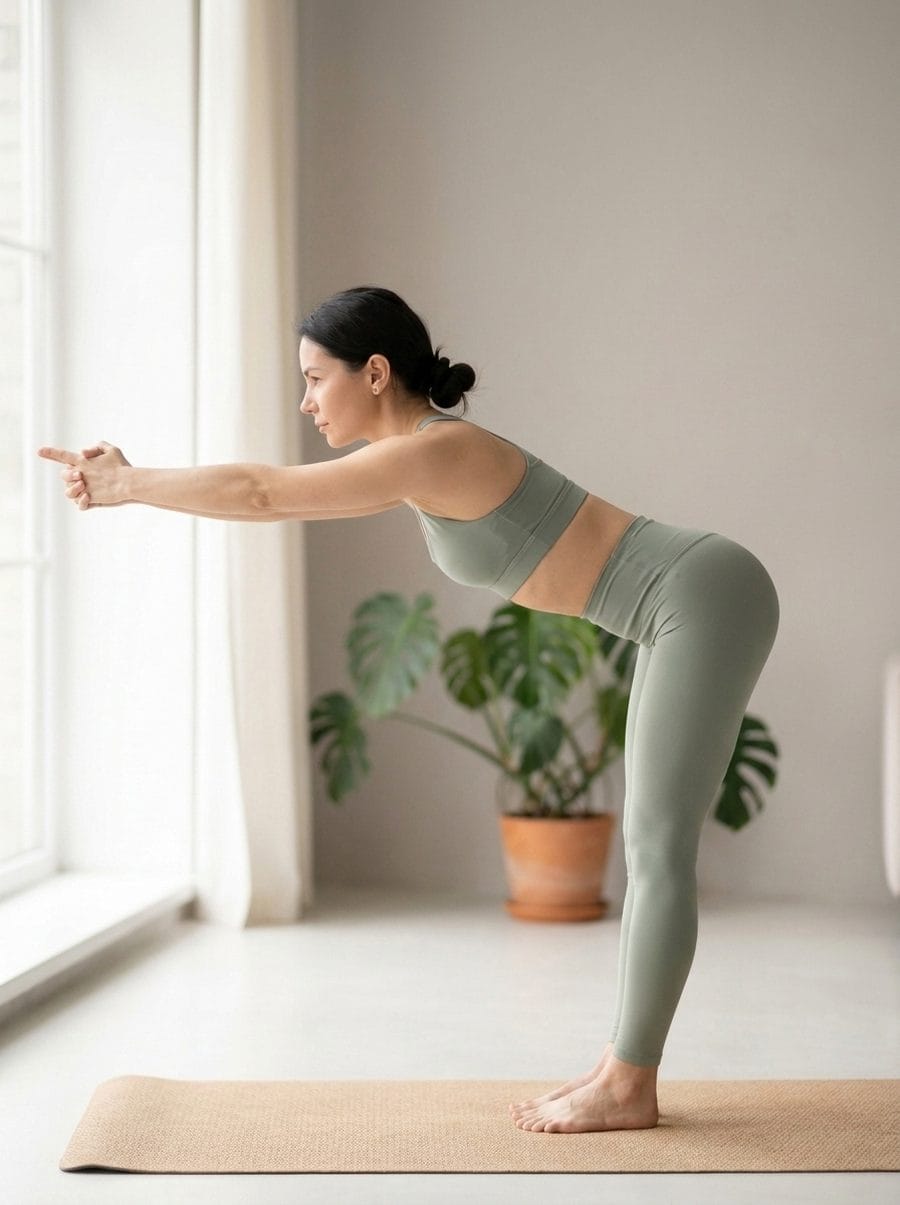
Build depth gradually; your thighs don't have to be parallel to the floor right away. Your feet can touch or sit hip-width apart; the wider stance is steadier. Your torso leans forward roughly in line with your shins, so there's no need to hold it upright.
Checking your weight is easy: lift your toes, and if you can still stand, your weight really is in your heels. If keeping your arms overhead tires your shoulders, bring your palms together at your chest.
Benefits
Strengthens the thighs, glutes, and core muscles.
Chair Pose strengthens the fronts of your thighs, your glutes and your core, and it warms up your body fast. That's precisely why it's placed at the start of strength sequences. It also trains you to keep your knees tracking over your feet, a skill that comes in handy in lunges and squats.
Cautions
- Knee injuries
- Flare-up of lower back problems
This site is for general information and is not medical advice. If you have pain, an injury, a chronic condition, or are pregnant, check with a qualified professional before practicing.
Common mistakes
- Knees caving inward. Your knees point the same way as your toes.
- Overarching the lower back so the ribs stick out. Drop your lower ribs and draw your belly in.
- Shifting your weight onto your toes.
- Hiking your shoulders up along with your arms. Neck free, shoulders down.
Modifications & variations
Counterpose
Where it appears
- Strength & Tone 25 min · Intermediate
- Classic Full Practice 50 min · Intermediate
- Energy Boost 15 min · Intermediate
- Advanced Intensive 35 min · Advanced
- Warm-up: Big Round The classic round: standing — arm support — belly-down — standing
- Warm-up: Equilibrium Tree Pose and Boat Pose: two balances, each with a prep and a counterpose
- Warm-up: Morning Boost Upright, squat, and backbend — an energizing wake-up with no weight on the hands
- Warm-up: Heart Opener Two backbends with different mechanics — Camel Pose from the knees and Upward-Facing Dog from the floor — with active counterposes: a stretch and a forward fold
Similar poses
Questions
What if my knees hurt in Chair Pose? Knee injuries are a contraindication for this pose. Without one, sit less deep and make sure your knees don't move past your toes or drift inward. If the pain doesn't go away, see a doctor.
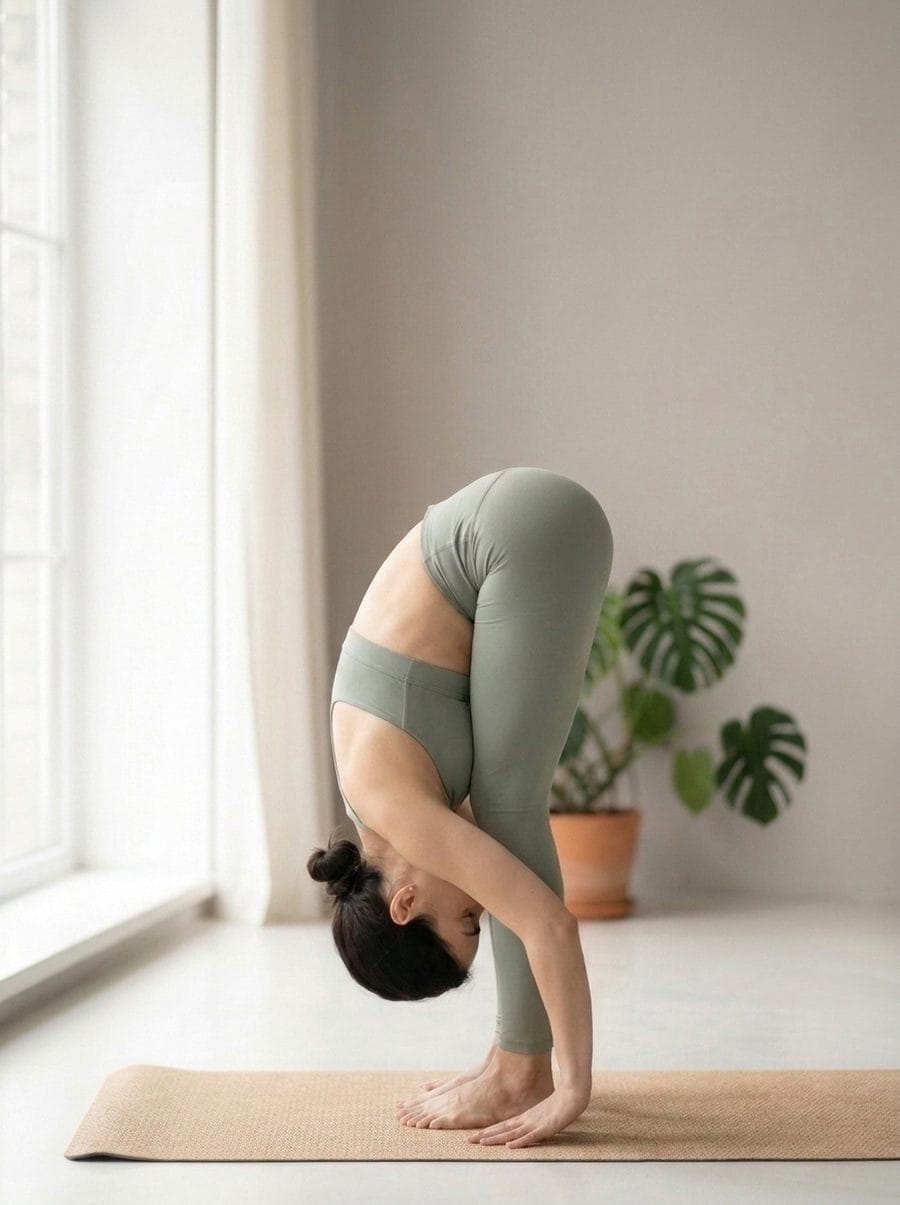
What hold time works for Utkatasana? The app's card for Chair gives 30 seconds. In sequences the hold grows from 35 to 75 seconds, with the longest in Strength & Tone. Right after Chair, it feels good to relax your legs by hanging down into Standing Forward Fold.
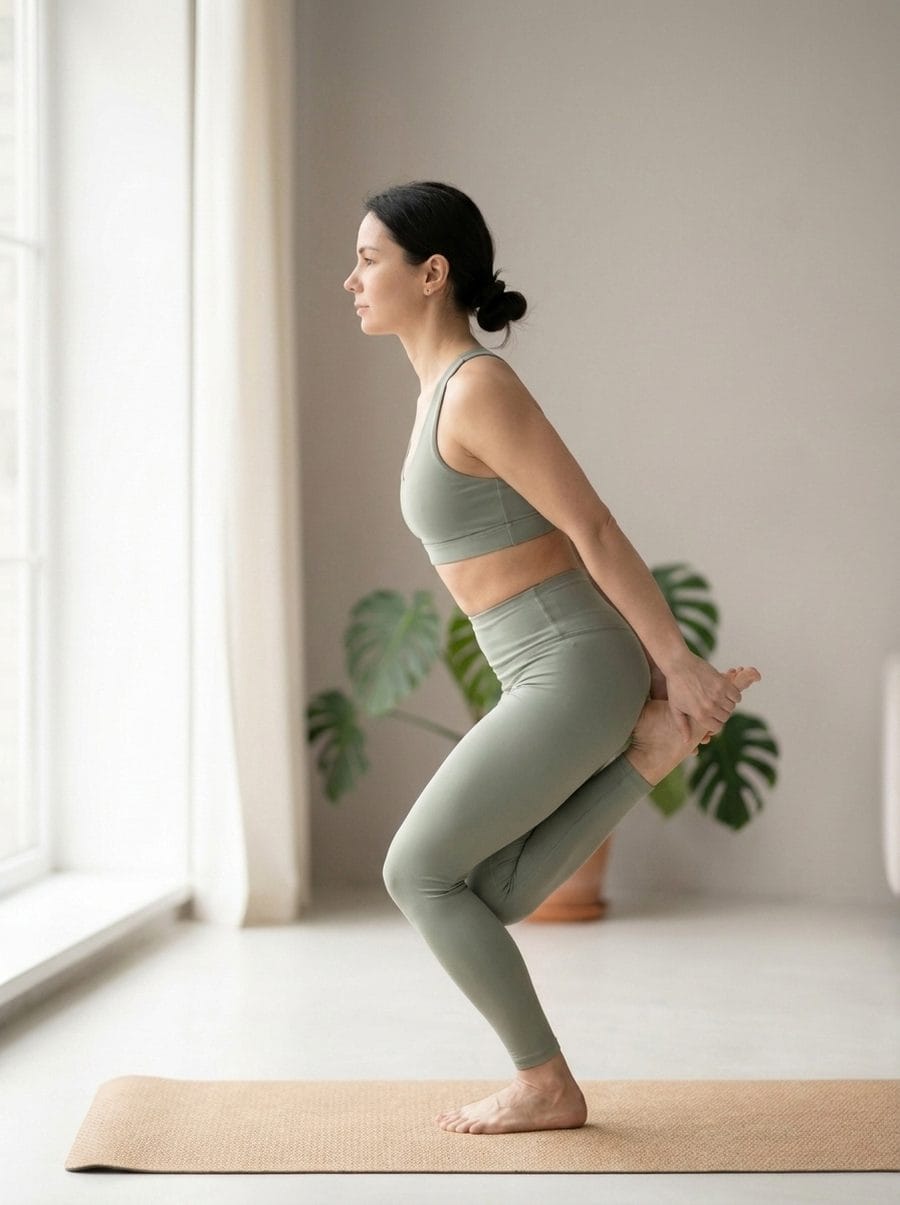
How can I make the pose harder? Cross one ankle over the opposite thigh and balance in Chair on one leg. Another route is to add a twist in Chair, so rotation joins the work of your legs.
Updated: