 Hatha Yoga
Equilibrium: a standing and seated balance flow
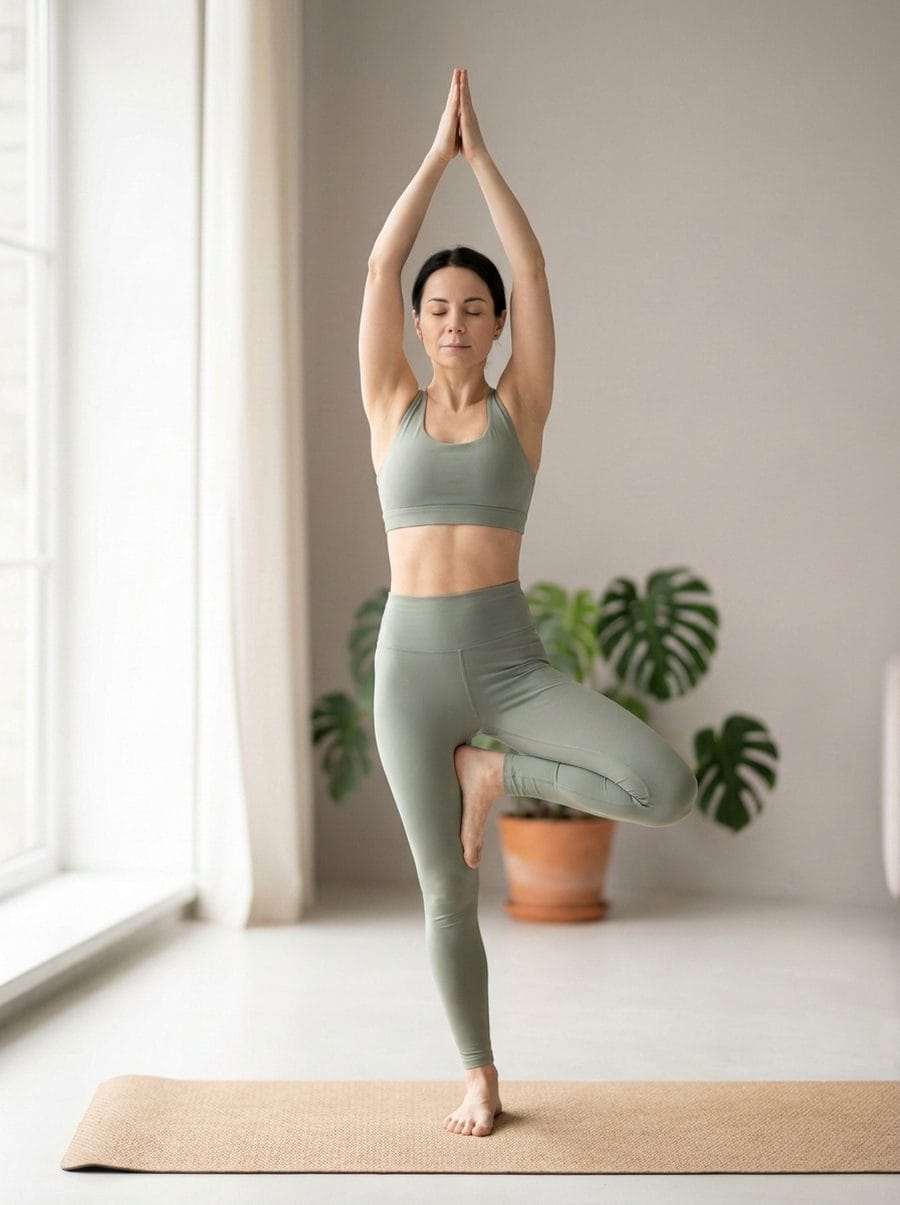
Tree Pose and Boat Pose: two balances, each with a prep and a counterpose
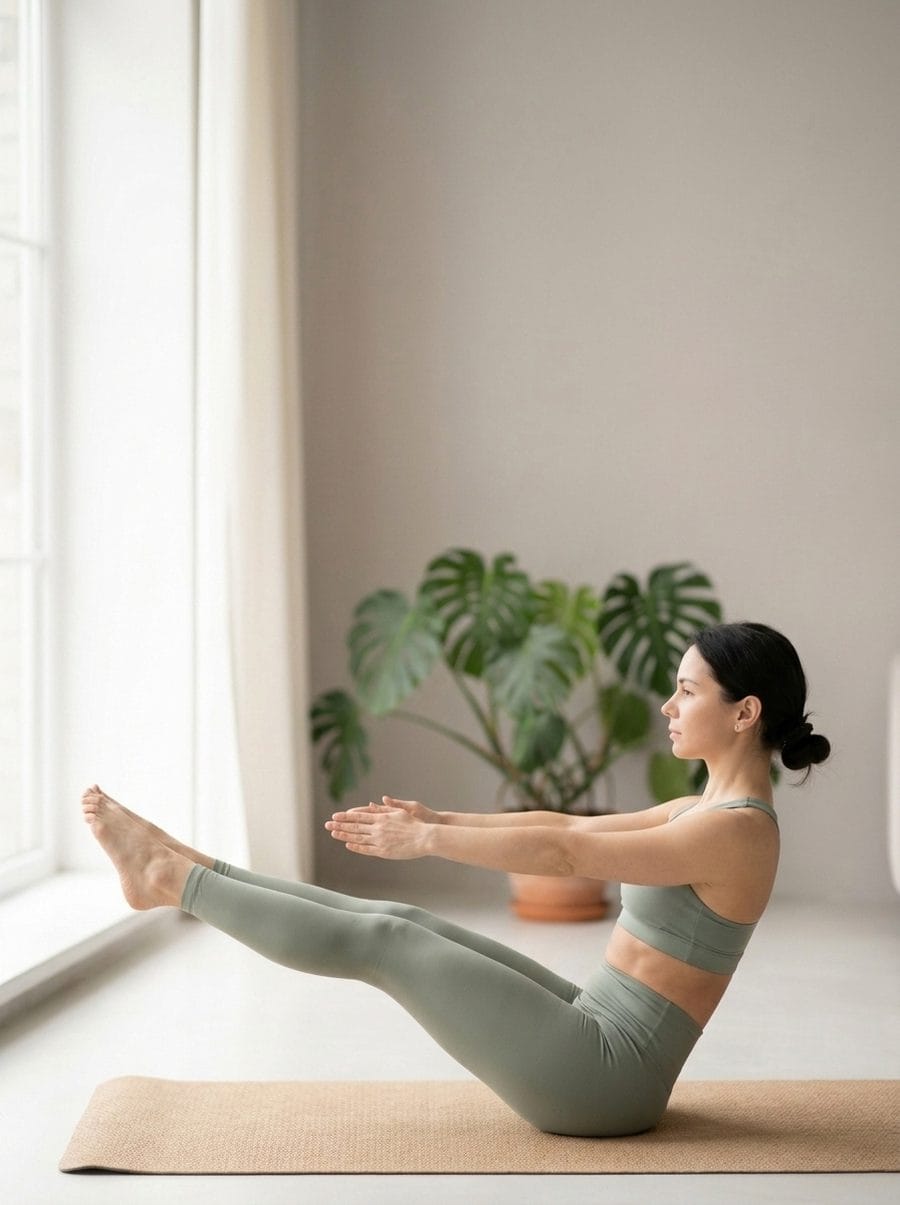
This flow is built around two balances: Tree Pose holds you steady standing, and Boat does the same seated. The other poses prepare you for them and release the load afterward. The level is intermediate. If your balance is still shaky, stand near a wall and fix your gaze on one point, and if you feel dizzy, keep the toes of your lifted foot on the floor.
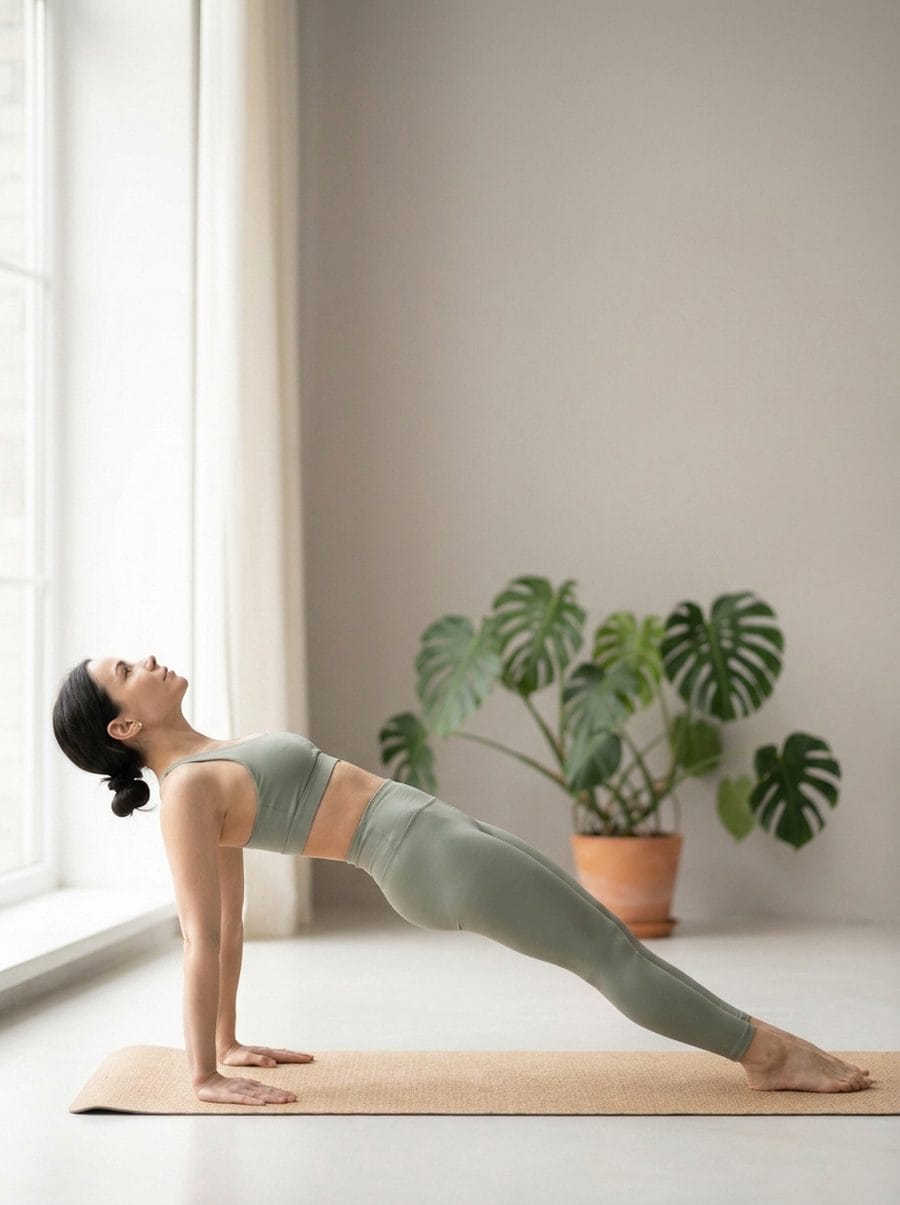
Pregnant students drop it starting with the second trimester, since Boat compresses the belly. With wrist injuries, Reverse Plank is replaced by a bent-knee tabletop.
Why this order
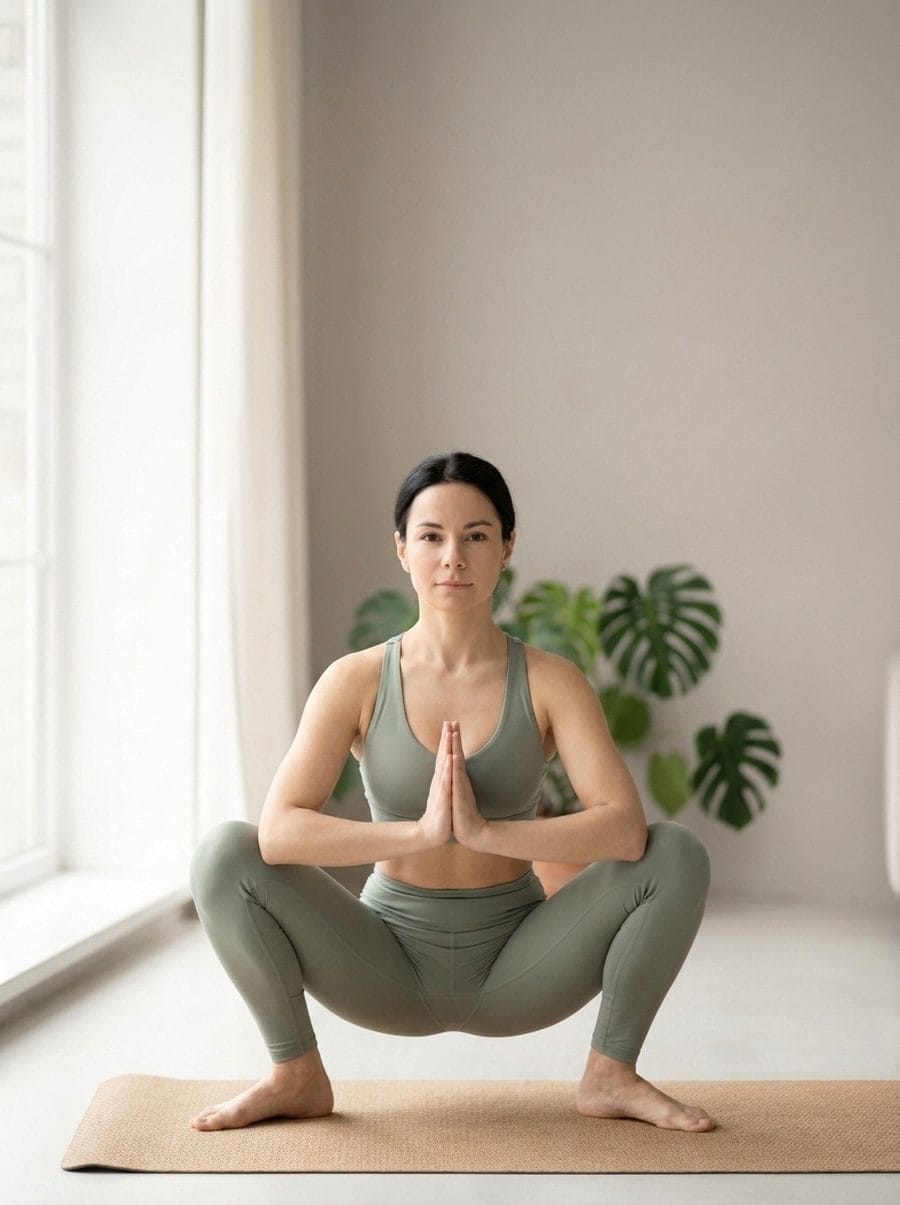
Tree gets the most time: two cycles to enter and two to hold, and both legs take a turn in it every round. The deep squat of Garland brings your weight back onto both feet, from there you sit into Boat and hold it for two breaths.
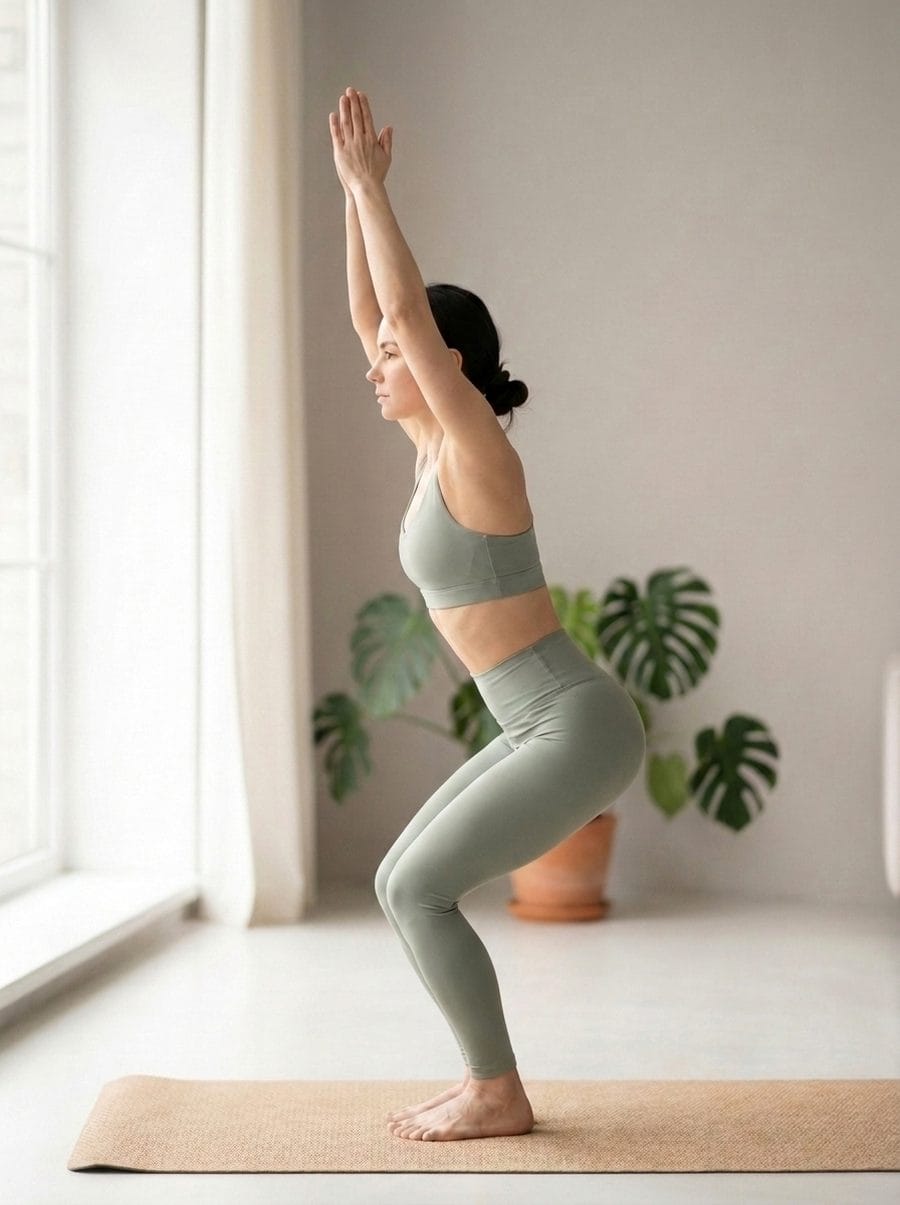
Reverse Plank turns your chest and hips up after the compression, and Chair puts you back on your feet and readies you for the next Tree. After the last round, stand in Mountain Pose and notice how much steadier your body has become.
Cautions
- Dizziness — practice near a wall (Tree Pose)
- Knee injuries (Garland Pose, Chair Pose)
- If your heels don't reach the floor, place a blanket under them (Garland Pose)
- Lumbar disc herniation (Boat Pose)
- Pregnancy (Boat Pose)
- Diastasis recti (Boat Pose)
- Wrist and shoulder injuries (Reverse Plank)
- Neck injuries — don't drop your head back (Reverse Plank)
- Flare-up of lower back problems (Chair Pose)
This site is for general information and is not medical advice. If you have pain, an injury, a chronic condition, or are pregnant, check with a qualified professional before practicing.