 Hatha Yoga
Reverse Plank
Pūrvottānāsana
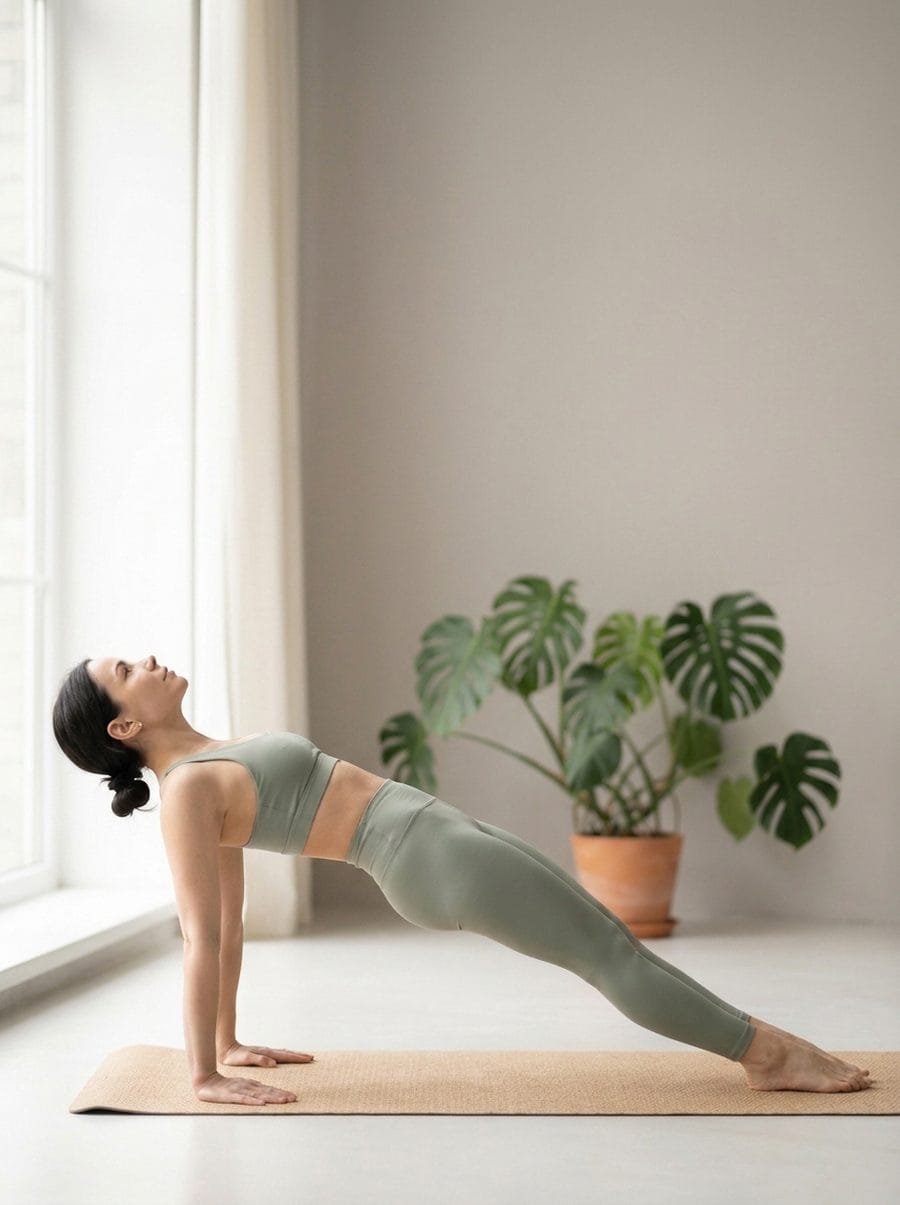
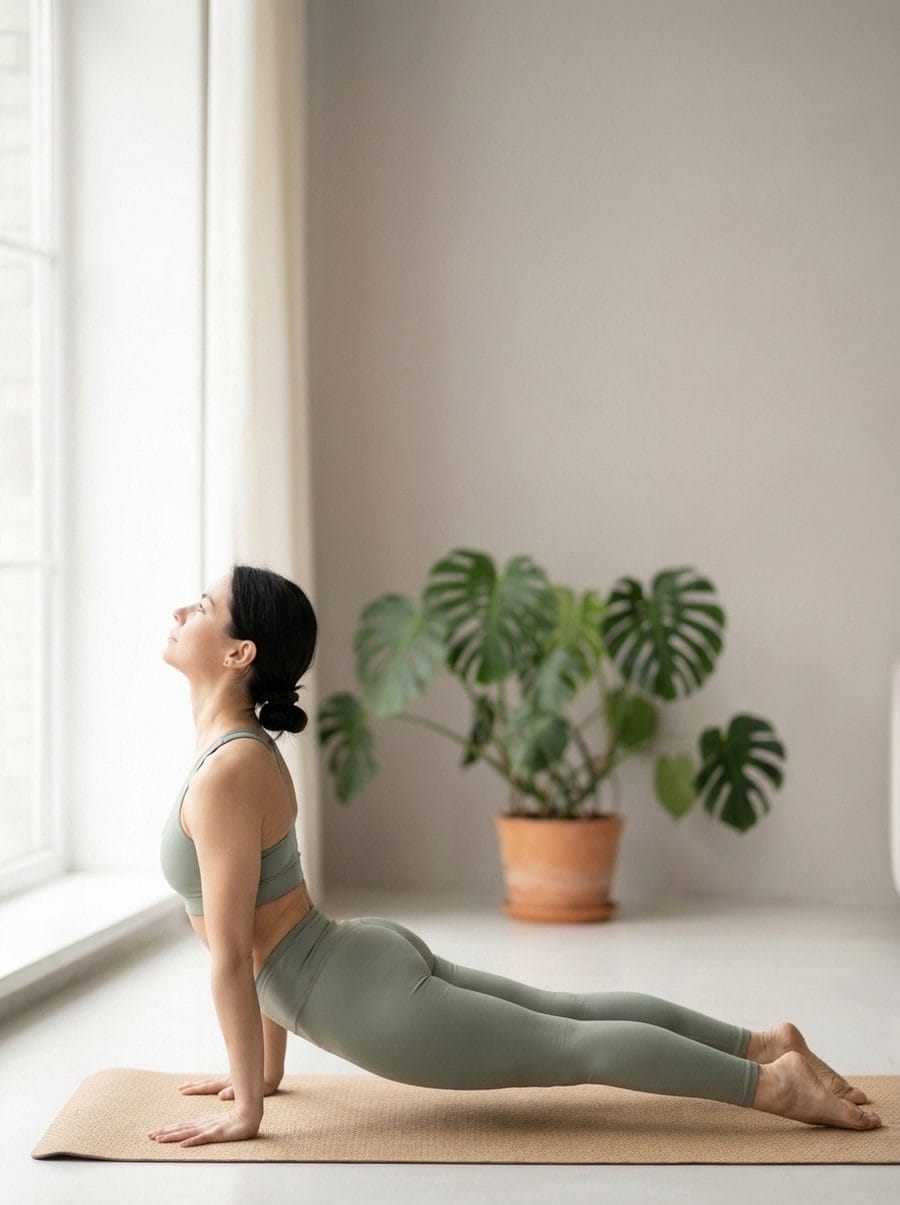
Reverse Plank, or Purvottanasana, puts you face up on your palms and heels, hips lifted, body slanting in one straight line from shoulders to feet. The name means "stretch of the east side," and in yoga the east side is the front of the body.
It's intermediate; the card times it at 20 seconds. Strong Core gives it 50 seconds, and the Equilibrium flow lifts into it on an inhale right after Boat Pose.
How to do it
- EnterSit with your legs straight and place your palms behind your hips, fingers pointing forward. Inhale and lift your hips, stretching your body into one line, soles of the feet reaching toward the floor.
- HoldShoulders over wrists, hips lifting, chest opening. Keep your head neutral, or gently let it drop back if your neck is healthy.
- ExitExhale and slowly lower your hips to the floor.
More detail
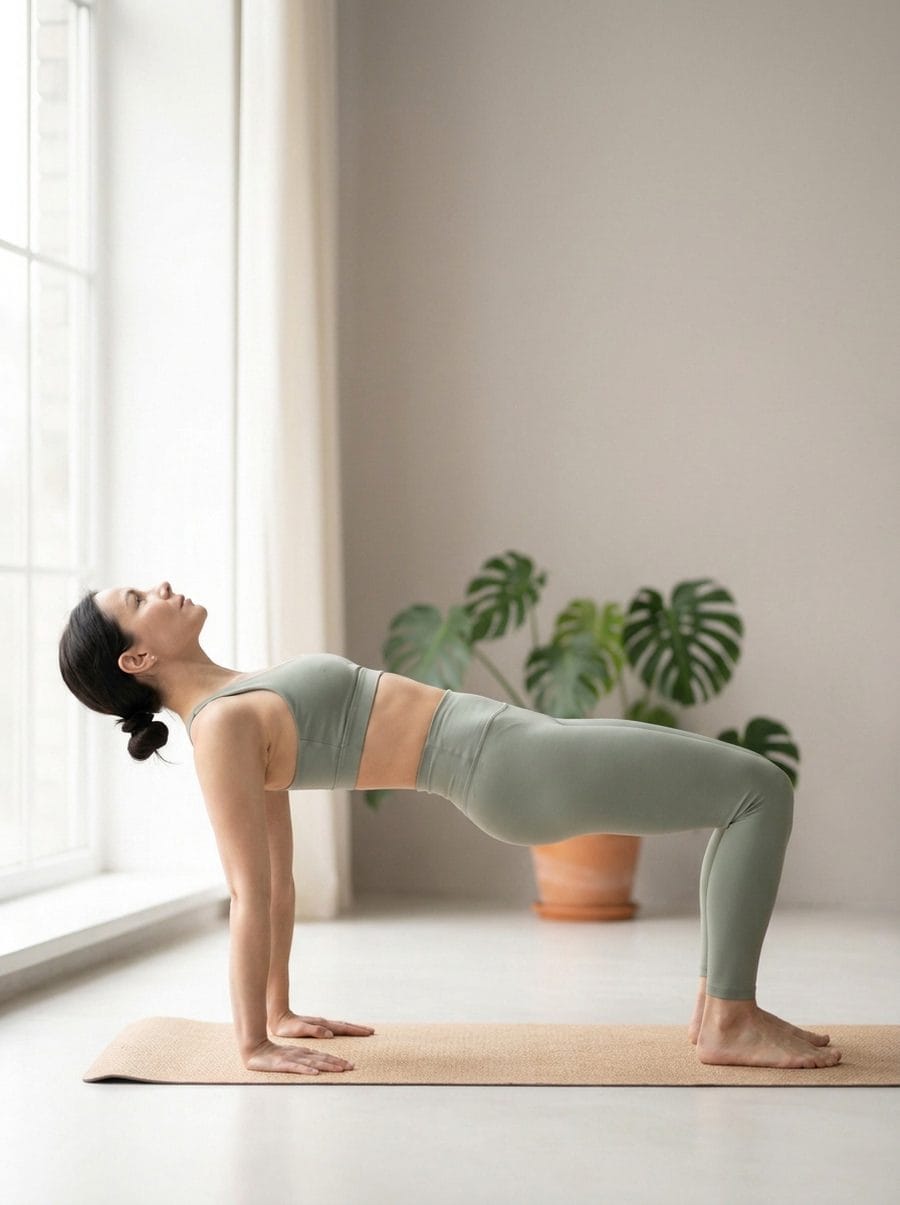
If Reverse Plank doesn't hold yet, start with Reverse Tabletop Pose: same support, but with bent knees and noticeably less load on the arms. For the full version, sit with straight legs and set your hands shoulder-width apart, a couple of palm-lengths behind your hips, fingers pointing toward your feet.
Before lifting, press your heels down and engage your glutes: the lift comes from them, with the arms simply propping you up. Reach your soles toward the floor if your ankles allow. Keep your neck neutral; the app allows a gentle release backward only for a healthy neck. After the hold, rest in Child's Pose.
Benefits
A counterpose to forward folds: opens the entire front of the body and strengthens the arms.
Purvottanasana stretches open your entire front body, including the chest, shoulders and fronts of the thighs, and strengthens your arms, back and hamstrings. It counterbalances forward folds and core work, which is why the flow places it right after Boat.
Cautions
- Wrist and shoulder injuries
- Neck injuries — don't drop your head back
This site is for general information and is not medical advice. If you have pain, an injury, a chronic condition, or are pregnant, check with a qualified professional before practicing.
Common mistakes
- Sagging hips. Your glutes keep them in line with shoulders and heels.
- Shoulders hiking up and chest caving. Widen across the collarbones.
- Hands too far behind you. Your shoulders should land over your wrists.
- Throwing your head back abruptly, especially with a sensitive neck.
Modifications & variations
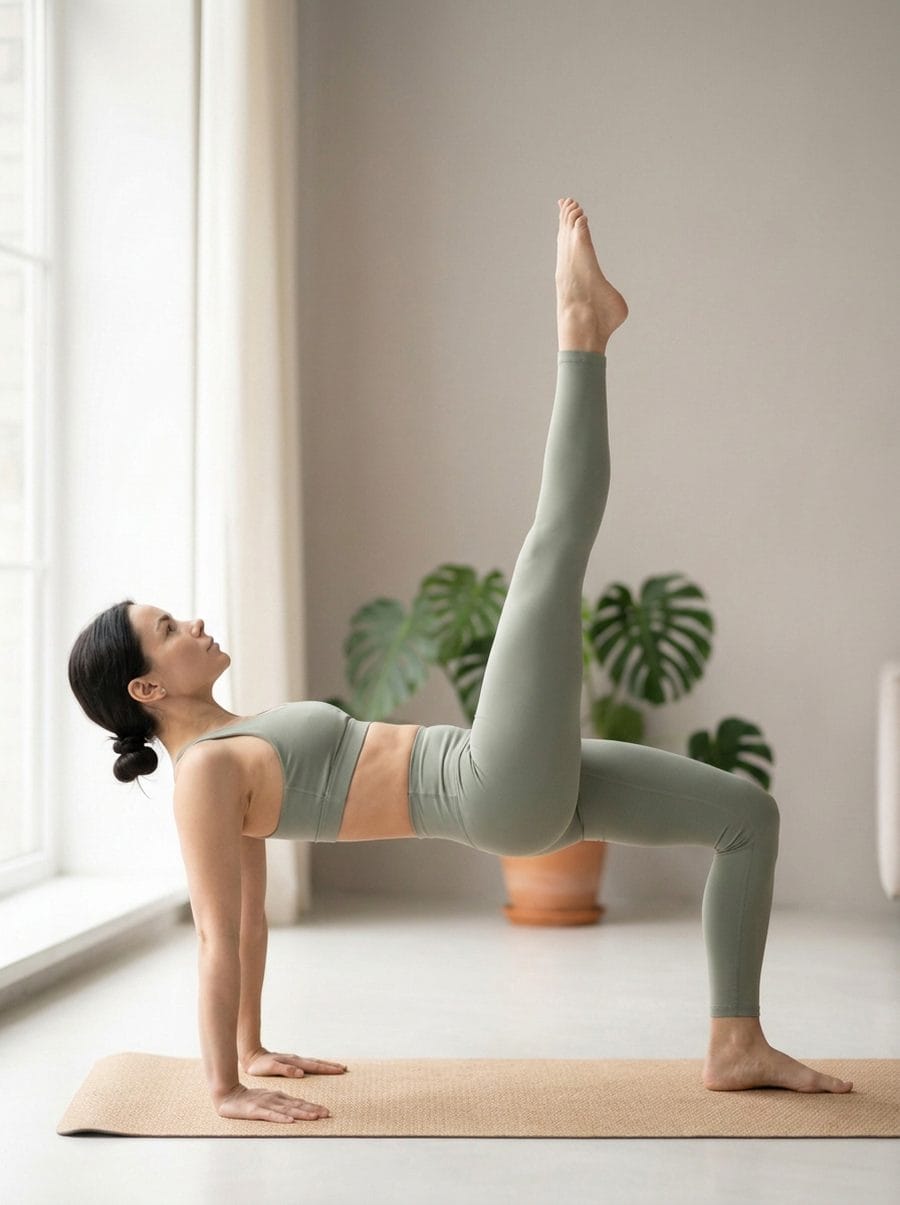
Counterpose

Where it appears
- Strong Core 15 min · Intermediate
- Warm-up: Equilibrium Tree Pose and Boat Pose: two balances, each with a prep and a counterpose
Similar poses
Questions
Who should avoid Reverse Plank? Leave Reverse Plank out after any wrist or shoulder injury; the app excludes it. An injured neck: hold your head level, never tipped back.
What does Purvottanasana mean? "Purva" literally means east, and in yoga it refers to the front side of the body; "uttana" is an intense stretch. Together: a stretch of the entire front body, which is exactly what happens in the pose.
Can I do Purvottanasana with bent knees? Yes, that's Reverse Tabletop, or Ardha Purvottanasana, a beginner pose. It's a convenient starting point before you move to straight legs.
Featured in
Updated: