 Hatha Yoga
Yoga for Abs: Core Poses, the Plank Exercise and a 15-Minute Routine
Hatha Yoga editorial team · Updated · 6 min read
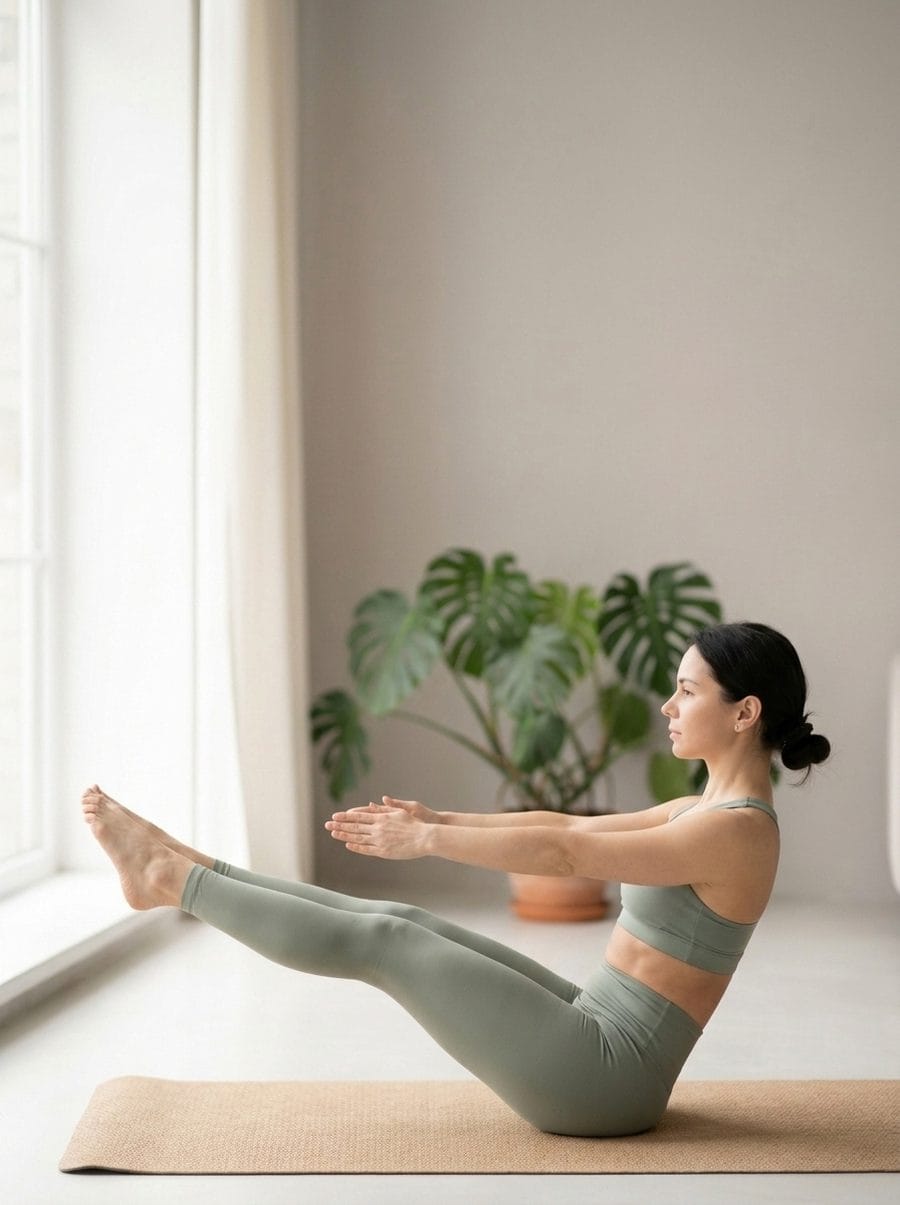
Yoga for abs looks nothing like a hundred crunches in a row. Your abdominal muscles work through holds instead: in a plank, in Boat Pose, on all fours and lying on your back, all while your breathing stays steady. That builds strength across your whole core: the front and side abs, the deep stabilizing muscles and your back.
Below you'll find 10 poses from easy to hard, a breakdown of the plank exercise, a 15-minute routine and an honest answer about a flat stomach.
What your core muscles actually are
Your core is more than a six-pack. It includes the rectus abdominis at the front, the obliques along your sides, the deep transverse muscle that wraps your waist like a built-in corset, the muscles along your spine, the diaphragm and the pelvic floor.
Together they hold your spine steady when you stand, lift a grocery bag or shift your weight from one foot to the other.
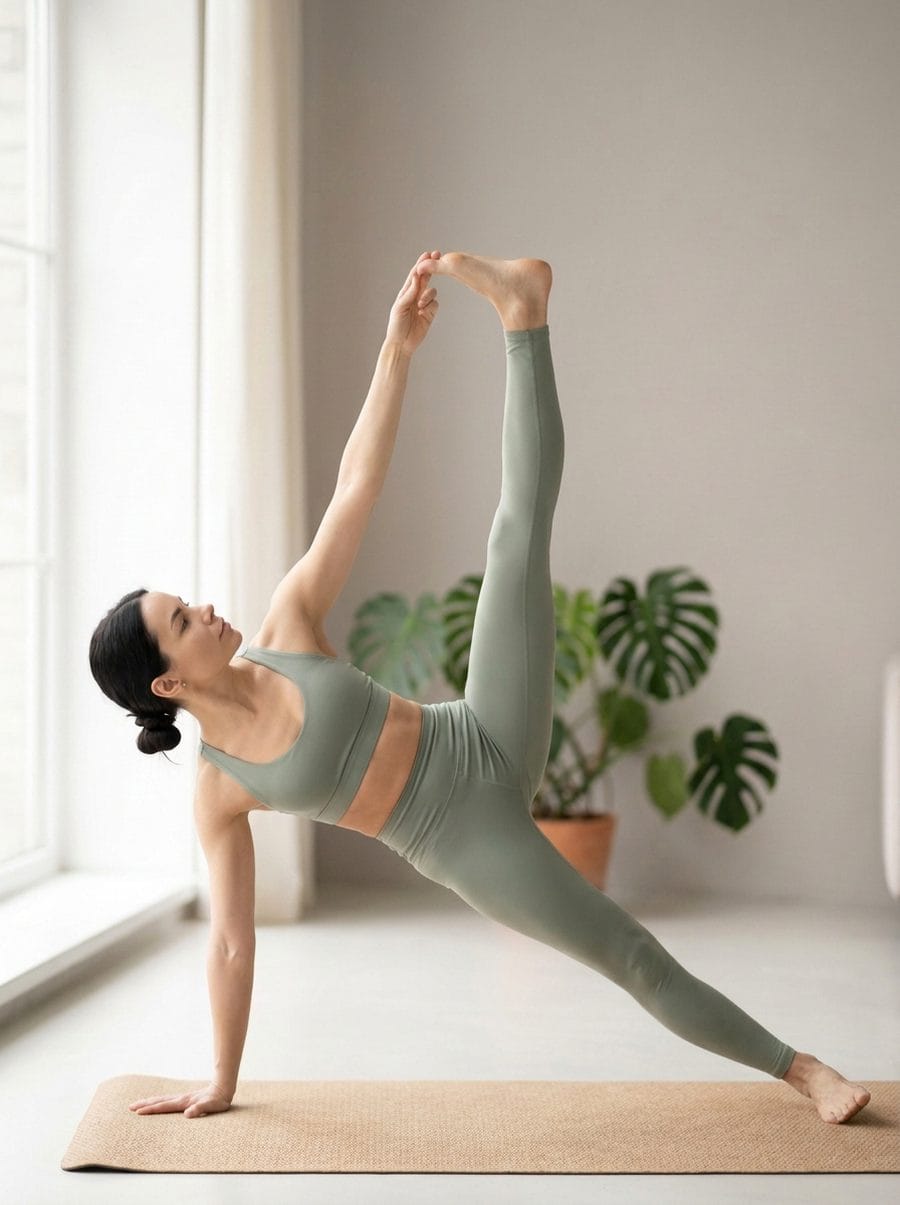
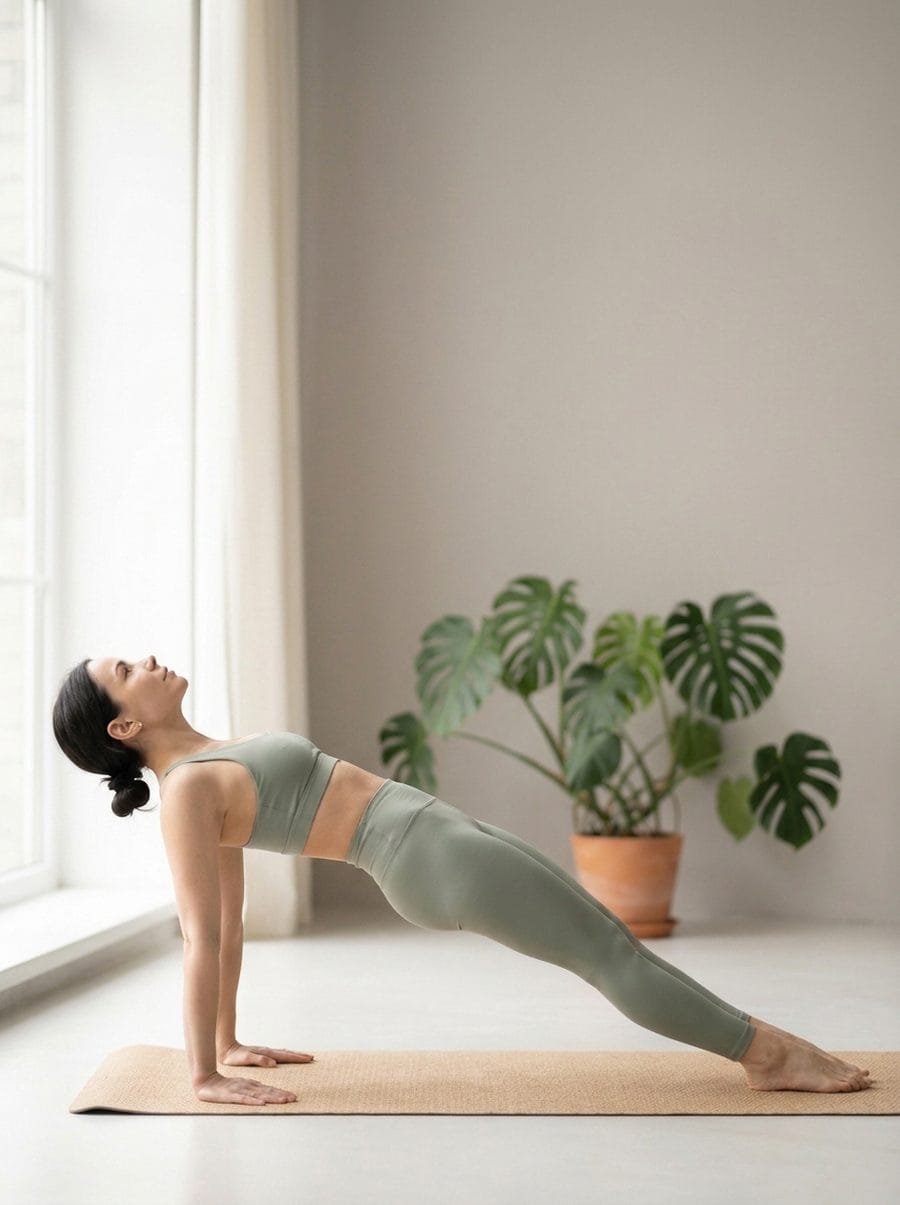
So a solid ab workout loads your trunk from every side: front, sides and back. Yoga does this with poses where you have to keep your body still and aligned. Plank Pose challenges the whole trunk, Side Plank adds the obliques, and Reverse Plank brings in your back and glutes.
The plank exercise: form and hold times
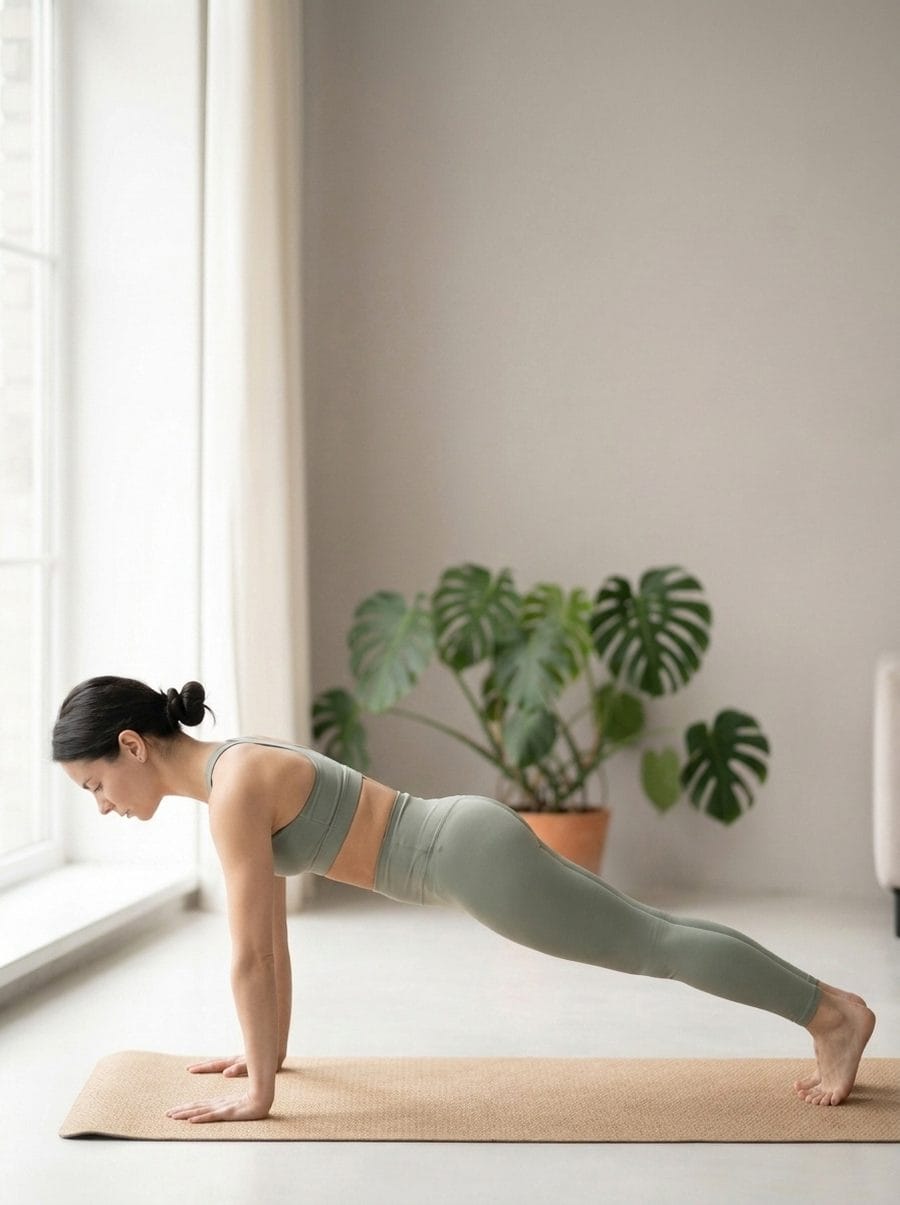
The plank is the foundational strength pose in yoga. It looks simple, but the details make it work:
- Hands under your shoulders, fingers spread, pressing the floor away.
- One straight line from the crown of your head to your heels: no sagging hips, no hips piked up like a tent.
- Belly drawn in, tailbone tucked slightly, legs engaged.
- Even breathing. If your breath turns ragged, the hold is too long for now.
In the app, the default plank hold is 30 seconds, and in strength routines it lasts anywhere from 35 to 75 seconds. Begin at 20 to 30 seconds with rests between sets, then add 5 to 10 seconds as long as your form stays clean. There's no need to chase records; keeping the line matters more.
If your wrists are injured, hold the plank on your forearms. Beginners can start with their knees on the floor. Full technique and common mistakes are on the Plank Pose page.
10 yoga poses for abs and core strength
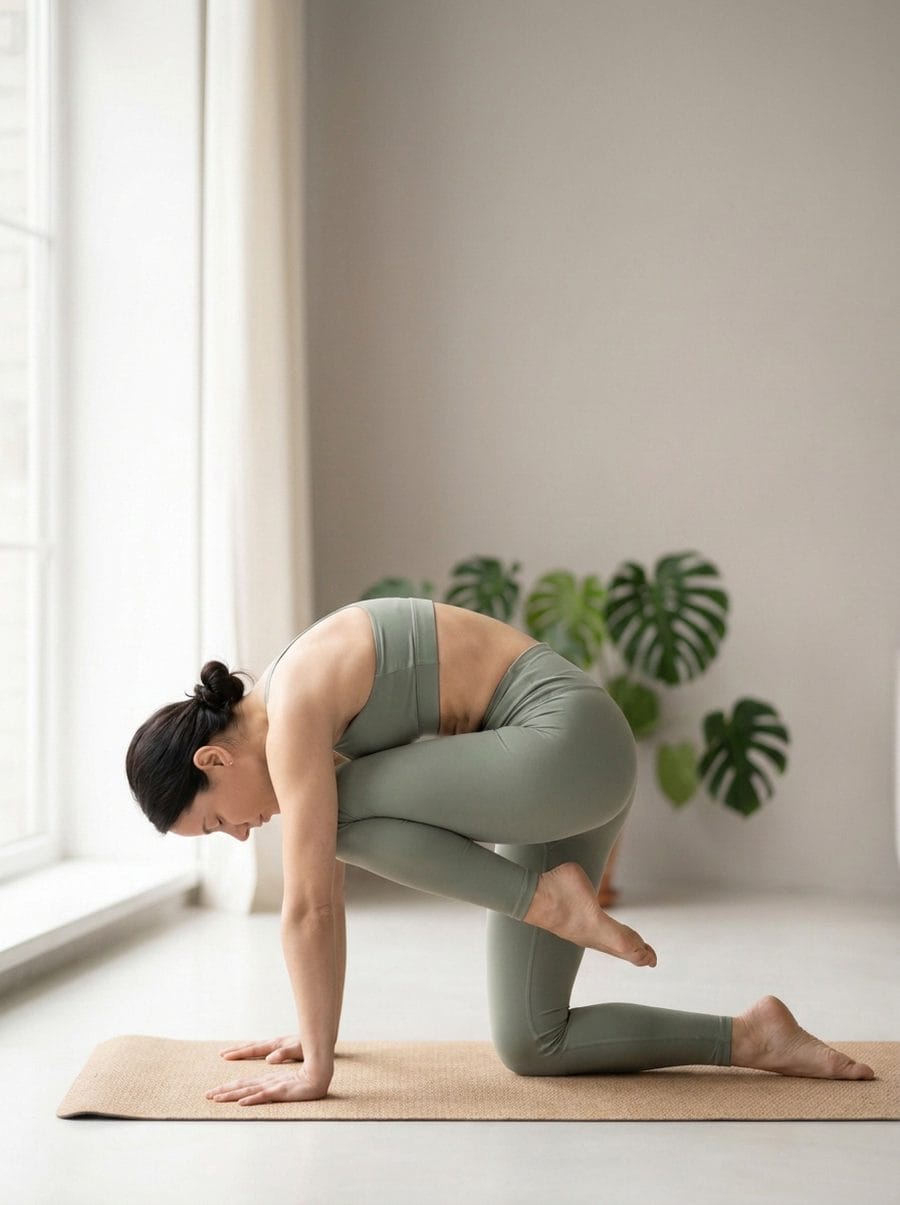
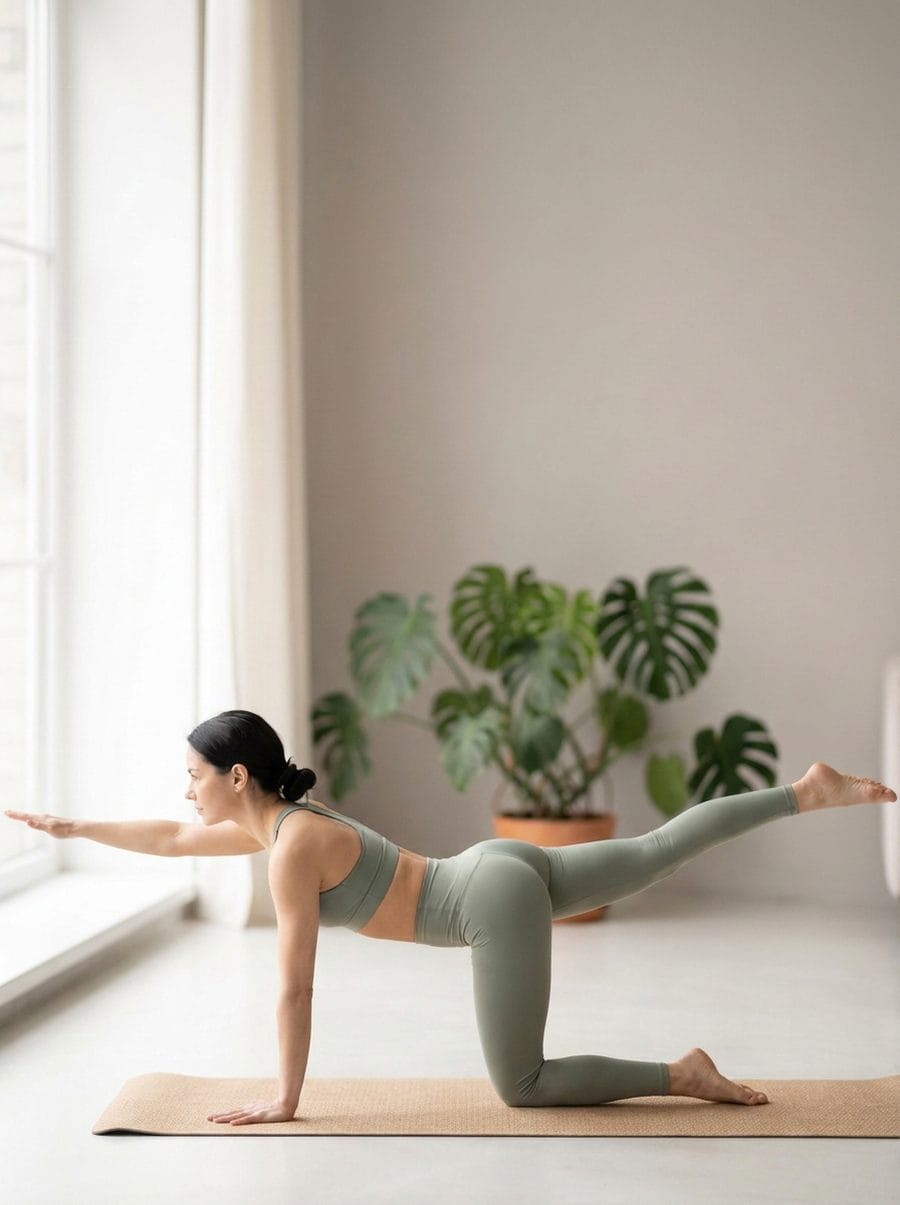
Start on all fours
These two are a good fit while a full plank still feels hard. Knee-to-Forehead Cat fires up the deep abdominal muscles as you exhale. Bird Dog trains you to hold your pelvis and shoulders square while the opposite arm and leg reach away from each other.
Three planks
Together they load your trunk from three directions. Side Plank gets easier if you lower your bottom knee to the floor. In Reverse Plank your chest opens toward the ceiling while your hips rise on the power of your glutes and hamstrings.
On your back
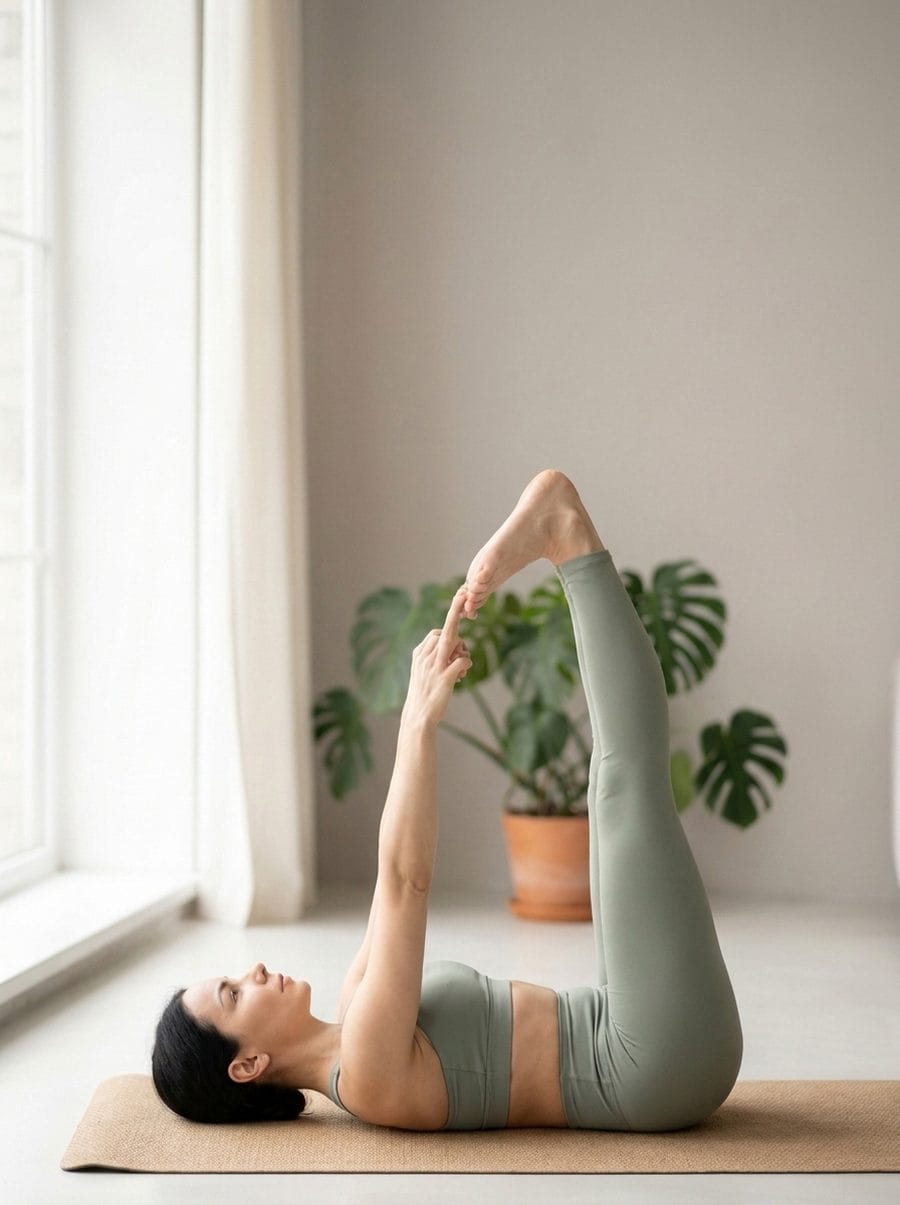
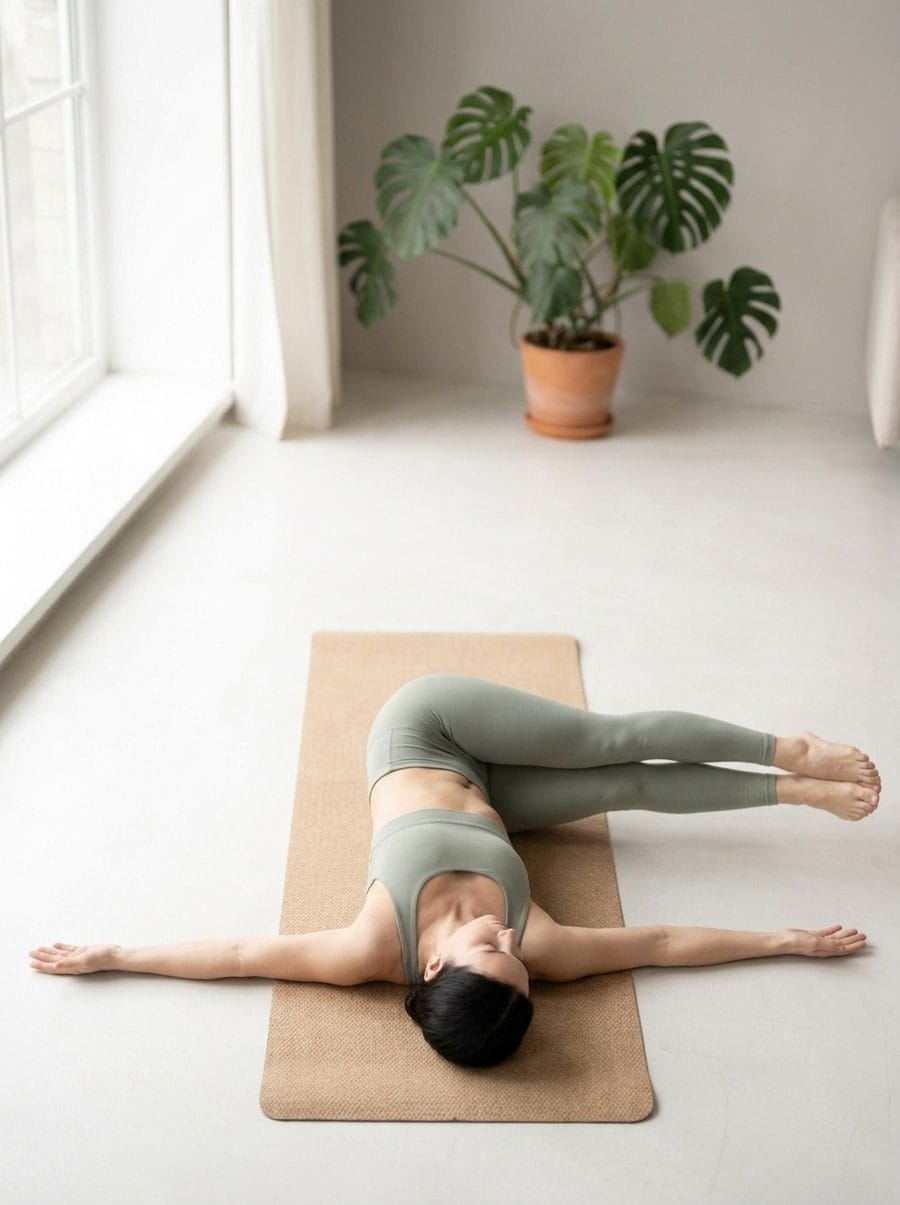
Right-Angle Leg Raise is the gentlest way into ab work lying down. Your lower back stays pressed to the floor, and if it aches, tuck your palms beneath your sacrum. In Revolved Abdomen Pose your straight legs lower to one side without touching the floor, so the obliques work at full capacity. Your shoulders stay on the mat the whole time.
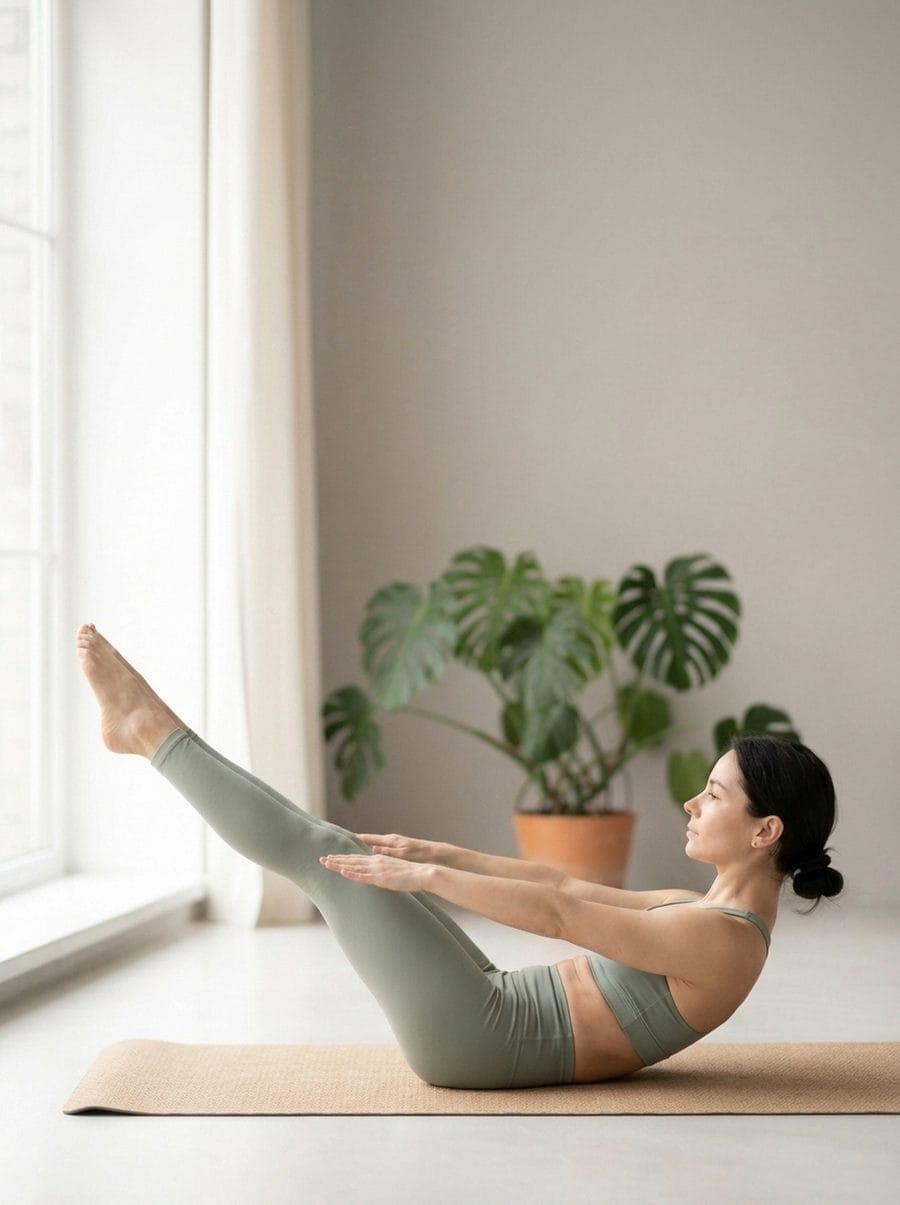
Boat and Half Boat
Boat Pose builds abdominal strength and seated balance. Keep your back long, and bend your knees more as soon as your lower back starts to round. Half Boat Pose lowers your torso and legs closer to the floor and targets the lower belly. In both, keep breathing evenly.
Rest
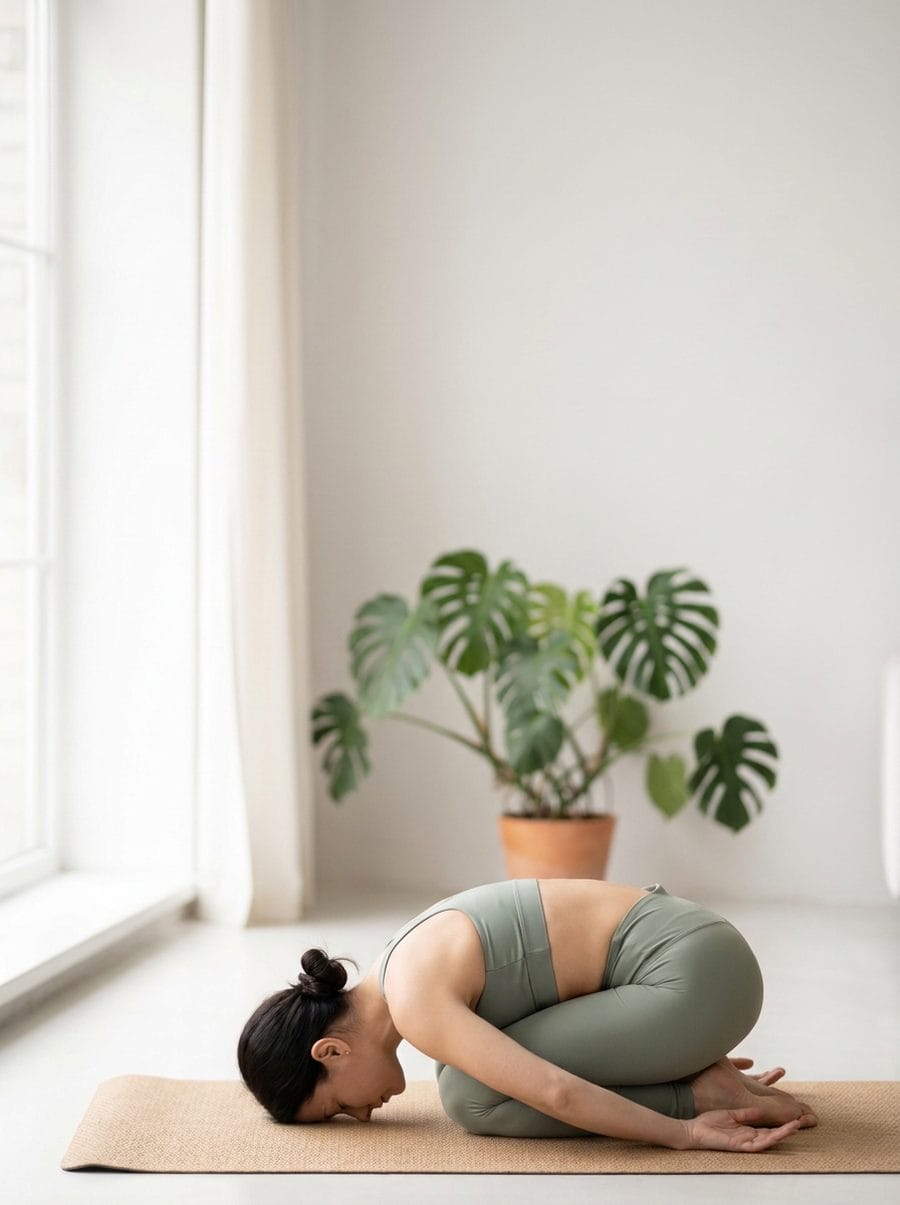
After the ab work, Child's Pose lets your back relax and brings your breathing back to calm.
Strong Core: a 15-minute yoga routine for abs
The app has a ready-made ab program called Strong Core: 15 minutes, intermediate level, 10 poses. Two rounds of Sun Salutation warm you up. Next come Plank Pose and Side Plank, three versions of Boat Pose (including Revolved Boat Pose for experienced students), Revolved Abdomen Pose and Right-Angle Leg Raise.
Reverse Plank balances out all that work in flexion, and you finish in Child's Pose and Relaxation Pose.
Two or three sessions weekly, with a rest day between them, is a good rhythm. If you're new, swap Revolved Boat Pose for the regular Boat Pose.
For a short version in motion, try the Core Focus round, five poses with no weight on your wrists. If you'd like faster-paced strength work, there's the 12-minute Power Wave routine. Individual core poses are collected in the Core section.
Breathing: the one rule that matters
The most common mistake in ab exercises is holding your breath under effort. Your belly turns rigid, your face goes red, and your lower back takes on more than it should. In yoga the effort happens on the exhale, while the inhale stays easy and flows into your sides and back.
Keep your belly engaged, but don't suck it in as far as it will go. For more on breathing in poses, see Breath in Practice.
A flat stomach: what to honestly expect
Ab work builds muscle, yet spot reduction is a myth: no exercise melts fat from one chosen area. Your waistline depends more on what you eat, how active you are overall and how well you sleep. What a strong core does give you is a firmer midsection from the inside, an easier upright posture and better support for your lower back in daily movement.
The first changes usually show up as stability and a lighter-feeling back rather than a new number on the tape measure.
Safety
- Diastasis recti. Skip Plank Pose, Boat Pose and Half Boat Pose. After giving birth, have a doctor check your abdominal muscles first.
- Lumbar disc herniation and pregnancy. Leave out Boat Pose, Half Boat Pose, Revolved Boat Pose and Revolved Abdomen Pose.
- Wrists and shoulders. With a wrist injury, do the plank on your forearms and skip Side Plank, Reverse Plank and both poses on all fours. A shoulder injury also rules out Side Plank and Reverse Plank.
- Neck. With a neck injury, keep your head neutral in Reverse Plank instead of letting it hang back.
- Knees. Put a blanket under your knees on all fours, and skip Child's Pose if your knees are injured.
If your lower back starts to hurt during an exercise, the load is too much: stop. General rules are in Safety and Contraindications.
Pose cautions in this article
- Knee injuries — place a blanket under your knees (Knee-to-Forehead Cat, Bird Dog)
- Wrist injuries (Knee-to-Forehead Cat, Bird Dog)
- Wrist injuries — practice on your forearms (Plank Pose)
- Diastasis recti (Plank Pose, Boat Pose, Half Boat Pose)
- Wrist and shoulder injuries (Side Plank, Reverse Plank)
- Neck injuries — don't drop your head back (Reverse Plank)
- Lower back pain — keep your hands under your sacrum (Right-Angle Leg Raise)
- Lumbar disc herniation (Revolved Abdomen Pose, Boat Pose, Half Boat Pose)
- Pregnancy (Revolved Abdomen Pose, Boat Pose, Half Boat Pose)
- Pregnancy — widen your knees (Child's Pose)
- Knee injuries (Child's Pose)
This site is for general information and is not medical advice. If you have pain, an injury, a chronic condition, or are pregnant, check with a qualified professional before practicing.
Questions
Can yoga give you abs? Yoga does a good job of strengthening your abdominal and back muscles, and planks and Boat Pose are genuinely demanding. Whether a six-pack shows, though, also depends on how much fat covers your belly, and that's driven more by diet and overall activity.
How long to hold a plank? Begin with holds of 20 to 30 seconds and lengthen them gradually. For most goals, holds of up to a minute are plenty, provided your body stays in a straight line and your breathing stays calm.
Is it OK to do a plank every day? A short plank is fine daily if your wrists and lower back feel good. A full ab routine works better on two or three non-consecutive days, so your muscles have time to recover.
Which yoga poses for abs suit beginners? Knee-to-Forehead Cat, Bird Dog, Right-Angle Leg Raise and a plank with your knees down.
Sources
- Pose technique and cautions, and the contents of the routines: the Hatha Yoga app. More about how we check our texts on the How We Prepare Our Content page.
Read next
- Yoga for Arthritis and Osteoporosis: How to Protect Your Joints and Bones7 min read
- Ashtanga Yoga Explained: The Series, the Breath and the Difference from Hatha6 min read
- Ayurveda Explained Simply: The Basics and a Daily Routine (Dinacharya)5 min read
- Balance Exercises: 10 Yoga Poses for Balance and Stability7 min read