 Hatha Yoga
Plank Pose
Phalakāsana
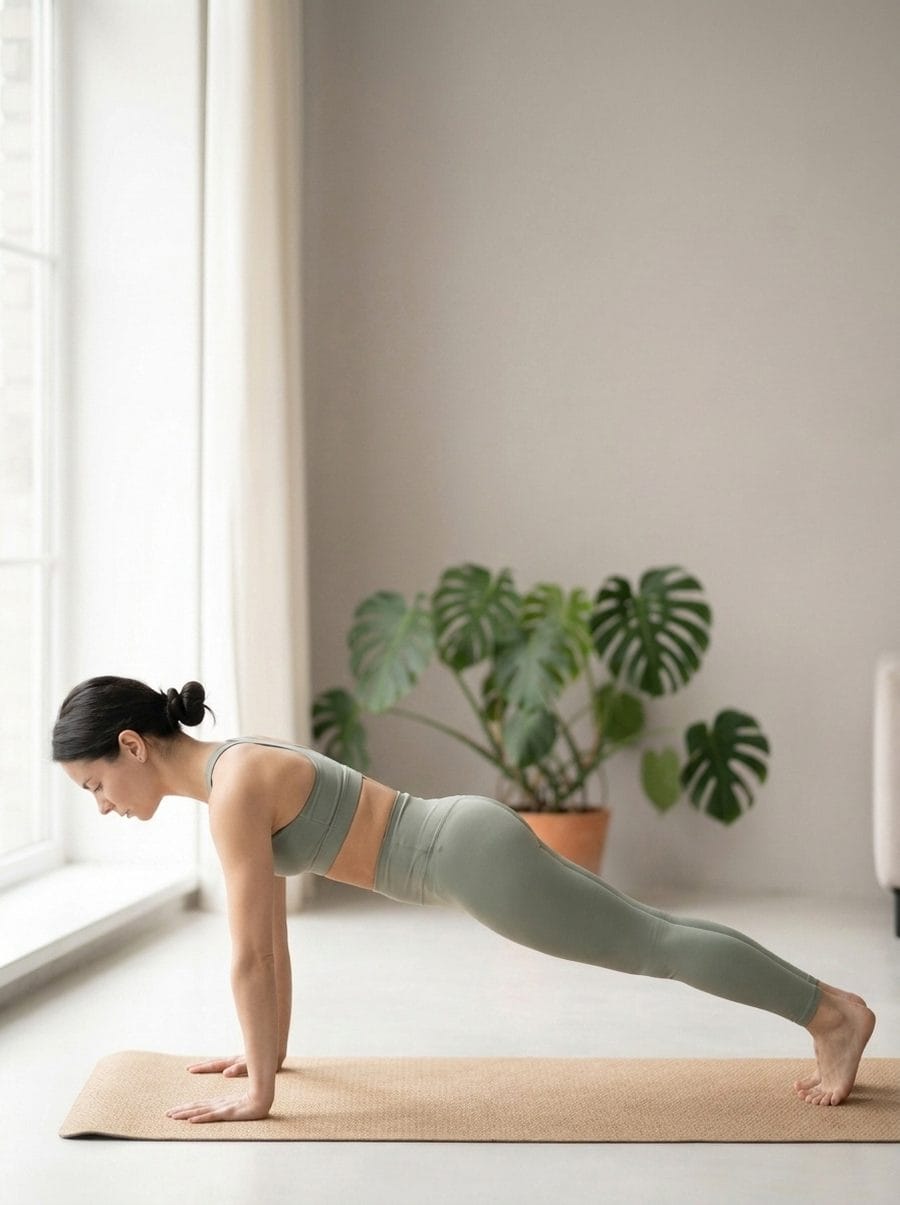
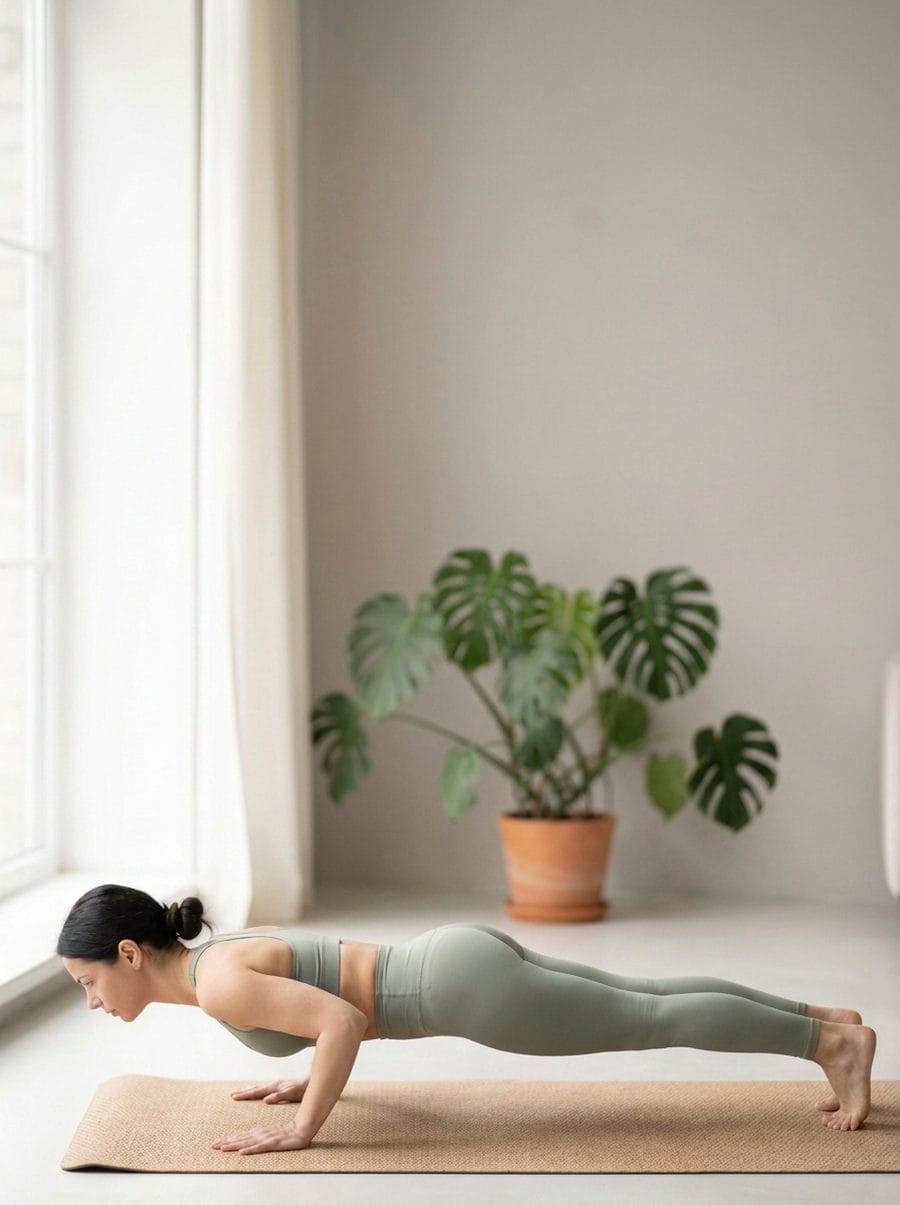
Plank Pose in yoga, or Phalakasana (from the Sanskrit "phalaka," board), is a straight-arm support in which your body stays as straight as a plank of wood. It's rated beginner level, yet holding it takes real work from your arms, shoulders and entire trunk.
The app includes Plank in 8 sequences and 4 flows, and two sequences begin with it, Strong Core among them.
How to do it
- EnterCome onto your hands and bring your body into one line from the crown of your head to your heels. Palms directly under your shoulders.
- HoldDraw your belly in and tuck your tailbone slightly. Don't let your lower back sag or your hips lift. Push the floor away, legs active.
- ExitGently lower your knees to the floor.
More detail
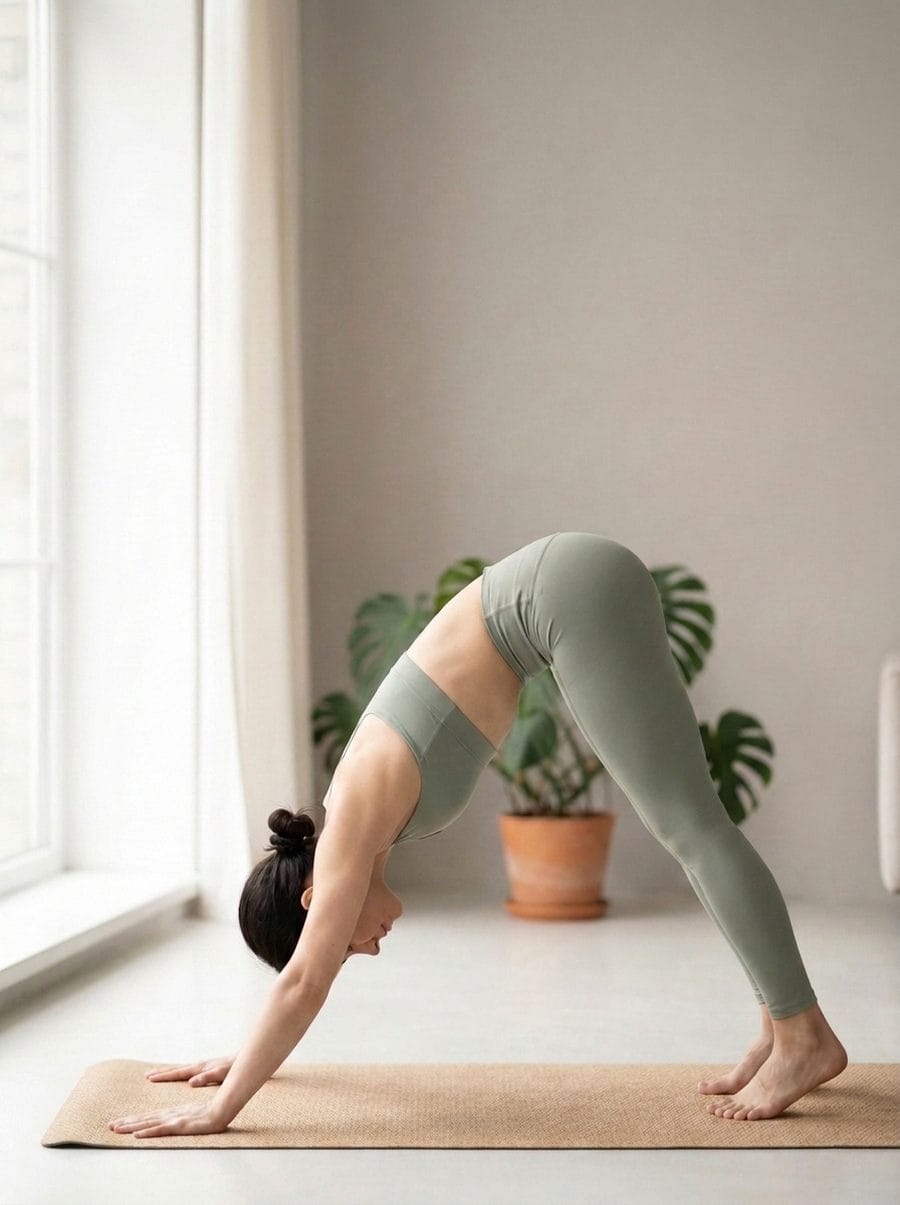
A convenient way into Plank is from Downward-Facing Dog: shift your torso forward until your shoulders are directly over your wrists. Set your feet hip-width apart and reach your heels back, which helps you hold the line of your body.
Let your gaze fall on the floor slightly ahead of your hands. For an easier version, lower your knees and keep the line from knees to crown straight. If your wrists hurt, come down onto your forearms, as the app recommends.
Benefits
A foundational strength pose: strengthens the core, arms, and shoulder girdle.
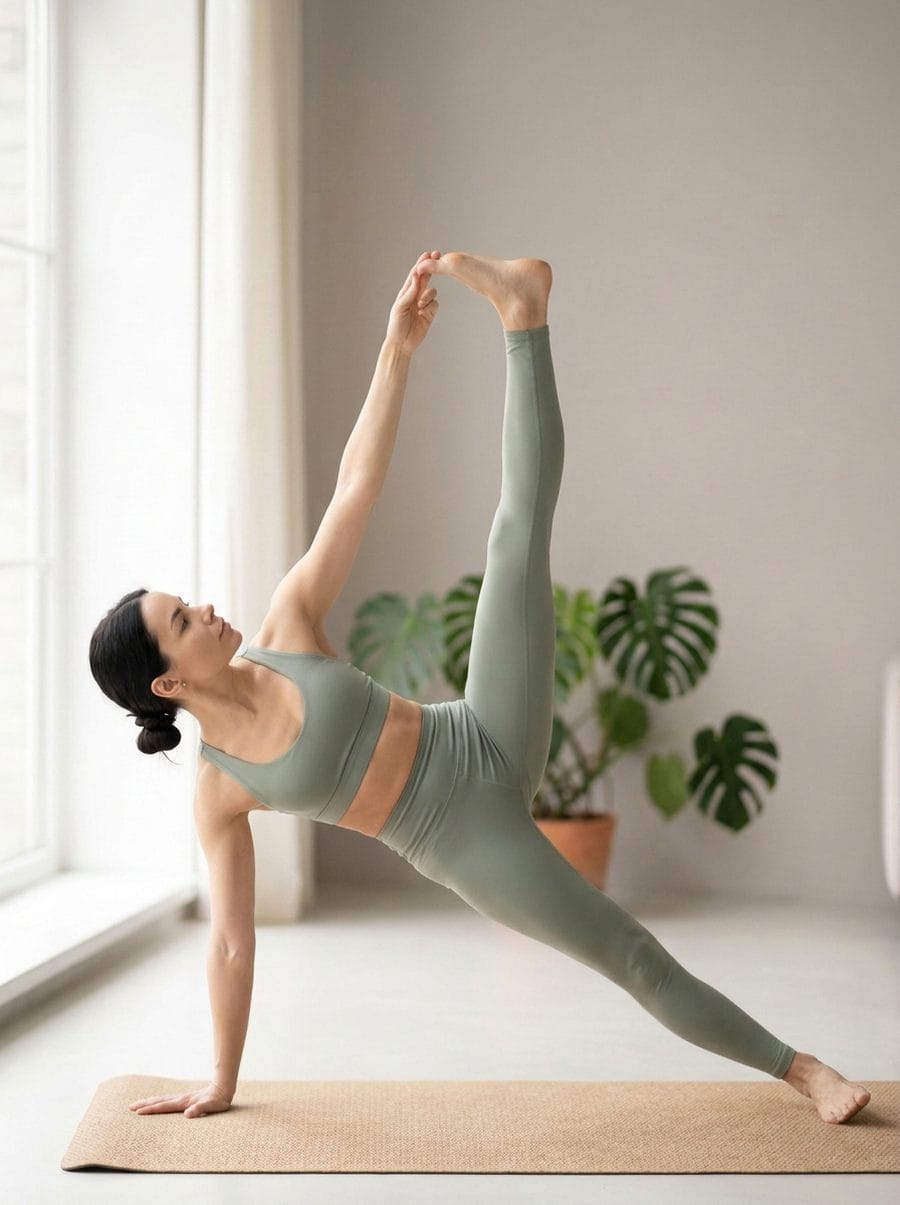
Plank builds strength in your core, arms and shoulder girdle and trains you to hold your trunk as one solid unit. Harder supports grow out of it: Side Plank, Chaturanga and arm balances such as Crow Pose.
Cautions
- Wrist injuries — practice on your forearms
- Diastasis recti
This site is for general information and is not medical advice. If you have pain, an injury, a chronic condition, or are pregnant, check with a qualified professional before practicing.
Common mistakes
- Sagging at the lower back. Draw your belly in and send your tailbone toward your heels.
- Lifting your hips into a tent. The line from shoulders to heels stays straight.
- Collapsing between your shoulder blades. Push the floor away so your upper back rounds slightly.
- Letting your head hang or lifting your chin.
- Holding your breath to squeeze out a few more seconds.
Counterpose
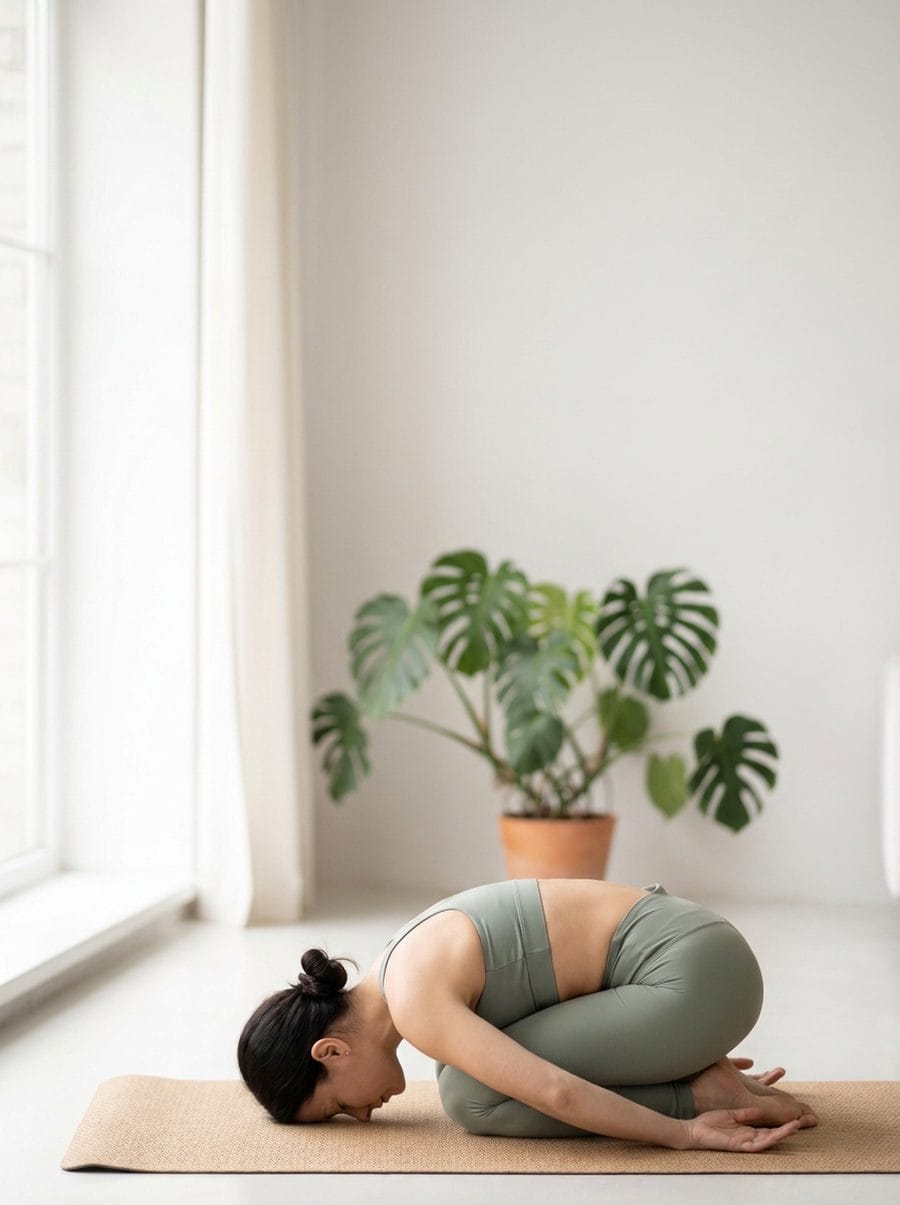
Where it appears
- Full Morning 20 min · Intermediate
- Strength & Tone 25 min · Intermediate
- Classic Full Practice 50 min · Intermediate
- Energy Boost 15 min · Intermediate
- Strong Core 15 min · Intermediate
- Arm Balances: Path to Crow 20 min · Advanced
- Advanced Intensive 35 min · Advanced
- Inversion Prep 25 min · Advanced · voice-guided in the app subscription
- Warm-up: Big Round The classic round: standing — arm support — belly-down — standing
- Warm-up: Twist Round Squat, strength, backbend, rotation, and fold
- Warm-up: Five-Level Strength All five levels of the body in a single round
- Warm-up: Side Line Side stretches on three levels: standing, arm support, seated
Similar poses
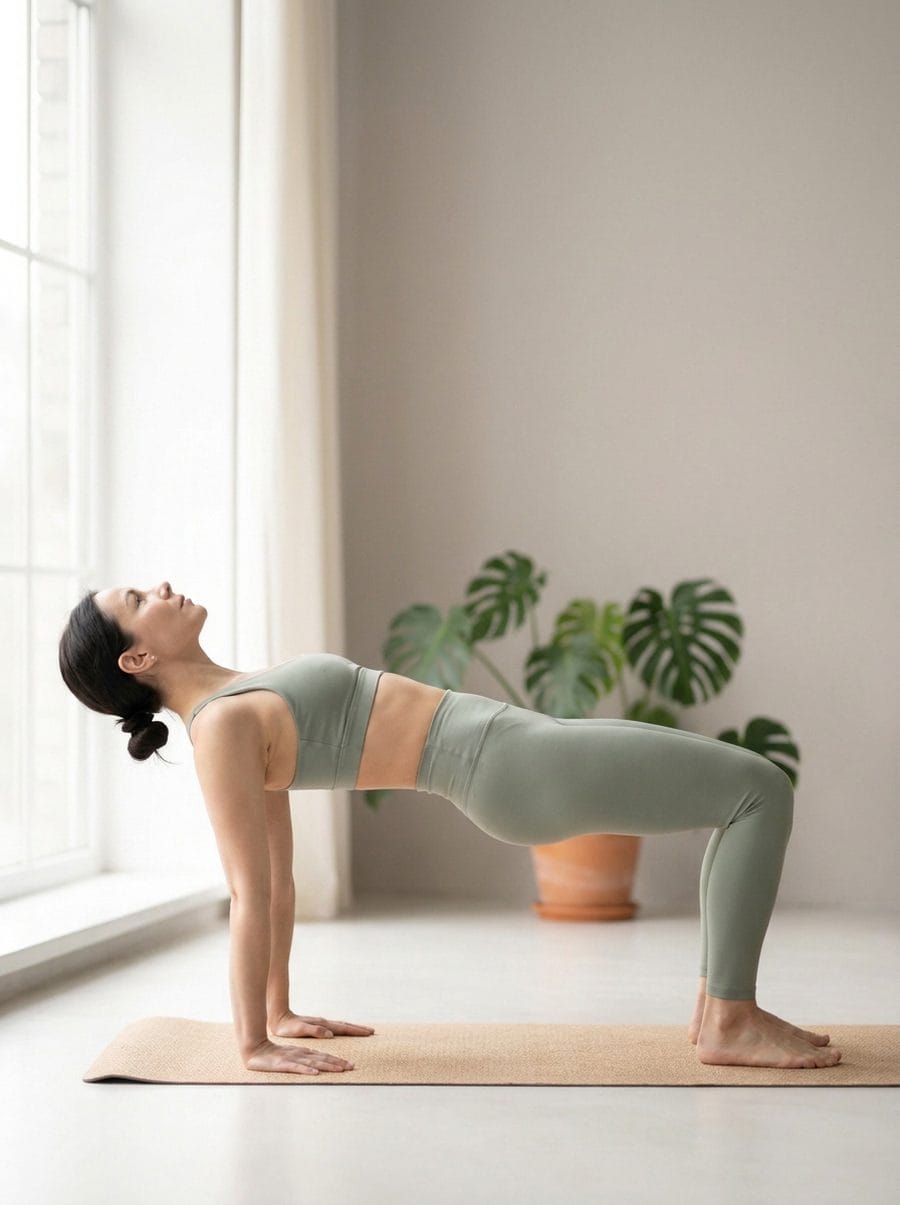
Questions
How long should I hold Plank? The pose card suggests half a minute, and sequences keep you there anywhere between 35 and 75 seconds. Good alignment beats time: once your lower back starts to dip, bring your knees down.
Is Plank OK with diastasis recti? The app lists diastasis as a contraindication, so skip it. Ask your doctor which exercises suit you.
How is Plank in yoga different from Plank in fitness? In yoga it's usually done on straight arms and as part of a sequence: from Plank you flow into Chaturanga or Downward Dog, with your breath setting the rhythm.
Updated: