 Hatha Yoga
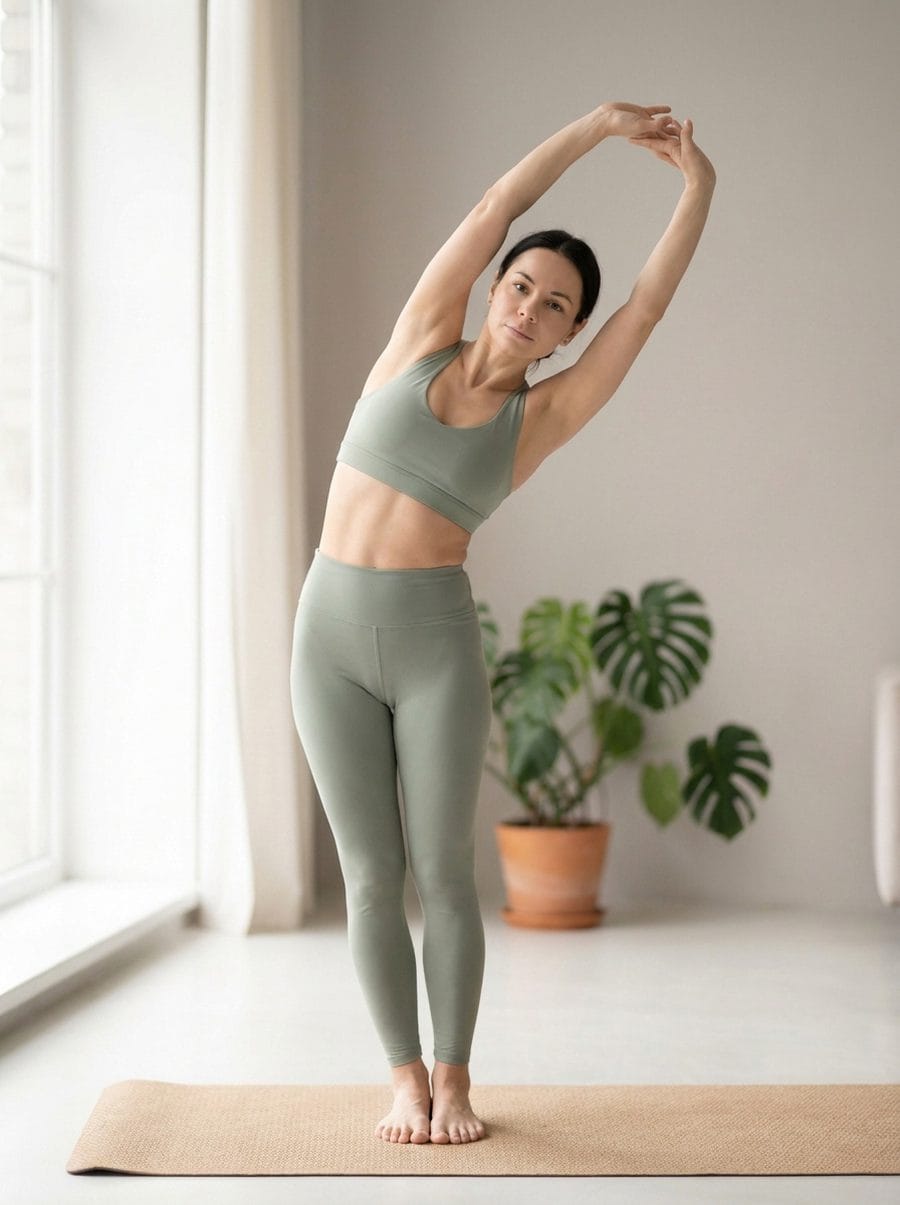
Side Line: a side-stretch warm-up
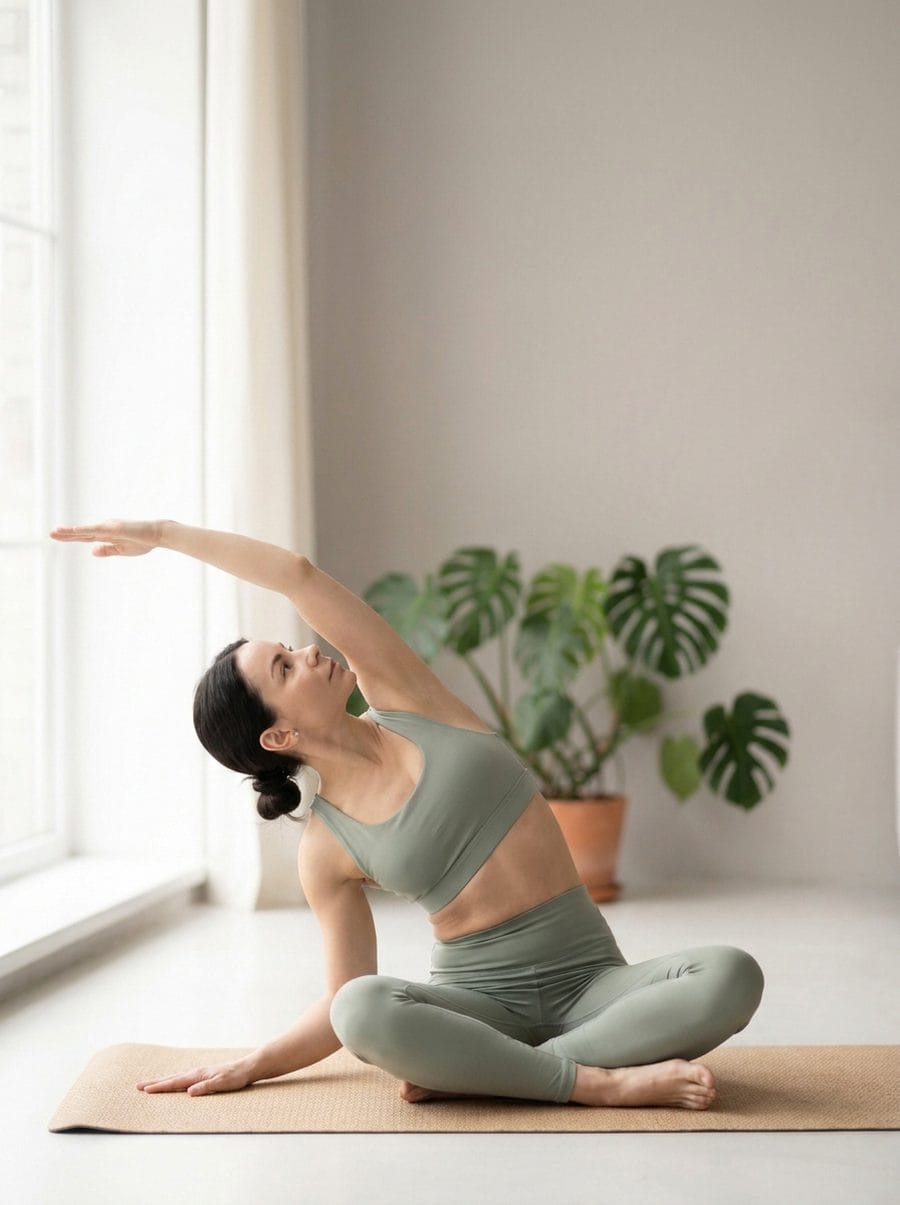
Side stretches on three levels: standing, arm support, seated
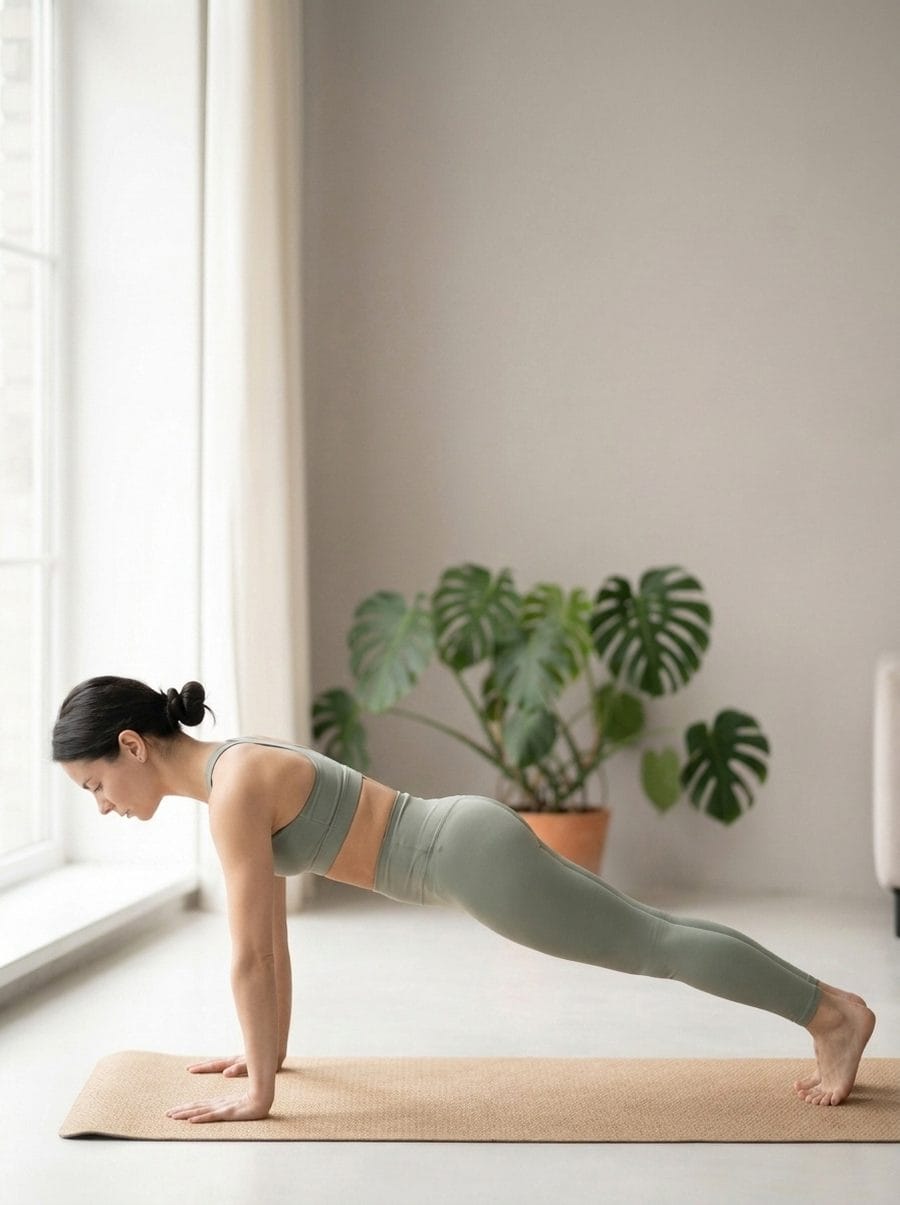
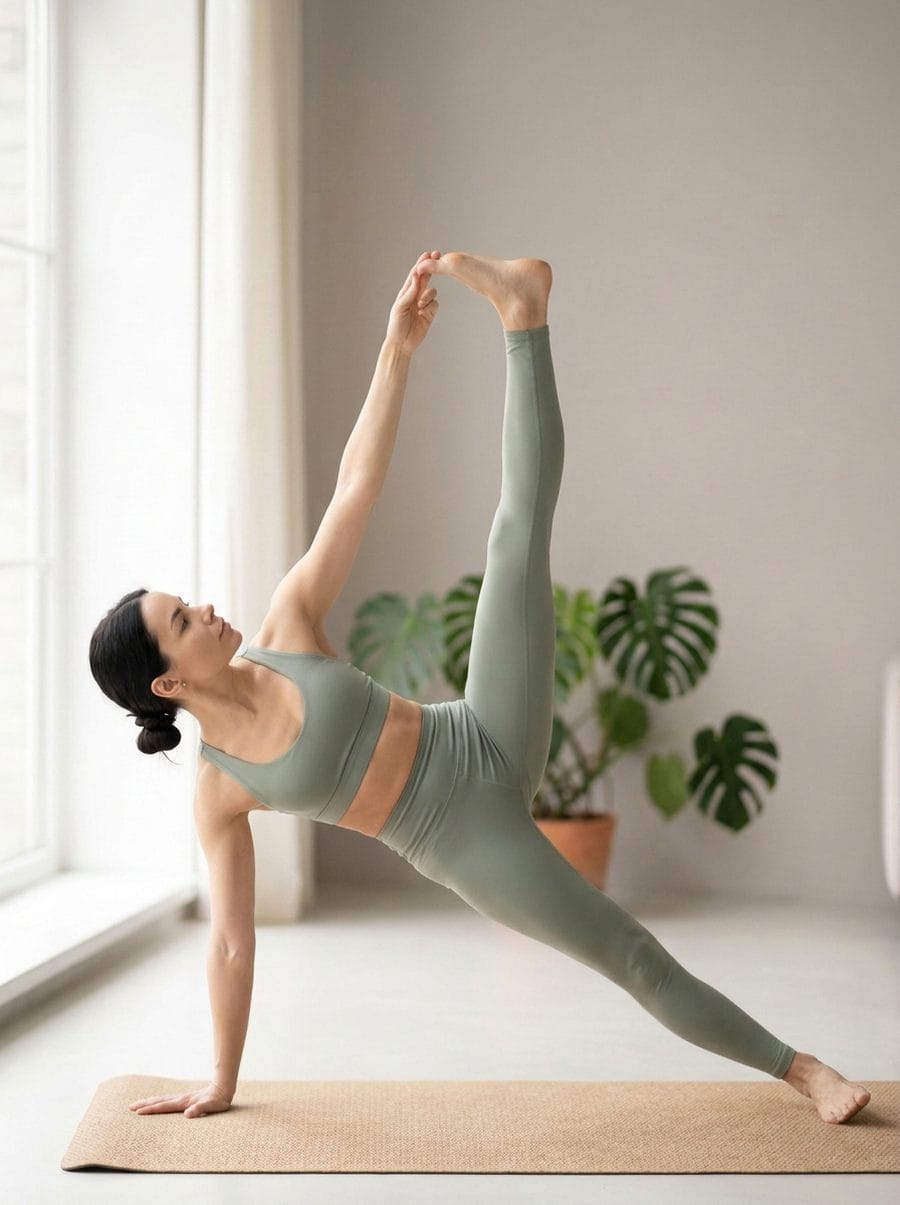
A flow for the side body, the part that usually gets the least attention in a regular practice. Your sides lengthen in three positions: standing, in arm support and seated. The level is intermediate. With wrist or shoulder injuries, do Plank from your knees and Side Plank with the bottom knee down or on your forearm.
When your lower back hurts acutely or a herniated disc is acting up, better to leave this flow for another day, and with intercostal neuralgia, bend only a little.
Why this order
Three of the five poses are one-sided, and each goes through both sides within a single round. First you bend sideways from Mountain Pose, then place your palms and step into Plank. From there you turn sideways into one-armed plank: here the side works to hold you up rather than to stretch.
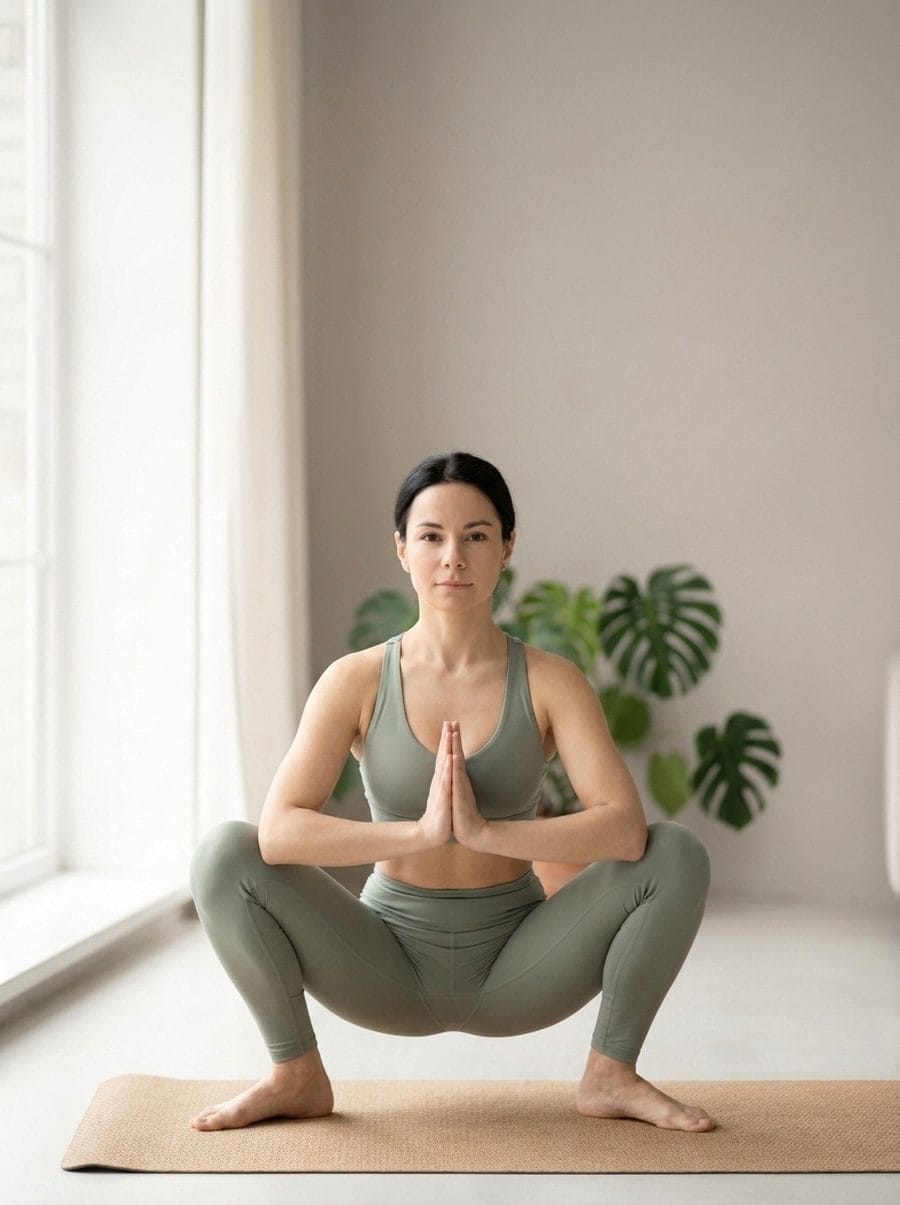
Cross-Legged Side Bend lengthens the sides again, now seated, and Garland returns your pelvis to neutral. Come up out of the deep squat slowly and only on an inhale.
Cautions
- Acute lower back pain (Mountain Pose with Side Bend, Cross-Legged Side Bend)
- Wrist injuries — practice on your forearms (Plank Pose)
- Diastasis recti (Plank Pose)
- Wrist and shoulder injuries (Side Plank)
- Knee injuries (Garland Pose)
- If your heels don't reach the floor, place a blanket under them (Garland Pose)
This site is for general information and is not medical advice. If you have pain, an injury, a chronic condition, or are pregnant, check with a qualified professional before practicing.