 Hatha Yoga
Side Plank
Vasiṣṭhāsana
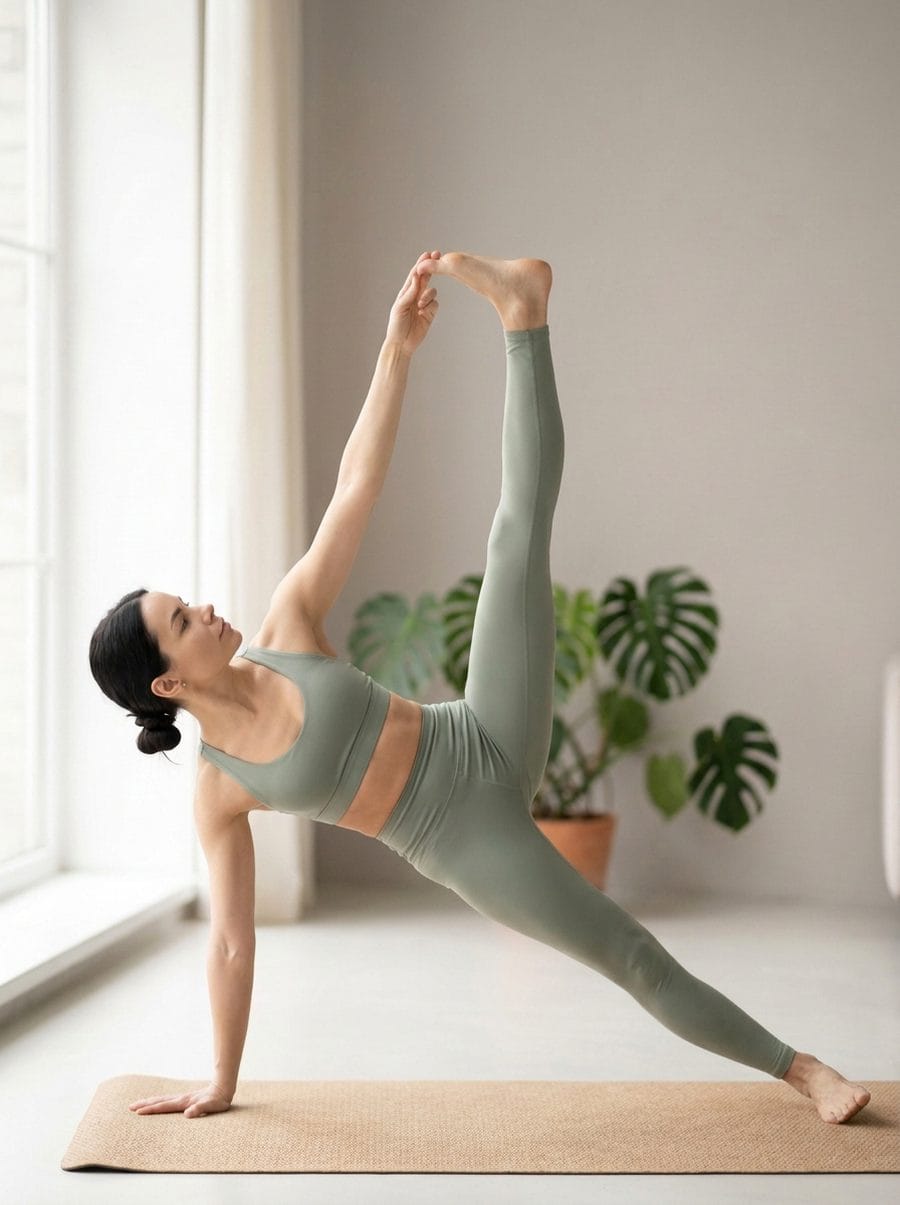
Side Plank, or Vasisthasana, is named after the sage Vasishtha. Your whole body rests on two points, one palm and the outer edge of one foot, turned sideways and stretched into a single plane from crown to heels, while your free arm points at the ceiling.
It's rated Intermediate. The pose is part of five app sequences, including Strong Core and Strength & Tone, plus the Side Line flow, and almost everywhere you move into it straight from Plank.
How to do it
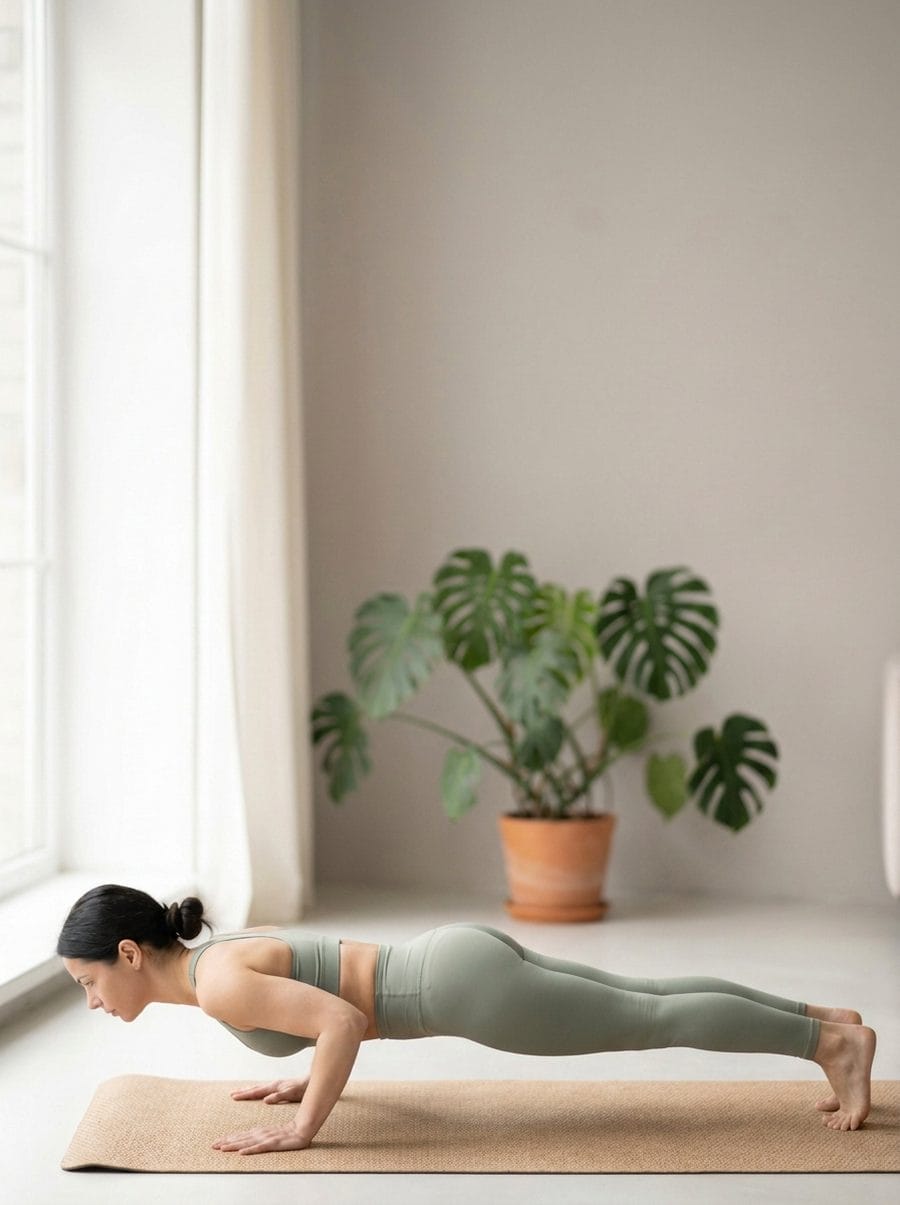
- EnterFrom Plank, shift your weight onto one hand and turn onto your side, stacking your feet, or lower your bottom knee to the floor to make it easier. Reach your top arm toward the ceiling.
- HoldSupporting palm under your shoulder, hips lifted high without sagging. Body in one plane, gaze forward or up at your top hand.
- ExitGently return to Plank and lower your knees.
More detail
From Plank Pose, shift your weight onto one hand and roll onto the outer edge of your bottom foot. Your supporting hand sits right under your shoulder, fingers fanned out, the whole palm rooting into the mat so the shoulder stays lifted.
Stack your feet, or for more stability place the top foot slightly in front of the bottom one. Lift your hips higher than feels necessary: your bottom side reaches up instead of sagging toward the mat. Stay in one plane, as if your body were pressed between two panes of glass, and keep the hips from sliding behind you.
If it's hard to hold, rest the lower knee on the mat: the app offers that same easier option. Look forward or up at your top hand.
Benefits
Strengthens the obliques and the shoulder girdle.
Your obliques and shoulder girdle work at full capacity here. Side Plank trains torso stability not only from the front, as in regular Plank, but from the side as well. Bearing weight on one arm also gets your wrists and shoulders ready for arm balances, so the sequence building toward Crow Pose includes it too.
Cautions
- Wrist and shoulder injuries
This site is for general information and is not medical advice. If you have pain, an injury, a chronic condition, or are pregnant, check with a qualified professional before practicing.
Common mistakes
- Hips sagging toward the floor. Lift them until your body is straight.
- Hand placed far ahead of your shoulder. It goes right underneath.
- Hips drifting back so your body folds. Stay in one plane.
- Supporting shoulder creeping toward your ear. Press the mat away from you.
Modifications & variations
Counterpose

Where it appears
- Strength & Tone 25 min · Intermediate
- Energy Boost 15 min · Intermediate
- Strong Core 15 min · Intermediate
- Arm Balances: Path to Crow 20 min · Advanced
- Inversion Prep 25 min · Advanced
- Warm-up: Side Line Side stretches on three levels: standing, arm support, seated
Similar poses
Questions
How can I make Vasisthasana easier? Put your bottom knee on the floor and, if you like, bring your top foot forward. That spreads your weight over a bigger base.
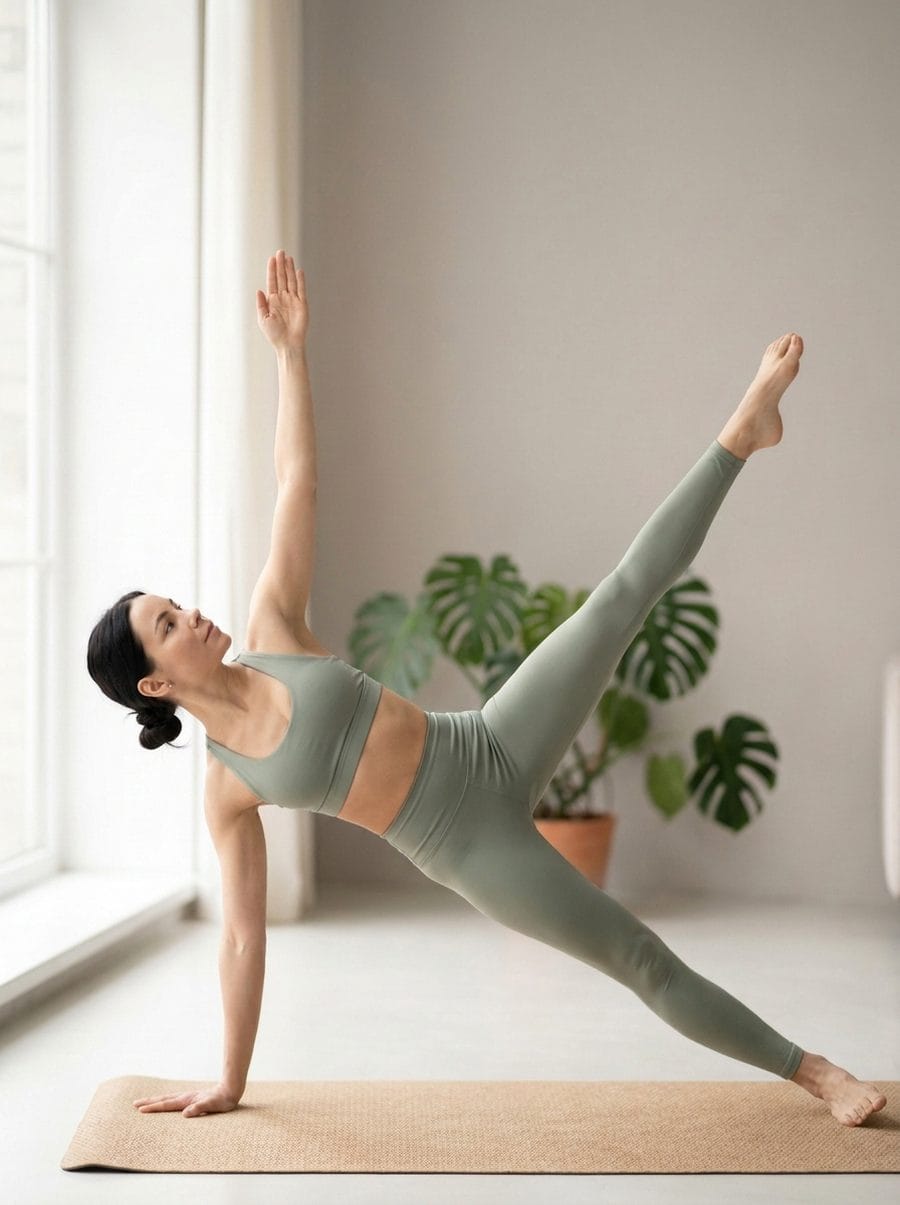
What variations of Side Plank are there? Once the basic shape feels solid, you can try Star Side Plank, which is rated Advanced. Wrist or shoulder injuries rule out both poses.
How long do you hold Side Plank? The card's number is 20 seconds a side. Sequences keep you there 25 to 40 seconds, with 40 in Strong Core, for example.
Featured in
- Yoga for Men: How to Get Started When Your Body Won't Bend6 min read
- Yoga vs. Pilates: How They Differ and Which Fits Your Goal5 min read
- Yoga for Scoliosis: How to Practice Safely and What to Expect6 min read
- Yoga for Strength: Poses for Strength and Tone, Including Legs and Glutes6 min read
- Yoga for Abs: Core Poses, the Plank Exercise and a 15-Minute Routine6 min read
Updated: