 Hatha Yoga
Yoga for Men: How to Get Started When Your Body Won't Bend
Hatha Yoga editorial team · Updated · 6 min read
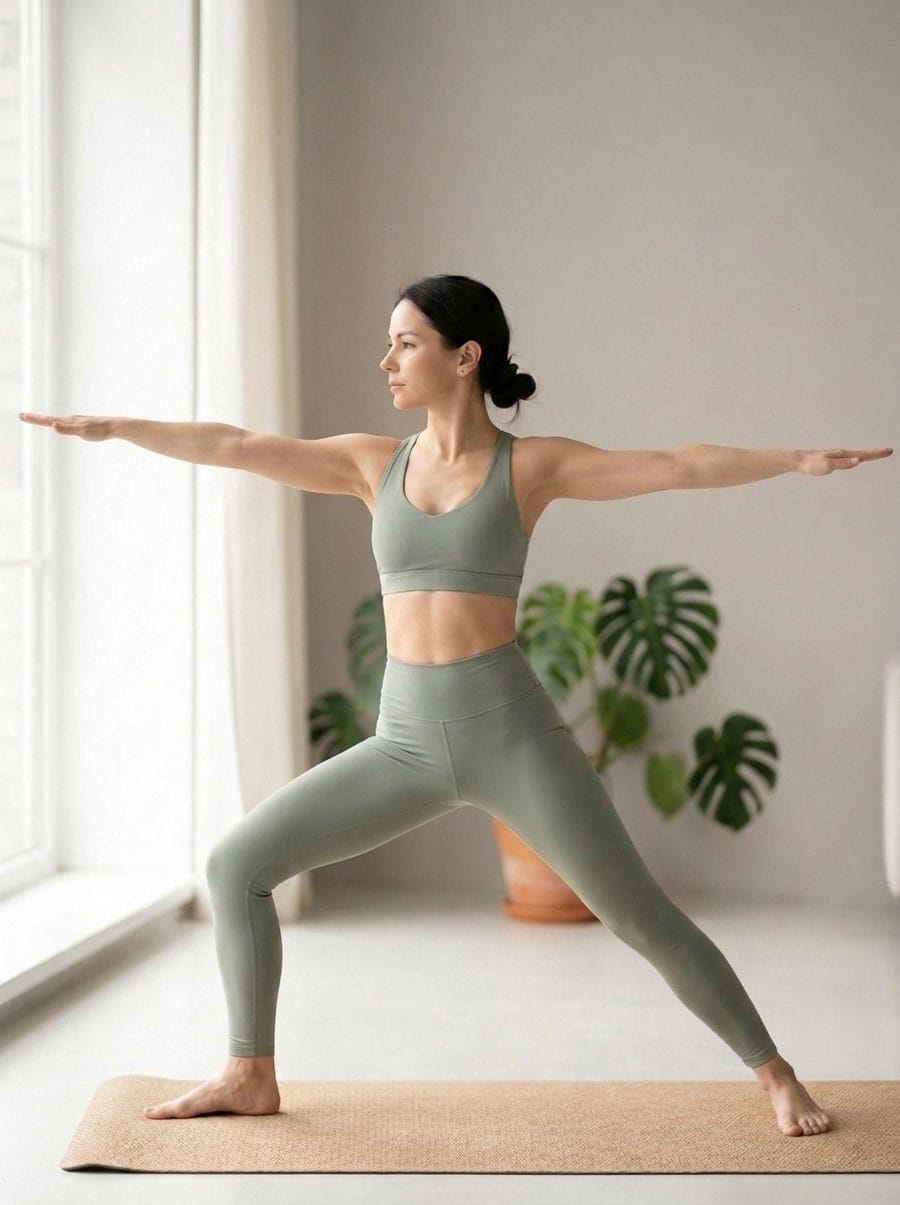
A lot of men put off yoga because of a single thought: "I can't even touch the floor." But in yoga, flexibility is something you build along the way, not a ticket you need at the door. Below you'll find where men tend to feel tight and how to modify those poses, where your training background actually helps, which routines in the app to choose, and how to set up your first month so you don't quit after a week.
Why you don't need flexibility to start
Every yoga pose has a final shape and plenty of in-between versions. The photo on a pose card shows the finish line, which people reach over months. Your goal in the first sessions is humbler: find a version where your spine stays long and your breathing stays calm.
Bent knees, a blanket folded under your seat, a strap instead of longer arms: that's a full practice, not a shortcut.
The second myth is that yoga is just stretching. In the UK's NHS guidelines, yoga sits on the same list of muscle-strengthening activities as push-ups, lifting weights and resistance bands. Those guidelines also ask adults to work all their big muscle groups on two or more days weekly.
In hatha yoga, planks, lunges and Boat Pose give your legs, arms and core plenty of real work.
Your first routine: First Practice
Start with this 15-minute beginner routine. It builds from easy to harder: neck, shoulders and Cat-Cow come first, and after them Downward-Facing Dog, standing poses with Tree Pose for balance, seated folds, Butterfly Pose, a reclining twist, and about three and a half minutes of rest in Relaxation Pose.
Do it three times a week for the first two weeks. Once the poses stop surprising you, add a strength routine. There's more on the very first steps in Yoga for Beginners.
Where men usually feel tight
If you sit a lot or lift weights, the backs of your thighs, your hips and your shoulders are usually the first to speak up. Here's how to modify the poses that feel hardest in those areas.
Hamstrings
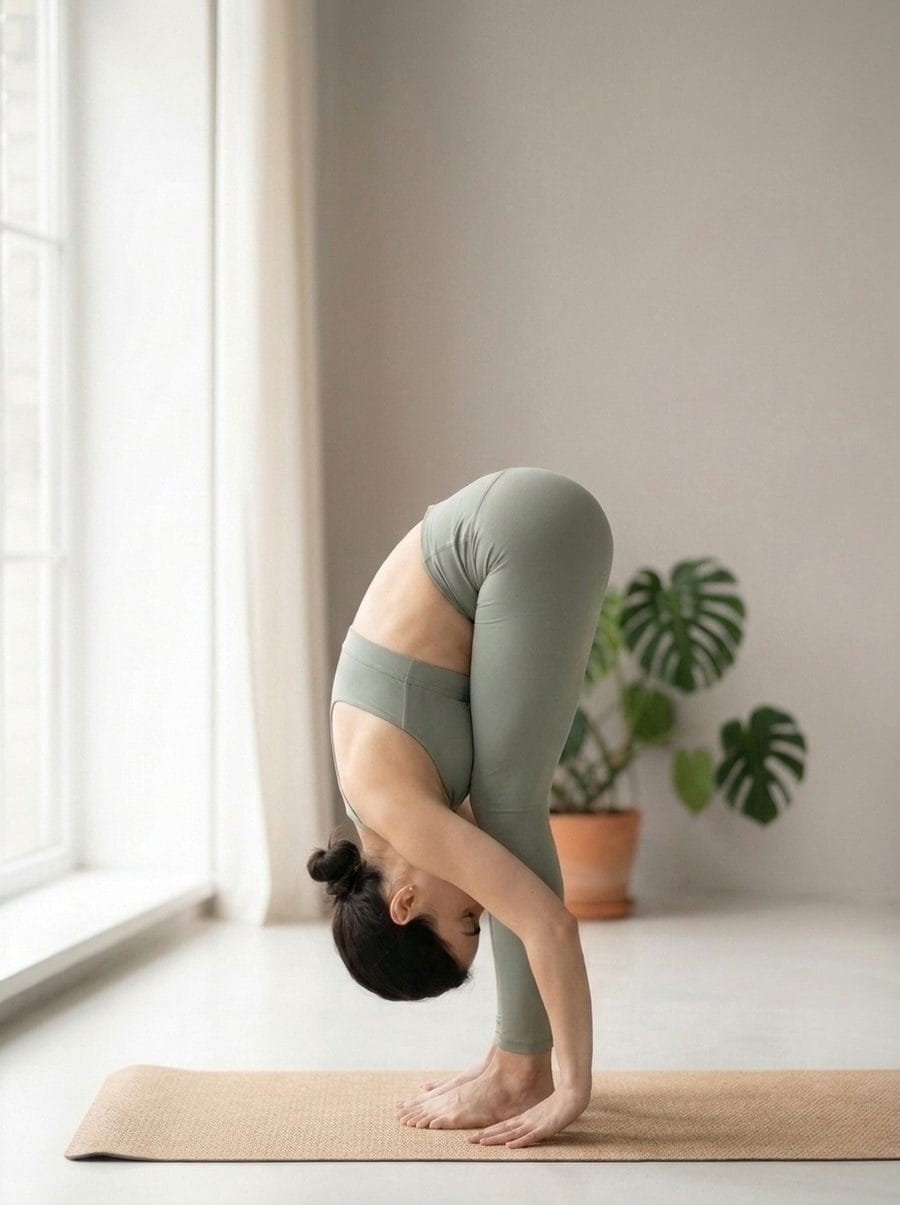
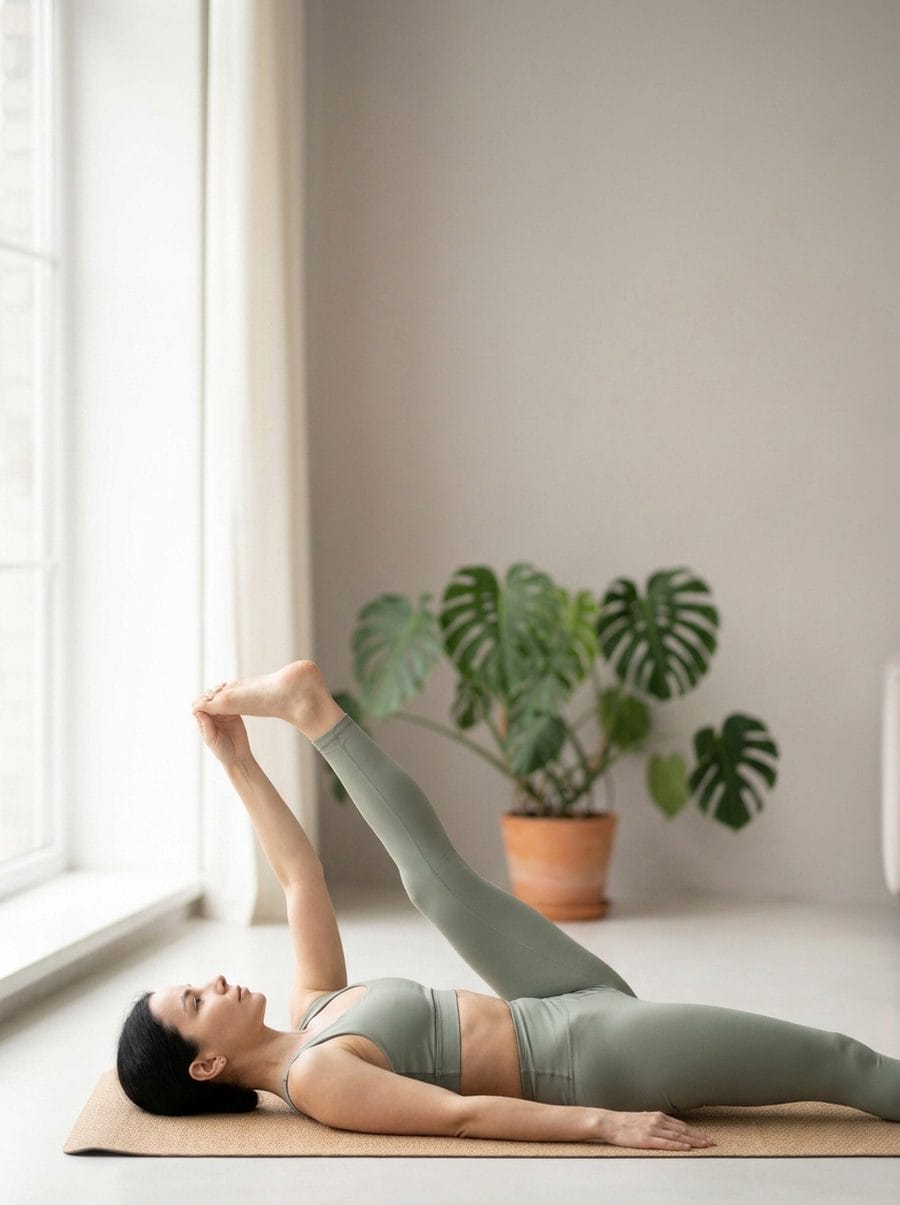
In a standing forward fold, soften your knees so your stomach can settle onto your thighs, and let your palms land on yoga blocks or a few thick books. Gentlest on your back: Reclining Hand-to-Big-Toe Pose, since the floor holds your spine, and a strap looped over your foot gives your arms the extra length they lack.
If your lower back lifts off the mat, the strap is a must.
Hips and squats
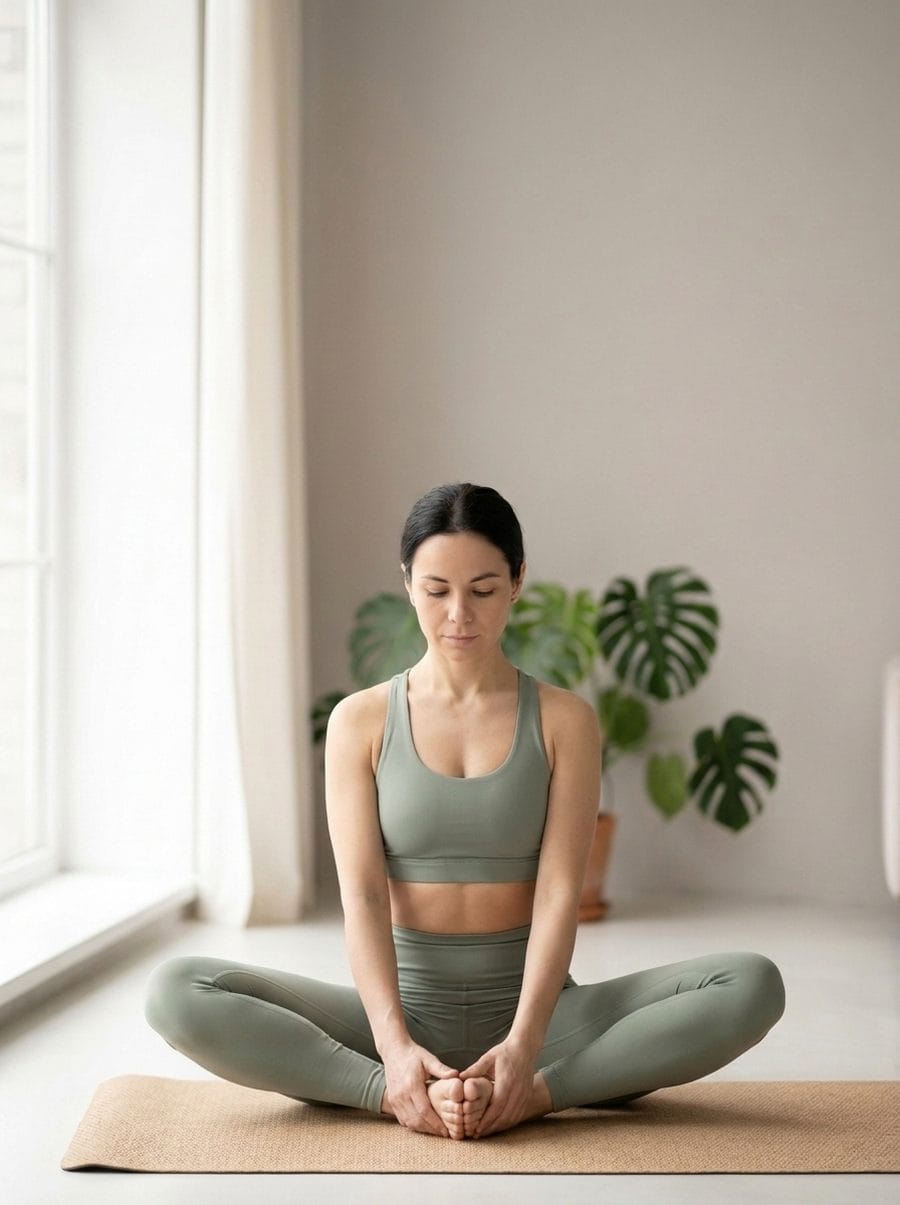
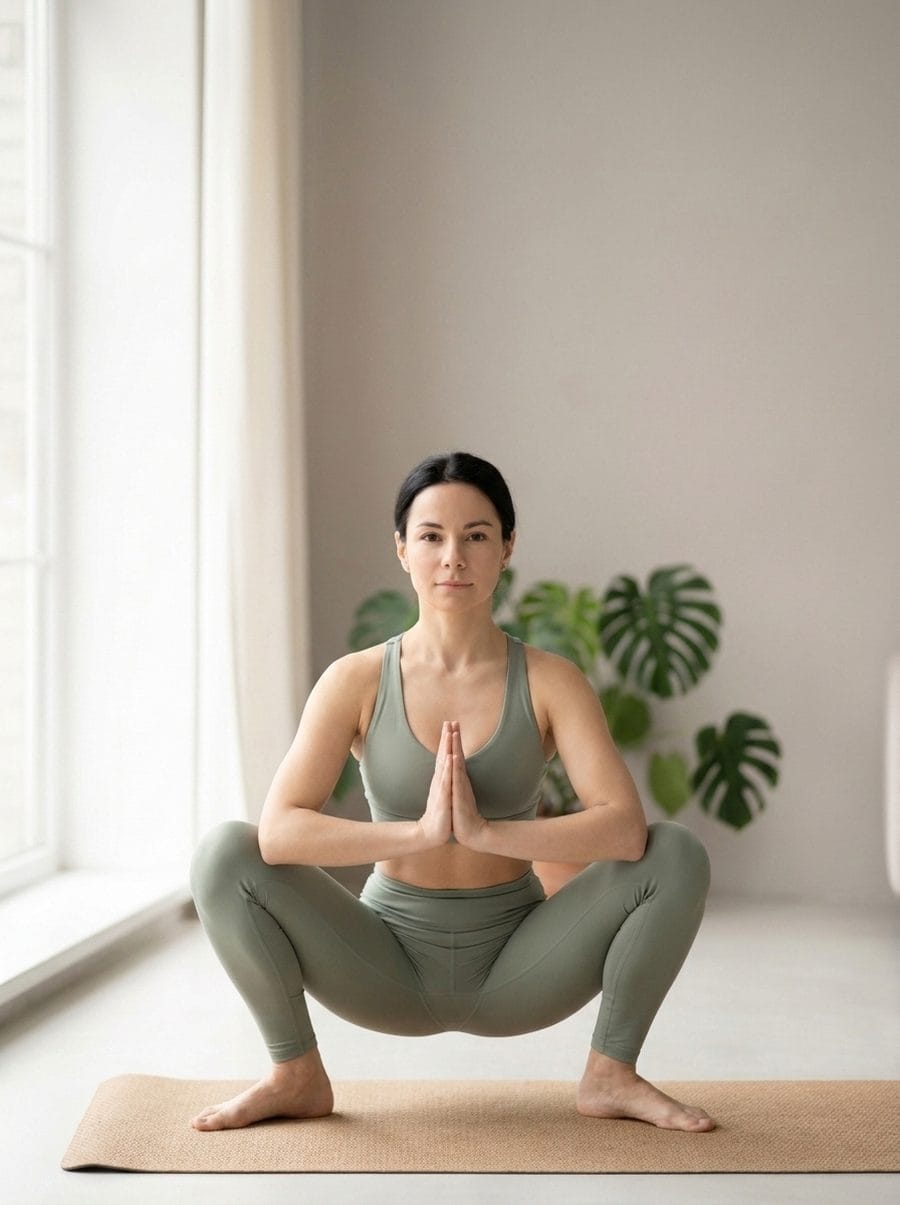
In Butterfly Pose, men's knees often sit high. Sit on a folded blanket and slide pillows under your thighs rather than pressing on your knees. Sinking all the way down in Garland Pose takes time: if your heels don't reach the floor, roll up a blanket and place it under them.
Strength poses: where your gym time pays off
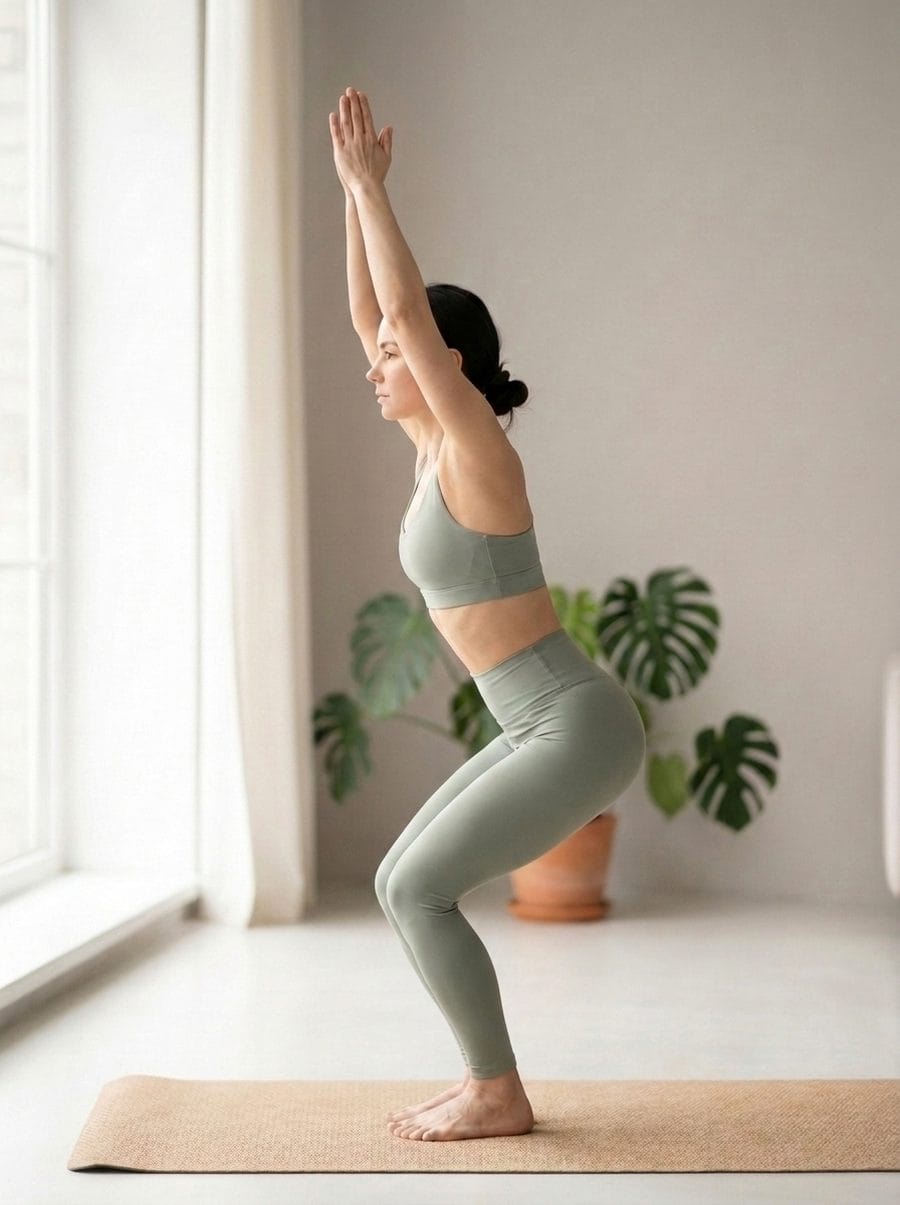
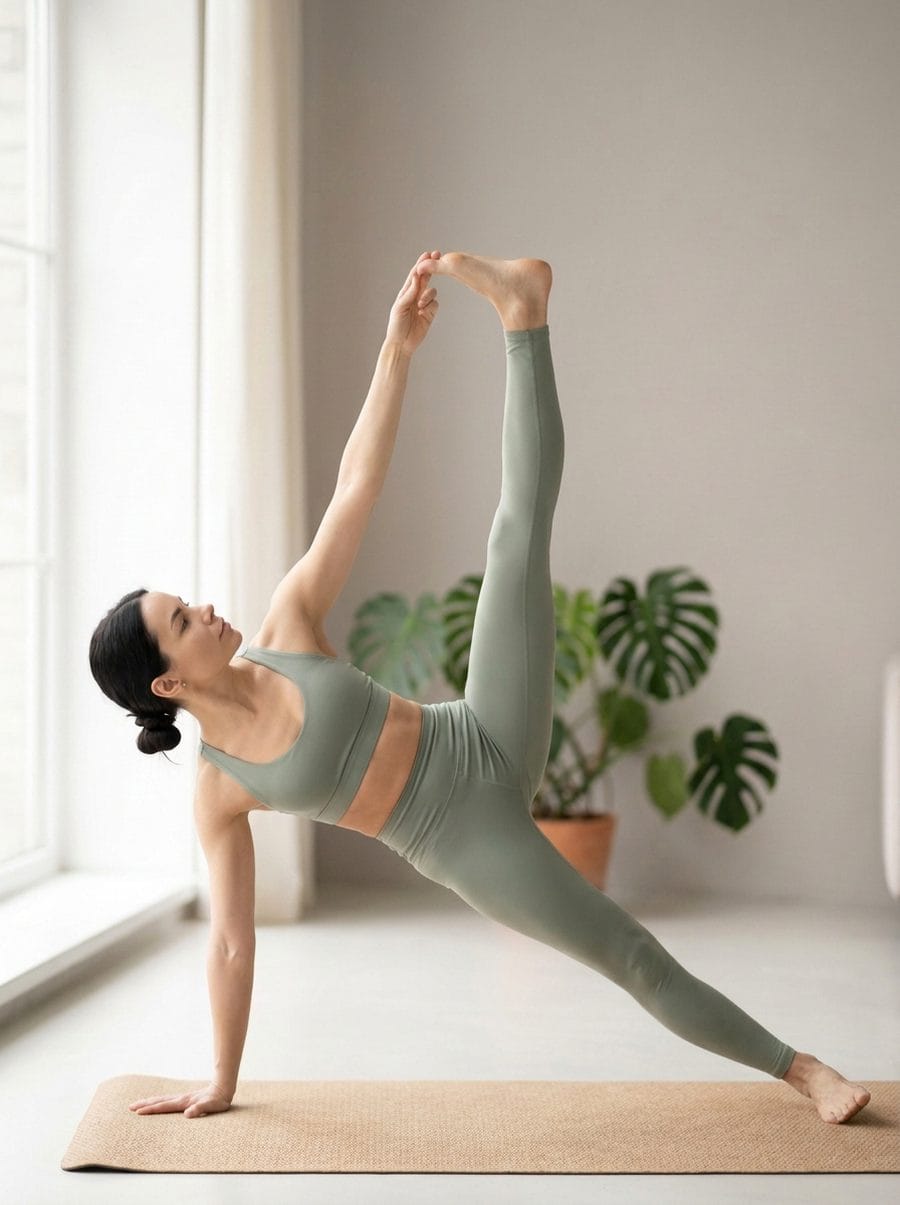
If you're used to the gym, the strength poses will feel familiar. The challenge lies elsewhere: holding the shape for a long time while breathing through your nose, evenly and without holding your breath. Plank Pose teaches you to keep your body in one straight line, Warrior II and Chair Pose load your thighs isometrically, and Side Plank fires up your obliques and shoulder girdle.
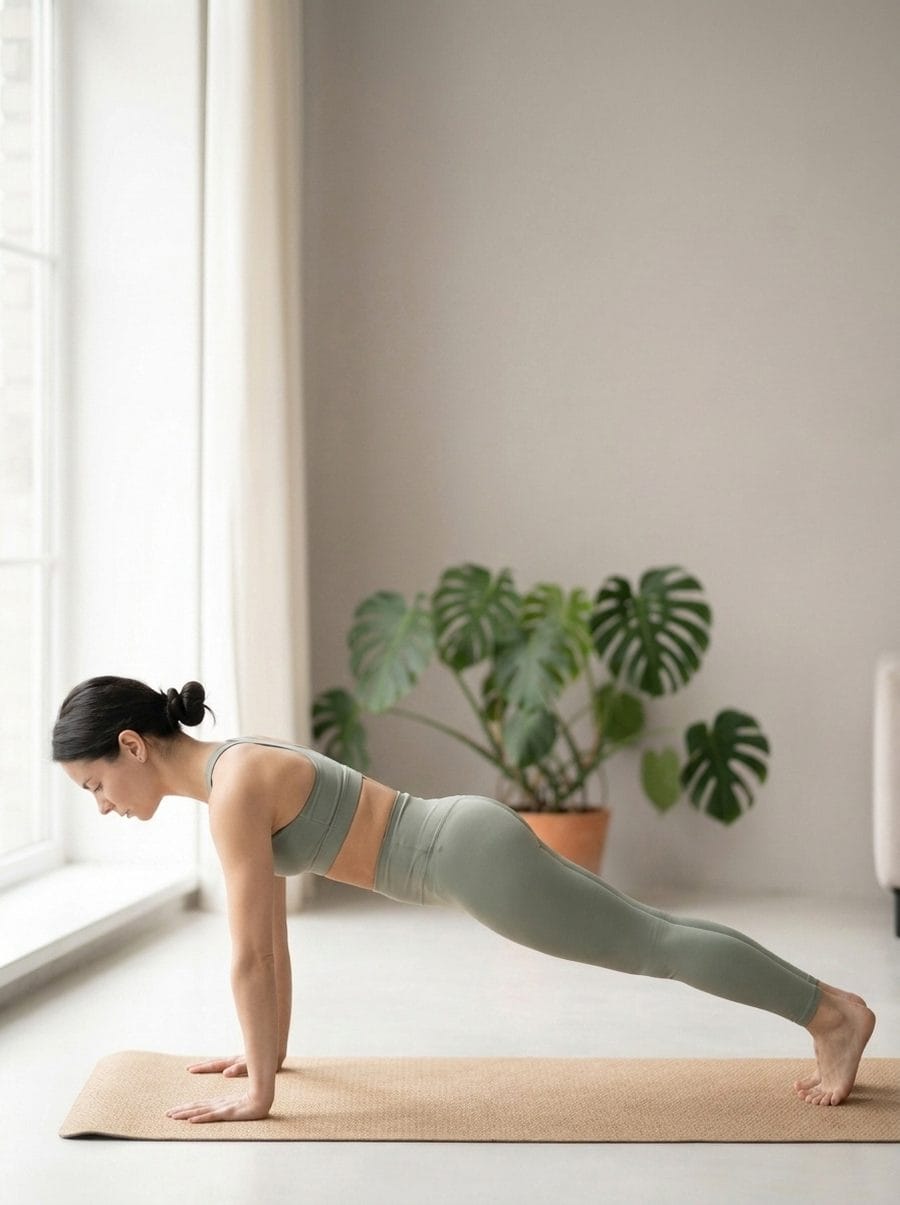
Power Wave is a short strength routine that runs 12 minutes with almost no breaks. You move from Down Dog into a high plank and back again and again, do push-ups through chaturanga, then work your abs in a boat and in Side-Lying Double Leg Lift.
Because it's intermediate, save it for when you have two or three weeks of basics behind you.
For a complete strength session, there's Strength & Tone, a 25-minute routine built on four Sun Salutations, three warriors, planks and backbends.
Stretching after the gym or a run
After a lifting session or a run, your muscles are warm, which makes it a good moment for calm poses. The areas that most often need attention are the hip flexors, the backs of the legs and the chest. Low Lunge, Reclining Hand-to-Big-Toe Pose and Puppy Pose cover them.
Hold each pose for about a minute, without bouncing. What to do before and after a run is covered in Yoga for Runners.
Breathing and a clear head
For many men, the biggest surprise in yoga isn't the stretching but the breathing. Try Box Breathing: inhale, hold, exhale and hold again, four counts each. If you have hypertension, do it without the holds. Five minutes of this rhythm before bed or before a tough conversation helps you settle.
A gentler entry point is Full Yogic Breath, with a rhythm of four counts in and six counts out.
Hatha yoga also has mula bandha, a soft engagement of the pelvic floor muscles during strength poses. It works the same way for men and women; read more in Bandhas: Energy Locks.
Your first-month plan
- Weeks 1 and 2. First Practice three times a week. The goal: learn the poses and stop holding your breath.
- Week 3. Two sessions of First Practice and one of Power Wave.
- Week 4. Two strength sessions and one calm one. On gym days, add 10 minutes of stretching poses after your workout.
Note how your standing forward fold feels at the start of the month and at the end. Progress shows up more clearly in how your back and thighs feel than in photos.
Safety
- Blood pressure. High readings rule out the standing forward fold, the chaturanga push-ups and the Down Dog to plank transitions.
- Knees. If your knees are injured, don't do Garland Pose, Chair Pose or Warrior II.
- Wrists and shoulders. Injured wrists move your plank down onto the forearms. Side Plank is out for injured wrists and for injured shoulders.
- Lower back. A herniated lumbar disc means bent knees in every standing fold and no Boat Pose. Chair Pose waits until a lower back flare-up has settled.
- Diastasis recti. Skip Plank Pose.
Stop and see a doctor if exercise brings on chest pain or tightness, makes it hard to breathe, or leaves you dizzy. Back pain that shoots down a leg or comes with numbness is also a reason to get checked.
Pose cautions in this article
- High blood pressure (Standing Forward Fold)
- Lumbar disc herniation — bend your knees (Standing Forward Fold)
- Use a strap if your back lifts off the floor (Reclining Hand-to-Big-Toe Pose)
- Groin and knee injuries — place supports under your thighs (Butterfly Pose)
- Knee injuries (Garland Pose, Warrior II, Chair Pose)
- If your heels don't reach the floor, place a blanket under them (Garland Pose)
- Wrist injuries — practice on your forearms (Plank Pose)
- Diastasis recti (Plank Pose)
- Flare-up of lower back problems (Chair Pose)
- Wrist and shoulder injuries (Side Plank)
This site is for general information and is not medical advice. If you have pain, an injury, a chronic condition, or are pregnant, check with a qualified professional before practicing.
Questions
Is yoga good for men who aren't flexible? Yes. Flexibility comes with practice, and at the start simplified versions are enough: bent knees, a blanket under your seat, a strap around your foot.
What if I can't touch the floor in a forward fold? Bend your knees and rest your hands on blocks or books. Length in your back counts for more than fingertips on the floor.
Can yoga replace the gym? For general strength, mobility and balance, yoga is enough: the NHS counts it as a strengthening activity. If your goal is lifting heavy weights, yoga works as a strong complement rather than a replacement.
How often should a beginner practice? Three times a week for 15 minutes in the first month, then two strength sessions and one calm session. Consistency matters more than length.
Sources
- NHS. Physical activity guidelines for adults aged 19 to 64.
- Pose technique, holds and cautions, routine contents and breathing rhythms: the Hatha Yoga app. More on how we review our texts on the How We Prepare Our Content page.
Read next
- Yoga for Arthritis and Osteoporosis: How to Protect Your Joints and Bones7 min read
- Ashtanga Yoga Explained: The Series, the Breath and the Difference from Hatha6 min read
- Ayurveda Explained Simply: The Basics and a Daily Routine (Dinacharya)5 min read
- Balance Exercises: 10 Yoga Poses for Balance and Stability7 min read