 Hatha Yoga
Yoga for Beginners: How to Start Yoga at Home from Scratch
Hatha Yoga editorial team · Updated · 7 min read
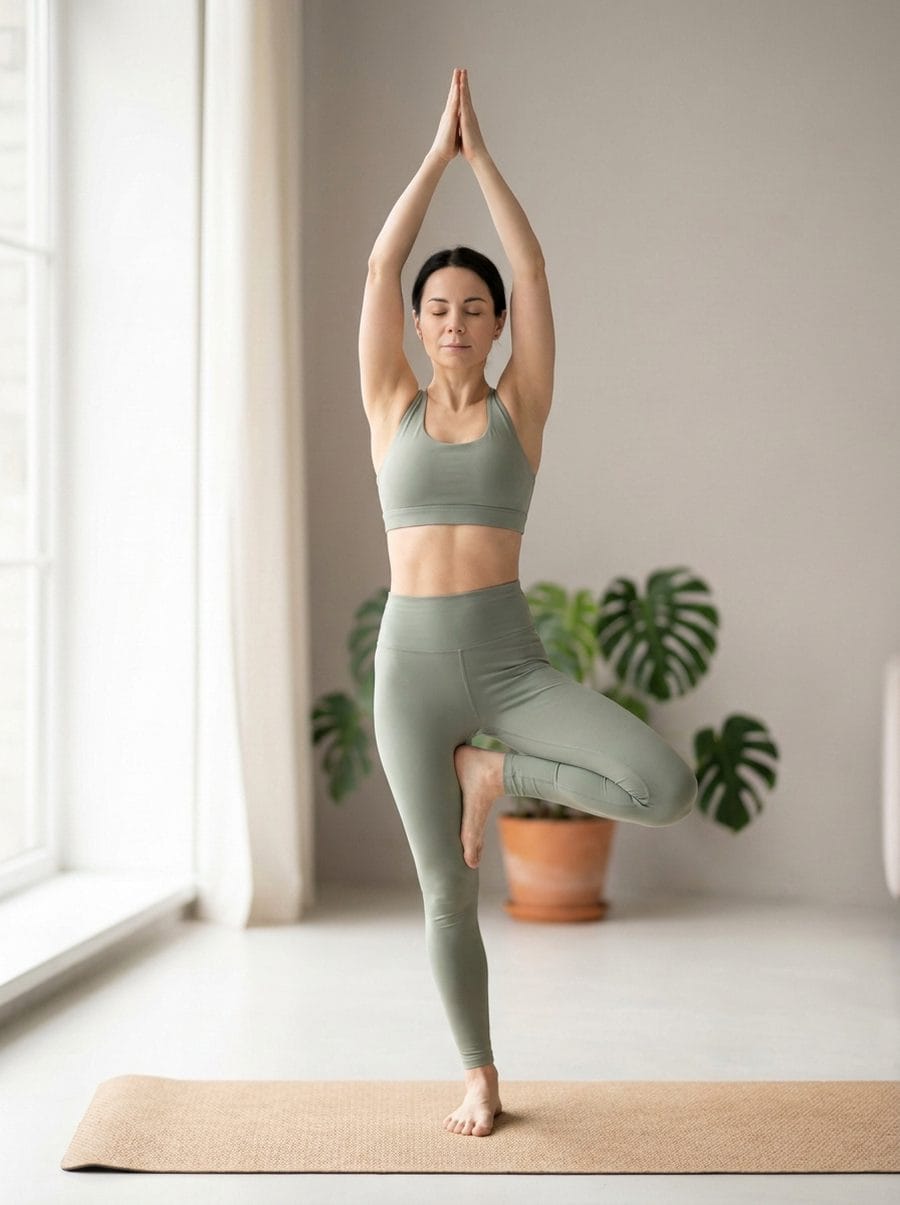
You can start yoga at home without a teacher, without being flexible and without any special gear. A mat, 15 minutes and a simple plan are enough: a gentle warm-up, then standing poses, then seated forward folds, a twist on your back and a rest to finish.
This guide lays out that plan step by step: ten basic hatha yoga poses, a ready-made 15-minute routine, tips for anyone who feels stiff, and an honest talk about safety.
What you need for your first yoga session at home
Getting set up takes about five minutes.
- Space. A flat floor and a clear patch roughly 2 by 1 meters (about 6.5 by 3 feet). A wall nearby comes in handy, since balancing is easier next to one.
- Mat. Any non-slip mat will do. No mat yet? Practice on a rug, barefoot, so your feet stay put.
- Props. A folded blanket, a firm pillow and a bathrobe belt. The blanket raises your hips when sitting up straight feels hard, and the belt helps you reach in forward folds.
- Clothes. Anything you can comfortably bend over and sit on the floor in.
- Timing. Practice on an empty stomach: after a big meal, give it a couple of hours. Morning and evening work equally well. The key is to choose an hour that suits you and keep to it.
How a beginner yoga routine is put together
Hatha yoga for beginners moves from easy to more demanding. First, your joints and spine wake up with soft movement. Standing poses come next and teach you to stand tall and hold your balance. After that, the body is ready for seated forward folds.
A twist lying on your back lets the lower back unwind, and the session closes with a few minutes of complete relaxation.
The app's First Practice program follows exactly this shape: 13 steps in 15 minutes. You can go through it here using the photos, and in the app a voice talks you through each step.
The order is not random. A seated forward fold feels noticeably easier once you've warmed up and done the standing poses than it would at the very start. And Savasana at the end is more than a break you take "just in case": it's the moment your body and breathing quiet down after the effort.
10 beginner yoga poses to learn first
All of these poses are part of the first routine, and you'll meet them in almost any hatha yoga class. Once they feel familiar, most beginner programs will be open to you.
Warm-up and spine
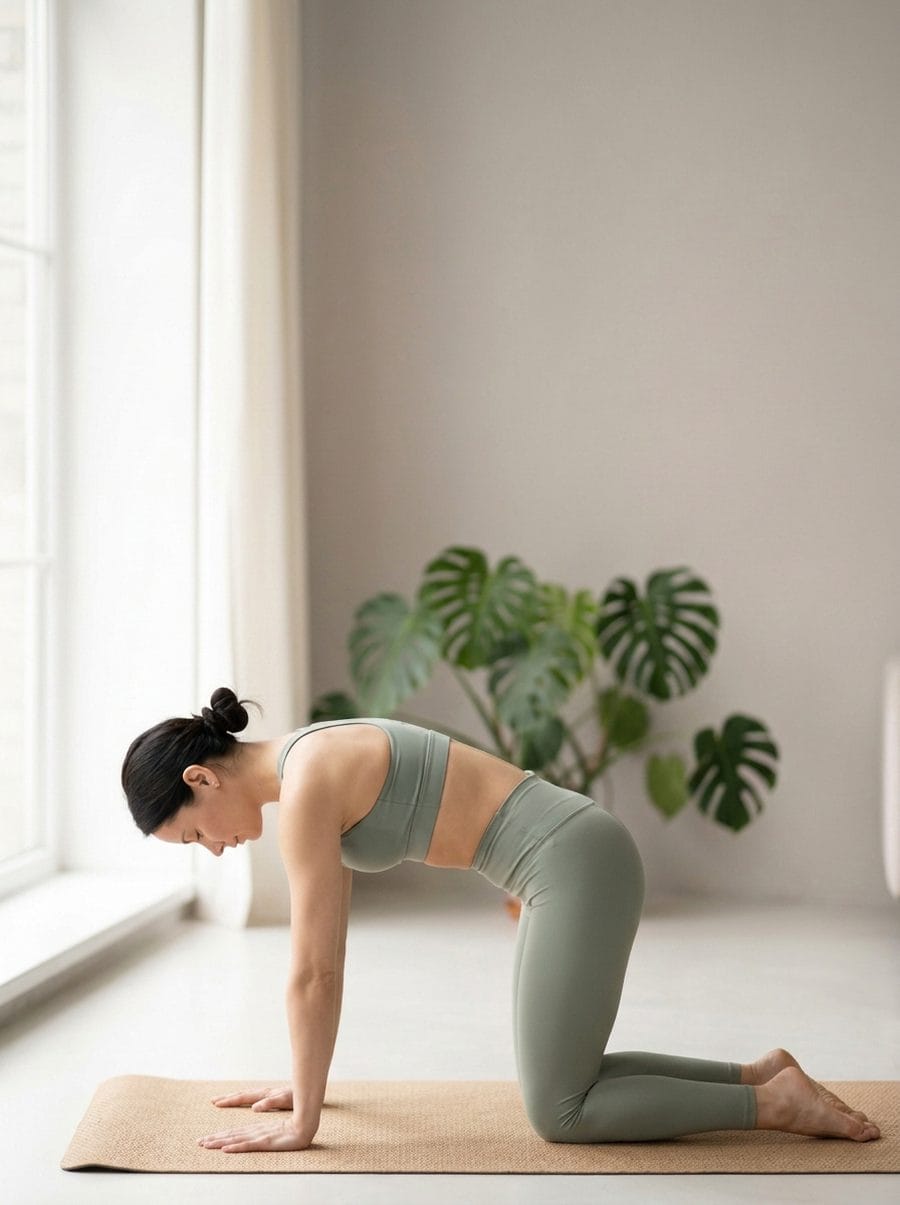
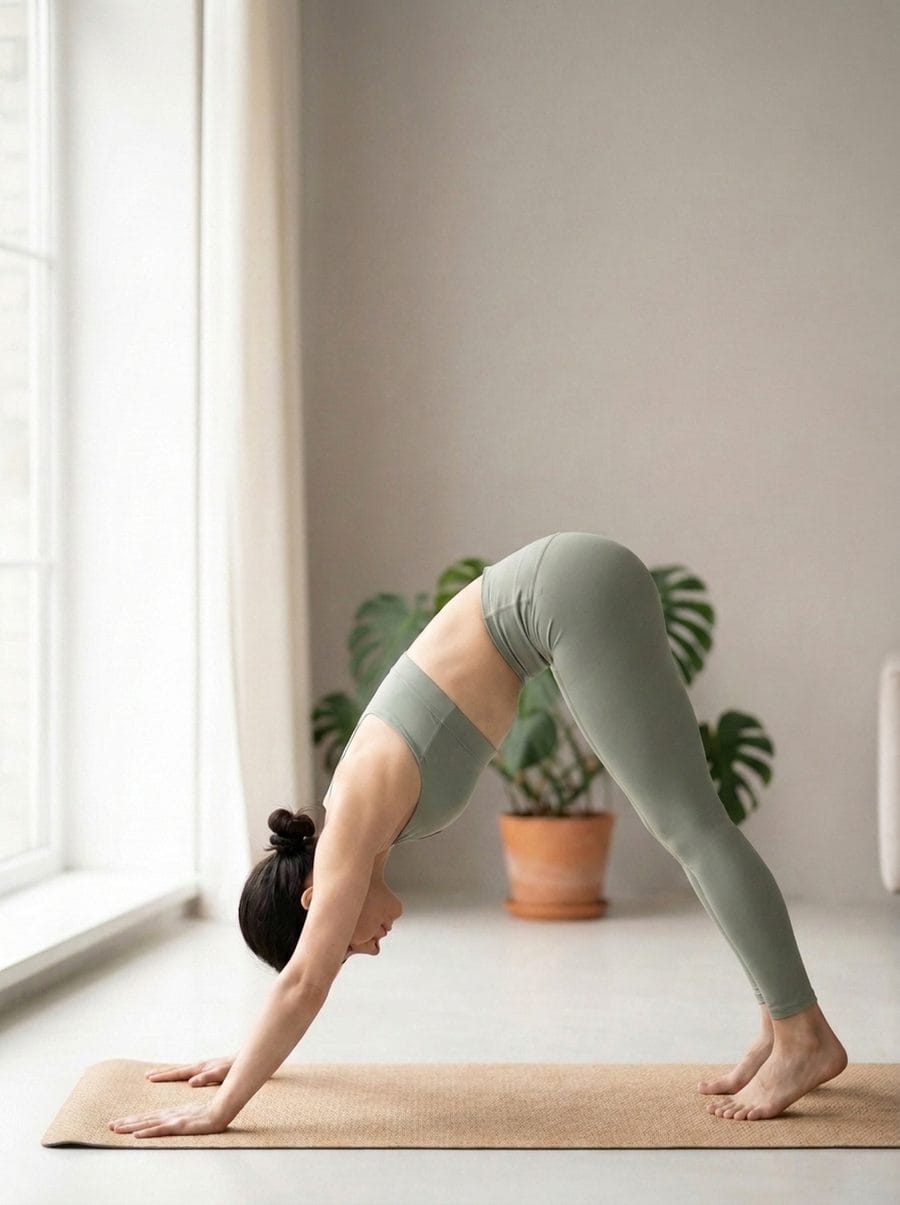
Cat-Cow warms up your back in time with your breath: arch your back on the inhale, round it on the exhale. Downward-Facing Dog lengthens the whole back line of the body. Bend your knees in it as much as you like, and don't worry if your heels stay off the floor.
Standing poses
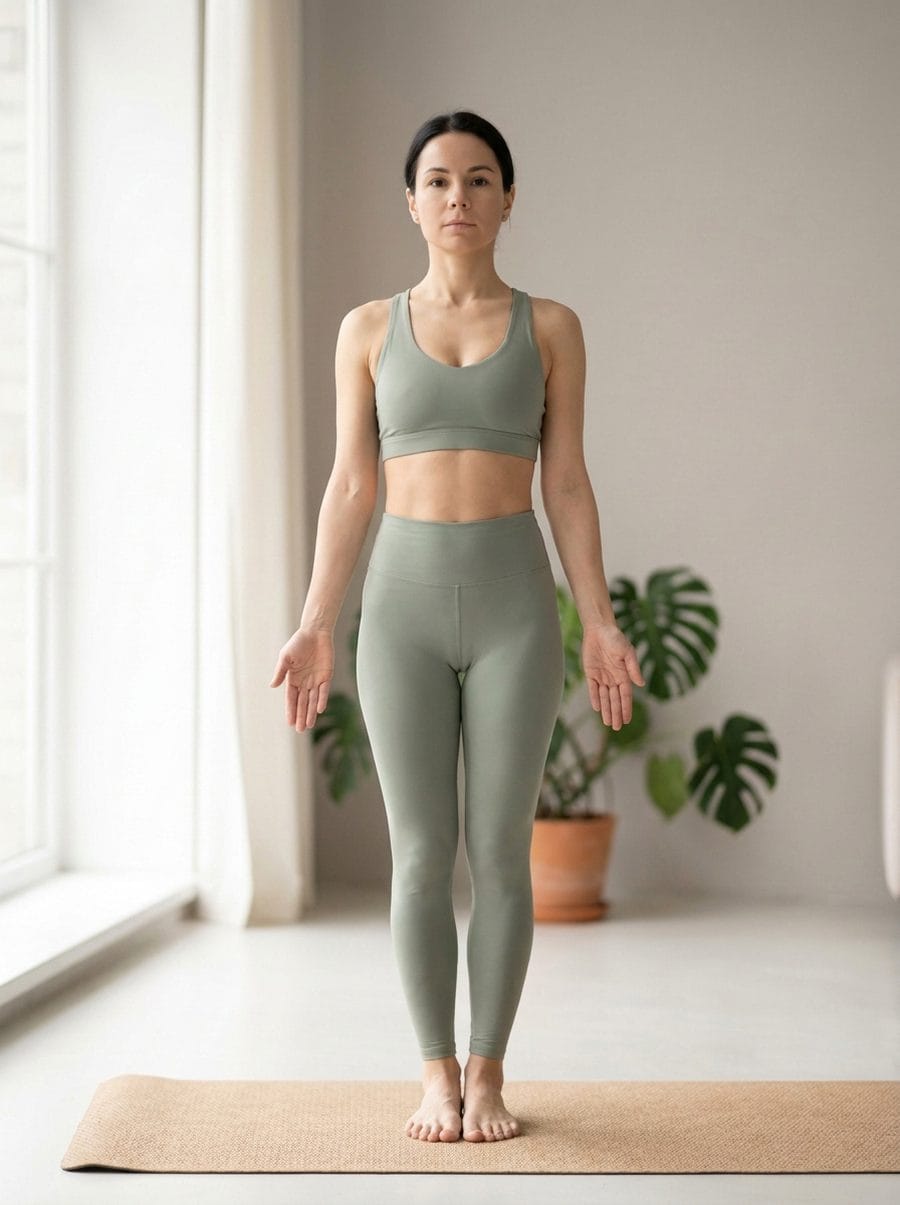
Mountain Pose looks easy, yet it teaches the fundamentals: stand evenly on both feet, reach the crown of your head upward and let your shoulders drop. Tree Pose builds balance, so spend your first weeks doing it beside a wall.
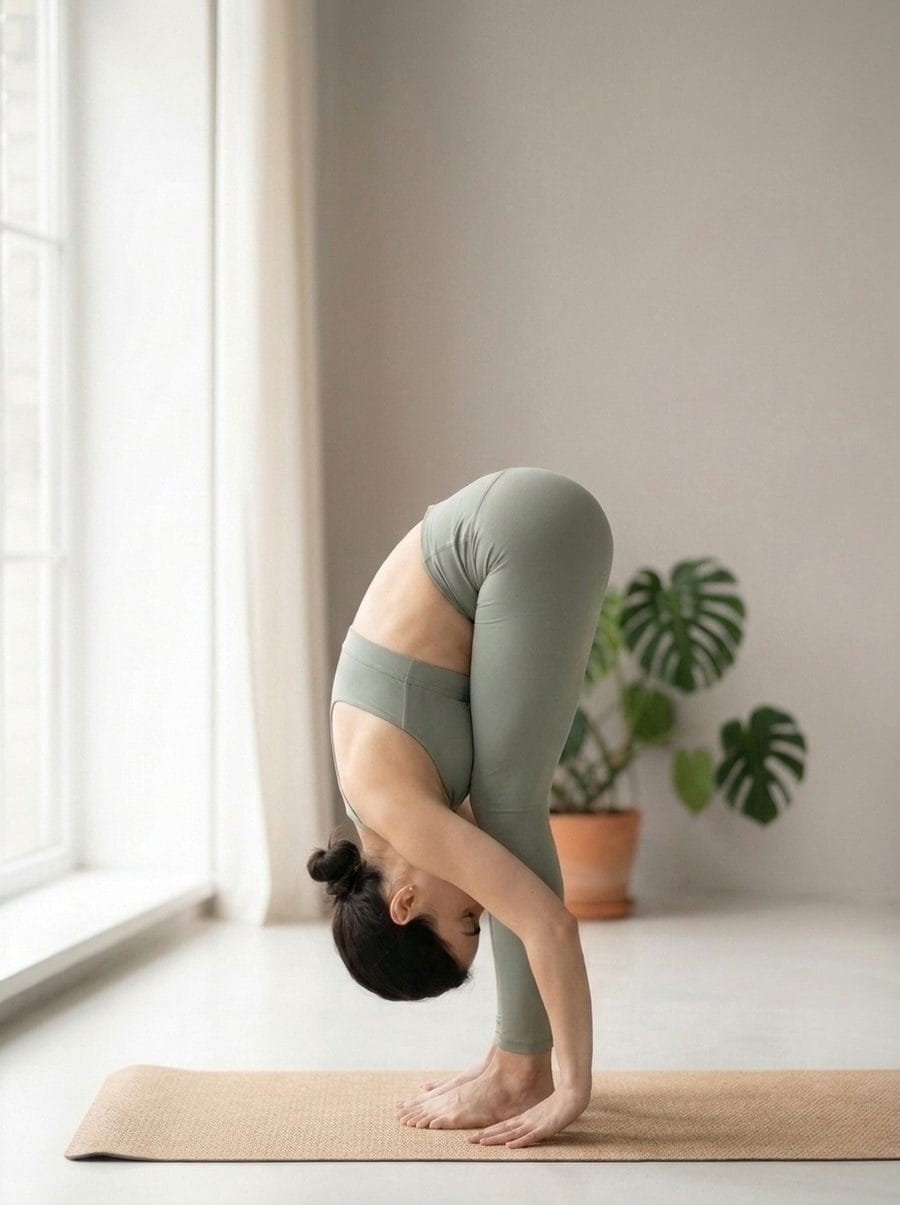
In Standing Forward Fold, bend your knees as far as you need to keep your back long.
Seated and lying down
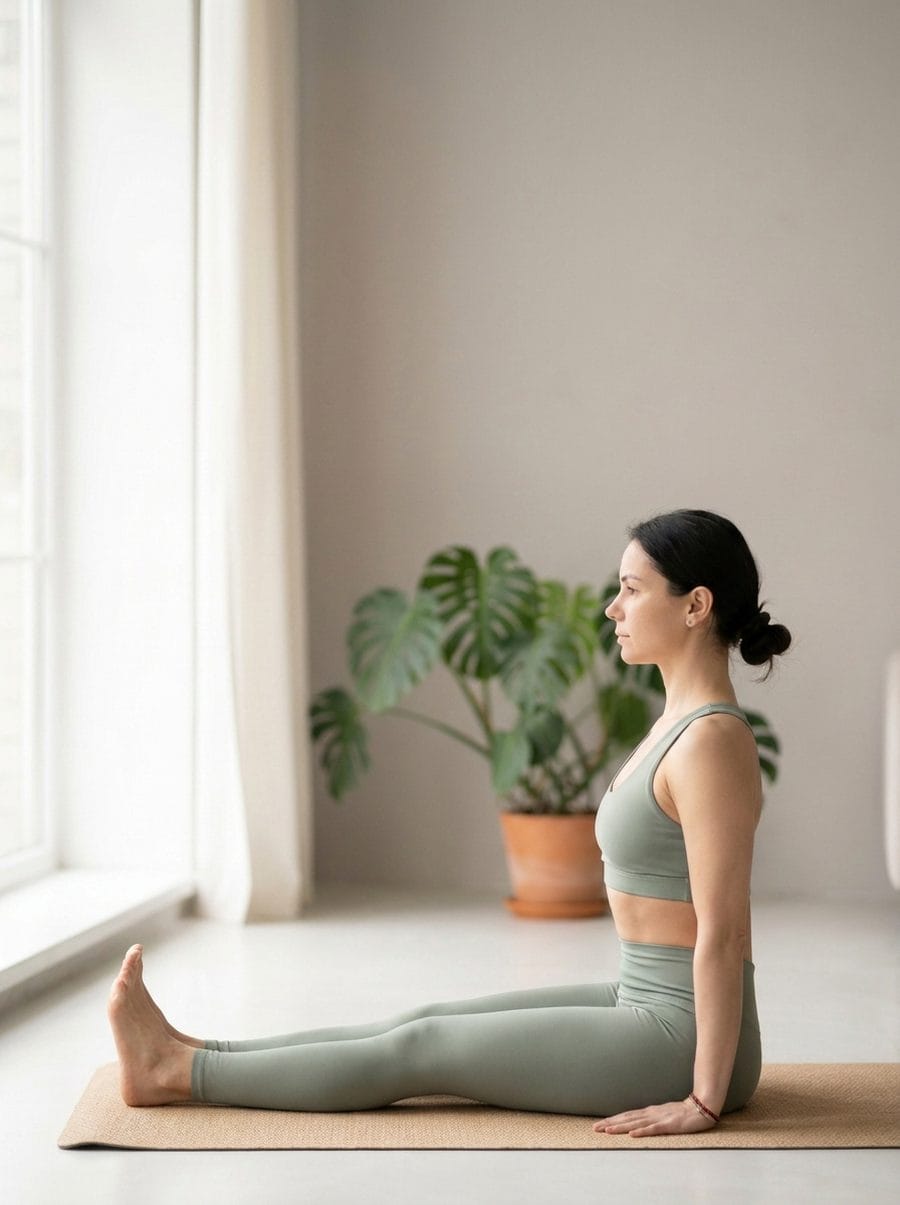
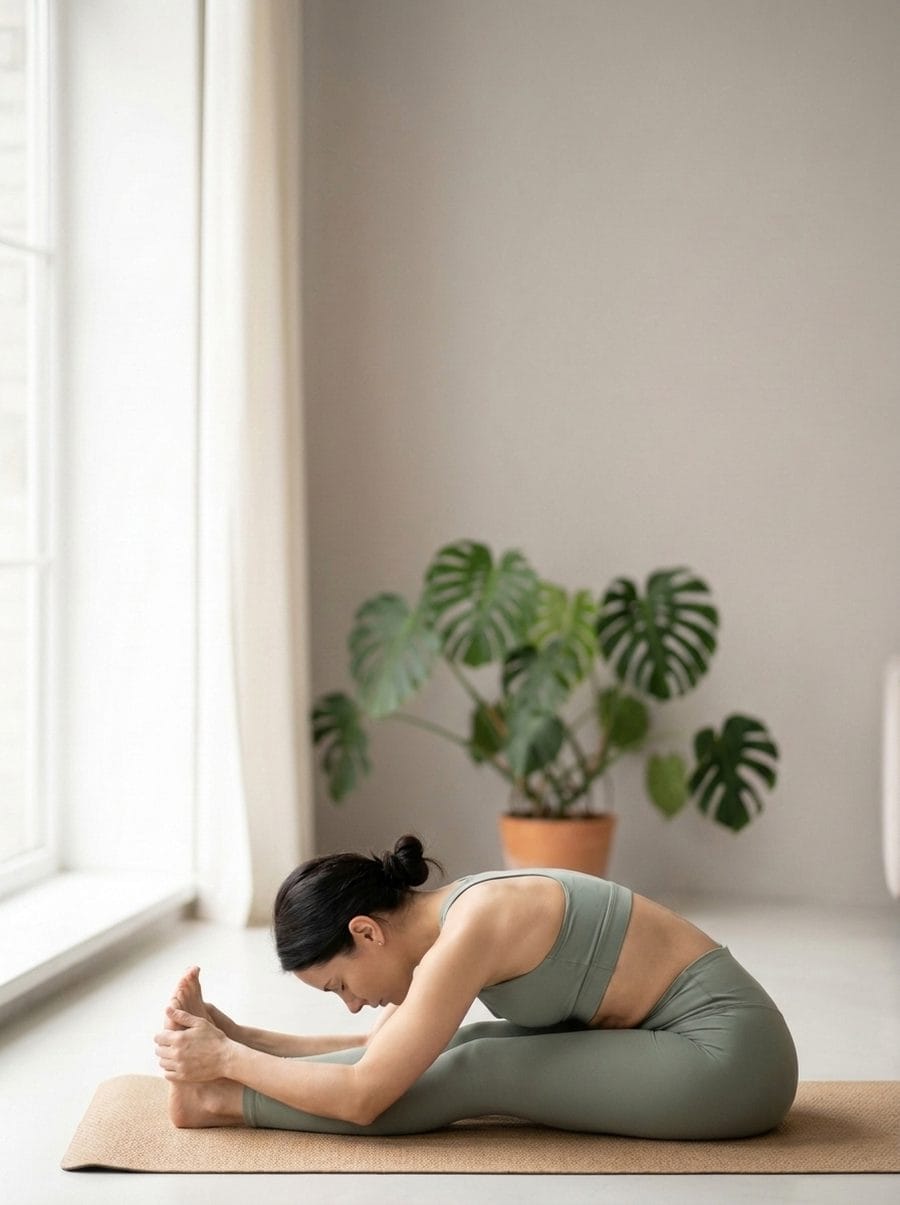
If your back rounds in Staff Pose, sit up on a folded blanket. In Seated Forward Fold, move your chest forward instead of pulling your forehead toward your knees, and wrap a belt around your feet if your hands don't reach.
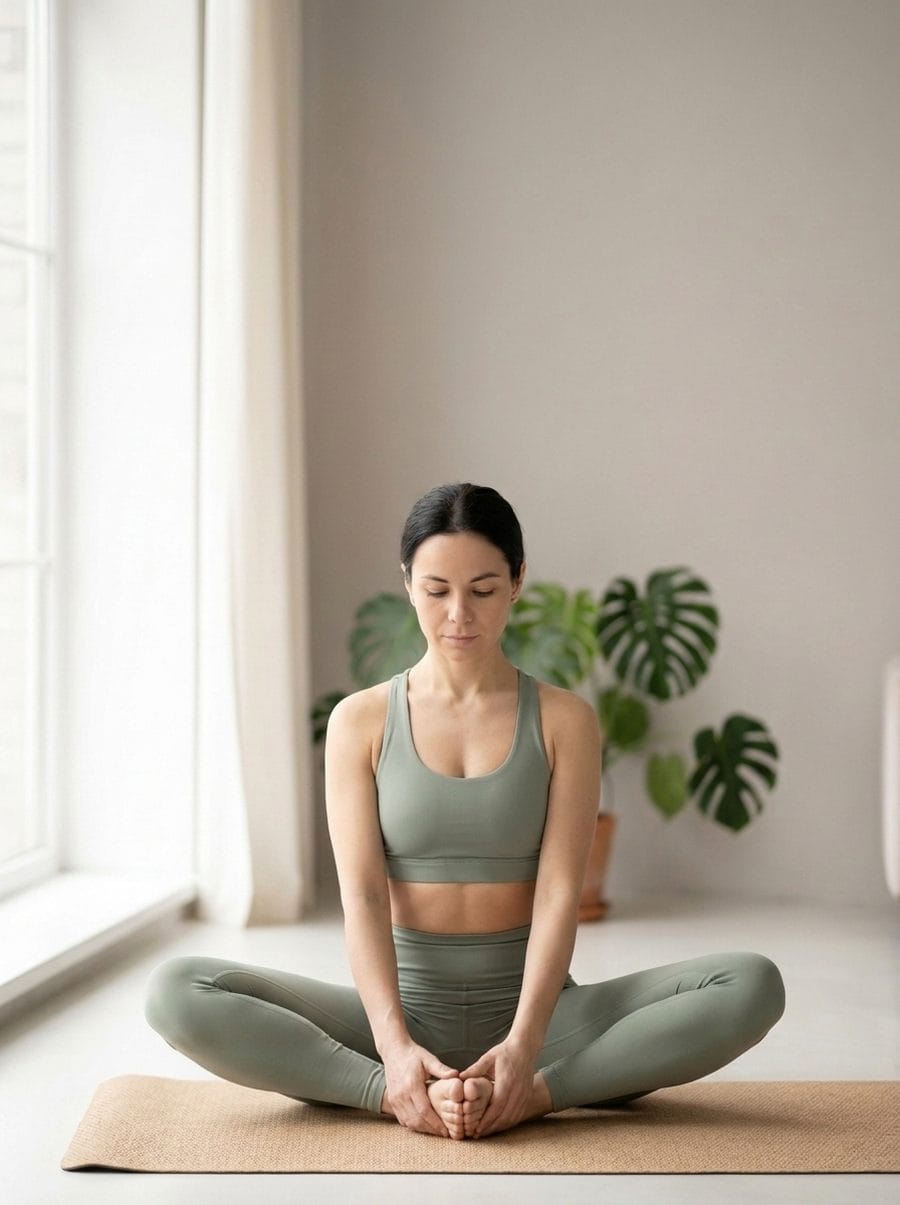
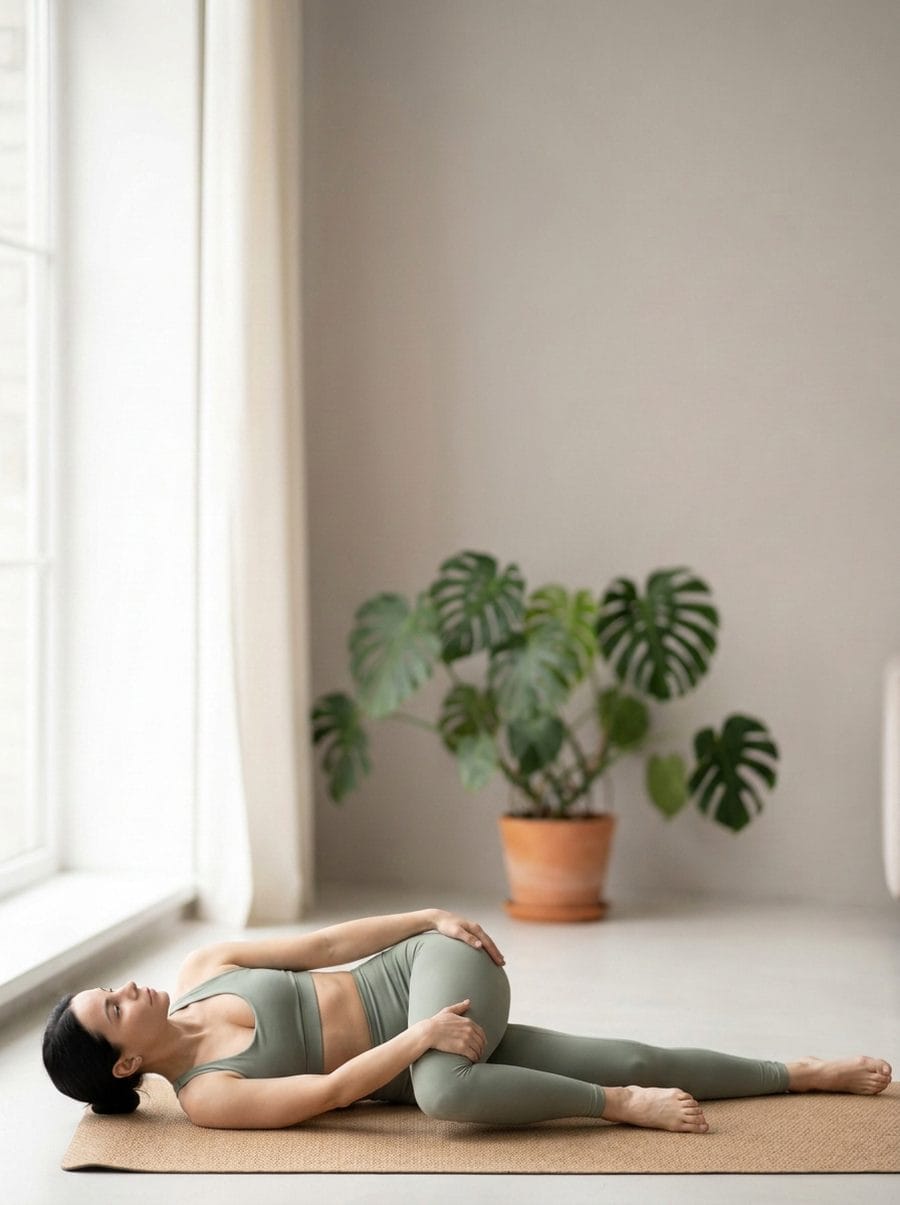
Butterfly Pose gives the hip joints a gentle opening. Supine Twist relaxes the lower back, and Relaxation Pose brings the session to a close.

Not flexible? How to start yoga anyway
This is the fear new students mention most, and it's the one you can drop right away. Yoga doesn't require flexibility up front. Flexibility is something you build by practicing.
- Bend your knees in every forward fold. Keeping your back long is the priority; straight legs can wait.
- Bring the floor up to you. Put a blanket under your hips, pillows under your knees in Butterfly Pose, and books under your palms in the standing fold.
- Aim for a stretch, never pain. A pulling feeling in your muscles is normal. Sharp or stabbing pain, or any pain in a joint, means it's time to ease out of the pose.
- Don't measure yourself against the photos. The pose cards show the final shape. Your version today might be half that deep, and that is real, correct practice.
How to breathe during yoga
Breathe through your nose, slowly and steadily. Avoid holding your breath in challenging poses: if your inhale starts to stutter, you've gone too far. An easy rule for the beginning: open up and lift as you breathe in, fold and twist as you breathe out.
Once that feels natural, try Full Yogic Breath, which trains you to fill the belly, then the ribs, then the chest. There's more about breathing in poses in Breath in Practice.
How often should beginners do yoga?
At first, 15 to 20 minutes three or four times a week is plenty. A short daily session is fine too, as long as it doesn't leave you tired or in pain. Showing up regularly matters more than session length: four 15-minute practices will give you more than a single hour once a week.
After three or four weeks, add a second program. Try 10-Minute Morning for an energizing start to your day, or Healthy Back if your days involve a lot of sitting. When you want to design sessions yourself, there's a guide to building a practice of your own.
Yoga safety for beginners
For healthy people, most basic poses are safe if you take your time and never push through pain. Some poses do come with limits, though, and it's better to learn them before you start.
- High blood pressure. Leave Standing Forward Fold out of your routine, keep Downward-Facing Dog brief and rise slowly.
- Lumbar disc herniation. Bend your knees in Standing Forward Fold, skip Seated Forward Fold, and leave out Supine Twist during a flare-up. Get your doctor's advice first.
- Dizziness. Do Tree Pose next to a wall, and come up from forward folds gradually.
- Wrist injuries. Cat-Cow can be done resting on your fists.
If you're pregnant, recovering from an injury or surgery, or managing a chronic condition, talk your plans over with a doctor first. The complete list of cautions is in Safety and Contraindications.
Pose cautions in this article
- Acute back pain (Cat-Cow)
- Wrist injuries — practice on your fists (Cat-Cow)
- Wrist and shoulder injuries (Downward-Facing Dog)
- High blood pressure — don't stay in the pose long (Downward-Facing Dog)
- Glaucoma (Downward-Facing Dog)
- Dizziness — practice near a wall (Tree Pose)
- High blood pressure (Standing Forward Fold)
- Lumbar disc herniation — bend your knees (Standing Forward Fold)
- Lumbar disc herniation (Seated Forward Fold)
- Flare-up of back pain — bend your knees (Seated Forward Fold)
- Groin and knee injuries — place supports under your thighs (Butterfly Pose)
- Disc herniation in the acute phase (Supine Twist)
This site is for general information and is not medical advice. If you have pain, an injury, a chronic condition, or are pregnant, check with a qualified professional before practicing.
Questions
Can I do yoga at home by myself as a beginner? Yes, as long as you start with simple poses, move slowly and don't push through pain. A ready-made routine settles the biggest beginner question of what to do and in what order. If you have injuries or ongoing pain, see a doctor first.
Should beginners start with hatha yoga? Hatha yoga suits a first step well: poses are held calmly, with no fast transitions, so there's time to get to know each one. You can read more about the style in What Is Hatha Yoga.
How long does it take to get flexible with yoga? It varies from person to person and depends a lot on age, genetics and how regularly you practice. Most people notice poses getting easier after a few weeks, but it's best not to rush your body.
Is it OK to do yoga every day? Yes, a short, gentle practice can be a daily habit. If you start feeling worn out, or your muscles stay sore for more than a day, take a day off.
Sources
- Pose technique, benefits and cautions, and sequence contents: the Hatha Yoga app. How we check our texts is explained on the How We Prepare Our Content page.
- National Center for Complementary and Integrative Health (NIH). Yoga: Effectiveness and Safety.
Read next
- Yoga for Arthritis and Osteoporosis: How to Protect Your Joints and Bones7 min read
- Ashtanga Yoga Explained: The Series, the Breath and the Difference from Hatha6 min read
- Ayurveda Explained Simply: The Basics and a Daily Routine (Dinacharya)5 min read
- Balance Exercises: 10 Yoga Poses for Balance and Stability7 min read