 Hatha Yoga
Yoga vs. Pilates: How They Differ and Which Fits Your Goal
Hatha Yoga editorial team · Updated · 5 min read
Yoga and Pilates look alike from the outside: a mat, slow movement, attention to breath and posture. But they're built differently, and that shapes what you get out of them. This guide explains, without jargon, what Pilates is, how it differs from yoga, which one suits flexibility, core strength, your back or a calmer mind, and how to fit both into the same week.
What is Pilates?
Pilates is an exercise system created by Joseph Pilates in the first half of the 20th century. He called it "Contrology," the science of controlling the body. The method centers on the deep trunk muscles: abs, back, pelvic floor and glutes, which Pilates calls the "powerhouse."
Pilates is done either on a mat or on equipment, the best known being the reformer: a sliding carriage on springs. Exercises are done slowly, with few repetitions and full control. Six principles of the method are usually listed: concentration, control, centering, flow, precision and breathing.
Many schools teach lateral breathing: in through the nose into the sides of the ribs, out through the mouth, with the belly staying drawn in. Classic mat exercises will be familiar to anyone who's been to a gym class: the Hundred with its pulsing arms, the Roll Up, the Single Leg Stretch, Swimming.
Yoga vs. Pilates: the key differences
- Origins. Yoga comes from Indian tradition, where poses are only one part of a path that also includes breathing and meditation. Pilates is a 20th-century Western system of physical training.
- Movement. Hatha yoga is about arriving in a pose and holding still. In Pilates you repeat an exercise several times in a row, with fewer static holds.
- Focus. Pilates builds nearly everything around a stable torso. Yoga casts a wider net: flexibility, strength, balance, breath and relaxation.
- Breath. In yoga you breathe through the nose, and breathing techniques, pranayama, are a practice of their own. In Pilates the breath serves the movement: you exhale on the effort.
- Ending. Yoga practice ends with several minutes of rest in savasana. Pilates classes usually skip that pause.
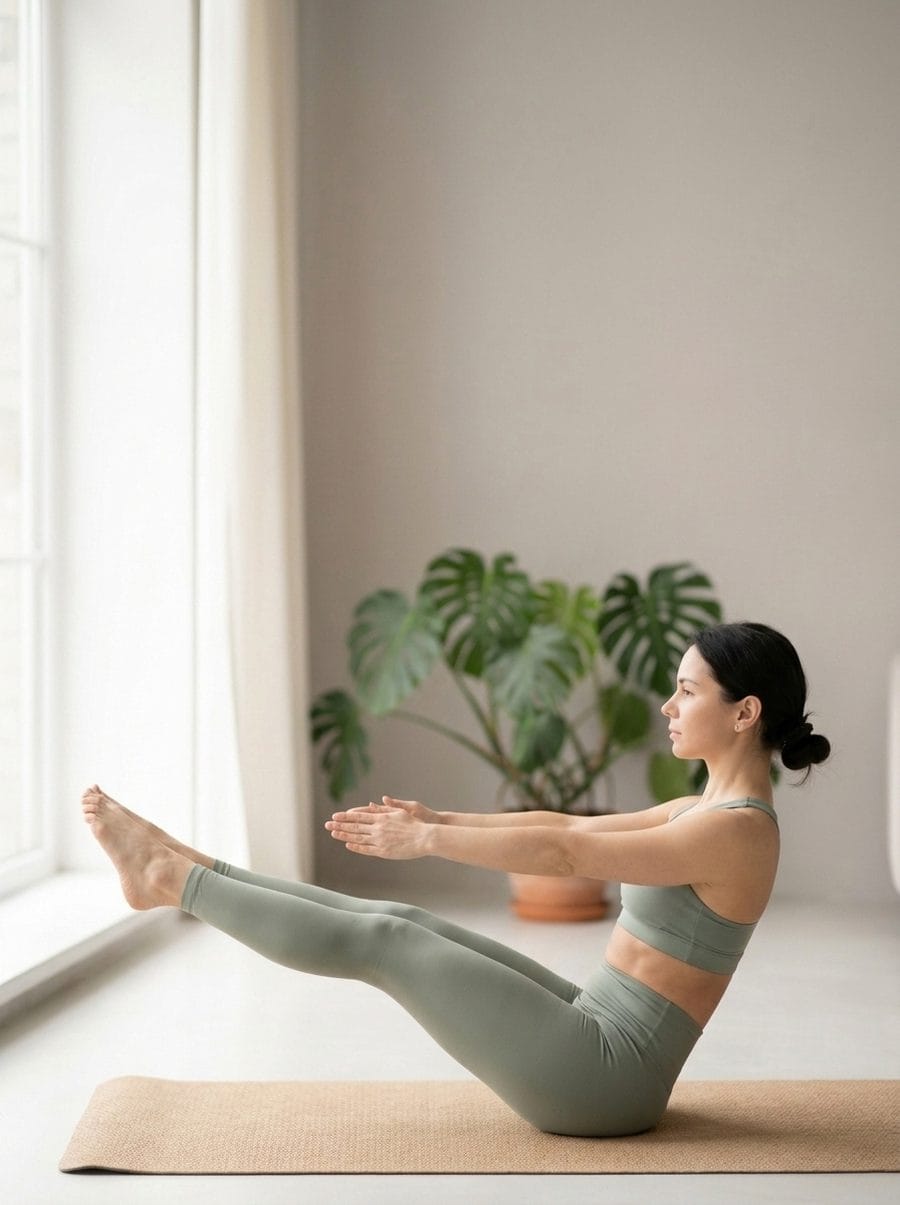
There's plenty in common, too. Both are gentle on the joints, build body awareness, work on posture and suit home practice. Some exercises even look alike: the Pilates Teaser resembles Boat Pose, and the Saw and the Swan will feel familiar to yogis from twists and backbends.
Is yoga or Pilates better? Match it to your goal
- Flexibility and tight hamstrings. Yoga wins here: long holds in forward folds give muscles time to let go, and hip openers gradually free up the hips.
- A strong, stable core. That's exactly what Pilates was made for. In yoga, strength poses do the same job: planks, Boat Pose, balances.
- Stress and sleep. Yoga offers more: slow breathing, quiet poses and a final relaxation.
- Posture. Both help. Pilates strengthens the torso muscles, and yoga adds mobility to the upper back and shoulders.
- Back pain, a herniated disc, sciatica, arthritis or pelvic floor problems. There's no one-size answer. Choose the method and the load together with your doctor or a physical therapist.
- Pregnancy. Clear regular classes of either kind with your doctor. Prenatal-specific programs are the safer choice.
Wall Pilates has been a big trend in recent years: mat exercises with your feet pressed against a wall. Yoga uses a similar trick, covered in Wall Yoga.
Yoga for core strength: Strong Core
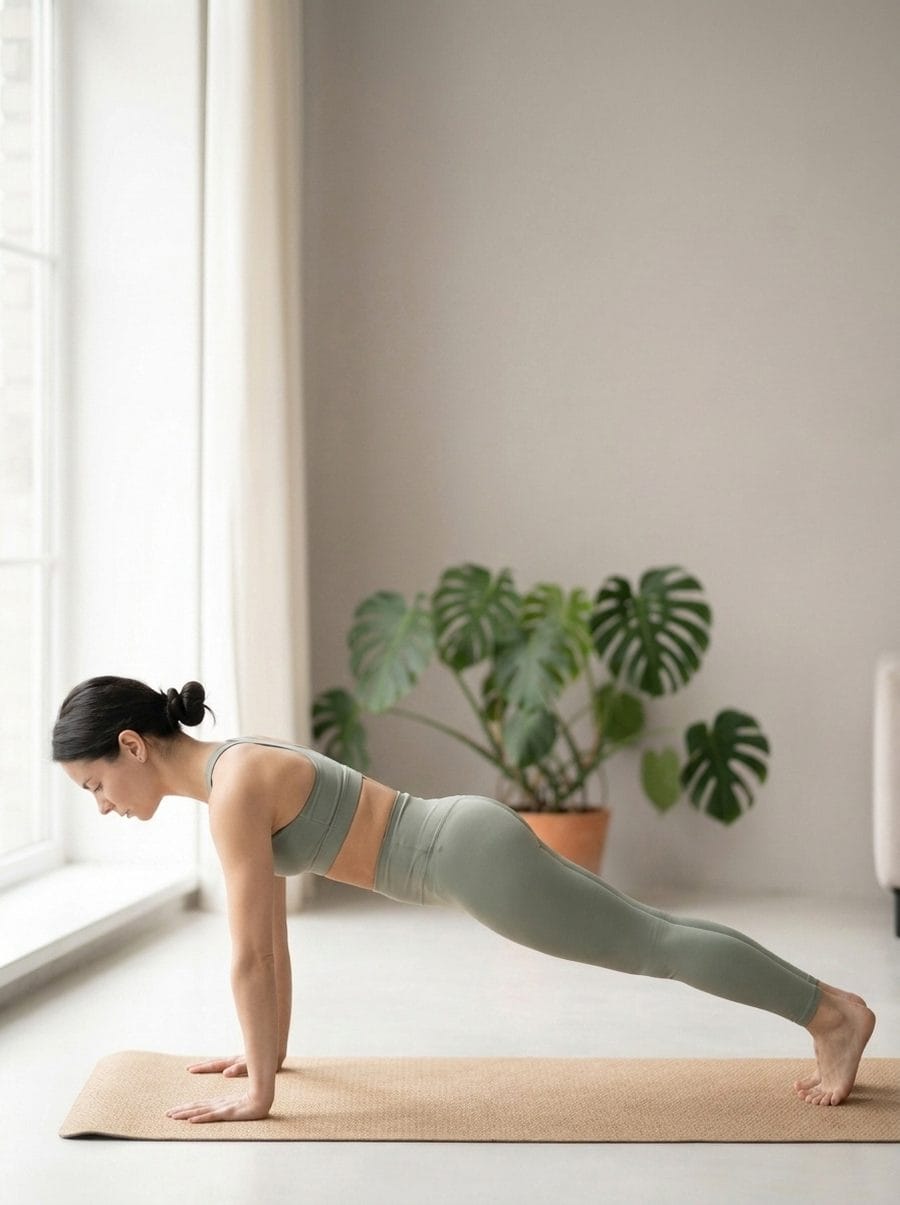
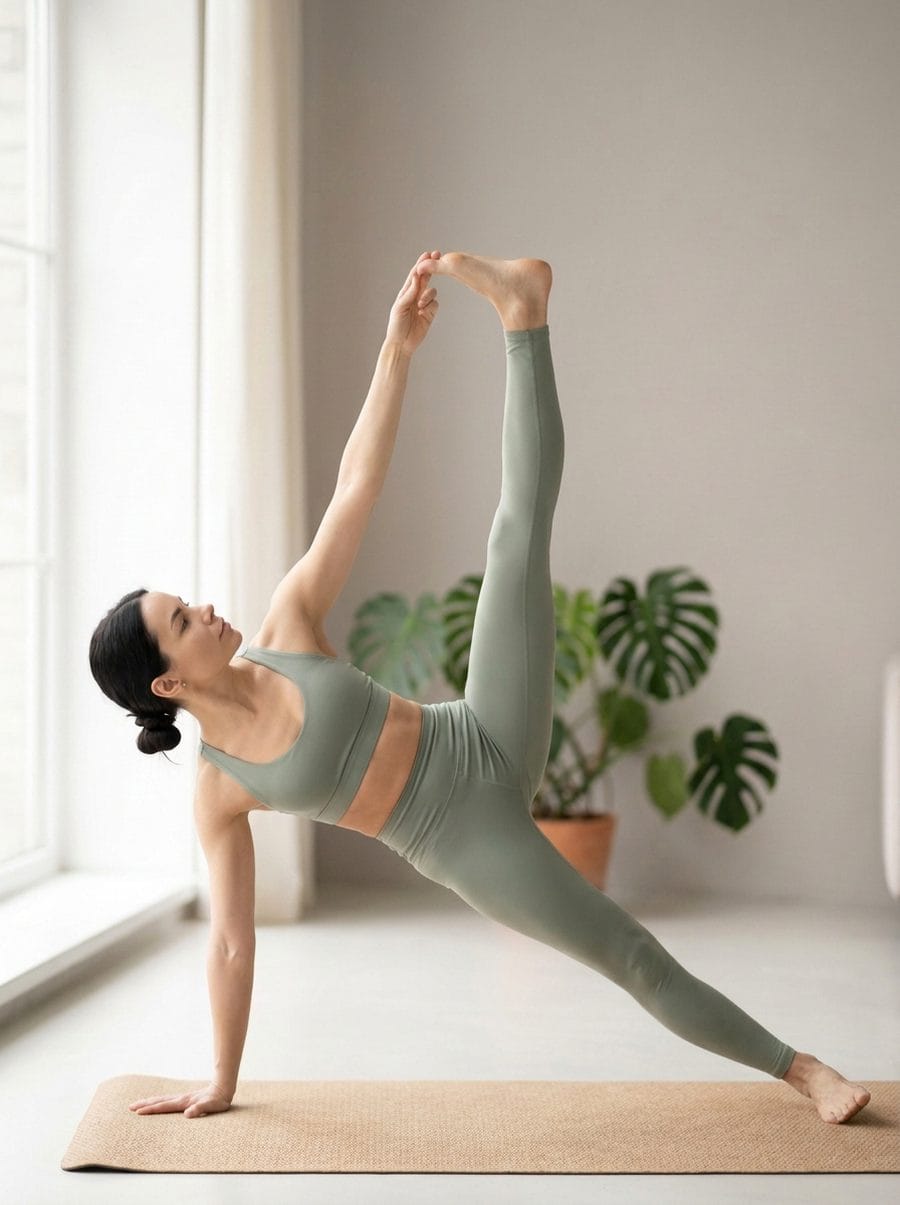
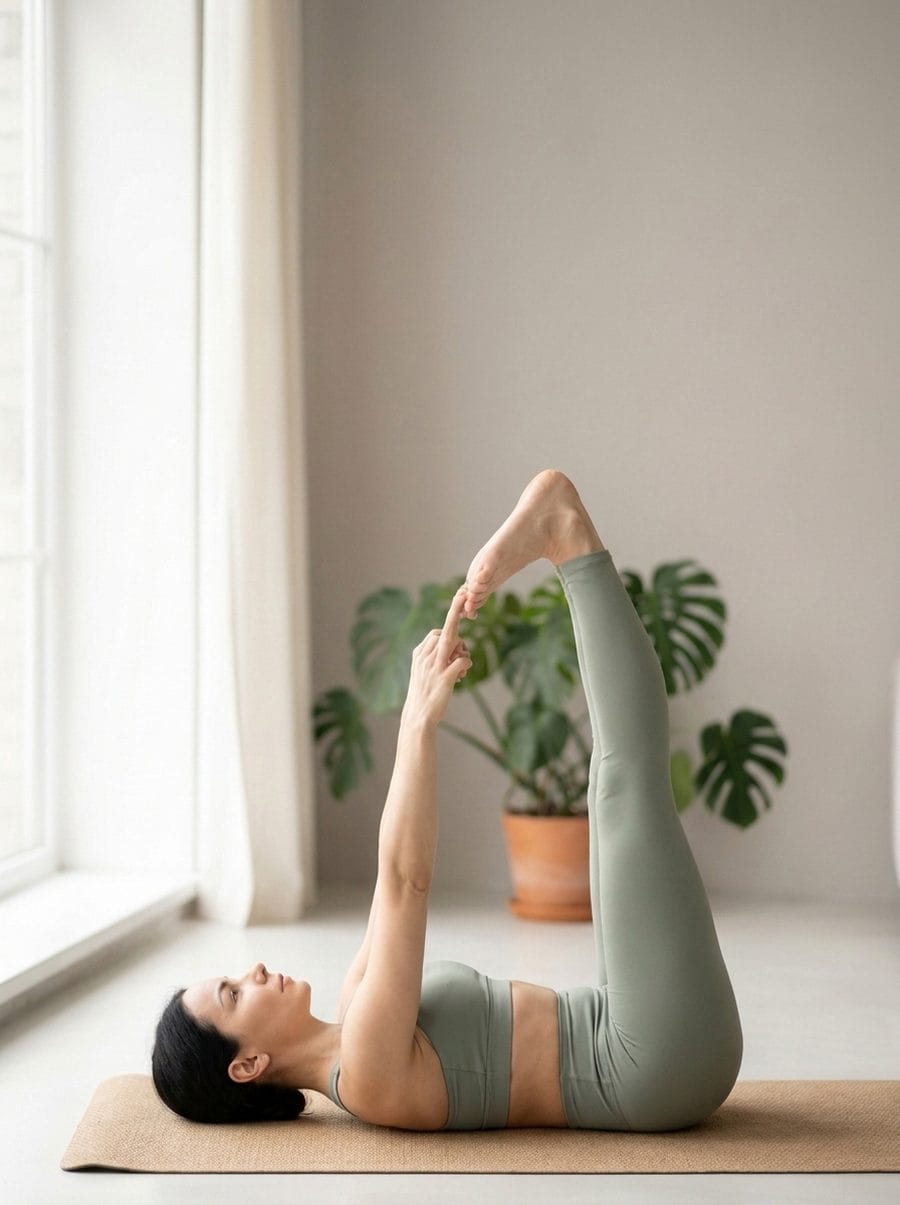
If Pilates appeals to you for your abs and back, try the app's Strong Core program. It takes 15 minutes, is pitched at intermediate level and starts with a pair of Sun Salutation rounds. After that, 10 poses follow: Plank, Side Plank, Boat Pose and its variations, Revolved Abdomen Pose, Right-Angle Leg Raise, Reverse Plank, Child's Pose and savasana.
Yoga for flexibility: Deep Stretch
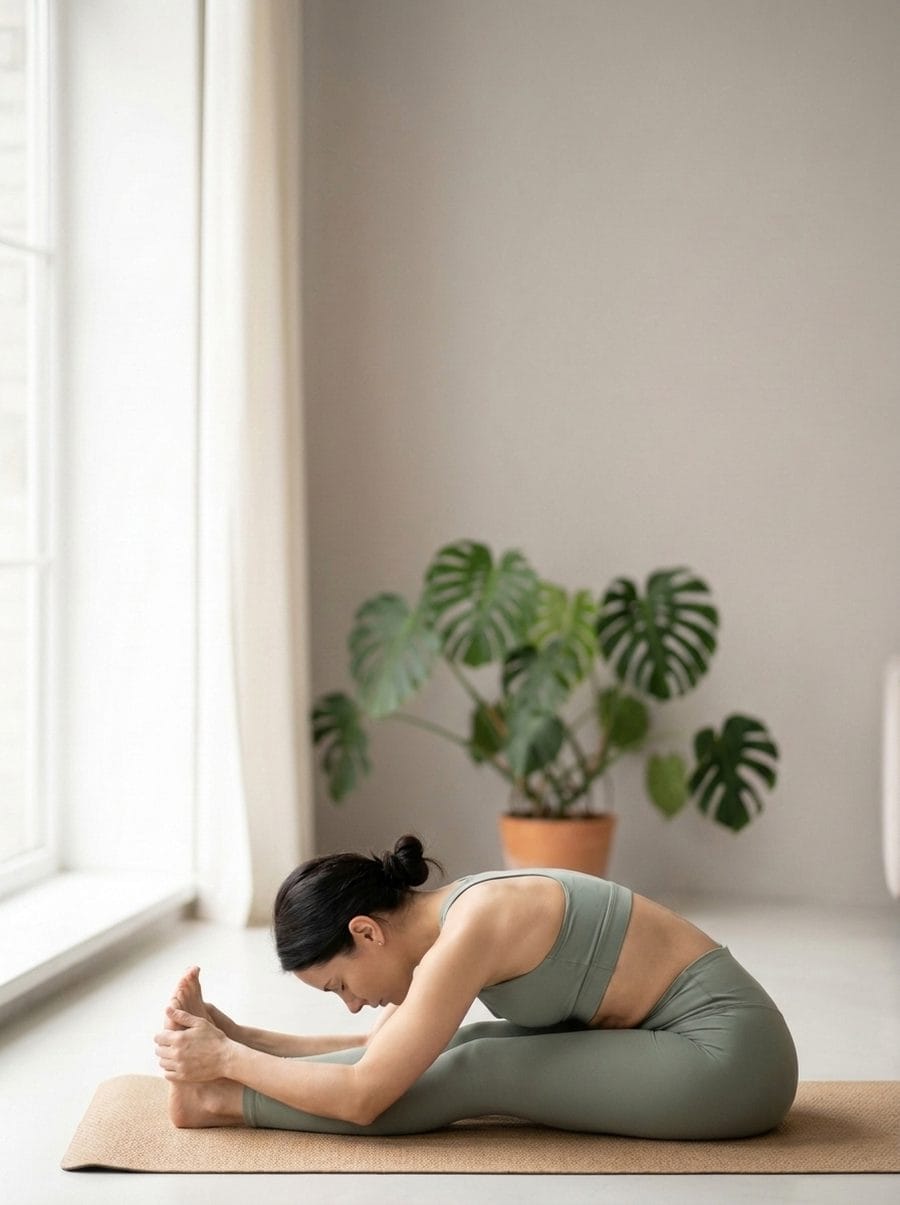
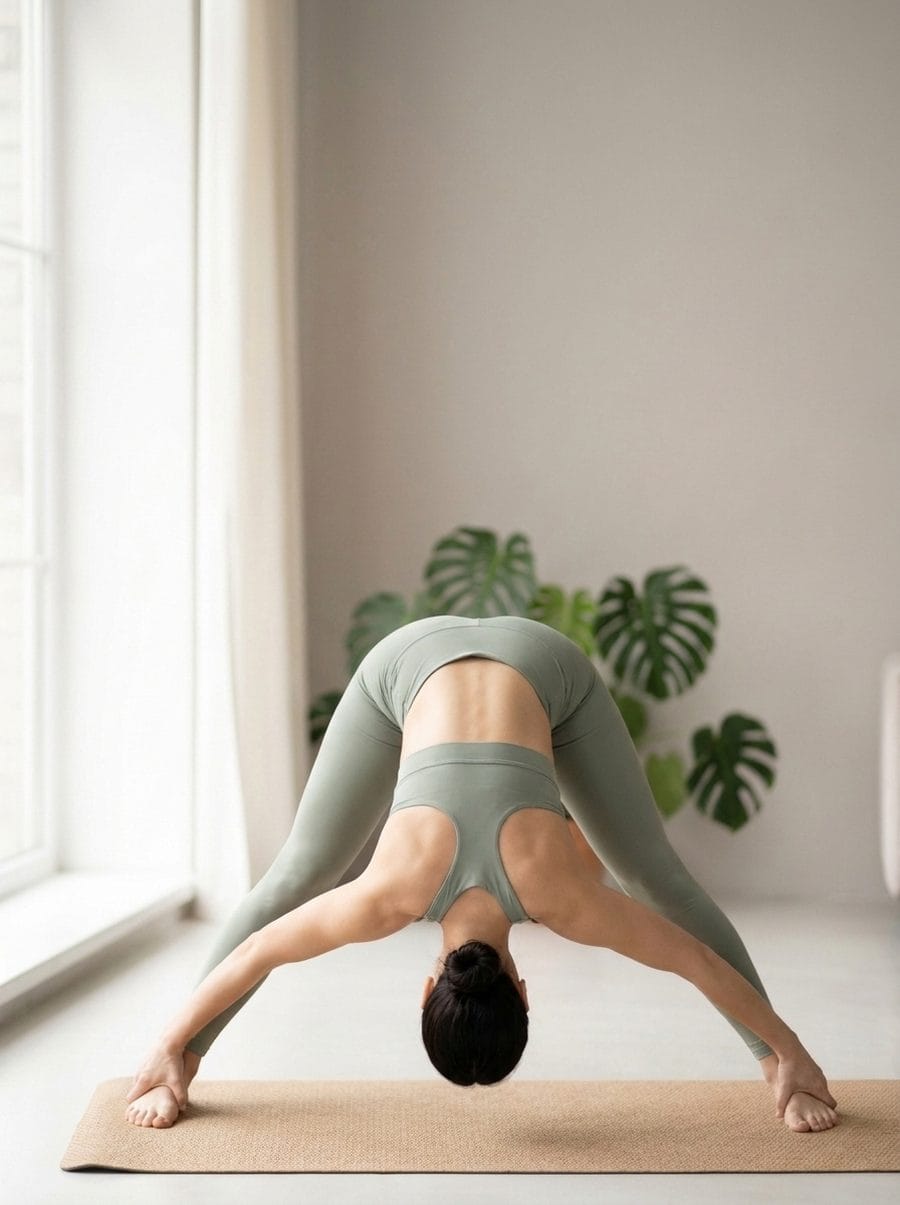
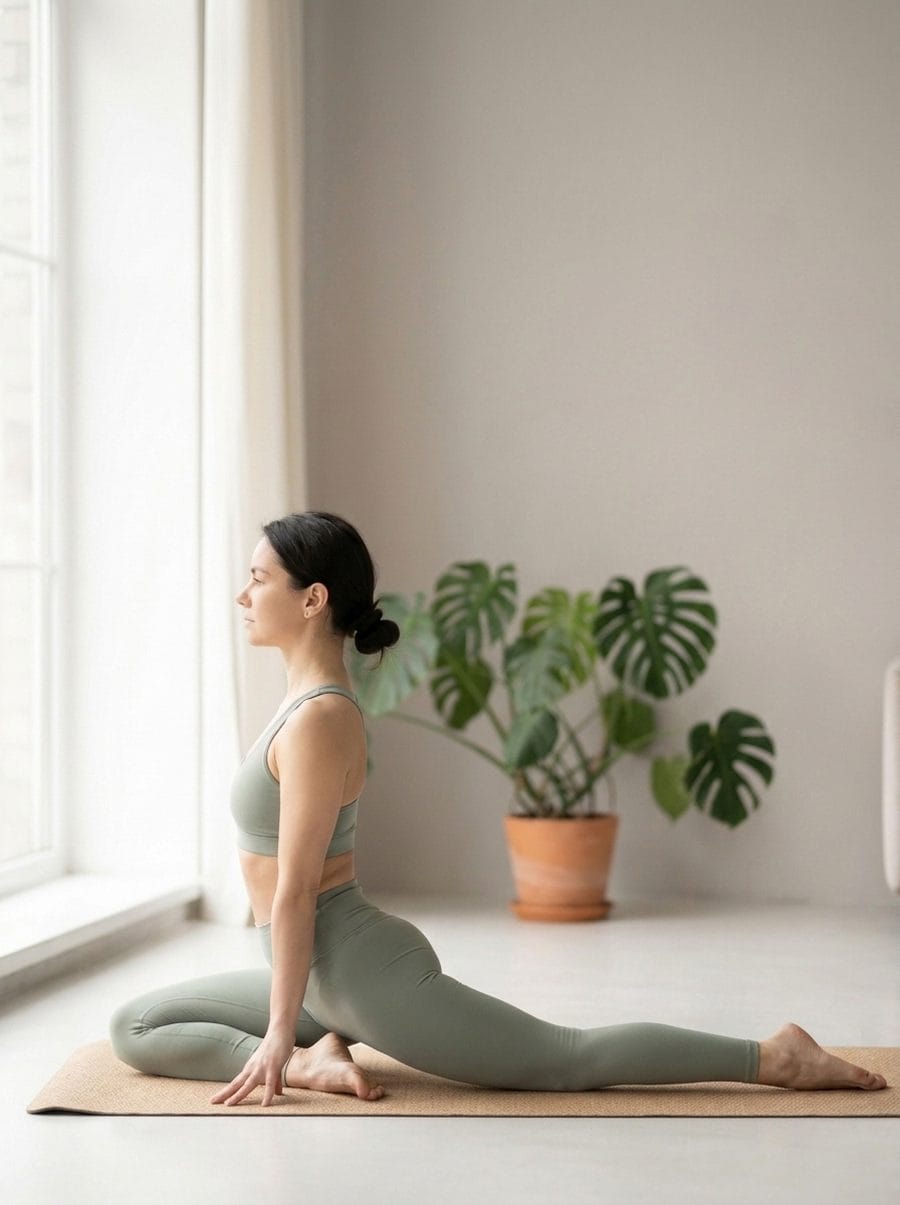
For flexibility, Deep Stretch is the better fit: 25 minutes, 13 poses, intermediate level. Standing and seated folds, Pigeon Pose (Prep) and gentle twists are held for 40 to 75 seconds each, with a five-minute Relaxation Pose to finish. This is exactly the kind of work people who only do Pilates tend to miss.
How to combine yoga and Pilates
You don't have to pick one forever. An easy weekly plan: two days of core work (Pilates or strength yoga) and two or three days of yoga with folds, twists and relaxation. After a strength session, calm reclining poses feel especially good.
Beginners usually do better starting with one method and add the other after a month or two, once the basic movements feel familiar. Keep an eye on your total load: if your abs are sore after Pilates, choose calm yoga without Boat Pose and planks the next day.
Not sure where to begin? Take a look at Types of Yoga or Yoga for Beginners.
Safety
- Boat Pose. Lumbar disc herniation, pregnancy and diastasis recti all rule it out.
- Plank Pose. With sore wrists, move onto your forearms; with diastasis recti, plank is off the menu.
- Side Plank. Wrist or shoulder injuries mean you skip this one.
- Right-Angle Leg Raise. When the lower back aches, tuck both palms beneath the sacrum.
- Seated Forward Fold. A lumbar disc herniation takes this pose off your list.
- Pigeon Pose (Prep). Injured knees call for a Supine Twist with the knee pulled in toward the chest instead.
Living with a chronic illness, recovering from a recent injury or expecting a baby? Book a medical check before you start. The general rules are in Safety and Contraindications.
Pose cautions in this article
- Wrist injuries — practice on your forearms (Plank Pose)
- Diastasis recti (Plank Pose, Boat Pose)
- Wrist and shoulder injuries (Side Plank)
- Lumbar disc herniation (Boat Pose, Seated Forward Fold)
- Pregnancy (Boat Pose)
- Lower back pain — keep your hands under your sacrum (Right-Angle Leg Raise)
- Flare-up of back pain — bend your knees (Seated Forward Fold)
- High blood pressure — don't lower your head too far (Wide-Legged Forward Fold)
- Hamstring injuries (Wide-Legged Forward Fold)
- Knee injuries — do a Supine Twist with your knee to your chest instead (Pigeon Pose (Prep))
This site is for general information and is not medical advice. If you have pain, an injury, a chronic condition, or are pregnant, check with a qualified professional before practicing.
Questions
How is Pilates different from yoga? Pilates is a 20th-century Western exercise system centered on the torso muscles and repeated movements. Yoga is broader: held poses, flexibility, balance, breathing techniques and relaxation.
Is yoga or Pilates better for tight hamstrings? Yoga. It has more long forward folds and hip openers. Pilates stretches too, but its main job is a stable core.
Is yoga or Pilates better for your back? Both work for general back health if you practice regularly and without pain. With a herniated disc, sciatica or acute pain, make the choice together with your doctor.
Can you do yoga and Pilates in the same week? Yes. Many people alternate them: Pilates or strength yoga for the core, calm yoga for flexibility and recovery.
Sources
- Pose technique and cautions, contents of the Strong Core and Deep Stretch programs: the Hatha Yoga app. More on the How We Prepare Our Content page.
Read next
- Yoga for Arthritis and Osteoporosis: How to Protect Your Joints and Bones7 min read
- Ashtanga Yoga Explained: The Series, the Breath and the Difference from Hatha6 min read
- Ayurveda Explained Simply: The Basics and a Daily Routine (Dinacharya)5 min read
- Balance Exercises: 10 Yoga Poses for Balance and Stability7 min read