 Hatha Yoga
Wall Yoga: Poses with Wall Support You Can Do at Home
Hatha Yoga editorial team · Updated · 6 min read
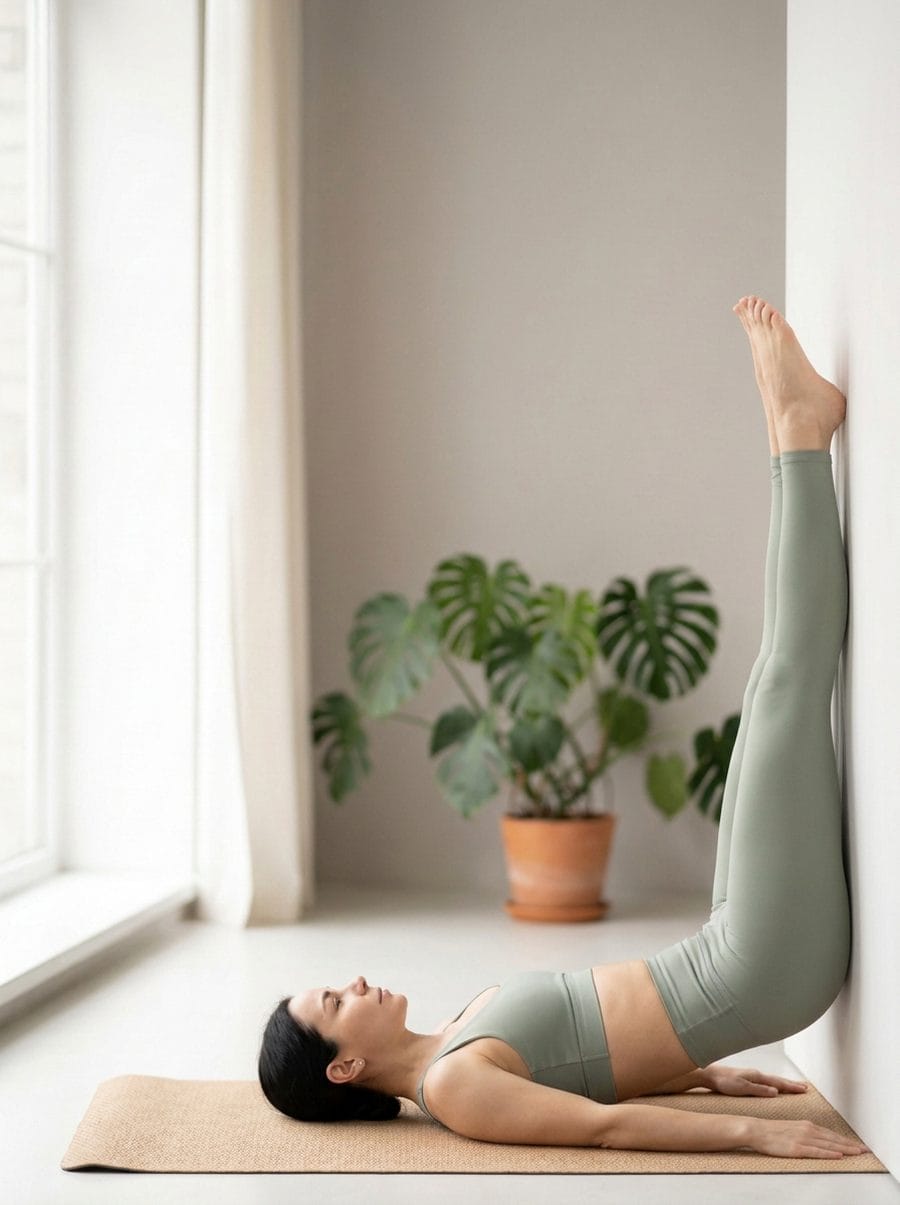
In yoga, a wall works like a quiet assistant. It shows you where vertical is, catches you in balance poses and holds your legs up while you rest. The app has no dedicated wall yoga program, and we'd rather say so up front.
What it does have is a wall-supported option for many poses. This guide covers 9 of them, from Legs-Up-the-Wall Pose to Handstand, two routines that are easy to do next to a wall, and the safety rules.
What is wall yoga?
The term usually means familiar poses where the wall serves as a prop: you rest your legs on it, press your hands or back into it, or stand side-on to it for balance. Props like blocks, straps and walls have long been part of yoga, especially in the Iyengar method. That doesn't make wall yoga a separate style.
What the wall gives you:
- A reference. Against a wall it's easy to check whether you're standing straight or whether your torso is level with the floor.
- A safety net. In balance poses you can touch the wall and stay on your feet. The NHS also suggests doing balance exercises near a wall or a sturdy chair.
- Rest. Legs resting on a wall stay up by themselves, so your muscles don't have to hold them.
- A safe way into harder poses. The app says Handstand, like Forearm Stand, should be learned only at a wall. The wall catches your legs and stops you from toppling past vertical.
There's no research on wall yoga as such. So promises like "drop a dress size in 28 days" are marketing: this is ordinary yoga, just with support.
Legs-Up-the-Wall Pose
This is the best-known wall pose. Lie on your side close to the wall, roll onto your back and walk your straight legs up the wall, sliding your hips in close. Let your legs, belly and face go completely soft, and your breath will slow on its own.
To come out, bend your knees, roll to one side and stay there for a few seconds. If there's no wall nearby, you can support your hips with your hands, elbows on the floor.
For this pose, the default hold in the app is two minutes, and across its programs the pose lasts anywhere from 70 to 160 seconds. It's the last pose before Savasana in the 10-minute Before Bed routine, for example. That routine has just six poses, all done lying down.
Posture at the wall: Mountain Pose and Half Forward Fold
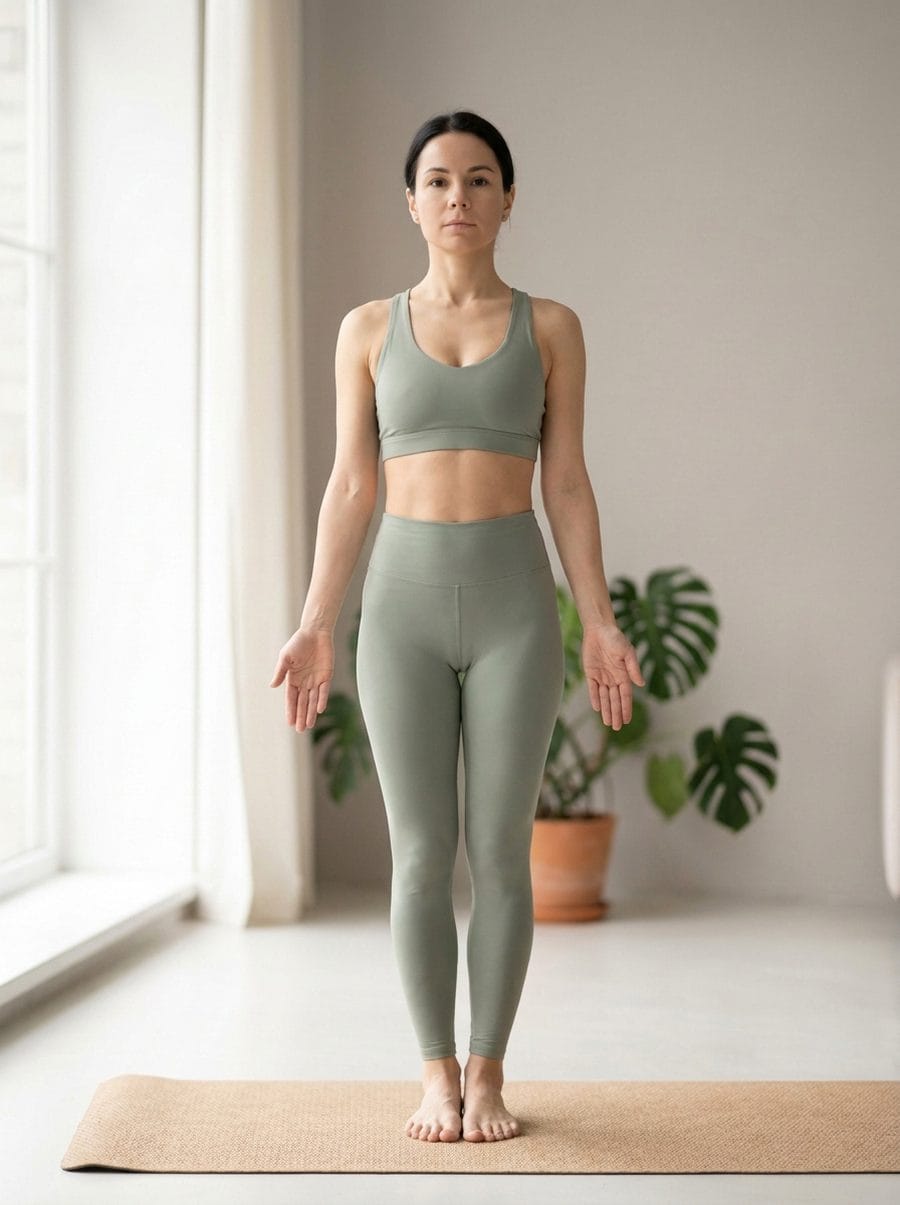
Mountain Pose with your back to the wall helps you find vertical: the back of your head, your shoulder blades and your sacrum touch the wall while the crown of your head reaches up. A full wall posture test is in Posture Exercises.
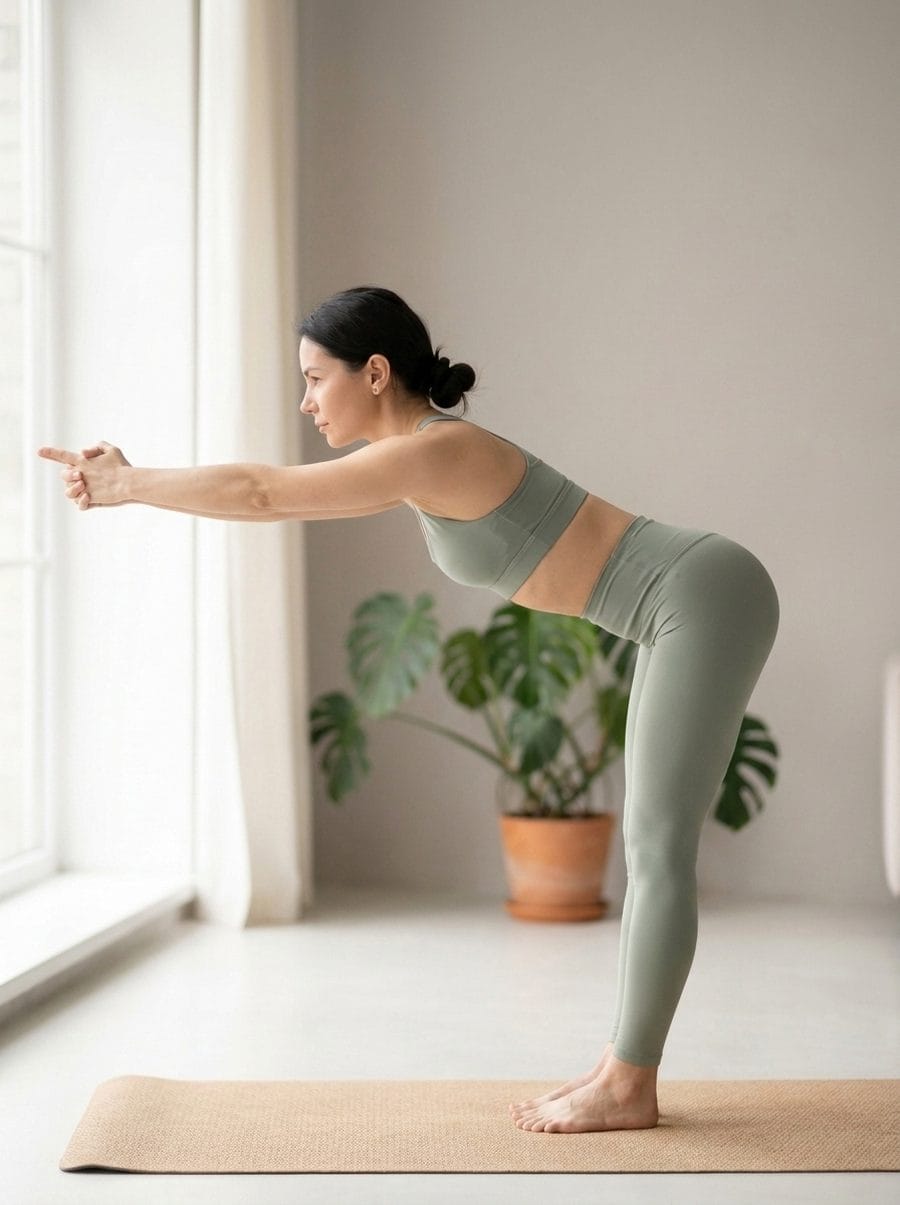
Half Forward Fold at the wall lengthens your back, shoulders and hamstrings. Face the wall, place your palms on it at hip height and step back until your torso is parallel to the floor. Keep your spine long, reach the top of your head toward the wall and let your neck follow the line of your spine. A slight bend in the knees is fine.
Wall yoga poses for balance
This is where the app writes the wall right into the instructions. With dizziness, Tree Pose is done at a wall, and Half Tree Pose too when your balance is shaky. In Extended Hand-to-Big-Toe Pose (Side), balance problems mean you stand with the wall behind you.
In Warrior III, balance problems call for a support, and hands on a wall are the simplest one.
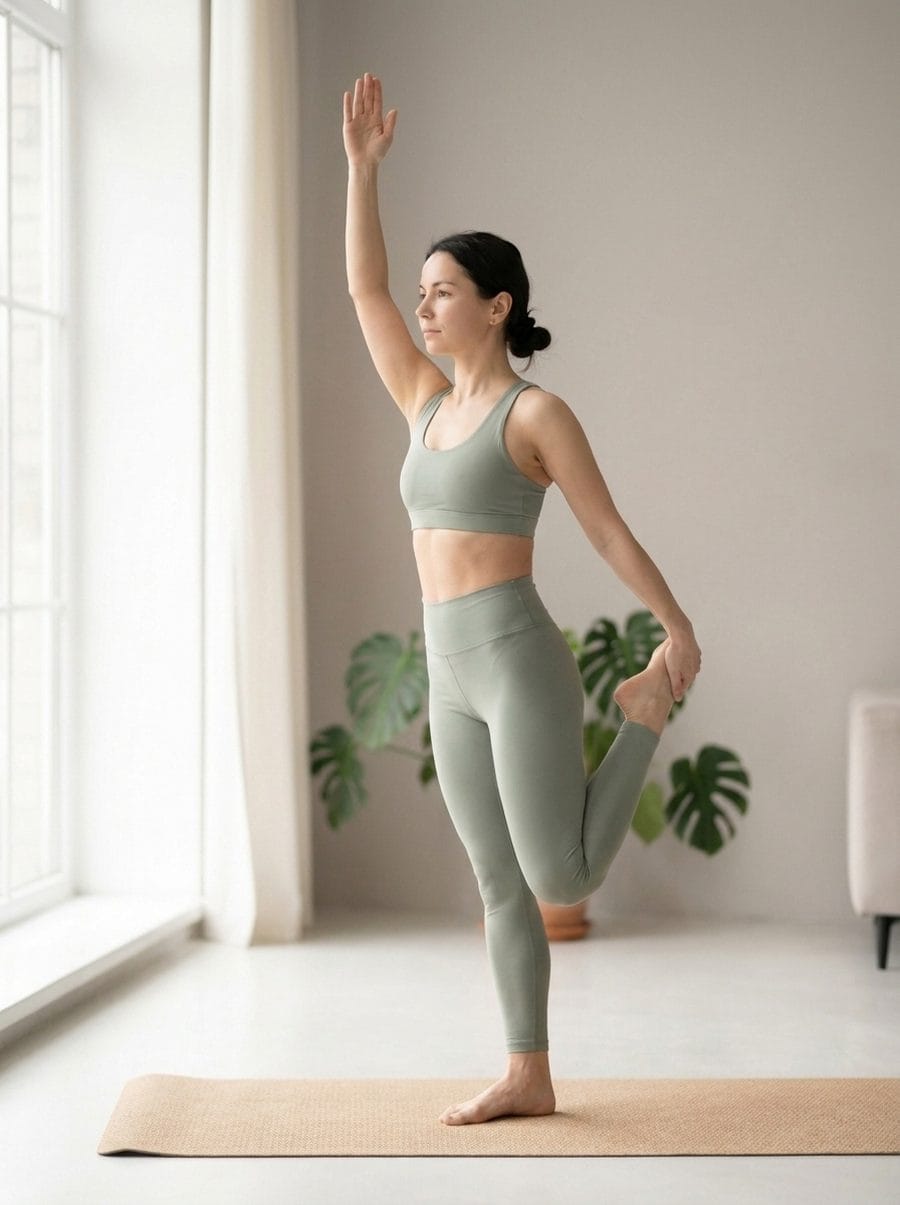
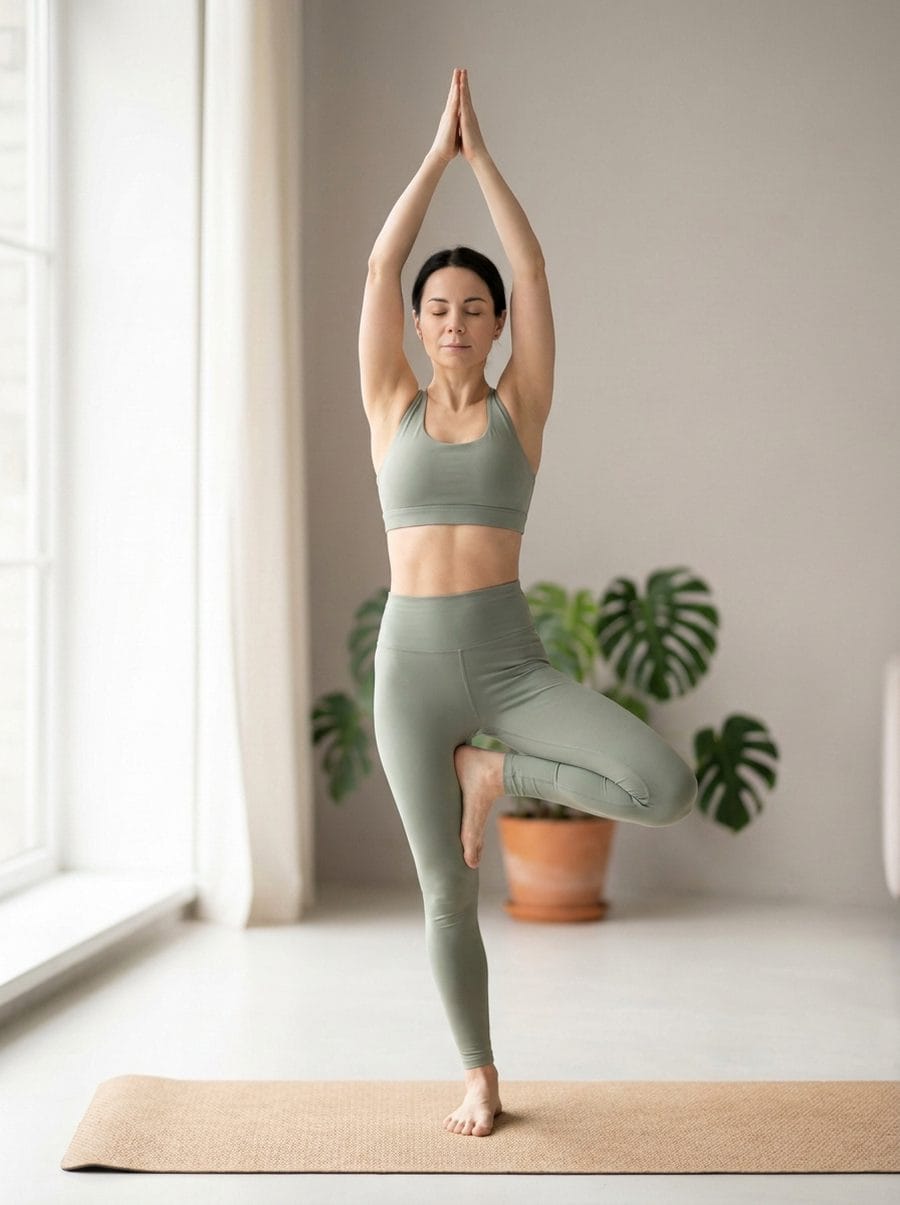
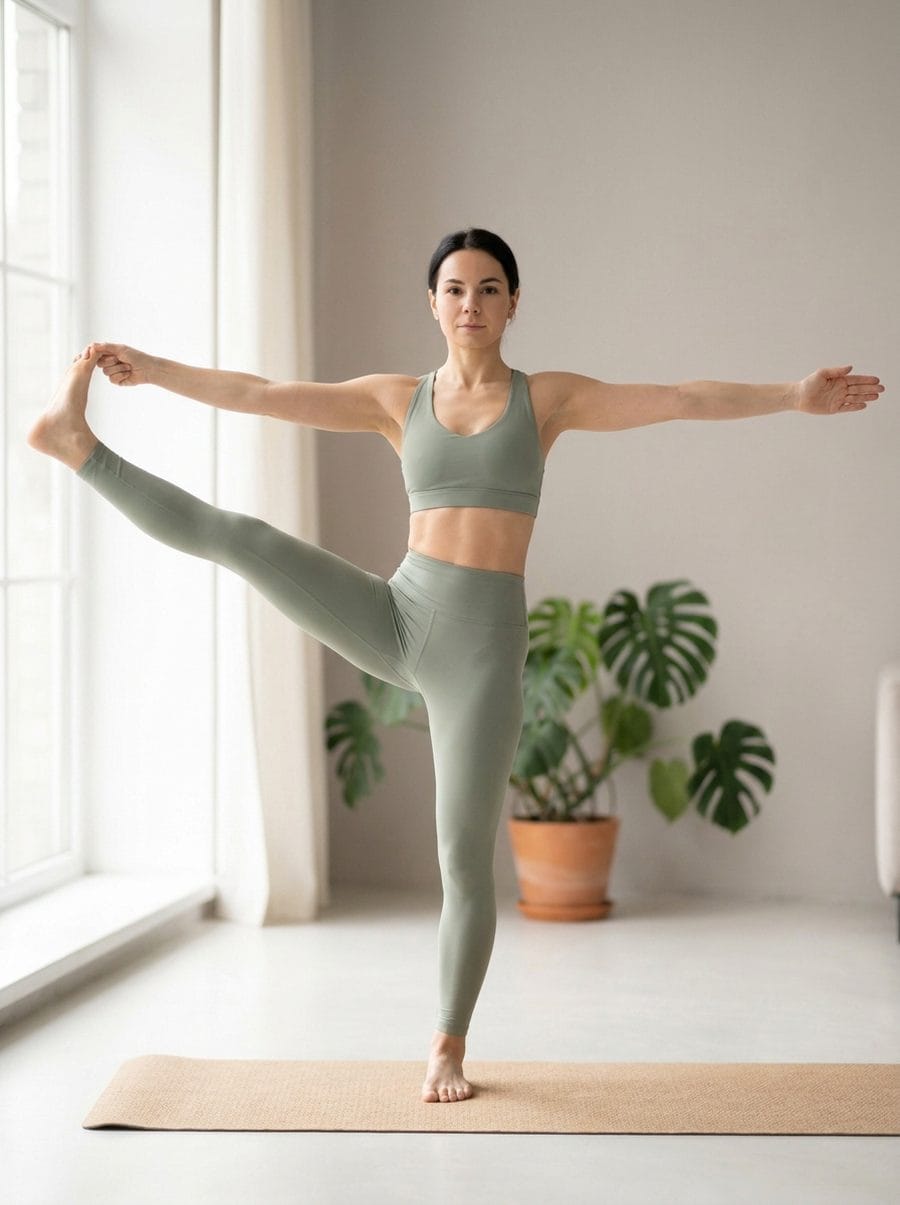
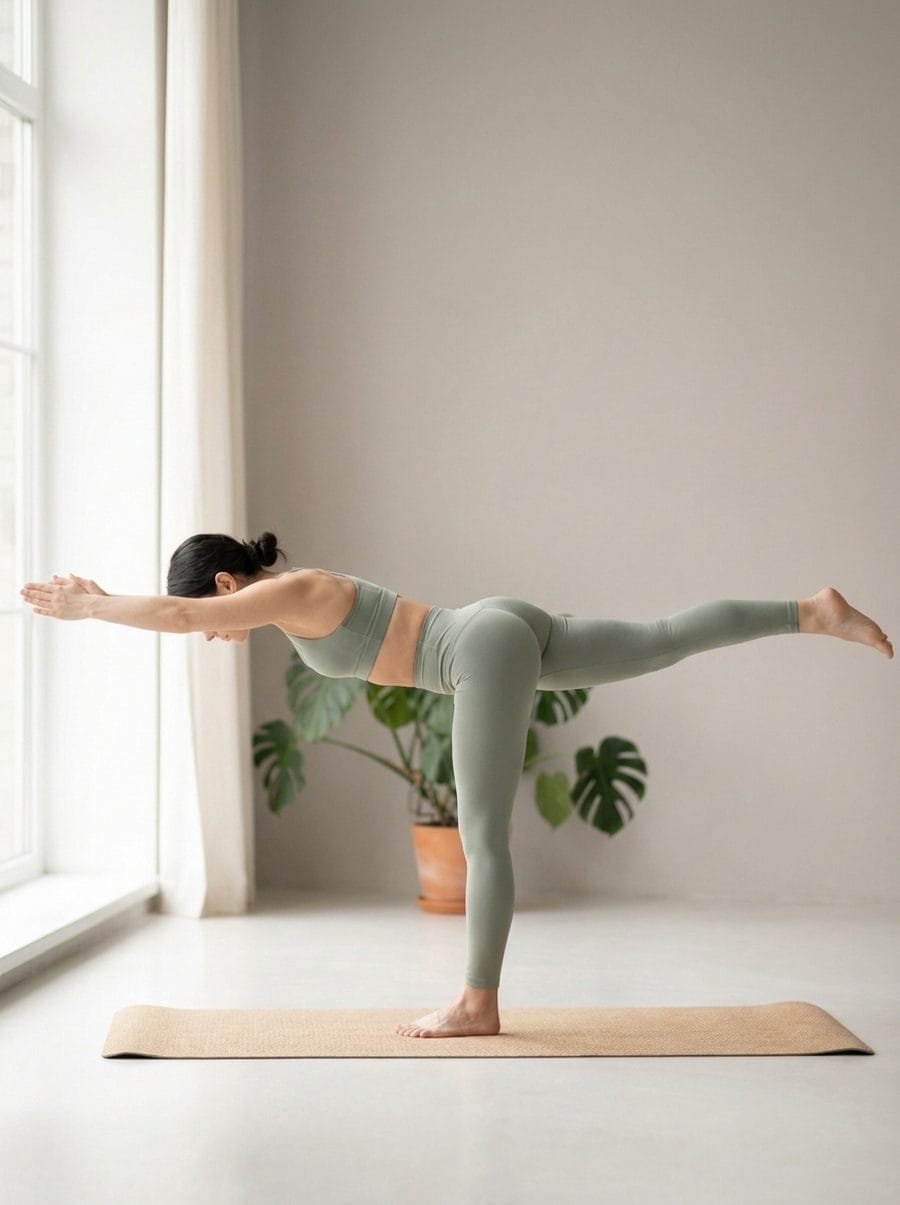
Stand side-on, close enough that you could reach the wall with your hand. Begin with Half Tree Pose, which lets the other foot keep its toes down. Touch the wall with your fingertips only when you start to tip, and lean on it less each week. For more on progressing in balance work, see Balance Exercises.
First Balances at the wall: a 15-minute routine
The First Balances routine takes you from a steady stance to Tree Pose in 15 minutes. It works well done entirely at a wall: lay your mat along it and keep a hand nearby in every one-legged pose.
Inversions at the wall
The app lets you learn Handstand and Forearm Stand only at a wall. Both are level 3, advanced poses. For Handstand, your palms go down a step away from the wall, then a gentle kick brings your legs up until your heels rest on it.
Headstand is also best done at a wall, but only after you've learned it with a teacher.
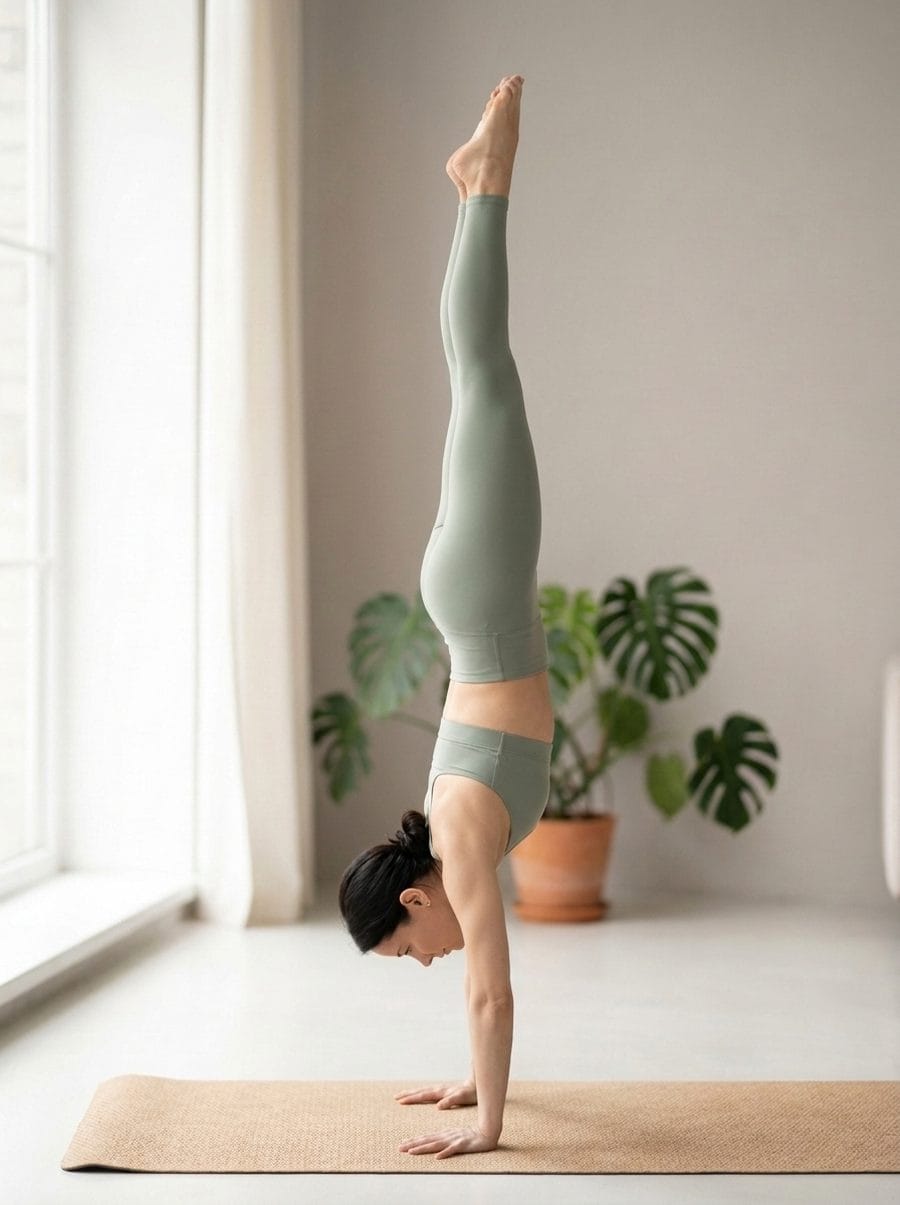
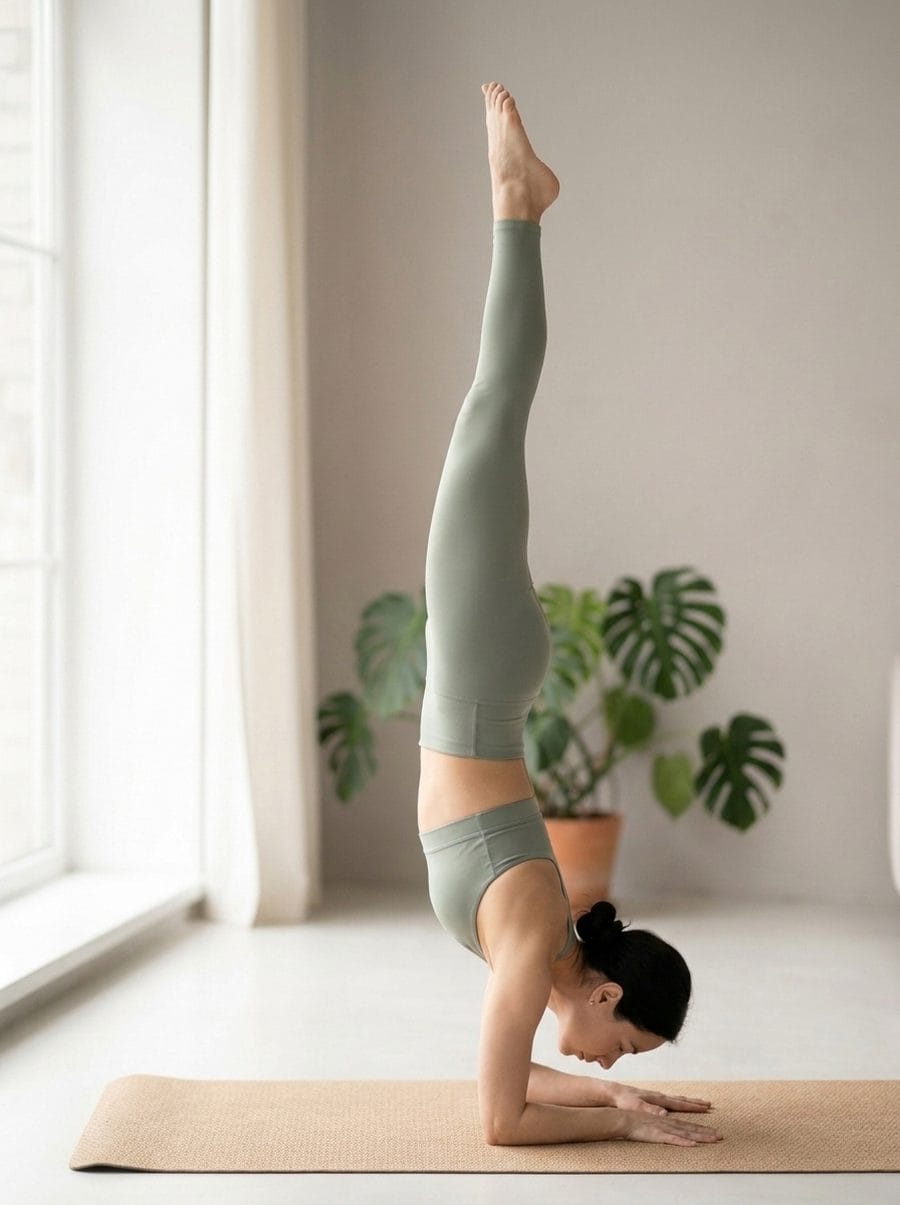
The Inversion Prep program gets shoulders, wrists and core ready for the stands, which are themselves gathered in Upside-Down World. Both are meant for experienced students.
The wall comes in handy elsewhere too. Sliding your hands down a wall gives you a first taste of dropping back into a backbend, covered in How to Do a Backbend, and a wall makes a convenient support for side splits practice.
Wall yoga safety
Pick a stretch of wall without shelves, pictures or outlets, take off your socks and set your mat where it won't slide.
- Legs-Up-the-Wall Pose. Skip it during your period, with glaucoma and with uncontrolled high blood pressure.
- Handstand and Forearm Stand. Skip them with high blood pressure or glaucoma, and with shoulder, neck or wrist injuries.
- Warrior III. Drop it from your practice if you have hypertension.
- Get up slowly. After any pose with your legs raised, lie on your side briefly before you sit up.
The general rules are gathered on our Safety and Contraindications page.
Pose cautions in this article
- Menstruation (Legs-Up-the-Wall Pose)
- Glaucoma (Legs-Up-the-Wall Pose, Handstand, Forearm Stand)
- Uncontrolled hypertension (Legs-Up-the-Wall Pose)
- Balance disorders — stand near a wall (Half Tree Pose)
- Dizziness — practice near a wall (Tree Pose)
- Balance problems — stand with your back to a wall (Extended Hand-to-Big-Toe Pose (Side))
- High blood pressure (Warrior III)
- Balance problems — use a support (Warrior III)
- Wrist and shoulder injuries (Handstand)
- Hypertension (Handstand, Forearm Stand)
- Learn it only at a wall (Handstand, Forearm Stand)
- Shoulder and neck injuries (Forearm Stand)
This site is for general information and is not medical advice. If you have pain, an injury, a chronic condition, or are pregnant, check with a qualified professional before practicing.
Questions
How is wall yoga different from regular yoga? Mostly it's the same set of poses, but the wall acts as a prop: it backs you up in balance poses, props up your legs while you rest and helps you line up. It's an easy way to begin, not a separate style.
Is wall yoga good for seniors? Yes, the support makes balance poses safer. If you live with a long-term illness or you've fallen before, check with your doctor first. More ideas in Yoga for Seniors.
How long should you keep your legs up the wall? The app's base time is two minutes, and its programs use 70 to 160 seconds. Come out if your feet go numb or you feel uncomfortable.
Can wall yoga help you shed pounds? There's no research on wall yoga specifically. It's a gentle kind of exercise that's good for balance, flexibility and rest, so don't expect quick changes on the scale.
Sources
- NHS. Balance exercises.
- Pose technique, levels and cautions, and sequence contents: the Hatha Yoga app. More on the How We Prepare Our Content page.
Read next
- Yoga for Arthritis and Osteoporosis: How to Protect Your Joints and Bones7 min read
- Ashtanga Yoga Explained: The Series, the Breath and the Difference from Hatha6 min read
- Ayurveda Explained Simply: The Basics and a Daily Routine (Dinacharya)5 min read
- Balance Exercises: 10 Yoga Poses for Balance and Stability7 min read