 Hatha Yoga
Posture Exercises: 10 Yoga Poses to Stand Taller and Stop Slouching
Hatha Yoga editorial team · Updated · 7 min read
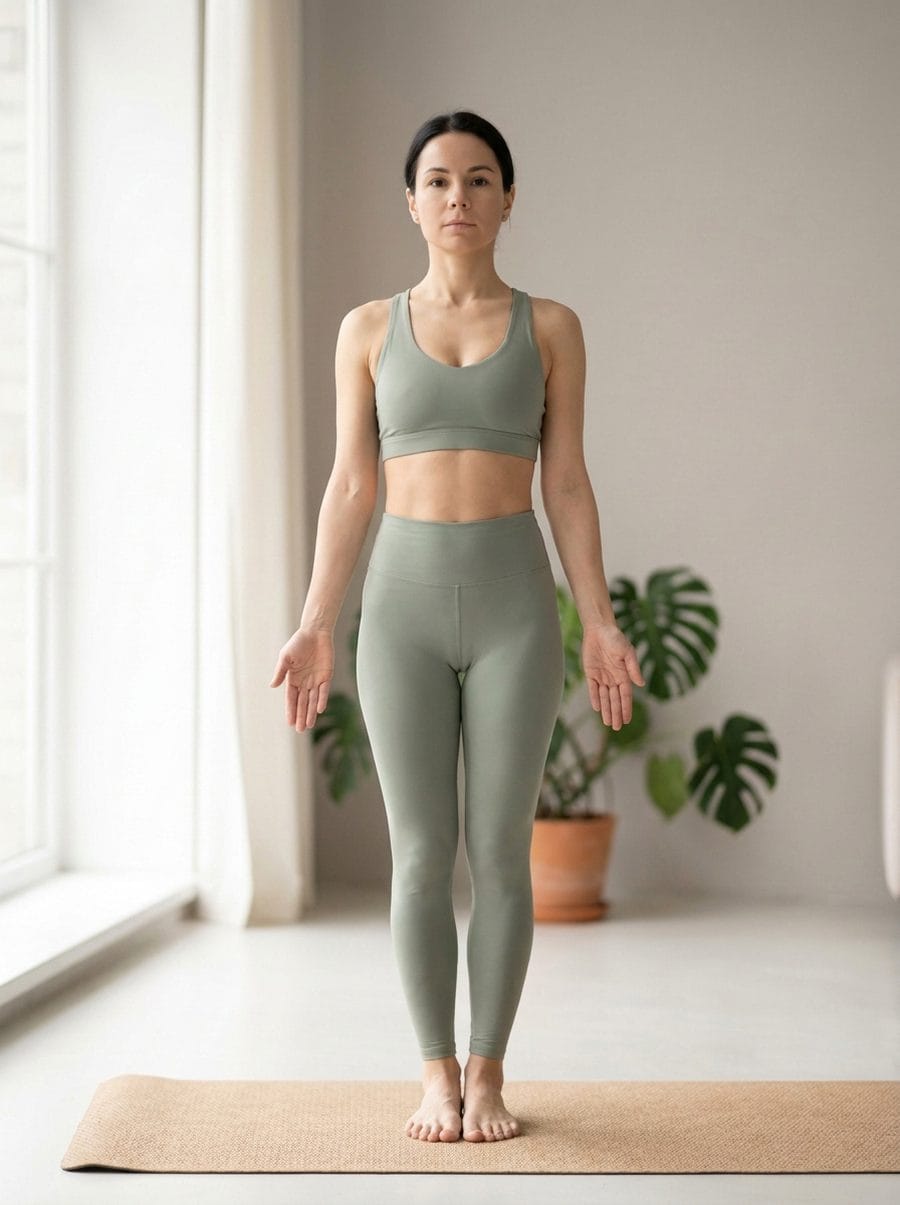
Slouching rarely comes from a single cause. It's usually the sum of everyday habits: hours at a desk, a phone in your hand, weak back muscles and a tight chest. Good posture exercises work on three fronts. They strengthen the muscles that hold your spine up, give your rib cage its mobility back, and teach you what upright actually feels like.
Below you'll find a quick wall test, 10 yoga poses for posture, a 20-minute routine and a few habits for every day.
What good posture really means
Good posture doesn't mean a ramrod-straight back. Your spine has natural curves: the neck and lower back arch gently forward, and the upper back rounds slightly backward. Good alignment keeps those curves without extra effort, with your head stacked over your shoulders and your shoulders over your pelvis.
When you spend hours sitting, the pelvis tips backward, the upper back rounds more, the shoulders roll forward and the head follows them. The chest muscles and the fronts of the hips get shorter, while the back muscles and glutes get weaker.
Over time this shape starts to feel normal, and your body slips into it even when you stand.
The takeaway is simple: stretching alone won't do it. You need three things: a strong back and core, a mobile chest and hips, and some attention to how you hold yourself during the day.
The wall test: check your posture in one minute
Stand with your back to a wall, heels 2 to 4 inches away from it. Let your buttocks, shoulder blades and the back of your head touch the wall, with your chin level.
- The back of your head can't reach the wall unless you tilt your chin up: your head tends to sit forward.
- Your shoulder blades don't touch the wall without effort: your upper back is rounded and your shoulders roll forward.
- More than a flat hand fits behind your lower back: the arch in your lower back is deeper than usual.
Notice how standing tall against the wall feels. After a month of practice, repeat the test and compare.
10 yoga poses for better posture
The poses fall into four groups. For a well-rounded session, take one or two from each group so your back gets both strength and mobility.
Find a neutral spine
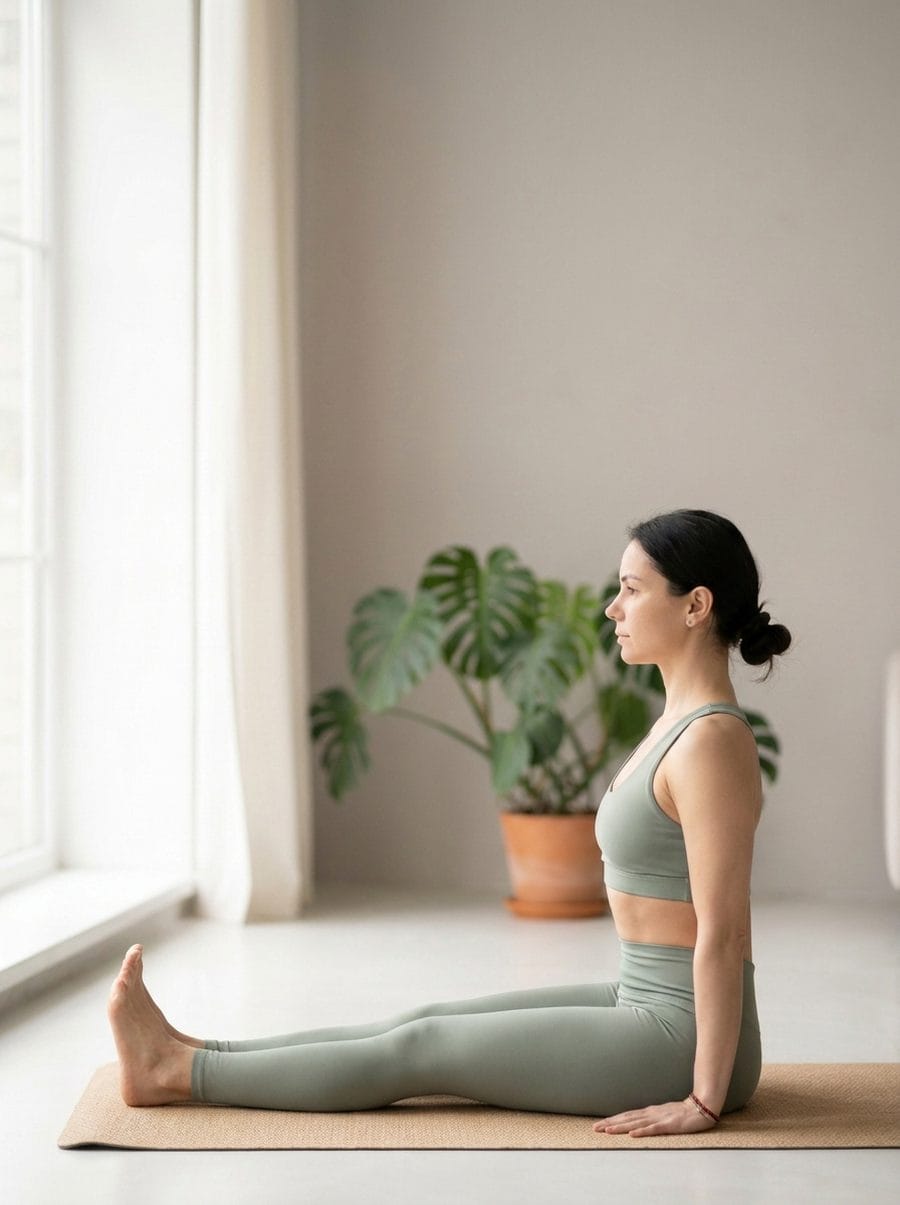
Mountain Pose teaches you to stand with your weight spread over the whole foot and the top of your head reaching up. Staff Pose does the same while seated; if your lower back slumps, raise your hips on a folded blanket. Stay in each pose for 5 or 6 calm breaths and memorize the feeling.
Strengthen your back
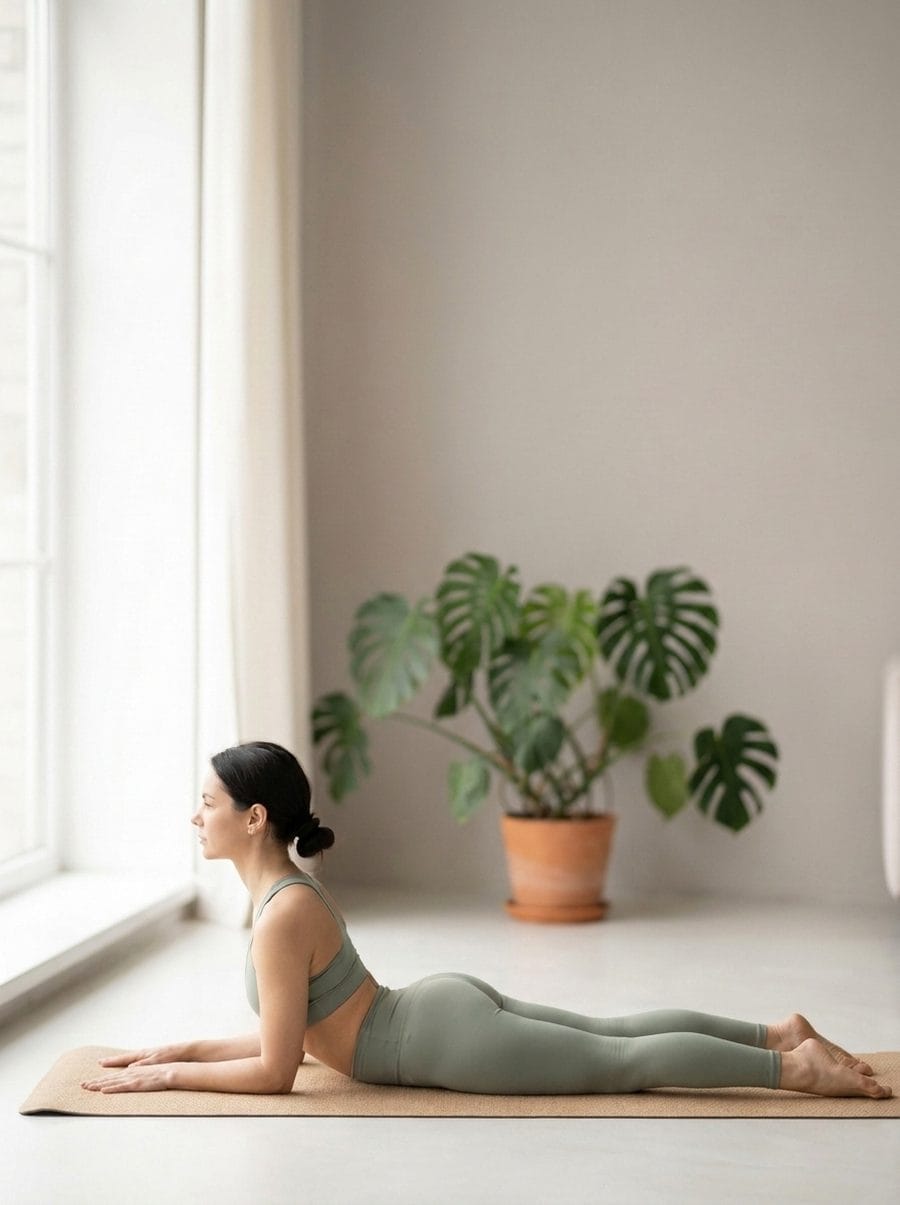
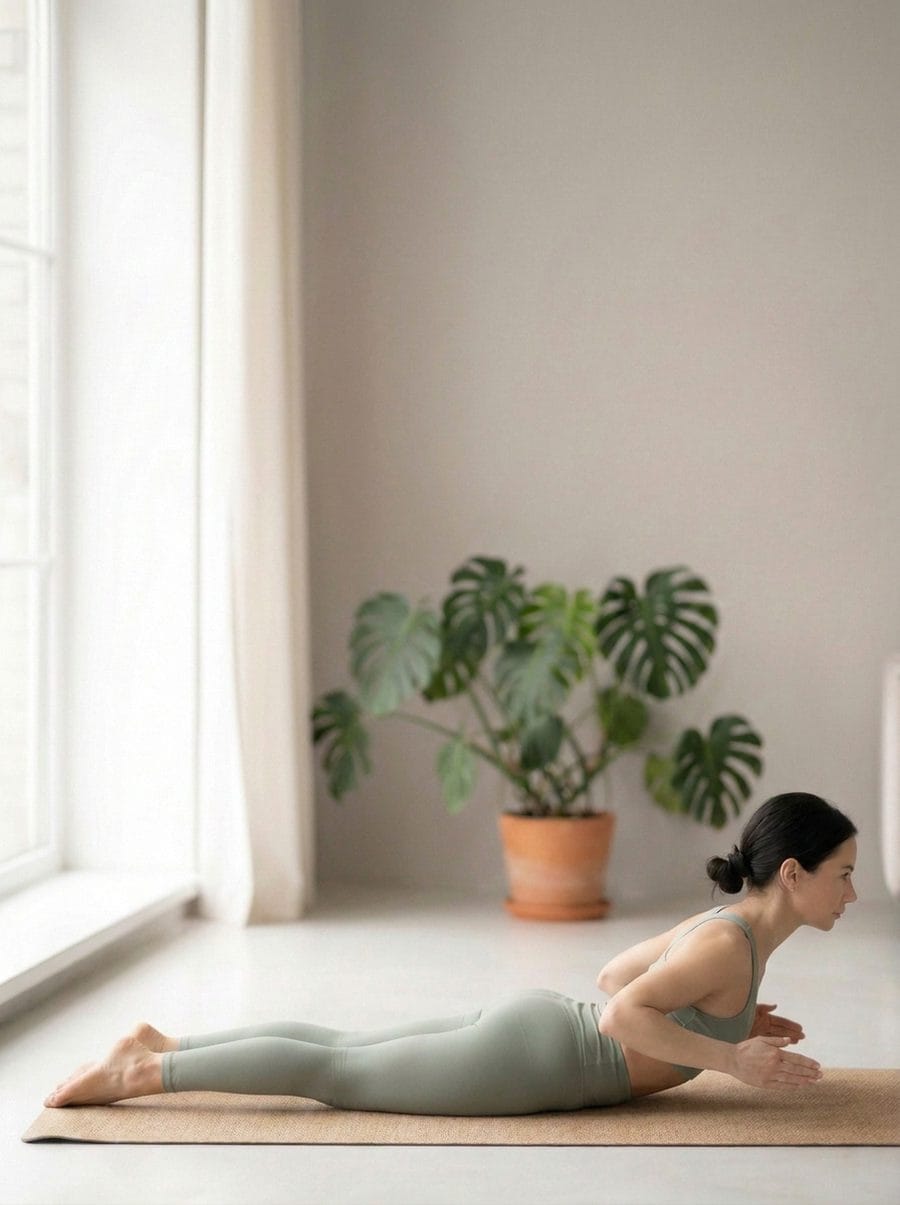
These are the muscles that keep your spine upright while you sit. Sphinx Pose is the gentlest option: you rest on your forearms and the backbend stays small. In Snake Pose your hands leave the floor, so only the muscles along your spine do the lifting.
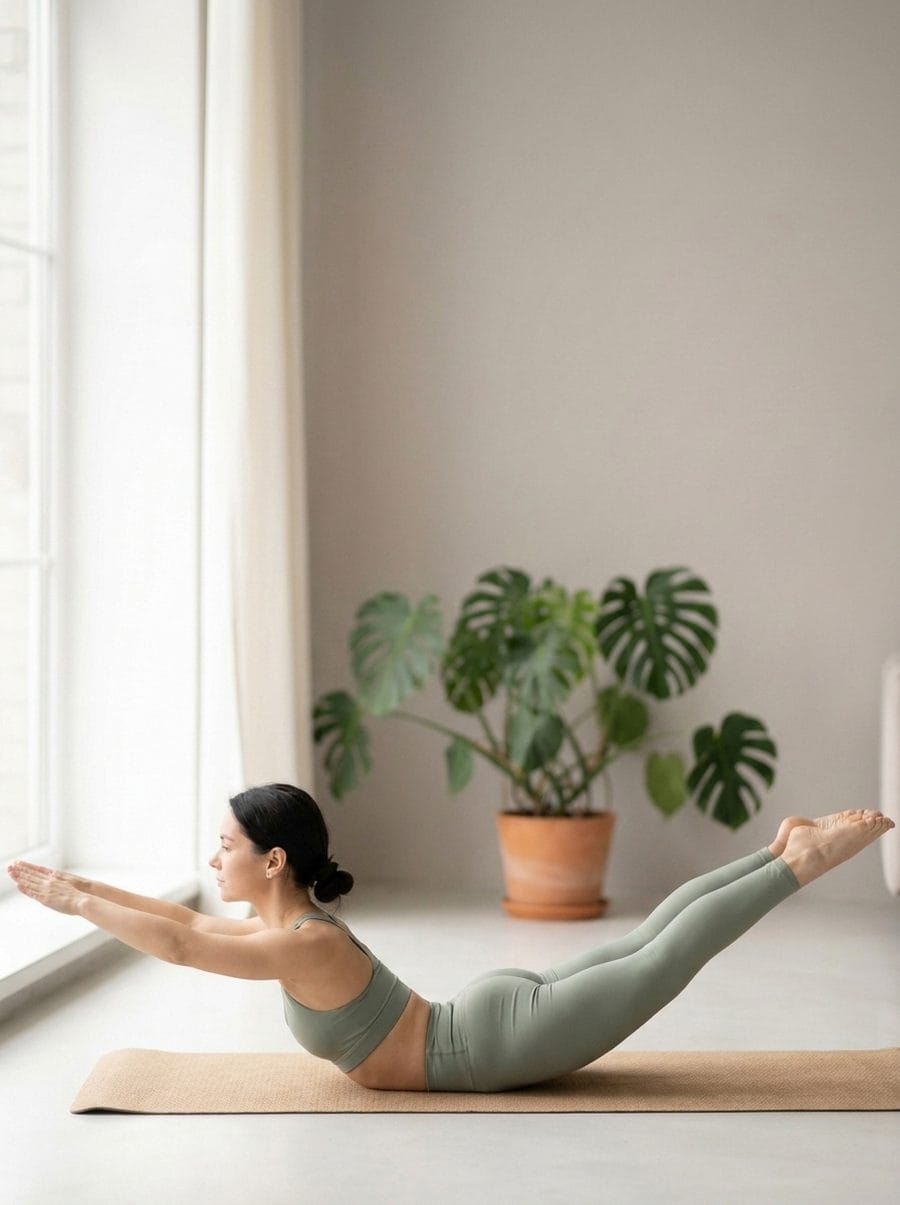
Locust Pose fires up the entire back of the body, from neck to heels. Lift only a little, and let your neck stay in line with your spine.
Open your chest
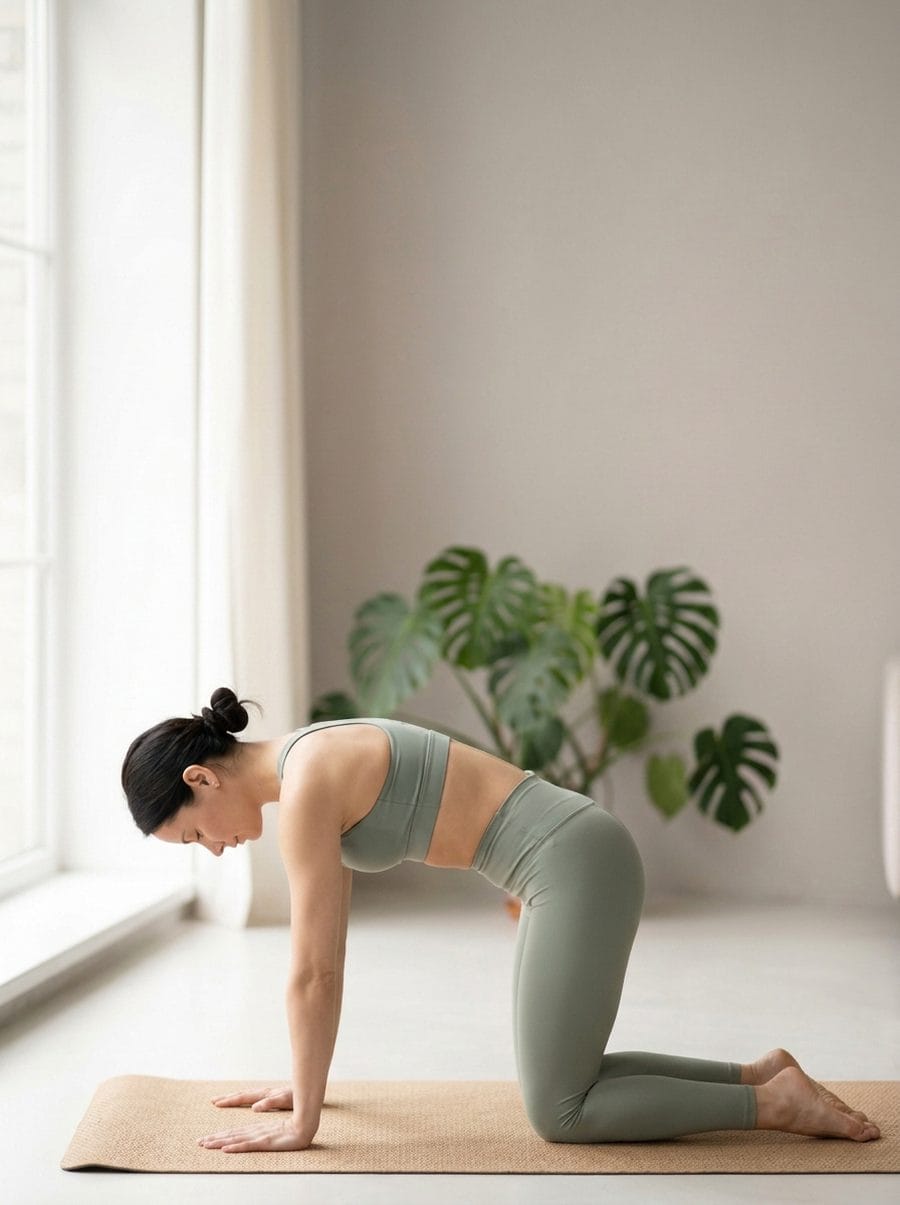
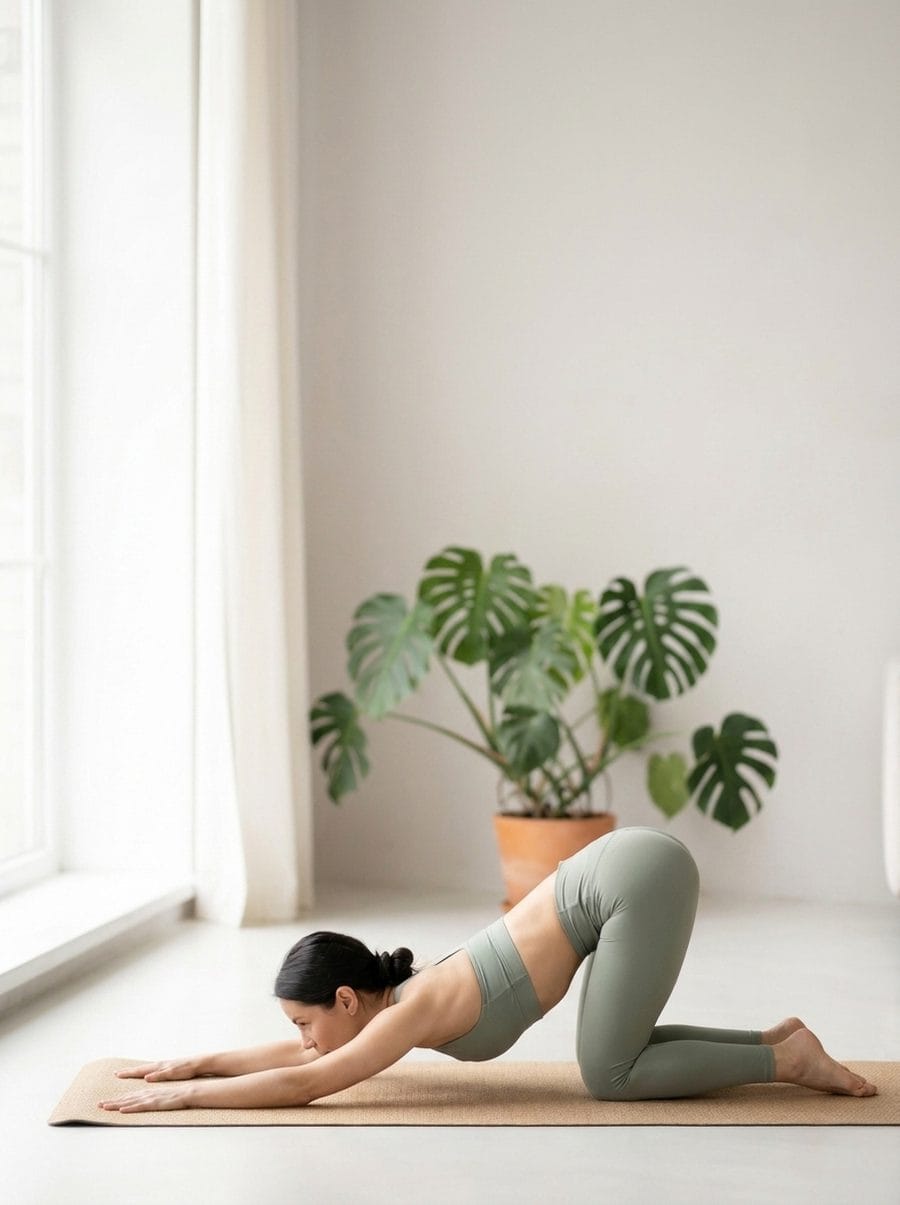
Cat-Cow brings movement back to the upper back, a part of the spine that barely moves when you sit all day. In Puppy Pose your chest melts toward the floor while your arms and shoulders lengthen forward. Breathe into your back and the sides of your ribs, and avoid any bouncing.
Build support: core, glutes and hips
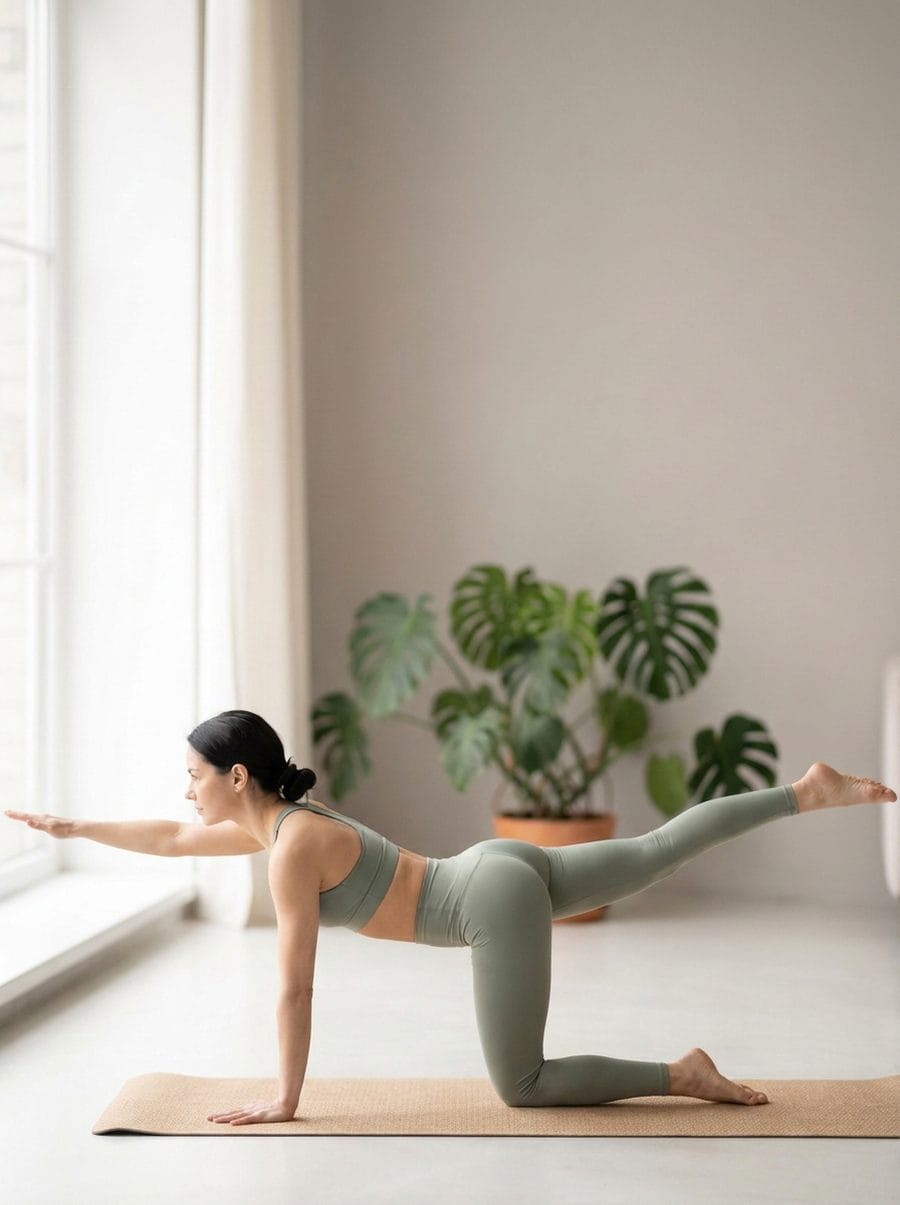
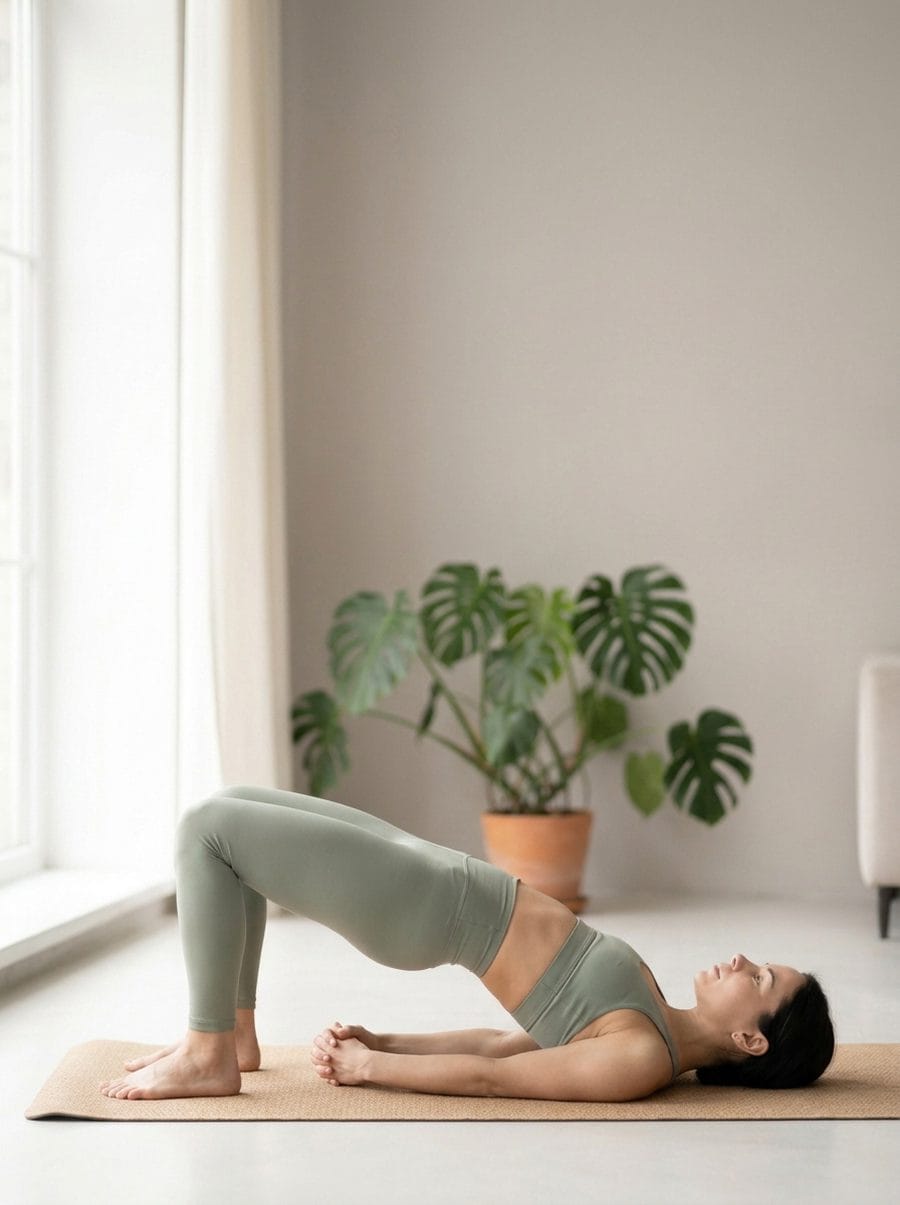
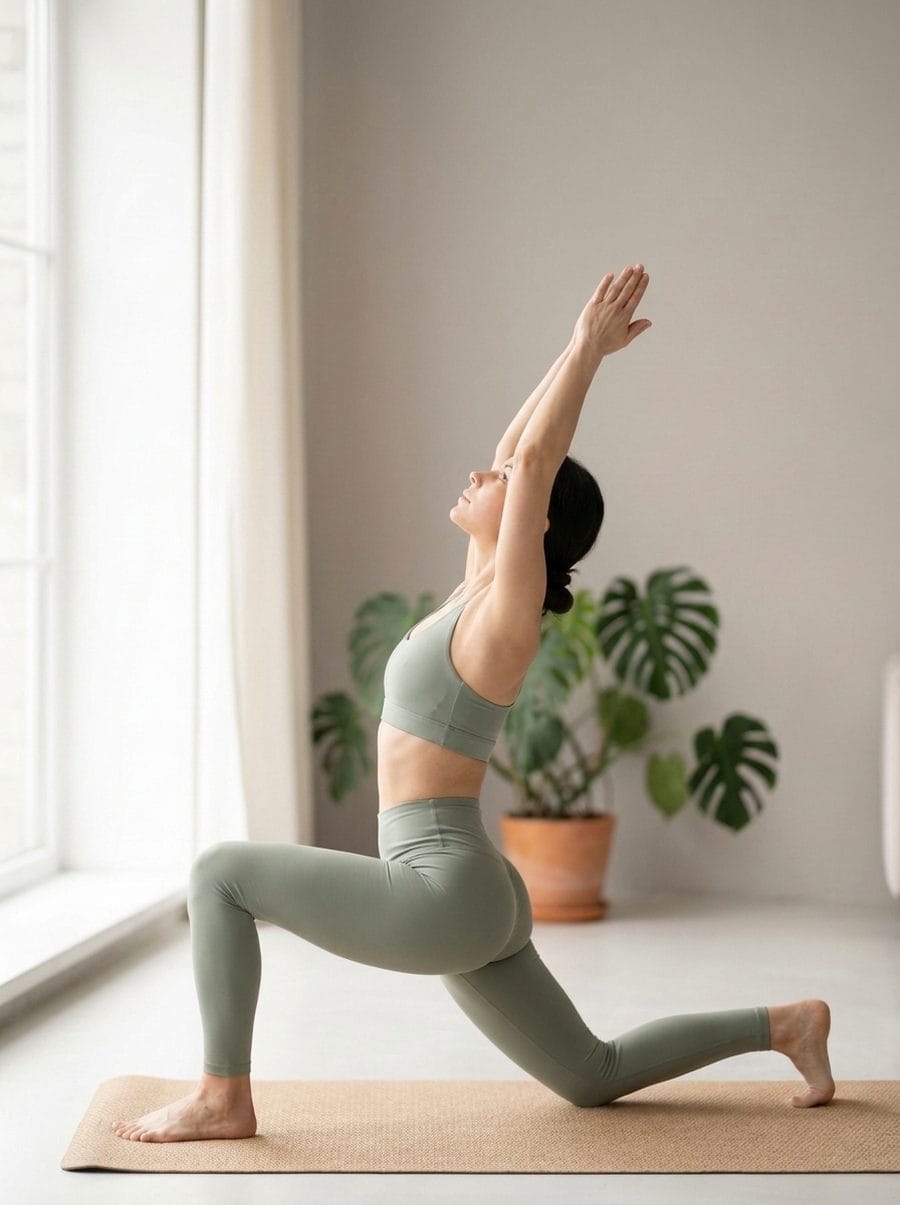
Bird Dog works the deep abdominal muscles and shows you how to hold your pelvis level. Bridge Pose strengthens the glutes. In Low Lunge you lengthen the hip flexors, which tighten over a day of sitting and makes it hard to stand fully upright.
Shoulders & Posture: a 20-minute yoga routine
For a complete session, the app offers the Shoulders & Posture routine: 20 minutes at an intermediate level. You begin with Shoulder Rolls and two rounds of Sun Salutation, then Cow Face Pose and Eagle Pose free up the shoulder joints.
The middle of the practice belongs to backbends, first lying on your belly, then Camel Pose, Bridge Pose and Fish Pose. You finish with a rest in Wide-Knee Child's Pose and a long Relaxation Pose.
This isn't a first-day routine, since Bow Pose, Camel Pose and Fish Pose need some preparation. With high blood pressure, skip Bow Pose, Camel Pose, Fish Pose and Locust Pose. With a disc herniation, avoid Bow Pose, Camel Pose, Locust Pose and Cobra Pose; during pregnancy, Cobra Pose, Locust Pose and Bow Pose.
Fish Pose is also off the table with a neck injury, and both Fish Pose and Camel Pose with migraines.
As a beginner, choose the 15-minute Healthy Back routine instead. It's a beginner program: your spine warms up on all fours, lines up in Mountain Pose, gets stronger with Locust Pose and Cobra Pose, and relaxes on your back at the end. We walk through it in detail in Yoga for Back Pain.
What to drop from Healthy Back: the Standing Forward Fold and Locust Pose if your blood pressure runs high, Downward-Facing Dog if you have glaucoma, and Cobra Pose plus Locust Pose for a lumbar herniation or pregnancy.
Posture habits for the rest of your day
A session on the mat lasts 20 minutes, while you might sit for hours. That's why your habits shape your posture more than anything else.
- Sit on your sit bones. Keep your feet on the floor and your knees roughly level with your hips. If your lower back sinks backward, put a folded towel under your pelvis.
- Change positions often. There's no single right position for the whole day. Even a well-aligned back gets tired if it stays still too long.
- Stand in Mountain Pose. In line at the store or at the stove, spread your weight over both feet, keep your knees soft and lift the crown of your head.
- Switch shoulders with your bag. A backpack worn on both straps loads your back more evenly than a bag on one shoulder.
- Bring your phone up to eye level. For more on screens and your neck, read Yoga for Neck and Shoulders.
How often to practice and when to expect results
Muscles need regular work. Plan three or four short sessions weekly, 15 to 20 minutes each, and repeat the wall test once a month. What usually changes first is how it feels: sitting upright takes less effort, and by evening there's less nagging tension between the shoulder blades.
Visible changes come later and depend on how much you sit and how often you remember your habits off the mat.
Safety
Posture exercises suit most people, but sometimes a doctor should come first:
- your back hurts all the time, the pain spreads into an arm or leg, or you notice numbness;
- your slouch has gotten noticeably worse in a short time, or one shoulder now sits higher than the other;
- you've been diagnosed with scoliosis, kyphosis, a herniated disc or osteoporosis.
Skip Sphinx Pose during acute lower back pain. Locust Pose isn't for you with a lumbar disc herniation, pregnancy or high blood pressure, and Snake Pose is out with a lower back injury or pregnancy. Leave out Bridge Pose with a neck injury or when lower back pain flares up, and Puppy Pose with a shoulder injury.
The cautions for every pose are listed in the box below, and general rules are in Safety and Contraindications.
Pose cautions in this article
- Acute lower back pain (Sphinx Pose)
- Pregnancy (Snake Pose, Locust Pose)
- Lower back injuries (Snake Pose)
- Acute abdominal conditions (Snake Pose)
- Lumbar disc herniation (Locust Pose)
- High blood pressure (Locust Pose)
- Acute back pain (Cat-Cow)
- Wrist injuries — practice on your fists (Cat-Cow)
- Shoulder injuries (Puppy Pose)
- Knee injuries — place a blanket under your knees (Bird Dog)
- Wrist injuries (Bird Dog)
- Neck injuries (Bridge Pose)
- Flare-up of lower back pain (Bridge Pose)
- Knee injuries — place a blanket under your back knee (Low Lunge)
- Lower back pain — don't deepen the backbend; keep your torso upright (Low Lunge)
This site is for general information and is not medical advice. If you have pain, an injury, a chronic condition, or are pregnant, check with a qualified professional before practicing.
Questions
Can yoga improve posture? Slouching that comes from a sedentary lifestyle usually responds well to practice: a strong back and a mobile chest make upright positions comfortable. If the cause is a structural change in the spine, a doctor should plan your exercise.
How long until posture exercises work? Think months of regular practice, not weeks. The pace depends on how many hours a day you sit and how often you pay attention to your back away from the mat.
Is yoga or the gym better for posture? Both can work, as long as your training includes back strengthening and chest opening. Yoga's advantage is that you need no equipment, and the focus on breathing helps you notice how you hold your body.
What posture exercises can I do at home? Start with Sphinx Pose, Snake Pose, Cat-Cow and Puppy Pose. A mat is the only equipment, and together they take less than 10 minutes.
Sources
- Pose technique and cautions, and the contents of the routines: the Hatha Yoga app. More about how we check our texts on the How We Prepare Our Content page.
Read next
- Yoga for Arthritis and Osteoporosis: How to Protect Your Joints and Bones7 min read
- Ashtanga Yoga Explained: The Series, the Breath and the Difference from Hatha6 min read
- Ayurveda Explained Simply: The Basics and a Daily Routine (Dinacharya)5 min read
- Balance Exercises: 10 Yoga Poses for Balance and Stability7 min read