 Hatha Yoga
Yoga for Neck and Shoulders: Release Tension After a Day at the Computer
Hatha Yoga editorial team · Updated · 5 min read
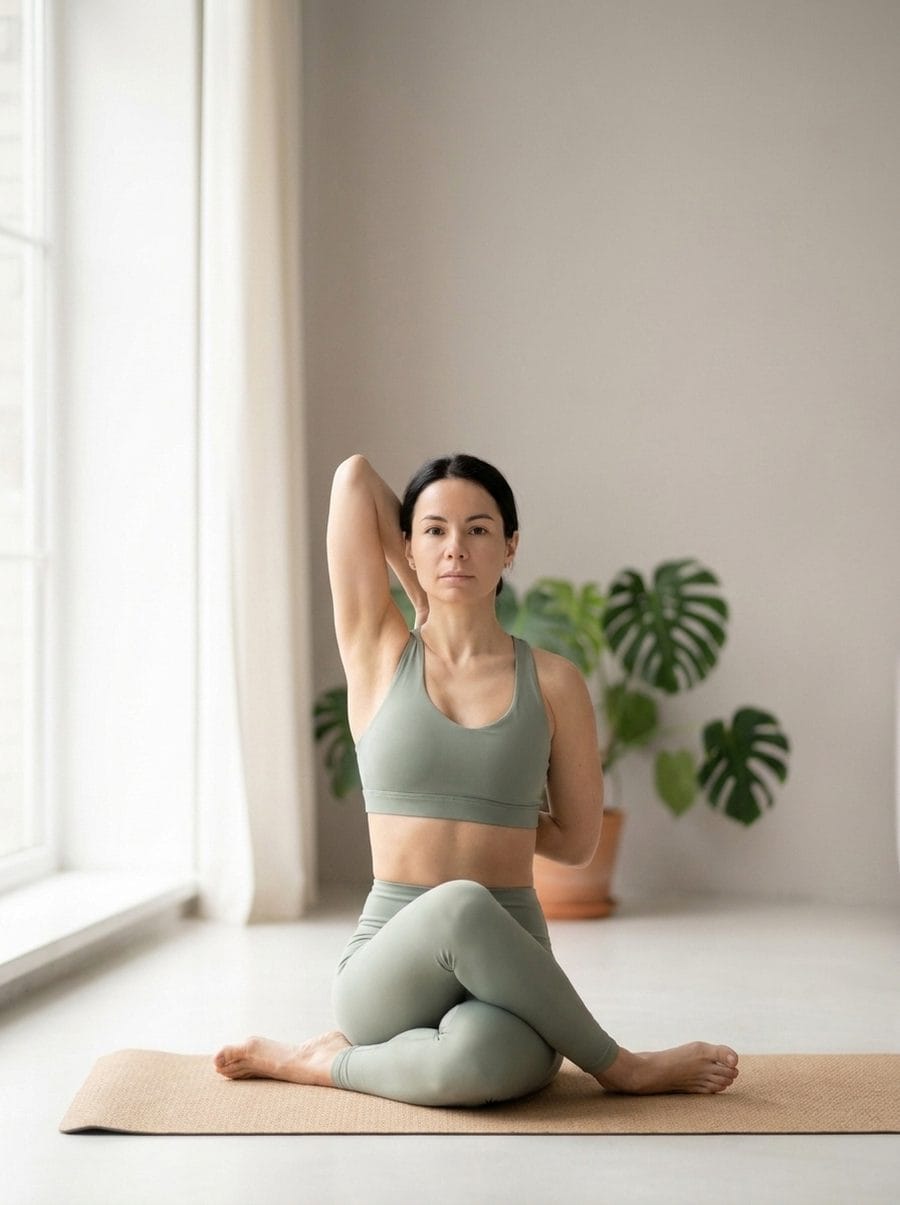
By evening your neck feels like stone, your shoulders have crept up toward your ears, and there's a dull ache between your shoulder blades. If you spend long hours at a computer or looking down at your phone, you know the feeling.
Yoga for the neck and shoulders works on two fronts: it lets go of the tension that has built up, and it opens your chest, which caves forward a little more with every hour at the desk. Below are 10 exercises, a short 10-minute routine for a work break, and a 20-minute program for your shoulders and posture.
Why your neck and shoulders get so tight
Your head is heavier than it seems, around ten pounds. When you stare at a screen for a long time, it drifts forward, and the muscles at the nape of your neck and across your upper back end up holding it in place all day.
Meanwhile your shoulders round, your chest muscles shorten, and the muscles between your shoulder blades get overstretched and worn out. This pattern is what people call tech neck.
That's why rubbing your neck is rarely enough on its own. The work has to go both ways: relax the muscles that are overloaded, and open up the ones that have closed in.
Office Reset: a 10-minute neck and shoulder break
The Office Reset routine in the app is built for a pause in your workday. It opens with neck, shoulder and wrist warm-ups, then Eagle Pose as a standing balance and Cow Face Pose seated. Then you shift to the mat for a gentle cross-legged backbend and forward fold, a twist seated on your heels, then Puppy Pose and Fish Pose, and you finish with two minutes of rest lying down.
Doing it once around midday is enough. On top of that, every 40 to 60 minutes, stand up and slowly roll your shoulders backward a few times. It takes all of thirty seconds.
10 neck and shoulder stretches
Warm-up
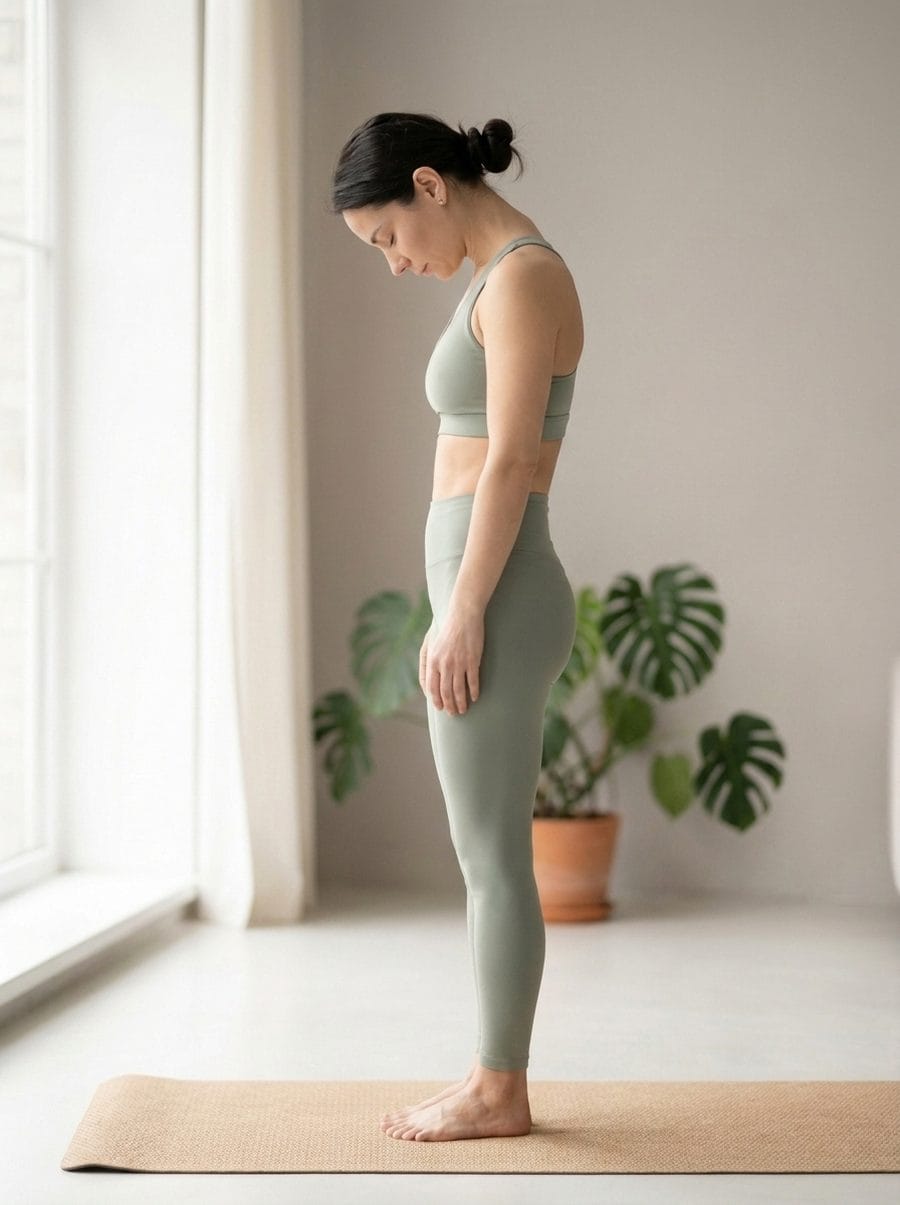
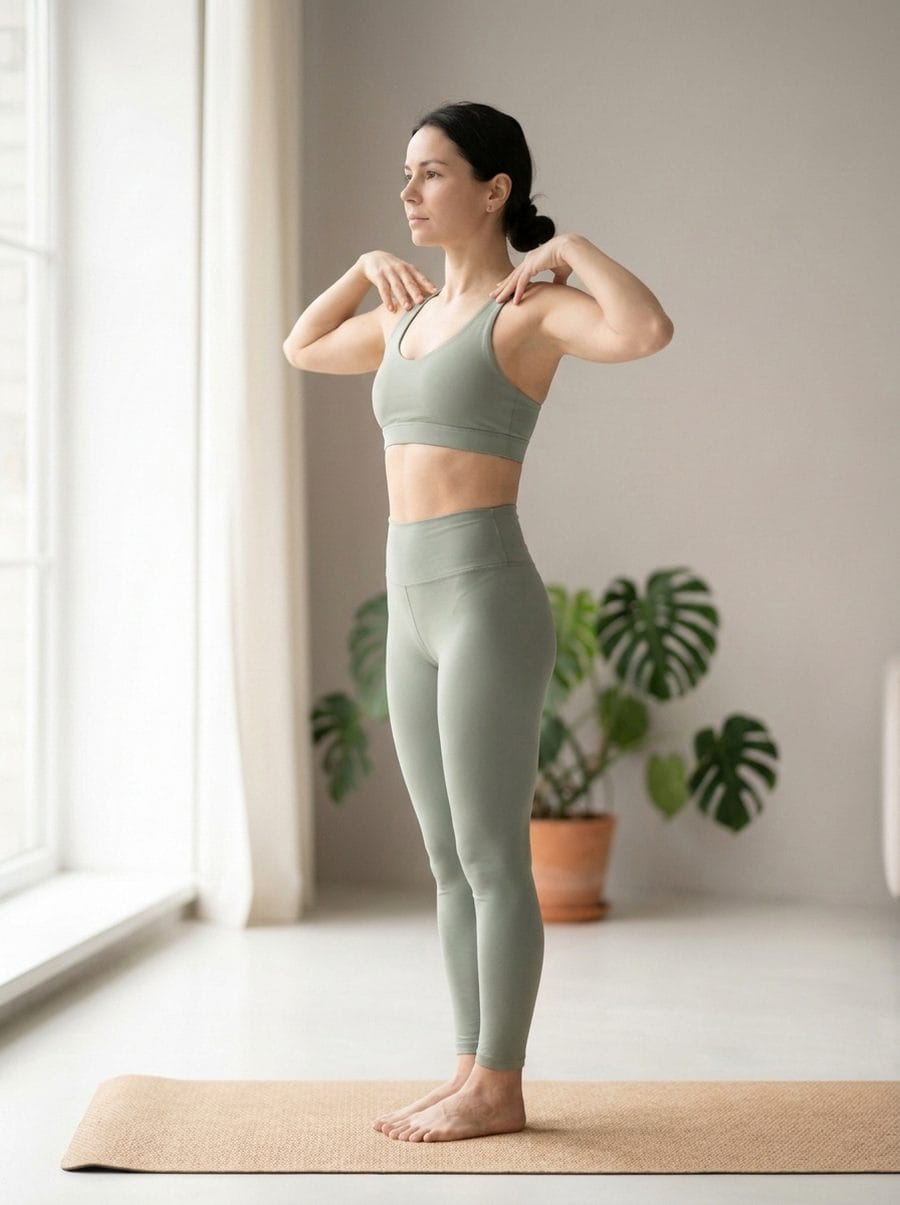
Slow half circles of the head and a few shoulder rolls warm the muscles up and tell you where most of today's tension is hiding. Move smoothly and avoid any sudden jerks.
Open your shoulders
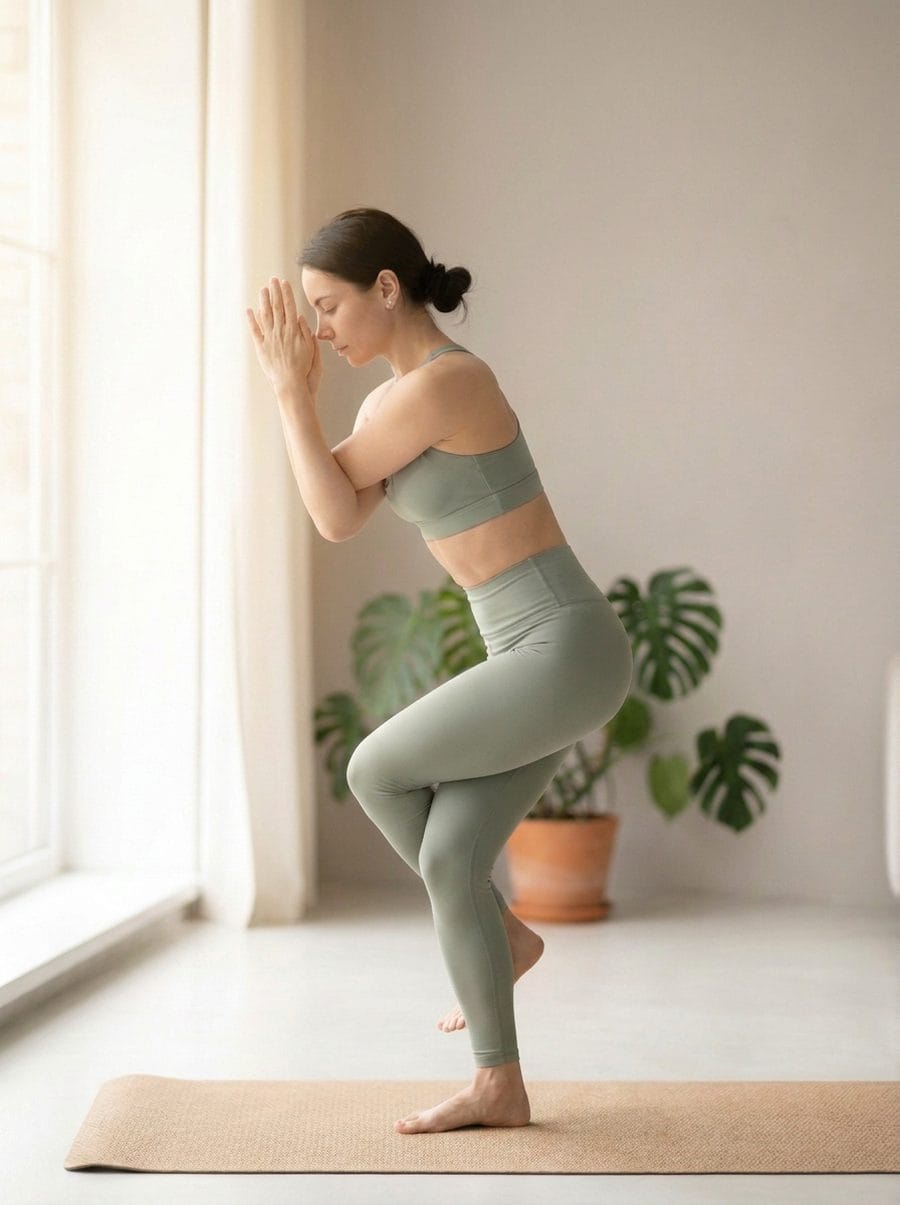
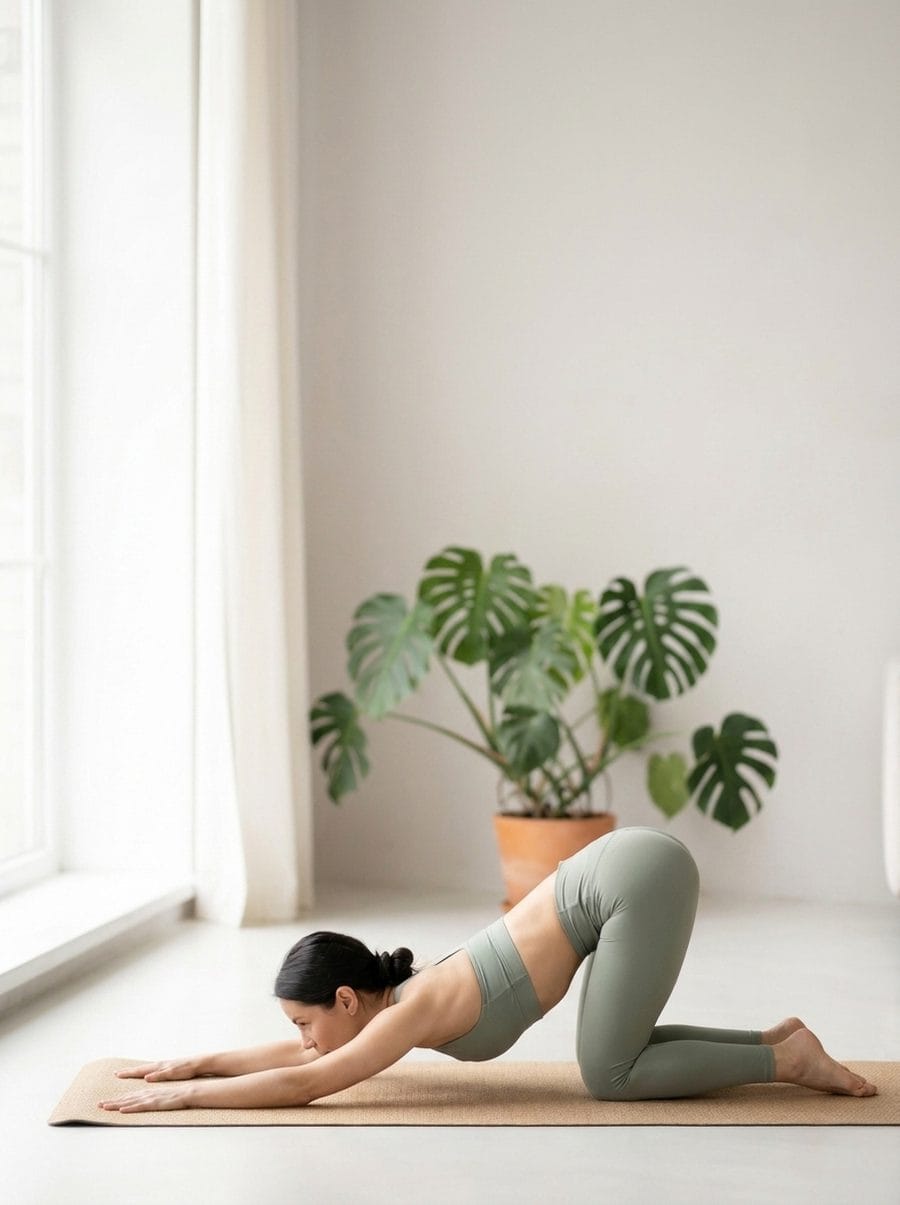
Eagle Pose stretches the space between your shoulder blades, the spot that suffers most during computer work. Cow Face Pose opens up the shoulder joints; if your fingers can't meet behind your back, hold a strap between your hands. Puppy Pose lengthens your shoulders and upper spine in a softer way than deep backbends do.
Open your chest
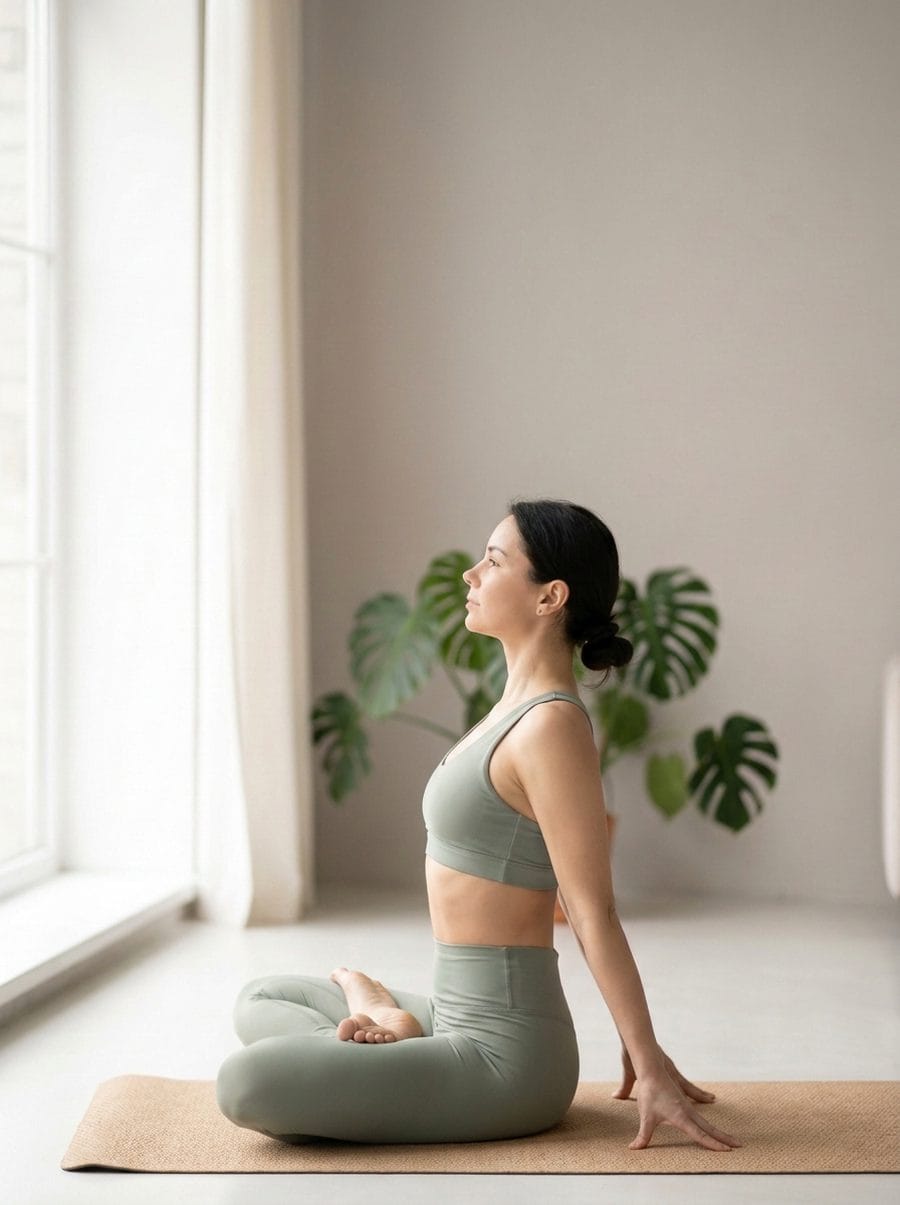
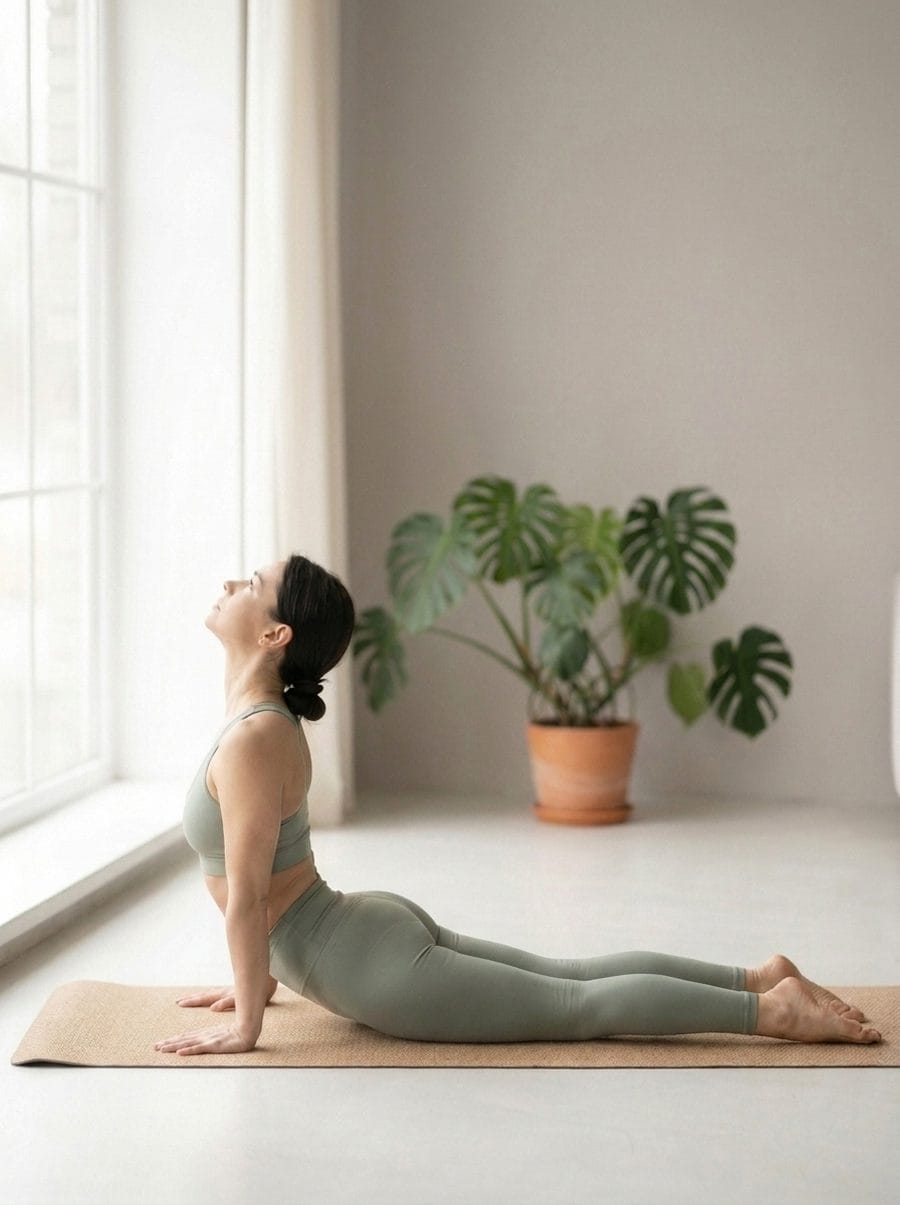
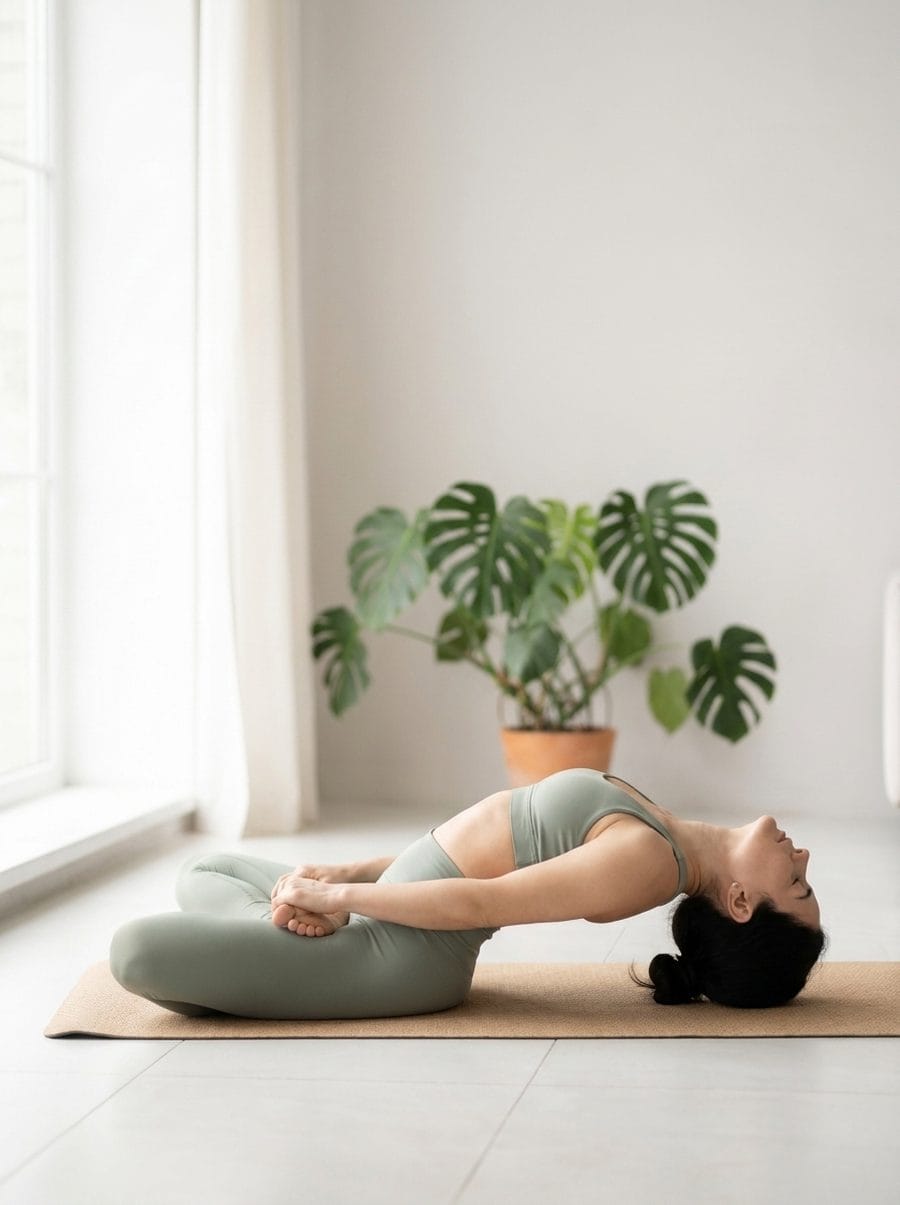
Cross-Legged Backbend and Cobra Pose give your rib cage back the room it loses while you sit. Fish Pose stretches your chest and also the front of the neck, but save it for later and practice it only if none of its contraindications apply to you.
Rest
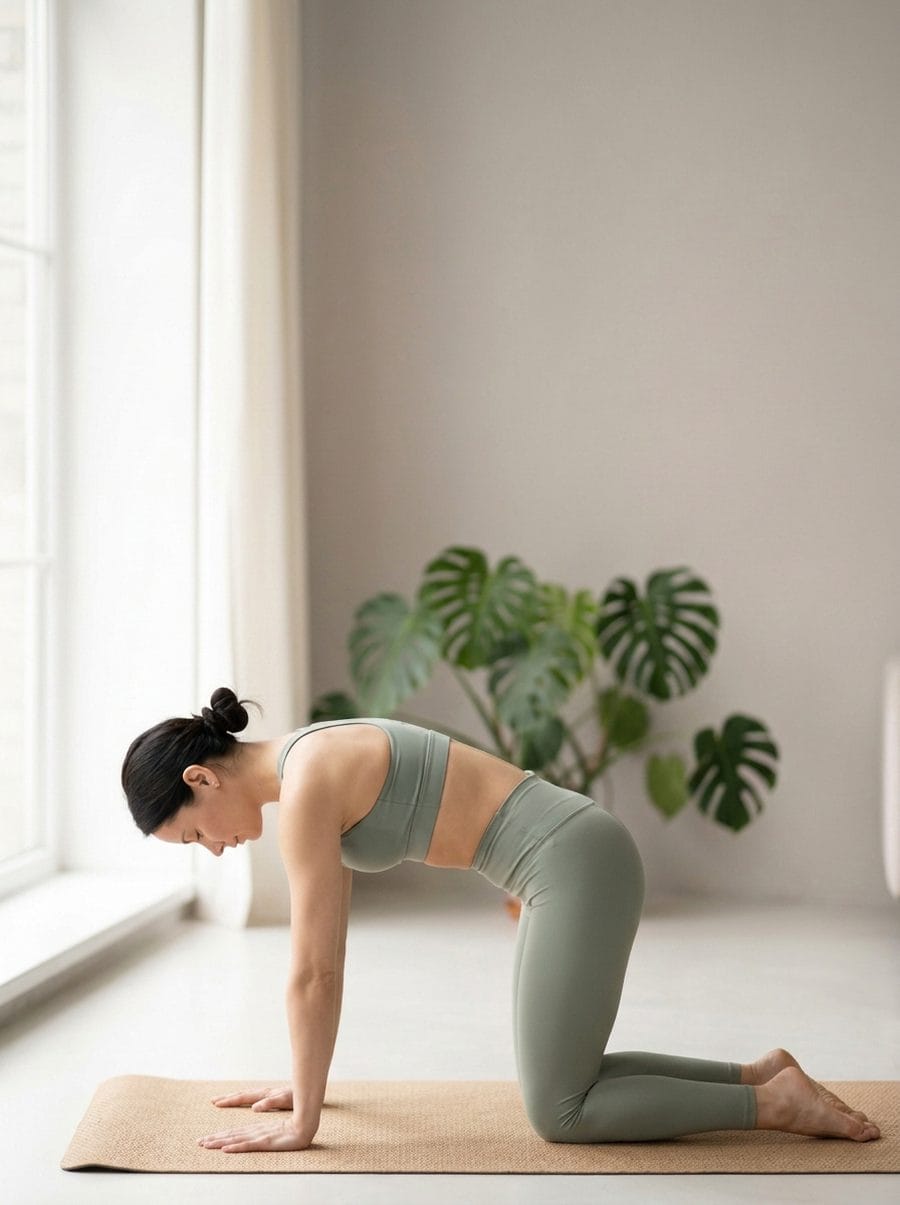
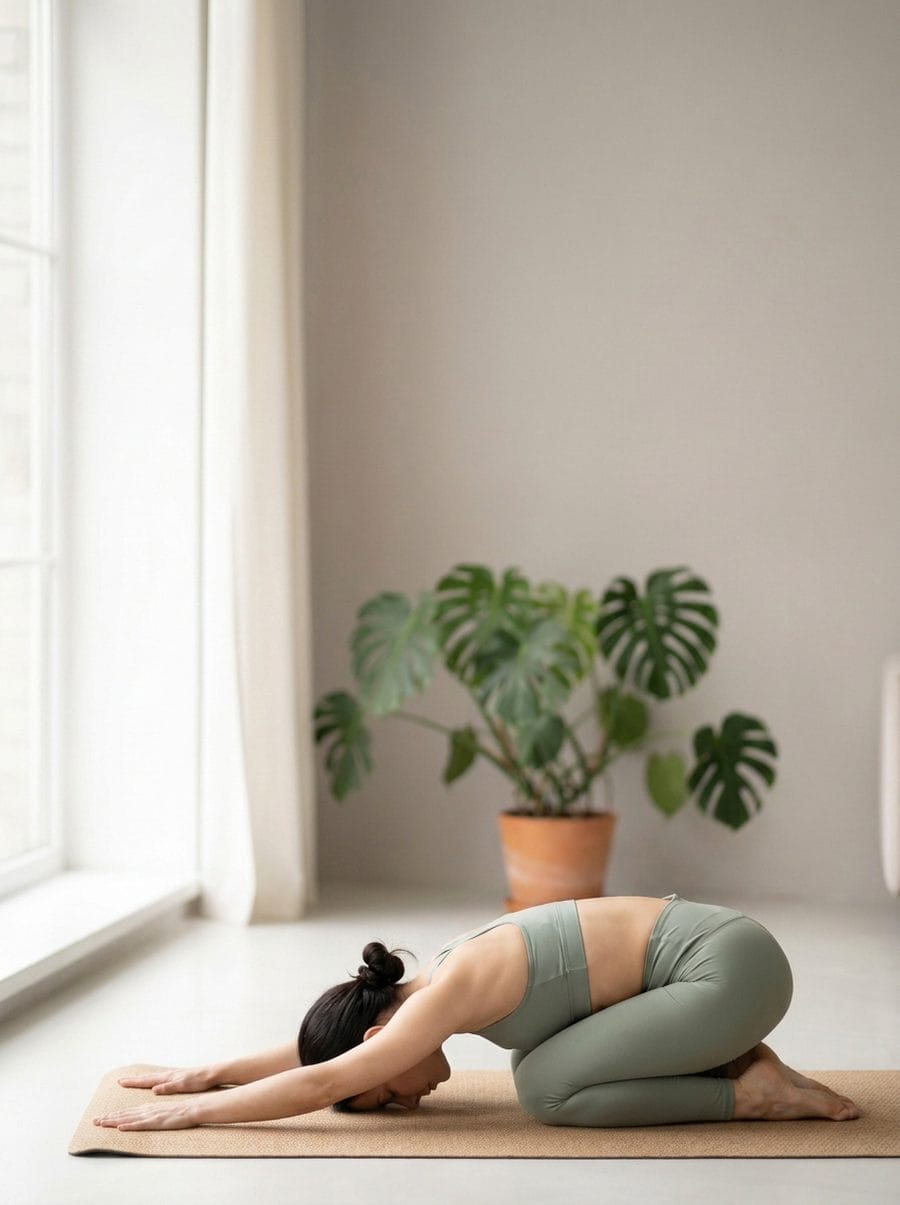
Cat-Cow pairs movement with breath and gently mobilizes your entire back. In Wide-Knee Child's Pose, your neck and shoulders finally get to let go completely.
Shoulders & Posture: a 20-minute routine
For a full session on the mat, there's the Shoulders & Posture routine. This intermediate program starts with two rounds of Sun Salutation, then moves to Cow Face Pose and Eagle Pose, backbends on your belly (Cobra Pose, Locust Pose, Bow Pose), Camel Pose, Bridge Pose and Fish Pose, and wraps up with a rest in a forward fold and Relaxation Pose.
Practice it two or three times a week if slouching has been bothering you for a long time. As a whole, it doesn't work for people with hypertension or a disc herniation: high blood pressure rules out Bow Pose, Camel Pose, Fish Pose and Locust Pose, while a disc herniation rules out Bow Pose, Camel Pose, Locust Pose and Cobra Pose.
If you enjoy flowing movement, the Shoulders & Chest round is a good fit: five poses linked into a breathing loop, with very little weight on your wrists.
Posture habits for desk workers
- Keep the screen at eye level. Raise your monitor, put your laptop on a stand, and bring your phone up to your face instead of bowing your head down to it.
- Shoulders down, away from your ears. Check in a couple of times an hour, because they tend to creep up without you noticing.
- Stand up once an hour. Two minutes of moving around undoes more tension than a single long workout at night.
- Let your belly do the breathing. Shallow chest breathing pulls your neck muscles into the job and tires them out even more. Read more in Breath in Practice.
When to see a doctor
Exercise is no replacement for a medical exam. See a doctor if your neck pain started after an injury, spreads down into your arm, or comes with numbness or weakness in the arm, dizziness or a severe headache. Skip the Neck Warm-Up if your neck has suddenly locked up or you feel dizzy.
Leave out Puppy Pose if you have a shoulder injury. Fish Pose is off limits with a neck injury, high blood pressure or migraines. The complete list of restrictions for every pose appears further down this page.
Pose cautions in this article
- Acute neck pain (Neck Warm-Up)
- Dizziness (Neck Warm-Up)
- Knee injuries — don't hook your foot behind your shin (Eagle Pose)
- Shoulder injuries — use a strap (Cow Face Pose)
- Knee injuries — sit on a prop (Cow Face Pose)
- Shoulder injuries (Puppy Pose)
- Wrist problems — rest on your fists (Cross-Legged Backbend)
- Lumbar disc herniation (Cobra Pose)
- Pregnancy (Cobra Pose)
- Flare-up of peptic ulcer disease (Cobra Pose)
- Neck injuries (Fish Pose)
- Hypertension (Fish Pose)
- Migraines (Fish Pose)
- Knee injuries — place a blanket under your knees (Wide-Knee Child's Pose)
- Acute back pain (Cat-Cow)
- Wrist injuries — practice on your fists (Cat-Cow)
This site is for general information and is not medical advice. If you have pain, an injury, a chronic condition, or are pregnant, check with a qualified professional before practicing.
Questions
What are the best stretches for a stiff neck? A slow Neck Warm-Up, Shoulder Rolls, Eagle Pose and Wide-Knee Child's Pose. The 10-minute Office Reset routine is a good place to start.
Are neck circles safe? Smooth half circles, without dropping your head back, work for most people. If your neck hurts sharply or you feel dizzy, it's wiser to give it a rest.
How often should I do yoga for my neck and shoulders? A short warm-up is fine every day, at work included. The full 20-minute routine two or three times a week is enough.
Can yoga help improve posture? Yoga opens the chest and strengthens the back muscles that keep you upright. Still, the habit of sitting tall is something you build off the mat as well.
Sources
- Pose technique and cautions, and the contents of the routines: the Hatha Yoga app. Details on how we review our texts are on the How We Prepare Our Content page.
Read next
- Yoga for Arthritis and Osteoporosis: How to Protect Your Joints and Bones7 min read
- Ashtanga Yoga Explained: The Series, the Breath and the Difference from Hatha6 min read
- Ayurveda Explained Simply: The Basics and a Daily Routine (Dinacharya)5 min read
- Balance Exercises: 10 Yoga Poses for Balance and Stability7 min read