 Hatha Yoga
Locust Pose
Śalabhāsana
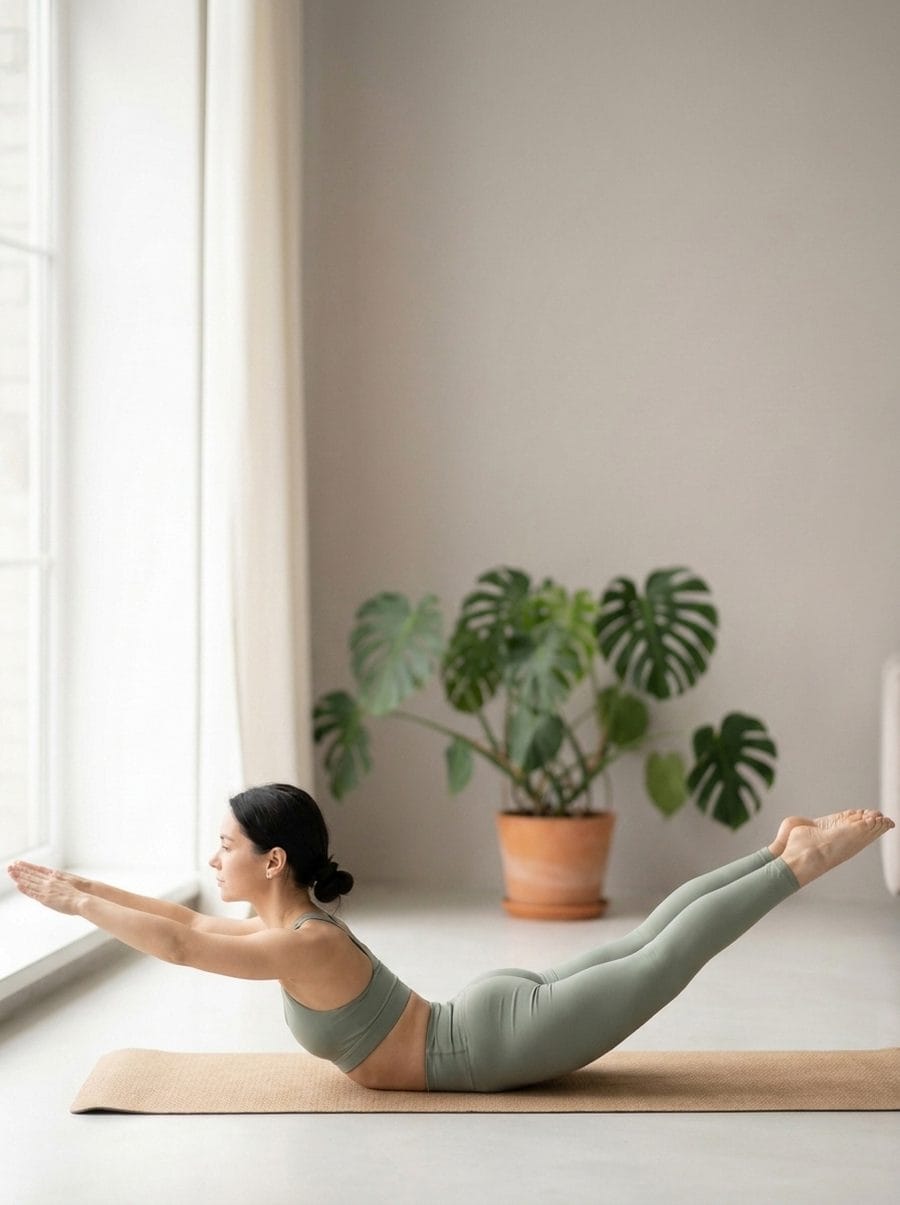
Shalabhasana, or Locust Pose, is a strengthening belly-down backbend in which your chest, arms and legs all lift off the floor at once. The name is literal: "shalabha" is Sanskrit for locust, and the silhouette with raised legs resembles the insect.
In the app it's a beginner pose, used in 5 sequences and 5 warm-up flows.
How to do it
- EnterLie on your belly, arms alongside your body, palms down, forehead on the mat. Inhale, lift your chest, arms, and legs off the floor all at once.
- HoldReach forward through the crown of your head and back through your feet. Legs straight and active. This is a strength pose, so it's all the more important to breathe evenly and calmly.
- ExitExhale, gently lower to the floor and relax.
More detail
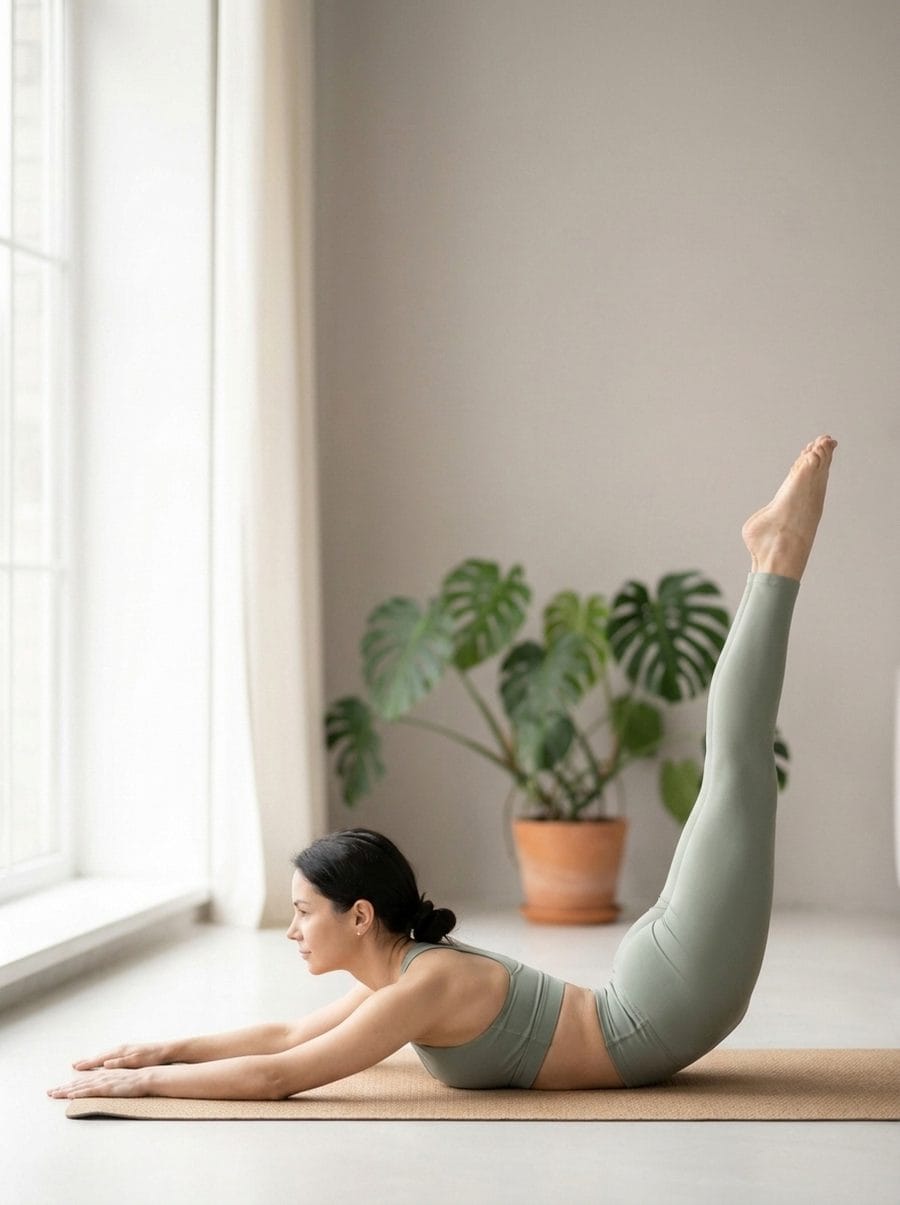
Locust is easiest to learn in pieces. First lift only your chest and arms, leaving your legs down; then only your legs; and only after that, everything together. Another easier option is raising your straight legs one at a time.
Your pubic bone presses into the floor, and your glutes engage without turning rock-hard. If your hip bones dig in, put a folded blanket under your pelvis. For a warm-up, Locust Flow works well: rise on the inhale, lower on the exhale.
Benefits
Powerfully strengthens the entire back of the body.
The pose strengthens your back muscles, glutes and the backs of your legs, the whole group that holds your posture. That's why Locust shows up both in the gentle Healthy Back sequence and in sequences built around deep backbends.
Cautions
- Lumbar disc herniation
- Pregnancy
- High blood pressure
This site is for general information and is not medical advice. If you have pain, an injury, a chronic condition, or are pregnant, check with a qualified professional before practicing.
Common mistakes
- Lifting your chin. Keep your neck long and your eyes on the floor just past the mat.
- Bending your knees. Legs stay straight, toes reaching back.
- Going for height. Reach for length instead, so your lower back isn't compressed.
- Holding your breath on the lift. Breathing is short but even and continuous.
Modifications & variations
Counterpose
Where it appears
- Healthy Back 15 min · Beginner
- Strength & Tone 25 min · Intermediate
- Shoulders & Posture 20 min · Intermediate
- Backbends & Opening 20 min · Intermediate
- Deep Backbend 35 min · Advanced · voice-guided in the app subscription
- Warm-up: Five-Level Strength All five levels of the body in a single round
- Warm-up: Shoulders & Chest An office upper-body reset: thoracic opening and shoulder mobility, almost no load on the wrists
- Warm-up: Warrior's Path Warrior strength across three body levels: the warrior is one step, not the whole round
- Warm-up: Back Line Stretch and strength for the back of the body on five levels, from a standing fold to Bridge Pose
- Warm-up: Core Focus Core in every plane — Boat Pose, Locust Pose, and twists with no load on the wrists
Similar poses
Questions
What does Shalabhasana mean? "Shalabha" means locust and "asana" means pose, which gives the English name. You'll also see it spelled Salabhasana.
How long should I hold Locust? The pose card gives 20 seconds. In the sequences, holds range from 30 to 65 seconds, the longest being in Backbends & Opening. For beginners, three short lifts are easier than one long hold.
Who should avoid Locust Pose? People with lumbar disc herniations or high blood pressure, and anyone who is pregnant. If your back hurts, see a doctor before you practice it.
Updated: