 Hatha Yoga
Handstand
Adho Mukha Vṛkṣāsana
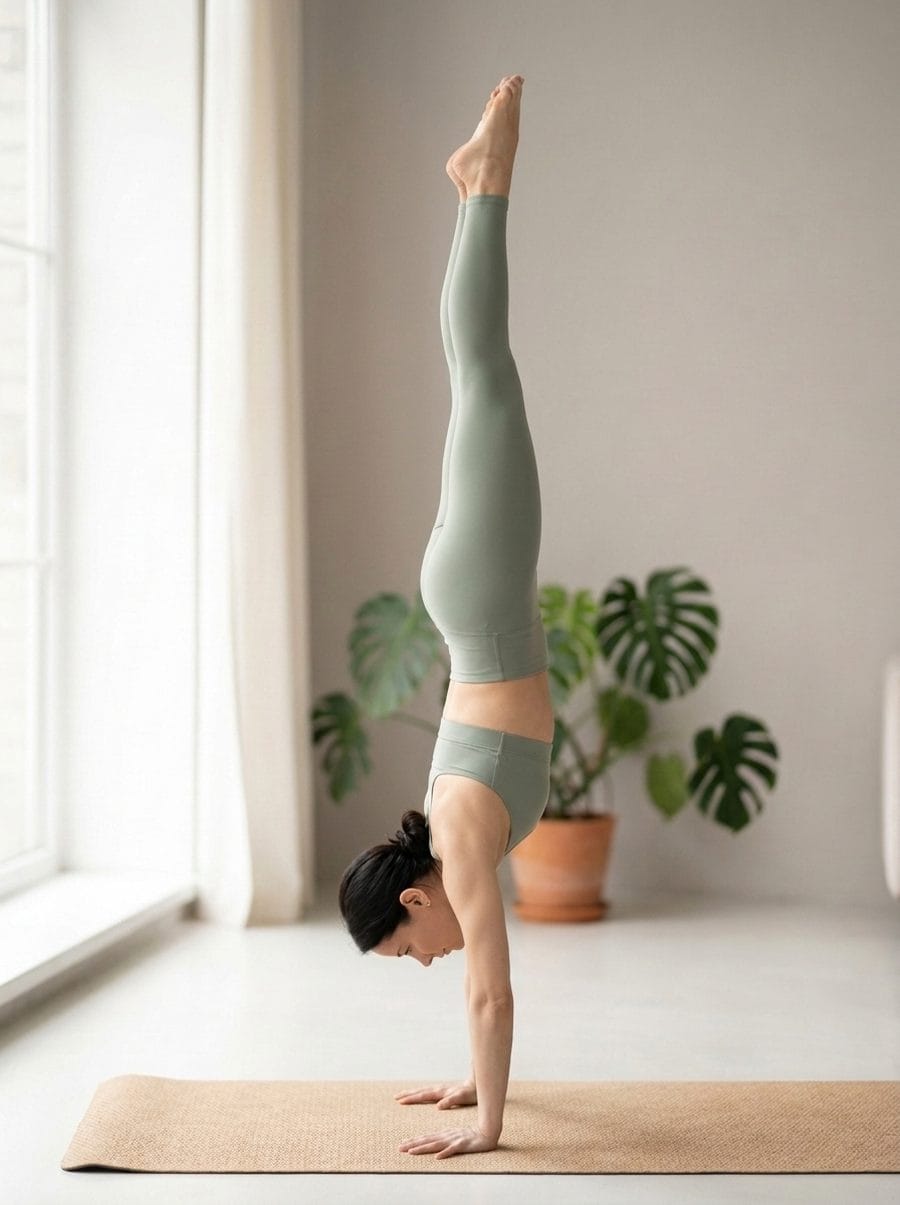
Handstand, or Adho Mukha Vrksasana (also spelled Vrikshasana), is an upside-down balance on straight arms: palms down, body and legs reaching up. The name means "downward-facing tree," Tree Pose flipped on its head. The app rates it advanced, with 15 seconds on its card.
You'll meet it in Upside-Down World, which holds it for 30 seconds.
How to do it
- EnterPlace your palms on the floor shoulder-width apart, about a step away from the wall. From Downward-Facing Dog, walk your feet in and with a soft kick bring your legs up, heels to the wall.
- HoldArms straight and pushing into the floor, shoulders over wrists, ribs drawn in, legs reaching up. Gaze between your palms.
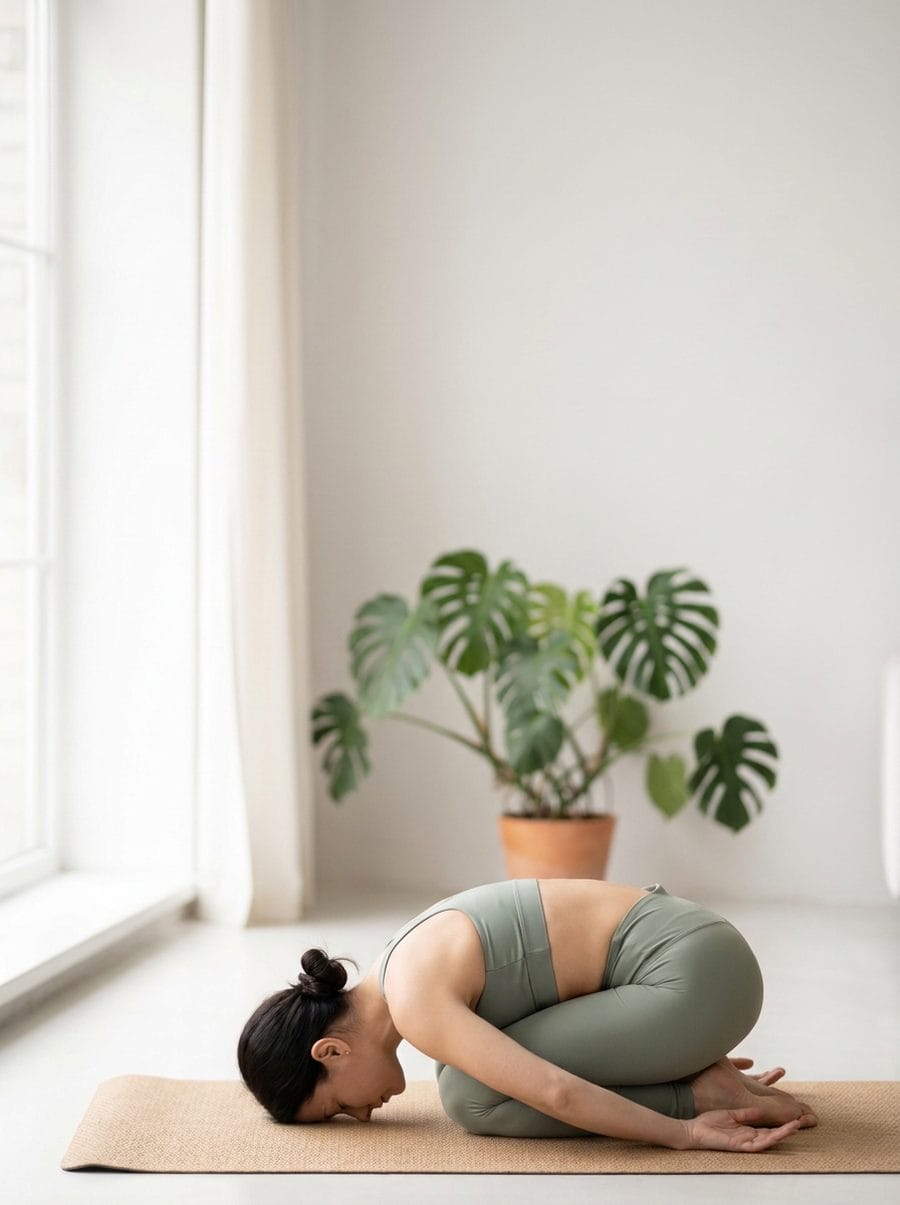
- ExitLower your legs one at a time with control, and rest in a forward fold.
More detail
The app sets a firm rule: learn Handstand only at a wall. Preparation starts long before your first kick-up. A steady Downward-Facing Dog and a solid Plank Pose show that your shoulders can carry weight, and your wrists deserve a warm-up before every attempt.
Place your hands about a step from the wall, fingers spread wide, weight across the whole palm. Swing one leg up and let the other follow; don't hop off both feet or throw yourself at the wall. Your heels touch it lightly, because it's a safety net, not a hammock.
A few seconds is plenty at first. Lower one leg at a time and rest in Child's Pose.
Benefits
An inverted balance that changes your relationship with gravity.
Handstand strengthens your arms, shoulders and the core muscles that hold your body in one line. It teaches you to spread weight across your hands and fine-tune balance through your fingers. It also helps you get used to being upside down at your own pace, since the wall takes the fear of falling out of the equation.
Cautions
- Wrist and shoulder injuries
- Hypertension
- Glaucoma
- Learn it only at a wall
This site is for general information and is not medical advice. If you have pain, an injury, a chronic condition, or are pregnant, check with a qualified professional before practicing.
Common mistakes
- Trying it away from the wall with no preparation.
- Bent elbows and collapsed shoulders. Keep your arms straight and push the floor away.
- A banana-shaped lower back. Draw your ribs in and keep your belly and legs active.
- Craning your head to look at the wall. Gaze at the floor between your hands.
Counterpose
Where it appears
- Upside-Down World 16 min · Advanced
Similar poses
Questions
Who shouldn't do a handstand? Wrist or shoulder injuries, hypertension and glaucoma all exclude the pose in the app; if any of them applies, skip it. Any doubt about these is a question for your doctor.
How do I start learning handstand in yoga? Build strength first: Downward Dog, Plank and Reverse Tabletop Pose, as in the Inversion Prep sequence. Then practice kick-ups at the wall for a few seconds at a time. A freestanding handstand takes a while, so don't rush it.
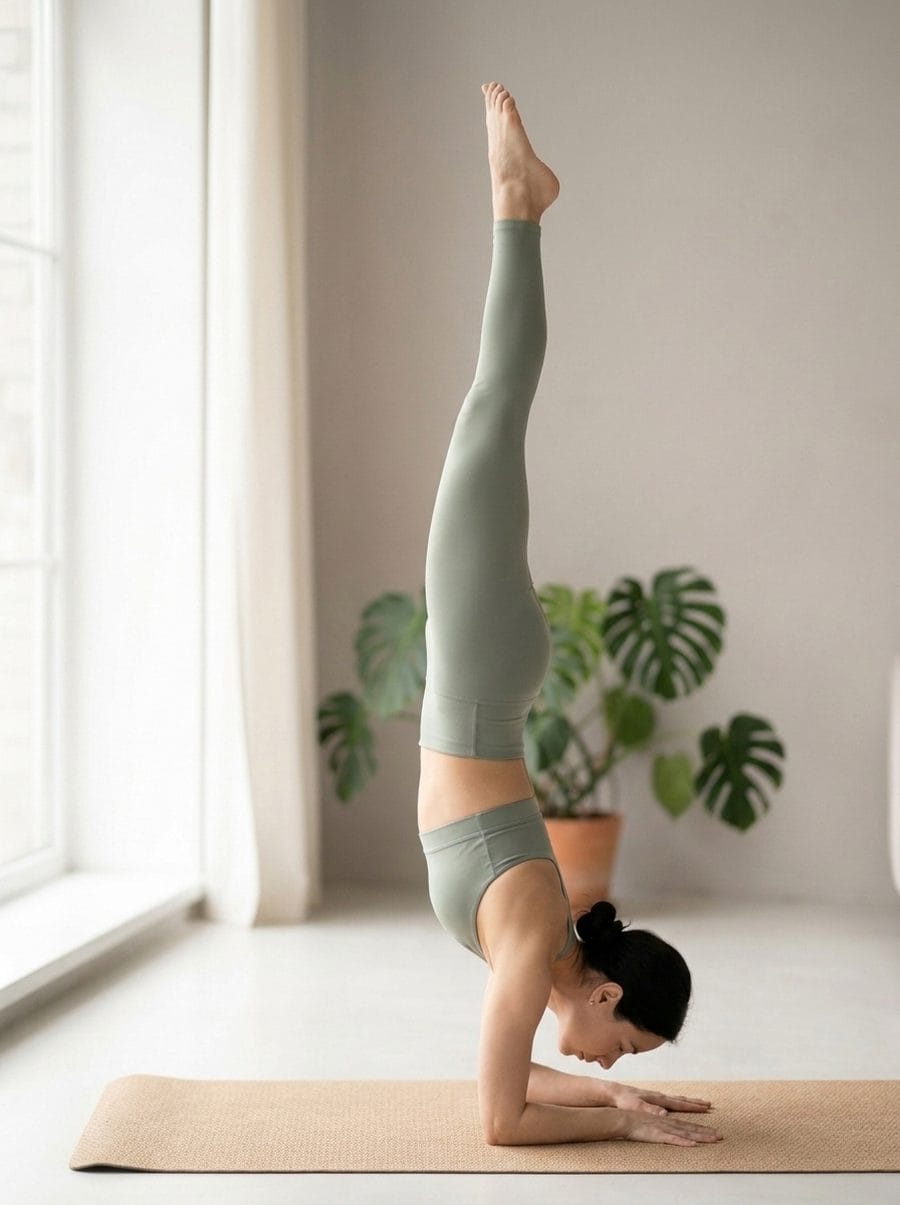
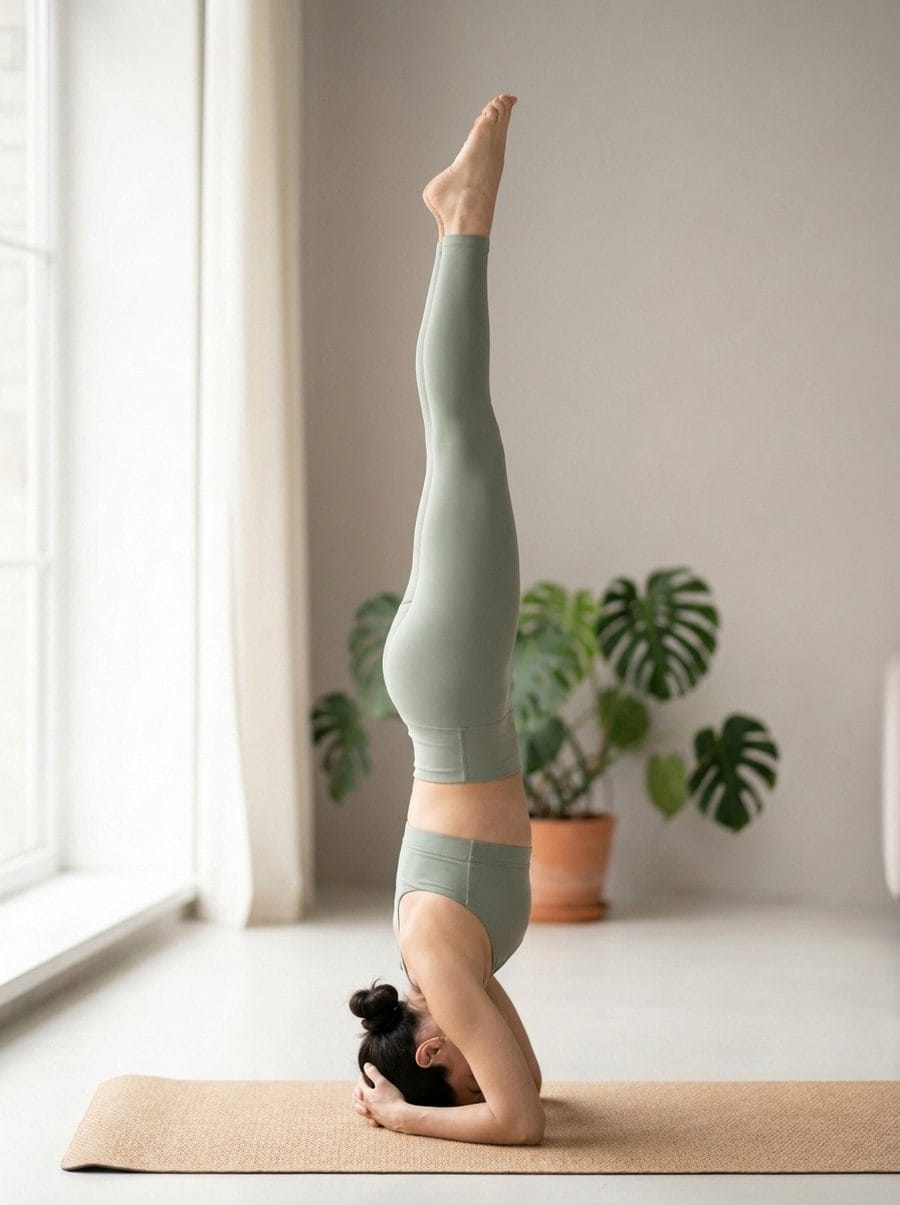
Headstand vs handstand: which is harder on the body? In Headstand the load is split between your forearms and skull, while in Handstand your palms carry it alone, so your wrists and shoulders work harder. Both are advanced in the app and share the same limits for blood pressure and glaucoma.
Featured in
Updated: