 Hatha Yoga
Headstand
Sālamba Śīrṣāsana
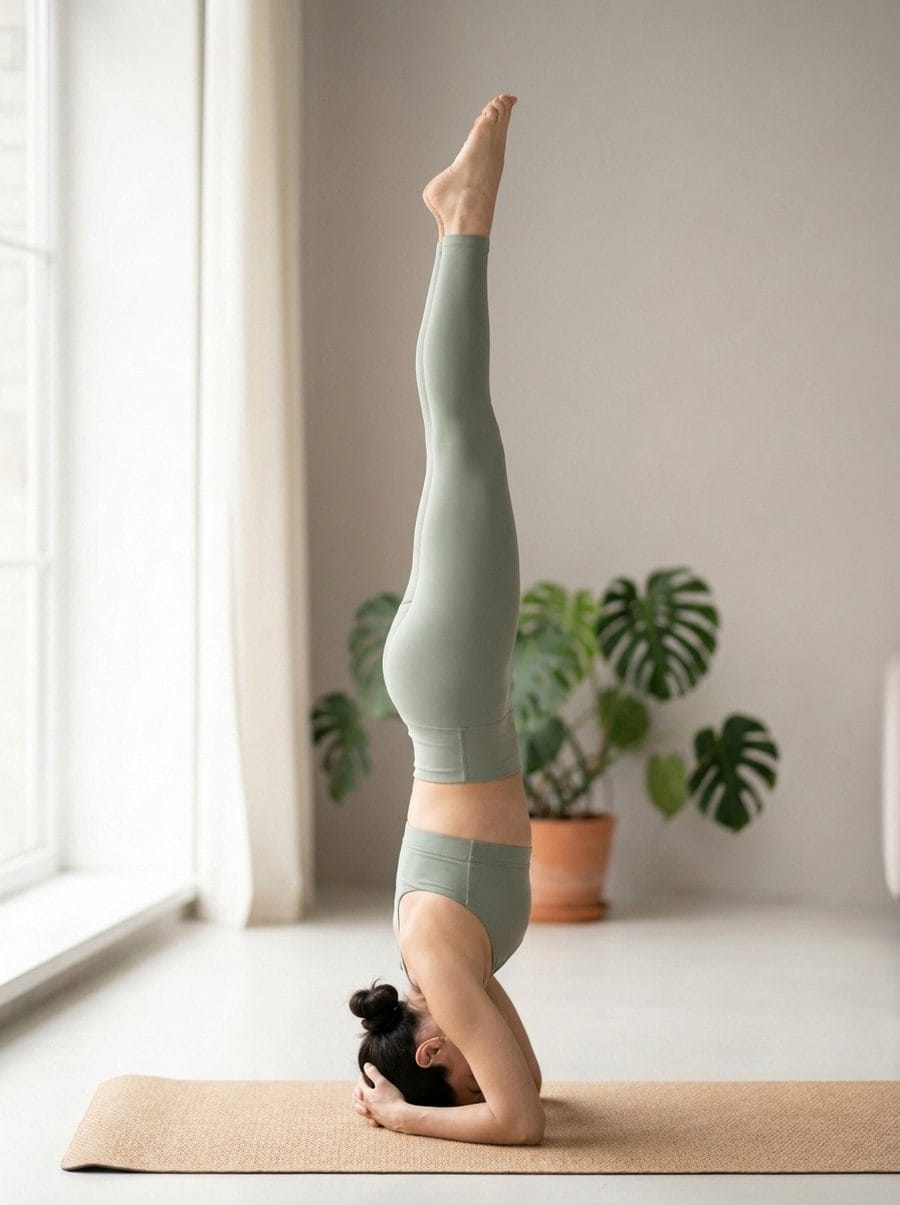
Headstand, or Salamba Sirsasana, is an inversion where the forearms and the crown form your base, with your body stacked vertically, feet up. It's often called the king of poses. It's rated Advanced, and the app makes a point of it: practice it only after learning it with a teacher. Headstand appears in two sequences, Upside-Down World and Advanced Intensive.
How to do it
- EnterInterlace your fingers, set your forearms on the floor, and place the crown of your head in the cup of your hands. Straighten your legs, walk your feet toward your torso, and gently lift your legs up, ideally against a wall.
- HoldMost of your weight is on your forearms, neck long. Your body is gathered into one vertical line, legs active. At the slightest sign of fatigue, come out.
- ExitSlowly and with control, lower your legs, and be sure to rest in Child's Pose.
More detail
This page isn't a substitute for a lesson: learn Headstand in person with a teacher, and at home repeat only the version you've already mastered, ideally against a wall. The foundation is your arms. Interlace your fingers, elbows no wider than your shoulders, and set your forearms and hands on the floor in a triangle.
The crown of your head rests in the cup of your palms. Your forearms and shoulders carry most of the weight: they press down into the mat so the neck stays long and uncompressed. Before lifting your legs, walk your feet toward your face until your hips are over your shoulders.
Your legs rise smoothly, with no kicking or hopping. At the top, your body is gathered into one line, legs together and engaged. At the slightest sign of fatigue, come down slowly, and always rest in Child's Pose afterward.
Benefits
The king of poses: balance, focus, and blood flow to the head.
Headstand demands precise balance and complete focus, which is why it's valued as training for attention. Your shoulders, arms and core work the whole time to hold the vertical. In Upside-Down World it's preceded by Downward-Facing Dog, which warms up your shoulders.
Cautions
- Neck injuries
- Hypertension
- Glaucoma
- Menstruation
- Pregnancy
- Only after learning it with a teacher
This site is for general information and is not medical advice. If you have pain, an injury, a chronic condition, or are pregnant, check with a qualified professional before practicing.
Common mistakes
- Standing on your head instead of your arms. The weight goes into your forearms, not your neck.
- Kicking up. Rise slowly, with control.
- Elbows wider than your shoulders. The base loses stability.
- Arching into a banana shape. Ribs and pelvis stay stacked over your shoulders.
Counterpose

Where it appears
- Upside-Down World 16 min · Advanced
- Advanced Intensive 35 min · Advanced
Similar poses
Questions
What are the benefits and risks of Headstand? The benefits are balance, focus and shoulder strength. The main risk is to your neck. Skip the pose if any of these apply: pregnancy, glaucoma, a neck injury, hypertension, or your period. And it's never done without first learning it with a teacher.
How many seconds in a headstand? The app thinks in seconds, not minutes: 30 on the pose card, 35 and 40 in the sequences. Come down sooner if you start to tire.
Can I learn Headstand on my own? The app advises against it: the pose is marked as one to practice only after learning it with a teacher.
Updated: