 Hatha Yoga
Shoulder Stand
Sālamba Sarvāṅgāsana
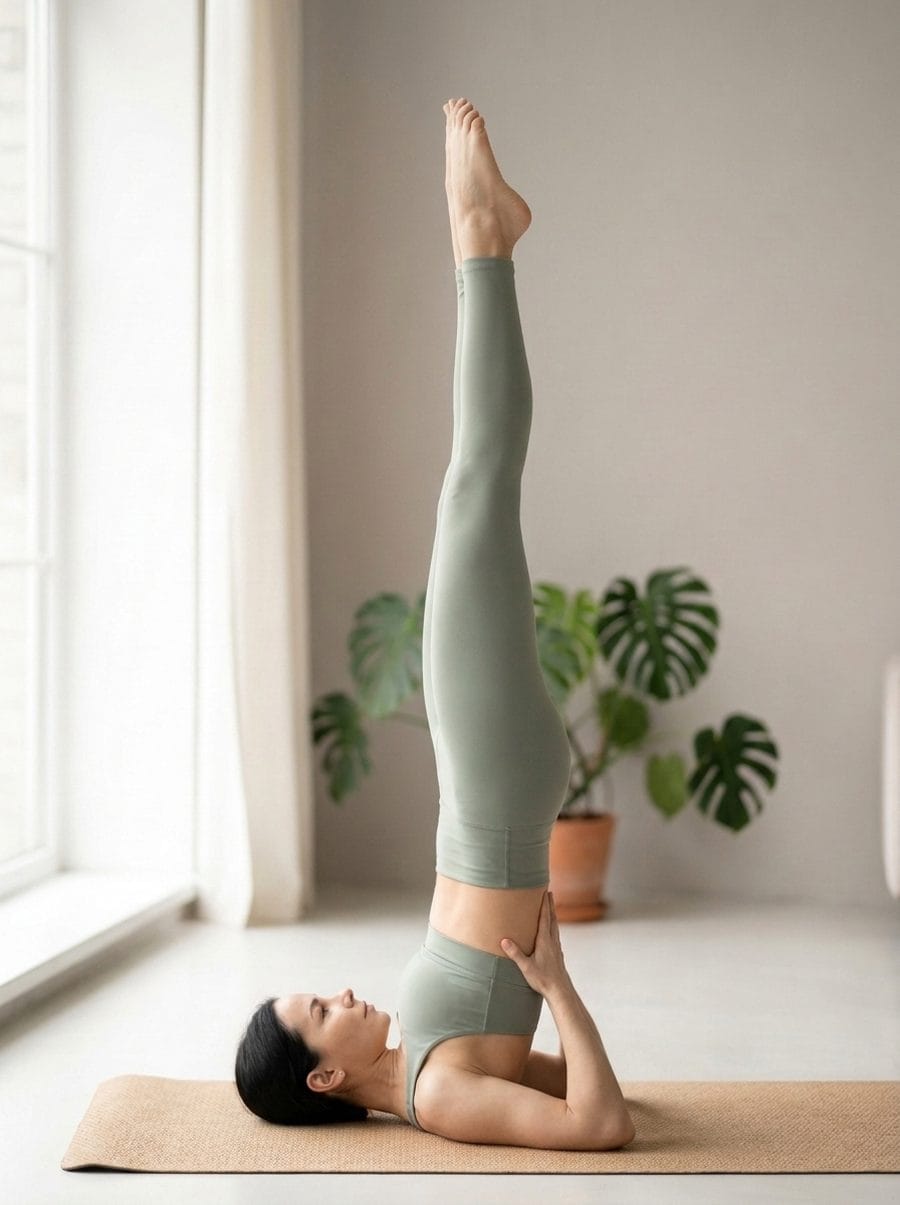
Shoulder Stand, or Salamba Sarvangasana, may look familiar from gym class, where kids call it the "candlestick." Your body rises vertically from your shoulders, your palms support your back, and your legs reach toward the ceiling. "Salamba" means "supported," and "sarvangasana" is often translated as the pose for the whole body.
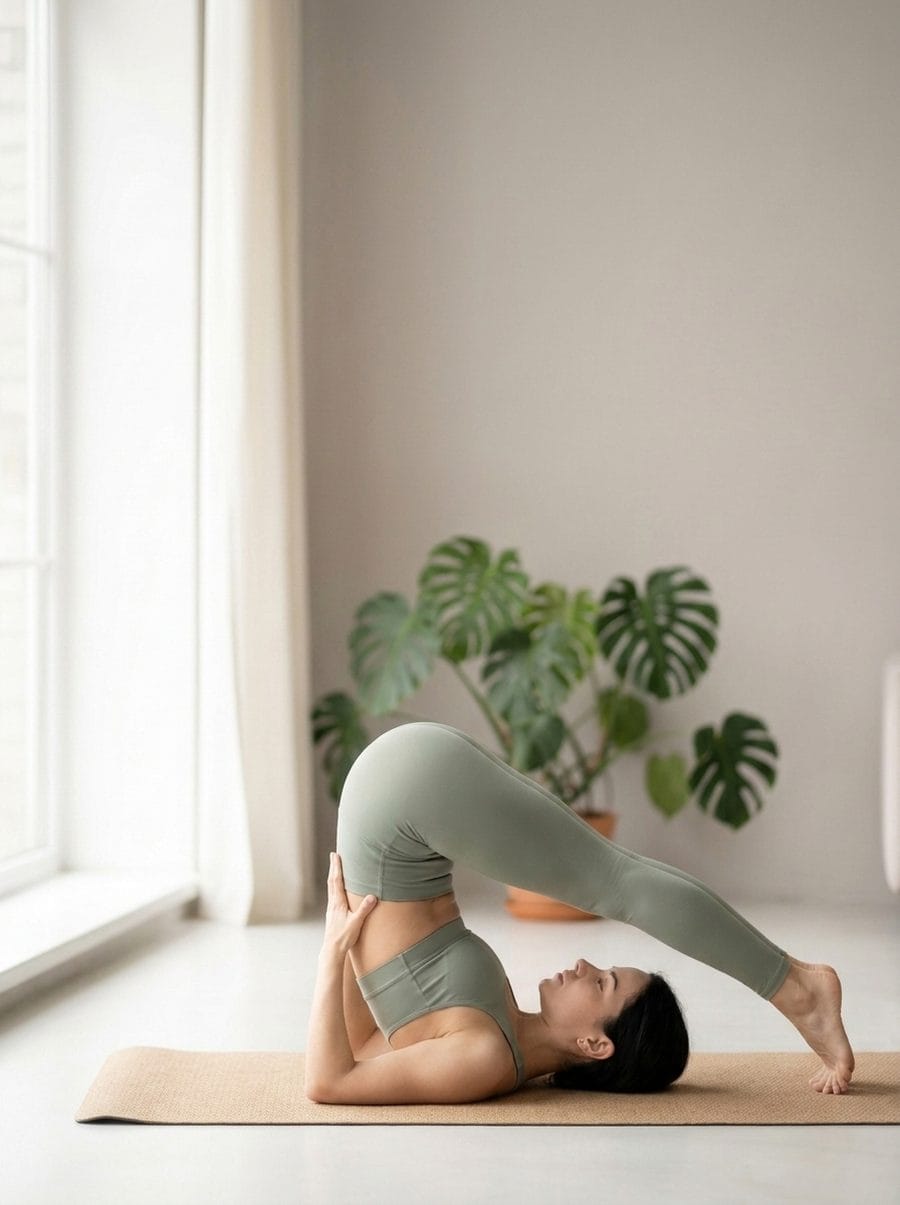
The app rates it intermediate. It appears in three sequences, and in every one of them Plow Pose comes right after it.
How to do it
- EnterLying on your back, lift your legs and pelvis up, supporting your back with your palms. Elbows shoulder-width apart, weight on your shoulders and elbows, not on your neck.
- HoldYour body lines up vertically, legs relaxed yet active. Keep your neck free, and never turn your head. Breathe evenly and calmly.
- ExitSlowly lower your legs behind your head, support your back, and roll down to the floor one vertebra at a time.
More detail
The first step toward the full pose is Legs-Up-the-Wall Pose, with your legs resting on the wall or your pelvis supported by your palms, which puts less load on your neck. For Shoulder Stand itself, fold two or three firm blankets and lie down so your shoulders rest at the edge of the stack while your head is down on the mat.
Keep your elbows shoulder-width apart; if they slide outward, loop a strap around your upper arms. Walk your hands closer to your shoulder blades, and your torso will straighten.
Benefits
A classic inversion: helps venous return from the legs and deeply calms the nervous system.
In Shoulder Stand your legs are above your heart and your attention settles on steady breathing. The app's sequences place it near the end of a session. The muscles of your shoulders, back and core keep you vertical, and holding the pose makes them stronger.
Cautions
- Neck injuries
- Hypertension
- Glaucoma
- Menstruation
- Pregnancy
This site is for general information and is not medical advice. If you have pain, an injury, a chronic condition, or are pregnant, check with a qualified professional before practicing.
Common mistakes
- Sinking your weight into your neck. Your shoulders and elbows carry you, and your neck doesn't press into the floor.
- Turning your head to look around. Keep it still for as long as you're in the pose.
- Letting your elbows splay. You lose your base and start to tip over.
- Dropping your back onto the floor on the way out. Come down through Plow or with bent knees, holding your back.
Counterpose
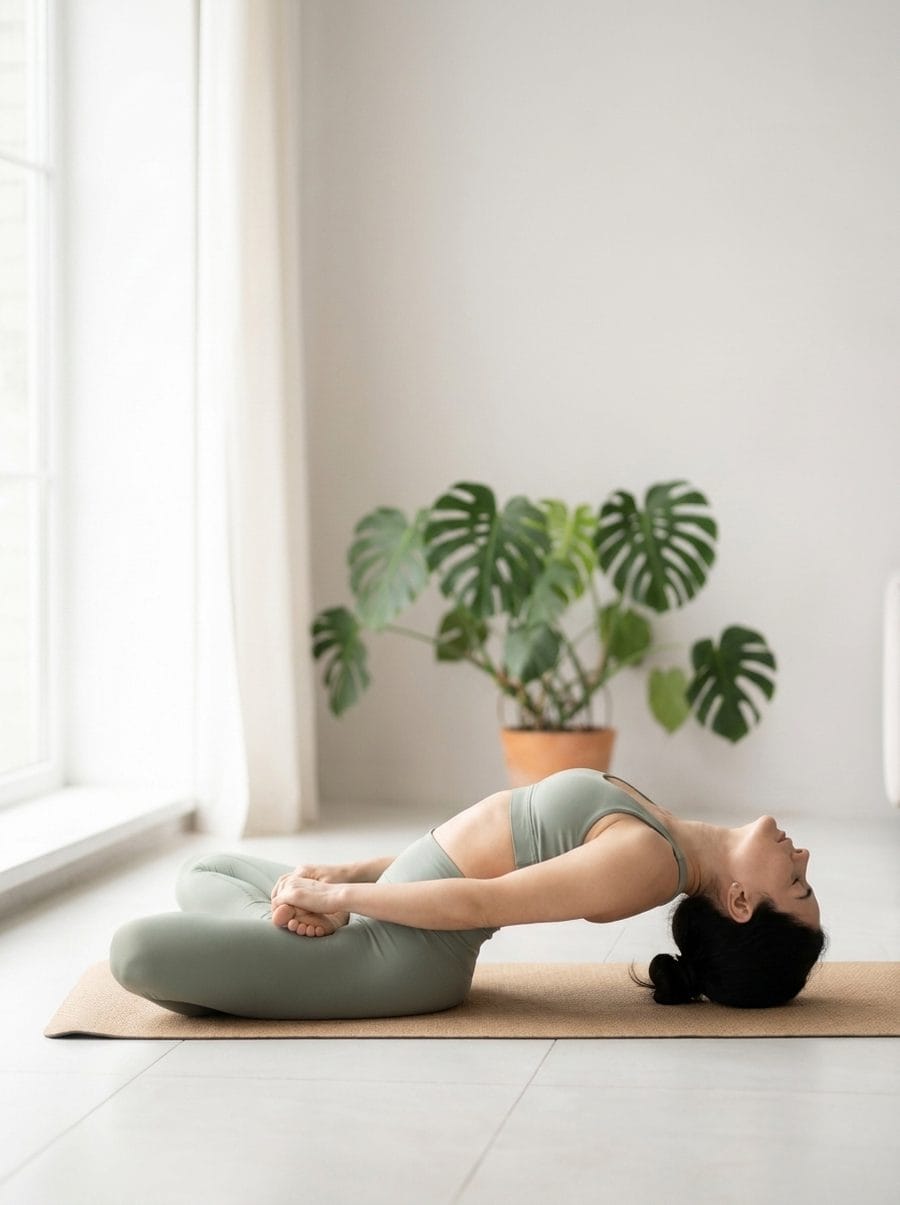
Where it appears
- Classic Full Practice 50 min · Intermediate
- Upside-Down World 16 min · Advanced
- Advanced Intensive 35 min · Advanced
Similar poses
Questions
Is Shoulder Stand the same as the candlestick from gym class? Essentially, yes. The difference lies in the details: in yoga you make sure your weight rests on your shoulders, your body is vertical, and there's support under your shoulders.
Who shouldn't do Shoulder Stand? The app rules it out with high blood pressure, glaucoma, neck injuries, pregnancy and during menstruation. Ringing in your ears or heaviness in your head or eyes during the pose is your cue to come down. If you have doubts, decide about practice together with your doctor.
How many seconds should Shoulder Stand last? One minute on the pose card, 70 or 75 seconds in the sequences. At first, stay for a few calm breaths and add time once the pose stops feeling like a struggle.
Updated: