 Hatha Yoga
Forearm Stand
Piñcha Mayūrāsana
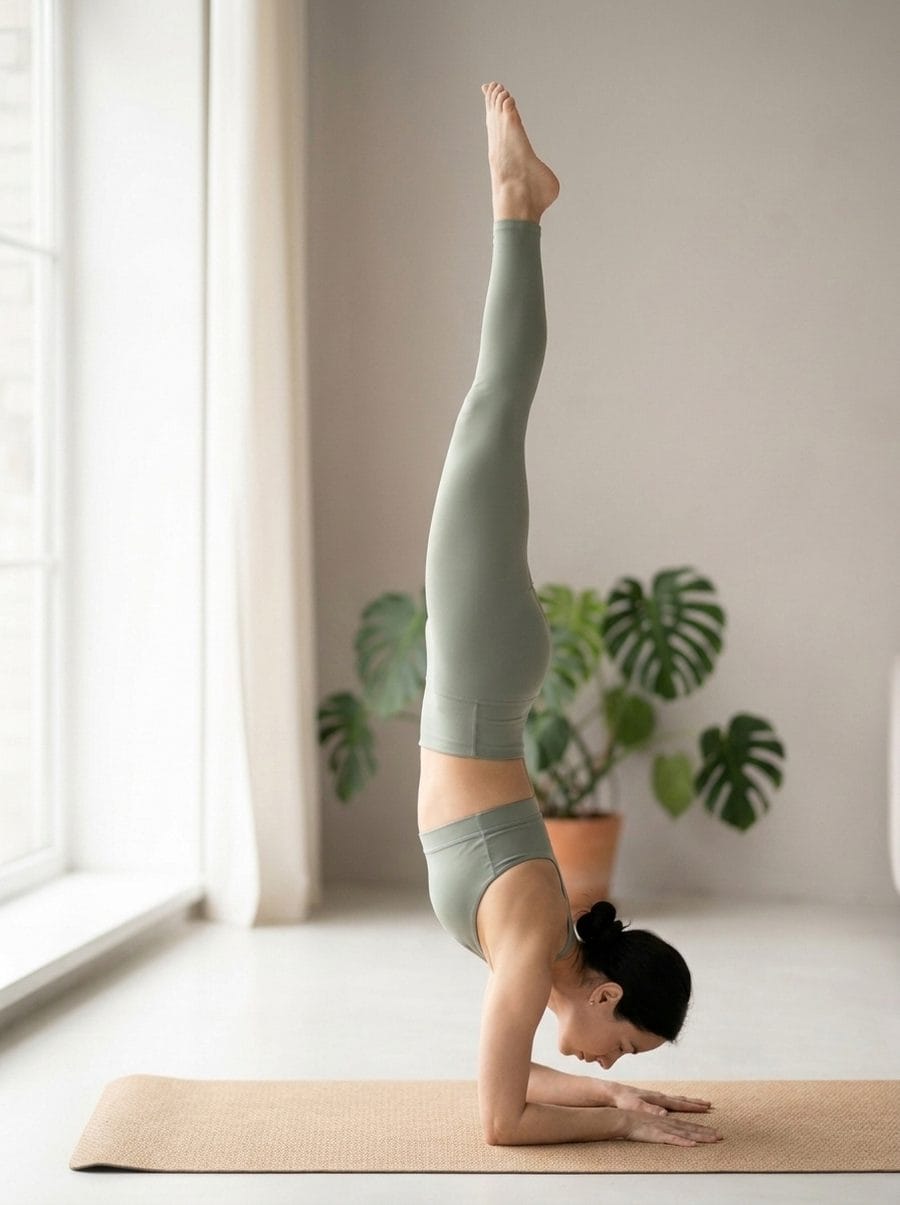
Forearm Stand, or Pincha Mayurasana, is an inverted balance: you support yourself on your forearms and palms, your body extends upward, and your head stays off the floor. The name is usually translated as "feathered peacock pose." The app classes it as advanced and recommends learning it only against a wall.
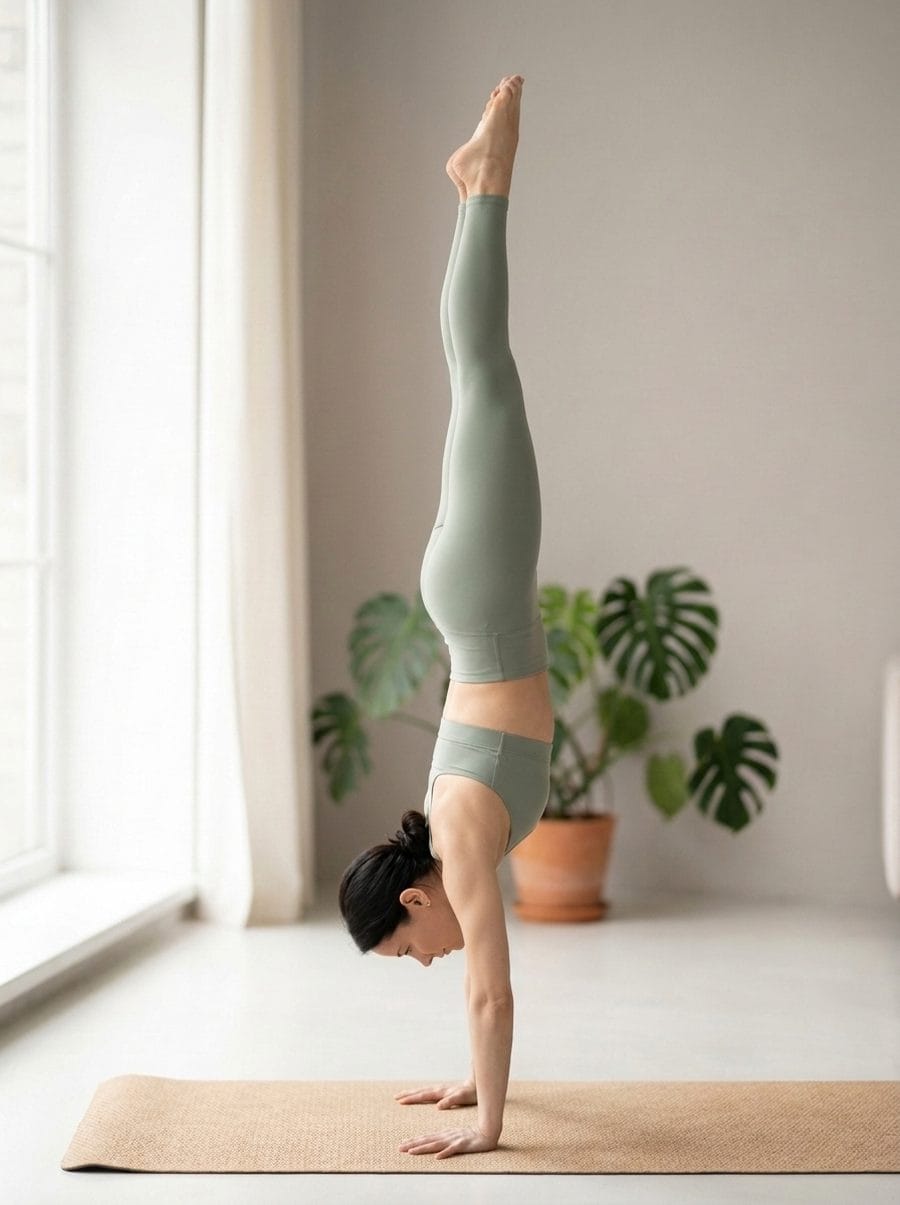
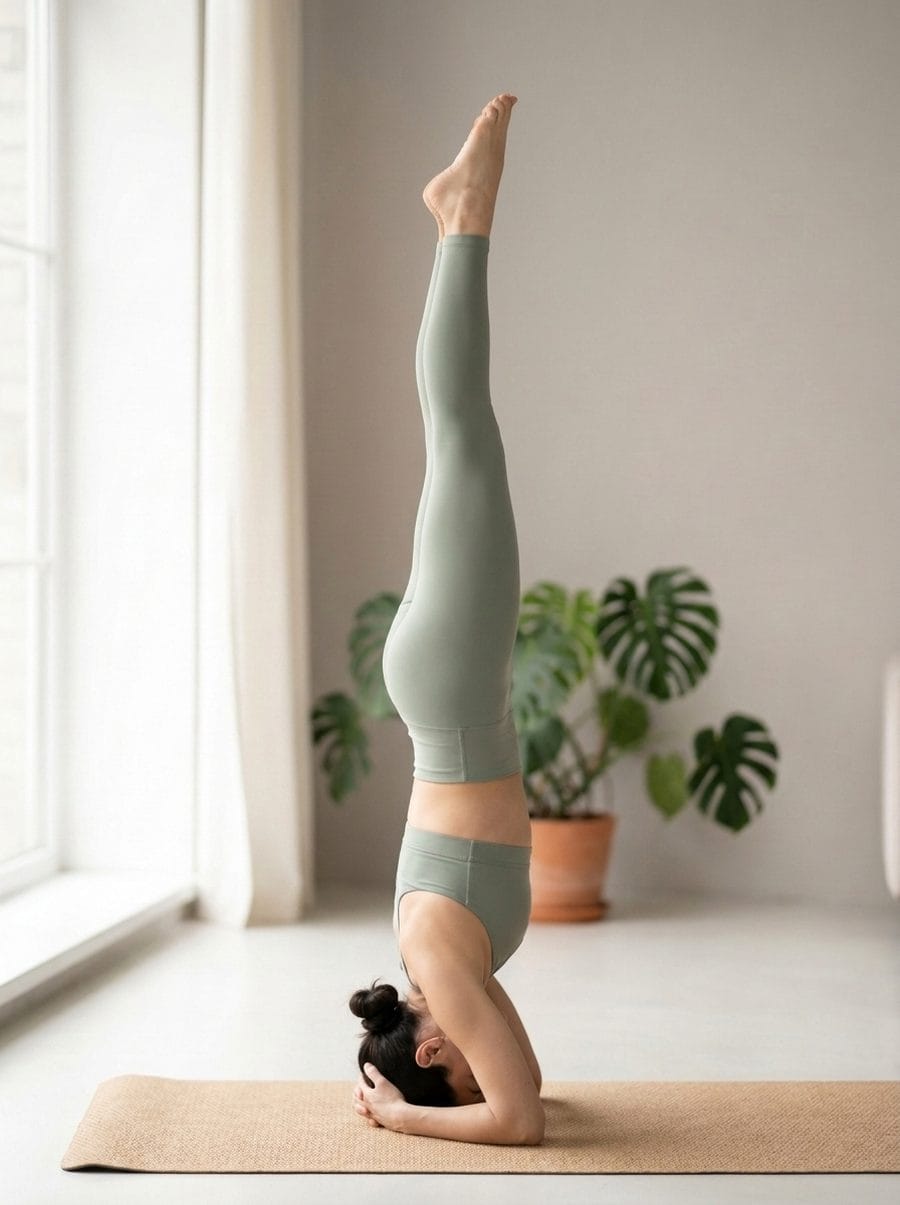
You'll find it in the Upside-Down World sequence, where it follows Headstand and Handstand.
How to do it
- EnterPlace your forearms on the floor, parallel and shoulder-width apart, ideally by a wall. Lift your hips, walk your feet in, and with a light kick bring your legs up.
- HoldShoulders over elbows, pushing actively into the floor. Neck relaxed, gaze between your palms. Draw your body into one line and keep your ribs from flaring.
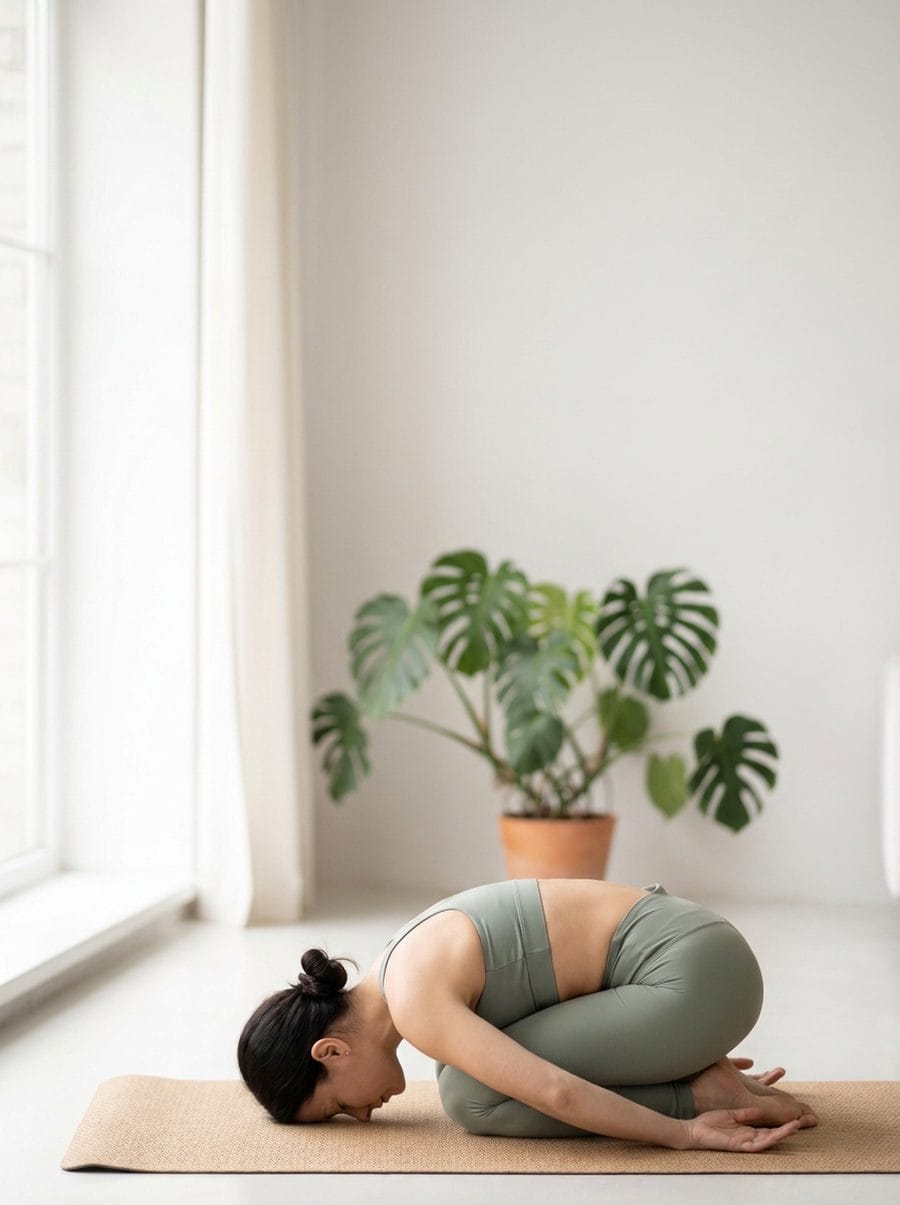
- ExitSlowly lower one leg, then the other, and rest in Child's Pose.
More detail
Before your first attempt, build shoulder strength, for instance in Downward-Facing Dog on your forearms: elbows shoulder-width apart, hips high, chest reaching toward your legs. That's also the place to practice walking your feet in toward your elbows without losing your base.
At the wall, start with single-leg kicks until the push-off feels soft and controlled. To stop your elbows from sliding apart, strap your arms just above the elbows or hold a block between your palms. The Inversion Prep sequence gets your shoulders and core ready for poses like this one.
Benefits
The queen of arm balances: shoulders, core, and the benefits of an inversion without loading the neck.
The pose strengthens your shoulders, arms and core and calls for concentration, since balance only holds when your body is engaged and your breathing is even. Unlike Headstand, it leaves your neck free, but it asks more strength and mobility of your shoulders.
Cautions
- Shoulder and neck injuries
- Hypertension
- Glaucoma
- Learn it only at a wall
This site is for general information and is not medical advice. If you have pain, an injury, a chronic condition, or are pregnant, check with a qualified professional before practicing.
Common mistakes
- Elbows drifting apart until the base caves in. A strap or block keeps the width.
- Kicking up with both legs at once. One leg pushes off and the other follows.
- Arching your lower back with your ribs popping forward. Draw your belly in and reach up through your heels.
- Trying it in the middle of the room. Until both the kick-up and the descent feel confident, the wall is non-negotiable.
Counterpose
Where it appears
- Upside-Down World 16 min · Advanced
Similar poses
Questions
How is Forearm Stand different from Headstand? In Headstand part of your weight rests on the crown of your head; here your head hovers above the floor and the load goes into your shoulders and forearms. The two share many limitations: neck injuries, high blood pressure, glaucoma. Pincha Mayurasana adds shoulder injuries to that list.
How do I come out of the pose safely? Lower your legs one at a time, slowly, and rest in Child's Pose. The wall keeps you from tipping over backward, which is why this pose is never learned without one.
How long should I hold Forearm Stand? The app's pose card gives 20 seconds, the sequence 35. A few brief holds with rests between them are more useful than one long one.
Updated: