 Hatha Yoga
Reverse Tabletop Pose
Ardha Pūrvottānāsana
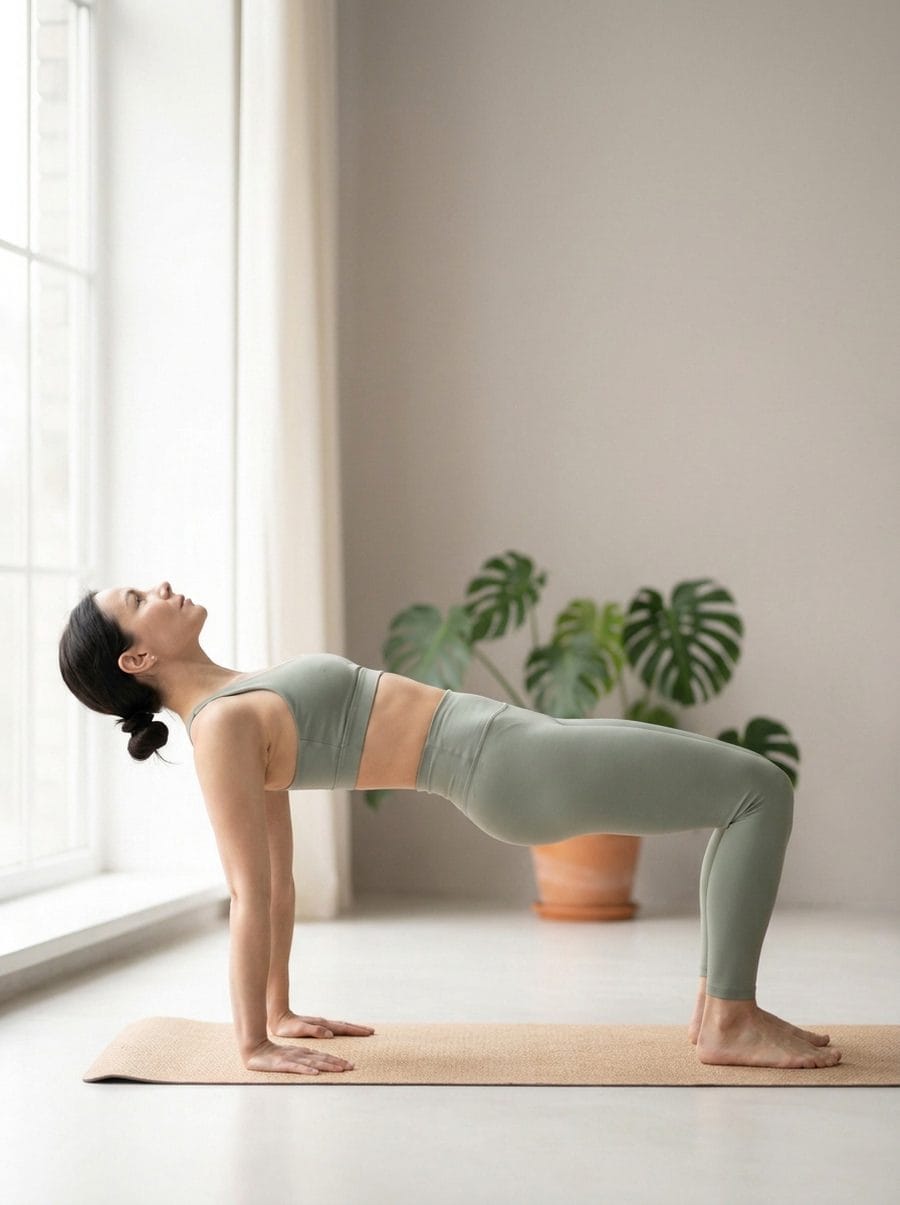
Reverse Tabletop Pose, or Ardha Purvottanasana, has you facing up and supported by your hands and feet: your hips rise and your thighs and torso make one flat surface, like the top of a table. It's a lighter form of Reverse Plank with the knees bent, so it's rated beginner.
In the app it's part of Inversion Prep, where you stay up for 50 seconds, while the pose card suggests 30.
A variation of: Reverse Plank
How to do it
- EnterSitting, place your palms behind your hips and your feet on the floor. Inhale and lift your hips into Reverse Tabletop.
- HoldThighs parallel to the floor, knees over your feet, shoulders over your wrists. Your chest opens upward.
- ExitExhale and lower your hips.
More detail
Set up seated: knees bent, feet hip-width apart and about a step away from your glutes. Place your palms behind your hips, shoulder-width apart, fingers pointing toward your feet; if that cramps your shoulders, angle your hands slightly outward. Before lifting, press the whole palm and the finger pads into the floor, not just the heel of the hand.
Let your glutes and hamstrings raise the hips while your arms act as pillars. Your head extends the line of your spine, or tip your chin down a little if your neck feels tight. As a beginner, a few breaths at the top is plenty: lower, rest and go again. Once Tabletop feels steady, try One-Legged Reverse Tabletop.
Benefits
An accessible Reverse Plank: arm strength and open shoulders.
Reverse Tabletop builds strength in your arms, glutes and hamstrings and broadens your chest across the collarbones. After long hours at a computer, it moves you in the opposite direction from the usual slump. In a sequence that prepares for inversions, it teaches your shoulders to bear body weight.
Cautions
- Wrist injuries
This site is for general information and is not medical advice. If you have pain, an injury, a chronic condition, or are pregnant, check with a qualified professional before practicing.
Common mistakes
- Letting the hips sag. Keep your thighs parallel to the floor with your glutes switched on.
- Knees drifting past your toes or splaying out. Shins vertical, knees hip-width.
- Shoulders creeping up to your ears. Draw them down and lift your breastbone.
- Flinging your head back. Keep your neck long and look up or toward your knees.
Where it appears
- Inversion Prep 25 min · Advanced
Similar poses
Questions
What does Ardha Purvottanasana mean? "Ardha" is half, "purva" is east, which yoga uses for the body's front side, and "uttana" means an intense stretch. Put together, it's a half stretch of the front body: it opens only from the shoulders to the knees.
Can I do Reverse Tabletop with sore wrists? No. With a wrist injury, leave this pose out: the app excludes it. Reverse Plank and One-Legged Reverse Tabletop carry the same restriction.
How is it different from Reverse Plank? In Tabletop your knees bend at a right angle and the load stays moderate. In Reverse Plank the legs extend fully and the body forms one line from shoulders to heels, so your arms carry more weight, which is why that pose is intermediate.
Updated: