 Hatha Yoga
How to Do a Backbend: Yoga Backbends for Beginners, from Sphinx to Wheel
Hatha Yoga editorial team · Updated · 6 min read
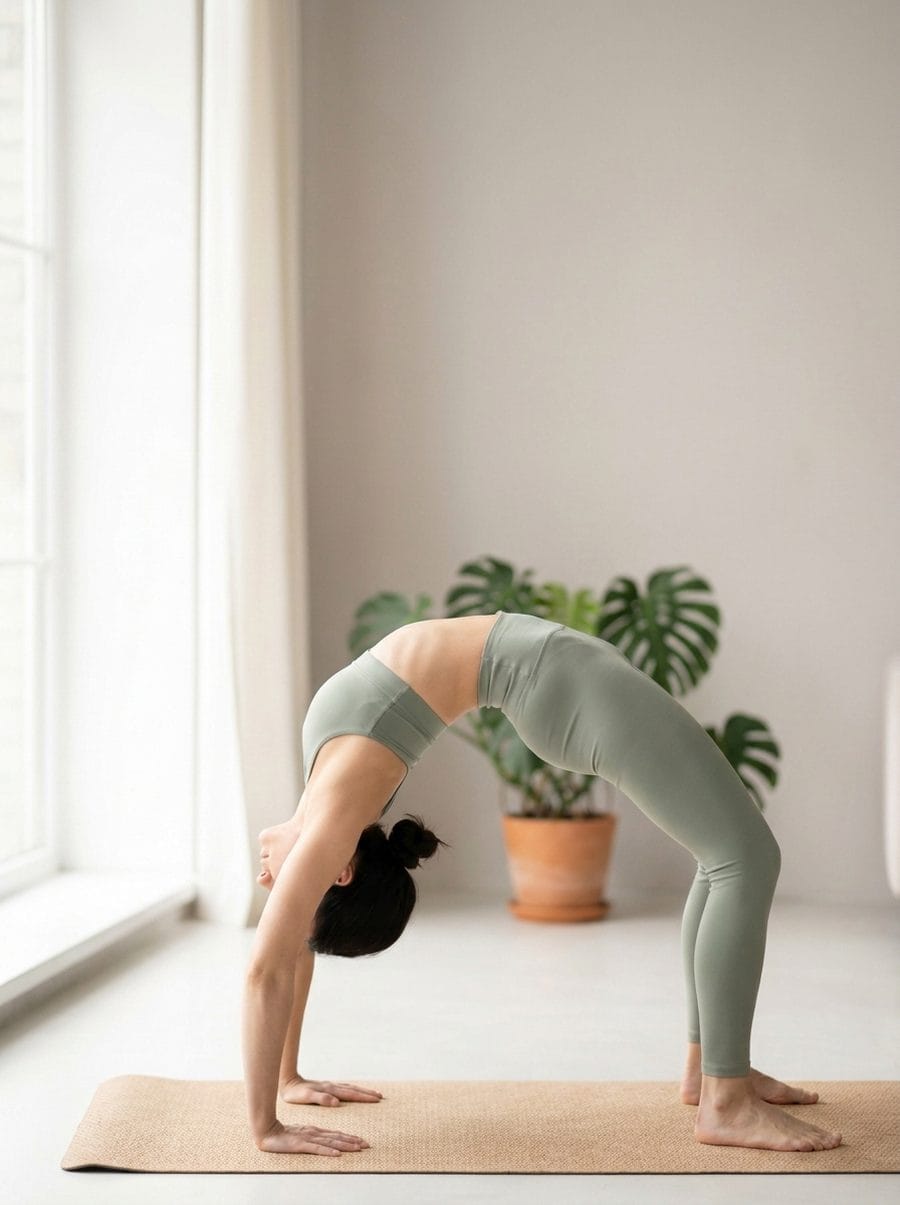
A backbend looks like a playground trick, but for an adult body it ranks among the toughest poses in yoga. To push up into a full backbend without your lower back paying for it, you need a mobile upper back, open shoulders and hips, and strong glutes and arms.
This guide lays out a gradual path from Sphinx Pose to Wheel Pose, 10 backbend poses with photos, a 20-minute routine and an honest list of when you shouldn't backbend at all.
Who should skip a full backbend
First things first. Wheel Pose, the full backbend you may remember from gymnastics, is a level 3 (advanced) pose in the app. It's off the table if your back, shoulders or wrists are injured, with high blood pressure and during pregnancy, and it should never be done without a warm-up.
Bow Pose and Camel Pose are also ruled out with high blood pressure and spinal disc herniation, Cobra and Locust are out for anyone whose lumbar disc has herniated, and Bridge Pose whenever the neck is injured or the lower back is acting up. Puppy Pose is out if a shoulder is hurt, and Sphinx is out during sharp, acute pain low in the back.
If you have a spine diagnosis or high blood pressure, get your doctor's OK before your first attempt. Stop right away and get medical help if, during or after a backbend, you feel pain shooting into an arm or leg, numbness, weakness, a sudden severe headache or strong dizziness.
Bridge vs. backbend: what's the difference
In yoga these are two separate poses, and it pays not to mix them up.
- Bridge Pose (Setu Bandha Sarvangasana). You lie face up, plant both feet and raise your hips, so your shoulders and feet carry the weight. It's a level 1 pose. The glute bridge you know from the gym is its closest relative.
- Wheel Pose (Urdhva Dhanurasana), the full backbend or gymnastics bridge. Your hands and feet press into the floor, arms straight, body arched like a wheel. It's a level 3 pose.
That's why Bridge Pose works as the last step before Wheel.
What a full backbend takes
Wheel Pose relies on three areas of mobility plus strength. Your upper back needs to arch, your shoulders need to open overhead, and the fronts of your hips need to lengthen. Glutes and legs drive the pelvis up, and your arms straighten under your body weight.
When one link is missing, the bend goes wherever it's easiest, which is usually the lower back. That's why preparation matters more than the number of attempts.
How to do a backbend in 5 steps
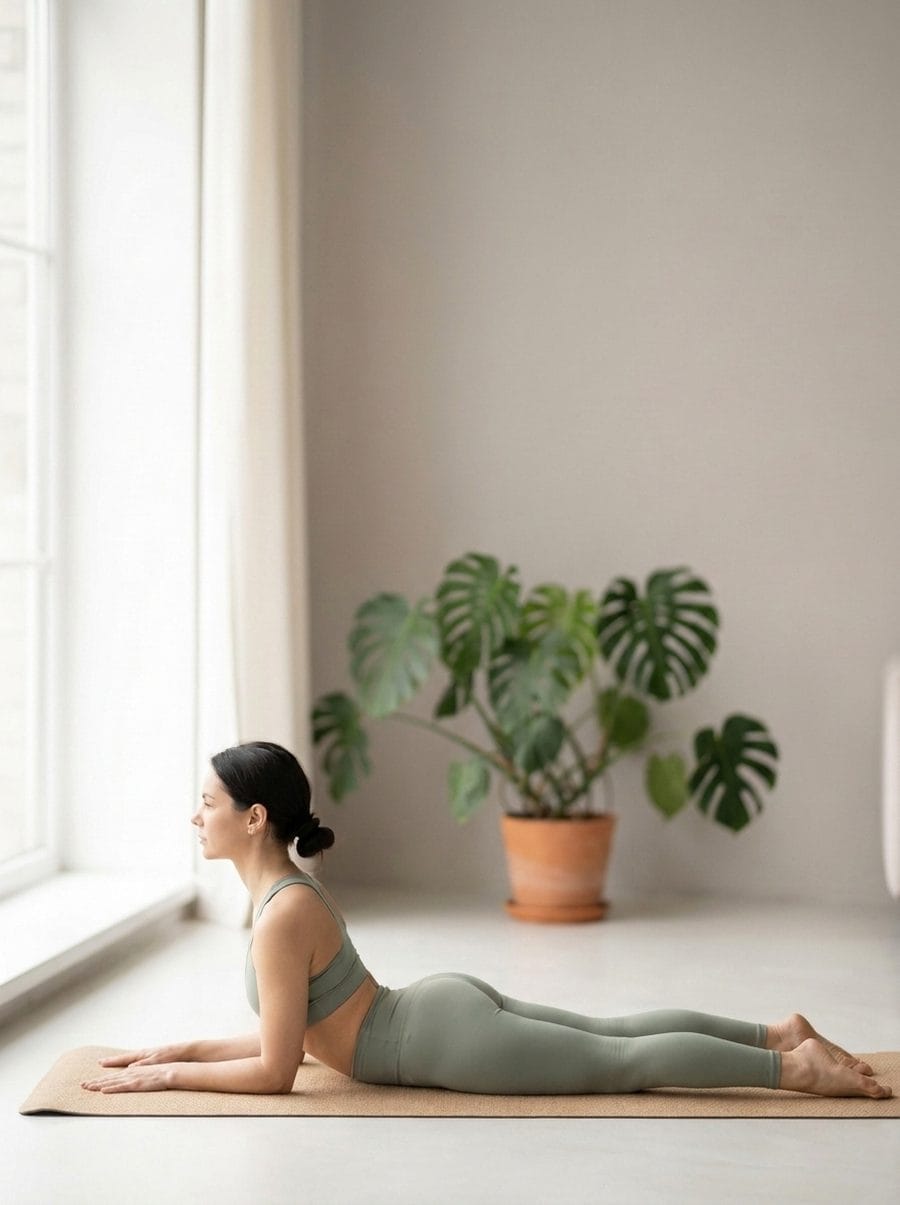
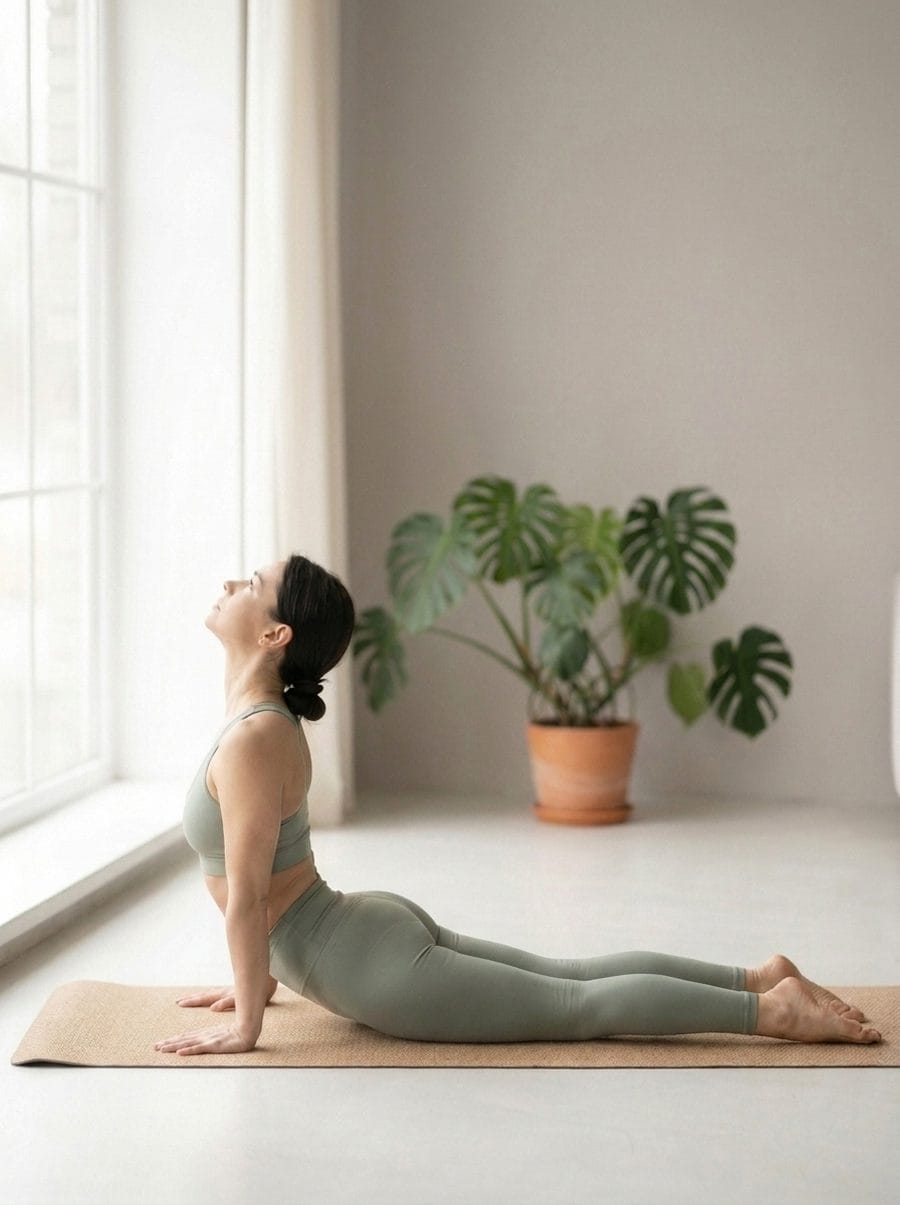
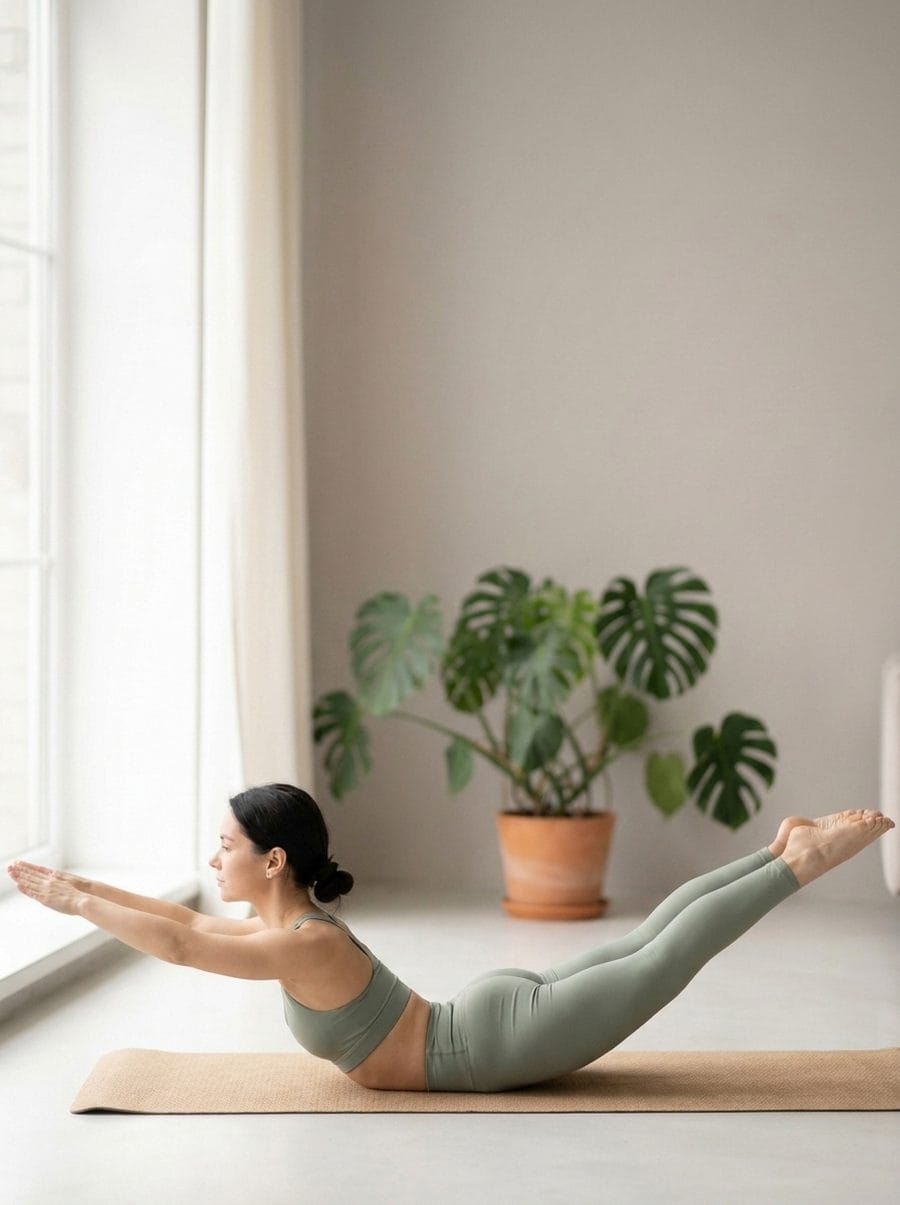
Step 1. Backbends on your belly
Sphinx Pose gives you the gentlest arch, resting on your forearms. Cobra Pose lifts the chest higher, and Locust Pose makes the back muscles work without help from your hands. Keep your pubic bone on the mat and open the chest forward rather than crunching the lower back.
Step 2. Hips and shoulders
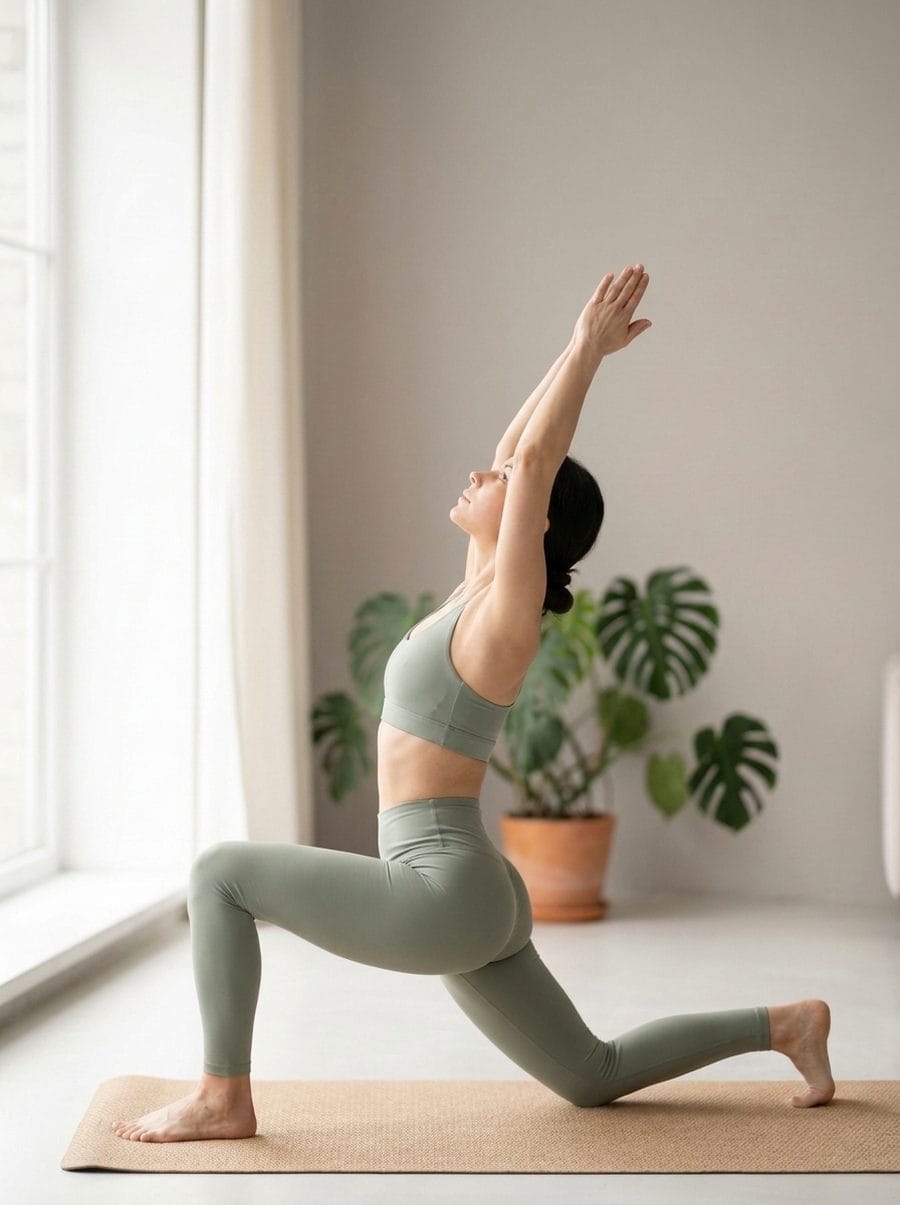
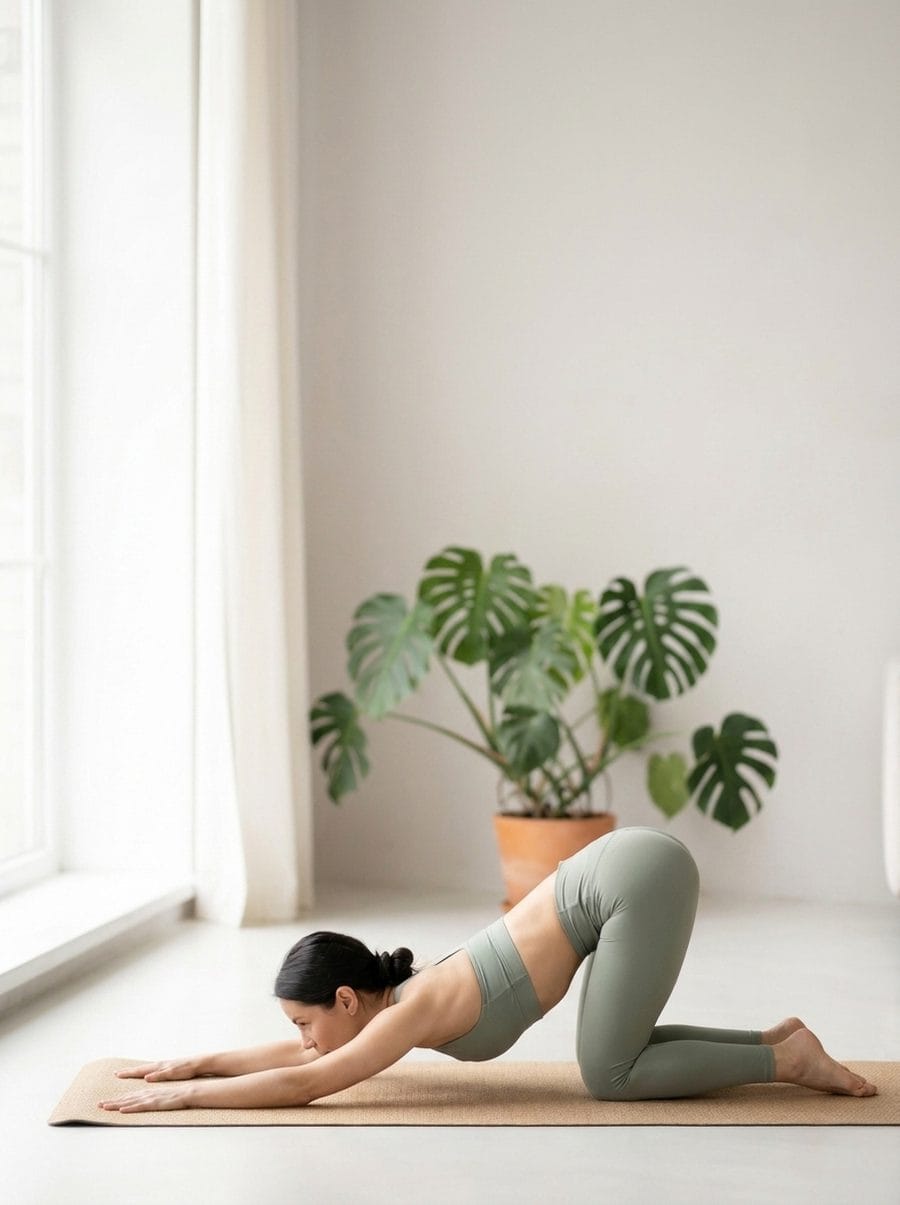
Low Lunge lengthens the hip flexors, which spend a day at the desk pulling your pelvis forward. Puppy Pose opens the shoulders and upper back while sparing the lower back.
Step 3. Bow Pose and Camel Pose
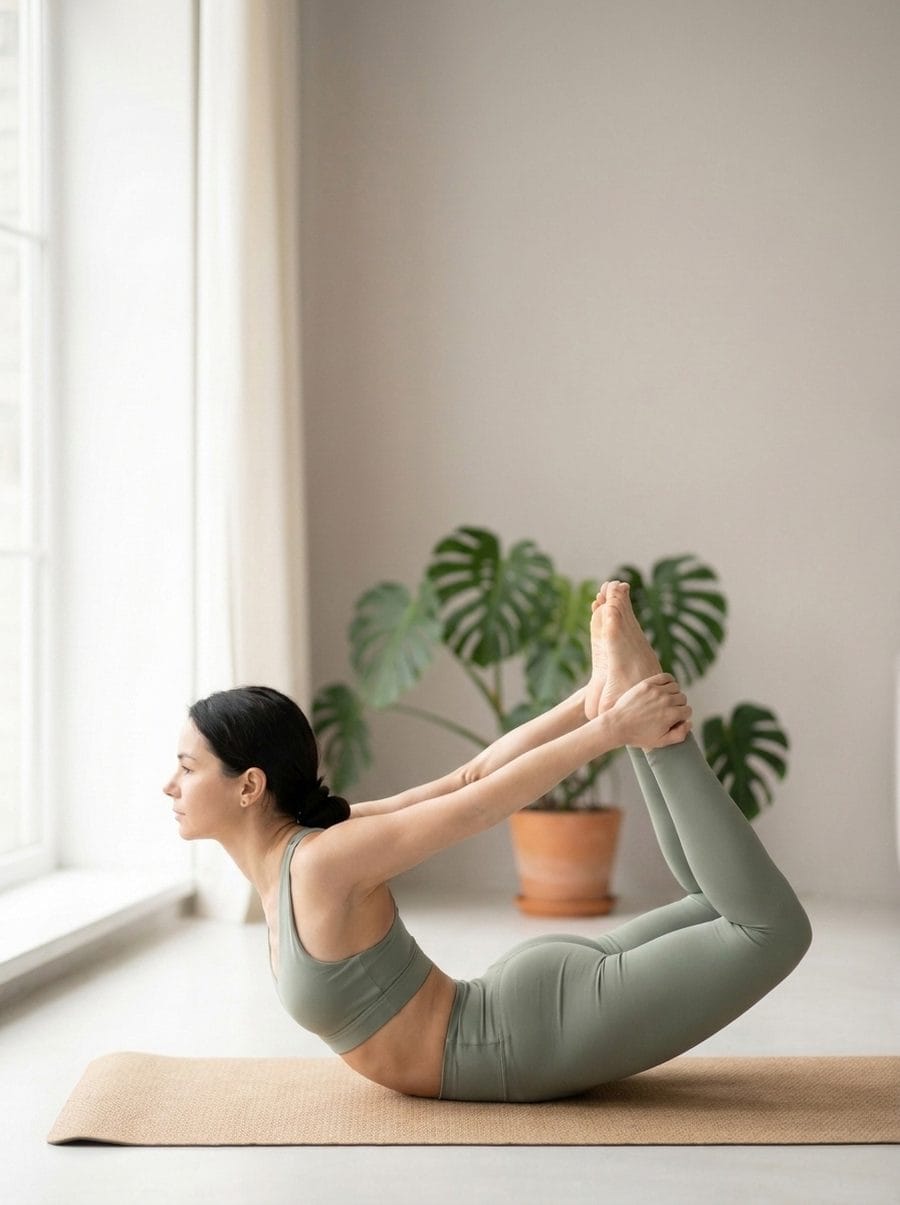
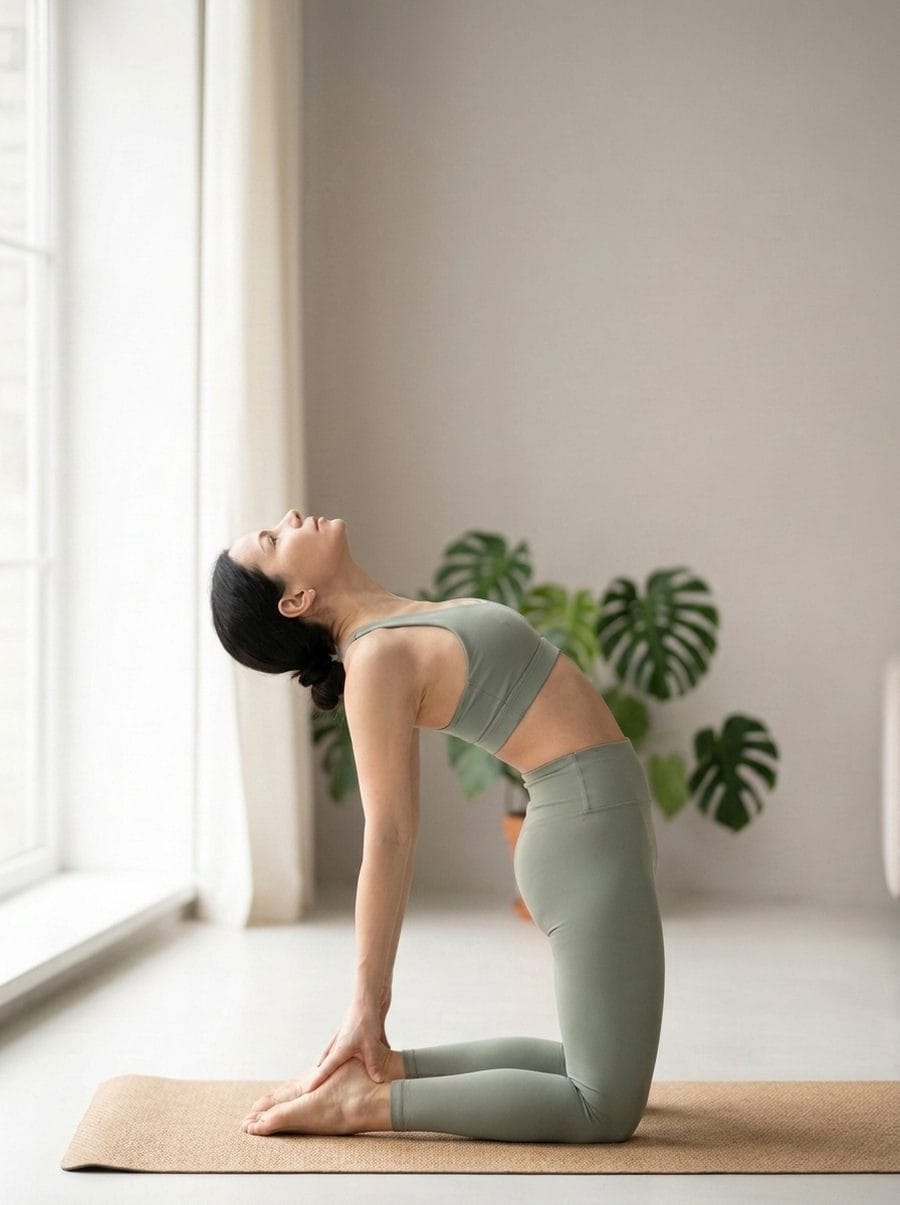
In Bow Pose, the lift comes from your legs pressing into your hands, not from pulling with your arms. In Camel Pose you're up on your knees, thighs stay vertical, and the arch grows out of your chest. If you're new to it, keep your palms on your lower back instead of reaching for your heels.
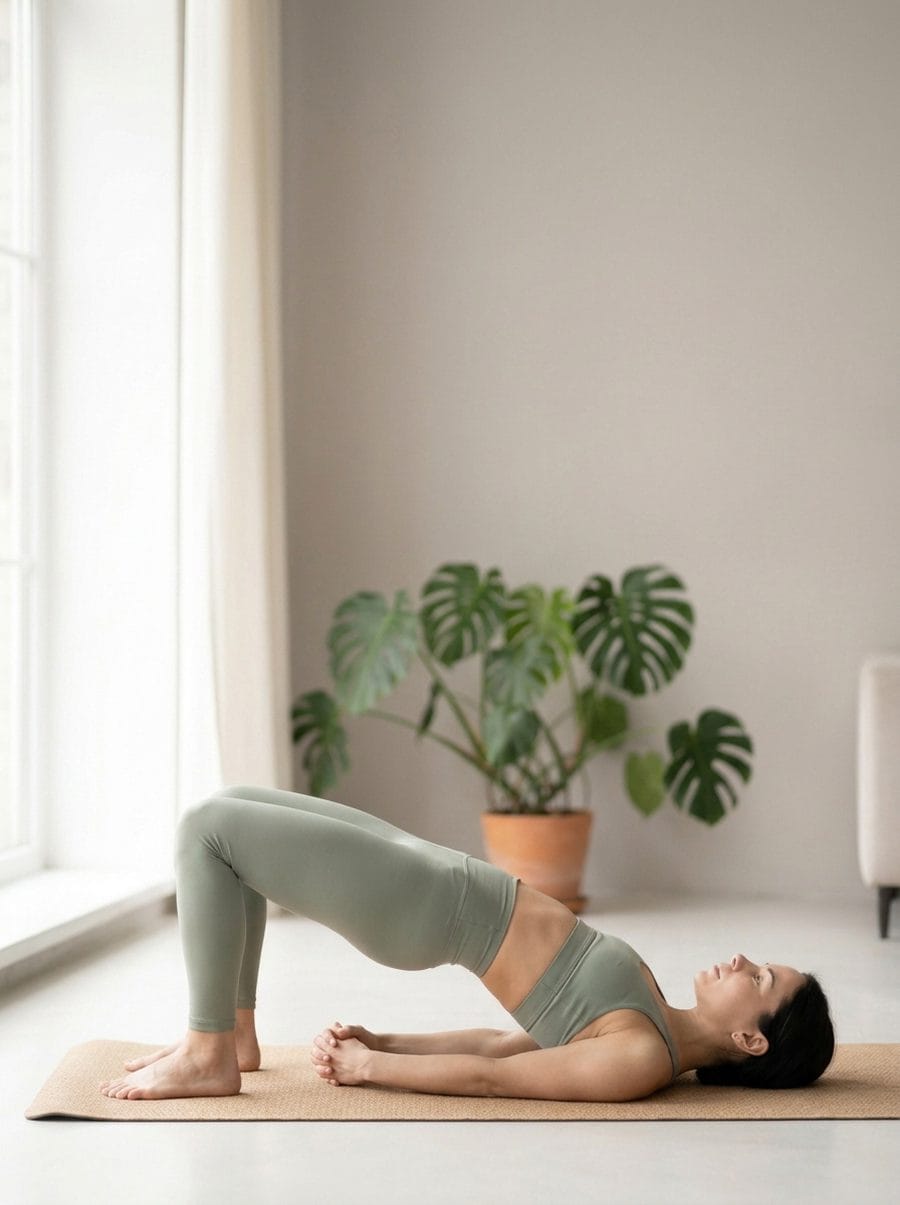
Step 4. Bridge Pose
Place your feet about as wide as your hips, near your seat, with knees pointing straight ahead. As you breathe in, lift your hips so your shoulders and feet hold the weight while your neck stays relaxed. Once Bridge Pose feels steady, clasp your hands under your back to open the chest further.
Step 5. Wheel Pose from the floor
This is how to do a backbend from lying down. Only try it after a warm-up.
- Lie on your back with knees bent and heels drawn in near your hips.
- Place your palms by your ears, fingers pointing toward your shoulders.
- As you breathe out, lift your hips, then straighten your arms, pushing the floor away with hands and feet.
- Let your head hang freely and keep breathing evenly. The app's base hold is 15 seconds.
- To come down, tuck your chin, lower your back slowly to the floor and hug your knees in.
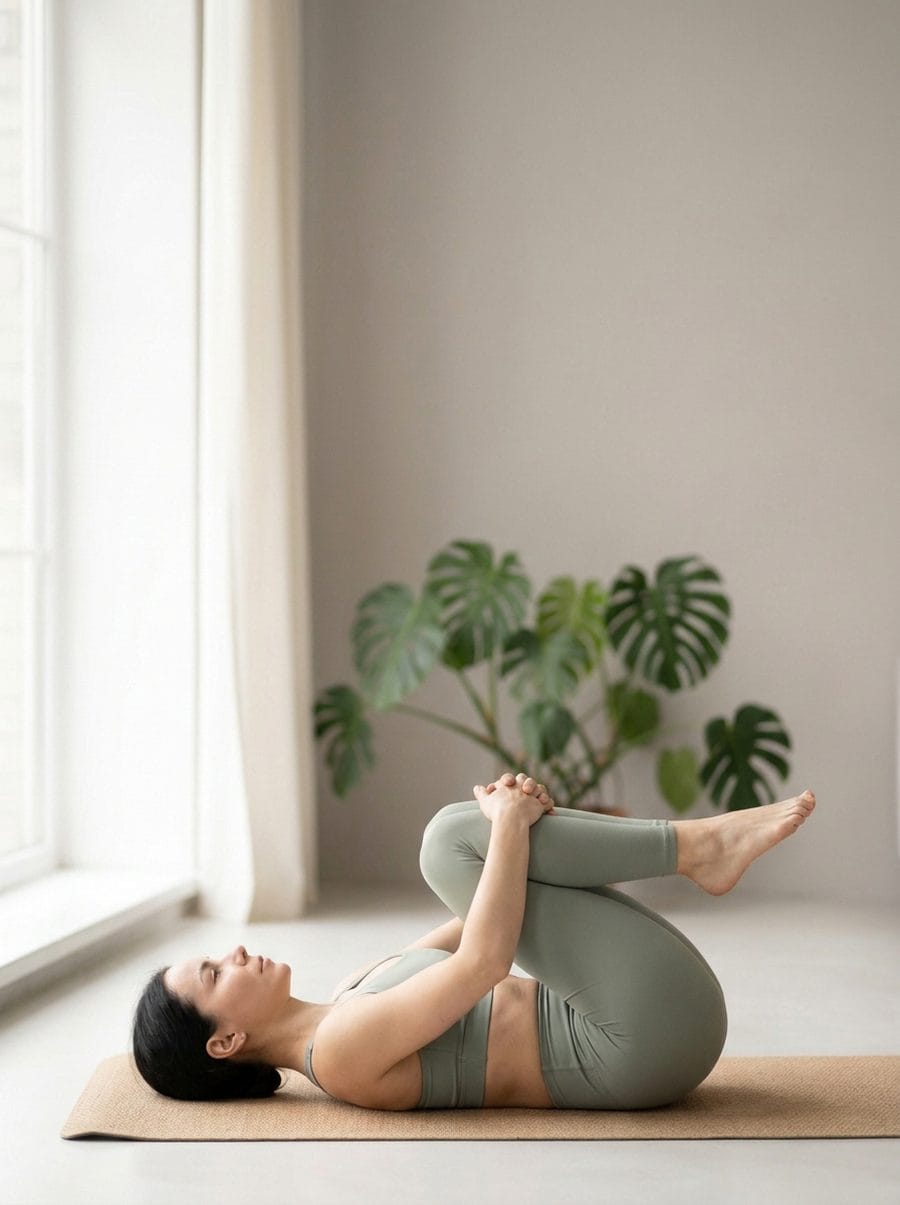
If your arms won't straighten, stay with Bridge Pose and build shoulder strength in Downward-Facing Dog and Plank Pose. Keep knees and feet parallel: when they splay out, the load slides into the lower back.
Backbends & Opening: a 20-minute backbend sequence
This program takes you from Sphinx to Wheel in 20 minutes. Two rounds of Sun Salutation lead into belly backbends, then Camel and Reclining Hero, then Bridge and Wheel. Fish Pose follows with a softer chest opening, and Knees-to-Chest, Supine Twist and Child's Pose come after it, and five minutes of Savasana round it off.
It's rated intermediate, but Wheel is an advanced pose: until it comes, linger in Bridge instead.
The routine doesn't suit you as a whole with high blood pressure. In that case leave out Bow, Camel, Wheel and Fish, along with Locust.
Deep Backbend: the next level
Once Wheel Pose feels solid, the Deep Backbend program is the next step. It runs 35 minutes with 38 positions including Savasana, and it peaks with One-Legged King Pigeon, the backbending Pigeon Pose and Wheel. The program is rated advanced and isn't meant for anyone with high blood pressure.
Backbend from standing
Dropping back into Wheel from standing is harder still, and the app doesn't include that transition. Work on it only once your Wheel from the floor is reliable, and with an experienced teacher spotting you. Walking your hands down a wall helps you feel the movement, but it's no replacement for the groundwork.
Timelines vary a lot. Some people push up into a backbend after a few weeks of practice, while others need months, and promises of a backbend "in 5 minutes" only hold true for people who've done a backbend before. Consistency beats stubbornness here: a couple of backbend sessions per week, always followed by counterposes.
Pose cautions in this article
- Acute lower back pain (Sphinx Pose)
- Lumbar disc herniation (Cobra Pose, Locust Pose)
- Pregnancy (Cobra Pose, Locust Pose, Bow Pose, Wheel Pose)
- Flare-up of peptic ulcer disease (Cobra Pose)
- High blood pressure (Locust Pose)
- Knee injuries — place a blanket under your back knee (Low Lunge)
- Lower back pain — don't deepen the backbend; keep your torso upright (Low Lunge)
- Shoulder injuries (Puppy Pose)
- Spinal disc herniation (Bow Pose, Camel Pose)
- Hypertension (Bow Pose, Camel Pose, Wheel Pose)
- Flare-ups of digestive disorders (Bow Pose)
- Migraines (Camel Pose)
- Neck injuries (Bridge Pose)
- Flare-up of lower back pain (Bridge Pose)
- Back, shoulder, or wrist injuries (Wheel Pose)
- Don't practice without warming up (Wheel Pose)
- Pregnancy from the second trimester onward — take your knees wider than your belly or skip the pose (Knees-to-Chest Pose)
This site is for general information and is not medical advice. If you have pain, an injury, a chronic condition, or are pregnant, check with a qualified professional before practicing.
Questions
Can you learn a backbend after 40? Yes, as long as nothing on the list above applies to you. It will take longer, so spend more time in Bridge Pose and the belly backbends, and don't force Wheel.
Why does my lower back hurt in a backbend? Usually there isn't enough mobility in the chest and shoulders, or your feet and knees are drifting apart. Go back to Bridge and the prep work. If the pain doesn't settle, see a doctor.
How do I do a backbend with weak arms? Stay with Bridge Pose and strengthen your shoulders in Downward-Facing Dog and Plank. Don't jerk your arms straight: Wheel asks for a smooth push away from the floor.
Are backbends safe with high blood pressure? No. In the app, Wheel, Bow, Camel and Fish are all excluded with high blood pressure. Talk to your doctor before trying even gentle ones like Sphinx.
Sources
- Pose technique, levels and cautions, and sequence contents: the Hatha Yoga app. More on the How We Prepare Our Content page.
Read next
- Yoga for Arthritis and Osteoporosis: How to Protect Your Joints and Bones7 min read
- Ashtanga Yoga Explained: The Series, the Breath and the Difference from Hatha6 min read
- Ayurveda Explained Simply: The Basics and a Daily Routine (Dinacharya)5 min read
- Balance Exercises: 10 Yoga Poses for Balance and Stability7 min read