 Hatha Yoga
Knees-to-Chest Pose
Apānāsana
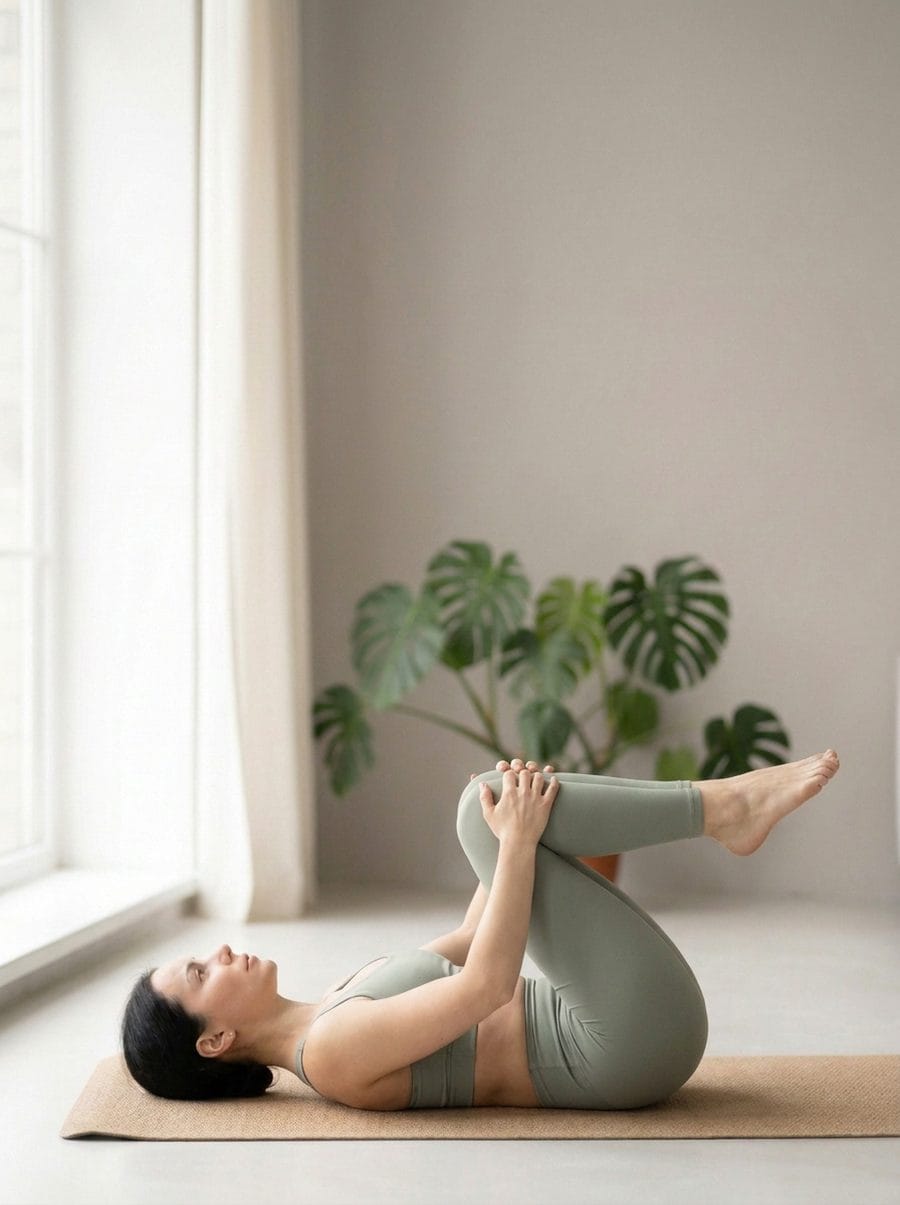
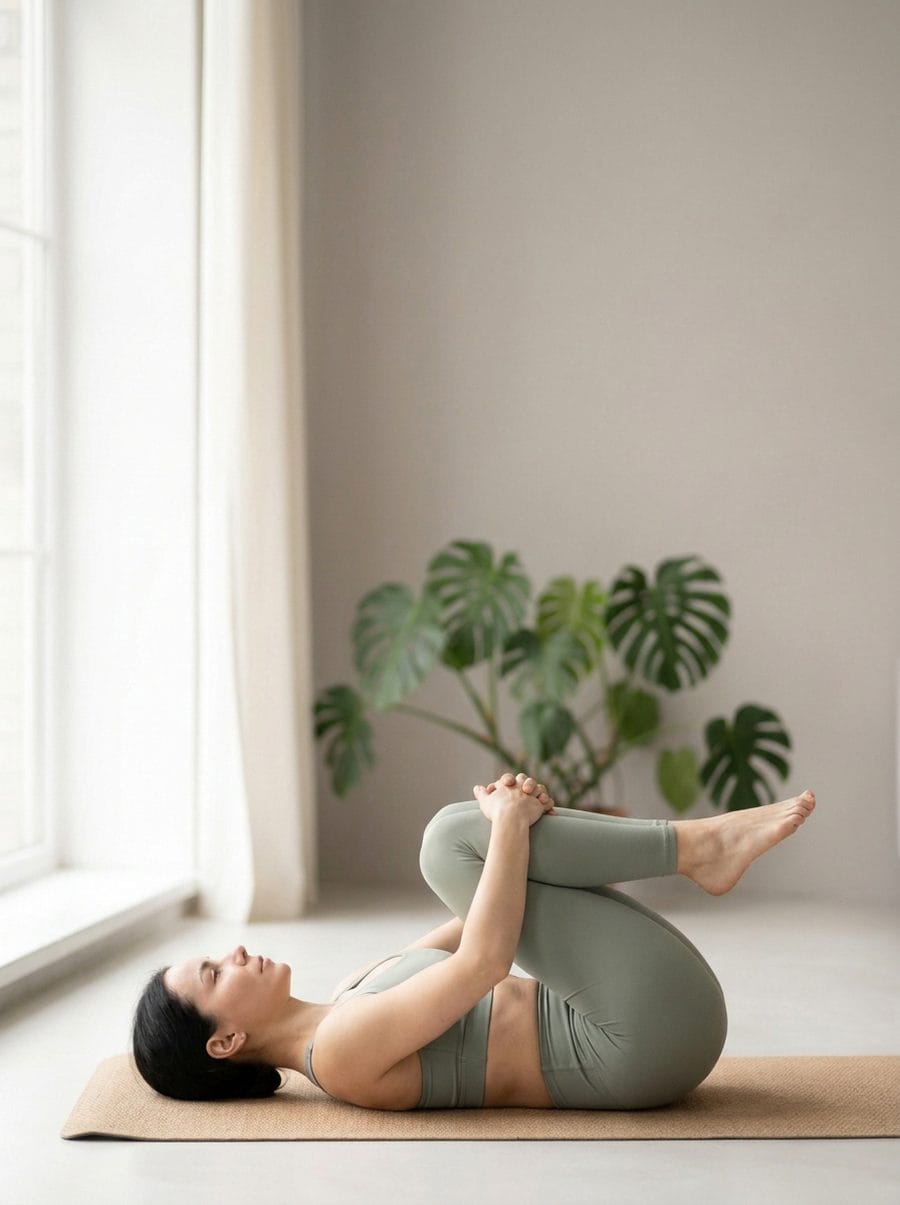
Apanasana, or Knees-to-Chest Pose, is an uncomplicated pose on your back: you draw your bent legs in toward your belly and wrap your arms around them. The name comes from "apana," the yogic term for the downward-moving current of energy.
The app uses it in 15 sequences and lists it as the counterpose for 16 asanas, from Bridge and Fish Pose, the backbend on your elbows, to the middle splits.
How to do it
- EnterLying on your back, draw both knees to your chest and wrap your arms around them.
- HoldGently hug your knees in as you exhale, and release them slightly as you inhale. Your lower back spreads out along the floor. You can gently rock from side to side.
- ExitRelease your knees and stretch your legs out along the floor.
More detail
The most comfortable grip is on your shins, just below the kneecaps. If your knees don't like bending all the way, hold behind them instead. The back of your head and your shoulders stay down, chin slightly tucked. The movement is small: on the exhale your knees come a little closer, on the inhale they drift a little away, and your arms never fully straighten.
You can also work one leg at a time while the other lies long on the floor. Rocking from side to side lets your back roll gently over the mat.
Benefits
Releases tension in the lower back; a counterpose after backbends.
Apanasana eases your lower back and returns your spine to neutral after backbends and strength work. There's no effort and no balance involved, so the pose suits evenings well: it's part of the Before Bed sequence, for example. A slow exhale that draws your knees in helps you wind down before Savasana.
Cautions
- Pregnancy from the second trimester onward — take your knees wider than your belly or skip the pose
This site is for general information and is not medical advice. If you have pain, an injury, a chronic condition, or are pregnant, check with a qualified professional before practicing.
Common mistakes
- Lifting your head to touch your forehead to your knees. Your neck should rest.
- Hauling your knees in by force. The exhale does the work; your hands simply hold on.
- Raising your pelvis high off the floor. Let your sacrum stay heavy.
- Holding your breath at the bottom of the exhale.
Where it appears
- Healthy Back 15 min · Beginner
- Strength & Tone 25 min · Intermediate
- Classic Full Practice 50 min · Intermediate
- Before Bed 10 min · Beginner
- Backbends & Opening 20 min · Intermediate
- Advanced Intensive 35 min · Advanced
- Flow with the Breath 12 min · Beginner · voice-guided in the app subscription
- Low-Energy Day 14 min · Beginner · voice-guided in the app subscription
- First Balances 15 min · Intermediate · voice-guided in the app subscription
- Lower Back After Sitting 15 min · Beginner · voice-guided in the app subscription
- Power Wave 12 min · Intermediate · voice-guided in the app subscription
- Spine Wave 13 min · Intermediate · voice-guided in the app subscription
- Inversion Prep 25 min · Advanced · voice-guided in the app subscription
- Splits: Advanced Path 35 min · Advanced · voice-guided in the app subscription
- Deep Backbend 35 min · Advanced · voice-guided in the app subscription
Similar poses
Questions
Why do Apanasana after backbends? Backbends keep your lower back in extension, and Apanasana gently rounds it the opposite way. That's why sequences so often place it right after Bridge, Wheel or Fish.
Can I do Apanasana during pregnancy? From the second trimester, open your knees wider than your belly or skip the pose, as the app advises. Clear any practice during pregnancy with your doctor.
How long should I stay in the pose? It varies by sequence, from 25 to 75 seconds. It's also handy outside of practice whenever your back needs a break, say, in the morning before you get out of bed.
Updated: