 Hatha Yoga
Lower back after sitting
All on the floor: unload your lower back and wake up your hips
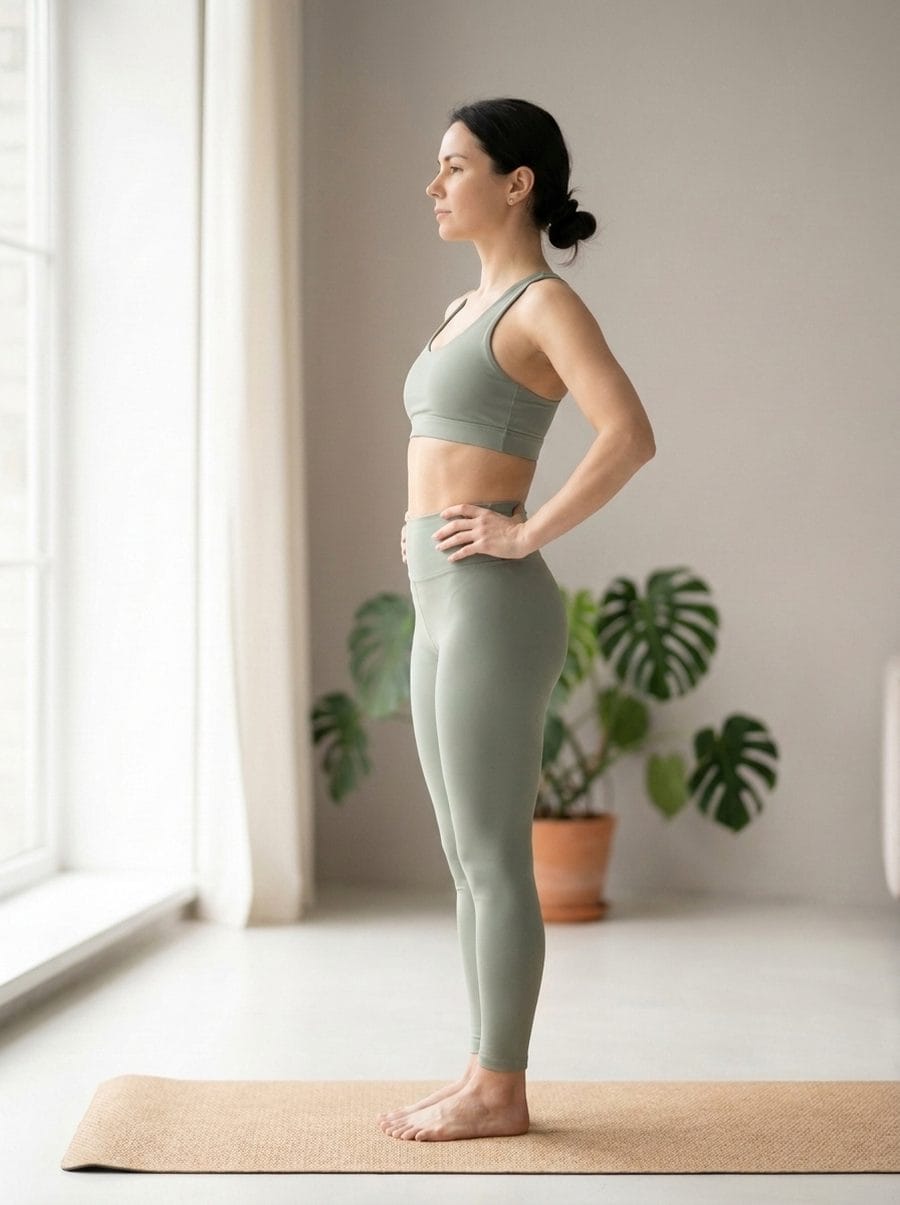
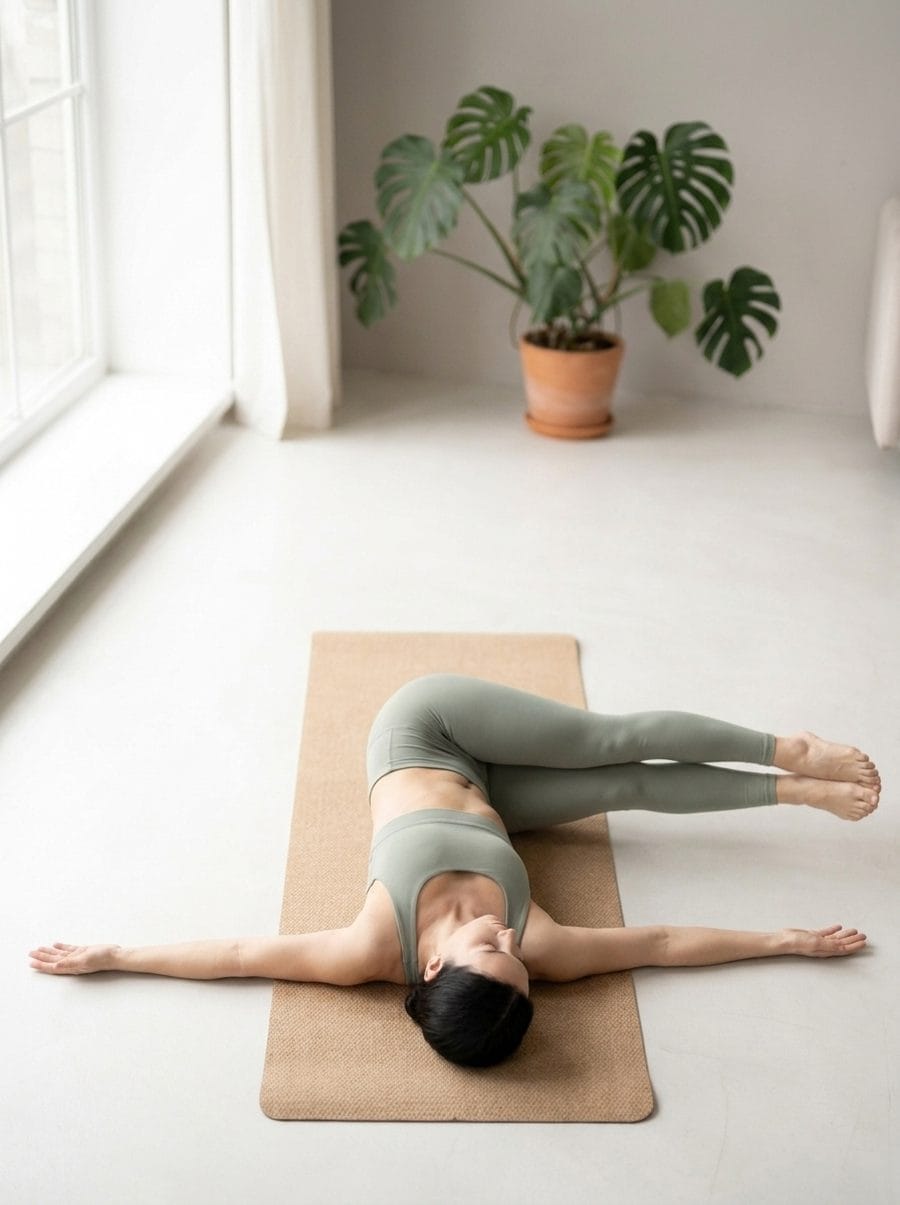
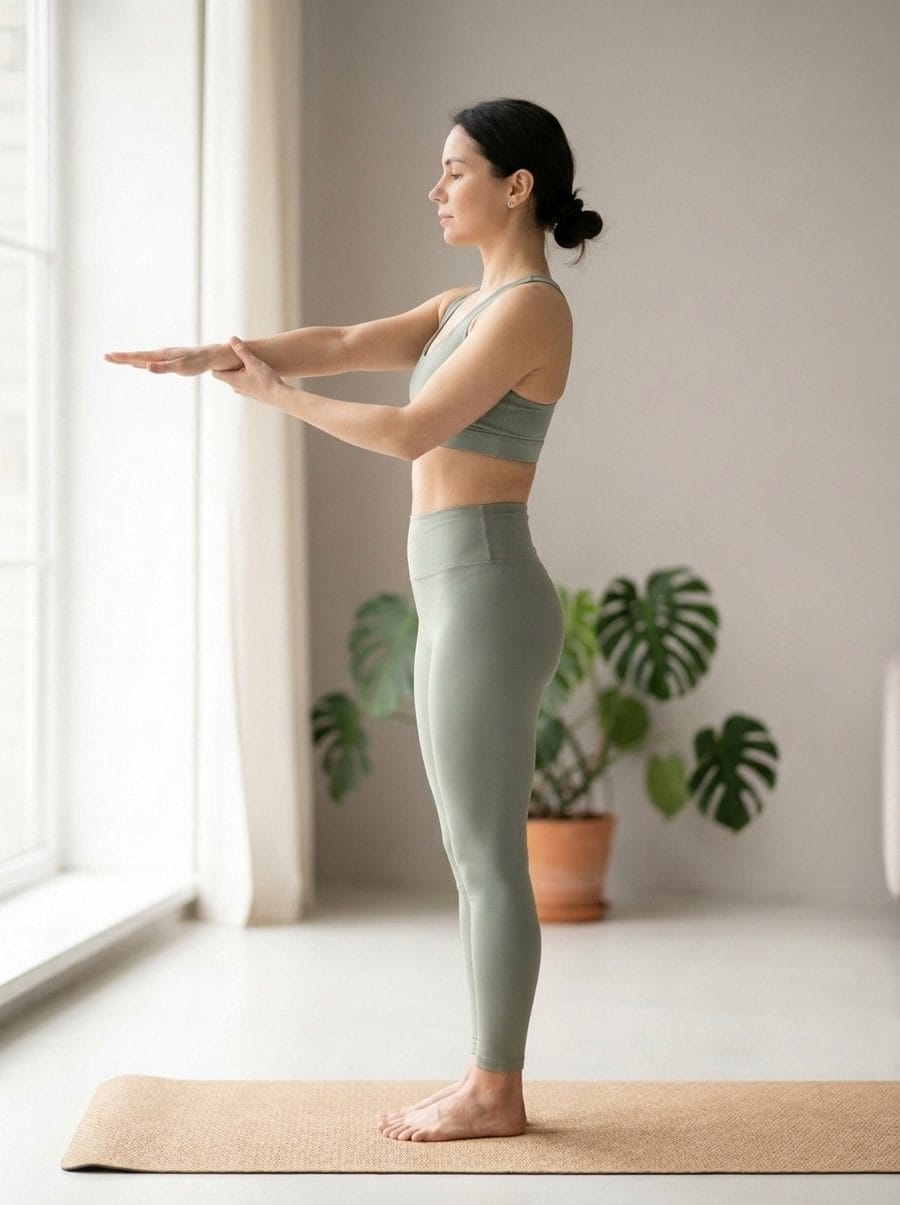
A sequence for people who sit a lot: all 14 poses are done on the floor, with no standing poses at all. First, gentle hip and knee movements take the load off your lower back, then your glutes and back muscles start working, and at the end you unwind your spine lying down.
In the app this sequence comes with voice guidance and a timer as part of the subscription. Here you can see the order of poses and follow it on your own.










Why this order
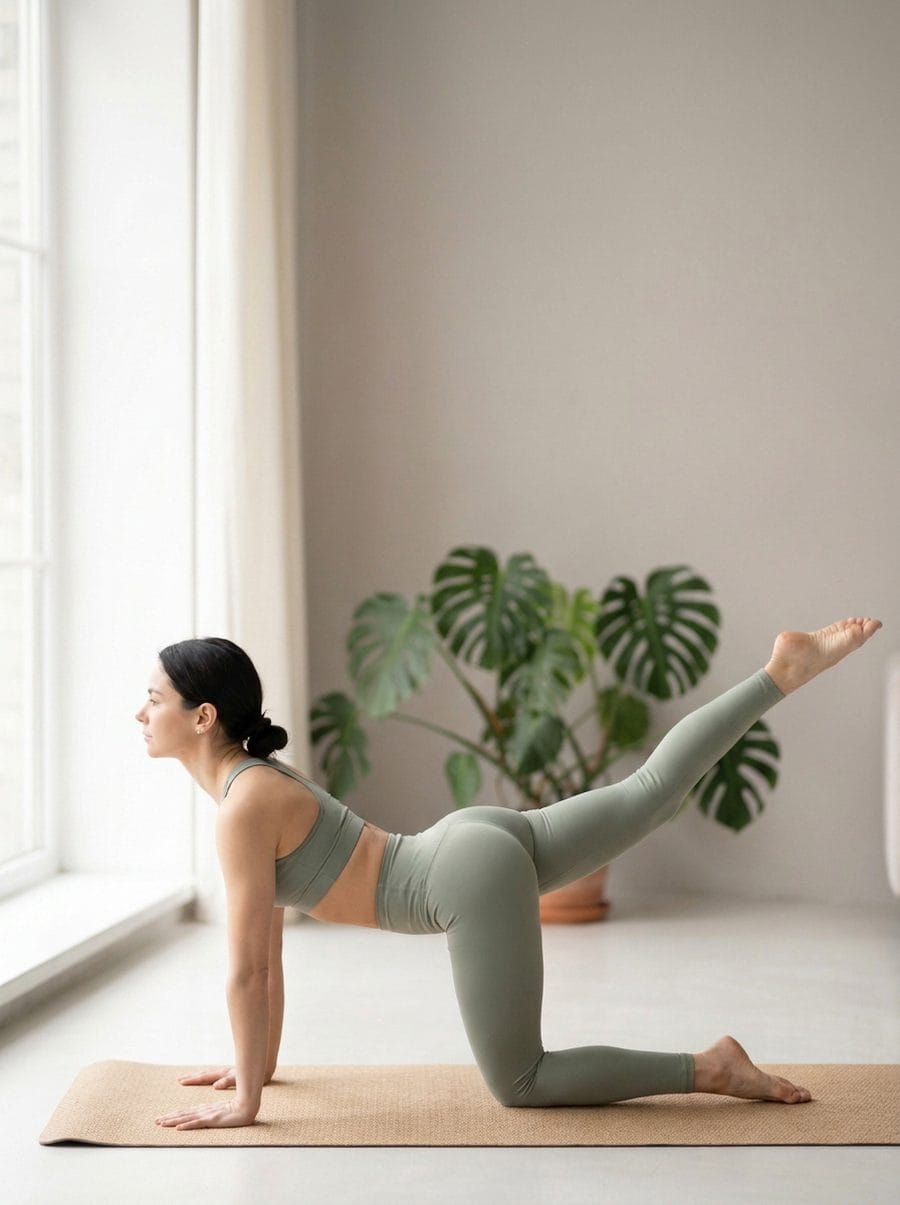
Hip Circles and Knees-to-Chest Pose gently get the lower back moving, while Supine Twist Flow and Bridge Flow warm up the back and glute muscles. Bird Dog teaches you to keep your back stable, and Low Lunge opens the front of the hip, which tends to shorten from sitting.
Locust Flow strengthens the back, and Child's Pose plus a reclined twist round off the practice before relaxation.
Cautions
- Pregnancy from the second trimester onward — take your knees wider than your belly or skip the pose (Knees-to-Chest Pose)
- Lumbar disc herniation (Supine Twist Flow, Locust Flow)
- Pregnancy (Supine Twist Flow, Locust Flow)
- Use a strap if your back lifts off the floor (Reclining Hand-to-Big-Toe Pose)
- Neck injuries (Bridge Flow)
- Flare-up of lower back pain (Bridge Flow)
- Acute wrist injuries (Wrist Warm-Up)
- Knee injuries — place a blanket under your knees (Tabletop Leg Lift, Bird Dog, Tabletop to Child's Pose Flow)
- Wrist injuries (Tabletop Leg Lift, Bird Dog)
- Knee injuries — place a blanket under your back knee (Low Lunge)
- Lower back pain — don't deepen the backbend; keep your torso upright (Low Lunge)
- High blood pressure (Locust Flow)
- Pregnancy — widen your knees (Child's Pose)
- Knee injuries (Child's Pose)
- Lumbar disc herniation — go more gently (Supine Twist with Eagle Legs)
This site is for general information and is not medical advice. If you have pain, an injury, a chronic condition, or are pregnant, check with a qualified professional before practicing.