 Hatha Yoga
Warrior III
Vīrabhadrāsana III
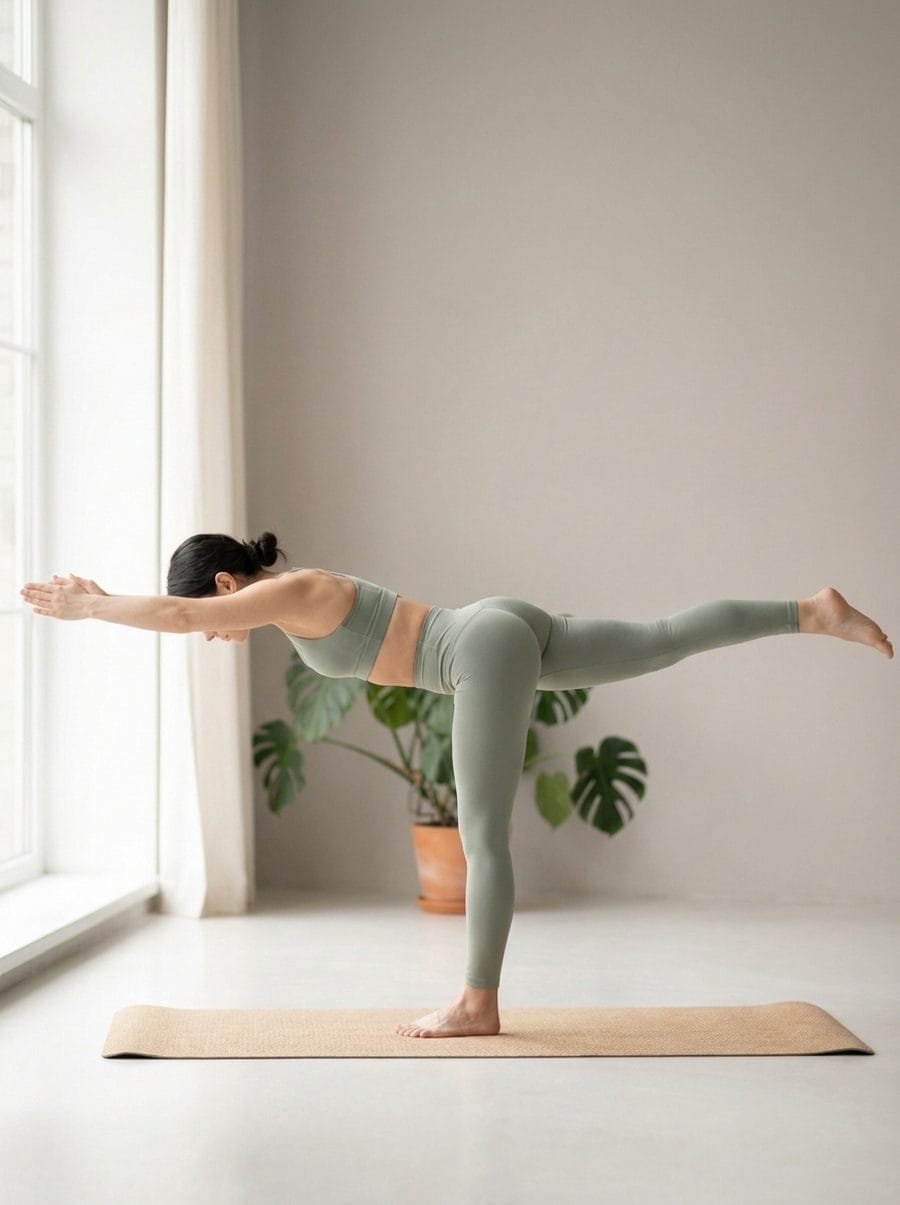
Warrior III, or Virabhadrasana III, is a one-legged balance: your torso tips forward, your other leg lifts back, and together they stretch into a line parallel to the floor. The shape looks like a letter T. It's rated Intermediate. The app uses Warrior III in four sequences, among them Strength & Tone and Balance & Focus, as well as in the Warrior's Path flow.
How to do it
- EnterShift your weight onto one leg and, keeping your torso straight, tilt forward, lifting your other leg back until it's parallel to the floor. Reach your arms forward, out to the sides, or alongside your body.
- HoldYour body forms one line from the crown of your head to the heel of your lifted leg. Hips level, toes of the lifted leg pointing down. Standing leg strong and almost straight.
- ExitSlowly lower your leg and lift your torso.
More detail
Picture a seesaw: your torso travels forward and down exactly as much as your back leg rises. Move slowly and as one piece, with no kink in your lower back. The finer point is your pelvis: both hip points face the floor, the lifted thigh doesn't roll open and the toes point down.
Keep a soft bend in the standing knee and your weight spread across the whole foot. You have three arm options: alongside your body is easiest, out to the sides adds stability, and reaching forward is hardest because the line gets longer.
Let your eyes rest on a spot on the mat just beyond your standing toes; the neck stays long. If balance is still tricky, the app suggests using a support: rest your hands on a chair back or a wall. At first you can lift your leg lower than parallel.
Benefits
Powerfully strengthens the legs, back, and stabilizing muscles.
Warrior III works your legs, back and the stabilizing muscles that keep your pelvis and torso balanced, and it works them hard. You can't hold it without a focused gaze and steady breath, which is why it also appears in the sequence built around balance and concentration.
Cautions
- High blood pressure
- Balance problems — use a support
This site is for general information and is not medical advice. If you have pain, an injury, a chronic condition, or are pregnant, check with a qualified professional before practicing.
Common mistakes
- Opening the hip. The lifted thigh drifts up and out and the line breaks.
- Dropping your chest below your hips. Torso and leg stay at the same height.
- Locking the standing knee. Straight, but not jammed.
- Craning your head up. Look down so the neck stays long.
Counterpose
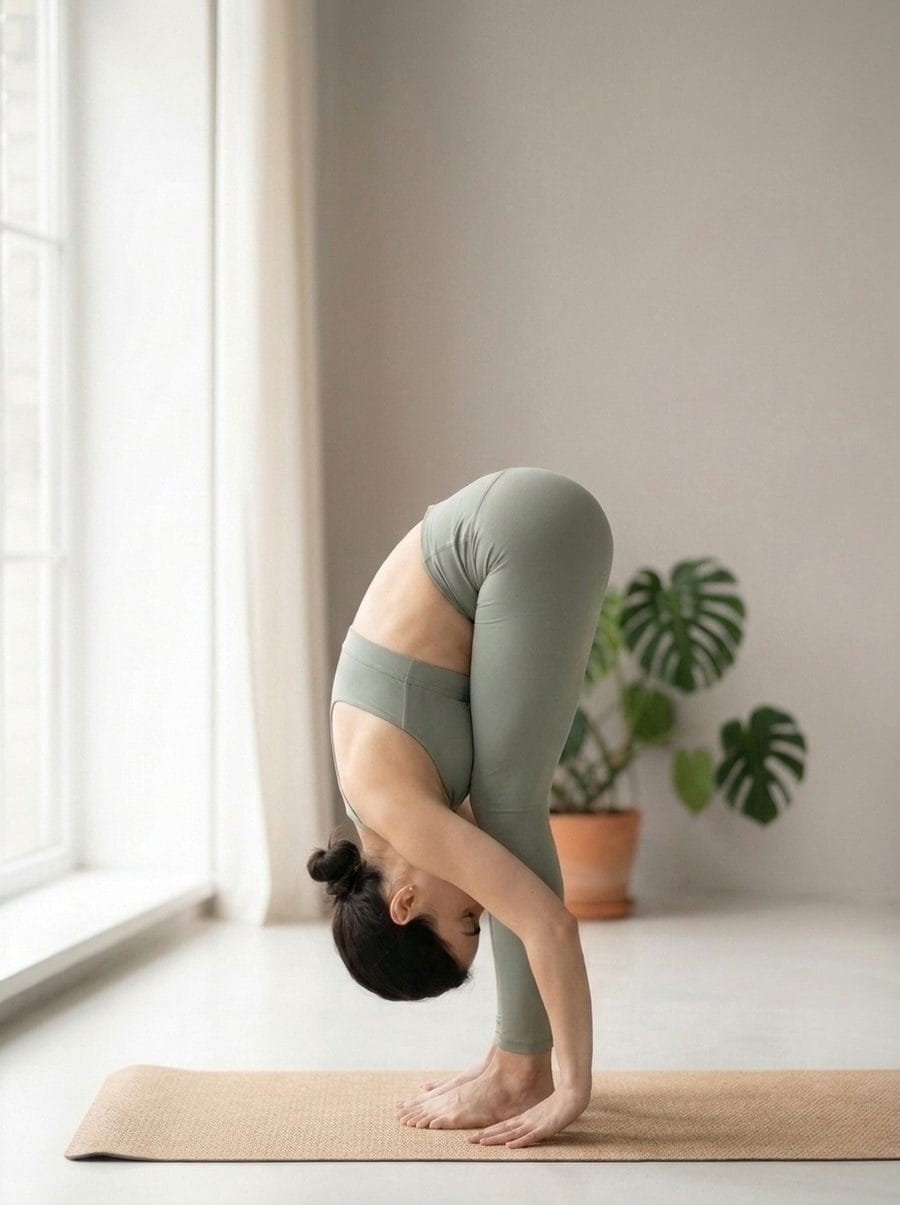
Where it appears
- Strength & Tone 25 min · Intermediate
- Balance & Focus 20 min · Intermediate
- Classic Full Practice 50 min · Intermediate
- Advanced Intensive 35 min · Advanced
- Warm-up: Warrior's Path Warrior strength across three body levels: the warrior is one step, not the whole round
Similar poses
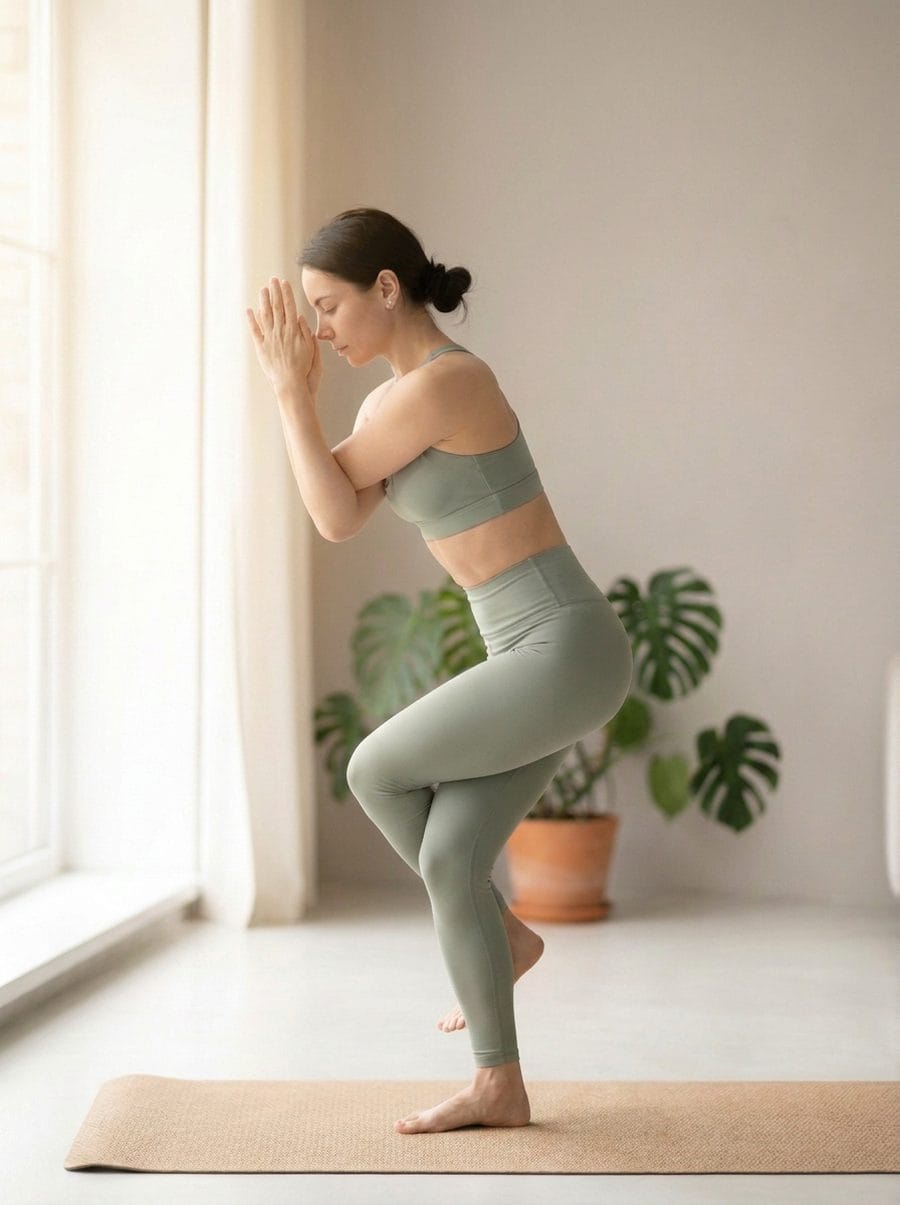
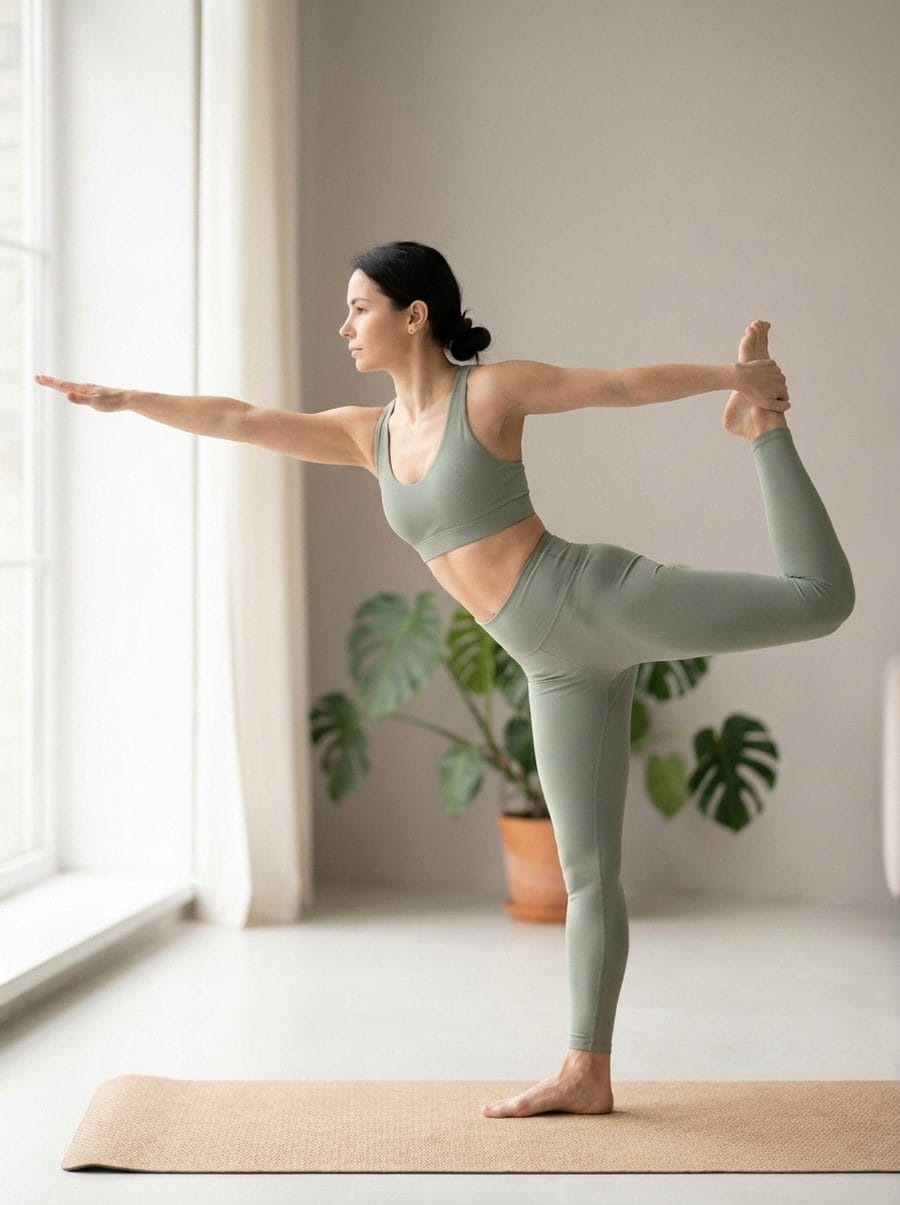
Questions
Who shouldn't do Warrior III? People with high blood pressure: for them the app says skip it. If your balance is unreliable, practice with a chair or wall for support, as the app recommends.
What should come before Warrior III? In the app's sequences it usually follows Warrior II or Tree Pose: your legs are warm and your balance is already switched on.
What's a typical Warrior III hold? The card gives 20 seconds per leg. Sequences nearly double that: 40 seconds in three of them and 35 in Classic Full Practice.
Featured in
Updated: