 Hatha Yoga
Half Lotus Tree Pose
Ardhapadma Vṛkṣāsana
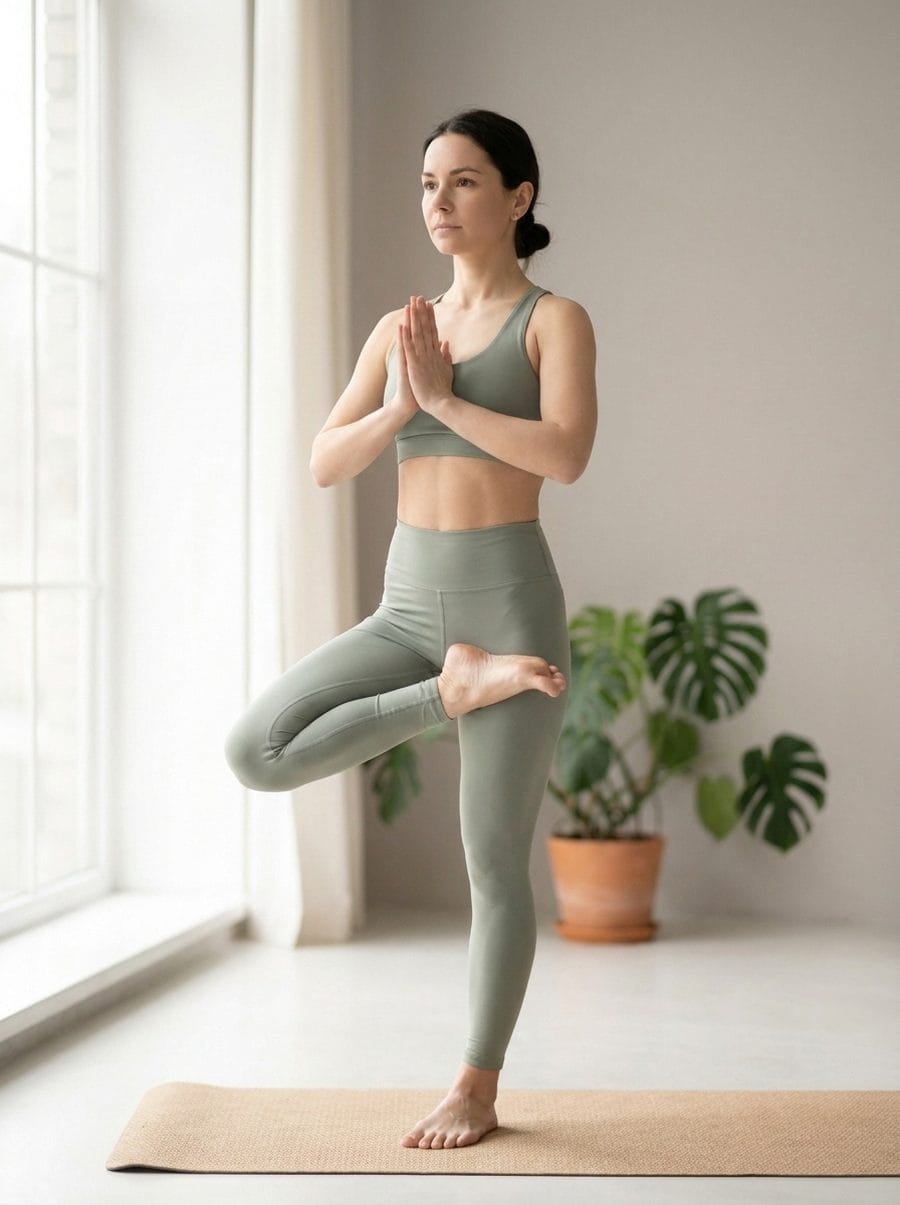
Ardha Padma Vrksasana, or Half Lotus Tree Pose, is a harder take on Tree Pose. The bent leg's foot rests sole up in the crease of the opposite hip, as in Half Lotus, hands joined at the breastbone. Balance meets a deep hip opening here.
It's rated intermediate. It isn't built into any app program; the pose library has it, 30 seconds per leg.
A variation of: Tree Pose
How to do it
- EnterStanding, shift your weight onto one leg. Place the other foot in the crease of your hip, sole facing up, as in Half Lotus. Bring your palms together at your heart.
- HoldKeep your standing leg strong, with the bent knee pointing down and out to the side. Reach up through the crown of your head and keep your gaze calm.
- ExitUse your hand to carefully release your foot, then lower your leg.
More detail
Test the leg seated first: if your knee settles without pain in Half Lotus Pose, you can move to the standing version. Standing on one leg, take the other foot in your hands and lay it high in the hip crease, sole facing up.
The rotation comes from the hip joint: the thigh turns out, the knee drops down and to the side, and the ankle doesn't sickle. The standing leg is strong, its knee unlocked. Join palms at the sternum and rest your eyes on one unmoving spot.
If the foot slips or the knee pulls, move the foot to the inner thigh as in regular Tree. Lift the foot down with your hand, slowly.
Benefits
A balance pose with a deep hip opening.
The pose pairs balance work with an opening of the bent leg's hip joint. Your whole weight rests on one leg and the tiny muscles of one foot while your torso learns to stay upright. For anyone working toward Lotus, it's a way to check hip mobility in an unfamiliar standing position.
Cautions
- Knee injuries
- Balance disorders
This site is for general information and is not medical advice. If you have pain, an injury, a chronic condition, or are pregnant, check with a qualified professional before practicing.
Common mistakes
- Hauling the foot up by force and wrenching the knee. It rises only as far as the hip joint allows.
- Pointing the bent knee forward. It aims toward the floor and outward.
- Sinking into the standing hip. Keep the pelvis even, left and right.
- Jamming the standing knee straight back. Keep a hint of softness behind it.
Similar poses

Questions
Who should avoid Half Lotus Tree Pose? Knee injuries and balance disorders both rule it out, so skip it.
Half Lotus Tree vs. regular Tree: what's the difference? In regular Tree the foot presses against the inner thigh or shin, and the knee hardly rotates at all. Here the foot rests on top of the thigh, sole up, so the hip opens more deeply and balancing is harder.
What does Ardha Padma Vrksasana mean? "Ardha" is half, "padma" lotus, and "vrksa" tree. Put together: Tree in Half Lotus.
Updated: