 Hatha Yoga
Yoga for Strength: Poses for Strength and Tone, Including Legs and Glutes
Hatha Yoga editorial team · Updated · 6 min read
Yoga isn't only about stretching and unwinding. In standing poses, planks and backbends your muscles work against your own body weight, and long holds make them work hard. This guide is upfront about how much strength yoga can build, then walks through 11 poses for legs, glutes, arms and back, two app routines of 25 and 12 minutes, and how to add load without getting hurt.
Is yoga good for strength?
The UK's NHS lists yoga among muscle-strengthening activities, alongside Pilates, body-weight exercises and working with weights. It advises adults to work all the major muscle groups at least twice a week: legs, hips, back, abdomen, chest, shoulders and arms.
Research backs this up, if modestly. In a 2015 controlled trial, 173 adults with an average age of 52 did hatha yoga for 12 weeks. Compared with a waitlist group, they improved on push-up and curl-up tests, along with flexibility and endurance.
For older adults the picture is more cautious: in a 2026 review, the benefit of yoga for leg strength was borderline once a statistical correction was applied.
So here's the bottom line. Yoga gives your muscles real work and pairs well with other training. If your goal is maximal strength or visible muscle size, though, yoga alone usually falls short, because body-weight load is harder to raise in small steps than the weight on a barbell.
What is strength yoga?
The name covers practice that puts muscle work first: long holds in standing poses, planks, transitions linked to the breath. In English-speaking countries a similar dynamic, vinyasa-based style goes by power yoga. For how slow-paced hatha compares with flowing vinyasa, see Hatha vs. Vinyasa.
Strength & Tone: a 25-minute strength yoga routine
This is the app's main strength program. After four rounds of Sun Salutation, the load moves through the whole body: Chair Pose and three Warriors for the legs, Plank, Side Plank and Boat Pose for arms and trunk, Locust and Bow for the back.
Child's Pose, Bridge and Knees-to-Chest follow, and the session ends in Savasana for five minutes. It's rated intermediate, and holds run up to 75 seconds.
11 yoga poses for strength and tone
Legs
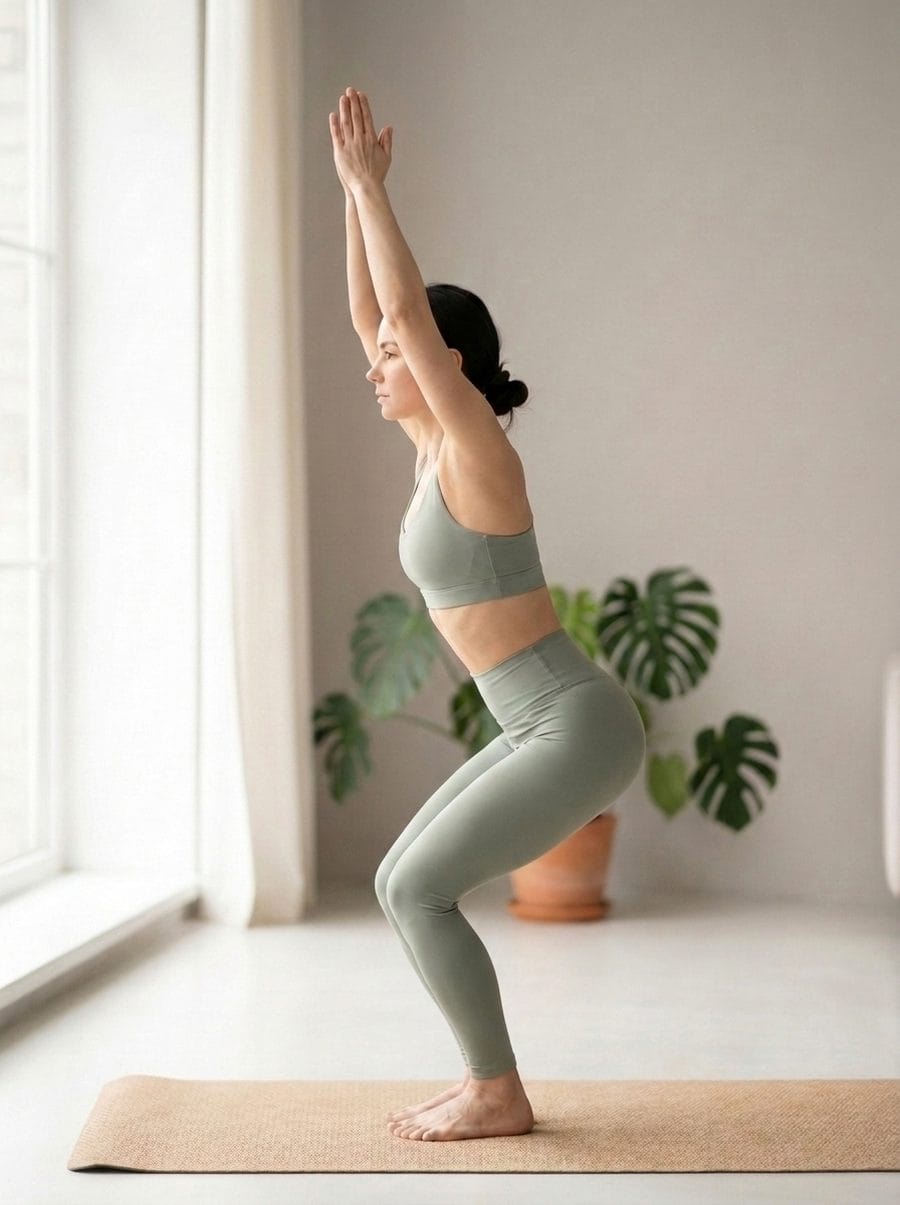
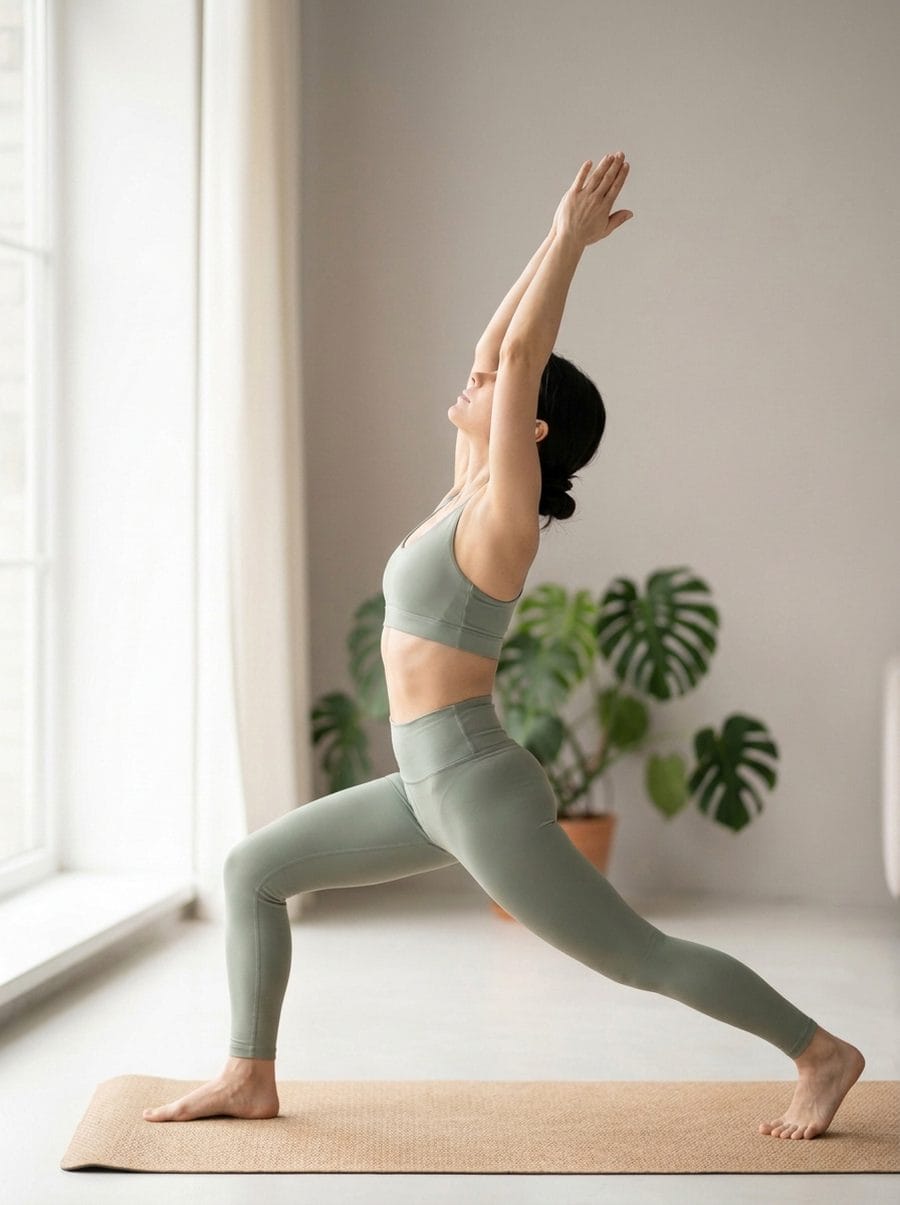
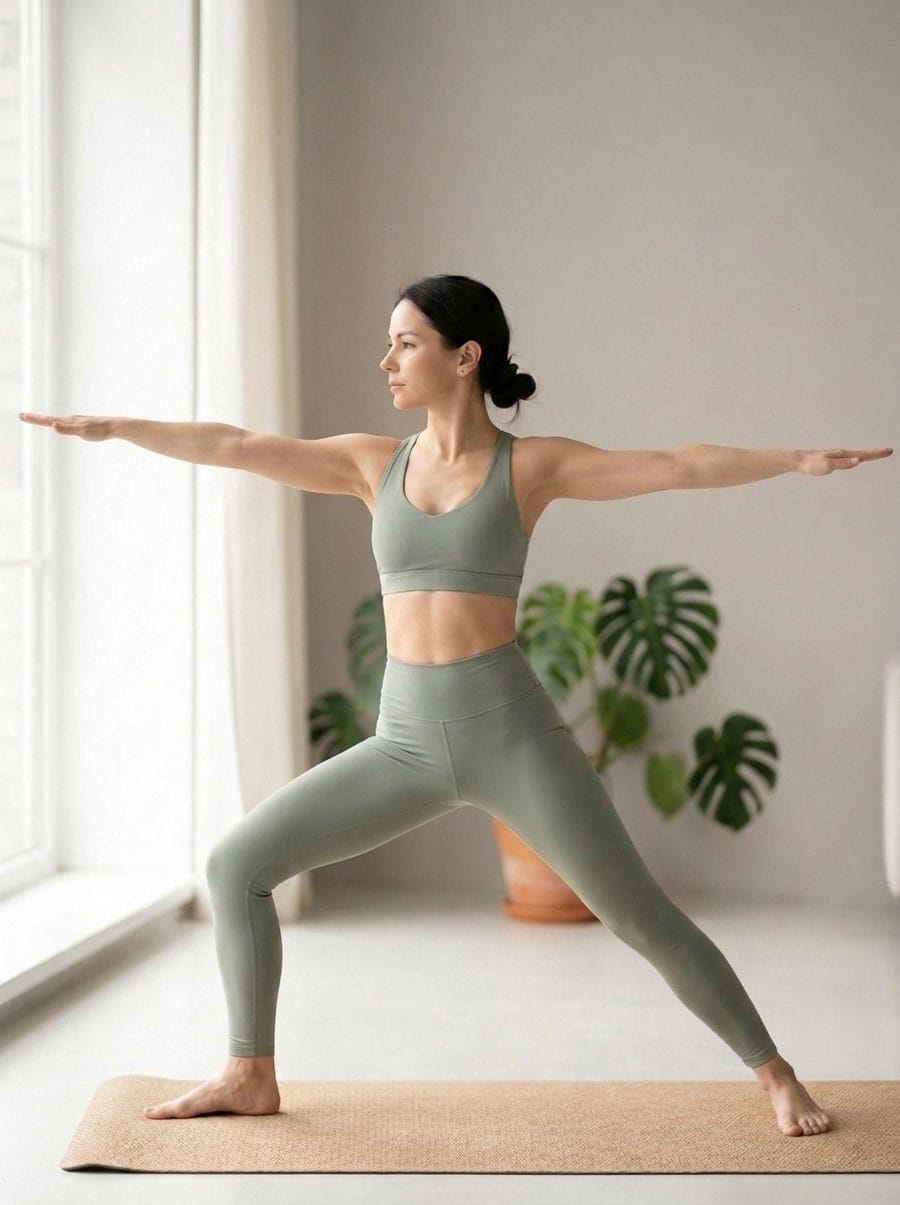
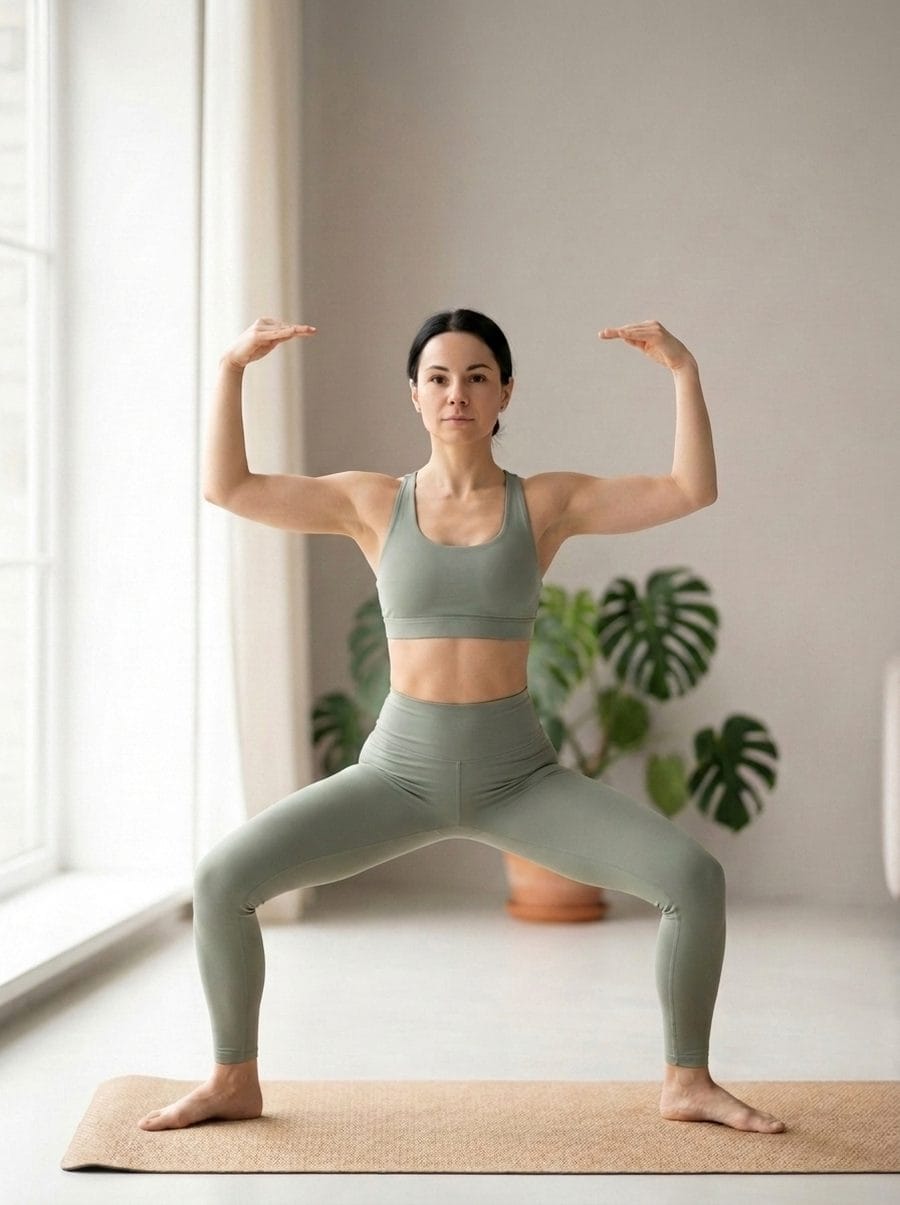
Chair Pose strengthens your thighs and glutes. Keep your weight toward your heels and make sure your knees stay over your feet rather than drifting past your toes. Warrior I and Warrior II build leg strength and stamina, and Goddess Pose loads the inner thighs.
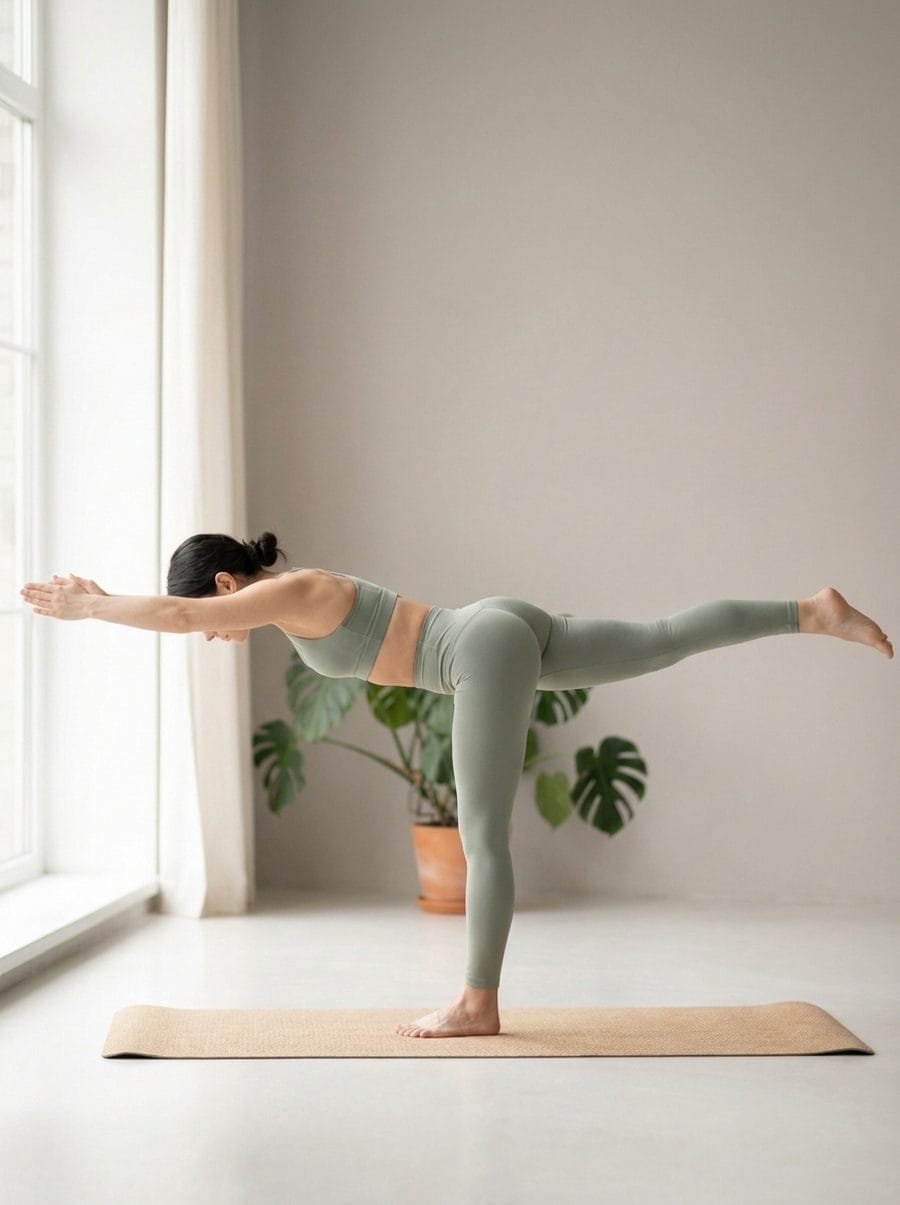
Warrior III puts you on one leg, so your stabilizing muscles get to work too.
Glutes and back
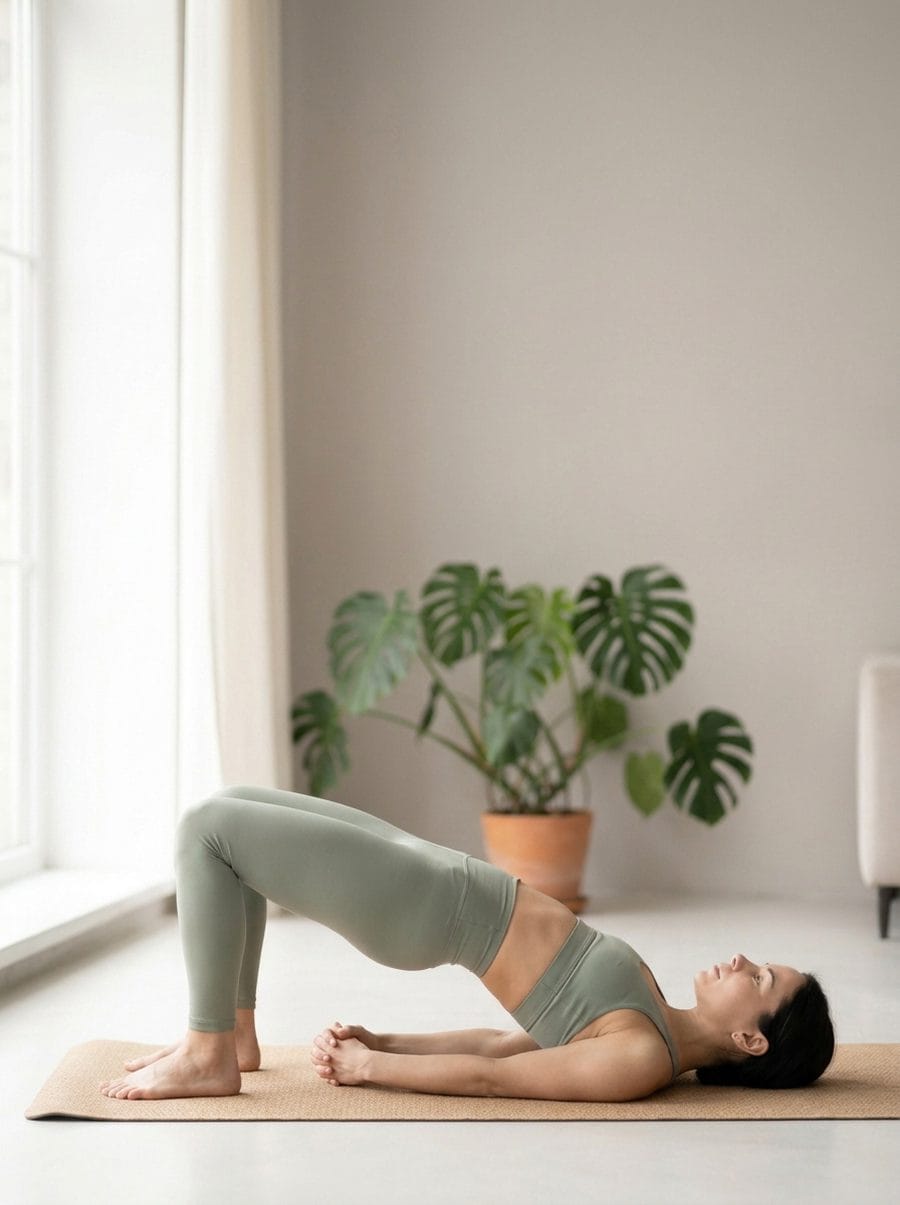
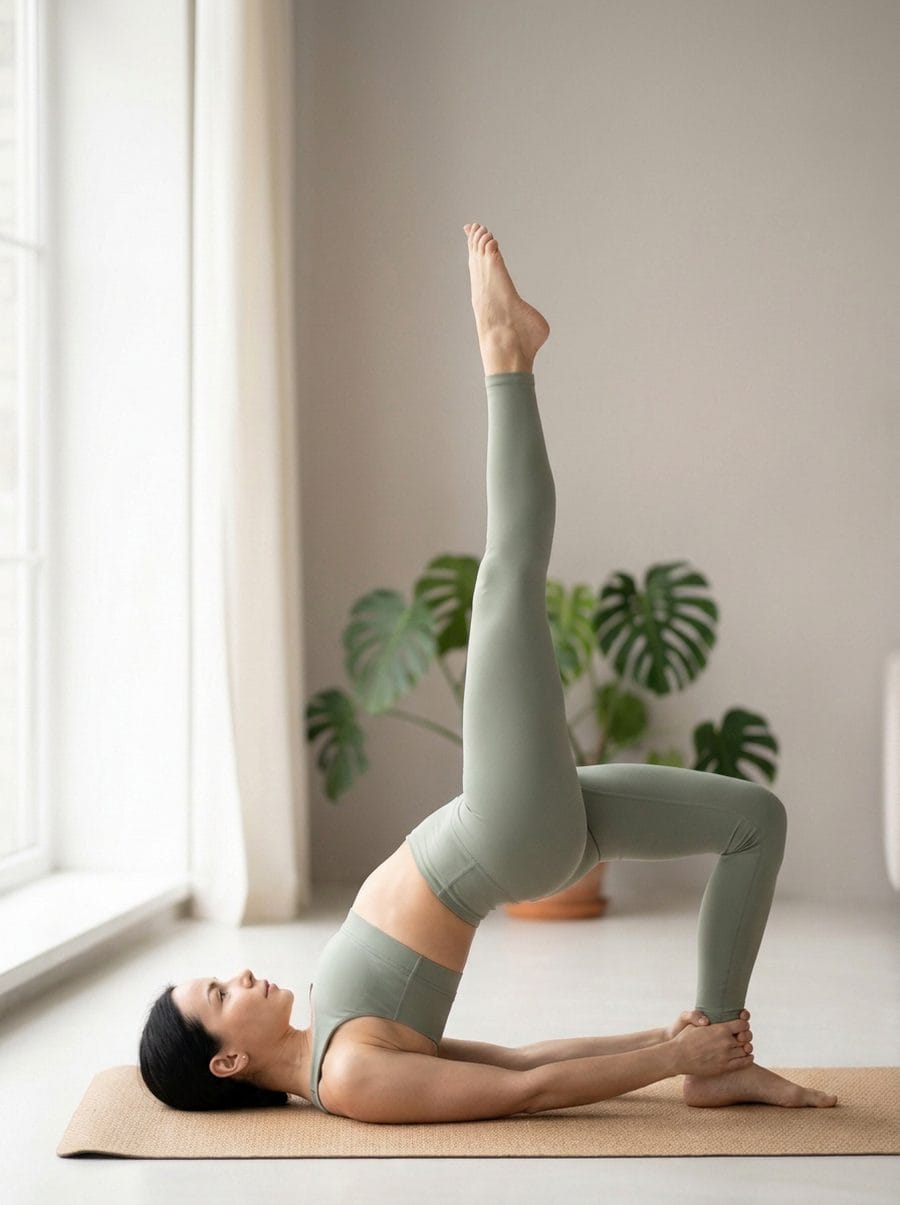
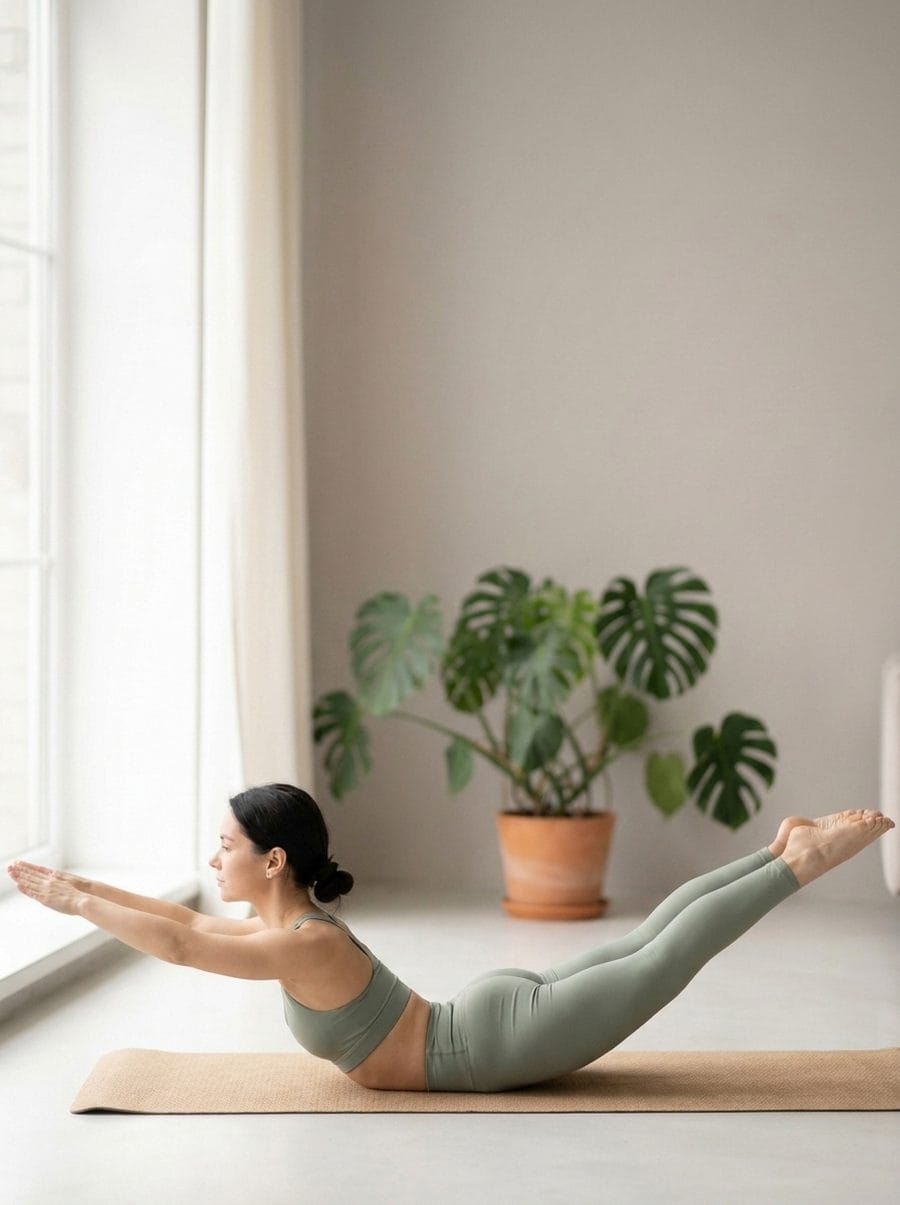
Bridge Pose switches on your glutes and back muscles. In One-Legged Bridge Pose, the glute on the standing side takes more load, and you have to keep your pelvis level. Locust Pose strengthens the entire back of your body from head to heels.
Arms and shoulders
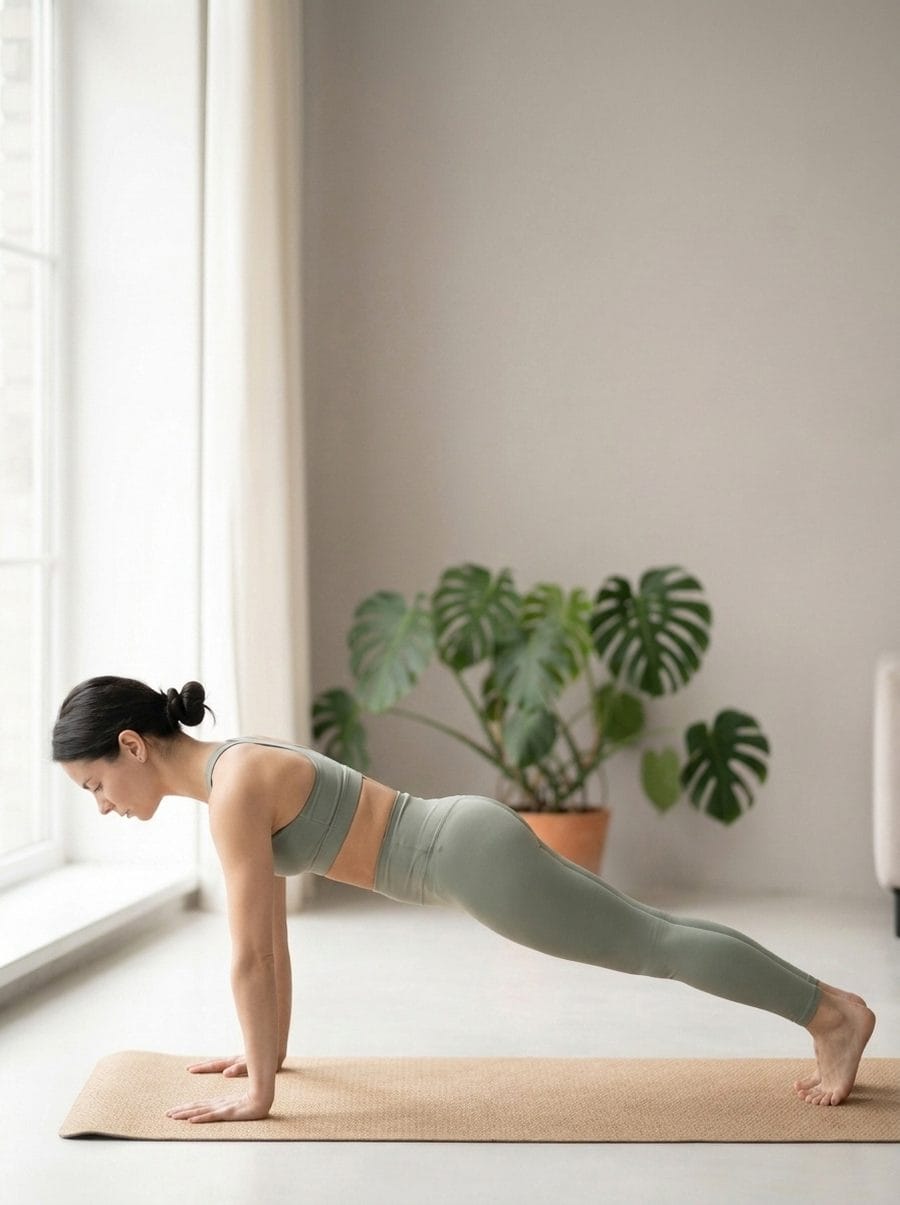
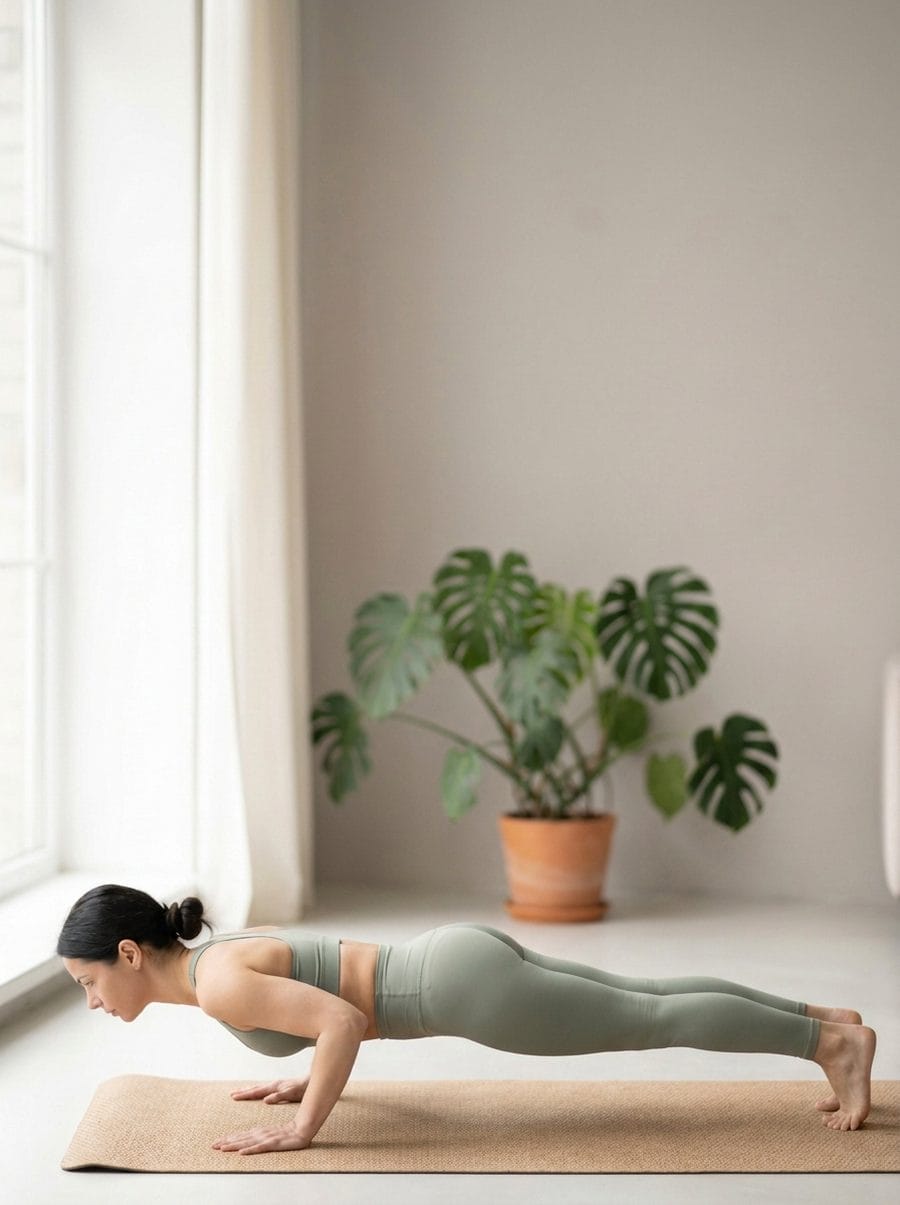
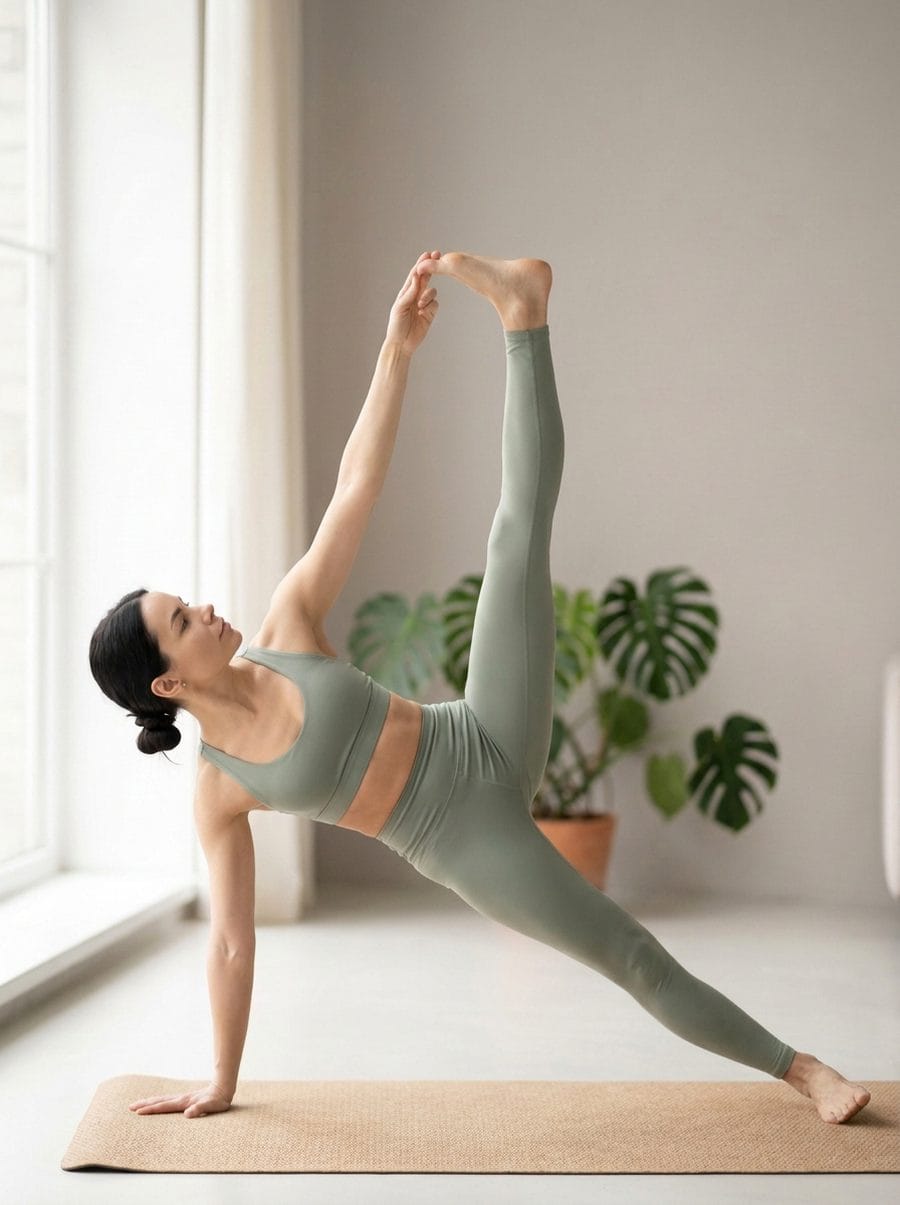
Plank Pose is the foundation: one straight line, belly drawn in, pushing the floor away. Plank to Chaturanga Flow strengthens arms, chest and trunk, and if it's too hard you can lower your knees to the mat. Side Plank works your shoulders and the obliques along the sides of your waist.
Yoga for legs and glutes
Your legs and glutes work in nearly every standing pose, but hardest in Chair, the Warriors, Goddess and the Bridges. One-Legged Bridge and Warrior III add single-leg work, where your glutes also have to hold the pelvis steady. To make it harder, sink lower in Chair and Goddess, hold the Warriors longer, and lift one leg in Bridge.
If your knees are fussy, start with Yoga for Knees and Feet, which builds thigh strength more gently. So does yoga build glutes? It firms and strengthens them, but visible growth usually takes load you can raise bit by bit, such as weights. Yoga is a good partner there, not a substitute.
Power Wave: a 12-minute strength flow
A short program with no long pauses, mostly for arms, shoulders and abs. Down Dog to Plank Flow, Three-Legged Dog and Plank to Chaturanga Flow load the shoulder girdle, then Boat Flow, Full Boat Pose and the Side-Lying Double Leg Lift shift the work to your trunk. It's rated intermediate.
Core work gets a full breakdown in Yoga for Abs.
How to progress
- Longer. Add a few breaths to each hold without losing your form.
- Slower. Lowering slowly into Chaturanga or Chair is tougher than dropping in fast.
- On one support. One-Legged Bridge instead of the regular one, Warrior III instead of Warrior I.
- Regularly. Two or three strength sessions per week, never on back-to-back days, so the muscles can rebuild.
Strength yoga safety
- Knees. If a knee is injured, drop Chair Pose, Warrior I and II, and Goddess Pose from your session.
- Lower back. If lower back trouble flares, skip Chair and Bridge; with a herniated lumbar disc, skip Locust.
- Blood pressure. If yours is high, leave out Warrior III, Locust, One-Legged Bridge and the Chaturanga flow. Do Warrior I with your hands resting on your waist.
- Neck. With a neck injury, skip both Bridge and One-Legged Bridge; skip the latter with a shoulder injury too.
- Wrists and shoulders. If a wrist or shoulder is injured, skip Side Plank and the Chaturanga flow; an injured elbow also rules out the Chaturanga flow. With a wrist injury, do Plank on your forearms.
- Diastasis and pregnancy. With diastasis recti, skip Plank. During pregnancy, Locust and the Chaturanga flow are out, and so is One-Legged Bridge late in pregnancy.
For general precautions, see Safety and Contraindications.
Pose cautions in this article
- Knee injuries (Chair Pose, Warrior I, Warrior II, Goddess Pose)
- Flare-up of lower back problems (Chair Pose)
- High blood pressure — you can keep your hands on your hips (Warrior I)
- High blood pressure (Warrior III, One-Legged Bridge Pose, Locust Pose, Plank to Chaturanga Flow)
- Balance problems — use a support (Warrior III)
- Neck injuries (Bridge Pose)
- Flare-up of lower back pain (Bridge Pose)
- Neck and shoulder injuries (One-Legged Bridge Pose)
- Late pregnancy (One-Legged Bridge Pose)
- Lumbar disc herniation (Locust Pose)
- Pregnancy (Locust Pose, Plank to Chaturanga Flow)
- Wrist injuries — practice on your forearms (Plank Pose)
- Diastasis recti (Plank Pose)
- Wrist, elbow, and shoulder injuries (Plank to Chaturanga Flow)
- Wrist and shoulder injuries (Side Plank)
This site is for general information and is not medical advice. If you have pain, an injury, a chronic condition, or are pregnant, check with a qualified professional before practicing.
Questions
Can yoga help build muscle? It can strengthen and tone, especially your legs, arms and trunk. Building a lot of muscle size usually takes weights and steadily rising load, and yoga complements them well.
Is yoga strength training or cardio? Hatha yoga mainly strengthens muscles and builds flexibility. Dynamic sequences like Sun Salutation raise your heart rate, but they don't replace proper cardio. The NHS counts yoga as a muscle-strengthening activity.
Which yoga poses work legs and glutes hardest? Chair Pose, the Warriors, Goddess Pose, Bridge Pose and One-Legged Bridge Pose. The Strength & Tone routine puts them together for you.
How many times a week to do strength yoga? Aim for two or three sessions weekly. The NHS wants every big muscle group trained on at least two days each week.
Sources
- NHS. Physical activity guidelines for adults aged 19 to 64.
- Lau C, et al. Effects of a 12-Week Hatha Yoga Intervention on Cardiorespiratory Endurance, Muscular Strength and Endurance, and Flexibility in Hong Kong Chinese Adults: A Controlled Clinical Trial. Evidence-Based Complementary and Alternative Medicine, 2015.
- Guo P, et al. Effects of yoga on lower-extremity muscle strength, balance, and quality of life across diverse older adult populations: a systematic review and meta-analysis. Experimental Gerontology, 2026.
- Pose technique, levels and cautions, and sequence contents: the Hatha Yoga app. More on the How We Prepare Our Content page.
Read next
- Yoga for Arthritis and Osteoporosis: How to Protect Your Joints and Bones7 min read
- Ashtanga Yoga Explained: The Series, the Breath and the Difference from Hatha6 min read
- Ayurveda Explained Simply: The Basics and a Daily Routine (Dinacharya)5 min read
- Balance Exercises: 10 Yoga Poses for Balance and Stability7 min read