 Hatha Yoga
Hatha vs. Vinyasa: The Difference and Which One to Choose
Hatha Yoga editorial team · Updated · 6 min read
Vinyasa yoga strings poses into a continuous flow: every movement matches a breath in or out, and there are hardly any pauses. Hatha yoga works the other way around: you take a pose and remain there for several unhurried breaths.
Below you'll find a plain explanation of vinyasa and vinyasa flow, a point-by-point comparison of the two styles, the poses a flow is built from, and two short routines so you can try both paces at home.
What is vinyasa yoga?
The Sanskrit word "vinyasa" is usually translated as "placed in a special way." It refers to the order of the poses and to the way movement is tied to breath. In a vinyasa class you don't freeze for long: you lift your arms as you breathe in, fold forward as you breathe out, step back to Plank, lower down, lift into a backbend and press back into Downward-Facing Dog.
Nearly every flow rests on the Sun Salutation. It has 12 positions, and each one belongs to a breath, either in or out. In the app, the Sun Salutation has a "one breath" mode: one movement per inhale or exhale, with no stops. That is vinyasa in its purest form.
Vinyasa flow is the freestyle version, where the teacher builds the sequence, so two classes rarely look the same. Power yoga puts even more weight on strength and stamina. If you want one fixed sequence that never changes, you're looking for ashtanga.
Hatha vs. vinyasa: the key differences
The app's own theory sums up the contrast in one line: in dynamic styles the speed of the transition comes first, while hatha values the quality of your presence in each shape. Here's how that plays out on the mat.
- Pace. In hatha you hold a pose for several breaths and rest between poses. In vinyasa your body keeps moving through most of the class.
- Transitions. In hatha, a transition is how you get into the next pose. In vinyasa the transition is practice in itself: Plank, lowering down and a backbend repeat dozens of times between poses.
- Effort. Vinyasa warms you up faster and raises your heart rate more. Hatha leaves time to sort out technique and feel where your support is.
- Sequence. Hatha classes usually follow a steady structure, from warm-up to relaxation. Vinyasa flow is put together differently every time.
- Breath. It's central in both, but in vinyasa the breath sets the rhythm like a metronome. Many people breathe with a soft sound, known as ujjayi.
The two styles share more than they don't: many of the poses are the same, and both end in relaxation. The classic approach is explained in What Is Hatha Yoga.
Vinyasa yoga poses: the building blocks of a flow
The transition sequence
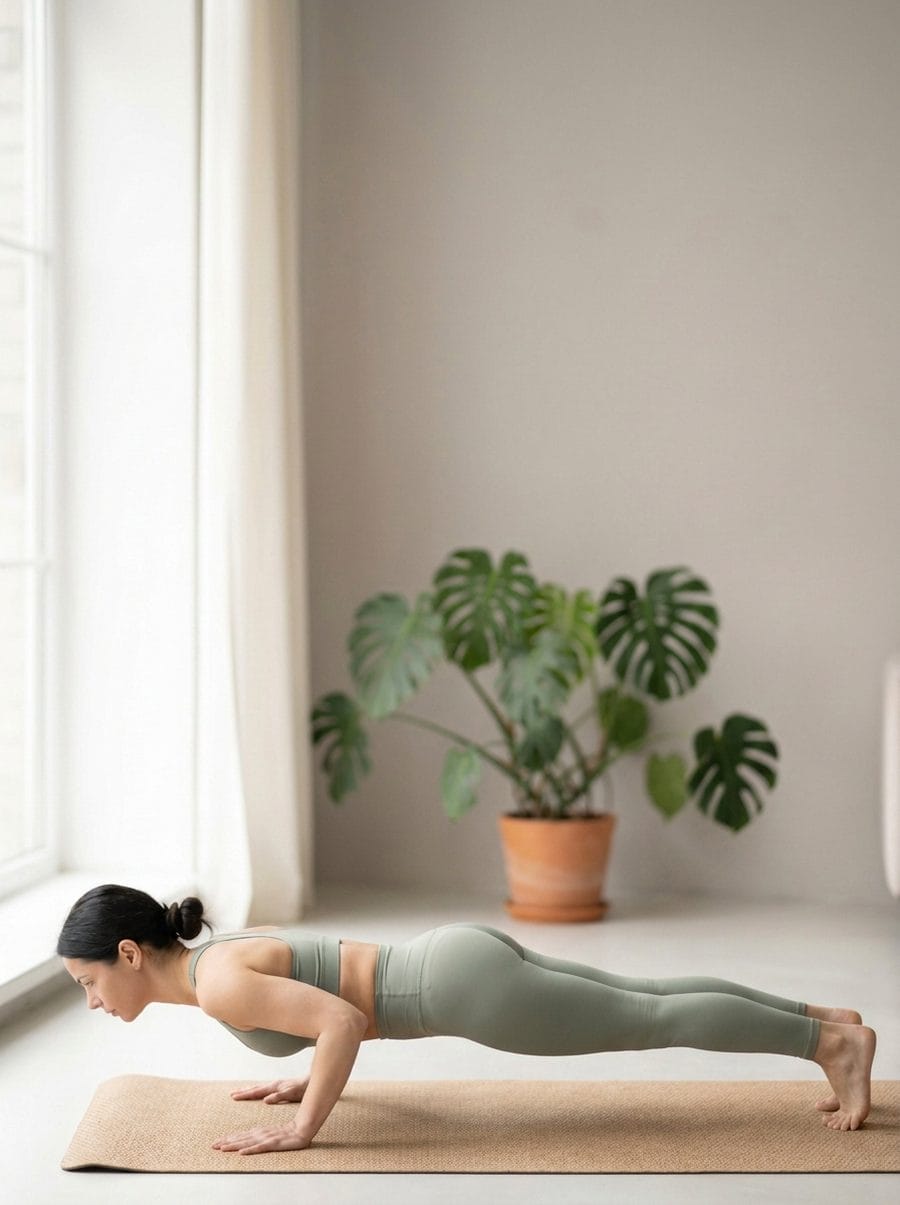
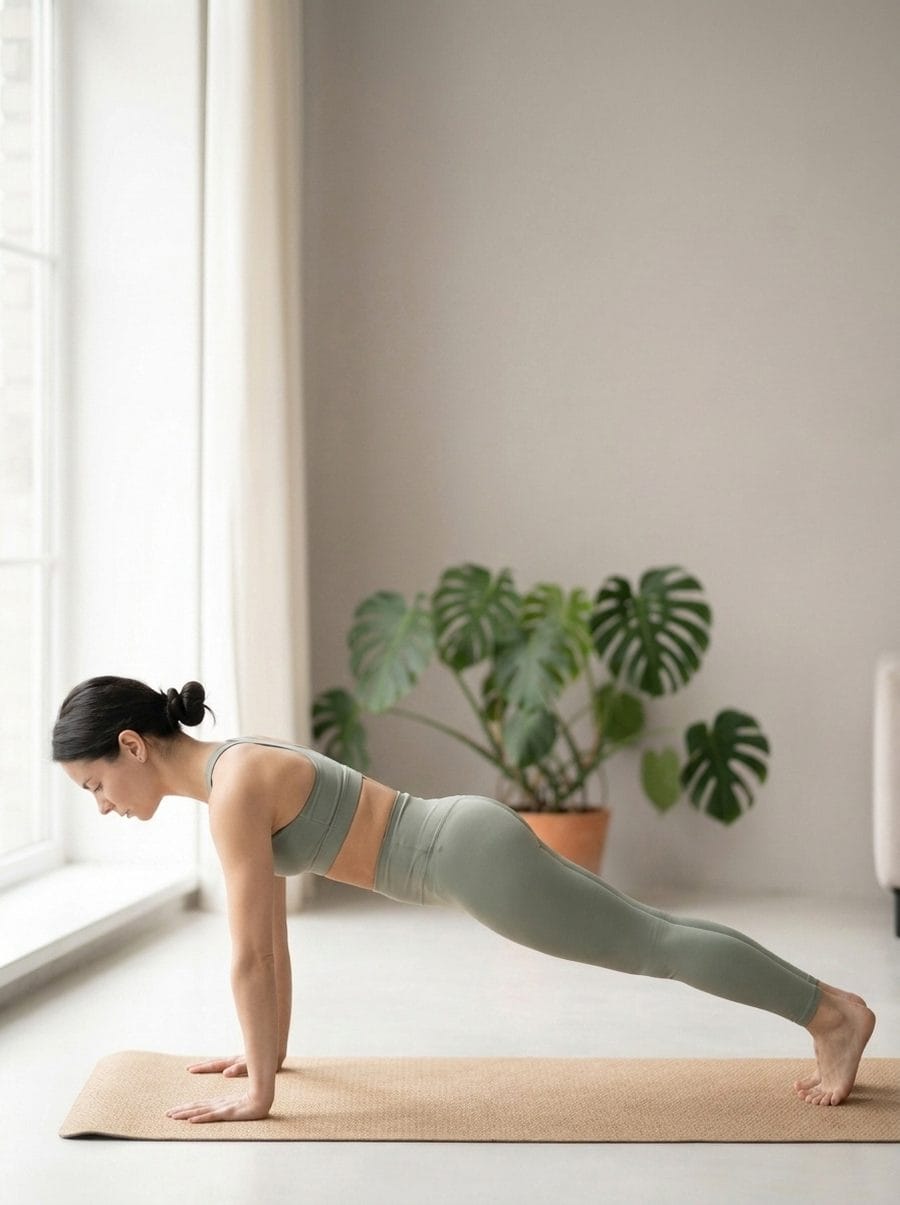
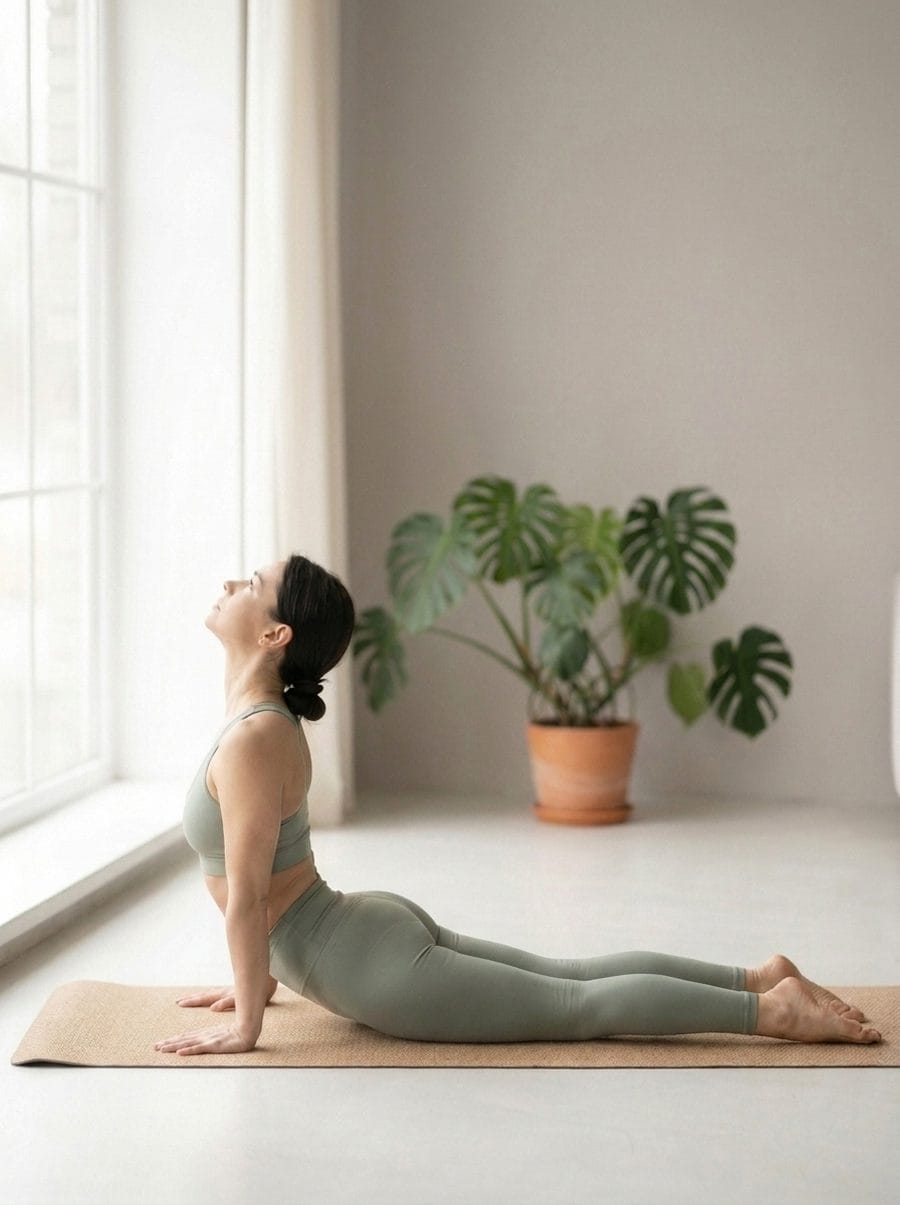
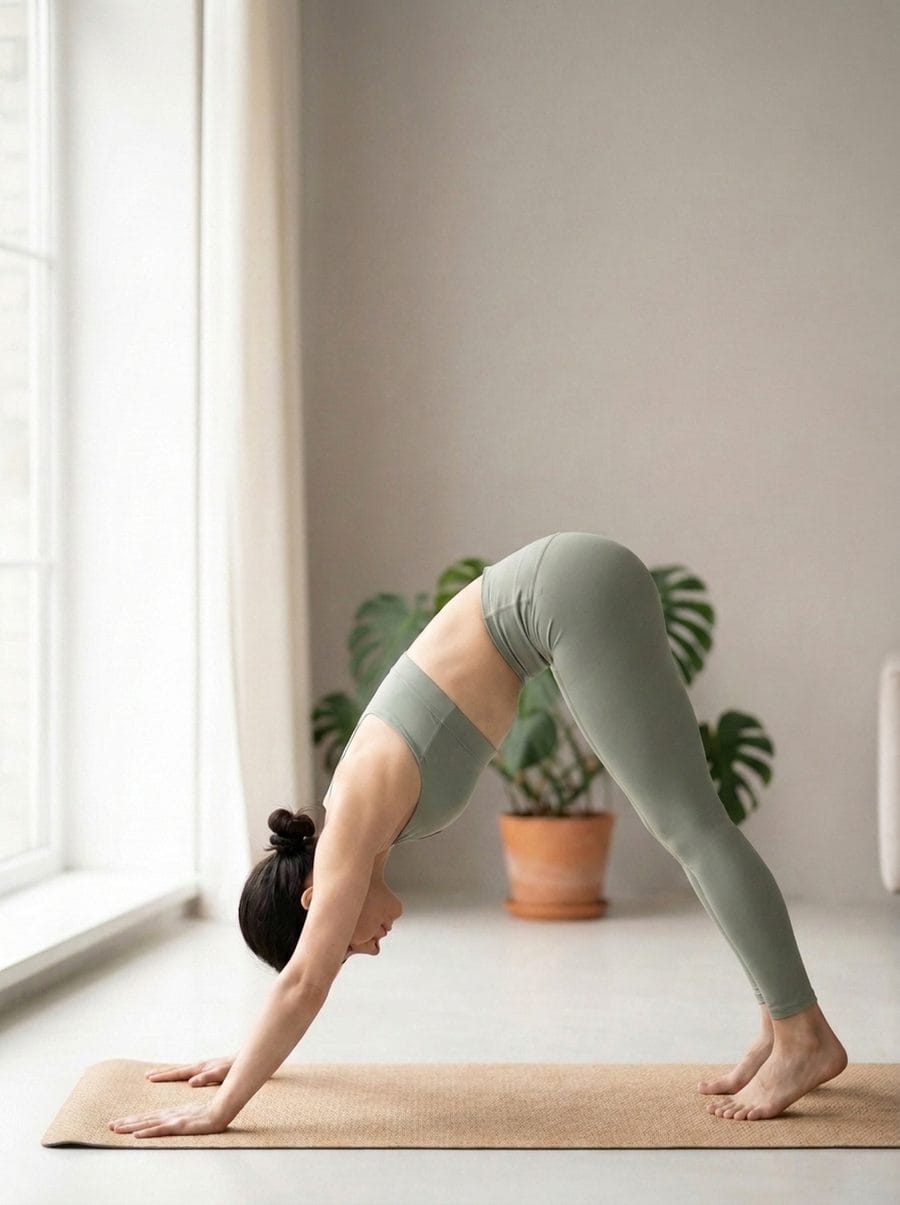
This is the stretch of movement you'll repeat most in vinyasa. From Plank you lower through Chaturanga, lift your chest into Cobra Pose, then send your hips up and back into Downward-Facing Dog. Beginners often find it easier to drop the knees in Chaturanga and do a low Cobra instead of Upward-Facing Dog.
The standing part
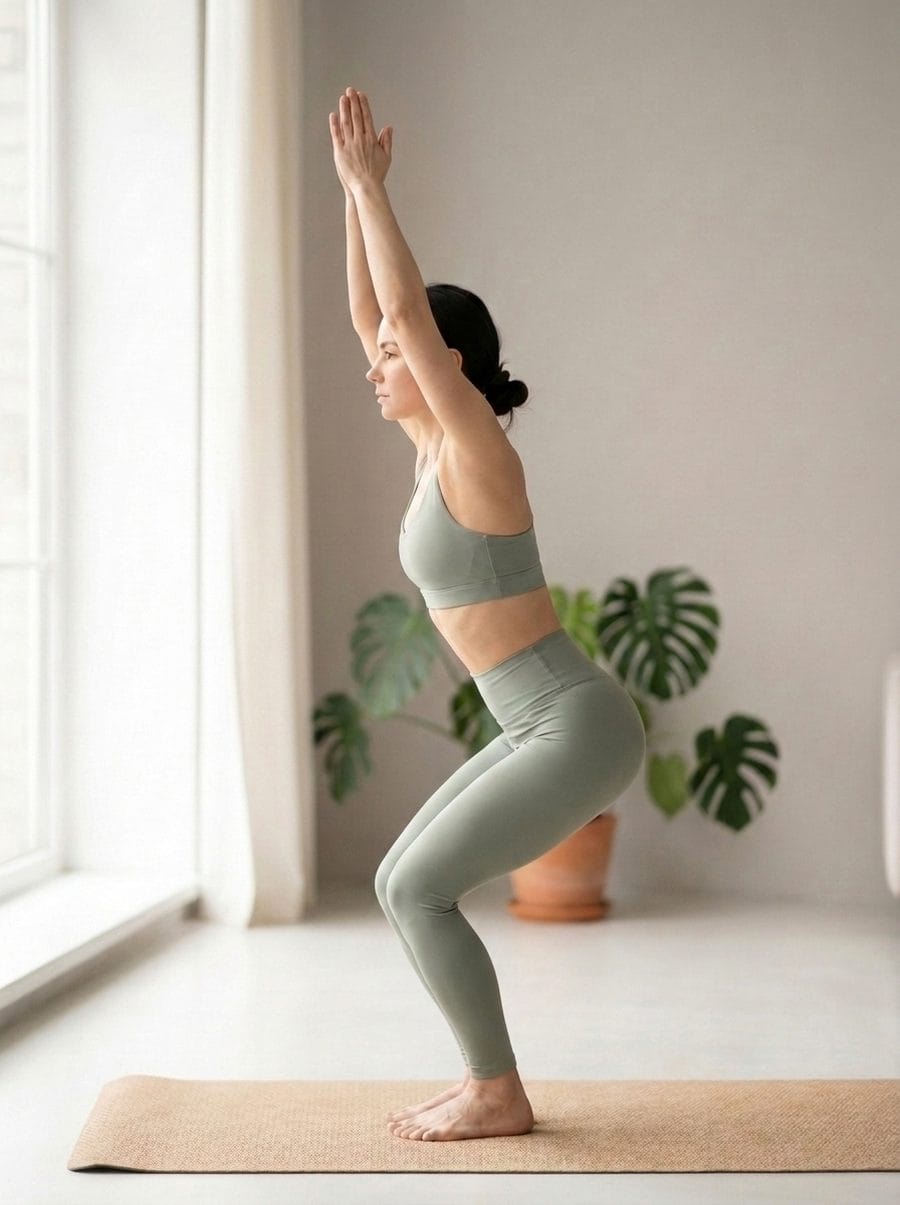
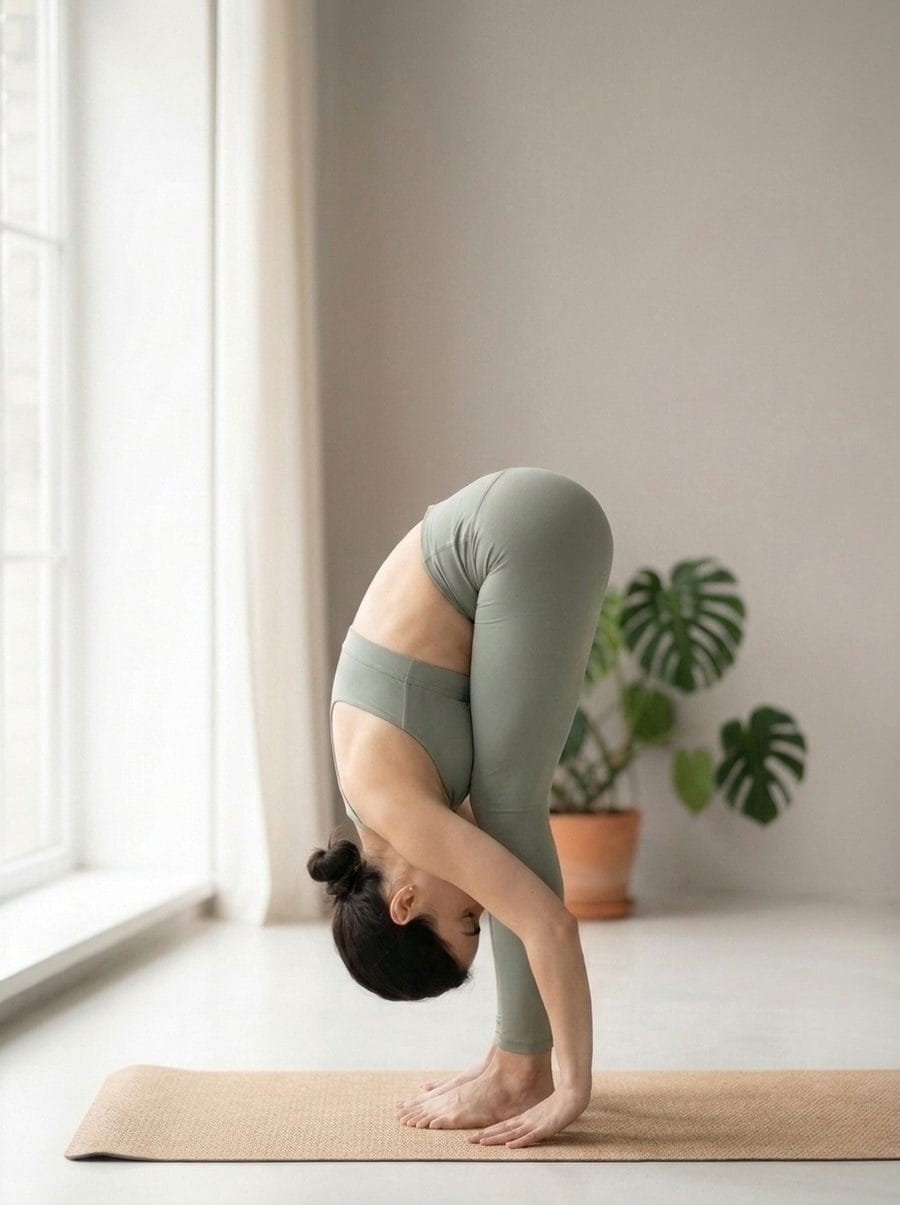
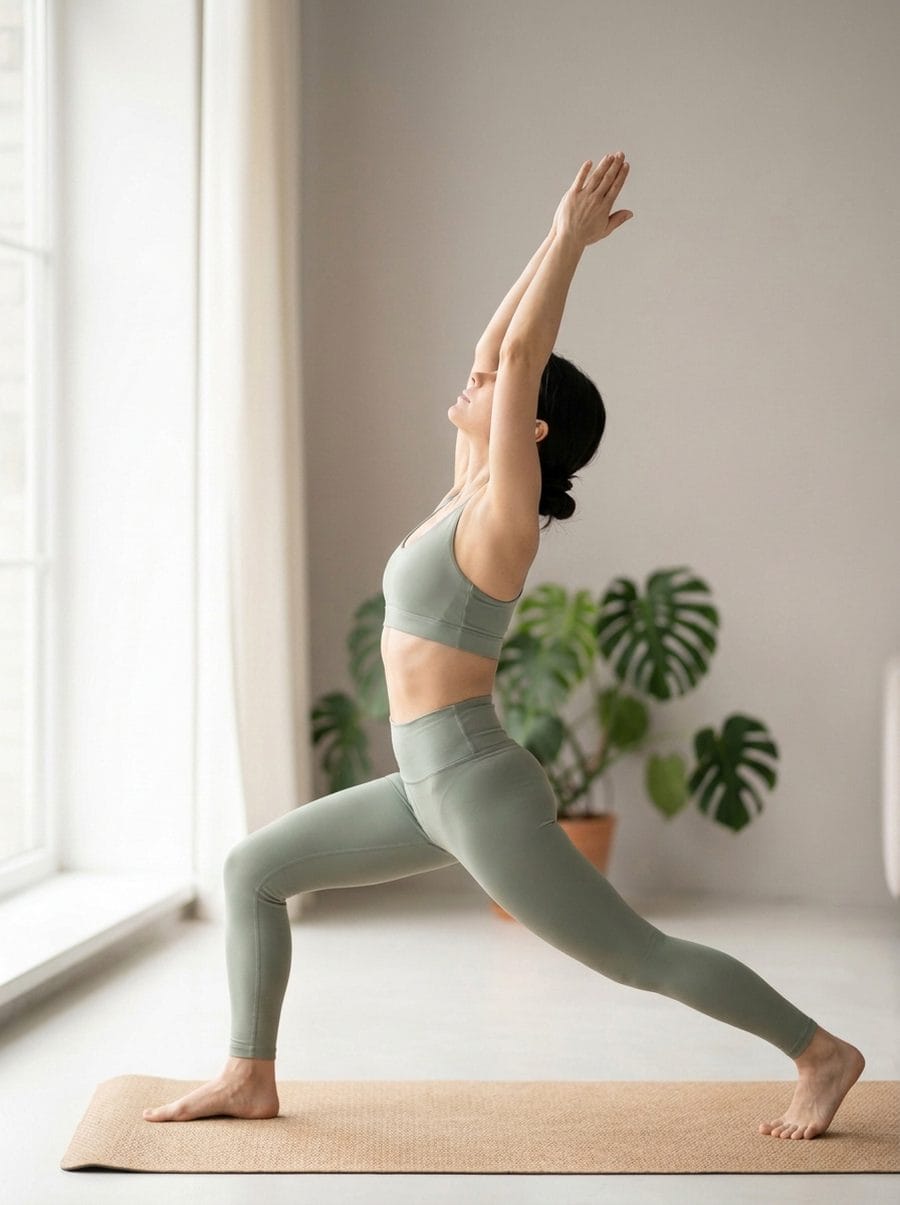
Standing poses come between transitions. Chair Pose, Standing Forward Fold and Warrior I appear in almost every flow: Chair warms up the legs, the fold gives you a breather, and the warrior adds stability. In vinyasa you don't stay long in them, sometimes just one breath.
Vinyasa yoga for beginners: Flow with the Breath
If you've never practiced in a flow, start with a beginner program that keeps weight off your hands. Flow with the Breath takes 12 minutes and has 14 movements: neck, shoulders, hip circles, standing reaches and side bends, Chair and forward fold in motion, Cat-Cow, tabletop to Child's Pose, Bridge and a supine twist in motion, knees to chest, and almost two minutes of savasana.
Every movement here is matched to a breath, so you learn the core skill of vinyasa without loading your wrists. Your next step is the Gentle Wave, a beginner round of five poses with no strength peaks.
A power yoga option: Power Wave
Once moving with the breath feels natural, you can add strength. Power Wave is an intermediate program with 13 poses in 12 minutes: Downward Dog melts into Plank, Plank into Chaturanga, Boat Pose turns into a moving exercise, and long pauses are rare. Of all the app's programs, it feels closest to power yoga.
If you'd like both flow and long holds in one session, have a look at Classic Full Practice: six rounds of Sun Salutation to begin, then 50 minutes in total with hatha poses held for longer.
Hatha or vinyasa: which should you choose?
Choose hatha when you're a complete beginner, want to understand technique, are coming back after a break, or practice in the evening to wind down. Choose vinyasa if holding still bores you, you want to warm up and sweat, and the basic poses already feel familiar.
Mixing the two works well. A short flow in the morning wakes you up, and calm hatha in the evening helps you relax. Many people begin with hatha and, after a month or two, add one or two dynamic days a week.
Safety
In a fast flow it's easier to lose alignment, so don't let the pace outrun your technique. Ragged breathing is your cue to slow down or pause in Child's Pose.
- Chaturanga. Wrist, elbow or shoulder injuries, raised blood pressure and pregnancy all rule out the Plank to Chaturanga Flow.
- Plank Pose. Injured wrists? Lower onto your forearms. Diastasis recti means Plank is not for you.
- Downward-Facing Dog. Glaucoma and injured wrists or shoulders rule it out. With elevated blood pressure, make the hold brief.
- Cobra Pose. Leave it out with a herniated lumbar disc, while pregnant, and while a peptic ulcer is flaring.
- Standing Forward Fold. High blood pressure rules it out. A herniated lumbar disc means folding with soft, bent knees.
- Chair Pose and Warrior I. An injured knee rules out both. Chair Pose also waits while lower back problems are acting up.
Living with a chronic illness or recovering from an injury? Talk it through with your doctor before your first flow. The general rules are in Safety and Contraindications.
Pose cautions in this article
- Wrist injuries — practice on your forearms (Plank Pose)
- Diastasis recti (Plank Pose)
- Wrist, elbow, and shoulder injuries (Plank to Chaturanga Flow)
- Pregnancy (Plank to Chaturanga Flow, Cobra Pose)
- High blood pressure (Plank to Chaturanga Flow, Standing Forward Fold)
- Lumbar disc herniation (Cobra Pose)
- Flare-up of peptic ulcer disease (Cobra Pose)
- Wrist and shoulder injuries (Downward-Facing Dog)
- High blood pressure — don't stay in the pose long (Downward-Facing Dog)
- Glaucoma (Downward-Facing Dog)
- Knee injuries (Chair Pose, Warrior I)
- Flare-up of lower back problems (Chair Pose)
- Lumbar disc herniation — bend your knees (Standing Forward Fold)
- High blood pressure — you can keep your hands on your hips (Warrior I)
This site is for general information and is not medical advice. If you have pain, an injury, a chronic condition, or are pregnant, check with a qualified professional before practicing.
Questions
What is vinyasa flow yoga? The freestyle form of vinyasa: the teacher designs each flow, so the sequence changes from class to class. One rule stays constant: each movement rides the breath.
Is vinyasa yoga good for beginners? Yes, as long as you begin with gentle classes that skip fast transitions through Plank. Learning the basic poses in hatha first makes it much easier to keep your form in a flow.
Is vinyasa harder than hatha? Vinyasa is harder on stamina and coordination, hatha on focus: staying in a pose and breathing calmly isn't easy either. How hard a class feels depends on the class itself, not just the style.
What's the difference between power yoga and vinyasa? Power yoga is a strength-focused take on vinyasa, with more planks, lunges and holds that build muscle. Regular vinyasa flow can be gentle or strong, depending on the teacher.
Sources
- Pose technique and cautions, program contents and the app's theory of styles: the Hatha Yoga app. More on the How We Prepare Our Content page.
Read next
- Yoga for Arthritis and Osteoporosis: How to Protect Your Joints and Bones7 min read
- Ashtanga Yoga Explained: The Series, the Breath and the Difference from Hatha6 min read
- Ayurveda Explained Simply: The Basics and a Daily Routine (Dinacharya)5 min read
- Balance Exercises: 10 Yoga Poses for Balance and Stability7 min read