 Hatha Yoga
Yoga for Knees and Feet: Build Strong Legs Without Straining Your Joints
Hatha Yoga editorial team · Updated · 7 min read
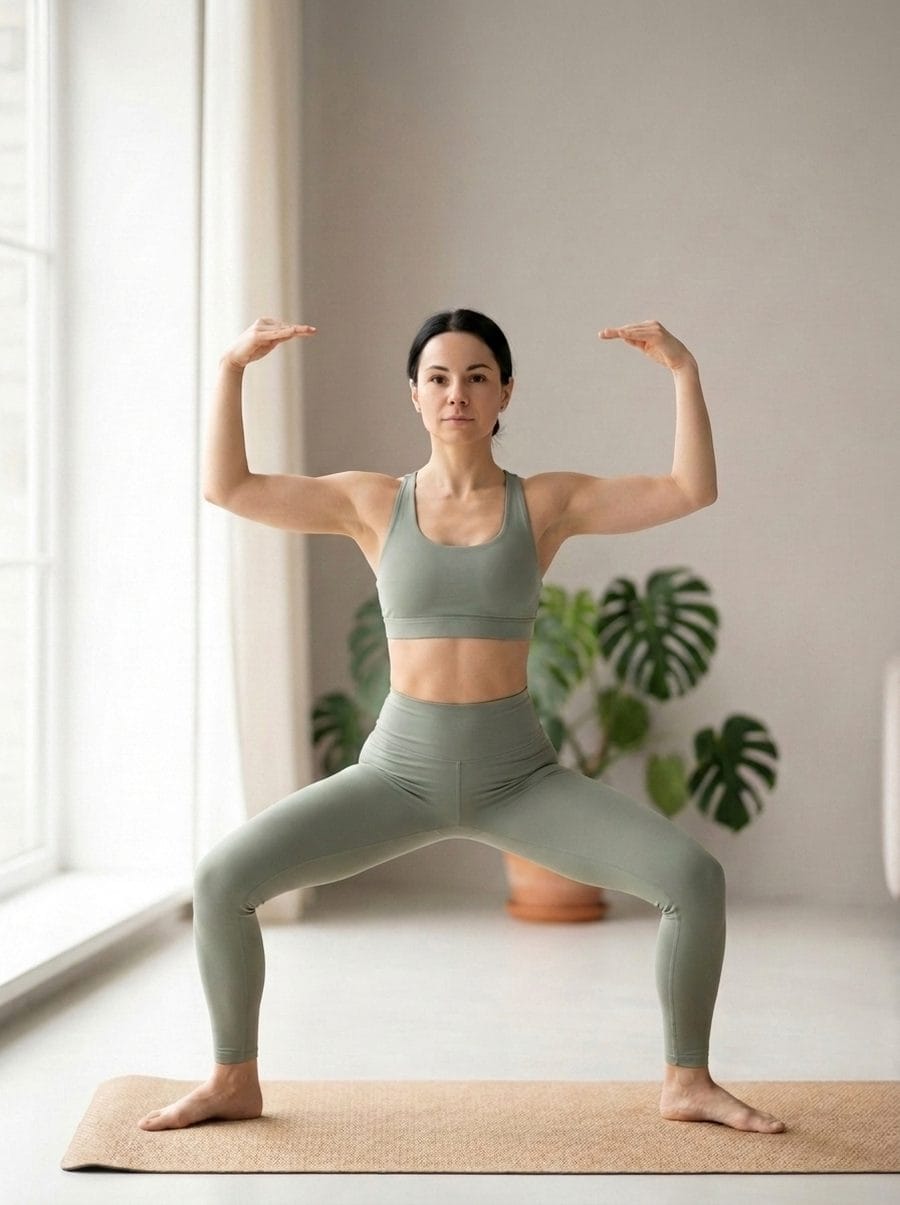
Your knees carry your weight on every step and stair, and your feet meet it first. Yoga for knees doesn't target the joint itself but everything around it: it strengthens the thighs and glutes, stretches the backs and inner sides of the legs, and makes your feet work for balance.
Below: 13 poses, the 15-minute Knees & Feet routine, rules that keep your knees safe on the mat, and the red flags that mean a doctor should see you before you start.
What yoga can do for your knees
The knee works much like a hinge. It bends and straightens happily, but it doesn't like twisting while it carries weight. Its stability comes from muscle. The front of the thigh straightens the leg, the hamstrings and glutes keep the pelvis steady, and the inner thigh stops the knee from caving inward.
When those muscles are strong and reasonably flexible, the joint has an easier job.
Knee osteoarthritis is a separate question. A 2019 meta-analysis pooled 9 trials with 640 participants, most of them between 50 and 80 years old. Compared both with other exercise and with no exercise, yoga showed improvements in knee pain, function and stiffness.
The authors rated the quality of that evidence as very low, though, and could only make a weak recommendation. So if you have osteoarthritis, yoga can be part of a plan you've discussed with your doctor, but it doesn't replace a checkup or the care your doctor prescribes.
Knees & Feet: a 15-minute yoga routine for your legs
The app has a routine built specifically for the legs. It has 14 poses, no Sun Salutations, and an intermediate level. It's designed for healthy knees: it strengthens and stretches, but it isn't meant for rehab after an injury.
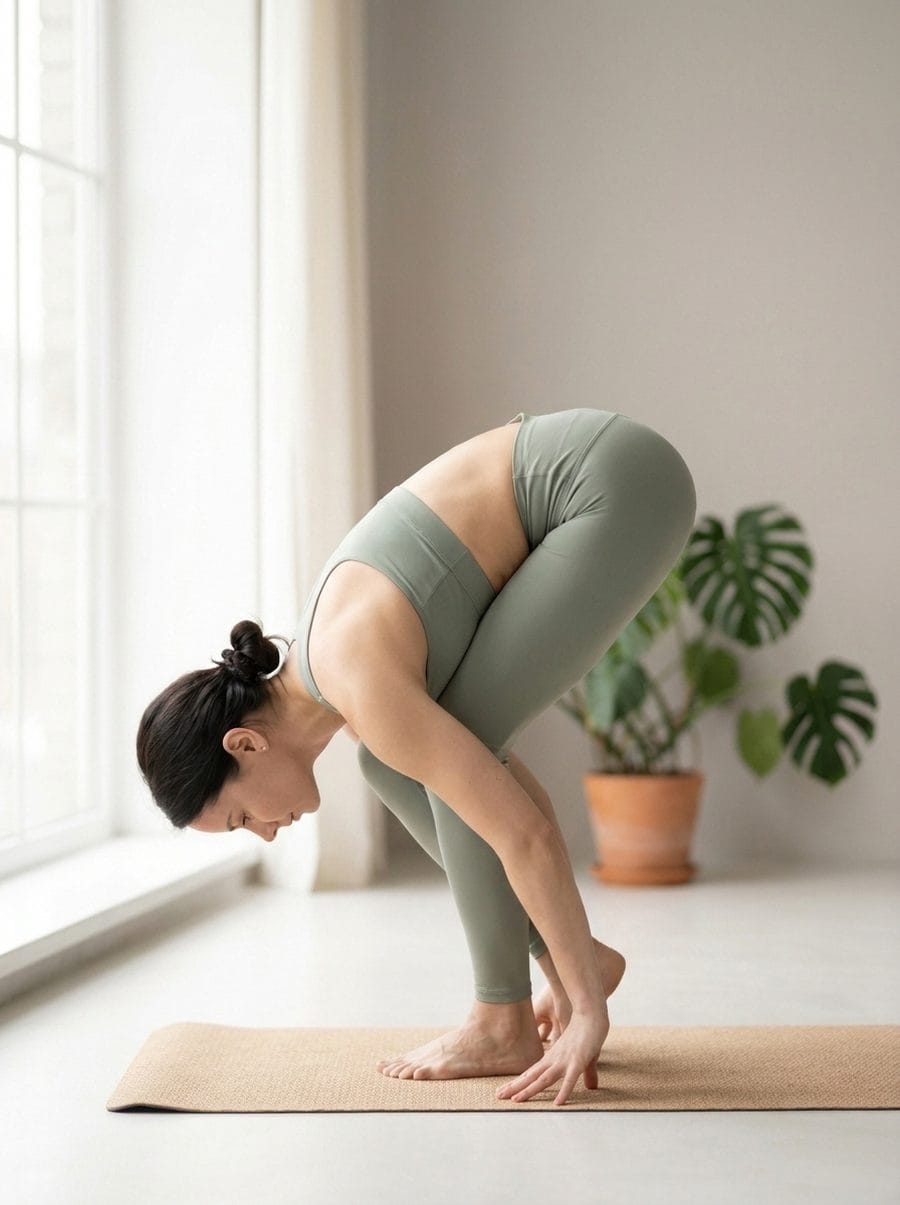
- Warm-up. Upward Salute Flow, Forward Fold Flow and Chair Flow gradually wake up the legs.
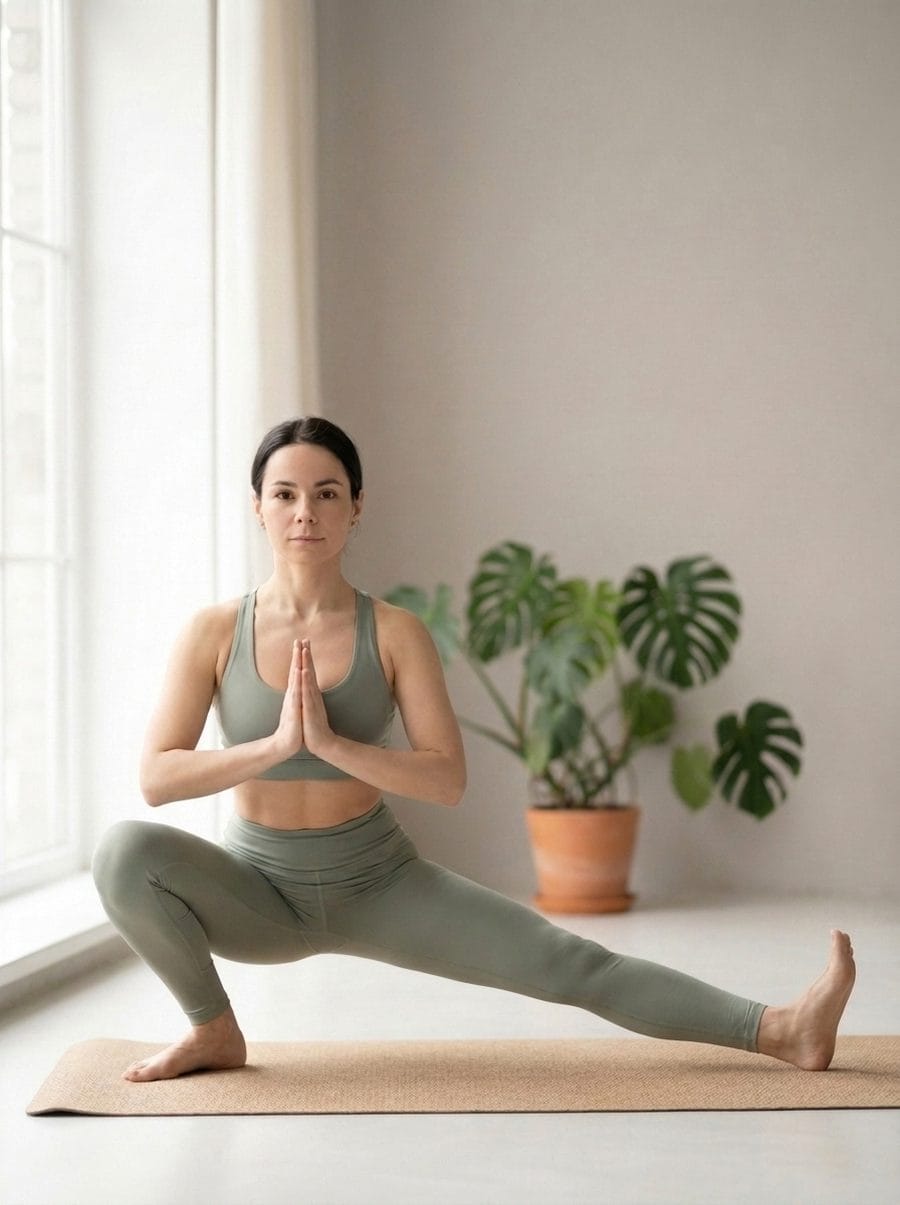
- Strength. One-Legged Chair Pose, Warrior I Flow, Goddess Pose and Side Lunge load the thighs with the knee bent at different angles.
- Lengthening. Standing Forward Fold and Standing Cross-Legged Forward Fold lengthen the hamstrings and the outer side of each leg.
- Feet. Thunderbolt Pose and Three-Limbed Forward Fold open the instep and the front of each ankle.
- Rest. Straight-Leg Bridge Pose, Legs-Up-the-Wall Pose, then a three-minute Savasana.
13 yoga poses for your knees and feet
Each pose works as a standalone exercise, yet the sequence counts: strength first, then stretching, and rest for the legs at the end.
Thigh strength
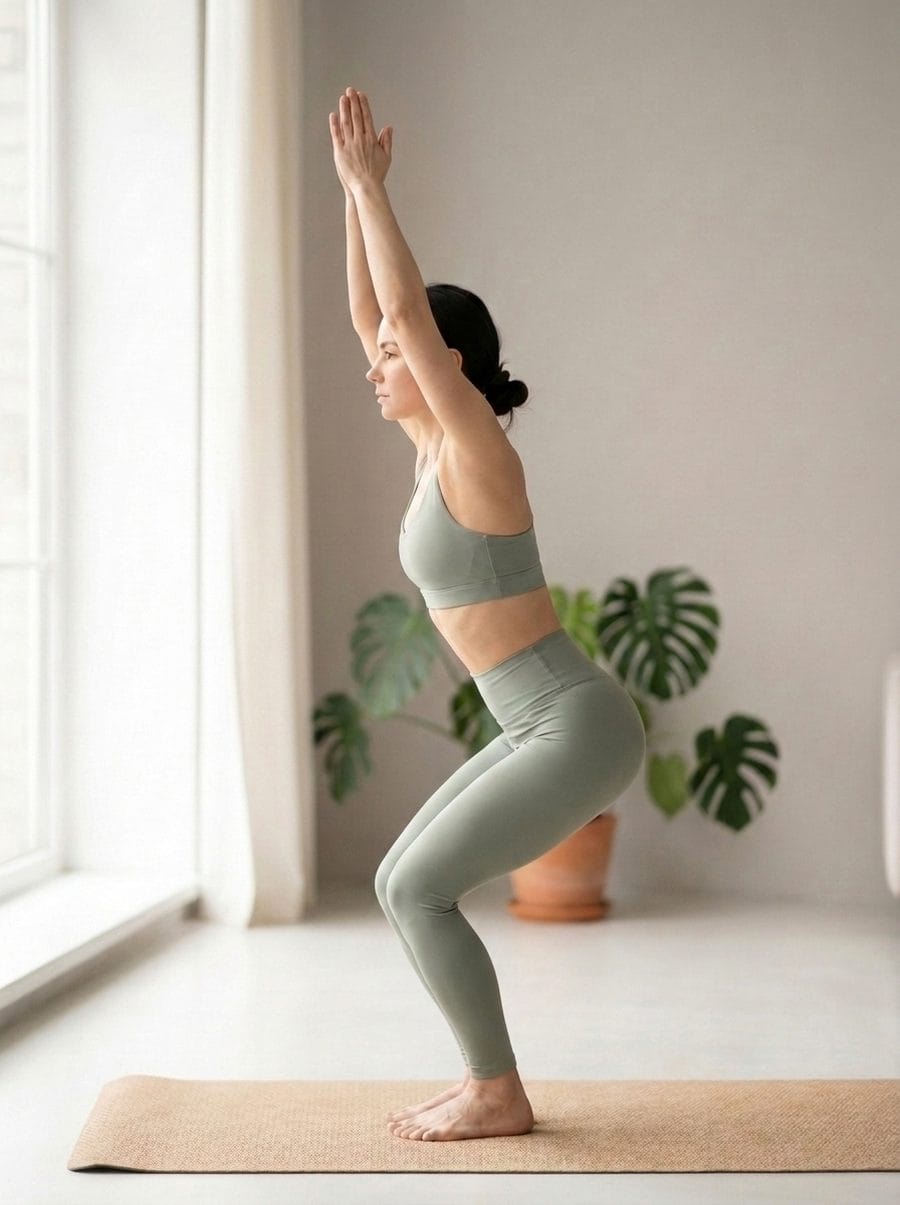
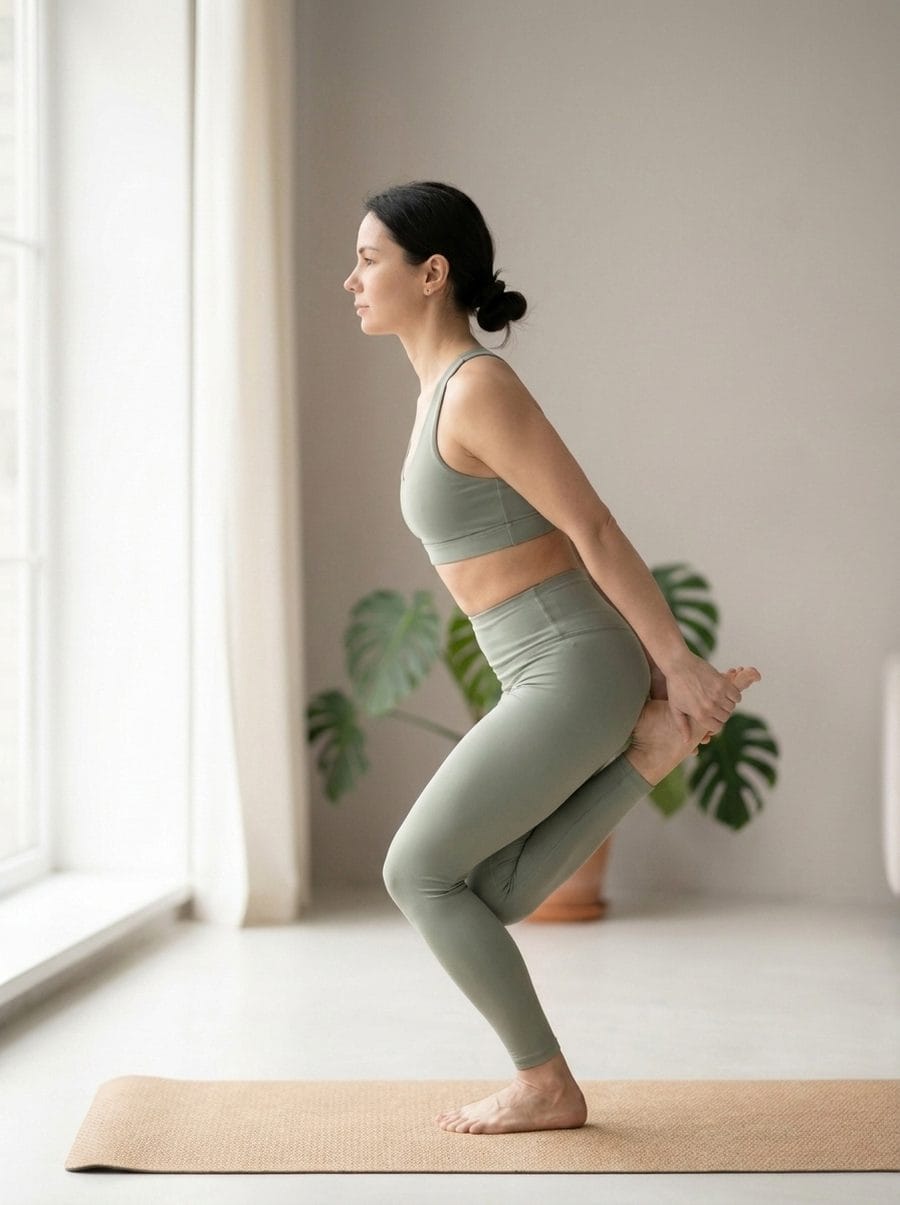
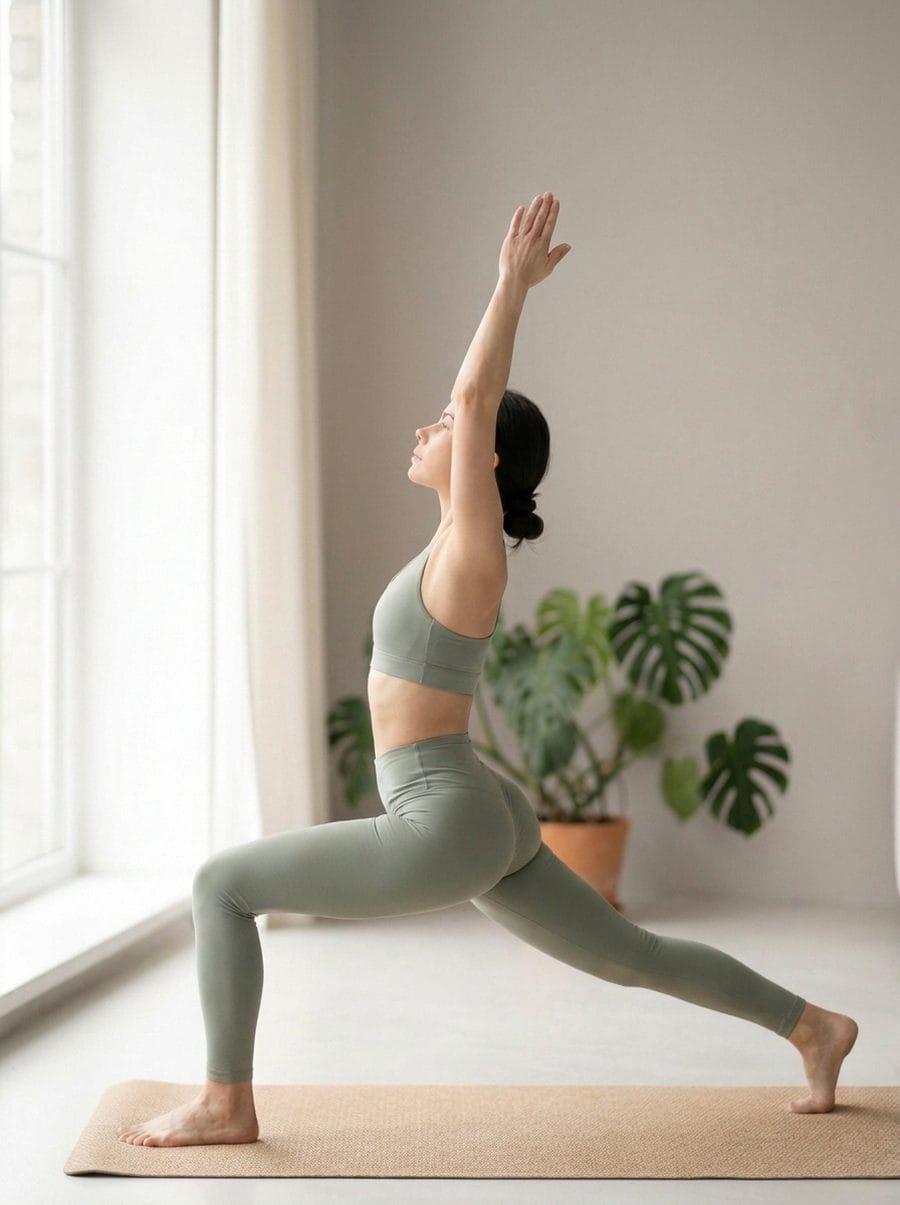
Chair Pose and Goddess Pose build strength in the front and inner thighs. Track your knees right over your feet, keep them from moving past your toes, and keep your weight in your heels. One-Legged Chair Pose adds a balance challenge, and in Warrior I Flow the front knee bends to a right angle on every repetition.
Leg stretches
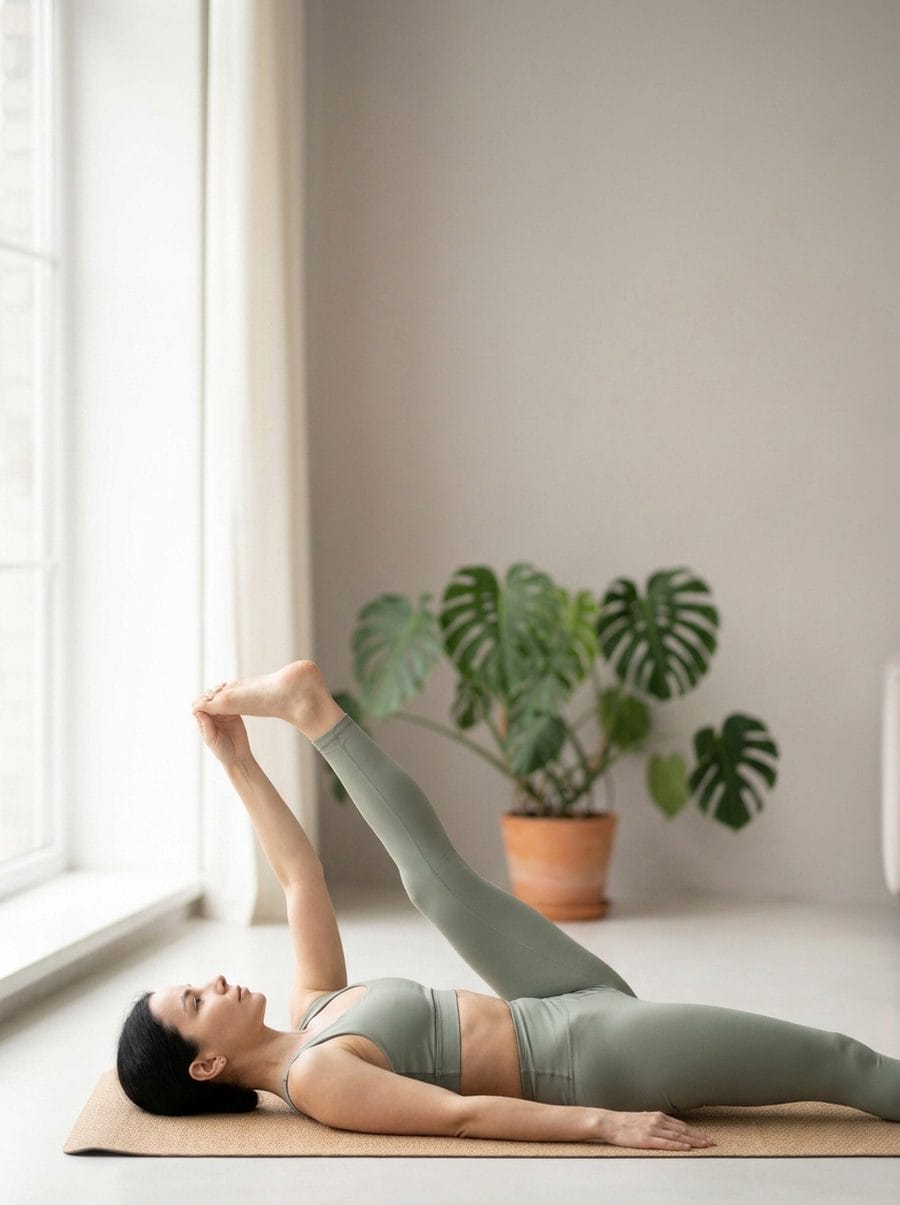
Side Lunge lengthens the inner thigh of the straight leg. Standing Cross-Legged Forward Fold reaches the outer thigh and shin, which a regular forward fold misses. Reclining Hand-to-Big-Toe Pose stretches your hamstrings while your back rests on the floor. If your hand can't reach your foot, loop a strap around it.
Feet and ankles
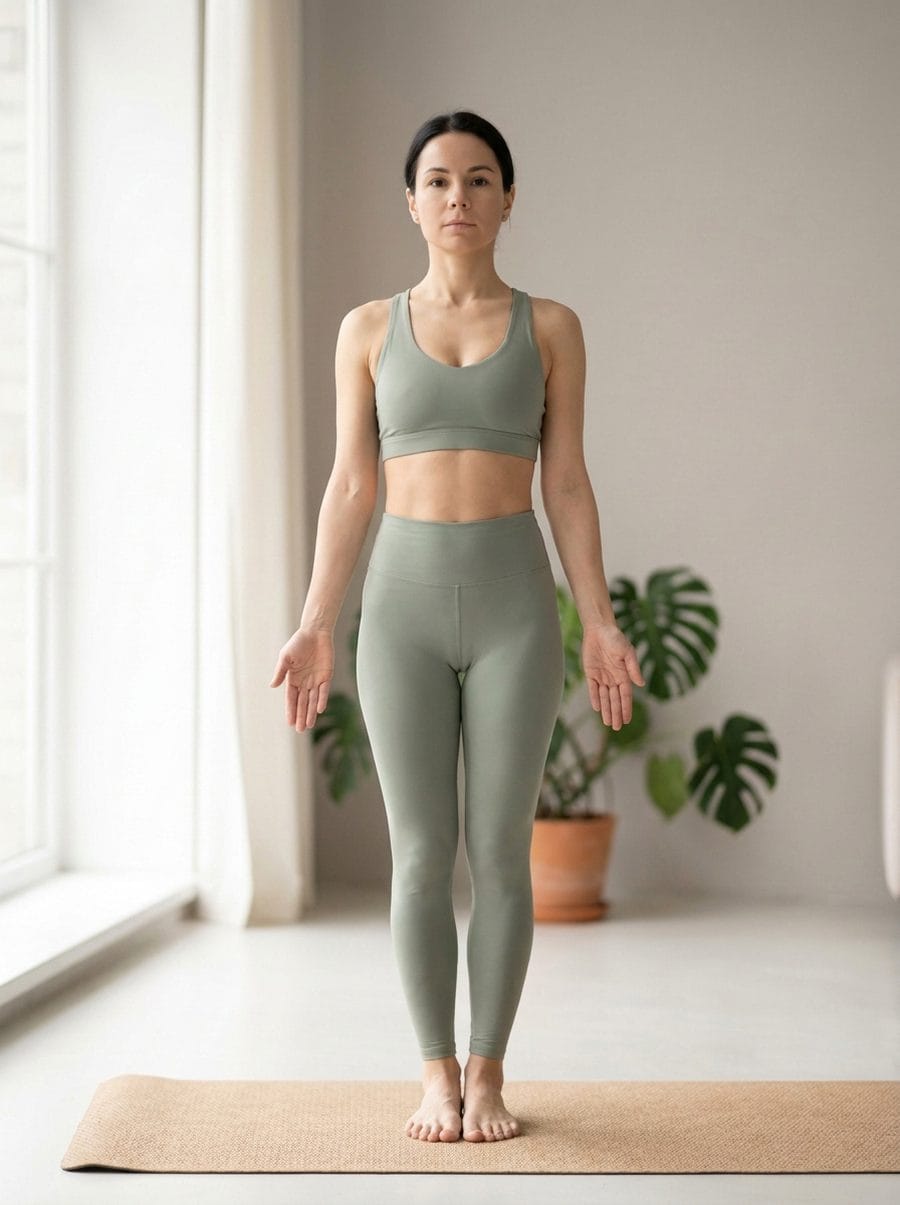
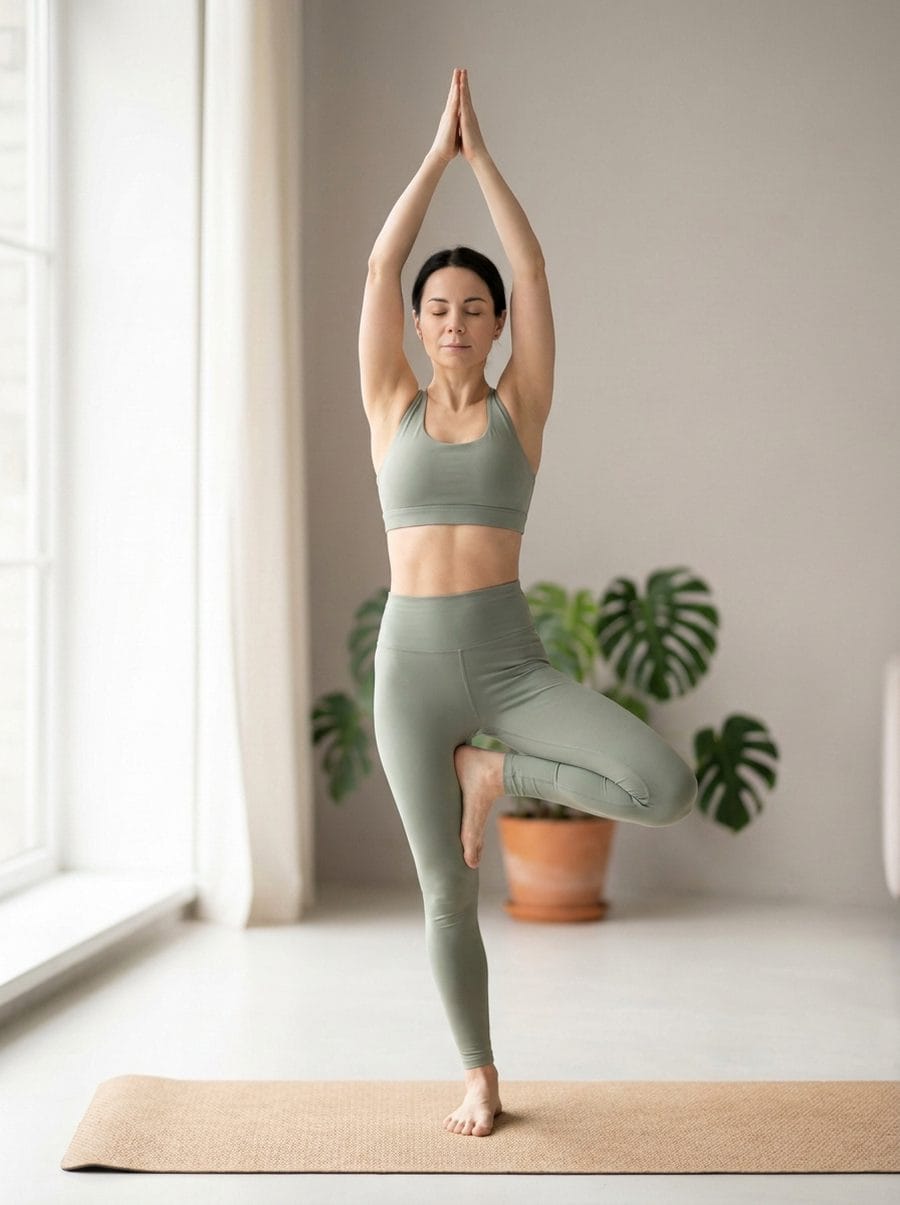
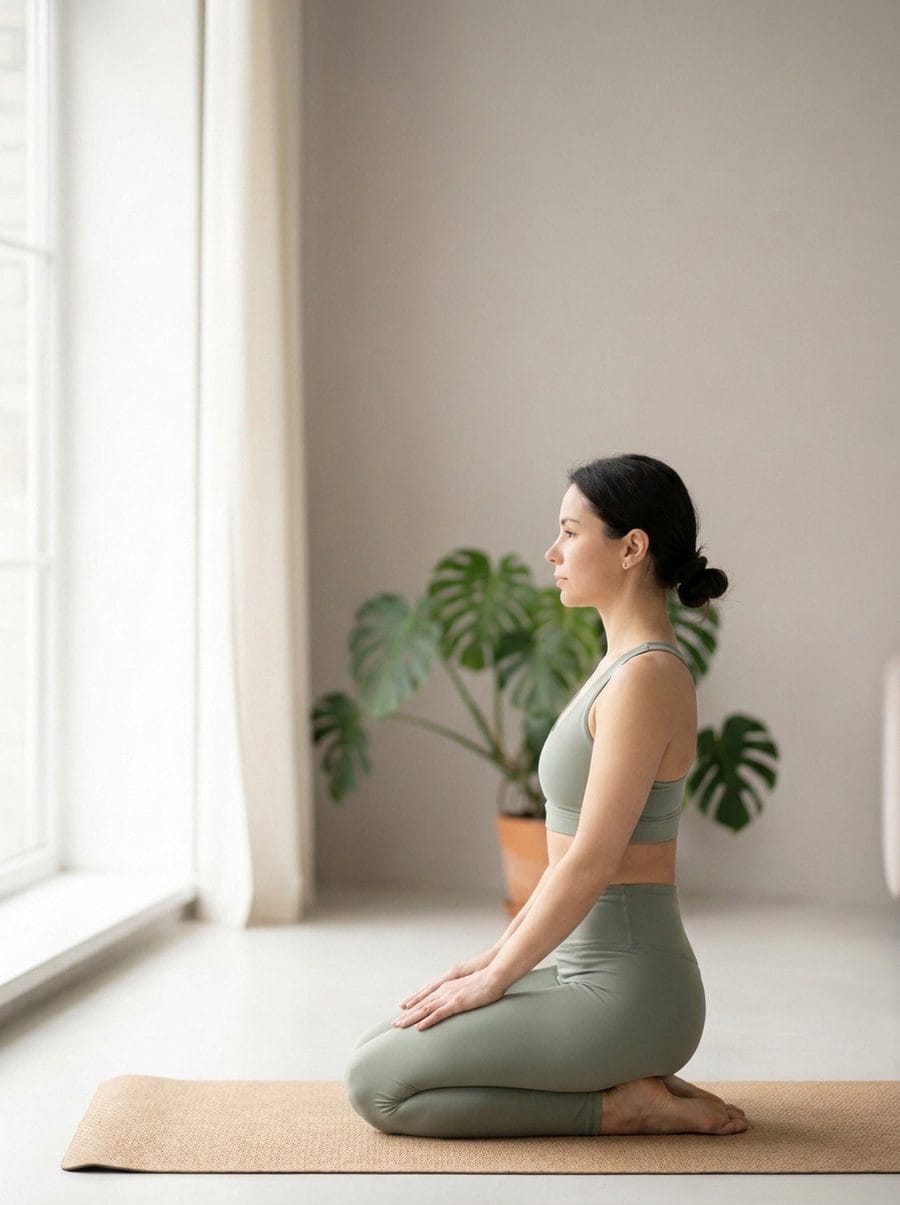
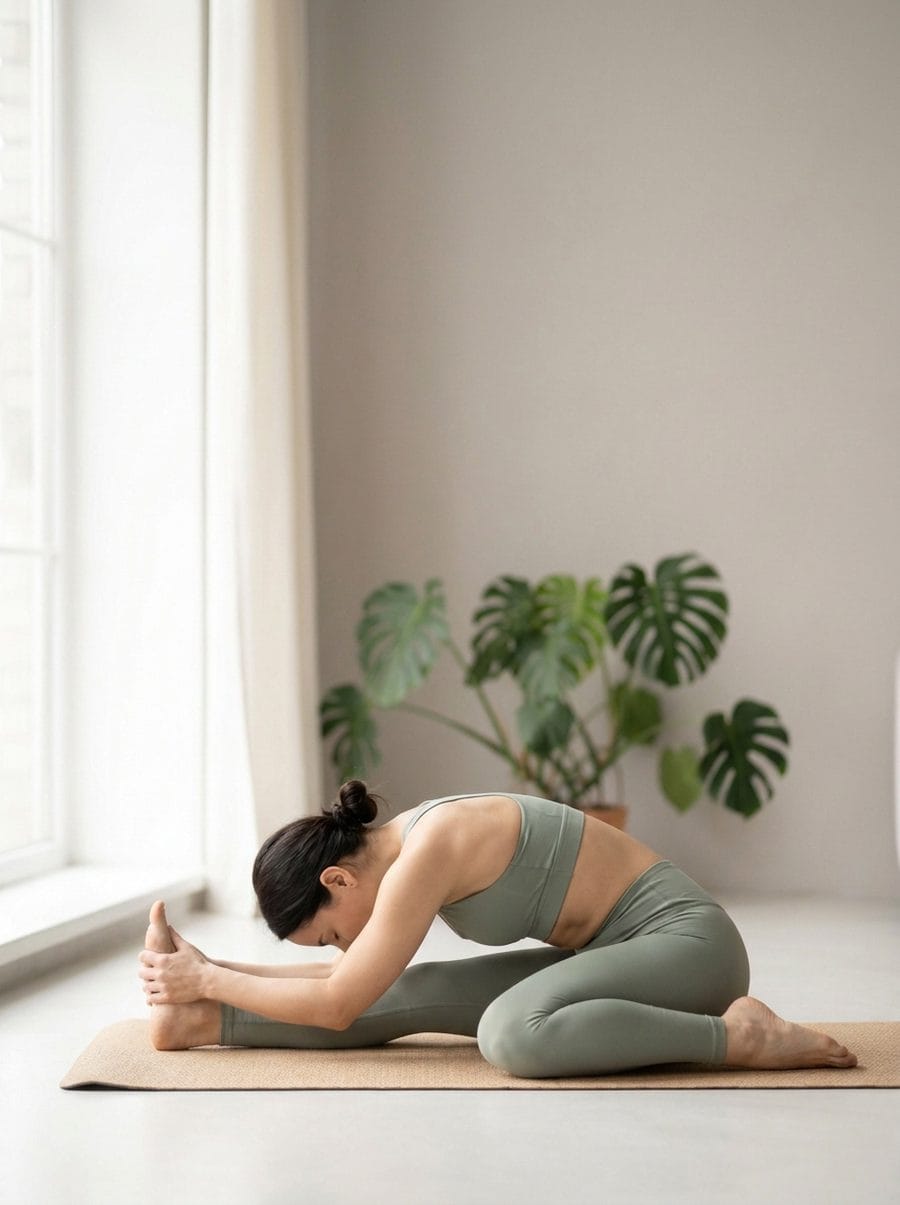
Mountain Pose trains you to stand evenly on the whole foot without rolling to the outer or inner edge. In Tree Pose, the standing foot keeps making small adjustments to hold you upright. Thunderbolt Pose and Three-Limbed Forward Fold lengthen the top of the foot, which barely moves inside your shoes.
Rest for your legs
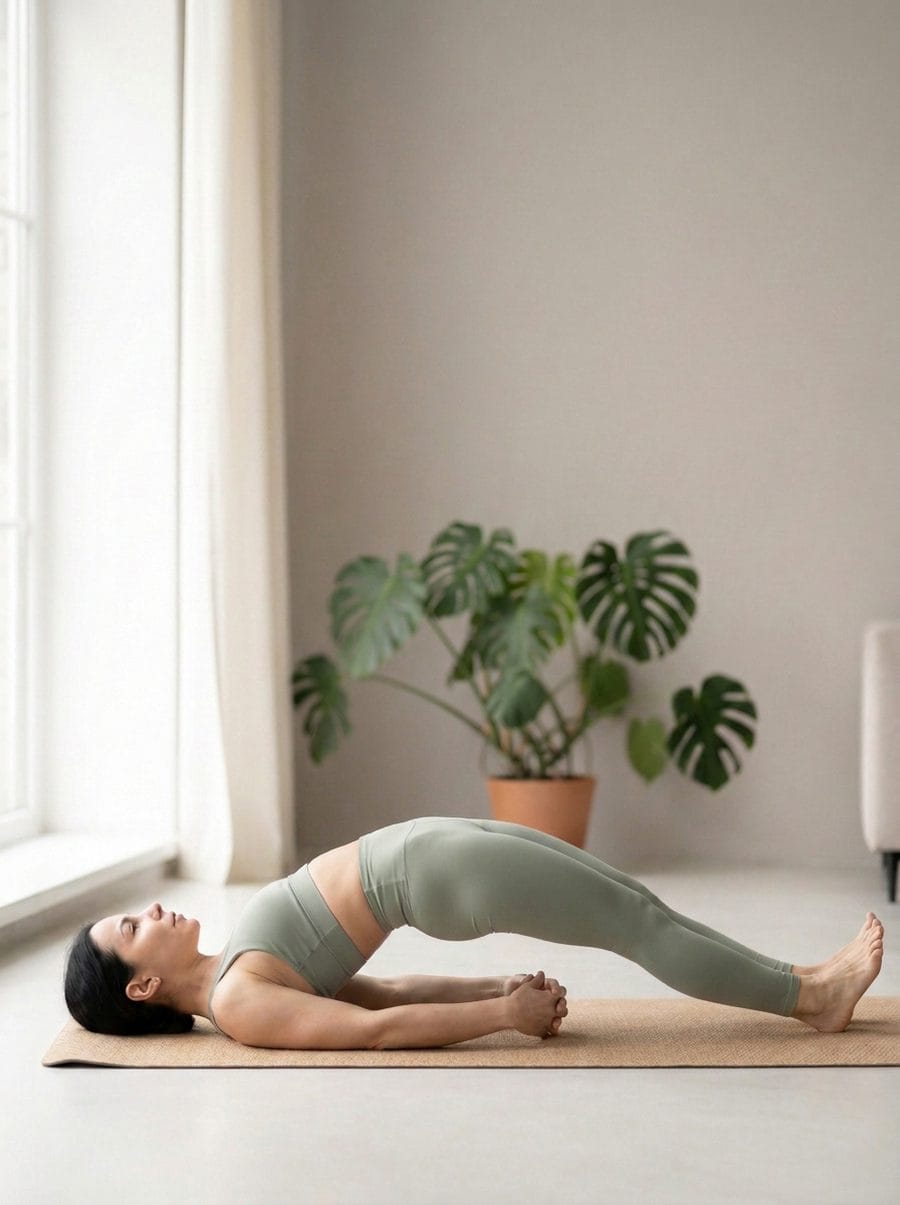
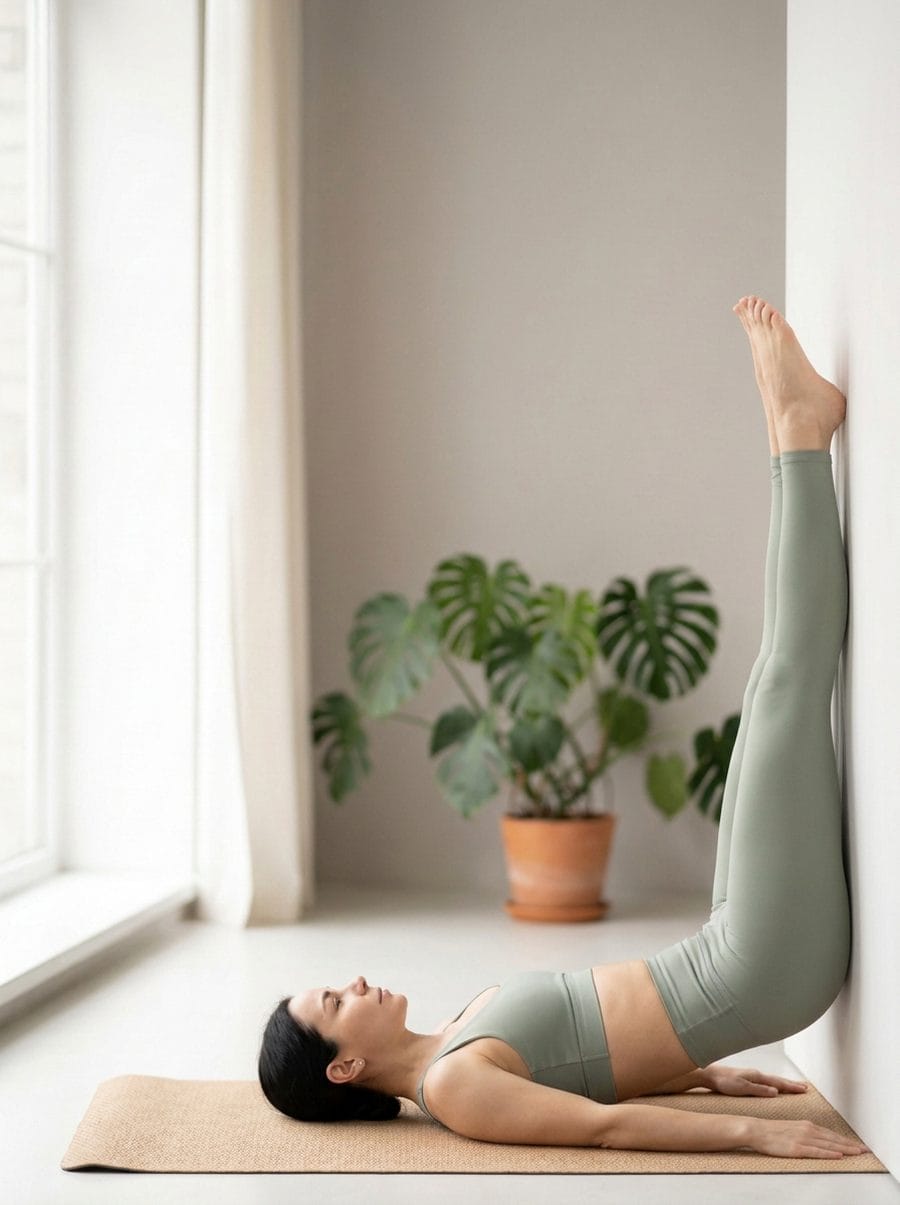
Straight-Leg Bridge Pose works the glutes and hamstrings. Legs-Up-the-Wall Pose gives your legs a break after the standing work.
Your feet: the base for everything above
You practice yoga barefoot, and that alone is training: on the mat there's no sole holding up your arch for you. In standing poses, ground yourself through three points: the heel, the pad under the big toe and the pad under the little toe.
When the foot collapses inward, the knee usually follows, so alignment starts from the ground up.
The tops of your feet hardly get stretched during the day, which is why sitting on your heels can feel strange at first. Start with 20 to 30 seconds and come out as soon as you feel pain. If your heel or arch hurts with your first steps in the morning, see a doctor before you start stretching: a stretch is no substitute for a diagnosis.
How to protect your knees in yoga
- Knee and toes point the same way. In lunges, Chair Pose and Goddess Pose, the knee follows the line of the foot and doesn't drift inward.
- Don't lock your knees. In standing poses and forward folds, keep a micro-bend so the muscles carry the load instead of the joint.
- Never force your legs into Lotus. If your knees sit higher than your hips when you're seated, sit on a folded blanket. There's more on the Lotus Pose page.
- Pad the floor. Whenever a knee rests on the floor, put a folded blanket under it.
- Feel it in the muscle, not the joint. A stretch in the thigh is fine. Sharp or stabbing pain inside the knee means you should stop and release the pose immediately.
Safety: which poses to skip and when to see a doctor
With a knee injury, the Knees & Feet routine doesn't work as a whole. The app lists knee injuries as a contraindication for Chair Flow, One-Legged Chair Pose, Chair Pose, Goddess Pose, Side Lunge and Thunderbolt Pose, and Thunderbolt Pose also rules out ankle injuries.
Skip those poses. For Warrior I Flow, the app says to place a folded blanket under your back knee if your knee is injured, and in Three-Limbed Forward Fold you don't sit on your heel but sit on a prop instead.
There are more limits. High blood pressure means no Forward Fold Flow, no standing forward folds and no Straight-Leg Bridge Pose; that bridge also doesn't fit neck or shoulder injuries or late pregnancy. Forward Fold Flow is a no with a herniated lumbar disc; in both standing folds, keep a generous bend in your knees.
Leave Chair Pose and Chair Flow out when your lower back acts up, and One-Legged Chair Pose if you have a balance disorder. As for resting your legs up the wall, glaucoma, uncontrolled hypertension and menstruation each rule it out.
If your knee hurts, is injured or you're recovering from surgery, build your routine together with a doctor or physical therapist. Get urgent help if:
- your knee is very painful or you can't put any weight on it;
- you can't bend it, or it's badly swollen or has changed shape;
- your knee locks, gives way or clicks painfully;
- the skin around it is red and hot and you have a high temperature.
Painless clicking is common and not a cause for worry on its own. Pain that lingers for several weeks, however, deserves a checkup. You'll find the general guidelines in Safety and Contraindications.
How often to do yoga for your knees
For leg strength, two or three practices weekly will do, since muscles need rest in between. On the other days, a short stretch is plenty. If yoga is new to you, begin with Yoga for Beginners, and you'll find full-body stretches in Stretching for Beginners.
After a run or a long walk, try the Post-Workout Legs routine.
Pose cautions in this article
- Knee injuries (Chair Pose, One-Legged Chair Pose, Goddess Pose, Side Lunge)
- Flare-up of lower back problems (Chair Pose)
- Balance disorders (One-Legged Chair Pose)
- Knee injuries — place a folded blanket under your back knee (Warrior I Flow)
- High blood pressure — keep your hands on your hips (Warrior I Flow)
- If your heel won't come down — keep it lifted (Side Lunge)
- Balance disorders — take a wider stance (Standing Cross-Legged Forward Fold)
- High blood pressure (Standing Cross-Legged Forward Fold, Straight-Leg Bridge Pose)
- Lumbar disc herniation — bend your knees (Standing Cross-Legged Forward Fold)
- Use a strap if your back lifts off the floor (Reclining Hand-to-Big-Toe Pose)
- Dizziness — practice near a wall (Tree Pose)
- Knee and ankle injuries (Thunderbolt Pose)
- Knee injuries — don't sit on your heel; place a prop under your hips (Three-Limbed Forward Fold)
- Neck and shoulder injuries (Straight-Leg Bridge Pose)
- Late pregnancy (Straight-Leg Bridge Pose)
- Menstruation (Legs-Up-the-Wall Pose)
- Glaucoma (Legs-Up-the-Wall Pose)
- Uncontrolled hypertension (Legs-Up-the-Wall Pose)
This site is for general information and is not medical advice. If you have pain, an injury, a chronic condition, or are pregnant, check with a qualified professional before practicing.
Questions
Is yoga good for knee pain? For healthy knees, yoga strengthens the thigh muscles and stretches the legs, which takes some load off the joint. In knee osteoarthritis, studies suggest possible improvements in pain and mobility, but the evidence is weak, so start only after talking with your doctor.
Is yoga bad for your knees? It can be, if you force your legs into Lotus, let your knee cave inward in lunges or push through pain in the joint. Keep the knee in line with your foot, and leave the pose at the first sharp pain.
Can you do yoga with bad knees? Find out what's causing the pain from a doctor first. For an injured knee, the app takes Chair Pose, Goddess Pose, Side Lunge and Thunderbolt Pose out of this routine, so the Knees & Feet sequence isn't the right fit for you.
What yoga poses are good for your feet and ankles? Mountain Pose shows you how to share your weight across the whole foot, Tree Pose trains balance, and Thunderbolt Pose lengthens the instep. Leave out Thunderbolt Pose when a knee or ankle is injured.
Sources
- Lauche R, et al. Yoga for Osteoarthritis: a Systematic Review and Meta-analysis. Current Rheumatology Reports, 2019.
- NHS. Knee pain. When knee pain needs urgent help.
- Pose technique and cautions, and sequence contents: the Hatha Yoga app. More on the How We Prepare Our Content page.
Read next
- Yoga for Arthritis and Osteoporosis: How to Protect Your Joints and Bones7 min read
- Ashtanga Yoga Explained: The Series, the Breath and the Difference from Hatha6 min read
- Ayurveda Explained Simply: The Basics and a Daily Routine (Dinacharya)5 min read
- Balance Exercises: 10 Yoga Poses for Balance and Stability7 min read