 Hatha Yoga
Stretching for Beginners: Full Body Stretches and How to Get Flexible
Hatha Yoga editorial team · Updated · 6 min read
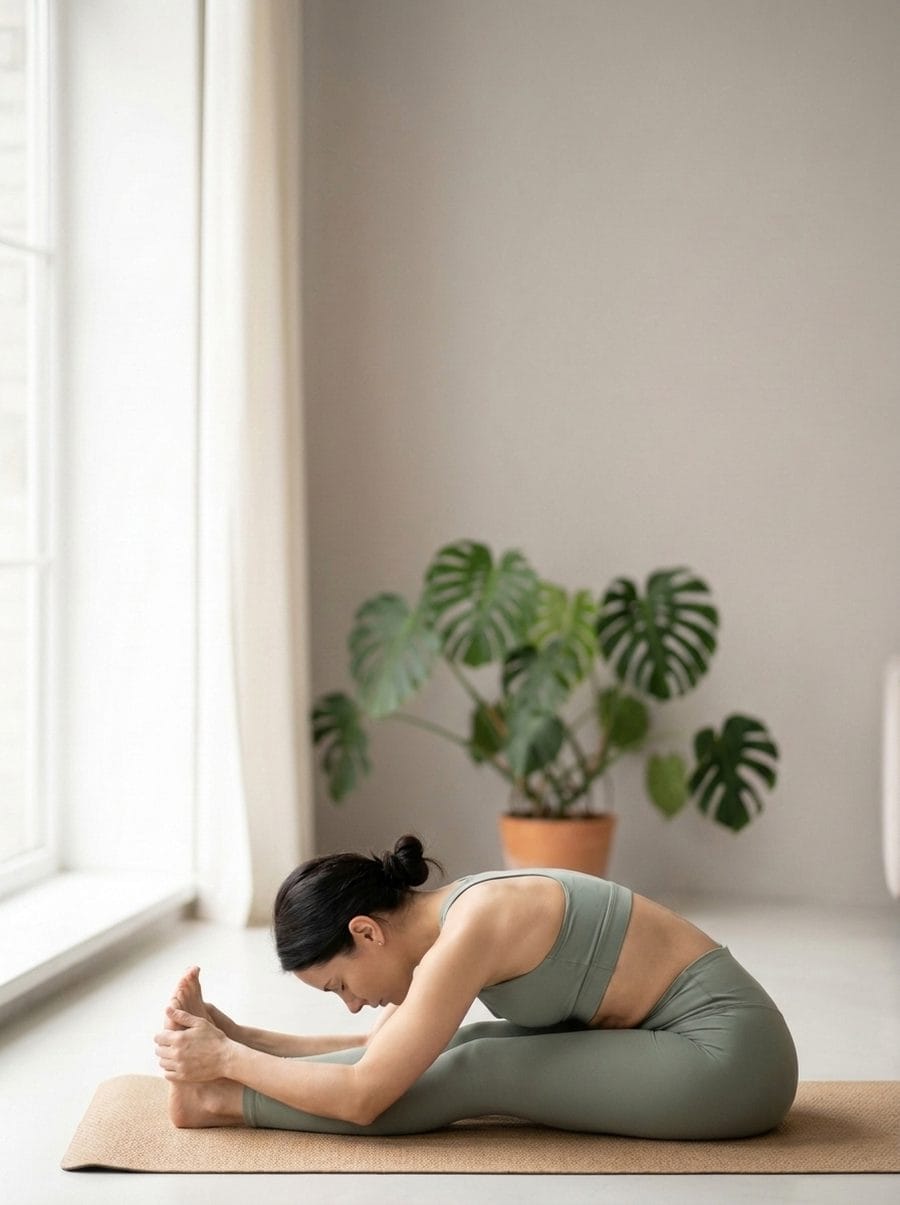
Stretching for beginners has nothing to do with the splits or pressing your forehead to your knees. Its goal is more modest and far more useful: to give your muscles back the length they lose over long days of sitting, so ordinary movements feel easier.
Picking a bag up off the floor, tying your shoes, twisting around to look over your shoulder while you back out of a parking spot. Below you'll find 10 full body stretches taken from yoga, the rules that keep you injury-free, and a ready-made routine for when you want to get serious.
Benefits of stretching: what to realistically expect
Muscles that stay in one position for hours adapt to it. If you sit most of the day, your hamstrings, hip flexors and chest muscles get shorter, and your upper back begins to round. Regular stretching brings them back to a useful working length, and your whole body feels lighter.
It helps to be realistic about the pace. Flexibility improves slowly, over weeks and months. The first thing most people notice is that they feel less stiff when they get out of bed, long before their forward fold gets any deeper.
Static vs. dynamic stretching
Dynamic stretching is done while moving: circles, gentle swings, transitions timed to your breath. It's ideal as a warm-up and in the morning. Static stretching means staying in one position for 30 to 60 seconds or more. It reaches deeper into the muscle and works best after you've warmed up, or in the evening.
Yoga gives you both kinds. Cat-Cow and breath-linked sequences are dynamic, while forward folds and twists are static holds. In the app's routines, a stretching pose typically lasts somewhere between 45 and 75 seconds.
Stretching tips for beginners
- Warm up before you go deep. Spend five minutes moving first: Cat-Cow, Downward-Facing Dog, a couple of rounds of Sun Salutation.
- A pull is fine, pain is not. A sense of tension in the middle of a muscle is what you're after. If you feel it in a joint, behind your knee or at the point where a muscle attaches to bone, come out of the pose at once.
- Skip the bouncing. Springing in and out of a stretch makes the muscle tighten up, so you end up with less length instead of more.
- Slow down your breathing. Muscles release more readily as you breathe out, so that's the moment to ease a little further.
- Props are your friends. A folded blanket beneath your pelvis, a strap looped around your foot, and blocks or a stack of books under your hands all help you keep good alignment.
- Aim for three or four sessions a week. That's enough for your flexibility to start moving in the right direction.
10 full body stretches from yoga
These flexibility exercises are grouped by body area. Do them in this order after a short warm-up, or pick the group your body needs most today.
Back
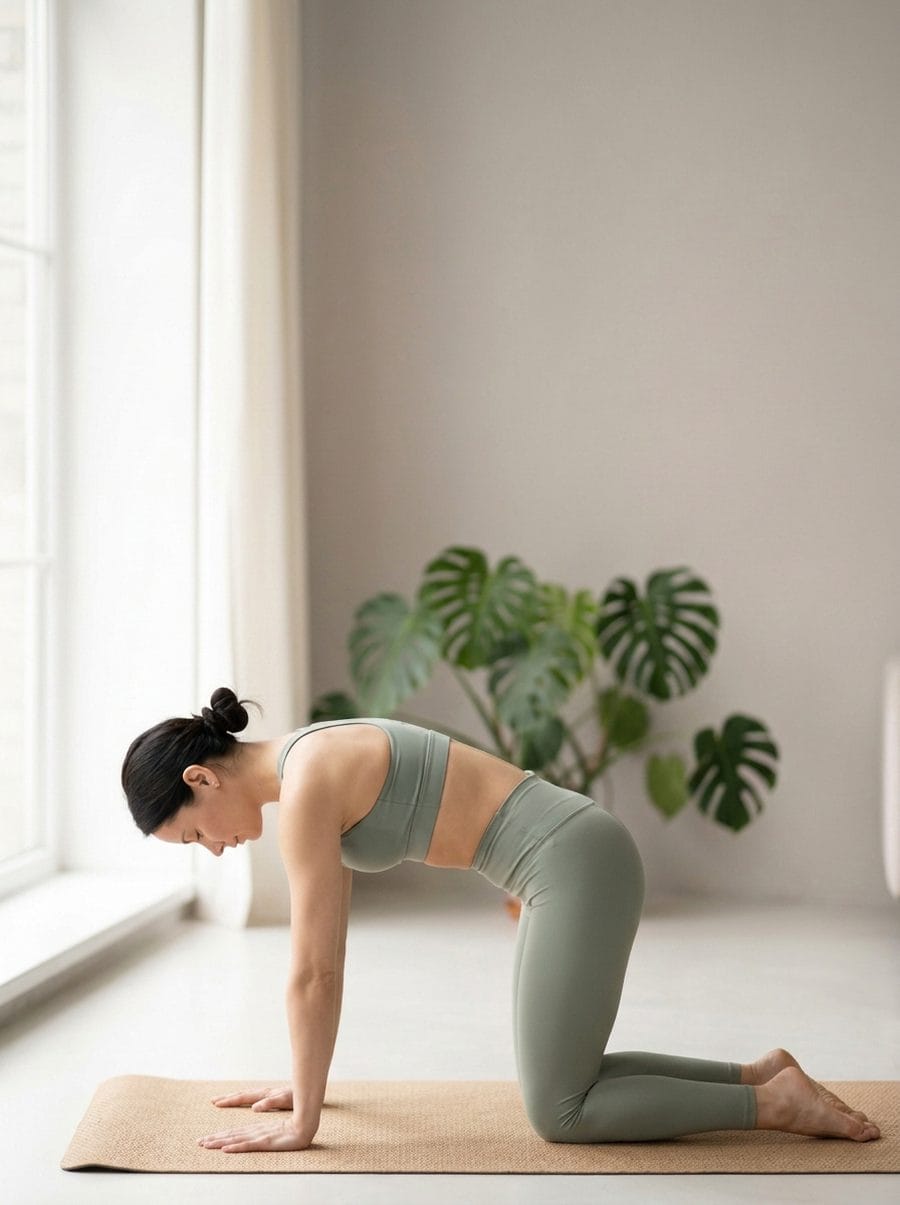
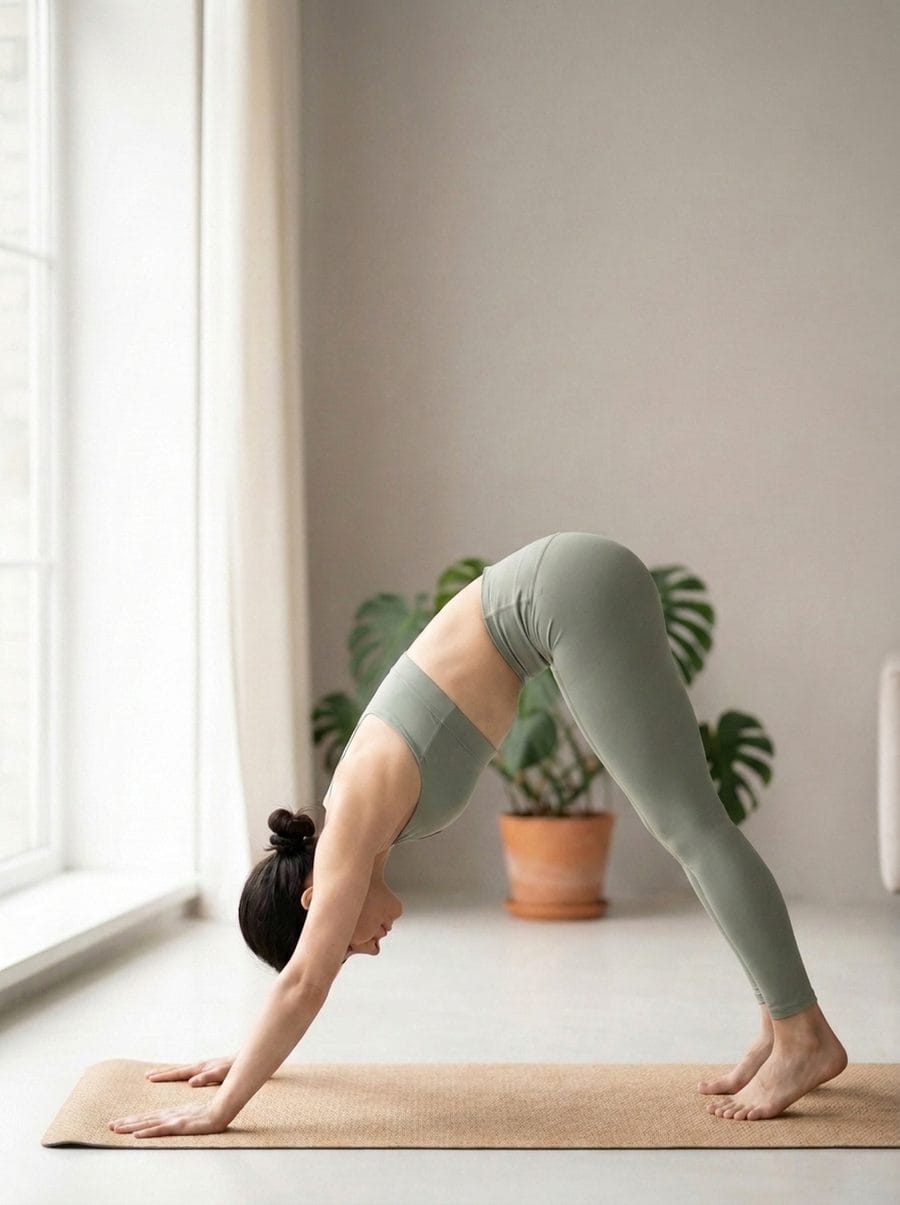
Cat-Cow wakes up your spine through movement. In Downward-Facing Dog, the stretch travels from your heels up through your calves and thighs to your shoulder blades.
Hamstrings
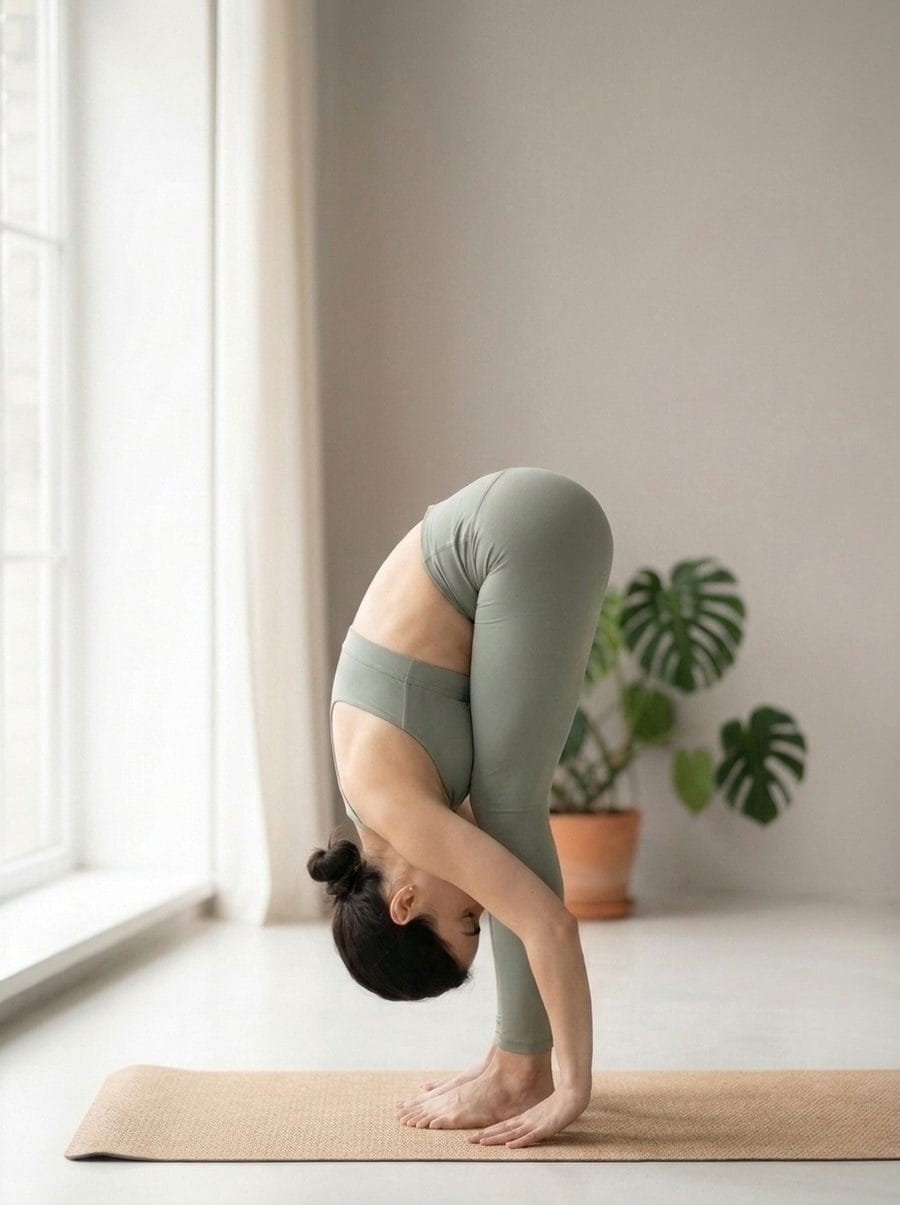
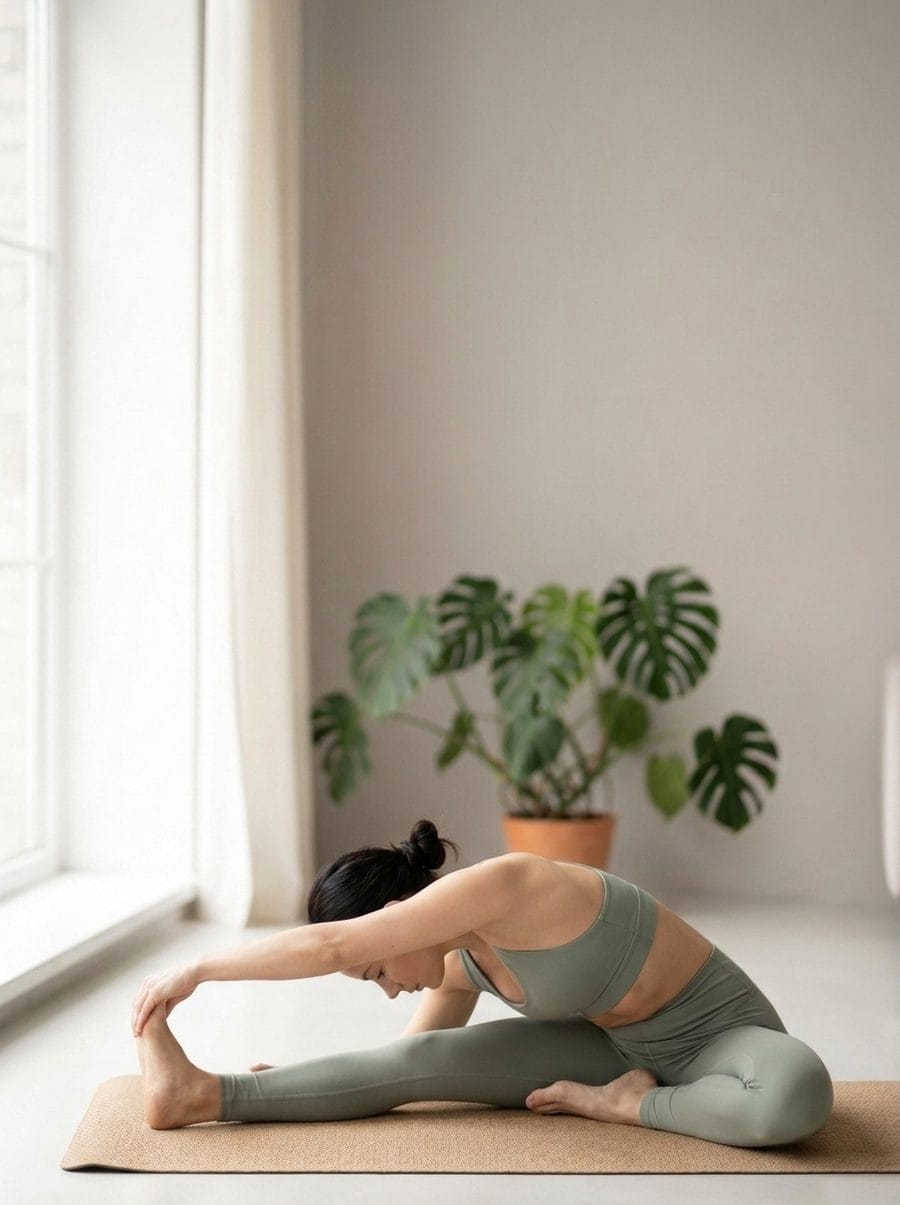
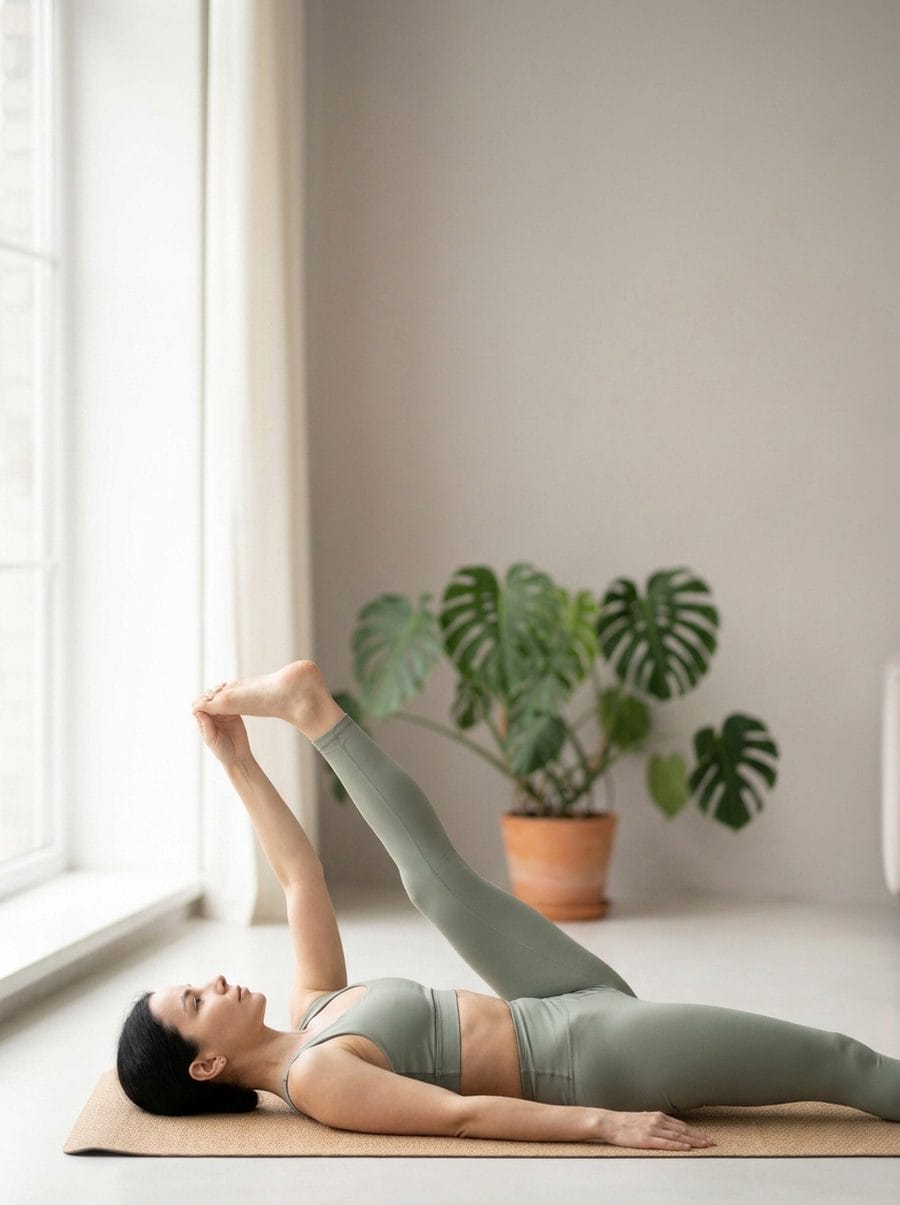
For anyone who sits a lot, this is usually the tightest area of all. In Standing Forward Fold and Head-to-Knee Pose, bend your knees as much as you need so your back stays long. The kindest option of the group is Reclining Hand-to-Big-Toe Pose: the floor supports your back, and a strap makes up for arms that don't quite reach.
Sides, hips and glutes
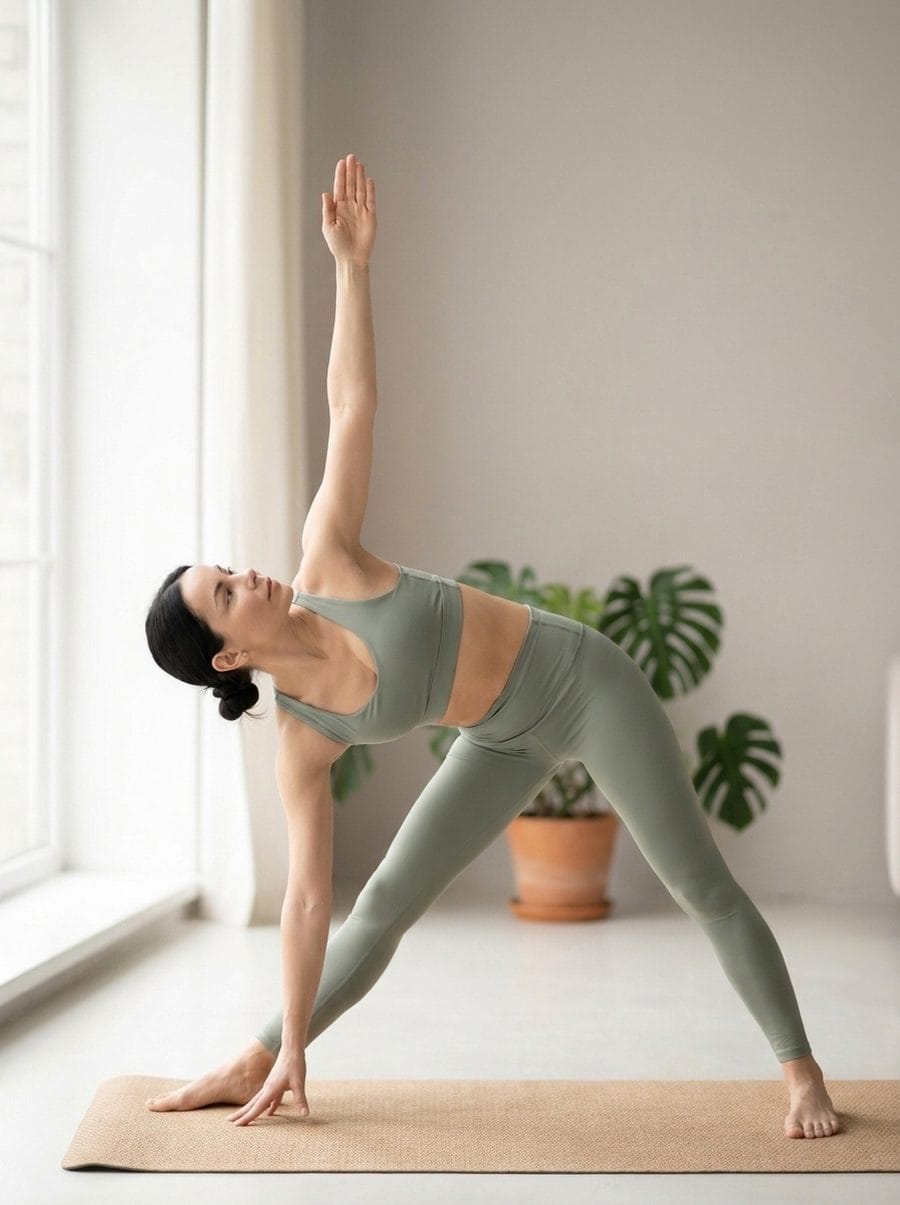
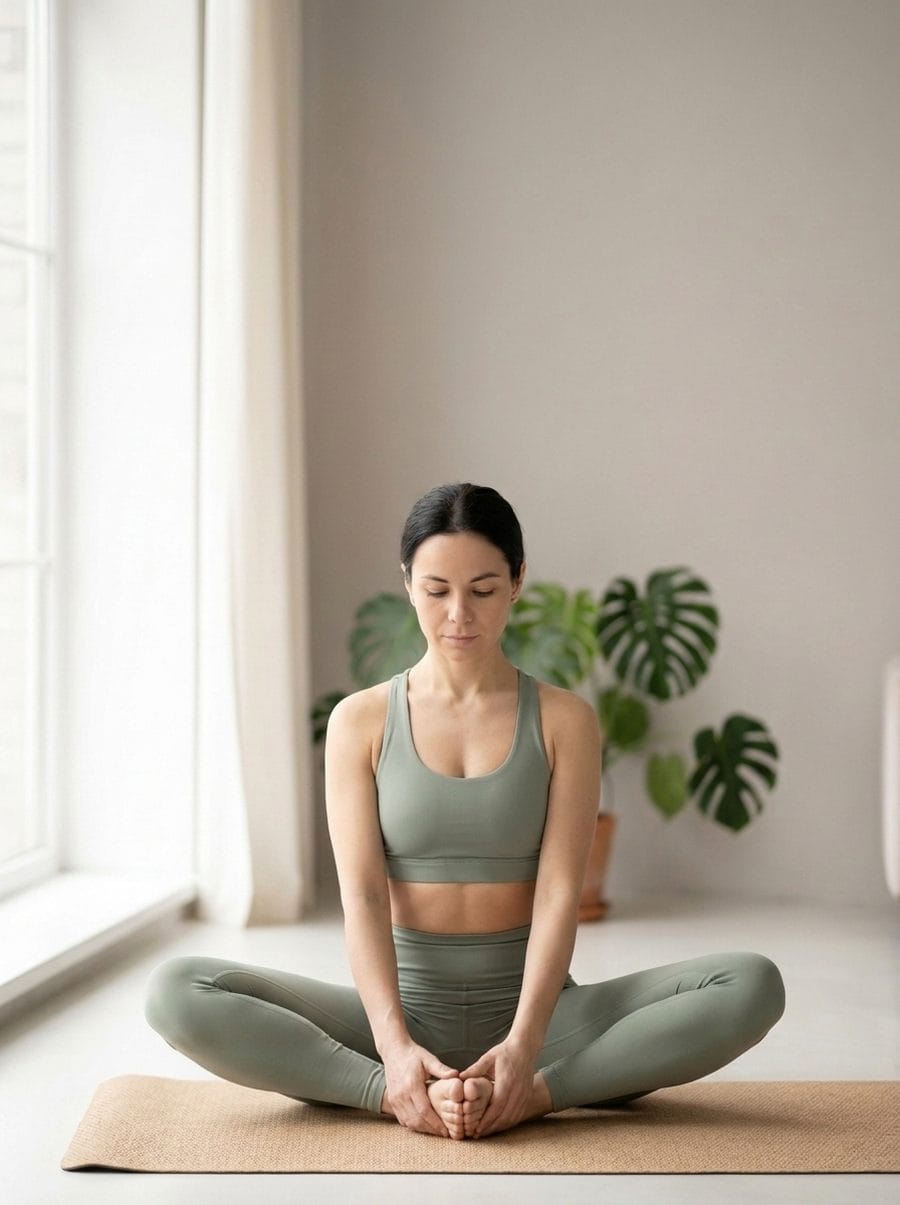
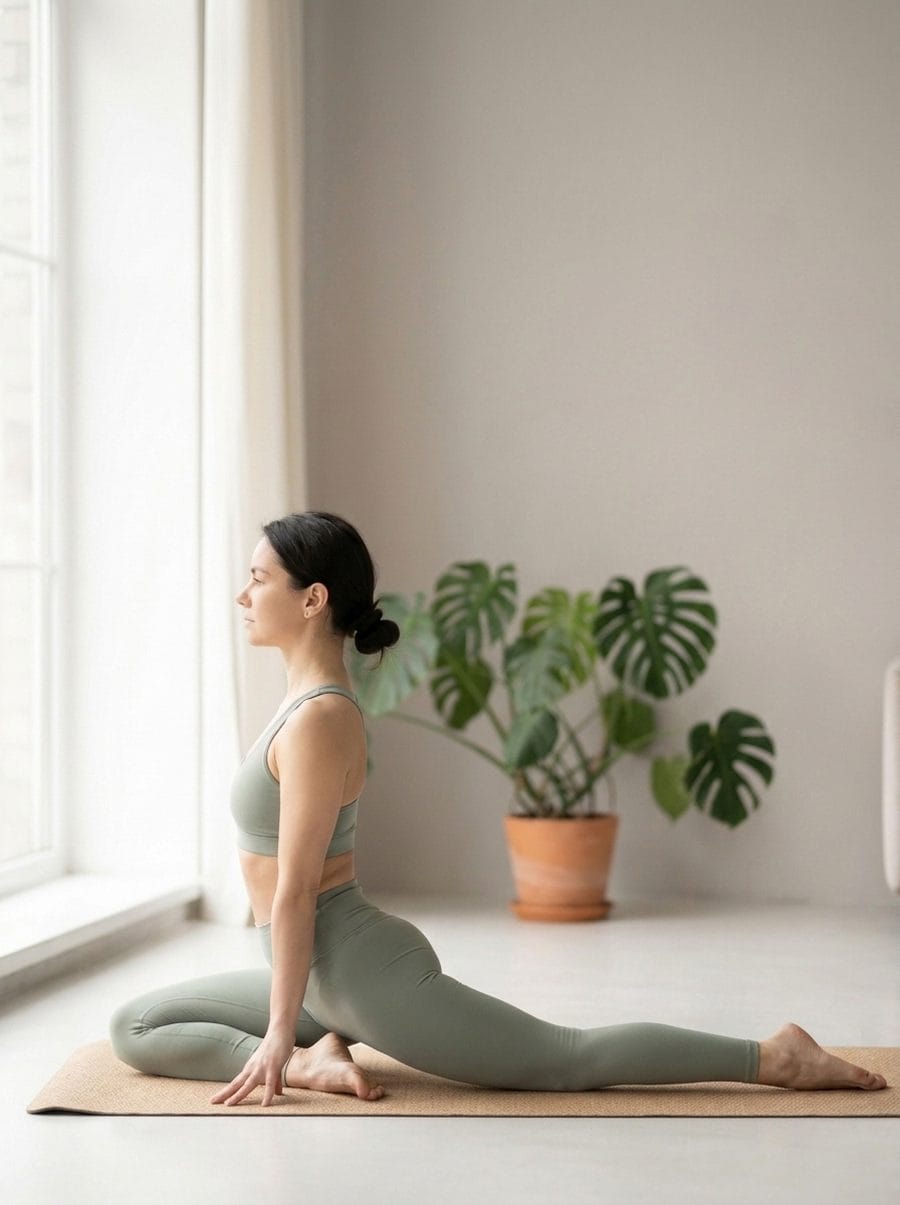
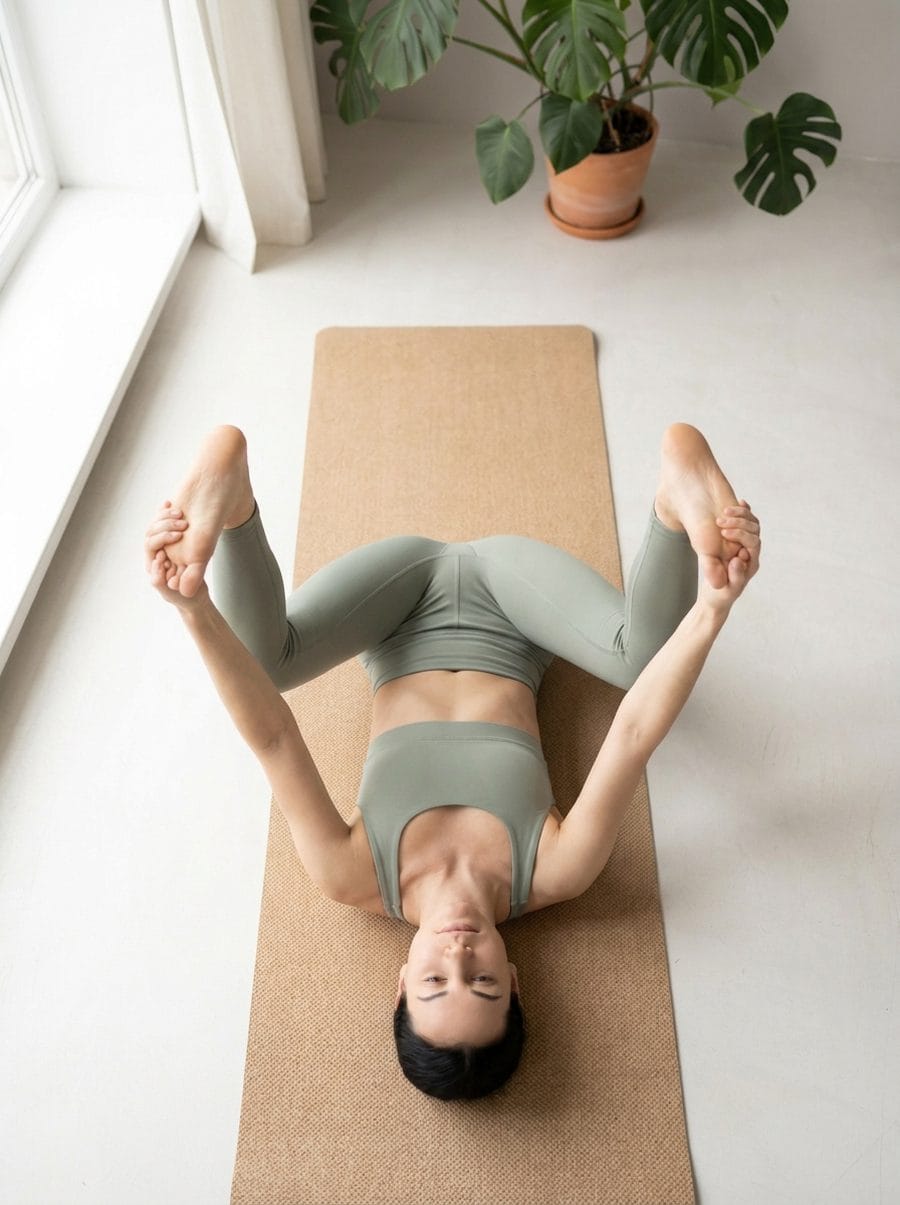
Triangle Pose lengthens the entire side of your body. Butterfly Pose gently opens your hip joints, Pigeon Pose (Prep) reaches deep into your glutes and outer thigh, and Happy Baby Pose lets your lower back settle at the end.
Deep Stretch: a 25-minute stretching routine
When the basic poses start to feel familiar, switch to a complete routine. Deep Stretch is an intermediate program. Two rounds of Sun Salutation warm you up first. Next come standing and seated forward folds, Triangle Pose, Pigeon Pose (Prep), Bridge Pose and Supine Twist, all with long holds, and the session closes with five minutes in Relaxation Pose.
If you're brand new, begin with First Practice instead. It already includes forward folds and Butterfly Pose, but in softer versions and with less load on your body.
Stretching in the morning vs. at night
Your muscles are cooler in the morning, so it pays to keep moving and avoid deep folds. That's the idea behind the 10-minute morning stretches. By evening your body is warmer and gives way more easily, and long holds help you wind down: try the gentle routine in yoga for sleep.
And if you're chasing a specific goal, follow the plan in how to do the splits.
How to get flexible: is there a fast way?
There's no shortcut, but there is a method that works: small doses, repeated often. Stretch for 15 to 20 minutes at least three times a week, and within a couple of months you'll move noticeably more freely. To track your progress, photograph the same forward fold every two weeks.
A picture reveals changes that you would hardly notice from the inside.
Safety
Never stretch into pain, and don't stretch an injured muscle until your doctor gives you the green light. If your hamstrings or groin are injured, do forward folds and Butterfly Pose only with props, or leave them out. With a knee injury, replace Pigeon Pose (Prep) with a Supine Twist, drawing your knee toward your chest.
Seated Forward Fold is out with a lumbar disc herniation; Triangle Pose is out while lower back pain is flaring up. Leave out Standing Forward Fold when your blood pressure is high. You'll find each pose's full list of cautions further down the page, and the general guidelines are collected in Safety and Contraindications.
Pose cautions in this article
- Acute back pain (Cat-Cow)
- Wrist injuries — practice on your fists (Cat-Cow)
- Wrist and shoulder injuries (Downward-Facing Dog)
- High blood pressure — don't stay in the pose long (Downward-Facing Dog)
- Glaucoma (Downward-Facing Dog)
- High blood pressure (Standing Forward Fold)
- Lumbar disc herniation — bend your knees (Standing Forward Fold)
- Flare-up of lower back pain (Triangle Pose)
- Low blood pressure — come out slowly (Triangle Pose)
- Knee injuries — place a support under your bent knee (Head-to-Knee Pose)
- Lumbar disc herniation (Seated Forward Fold)
- Flare-up of back pain — bend your knees (Seated Forward Fold)
- Groin and knee injuries — place supports under your thighs (Butterfly Pose)
- Knee injuries — do a Supine Twist with your knee to your chest instead (Pigeon Pose (Prep))
- Use a strap if your back lifts off the floor (Reclining Hand-to-Big-Toe Pose)
- Late pregnancy (Happy Baby Pose)
This site is for general information and is not medical advice. If you have pain, an injury, a chronic condition, or are pregnant, check with a qualified professional before practicing.
Questions
How long should you hold a stretch? For beginners, 30 to 45 seconds per pose is plenty. As you gain experience, your holds can grow to a minute or longer; in the app, stretching poses are held for 45 to 75 seconds.
Is it okay to stretch every day? Yes, gentle stretching is perfectly suited to daily practice. For long, deep holds on the same muscle group, give it a rest day in between.
Why am I not getting more flexible? The usual reasons are cold muscles, bouncing and practicing too rarely. Add a warm-up, settle into each pose calmly as you exhale, and stretch at least three times a week.
Which is better for flexibility: yoga or stretching? Yoga includes stretching and adds strength and breath work on top. Either will make you more flexible, but yoga also builds stability.
Sources
- Pose technique, hold times and cautions, and the contents of the routines: the Hatha Yoga app. Our checking process is described on the How We Prepare Our Content page.
Read next
- Yoga for Arthritis and Osteoporosis: How to Protect Your Joints and Bones7 min read
- Ashtanga Yoga Explained: The Series, the Breath and the Difference from Hatha6 min read
- Ayurveda Explained Simply: The Basics and a Daily Routine (Dinacharya)5 min read
- Balance Exercises: 10 Yoga Poses for Balance and Stability7 min read