 Hatha Yoga
Yoga for Sleep: Relaxing Bedtime Poses and a 10-Minute Routine
Hatha Yoga editorial team · Updated · 5 min read
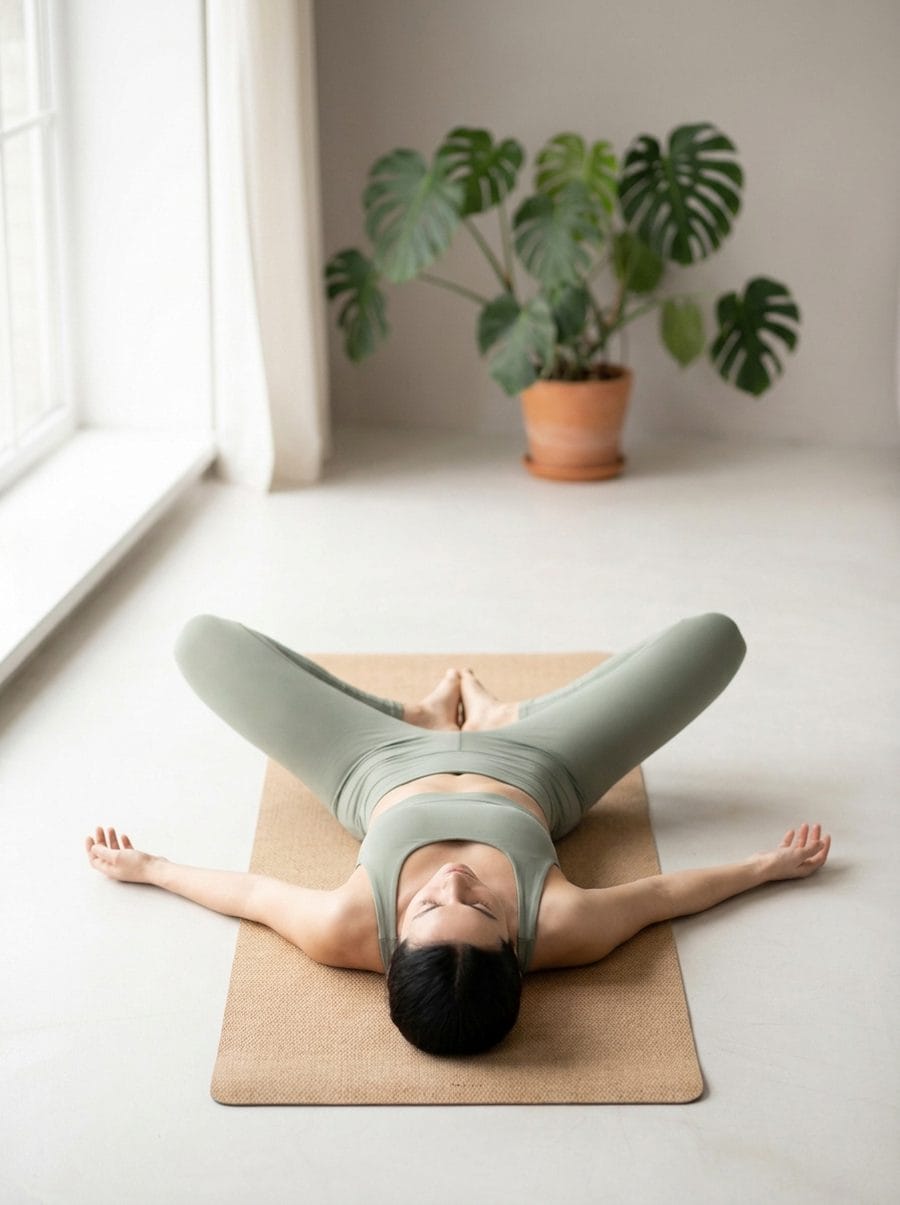
Yoga at night has a different job from yoga in the morning. You aren't trying to warm up or build strength. The goal runs the other way: shed the tension of the day, slow your breathing and give your body a clear signal that it's time to rest.
Below are 8 gentle poses you can do on a mat right beside your bed, a ready-made 10-minute routine, and a few simple rules that keep your bedtime yoga calming instead of energizing.
How bedtime yoga differs from morning yoga
In the morning you move briskly: you get your circulation going and wake up the muscles of your legs and core. At night everything flips. You do the poses lying down or seated, stay in them longer and breathe more slowly.
Strength poses and active backbends drop out completely, because they make you more alert and can push sleep further away.
A good evening sequence travels downward, from seated or hands-and-knees positions to poses on your back. The final minutes belong to complete relaxation. If you're going straight to sleep afterward, you can do Savasana already tucked into bed.
Before Bed: a 10-minute bedtime yoga routine
You do this routine from the app entirely on the floor. It has six poses, you never come up to standing, and close to a third of the time is given to the final relaxation.
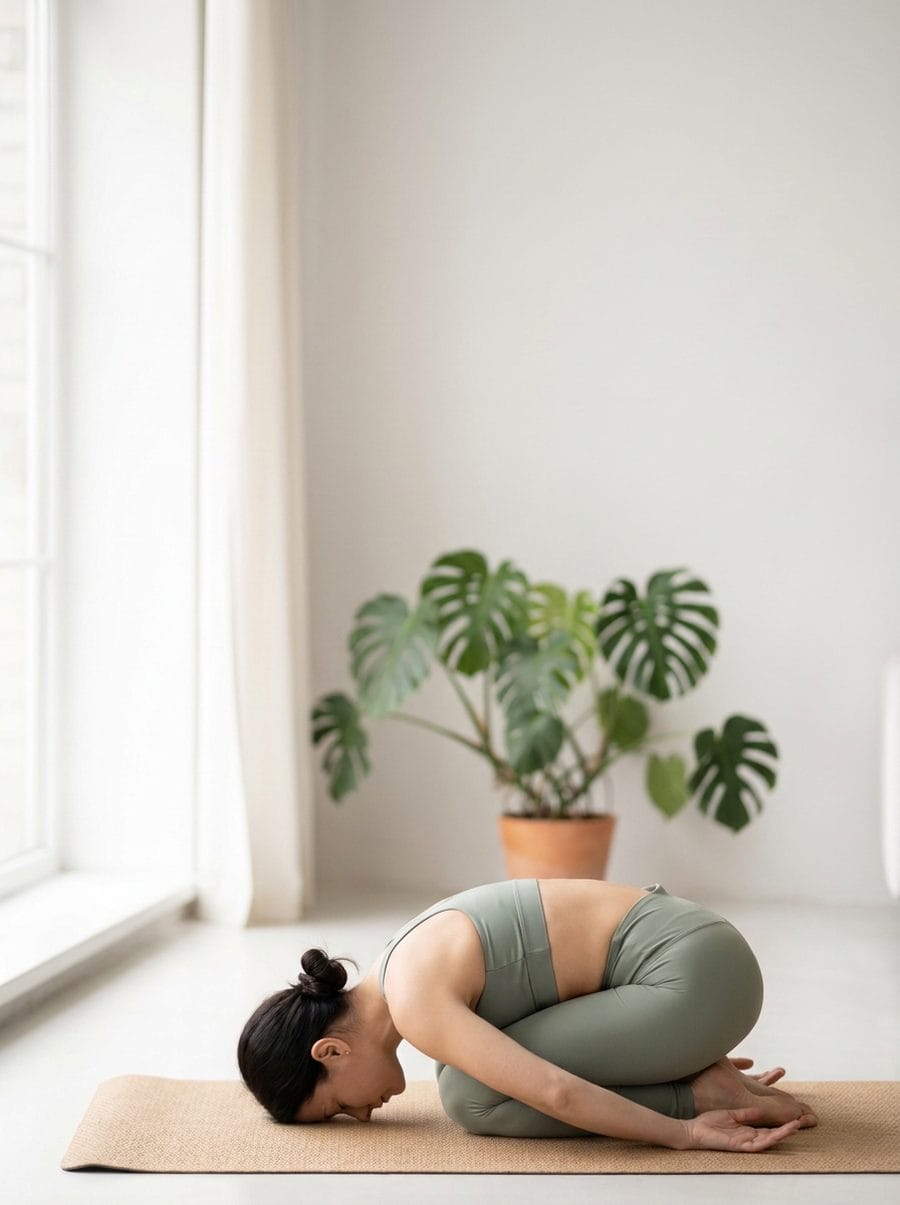
- Child's Pose. Forehead down on the mat, breath spreading into your back. A good way to step out of the day's errands.
- Reclining Butterfly Pose. Soles of the feet together, knees falling open. If your groin feels strained, tuck pillows under your knees.
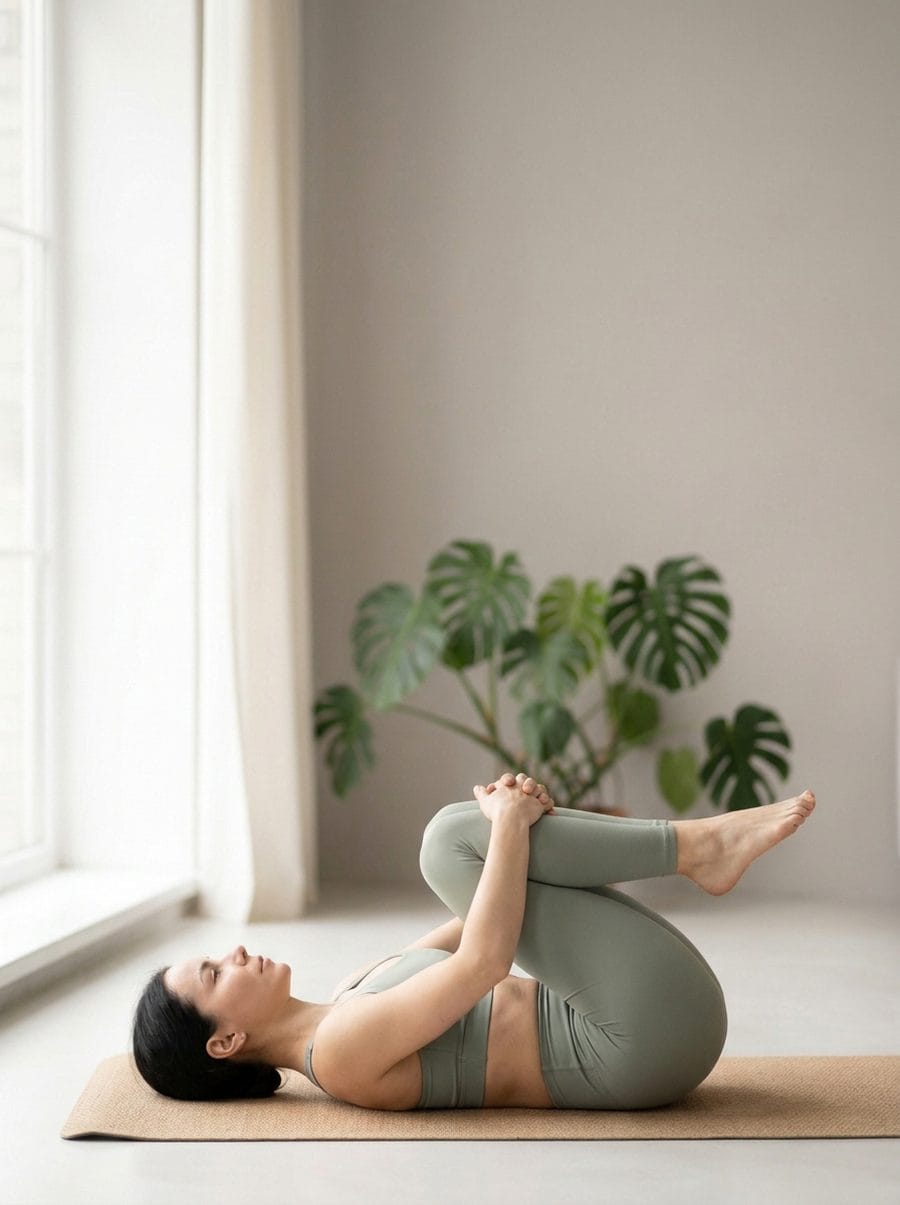
- Knees-to-Chest Pose. Eases your lower back after a day spent at a desk or on your feet.
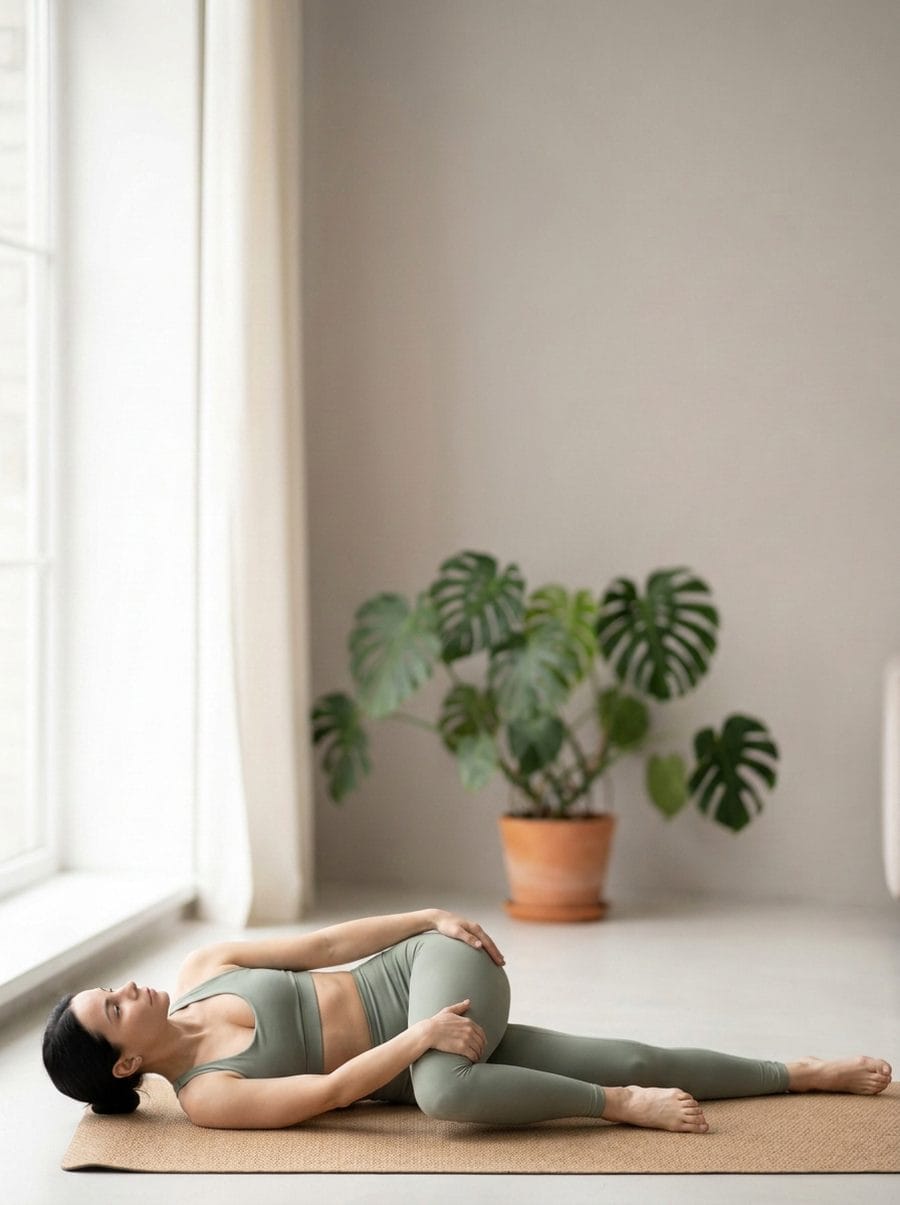
- Supine Twist. Shoulders stay down, knees drop to one side while you look the other way. Take a few unhurried breaths on each side.
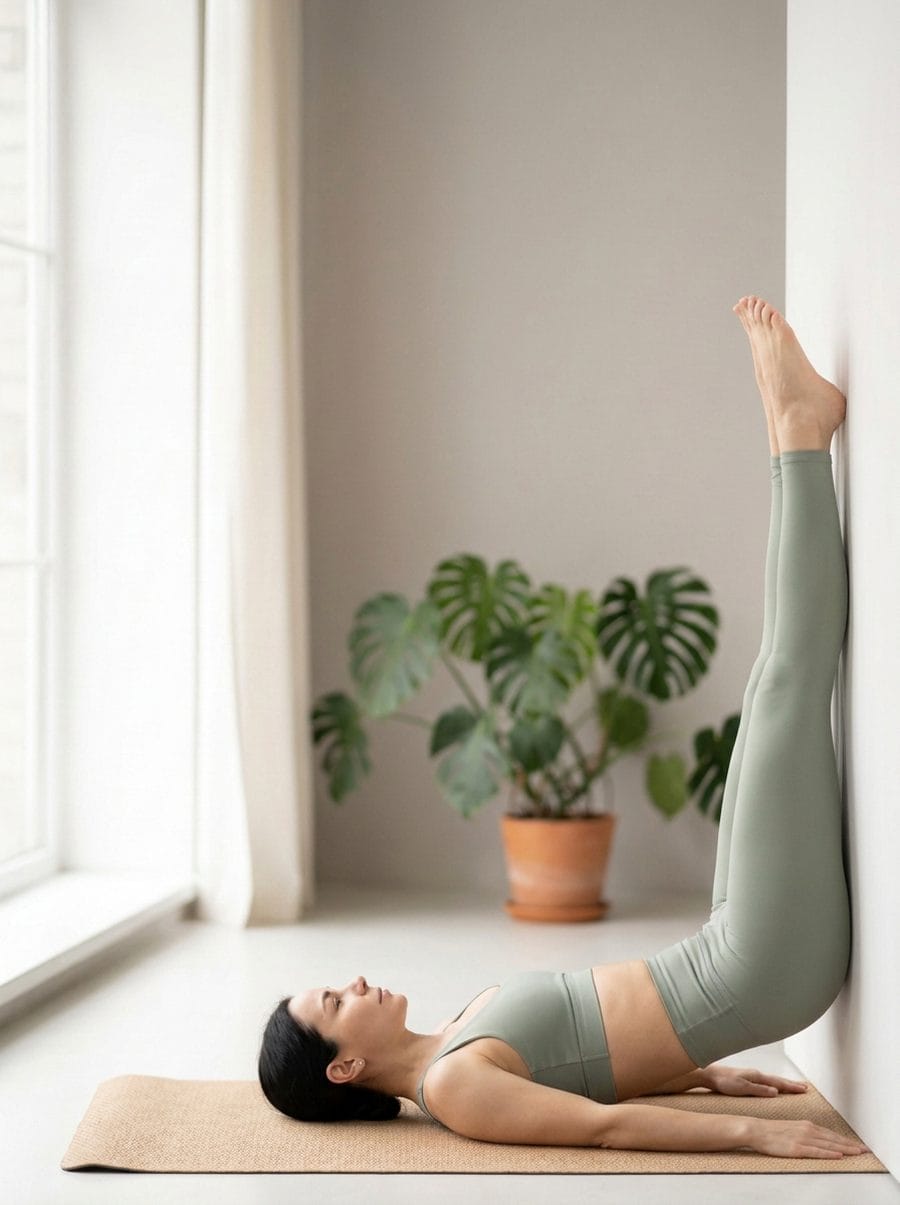
- Legs-Up-the-Wall Pose. Your legs rise up the wall, with your pelvis close to it or resting on a support. Tired legs feel lighter after a long day.
- Relaxation Pose. About three minutes of lying perfectly still.
8 yoga poses for sleep
The poses below come from the two evening routines in the app. Mix them in any combination you like, but always end with full relaxation.
Poses to let your back unwind
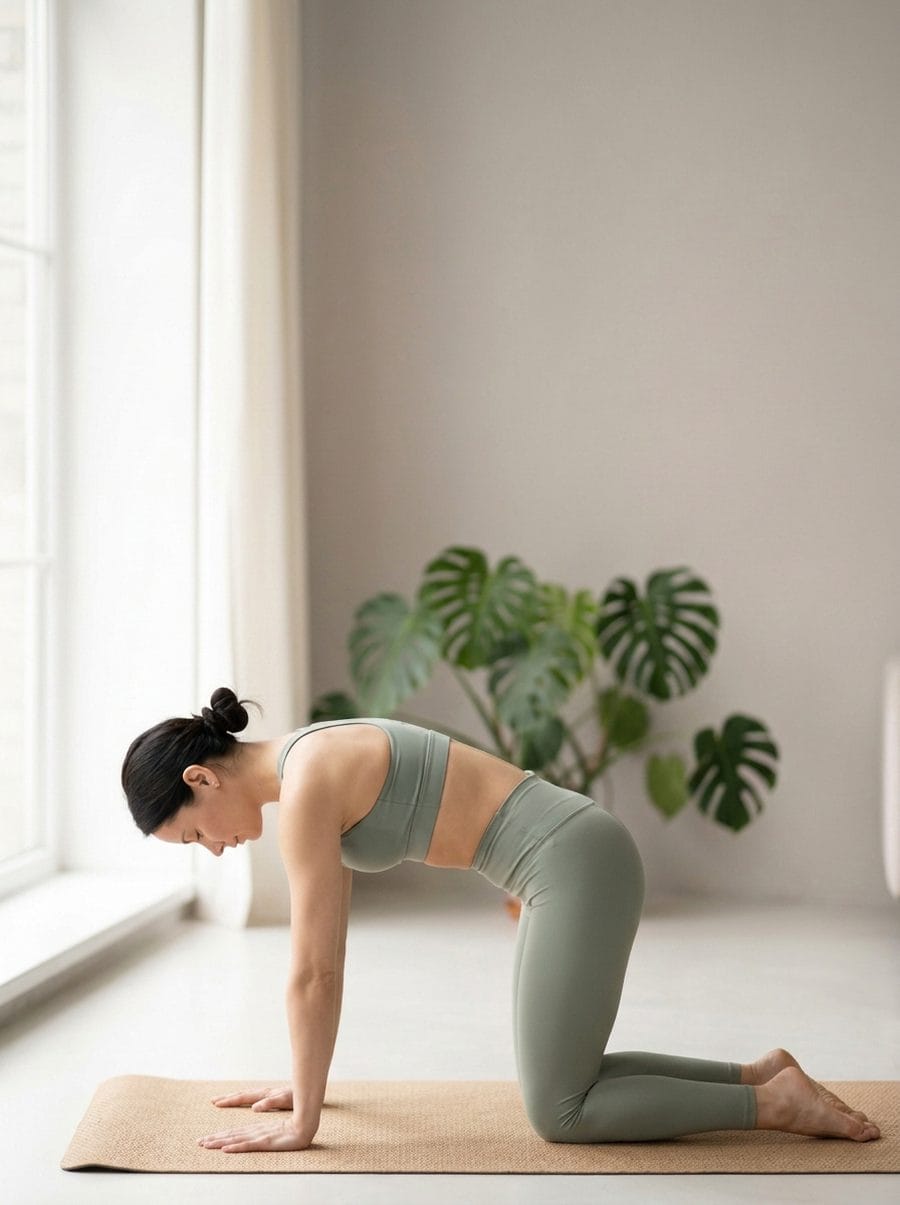
Cat-Cow done slowly, with a small range of motion, and Child's Pose ease stiffness along the spine. Knees-to-Chest Pose and Supine Twist help your lower back soften.
Poses to calm your mind
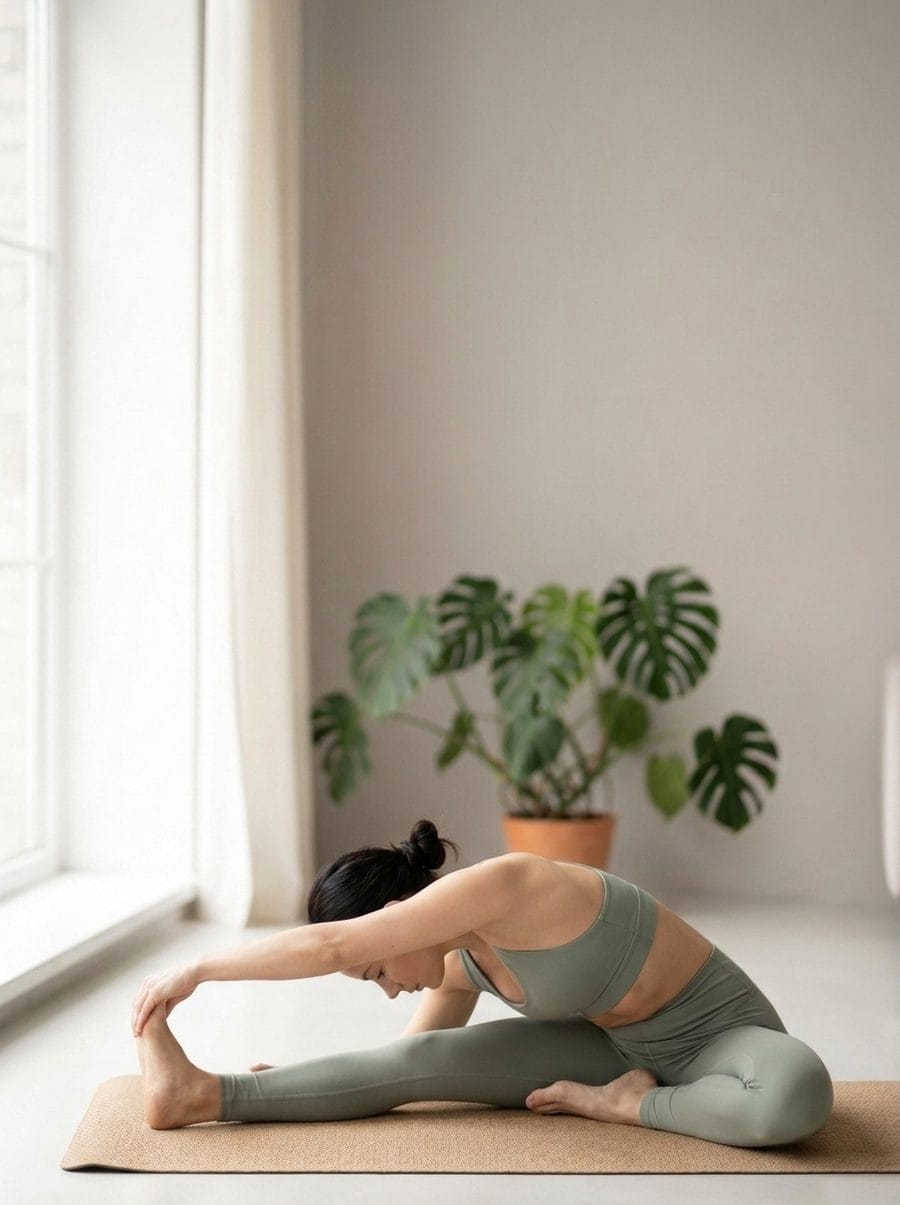
Reclining Butterfly Pose and Legs-Up-the-Wall Pose ask almost nothing of you: your body simply lies there and your breathing deepens by itself. If you crave a stretch after the day, Head-to-Knee Pose gently lengthens your back and the hamstrings of one leg at a time.

Stretches before bed
If "stretching" sounds more like you than "yoga", the same logic applies: slow positions lying down and seated, long holds of 40 to 60 seconds, and no bouncing. Give extra time to the hamstrings, glutes and lower back, since hours of sitting tire them out the most.
For a longer evening there's the 15-minute Evening Unwind routine. Alongside the reclining poses, it brings in Cat-Cow, Head-to-Knee Pose and Butterfly Pose done sitting up.
And if you like flowing movement, try the Evening Spiral round: folds and soft twists on the floor, with no getting up onto your feet.
Breathing exercises for sleep
Your breath changes how you feel faster than anything else. Make each exhale longer than the inhale: for example, breathe in for a count of four and out for a count of six. After a couple of minutes your pulse tends to slow down on its own.
If you'd like to learn a proper technique, start with Full Yogic Breath or Box Breathing. For deep relaxation, Bee Breath works well, with a soft humming sound as you breathe out.
One of the best-known bedtime techniques has its own guide: 4-7-8 breathing.
How to make yoga before bed a habit
- Keep the same time. Practice 30 to 60 minutes before sleep, and let at least an hour and a half to two hours pass after dinner.
- Low light, phone away. Looking at a screen after practice brings back the very alertness you just worked to let go of.
- Don't chase depth. Your body is tired by evening, so your range of motion is smaller than in the morning. That's perfectly normal.
- A short version beats none at all. Even Child's Pose, Knees-to-Chest Pose and three minutes of Savasana make it noticeably easier to switch off.
Safety
Leave out Legs-Up-the-Wall Pose if you have glaucoma or uncontrolled high blood pressure, and on the days of your period. With a knee injury, swap Child's Pose for Knees-to-Chest Pose. Leave Cat-Cow out when your back hurts acutely, and skip Supine Twist while a disc herniation is in its acute phase.
If you're pregnant, widen your knees in Child's Pose; from the second trimester, spread your knees apart in Knees-to-Chest Pose so they're wider than your belly, or leave the pose out. With high blood pressure or during pregnancy, do Box Breathing without the breath holds, and skip Bee Breath if you have an ear inflammation.
If insomnia lasts longer than a few weeks, talk to a doctor. Yoga is a good addition to a healthy sleep routine, but the cause of poor sleep needs to be found. More in Safety and Contraindications.
Pose cautions in this article
- Pregnancy — widen your knees (Child's Pose)
- Knee injuries (Child's Pose)
- Groin discomfort — place supports under your knees (Reclining Butterfly Pose)
- Pregnancy from the second trimester onward — take your knees wider than your belly or skip the pose (Knees-to-Chest Pose)
- Disc herniation in the acute phase (Supine Twist)
- Menstruation (Legs-Up-the-Wall Pose)
- Glaucoma (Legs-Up-the-Wall Pose)
- Uncontrolled hypertension (Legs-Up-the-Wall Pose)
- Acute back pain (Cat-Cow)
- Wrist injuries — practice on your fists (Cat-Cow)
- Knee injuries — place a support under your bent knee (Head-to-Knee Pose)
This site is for general information and is not medical advice. If you have pain, an injury, a chronic condition, or are pregnant, check with a qualified professional before practicing.
Questions
Is yoga right before bed a good idea? Yes, if you pick calm poses lying down and seated. Strength poses, balancing on your head or hands, and active backbends are better saved for the morning or daytime.
How long should bedtime yoga be? 10 to 15 minutes is enough. Regularity matters more than length: 10 minutes every evening will do more for you than an hour once a week.
Can you do yoga in bed? Knees-to-Chest Pose, Supine Twist, Reclining Butterfly Pose and Savasana are easy to do in bed. Child's Pose and Legs-Up-the-Wall Pose need a firmer surface.
Is yoga or stretching better before bed? The two are closely related. Yoga adds slow breathing and a final relaxation to the stretching, and those are exactly what help you fall asleep.
Sources
- Pose technique and cautions, and the contents of the evening routines: the Hatha Yoga app. How we check our texts is explained on the How We Prepare Our Content page.
Read next
- Yoga for Arthritis and Osteoporosis: How to Protect Your Joints and Bones7 min read
- Ashtanga Yoga Explained: The Series, the Breath and the Difference from Hatha6 min read
- Ayurveda Explained Simply: The Basics and a Daily Routine (Dinacharya)5 min read
- Balance Exercises: 10 Yoga Poses for Balance and Stability7 min read