 Hatha Yoga
Evening Spiral: a gentle flow on the floor
A calm round to end the day: folds and gentle twists on the floor, no standing up, finishing seated
A calm round for the evening: you never need to get up on your feet, since the practice begins and ends seated on the mat. Forward folds alternate with gentle twists, and the only backbend, Sphinx, is very low. The level is beginner.
Before you start, sit for two quiet breath cycles and settle into a slow pace. Pregnant? From your second trimester on, it's wiser to set this flow aside, and if a lumbar disc is herniated, keep the twists small.
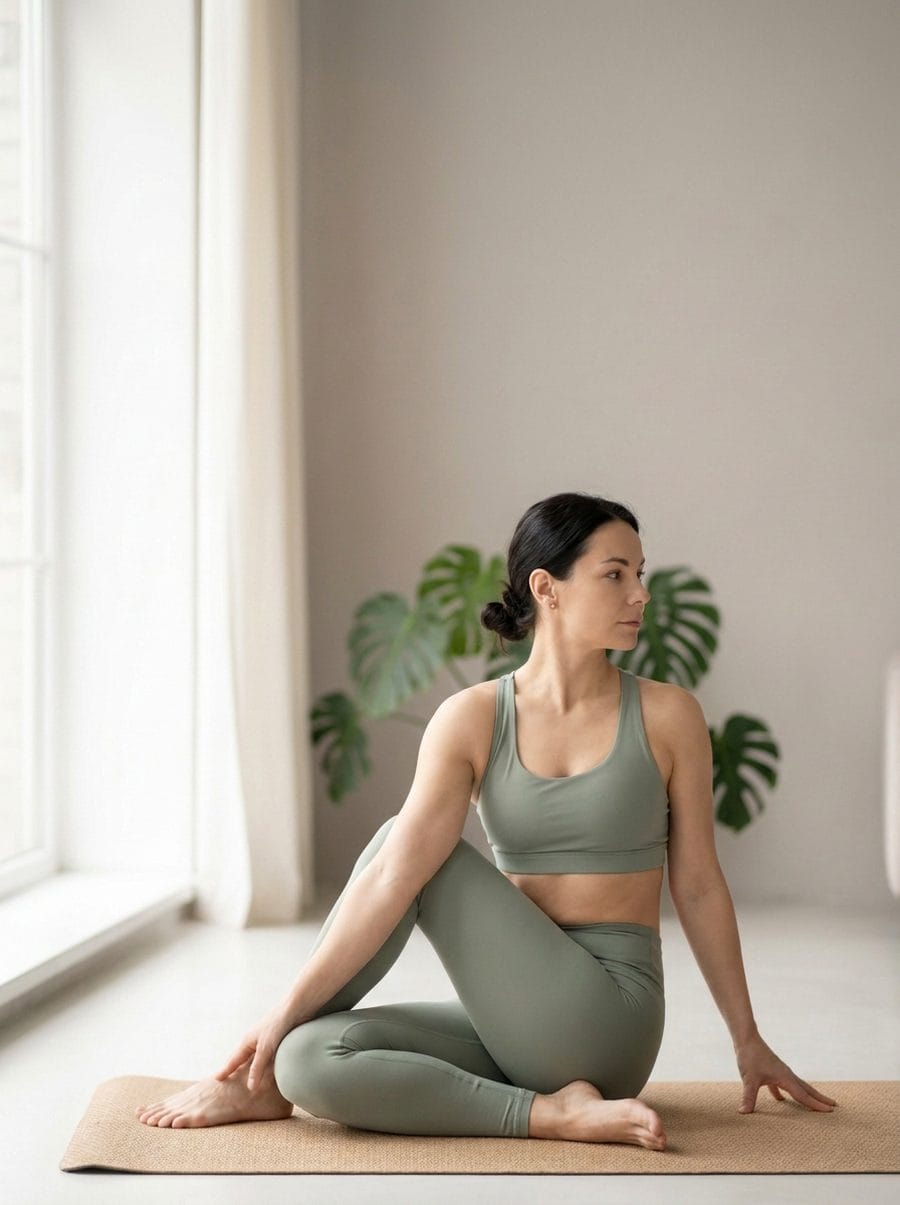
Why this order
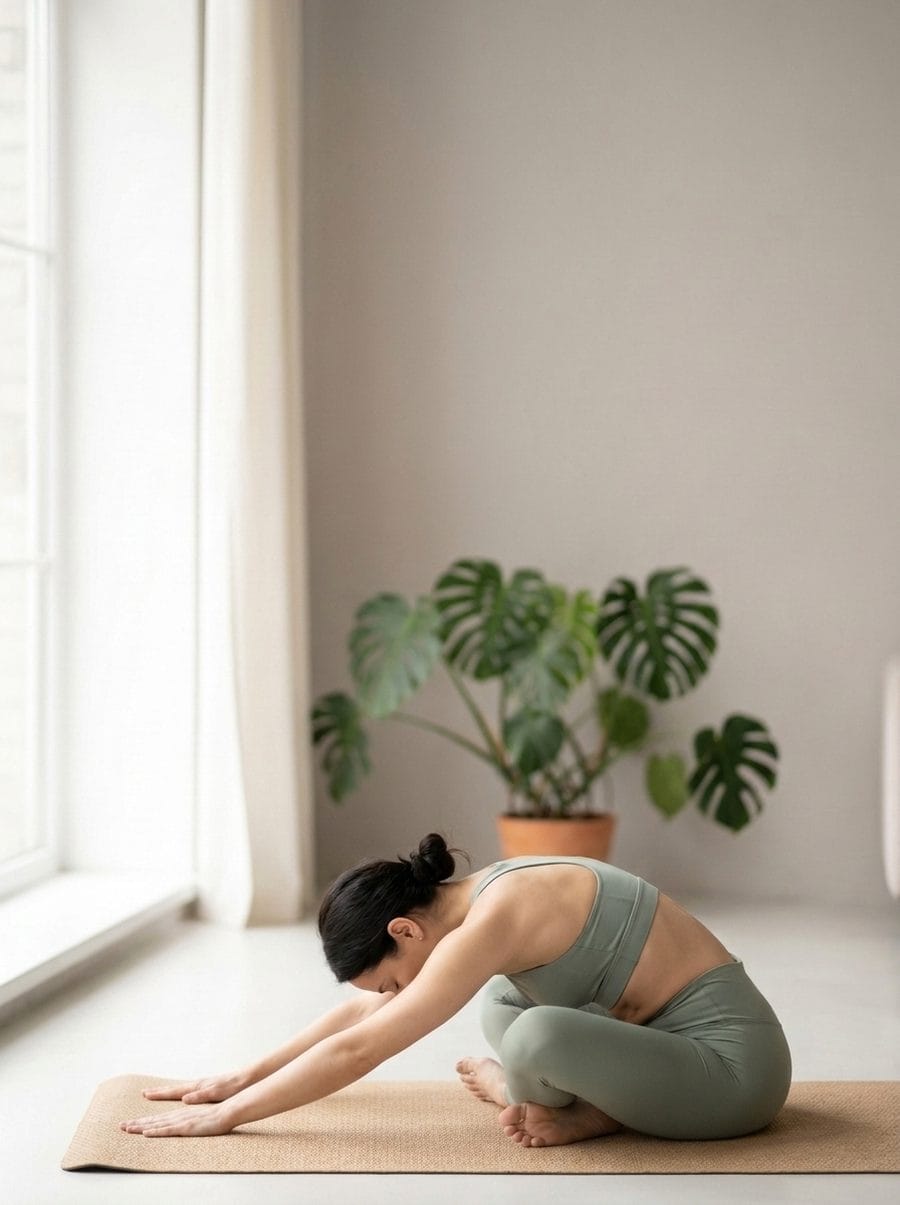
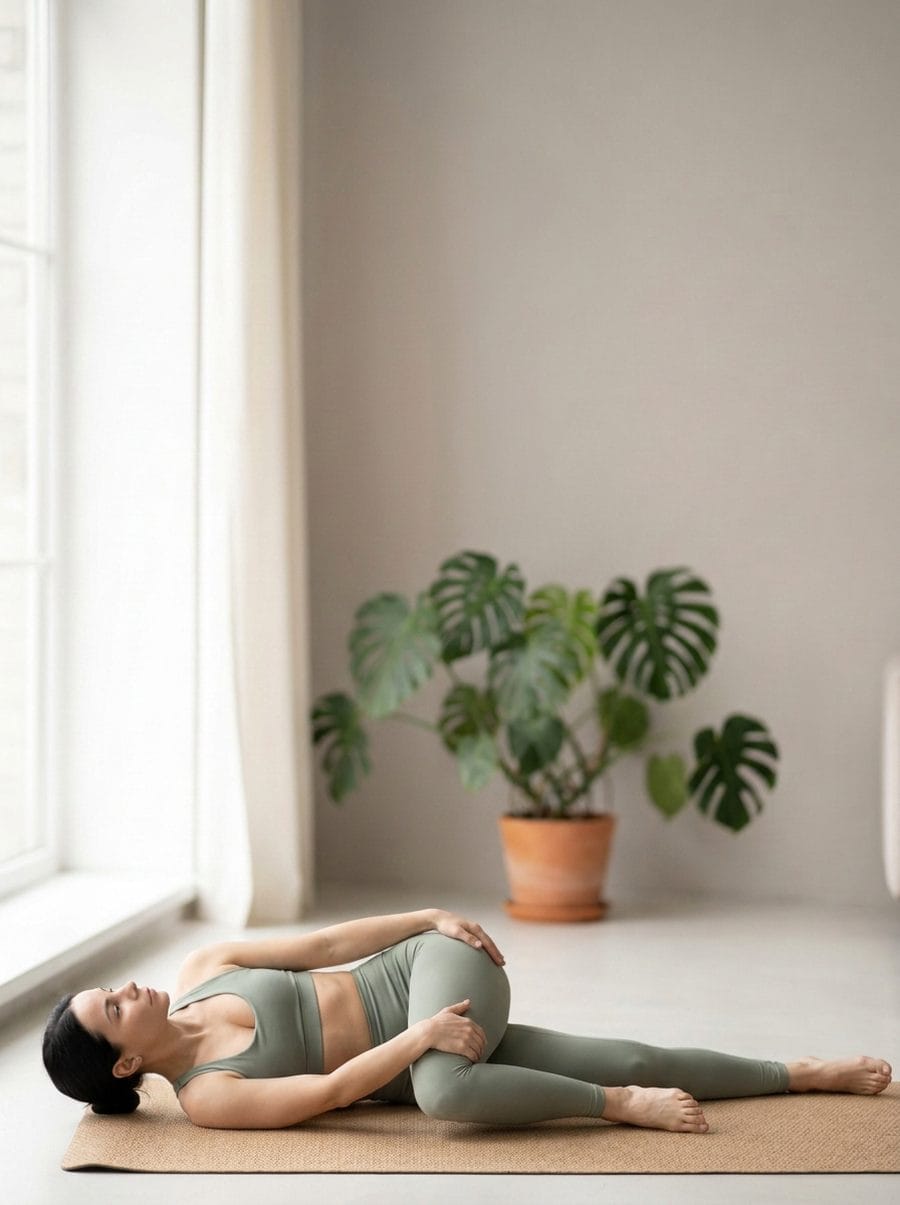
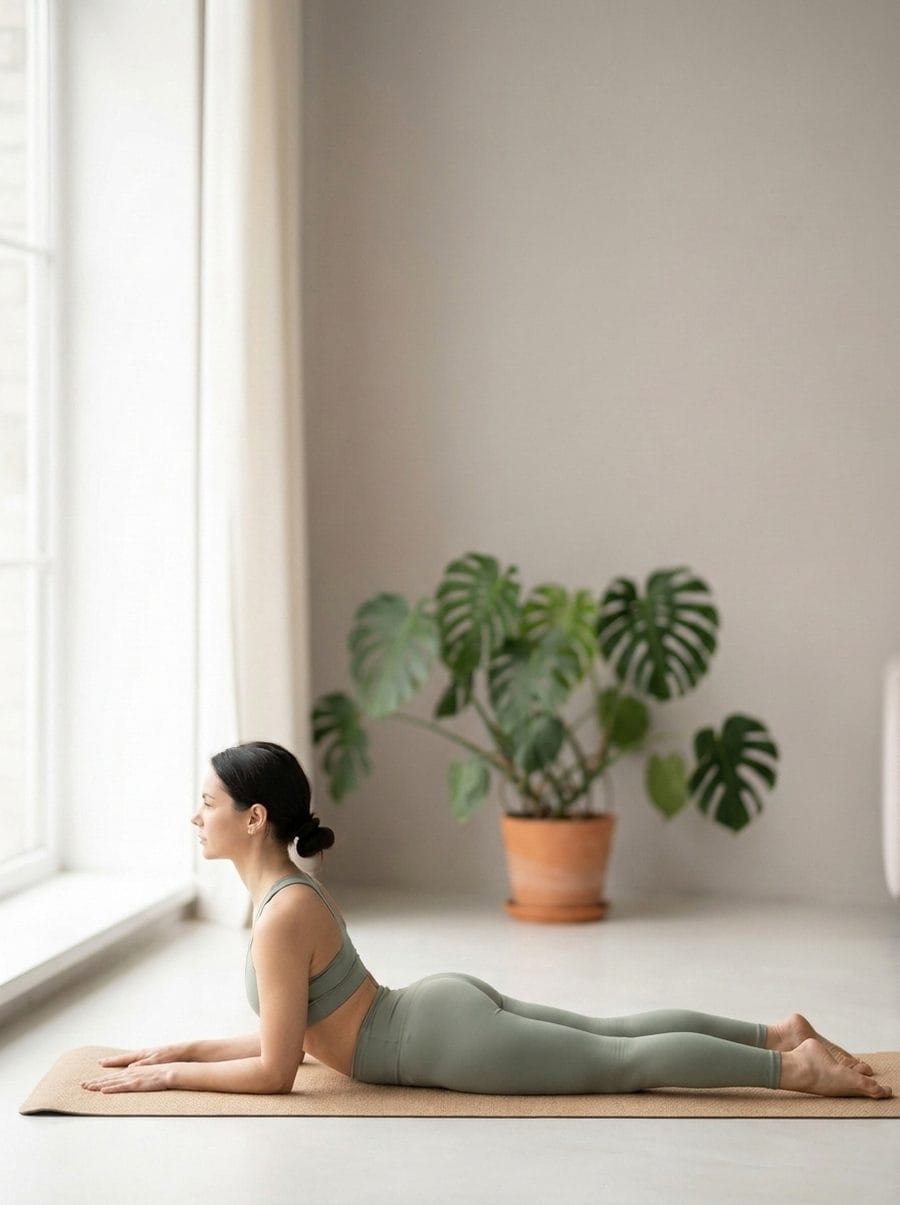
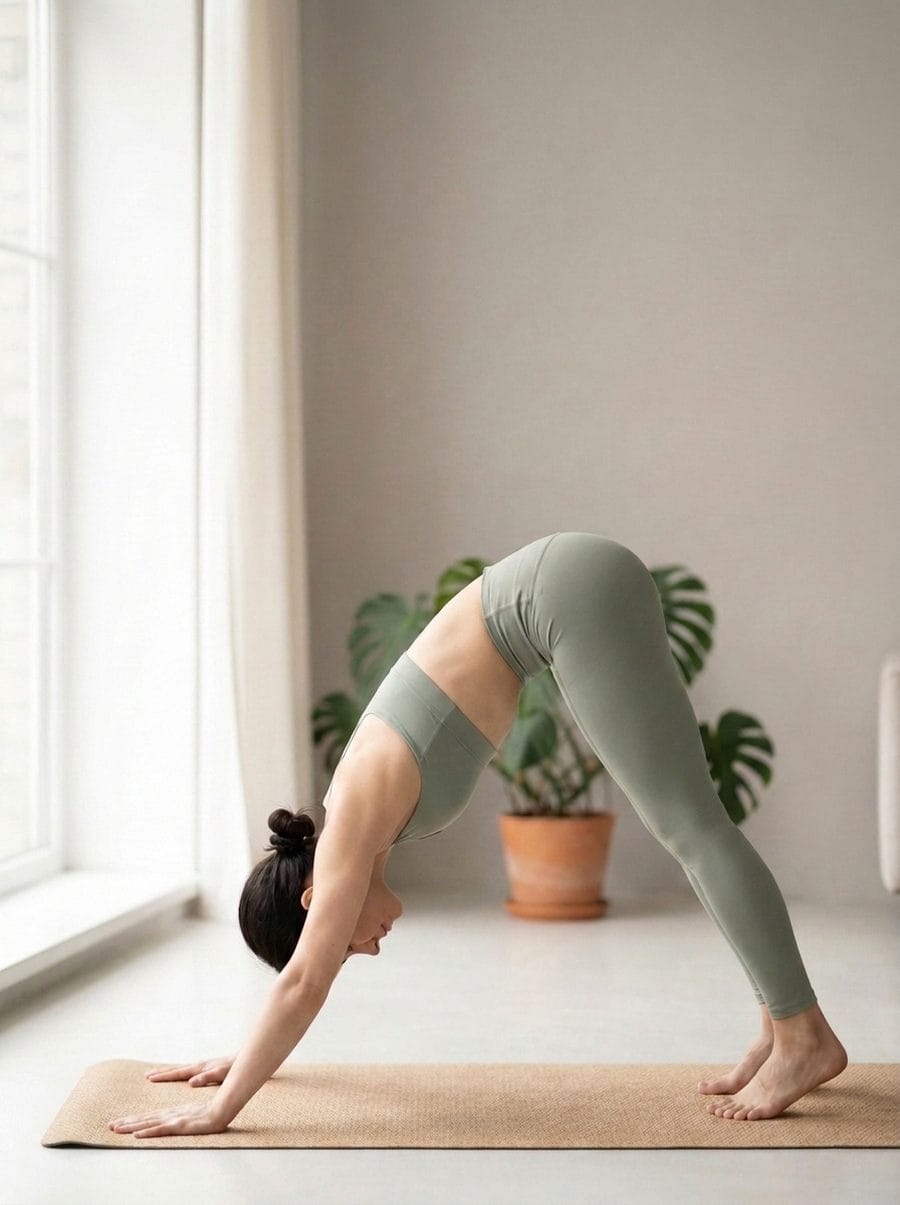
Cross-Legged Forward Fold lengthens your back, and then you lie down for a supine twist with knees to the side. Like the seated twist at the end, it's done to both sides within each round. Sphinx on your belly lets the spine arch after the twisting, and Downward-Facing Dog draws it up and back, then you sit and twist seated.
Almost every transition happens on an exhale; only Sphinx is entered with an inhale. The finish is your choice: sit with your eyes closed or lie down to rest. To stay longer on the mat, try the sequence for a gentle evening.
Cautions
- Knee discomfort — sit on a prop (Cross-Legged Forward Fold)
- Disc herniation in the acute phase (Supine Twist)
- Acute lower back pain (Sphinx Pose)
- Wrist and shoulder injuries (Downward-Facing Dog)
- High blood pressure — don't stay in the pose long (Downward-Facing Dog)
- Glaucoma (Downward-Facing Dog)
- Spinal disc herniation (Seated Twist)
- Pregnancy (Seated Twist)
- Flare-ups of digestive disorders (Seated Twist)
This site is for general information and is not medical advice. If you have pain, an injury, a chronic condition, or are pregnant, check with a qualified professional before practicing.