 Hatha Yoga
4-7-8 Breathing and Other Breathing Techniques for Sleep
Hatha Yoga editorial team · Updated · 6 min read

4-7-8 breathing is probably the best-known breathing trick for falling asleep: breathe in for four counts, hold for seven, breathe out for eight. This article takes an honest look at how to do it, what research has found and how it differs from the pranayama techniques in the Hatha Yoga app.
You'll also see which breathing to choose for sleep if a long hold doesn't suit you, plus a short floor sequence that fits right before lights out.
What is 4-7-8 breathing?
It's a three-phase pattern: inhale for 4 counts, hold your breath for 7, exhale for 8. One cycle takes about 19 seconds, which comes to roughly three breaths a minute. What sets it apart is the long pause after the inhale and an exhale twice as long as the inhale.
The 4-7-8 rhythm is popular with psychotherapists and in sleep apps. It isn't one of the eight techniques in the Hatha Yoga app, but it has close relatives with similar proportions, covered below.
How to do 4-7-8 breathing
- Lie on your back or sit tall. Let your shoulders and jaw go soft.
- Breathe out calmly and completely.
- Breathe in through your nose for a count of 4.
- Hold your breath for a count of 7, keeping your throat relaxed rather than clenched.
- Breathe out slowly for a count of 8. Many descriptions have you exhale through slightly parted lips.
- Repeat a few cycles, then return to normal breathing.
The counts don't have to be seconds; the ratio between the phases matters more. If the seven-count hold feels like a struggle, don't push through. Shorten it, or pick one of the no-hold techniques listed below. In one study, people did three sets of six cycles with a minute of regular breathing in between. You can start with less.
Does 4-7-8 breathing work? What the research says
There's little scientific data on 4-7-8, and what exists comes mostly from short experiments.
- Four rhythms compared (Marchant et al., 2025). Eighty-four college students tried box breathing, 4-7-8 and two six-breaths-per-minute patterns, 4:6 and 5:5. The authors note that box and 4-7-8 breathing are widely recommended despite limited evidence. Breathing six times a minute raised heart rate variability more than box or 4-7-8 breathing, with small to medium effects. None of the rhythms meaningfully changed blood pressure or mood. Six breaths a minute did lead some participants to over-breathe slightly.
- A single session (Vierra et al., 2022). Forty-three healthy young adults did three sets of six 4-7-8 cycles. Right afterward, their heart rate and systolic blood pressure were lower.
We found no direct evidence that 4-7-8 helps you fall asleep faster. The NCCIH fact sheet on relaxation techniques notes that relaxation techniques on their own don't look especially promising for sleep. For chronic insomnia, the first choice it cites is cognitive behavioral therapy for insomnia (CBT-I), in which relaxation is sometimes just one ingredient.
4-7-8 vs. yoga breathing: the rhythms side by side
The app writes each rhythm as four numbers in the same order: inhale, pause with full lungs, exhale, pause with empty lungs.
- 4-7-8. A 19-second cycle, about three breaths a minute, with a long hold after the inhale.
- Bee Breath. Inhale 4, exhale 8, no hold. The inhale-to-exhale ratio matches 4-7-8, and a soft hum replaces the pause. 5 minutes.
- Alternate Nostril Breathing. Beginner 4-2-6, classic 4-4-8, advanced 5-10-10. In terms of how big the hold is, 4-7-8 sits closest to the advanced version. 7 minutes.
- Box Breathing. 4-4-4-4, with two four-count holds. 5 minutes.
- Full Yogic Breath and Coherent Breathing. 4:6 and 5:5 without holds, exactly six breaths a minute. These are the very rhythms that raised heart rate variability the most in the 2025 comparison.
The takeaway: if you like the idea of a long exhale but holds feel uncomfortable, start with Bee Breath or Full Yogic Breath.
Breathing for sleep: what to choose
Good bedtime breathing is slow, effortless and goal-free. A few options from the app:
- Lying in bed: Full Yogic Breath or Coherent Breathing. Five minutes, no holds, a hand on your belly. For a full walkthrough of belly breathing, see Diaphragmatic Breathing.
- Seated, half an hour before bed: Bee Breath. The humming gives your attention something to hold, so thoughts wander less.
- If you like 4-7-8: do a few cycles once you're already in bed, and don't time how fast you drift off. Waiting for results gets in the way more than it helps.
- Not at bedtime: Skull Shining Breath (Kapalabhati). It's an energizing technique, best kept for the morning.
The UK's NHS suggests winding down before bed, breathing exercises included. If you still can't sleep after about 20 minutes, it recommends getting up and doing something calm, such as gentle yoga or reading.
A 10-minute bedtime sequence
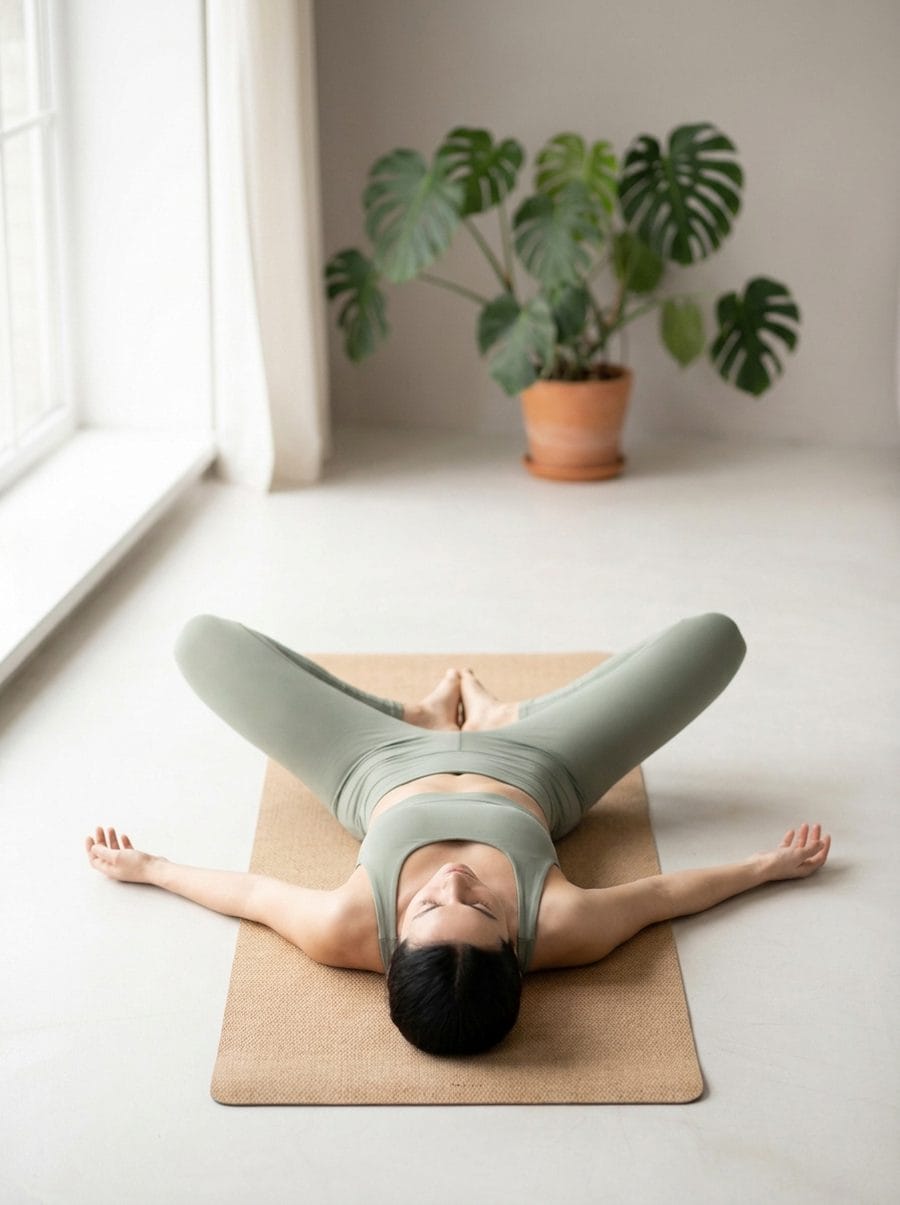
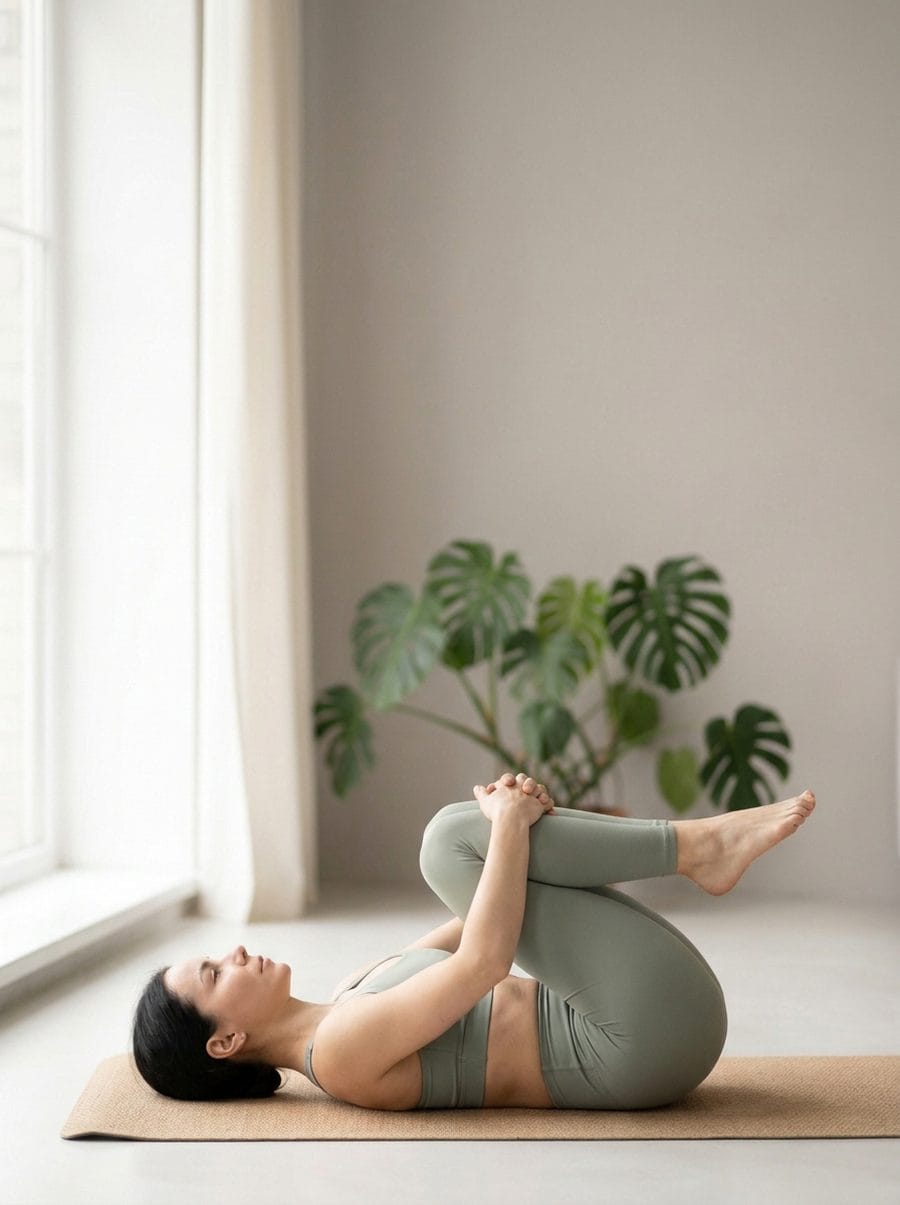
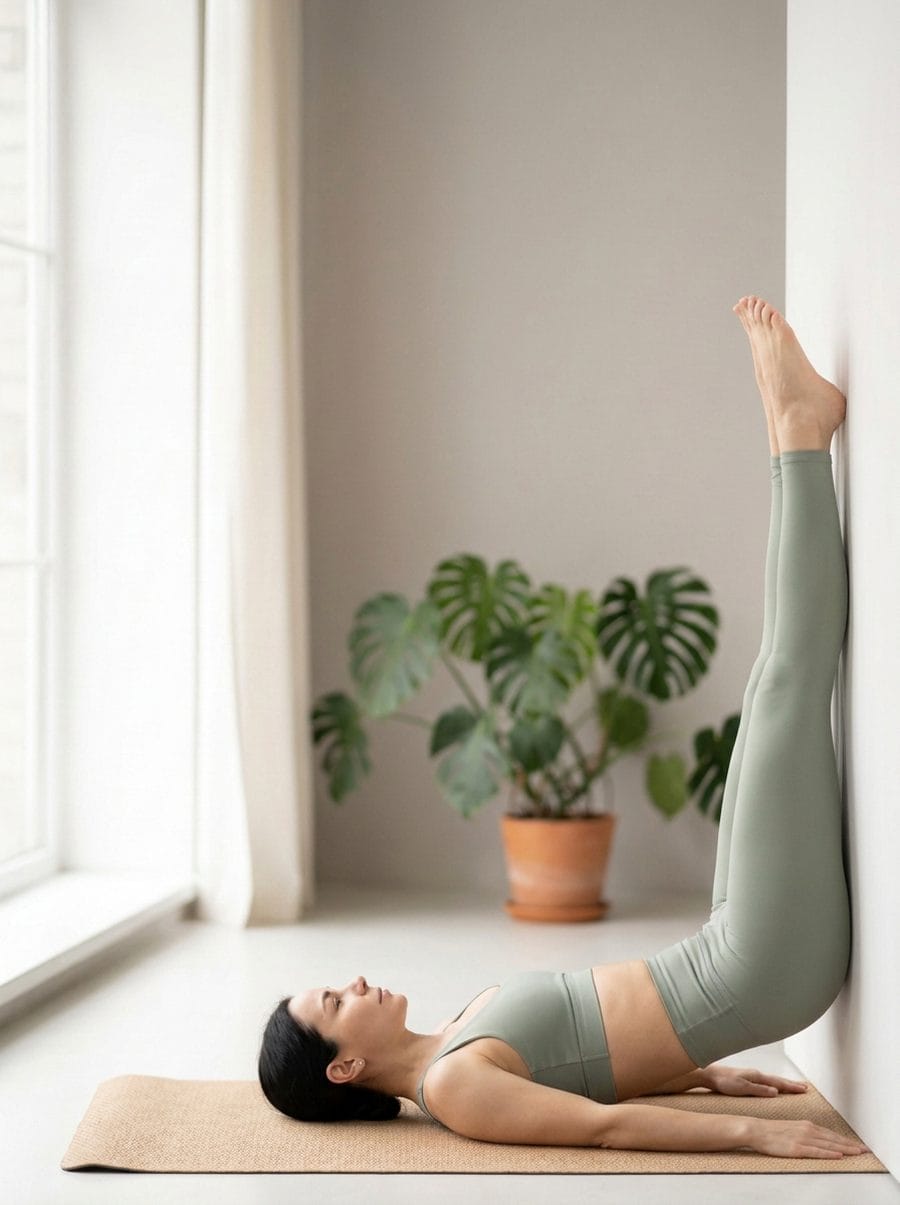
It's easier to slow your breathing once your body has let go. The app's Before Bed program happens entirely on the floor: 6 poses, 10 minutes, beginner level. It ends with nearly three minutes in Relaxation Pose, a perfect moment for a few slow breathing cycles.

For more evening poses, see Yoga for Sleep.
Safety
In the app, breath holds are dropped with high blood pressure and in pregnancy, and in Alternate Nostril Breathing with heart disease as well. We apply the same rule to 4-7-8: in these cases, breathe without the pause, for example 4 in and 8 out.
- On period days, with glaucoma, or when blood pressure is high and not under control, keep your legs down: no Legs-Up-the-Wall Pose.
- With injured knees, go without Child's Pose.
- Lightheaded or short of air? Stop and let your breath run free.
- Never practice breath holds while driving or in water.
If you've been sleeping poorly for weeks, or insomnia is getting in the way of your days, see a doctor. Breathing can help you relax, but the cause of sleep problems needs to be found.
Pose cautions in this article
- Groin discomfort — place supports under your knees (Reclining Butterfly Pose)
- Pregnancy from the second trimester onward — take your knees wider than your belly or skip the pose (Knees-to-Chest Pose)
- Menstruation (Legs-Up-the-Wall Pose)
- Glaucoma (Legs-Up-the-Wall Pose)
- Uncontrolled hypertension (Legs-Up-the-Wall Pose)
- Pregnancy — widen your knees (Child's Pose)
- Knee injuries (Child's Pose)
This site is for general information and is not medical advice. If you have pain, an injury, a chronic condition, or are pregnant, check with a qualified professional before practicing.
Questions
How many times should you do 4-7-8 breathing? Begin with a few cycles, then go back to normal breathing. Studies have used up to three sets of six cycles with rest in between.
Does 4-7-8 breathing put you to sleep in 60 seconds? There's no data showing that. The technique may help you relax, but how fast you fall asleep depends on many things: your schedule, light, caffeine and stress.
Is 4-7-8 breathing safe with high blood pressure? With hypertension, skip the hold: breathe 4 in and 8 out with no pause, like Bee Breath, and talk the practice over with your doctor.
Which is better for sleep: 4-7-8 or yoga breathing? No study has compared them directly for sleep. Smooth breathing without holds, six breaths a minute, is simpler and suits more people.
Sources
- Marchant J, et al. Comparing the Effects of Square, 4-7-8, and 6 Breaths-per-Minute Breathing Conditions on Heart Rate Variability, CO2 Levels, and Mood. Applied Psychophysiology and Biofeedback, 2025.
- Vierra J, et al. Effects of sleep deprivation and 4-7-8 breathing control on heart rate variability, blood pressure, blood glucose, and endothelial function in healthy young adults. Physiological Reports, 2022.
- National Center for Complementary and Integrative Health. Relaxation Techniques: What You Need To Know.
- NHS. How to fall asleep faster and sleep better and Insomnia.
- Pranayama rhythms and cautions, poses and program contents: the Hatha Yoga app. How we verify our texts is explained on the How We Prepare Our Content page.
Read next
- Yoga for Arthritis and Osteoporosis: How to Protect Your Joints and Bones7 min read
- Ashtanga Yoga Explained: The Series, the Breath and the Difference from Hatha6 min read
- Ayurveda Explained Simply: The Basics and a Daily Routine (Dinacharya)5 min read
- Balance Exercises: 10 Yoga Poses for Balance and Stability7 min read