 Hatha Yoga
How to Do the Splits: Front and Middle Splits Plan for Beginners
Hatha Yoga editorial team · Updated · 5 min read
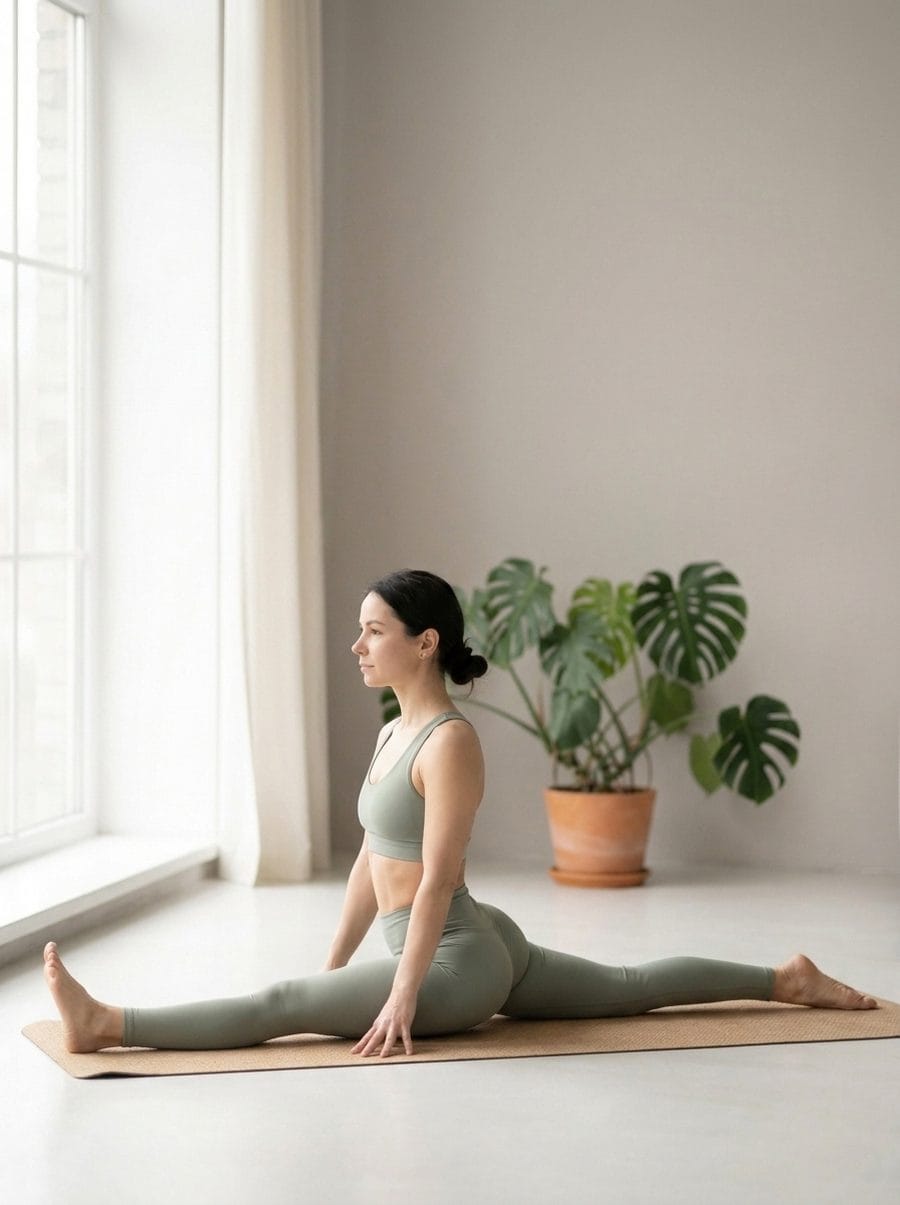
Nearly any healthy person can learn the splits, just not in a week and not by pushing through pain. Getting there comes down to three jobs: lengthen the back of one thigh, open up the front of the other, and get your hips ready.
Below are stretches for the front and middle splits, a ready-made 25-minute stretching routine and an honest answer to the question of how long it all takes.
Front splits vs. middle splits: which to start with
Front splits (Hanumanasana in yoga) need long hamstrings in the front leg and a supple hip flexor and front thigh in the back leg. Most beginners reach them sooner.
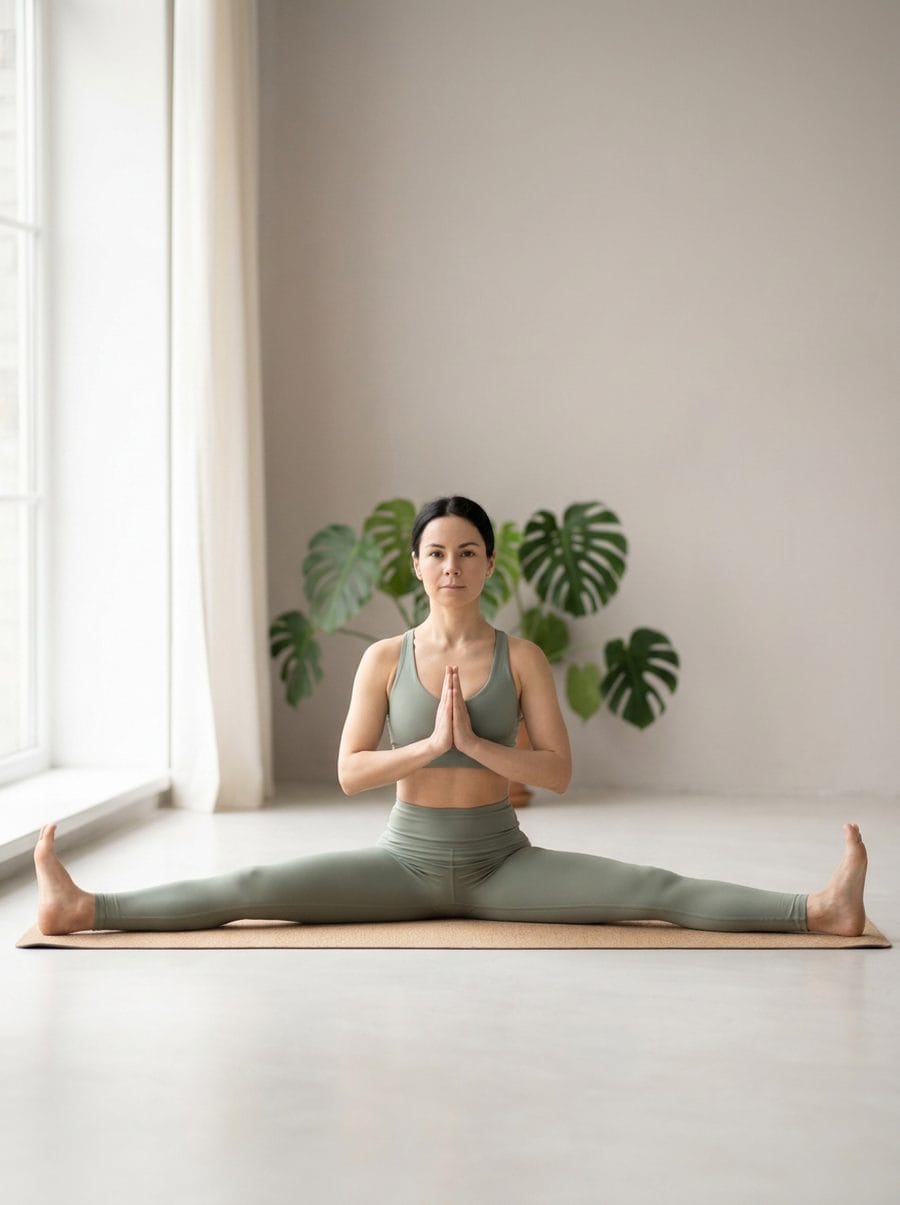
Middle splits, also called side splits (Samakonasana), depend on your inner thighs and on the shape of your hip joints. For some people, anatomy sets a limit on how deep they can go, and that is never a reason to strain the ligaments.
Begin with front splits on both legs, and develop middle splits alongside them, with no rush.
Toward the Splits: a 25-minute splits stretching routine
The app's Toward the Splits routine is built like a staircase. Two rounds of Sun Salutation warm you up, then come forward folds and lunges, after those Half Splits and Lizard Pose, and only near the end an attempt at the splits.
It's an intermediate program: if you're new to stretching, stop at Half Splits for the first few weeks.
Why the order matters so much: muscles stretch best once they're warm. Dropping into cold splits first thing in the morning usually ends with a sore hamstring rather than any progress.
Front splits stretches
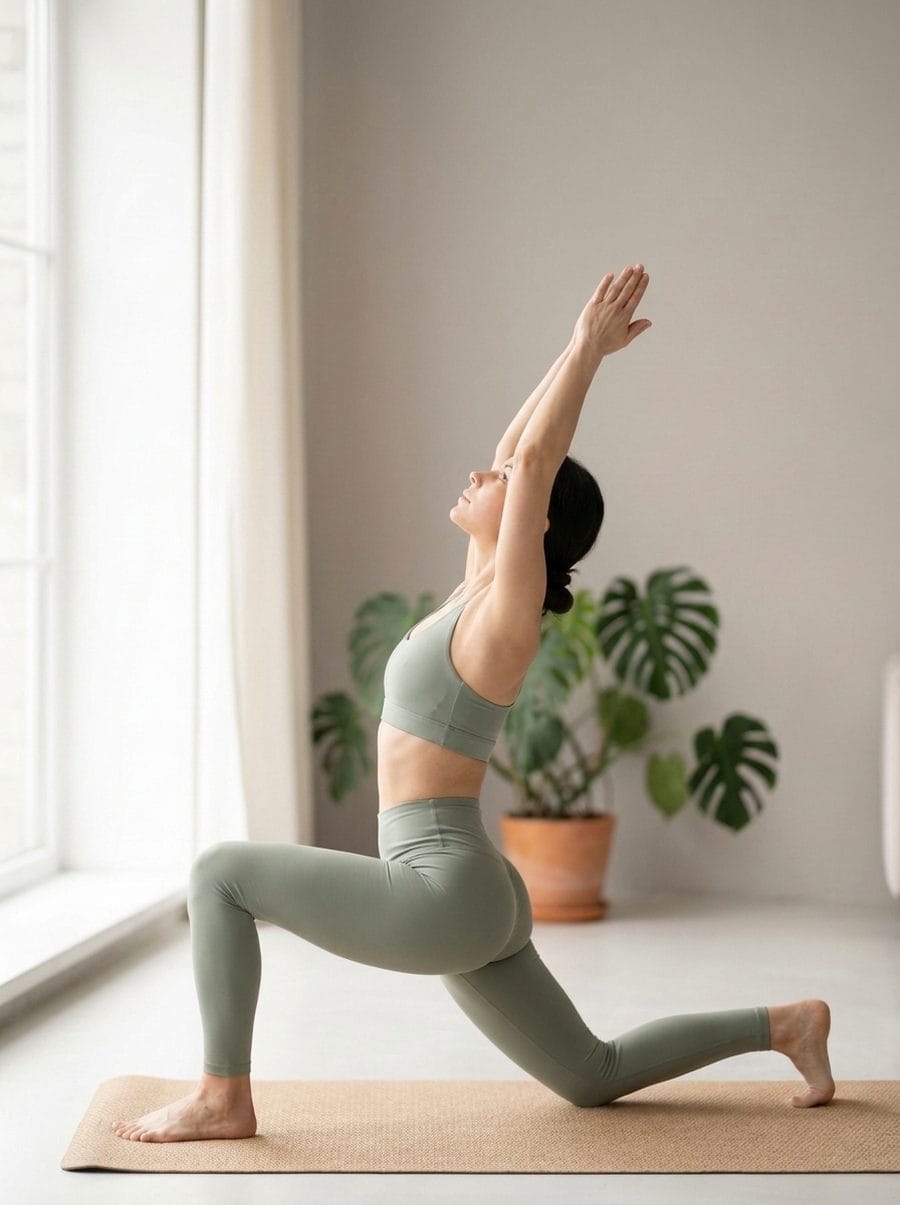
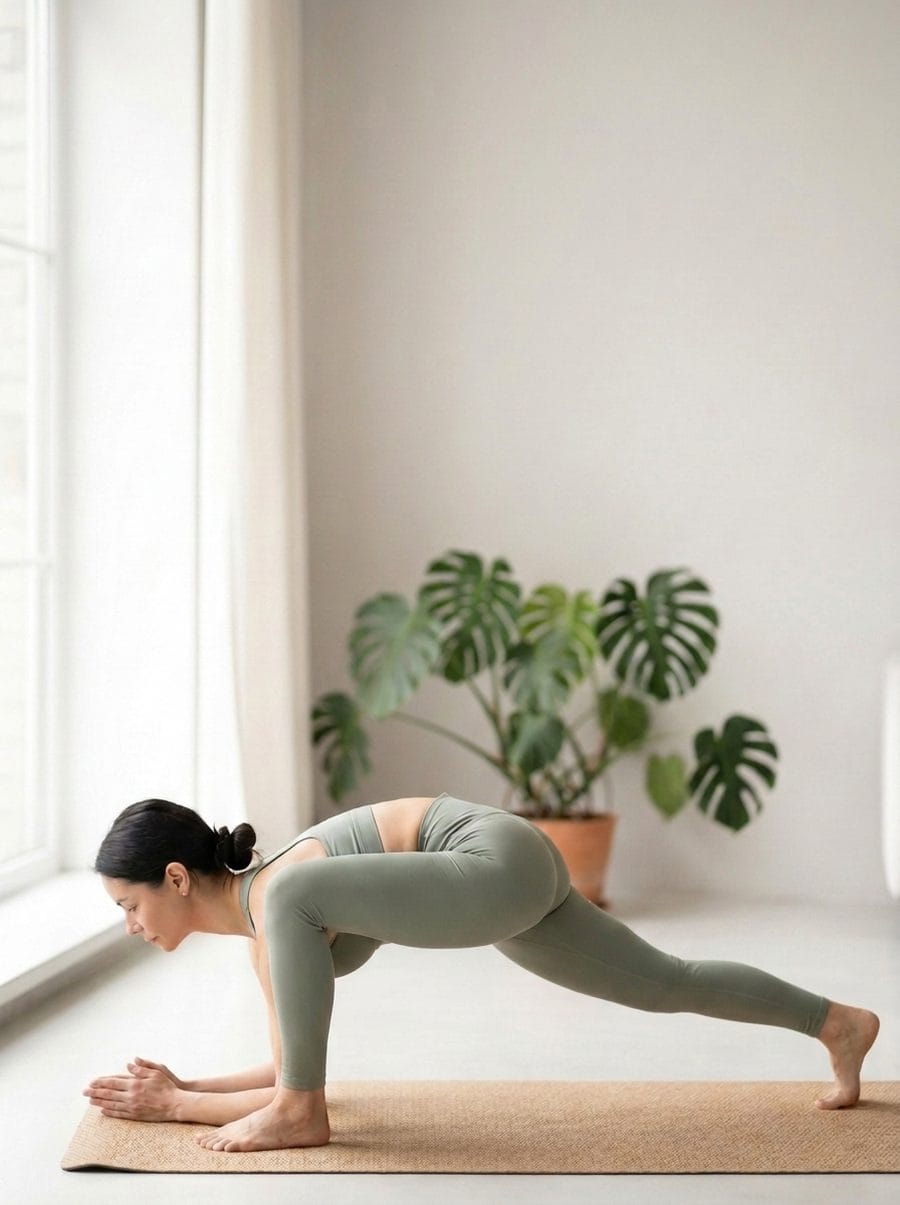
Hip flexors and the front of the thigh
Low Lunge opens the hip flexors of the back leg, and Lizard Pose goes deeper. Rest your back knee on a folded blanket.
Hamstrings
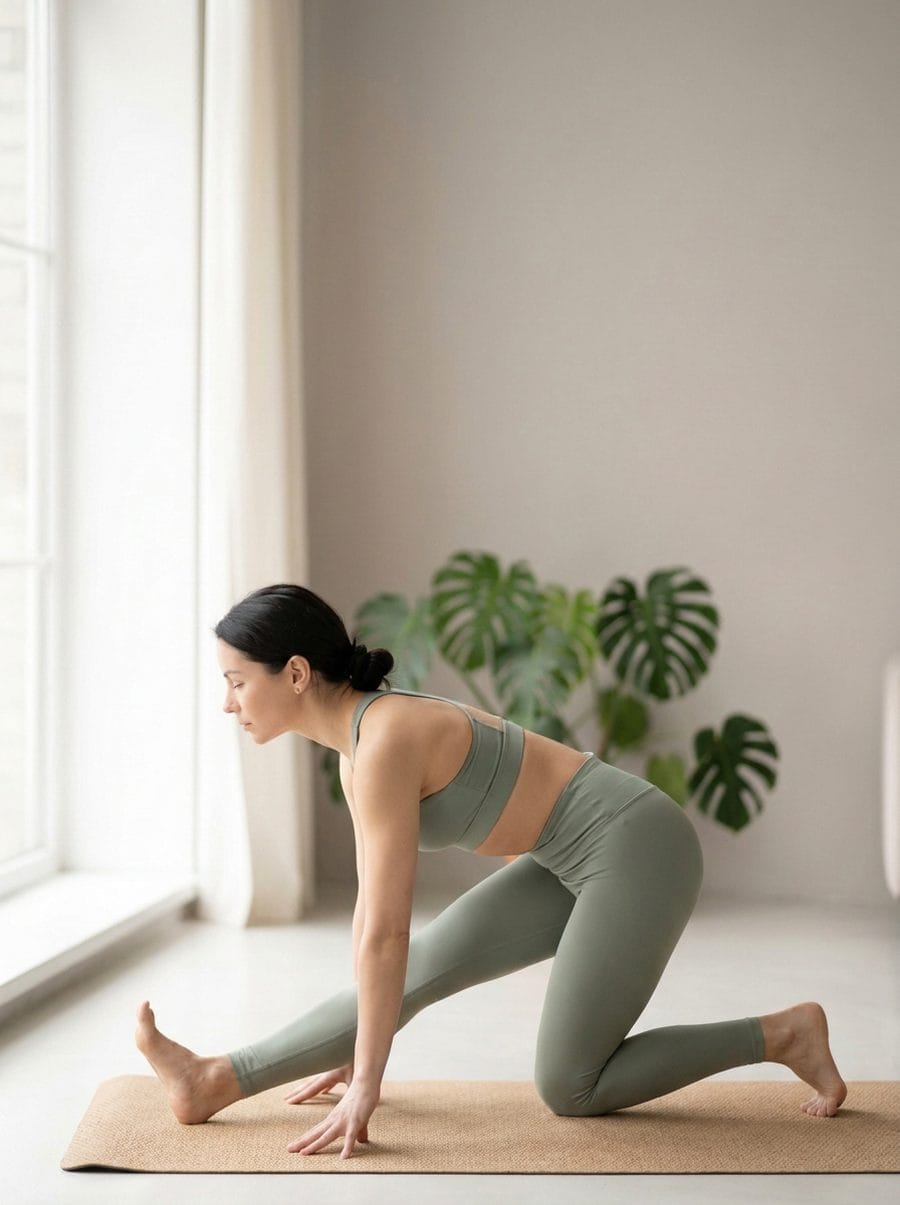
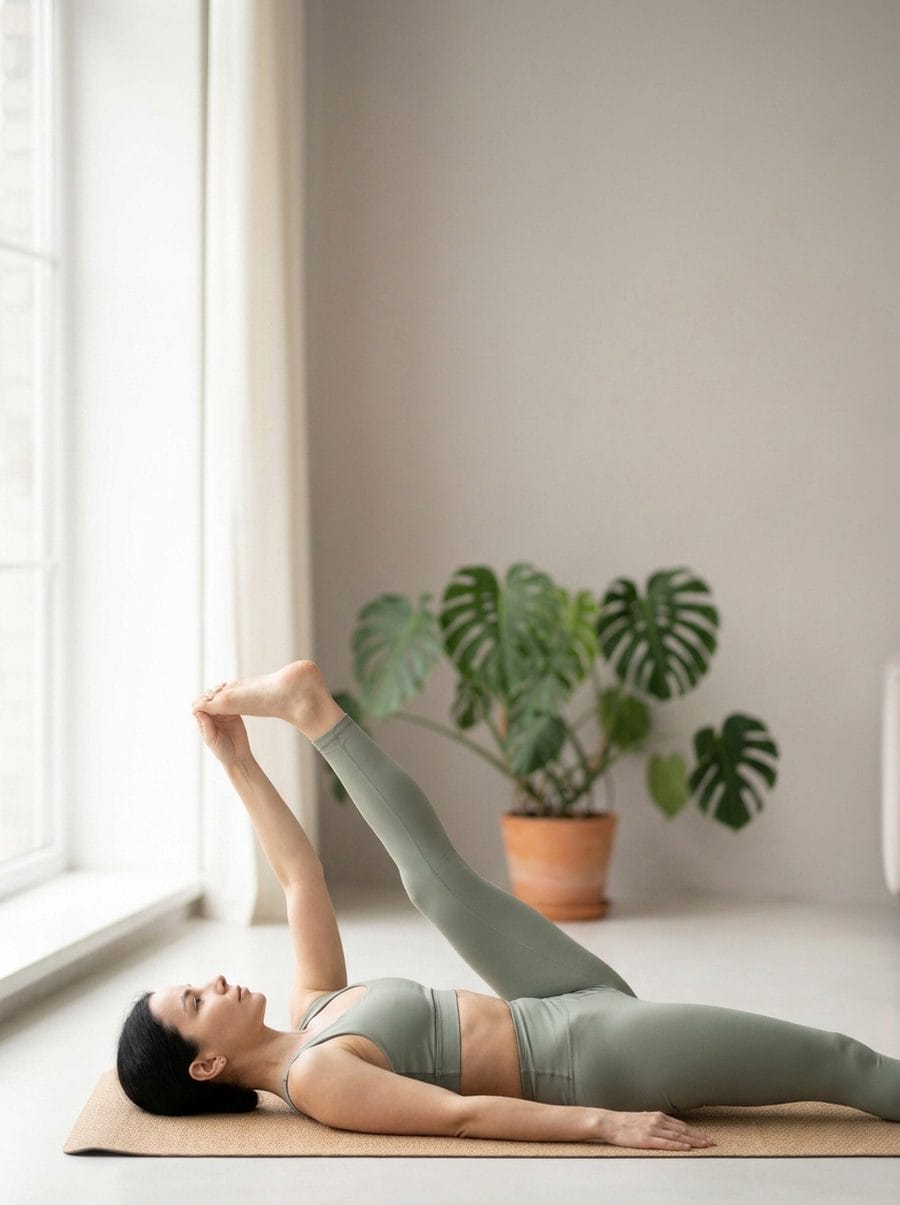
Half Splits gets the front leg ready for the splits in a safe way: hips stacked over the back knee, spine long. Reclining Hand-to-Big-Toe Pose has one big advantage: the floor keeps your back protected. If your back starts to lift off the floor, use a strap.
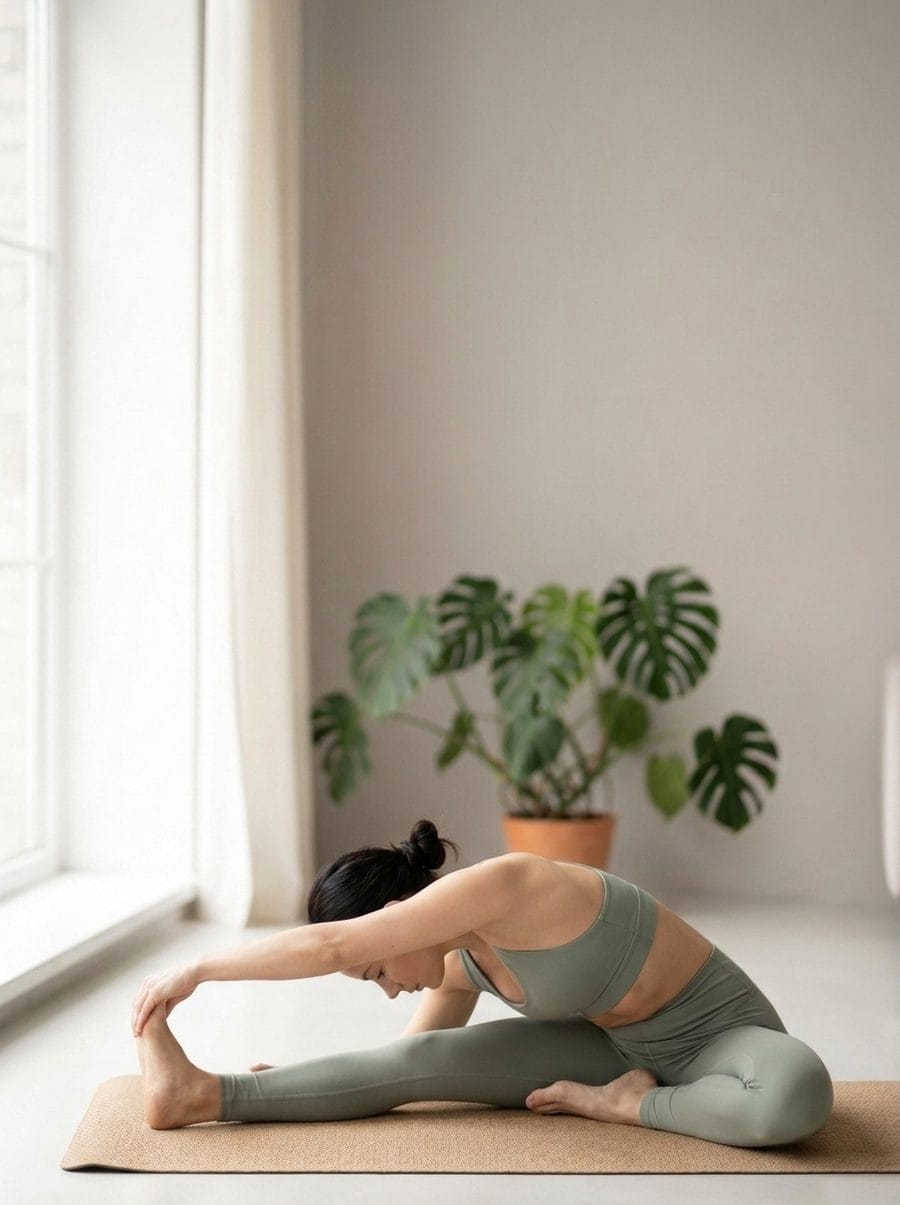
Head-to-Knee Pose stretches your back and the back of your thigh together.
The full front splits
Go into Front Splits only after a warm-up and with props: blocks or stacks of books under your hands and a folded blanket under your front thigh. Sink down on an exhale and stop at the point where the stretch is strong but still tolerable.
Middle splits stretches
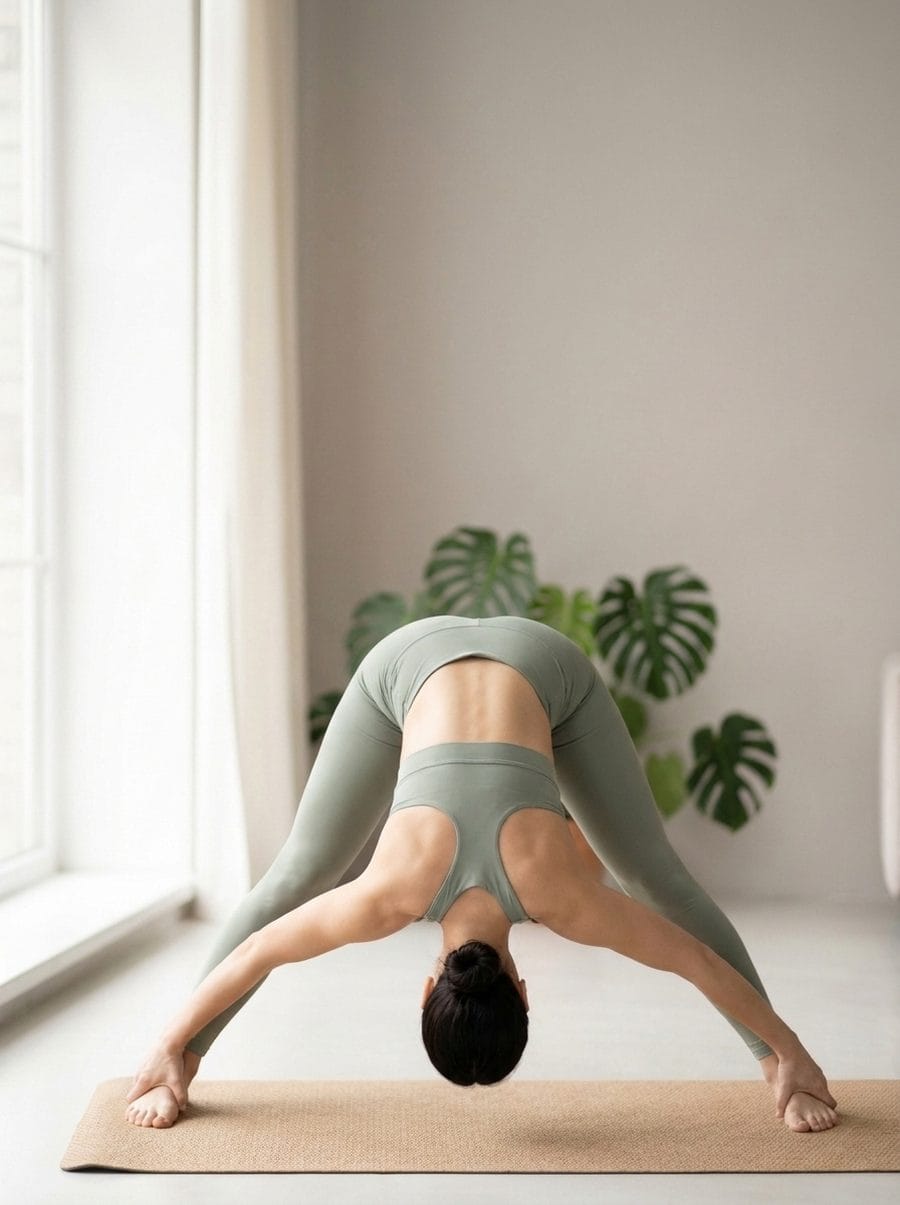
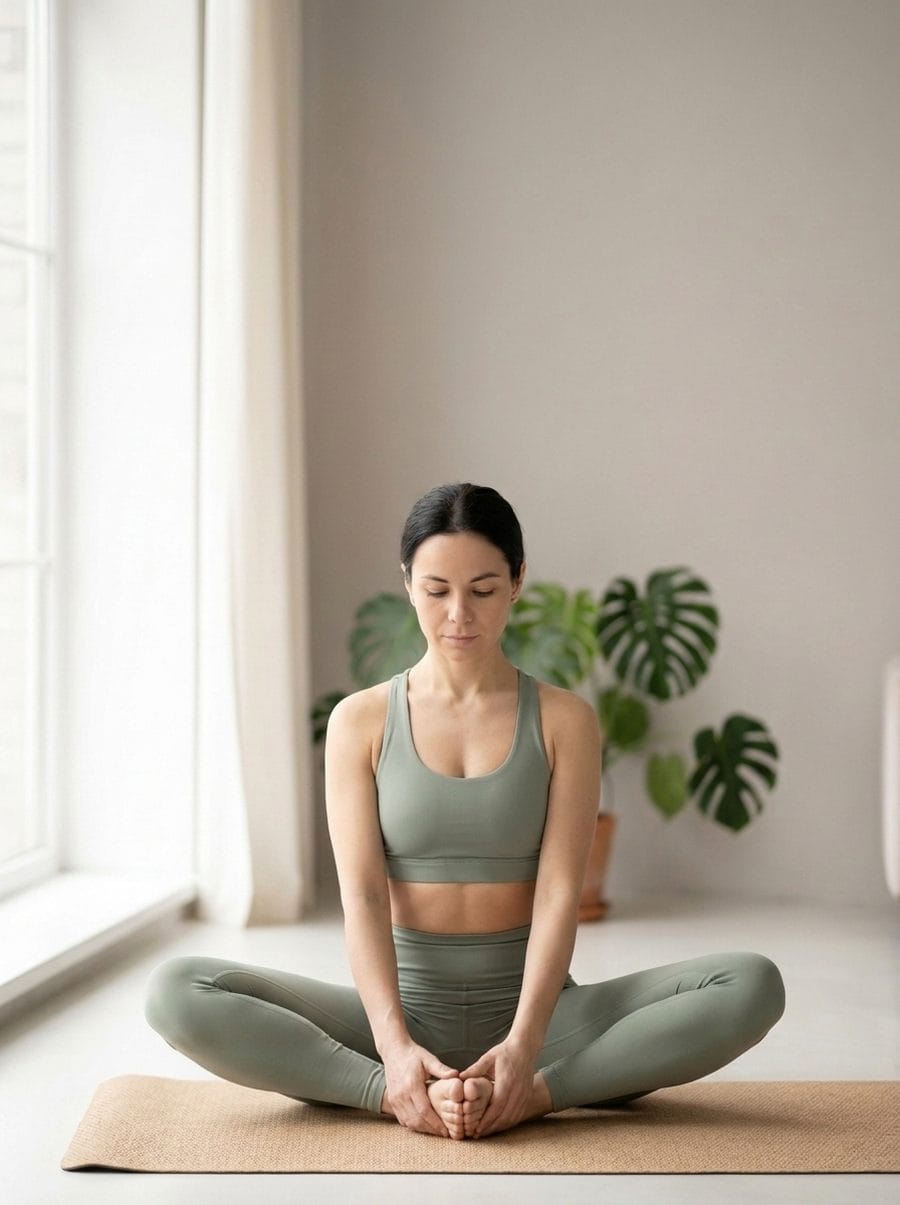
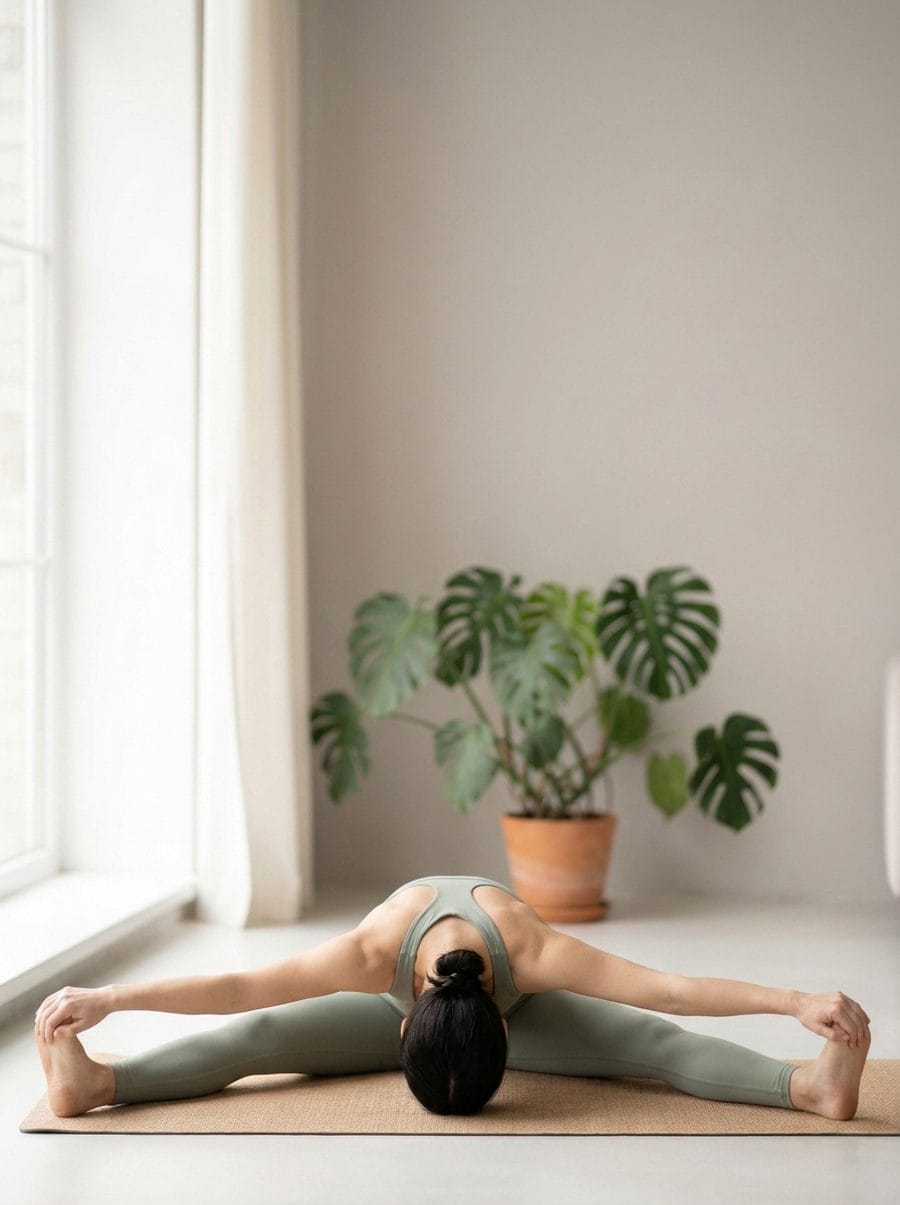
In Wide-Legged Forward Fold, the backs and insides of your thighs get a stretch. Butterfly Pose opens the hip joints. Wide-Angle Seated Forward Fold prepares you for the pose itself, and Side Splits are best practiced against a wall or with a support under your pelvis.
For overall flexibility without a focus on the splits, the Deep Stretch routine is a good choice, with long holds for the whole body.
How long does it take to do the splits?
The honest answer: anywhere from a few months to a year or more. It depends on how flexible you are to begin with, your age, how regularly you practice and the structure of your joints. Promises like "the splits in 30 days" or "the splits in one day" are realistic only for people who could already do the splits at some point in the past.
- Consistency beats long sessions. Three or four sessions of 20 to 25 minutes a week will get you further than a single two-hour session.
- Track your progress. Take a photo of your Half Splits and your supported splits every two weeks. The changes are easier to see in photos than to feel.
- Rest days. Stretched muscles need a day to recover, especially after long, deep holds.
Once you can do full front splits with props on both sides, you can move on to the more advanced Splits: Advanced Path routine. It includes four rounds of Sun Salutation, Standing Splits, Side Splits with Side Bend and Heron Pose.
How to do the splits without getting hurt
- Never stretch cold muscles. Spend 5 to 10 minutes warming up first.
- No bouncing. Jerky movements make the very muscle you're trying to lengthen tighten up by reflex.
- Pain in your knee or right under your glute means stop. The stretch belongs in the belly of the muscle, not in a joint or the spot where the muscle attaches.
- Props are nothing to be embarrassed about. Blocks, books and a blanket let you keep good form and stop your hips from tipping.
Skip Front Splits and Half Splits if you have a hamstring injury, and skip Front Splits with an inner thigh injury as well. Side Splits are ruled out if you've injured a knee, a hip joint or a hamstring, during pregnancy and during the first few days of menstruation.
Wide-Angle Seated Forward Fold is off the list with an inner thigh injury or a herniated disc in the lower back. Skip Wide-Legged Forward Fold with a hamstring injury, and with high blood pressure don't lower your head too far in it.
The Toward the Splits routine also includes Standing Forward Fold, which you leave out if you have high blood pressure. The general rules are in Safety and Contraindications.
Pose cautions in this article
- Knee injuries — place a blanket under your back knee (Low Lunge)
- Lower back pain — don't deepen the backbend; keep your torso upright (Low Lunge)
- Hamstring injuries (Half Splits, Wide-Legged Forward Fold)
- Knee injuries — rest your back knee on a blanket (Lizard Pose)
- Use a strap if your back lifts off the floor (Reclining Hand-to-Big-Toe Pose)
- Knee injuries — place a support under your bent knee (Head-to-Knee Pose)
- Hamstring and inner thigh injuries (Front Splits)
- Only after a thorough warm-up (Front Splits)
- High blood pressure — don't lower your head too far (Wide-Legged Forward Fold)
- Groin and knee injuries — place supports under your thighs (Butterfly Pose)
- Inner thigh injuries (Wide-Angle Seated Forward Fold)
- Herniated discs in the lower back (Wide-Angle Seated Forward Fold)
- Knee, hip joint, and hamstring injuries (Side Splits)
- Pregnancy (Side Splits)
- First days of your period (Side Splits)
This site is for general information and is not medical advice. If you have pain, an injury, a chronic condition, or are pregnant, check with a qualified professional before practicing.
Questions
Can you learn the splits after 30 or 40? Yes, though it will take longer than it would for a child. The main rule stays the same: practice regularly, warm up first and stay out of pain.
How can I do the splits fast? There's no fast way that is also safe. The only thing that speeds up progress is regularity: a short stretch almost every day and the full routine on three or four days each week.
How do I do the splits if I'm not flexible at all? Build general flexibility first with forward folds, Butterfly Pose, lunges and Reclining Hand-to-Big-Toe Pose with a strap. The basics for newcomers are in Yoga for Beginners.
Is it better to stretch for the splits in the morning or the evening? In the evening your muscles are warmer and stretch more easily. In the morning, stretching for the splits only makes sense after a thorough warm-up.
Sources
- Pose technique, levels and cautions, and the contents of the stretching routines: the Hatha Yoga app. How we check our texts is explained on the How We Prepare Our Content page.
Read next
- Yoga for Arthritis and Osteoporosis: How to Protect Your Joints and Bones7 min read
- Ashtanga Yoga Explained: The Series, the Breath and the Difference from Hatha6 min read
- Ayurveda Explained Simply: The Basics and a Daily Routine (Dinacharya)5 min read
- Balance Exercises: 10 Yoga Poses for Balance and Stability7 min read