 Hatha Yoga
One-Legged Bridge Pose
Ekapāda Pīṭhāsana
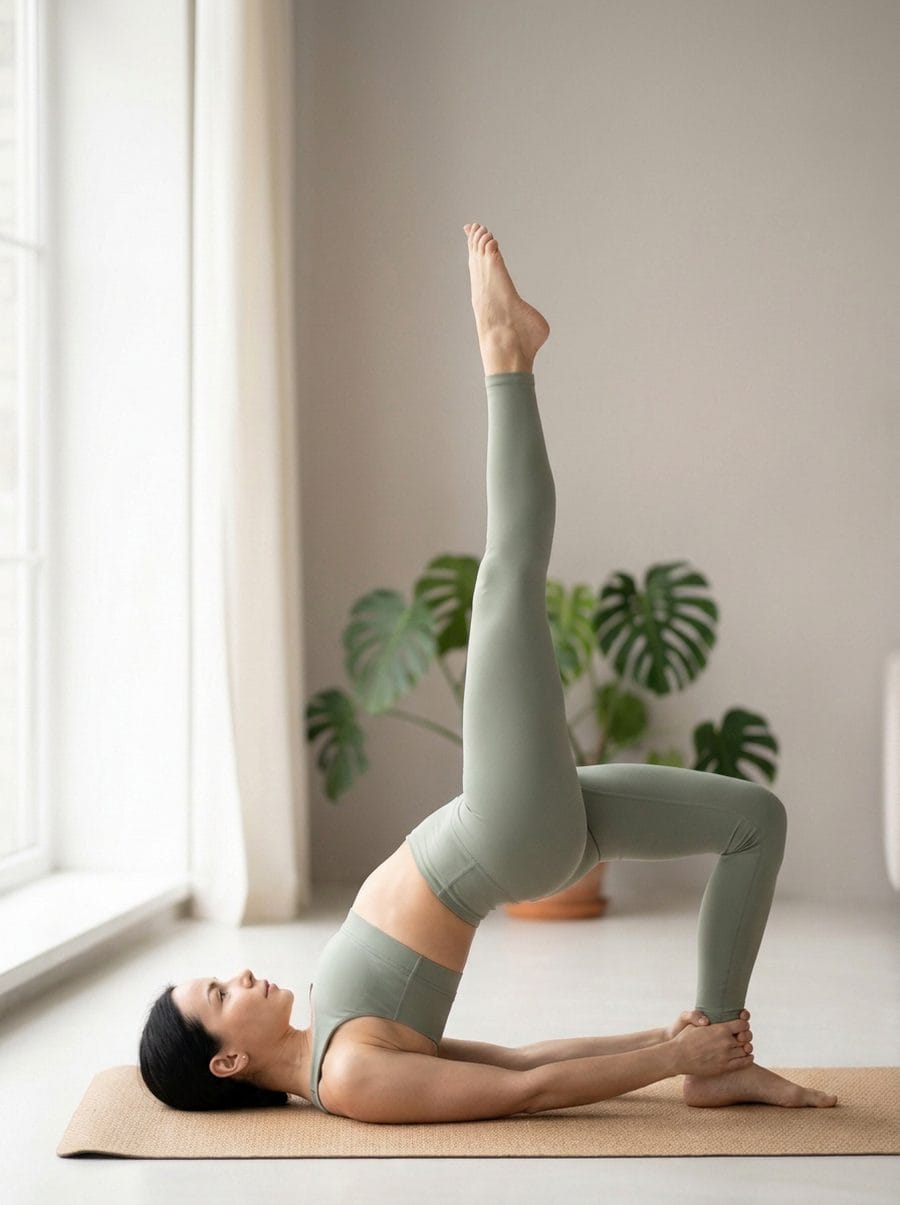
One-Legged Bridge Pose, or Ekapada Pithasana, is a harder take on Bridge Pose: your hips stay lifted while one leg reaches straight toward the ceiling. With only your shoulders and a single foot for support, your glutes and thighs carry more of the load.
Rated intermediate, it shows up in Spine Wave, one of the app's sequences, straight after Bridge Pose with Ankle Hold: 25 seconds per leg.
A variation of: Bridge Pose
How to do it
- EnterFrom Bridge Pose, holding your ankles, shift your weight onto one foot. Inhale and lift the other leg straight up.
- HoldKeep your hips high and level, without tipping to one side. Reach the heel of your lifted leg toward the ceiling. Don't turn your head.
- ExitExhale and lower your leg to the mat, then lower your hips and switch sides.
More detail
First make sure a regular bridge feels steady: hips high, knees over your heels. Then move your weight into one foot without letting your pelvis drop, and only after that peel the other foot away. Lifting it in two counts works well: knee to chest, then extend the leg upward.
Your standing foot sits right under the knee and presses down through the whole sole, especially the heel. Palms can rest flat beside your hips as a safety net for balance. As long as your pelvis sags to one side, keep the lifted leg bent or raise it only partway.
Benefits
Adds load to the glutes and thighs, and teaches you to keep your pelvis level.
With a single point of support, the standing leg's glute and hamstring do double duty while your abs and back keep the pelvis from tilting. The pose also makes asymmetry easy to spot: on one side your hips stay level, on the other they slide down.
As a side effect, the chest widens and the standing thigh gets a mild stretch across its front.
Cautions
- Neck and shoulder injuries
- High blood pressure
- Late pregnancy
This site is for general information and is not medical advice. If you have pain, an injury, a chronic condition, or are pregnant, check with a qualified professional before practicing.
Common mistakes
- Dropping the hip on the side of the lifted leg. Keep both hip points level, as if balancing a tray on them.
- Placing the standing foot too far from your hips. Heel under knee, or the load drifts into your lower back.
- Looking around with your pelvis lifted. Keep your neck still and your eyes on the ceiling.
- Freezing your breath the moment the leg goes up. Breathe evenly and send each inhale into your open chest.
Counterpose
Where it appears
- Spine Wave 13 min · Intermediate
Similar poses
Questions
What are the benefits of One-Legged Bridge Pose? Compared with a regular bridge, it works your glutes and thighs harder and asks you to keep the pelvis square even though your base is lopsided.
Who should skip One-Legged Bridge Pose? Leave it out if you have neck or shoulder injuries or high blood pressure, and in late pregnancy.
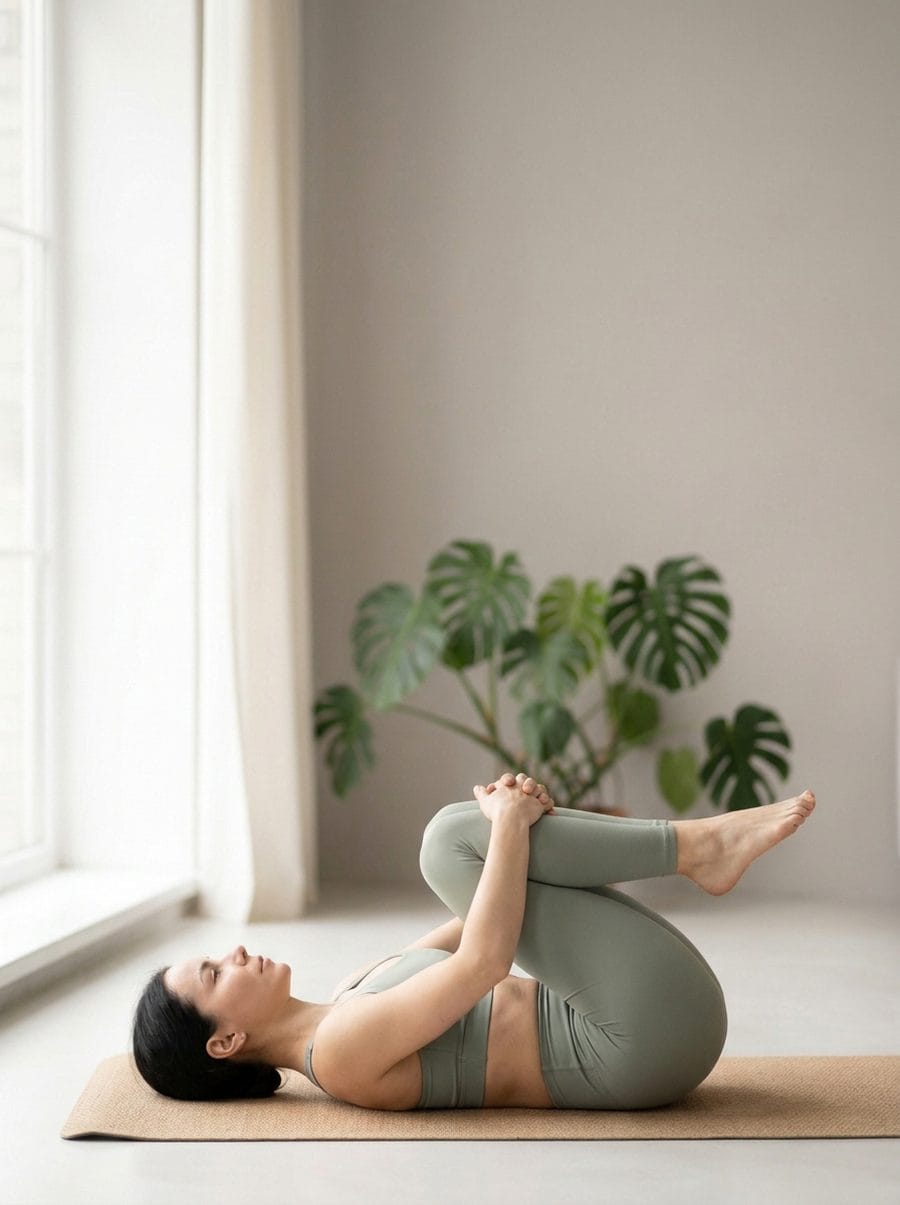
What comes after the pose? Lower your hips and hug your knees: in the app's sequence, Knees-to-Chest Pose comes right next and lets your lower back relax after the backbend.
Featured in
Updated: