 Hatha Yoga
Yoga for Scoliosis: How to Practice Safely and What to Expect
Hatha Yoga editorial team · Updated · 6 min read
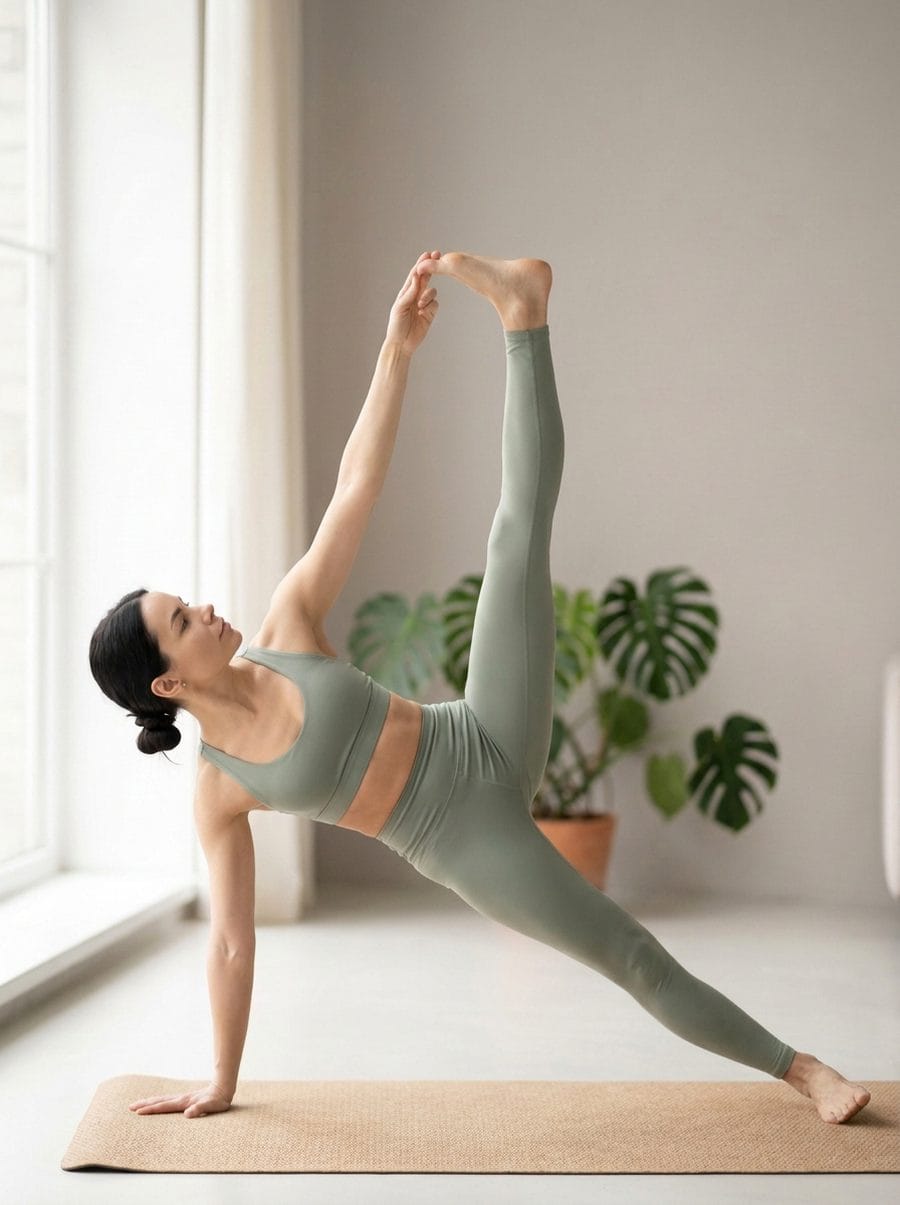
Scoliosis means the spine curves to the side and twists at the same time. Yoga isn't usually off-limits with scoliosis, but run your plan past an orthopedic doctor or physical therapist before you start: a lot depends on your age, the size of the curve and whether your back hurts.
Below: what's known, which poses to choose, a routine from the app, safety rules, and an honest answer on whether yoga can straighten the spine.
Is yoga good or bad for scoliosis?
Scoliosis most often starts between the ages of 10 and 15. According to the NHS, in about eight out of ten cases the cause is unknown. This idiopathic scoliosis isn't linked to poor posture, exercise or diet, so there's no reason to blame how you sat at school. Adults can also develop degenerative scoliosis, which comes with age.
Most people with scoliosis lead normal lives, play sports, and can do yoga. The NHS says it isn't clear whether back exercises improve the curve, but general exercise is good for your health and shouldn't be avoided unless your doctor advises it.
For adults, the NHS adds that activities that strengthen and stretch the back may help reduce pain, while exercises from a physiotherapist are unlikely to change the curve but may help with the pain. Before starting a new program, it's worth checking that it's safe with your doctor, a scoliosis specialist or a physical therapist.
What the research shows
There are no large studies of yoga for scoliosis. The best known is a case series published in 2014. Twenty-five people with idiopathic or degenerative scoliosis held Side Plank daily on one side only, with the outward bulge of the curve facing down, for as long as they could.
On average they managed about a minute and a half a day, nearly every day, for close to seven months. On follow-up X-rays the angle of the main curve was 32% smaller on average, and 41% smaller in those who practiced regularly.
That sounds encouraging, but there was no control group, only 25 people took part, and the authors themselves say the results need further testing. The side for the plank was also chosen from each person's X-ray. Don't copy this one-sided approach on your own: a specialist who has seen your images should decide the side and the load.
When to see a doctor before you start
See an orthopedic specialist before you begin if:
- the scoliosis is in a child or teenager who is still growing;
- the curve has become noticeably larger, or you've only just noticed it;
- you've had spinal surgery;
- your back hurts constantly, or pain travels into your legs with numbness or tingling.
The NHS notes that in adults scoliosis sometimes irritates nerves, so pain, numbness and tingling can be felt from the lower back down to the feet. With symptoms like these, get checked first and roll out the mat later.
How to do yoga with scoliosis
- Both sides equally. Practice one-sided poses on both sides and hold them for the same time. The app builds them this way.
- Don't chase the easy side. A twist or side bend will feel easier in one direction. That's normal; don't force the harder side to match.
- Strength before flexibility. Your back and trunk muscles support the spine. Stretching has its place, but it isn't the main event.
- Breathe into your ribs. With scoliosis, one side of the rib cage often expands less. Try Full Yogic Breath with your palms on your lower ribs.
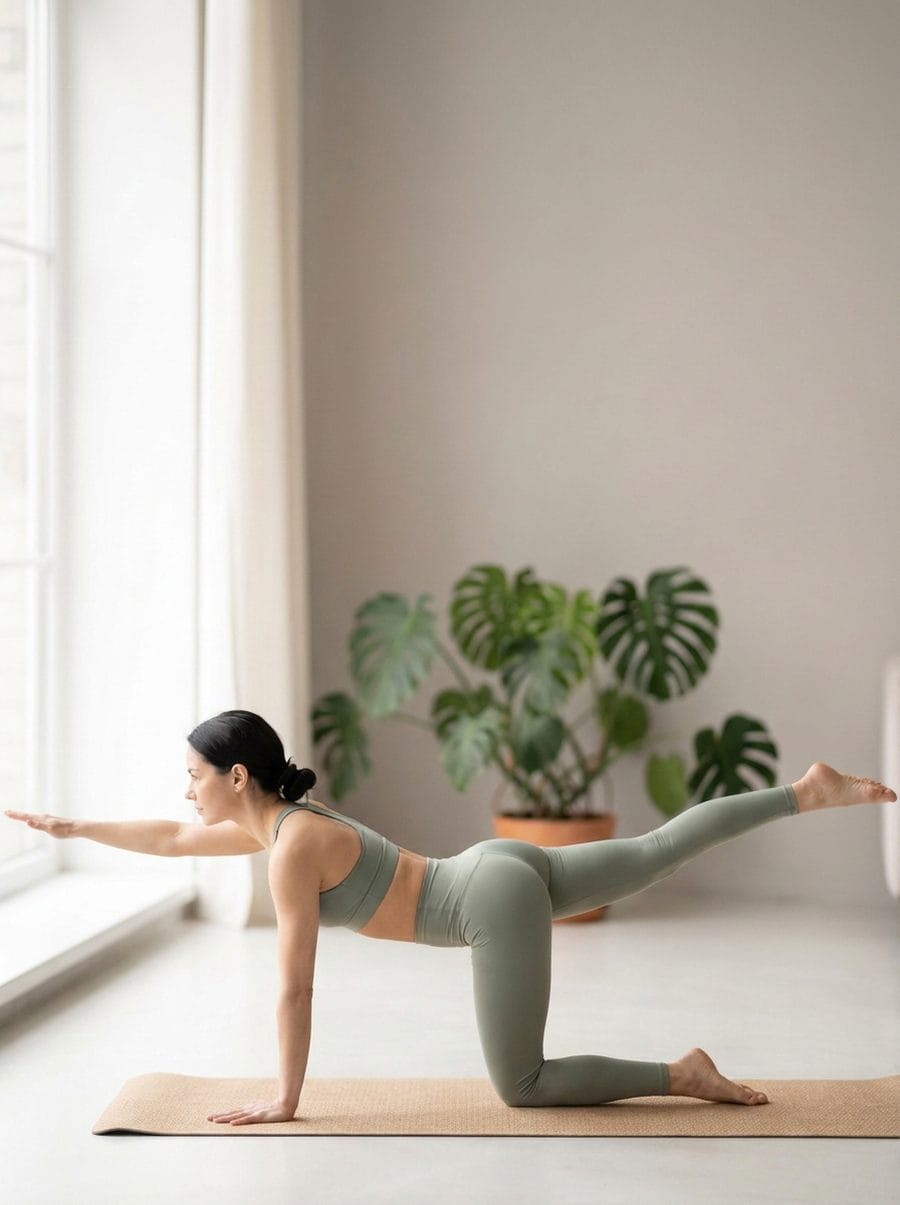
- Use a mirror. Set up so you can see your shoulders and pelvis, especially in Mountain Pose and Bird Dog.
Yoga poses for scoliosis
Posture and mobility
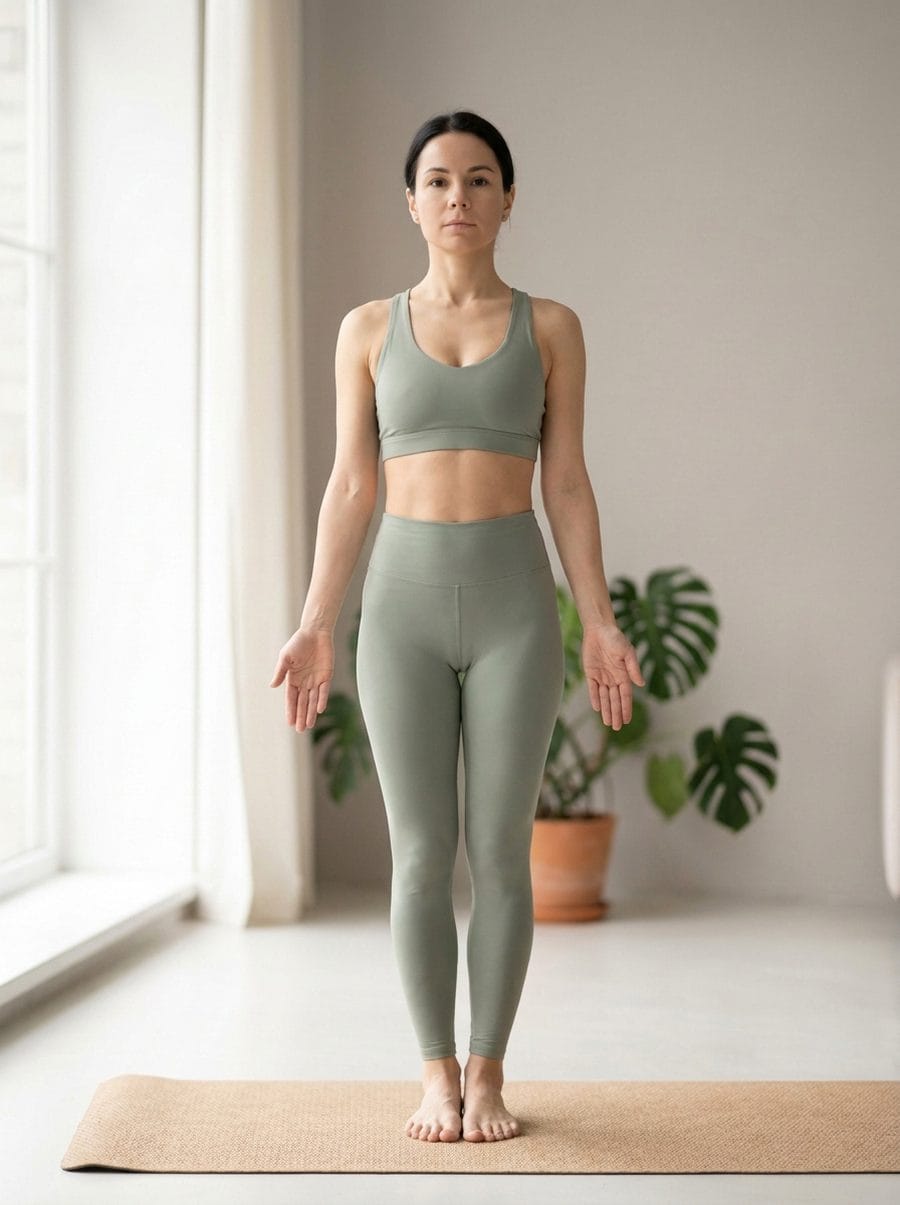
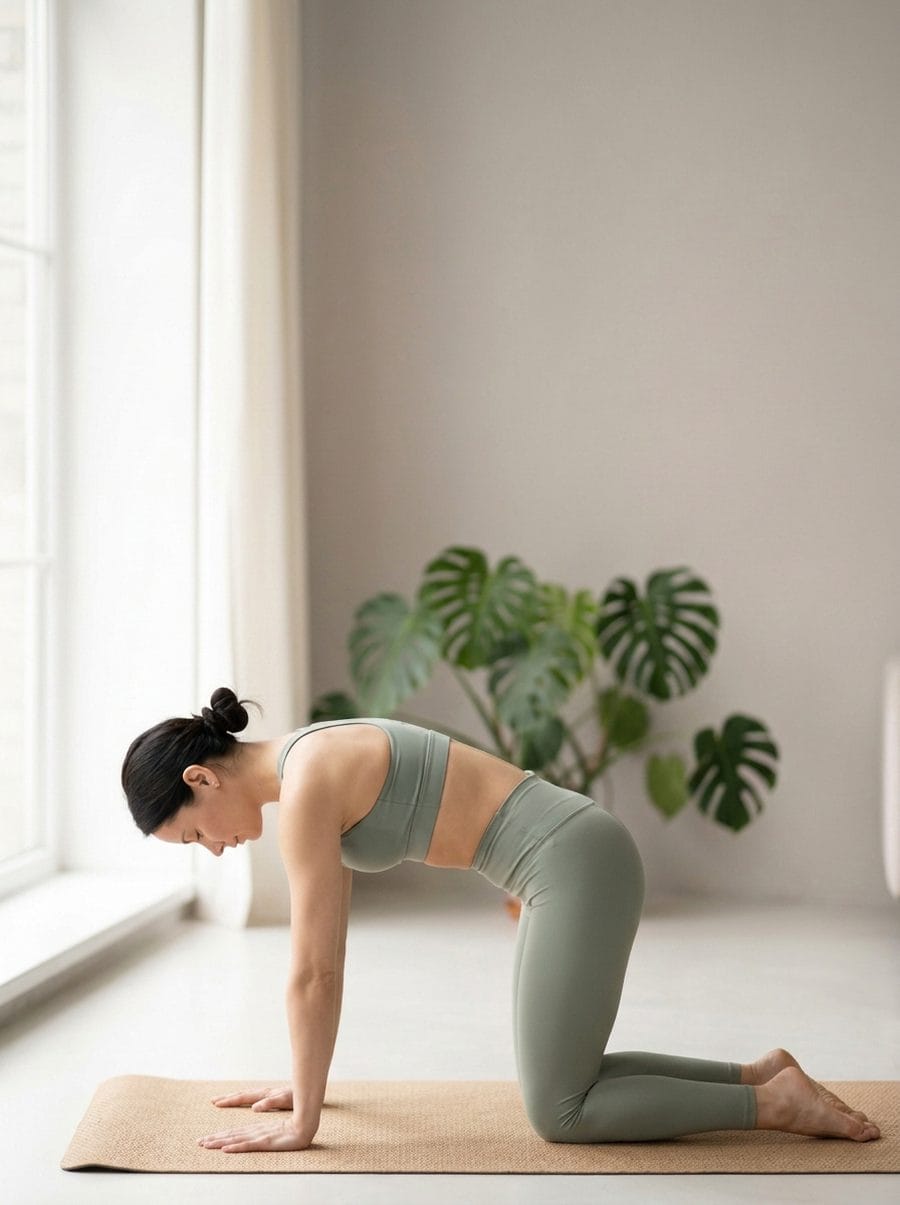
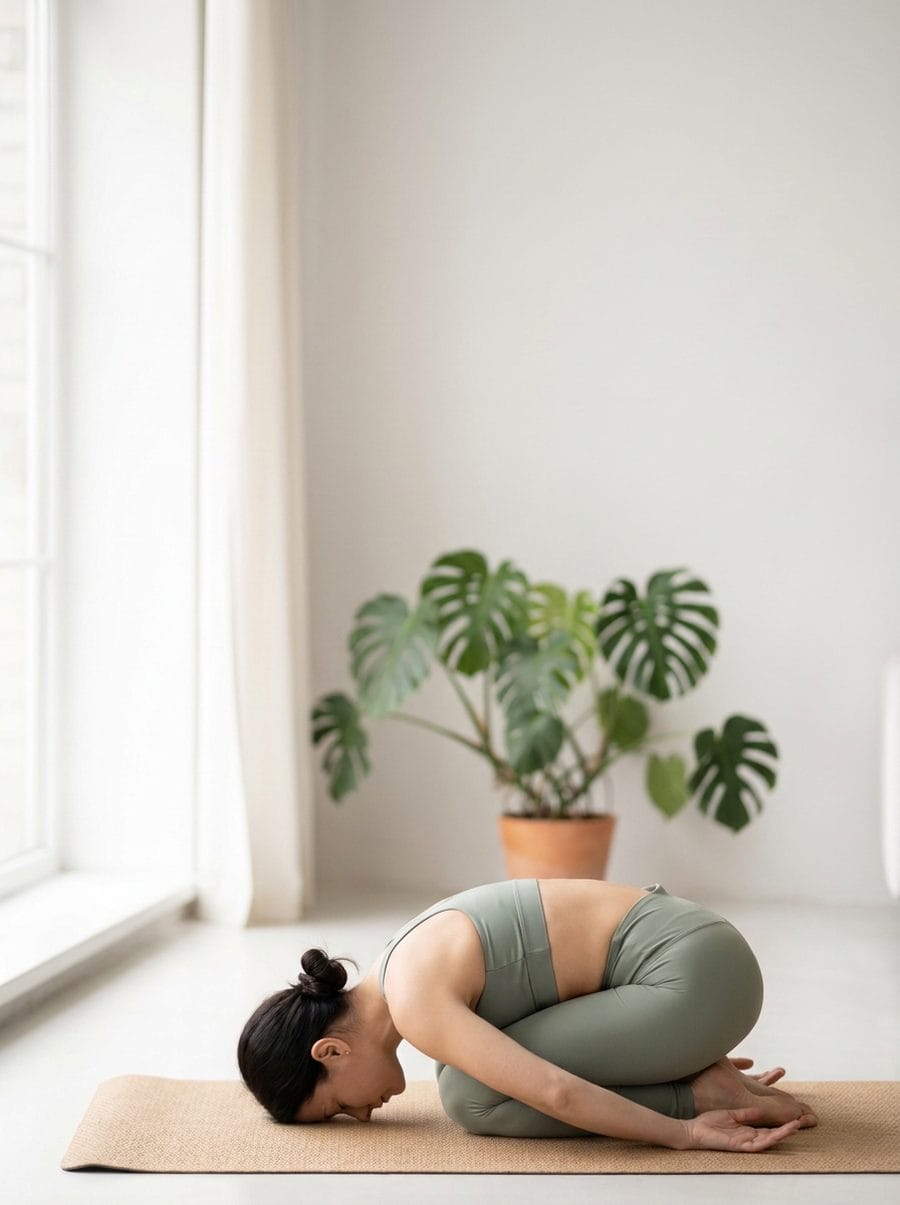
In Mountain Pose, notice which foot carries more weight and even it out. Cat-Cow moves the whole length of the spine, and Child's Pose lets it rest.
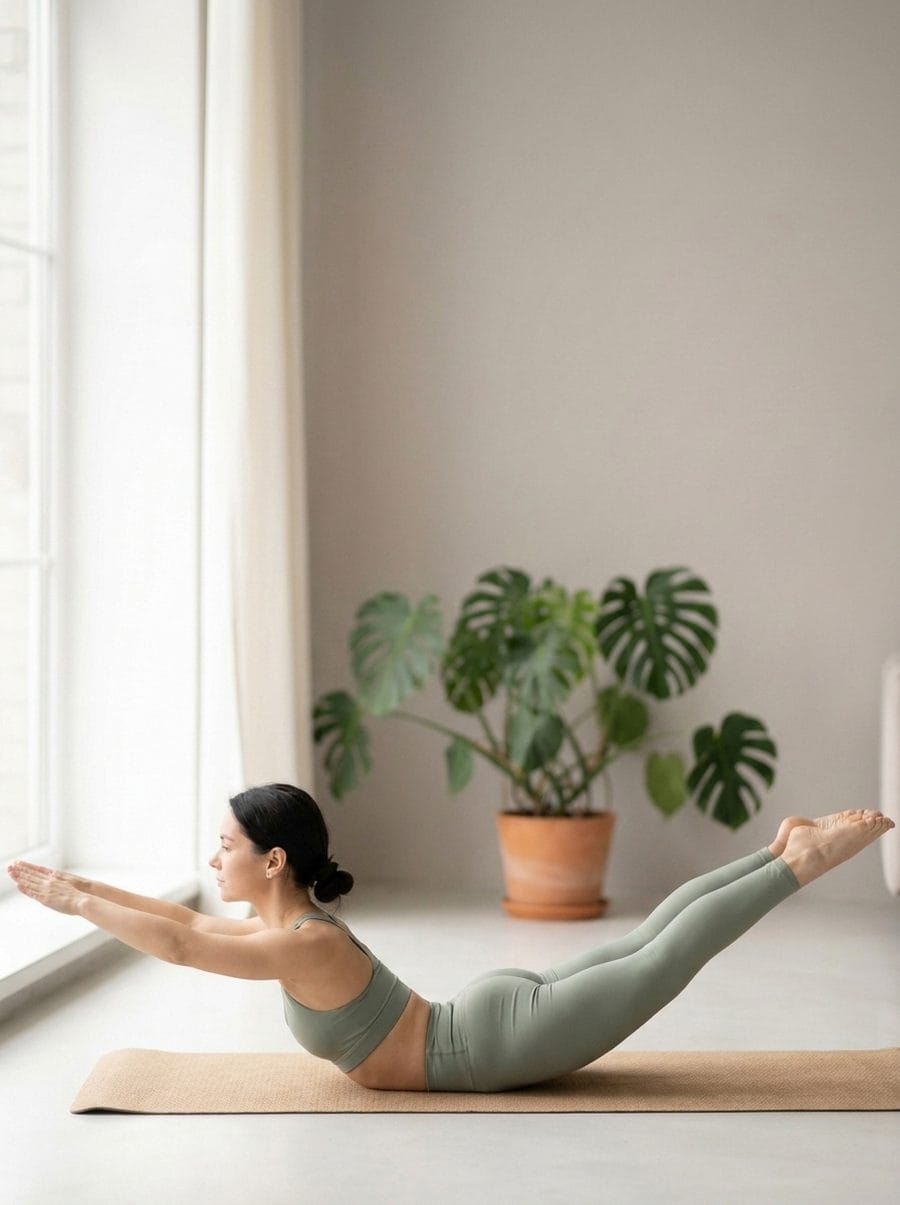
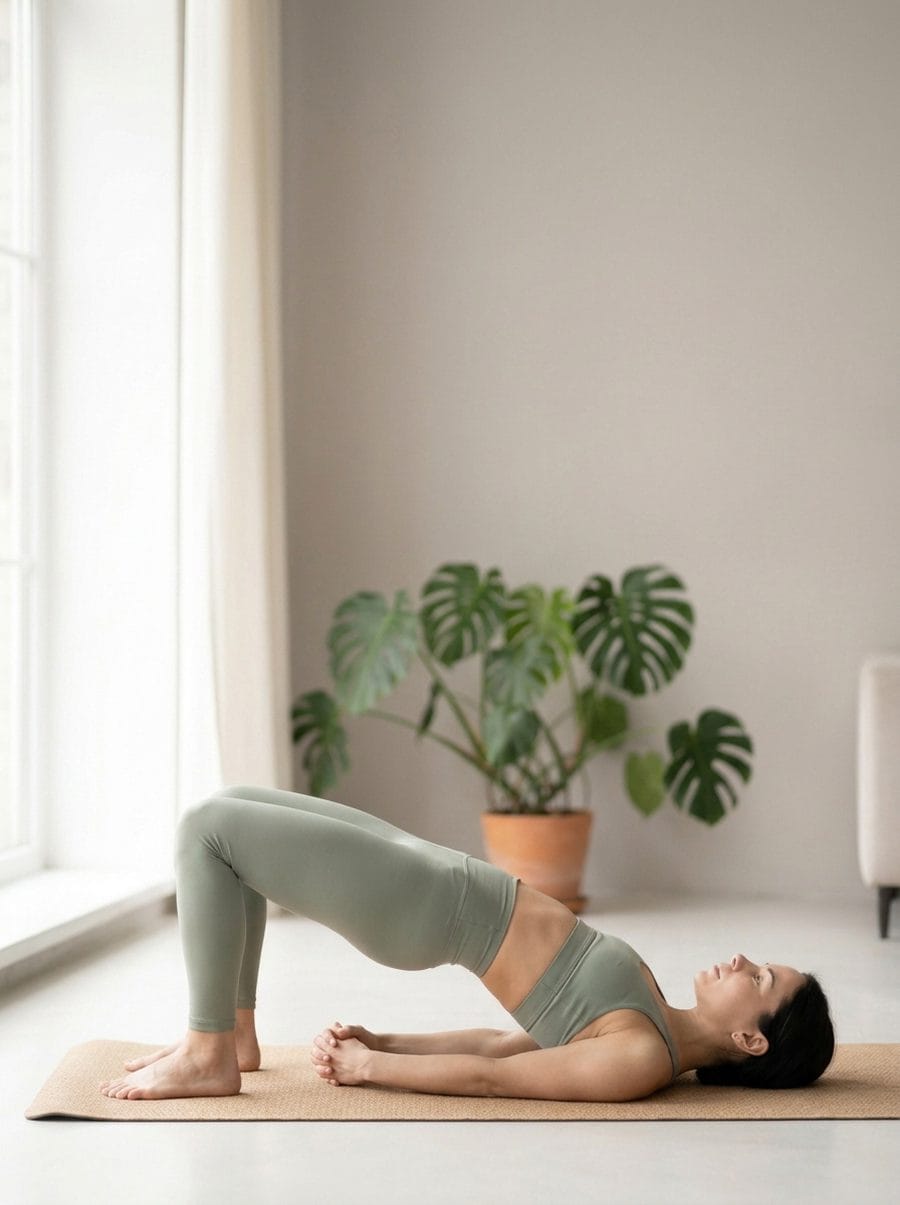
Strengthening the back and core
Bird Dog and Locust Pose work the long muscles beside the spine, and Bridge Pose adds the glutes. Side Plank strengthens the obliques; in the app it's done on both sides. It's an intermediate pose and should be skipped with wrist or shoulder injuries.
Relaxation
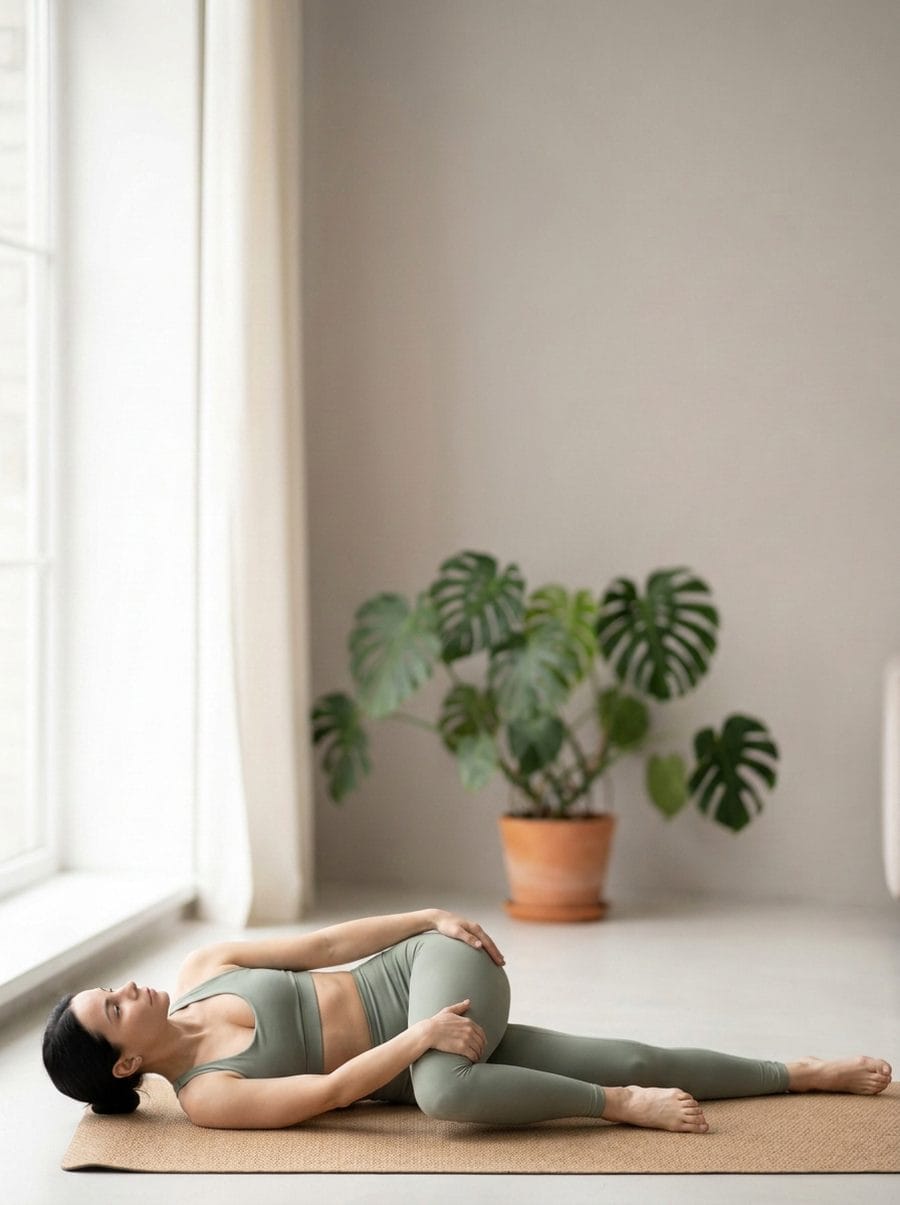
Keep Supine Twist gentle and even on both sides. Relaxation Pose lets your back release completely.

Healthy Back: a 15-minute routine
This beginner routine of 12 steps follows a clear plan: mobility, lengthening, strengthening, counterposes and relaxation. Nearly all of its poses are symmetrical, Supine Twist is done to both sides, and none of the poses carries a specific limit for scoliosis. For a full breakdown, see Yoga for Back Pain.
If a lumbar disc herniation comes on top of the scoliosis, take out Locust Pose and Cobra Pose and keep the knees soft as you fold forward from standing. High blood pressure means dropping Locust Pose and Standing Forward Fold.
A posture break: Office Reset
Sitting all day tires the back, and scoliosis makes that more noticeable. In 10 minutes, the Office Reset program works through the neck, shoulders and wrists, then moves on to Eagle Pose, Cow Face Pose, a cross-legged backbend and forward fold, a gentle twist, Puppy Pose, Fish Pose and a short rest.
Drop Fish Pose from it if you live with migraines, hypertension or an injured neck; save the Neck Warm-Up for a day when your neck is calm and your head is steady.
Habits that help keep your back straighter through the day are collected in Posture Exercises.
Safety with scoliosis
No pose in the app carries a "scoliosis" flag, so nothing is ruled out because of scoliosis itself. Limits appear when other problems come along with it:
- Lumbar disc herniation. Prone backbends, Seated Forward Fold and Boat Pose are out. The full breakdown is in Yoga for a Herniated Disc.
- Acute lower back pain. Put Sphinx Pose and side bends on hold, and leave out Cat-Cow while your back is acutely painful.
- A large curve, a growth spurt, or surgery. Practice only on a plan from a specialist.
For rules that apply to every practice, see Safety and Contraindications.
Pose cautions in this article
- Wrist and shoulder injuries (Side Plank)
- Acute back pain (Cat-Cow)
- Wrist injuries — practice on your fists (Cat-Cow)
- Pregnancy — widen your knees (Child's Pose)
- Knee injuries (Child's Pose)
- Knee injuries — place a blanket under your knees (Bird Dog)
- Wrist injuries (Bird Dog)
- Lumbar disc herniation (Locust Pose)
- Pregnancy (Locust Pose)
- High blood pressure (Locust Pose)
- Neck injuries (Bridge Pose)
- Flare-up of lower back pain (Bridge Pose)
- Disc herniation in the acute phase (Supine Twist)
This site is for general information and is not medical advice. If you have pain, an injury, a chronic condition, or are pregnant, check with a qualified professional before practicing.
Questions
Is yoga good for scoliosis? Yoga poses strengthen the back and trunk muscles and help keep the spine mobile. The NHS considers general activity worthwhile with scoliosis, and in adults back exercises may ease pain.
Can yoga fix scoliosis? There's no solid evidence that it can. In one small case series without a control group, a daily one-sided Side Plank reduced the curve angle, but that needs testing in rigorous trials.
Is yoga bad for scoliosis? Not in itself. Avoid forcing twists and side bends, keep both sides even, and follow your specialist's advice, especially with a large curve or after surgery.
Are any poses off-limits with scoliosis? The app has no scoliosis-specific bans. Skip anything that causes pain, don't force twists, and follow the herniated disc limits if you have one.
Sources
- NHS. Scoliosis and Scoliosis: treatment in adults. National Health Service, pages reviewed in 2023.
- Fishman LM, et al. Serial case reporting yoga for idiopathic and degenerative scoliosis. Global Advances in Health and Medicine, 2014.
- Pose technique and cautions, and sequence contents: the Hatha Yoga app. More on the How We Prepare Our Content page.
Read next
- Yoga for Arthritis and Osteoporosis: How to Protect Your Joints and Bones7 min read
- Ashtanga Yoga Explained: The Series, the Breath and the Difference from Hatha6 min read
- Ayurveda Explained Simply: The Basics and a Daily Routine (Dinacharya)5 min read
- Balance Exercises: 10 Yoga Poses for Balance and Stability7 min read