 Hatha Yoga
Yoga for a Herniated Disc: How to Practice Without Making It Worse
Hatha Yoga editorial team · Updated · 7 min read
A herniated or bulging disc doesn't rule out yoga, and many doctors actively encourage people to keep moving. Still, a yoga practice with a disc herniation looks quite different from a regular class, so start only after you've talked it through with your doctor.
Inside: research and NHS advice, the poses the app excludes for a lumbar herniation, two annotated routines, and the symptoms that need fast help.
Can you do yoga with a herniated disc?
Soft discs sit between the bones of your spine. With a herniation, a disc bulges outward, and if it presses on a nerve you may feel pain in the back, buttock or leg, sometimes with numbness and weakness. Imaging reports often call a smaller bulge a "disc bulge" or "protrusion" and a larger one a herniation.
Not every herniated disc hurts: according to the NHS, many people never find out they have one.
The NHS says a slipped disc usually improves slowly. If the pain is very bad you may need to rest at first, but you'll recover faster if you gradually start gentle exercise such as walking, swimming and yoga as soon as you can.
The type of activity matters less than one condition: it shouldn't cause pain or make your back pain worse.
There isn't much research yet. A 2022 randomized trial included 48 people with nerve-related (neuropathic) pain from a lumbar disc herniation. Everyone took part in an education program about their condition, and half also did a stretch- and strength-based yoga program for 12 weeks, one hour twice a week.
After the course, the yoga group had better scores for neuropathic pain, low back pain, disability and function than the group without yoga. At six months the difference between groups was moderate. The authors call the program promising, but the sample was small and the poses were chosen specifically for it.
Herniated disc red flags: when to get help right away
Call 911 if back pain comes with:
- numbness around your bottom or genitals;
- being unable to pee, or losing control of your bladder or bowels;
- loss of feeling in one or both legs;
- a recent serious accident, such as a car crash.
See your doctor if painkillers aren't helping, things haven't improved in a few weeks, you have a fever or feel shivery, you're losing weight without trying, there's a swelling on your back, or the pain is worse at night.
How to do yoga with a herniated disc
- Listen to sensation. A mild stretch in the muscles is normal. If pain travels into a leg or arm, or the skin goes numb or tingles, leave the pose.
- Wait out the acute phase. While the pain is intense, quiet poses lying down, breathing and short walks are enough. Add a full routine once the pain settles and your doctor agrees.
- Keep the spine long. The app rules out deep forward folds with a rounded back and deep backbends when the herniation is lumbar.
- Soft knees. With a herniation, the app allows Standing Forward Fold only with bent knees.
- No forcing in twists. Some twists are off the list with a herniation; for others the app says to go more gently.
- Roll to your side. Lie down on the mat and get up from it by rolling onto your side, not by jerking up from your back.
Yoga poses that usually suit a herniated disc
Unloading on the floor
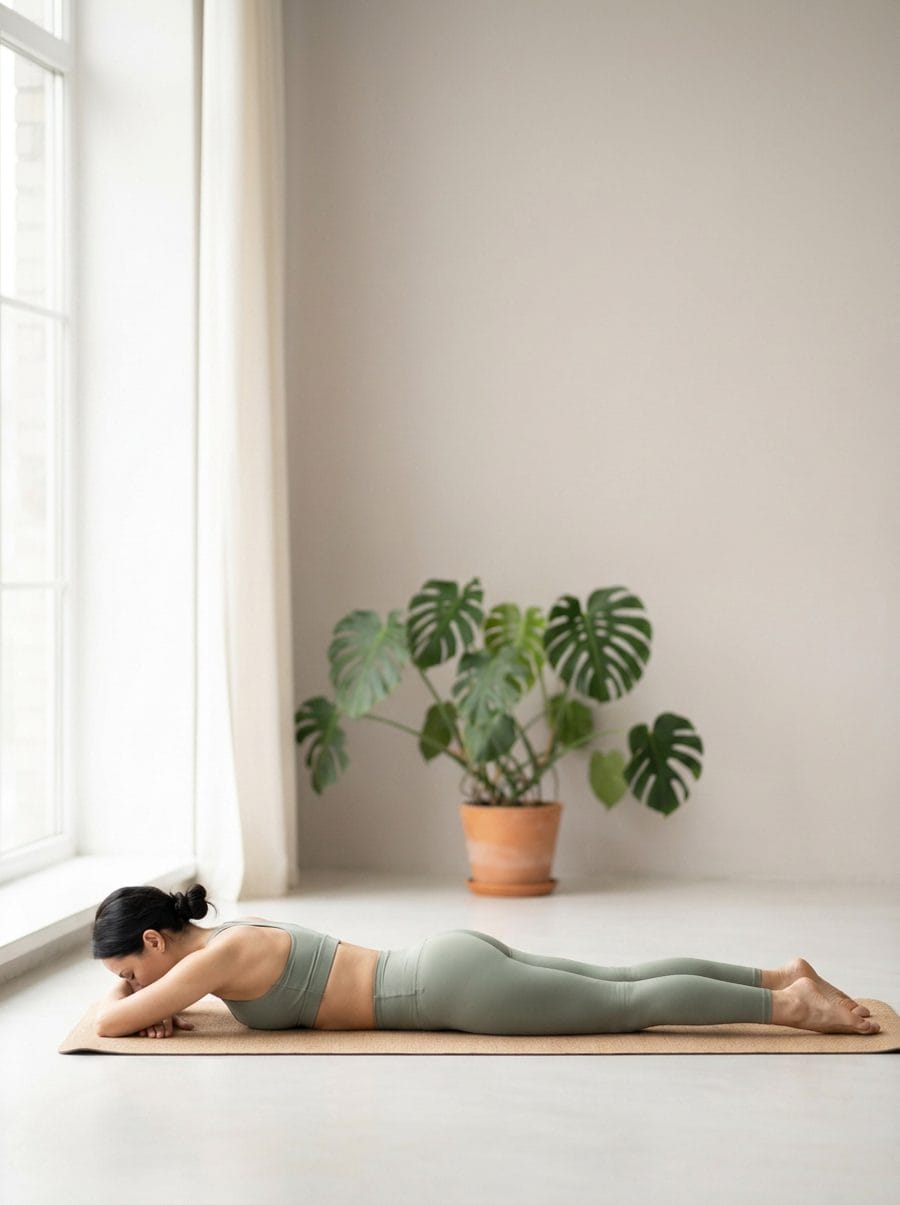
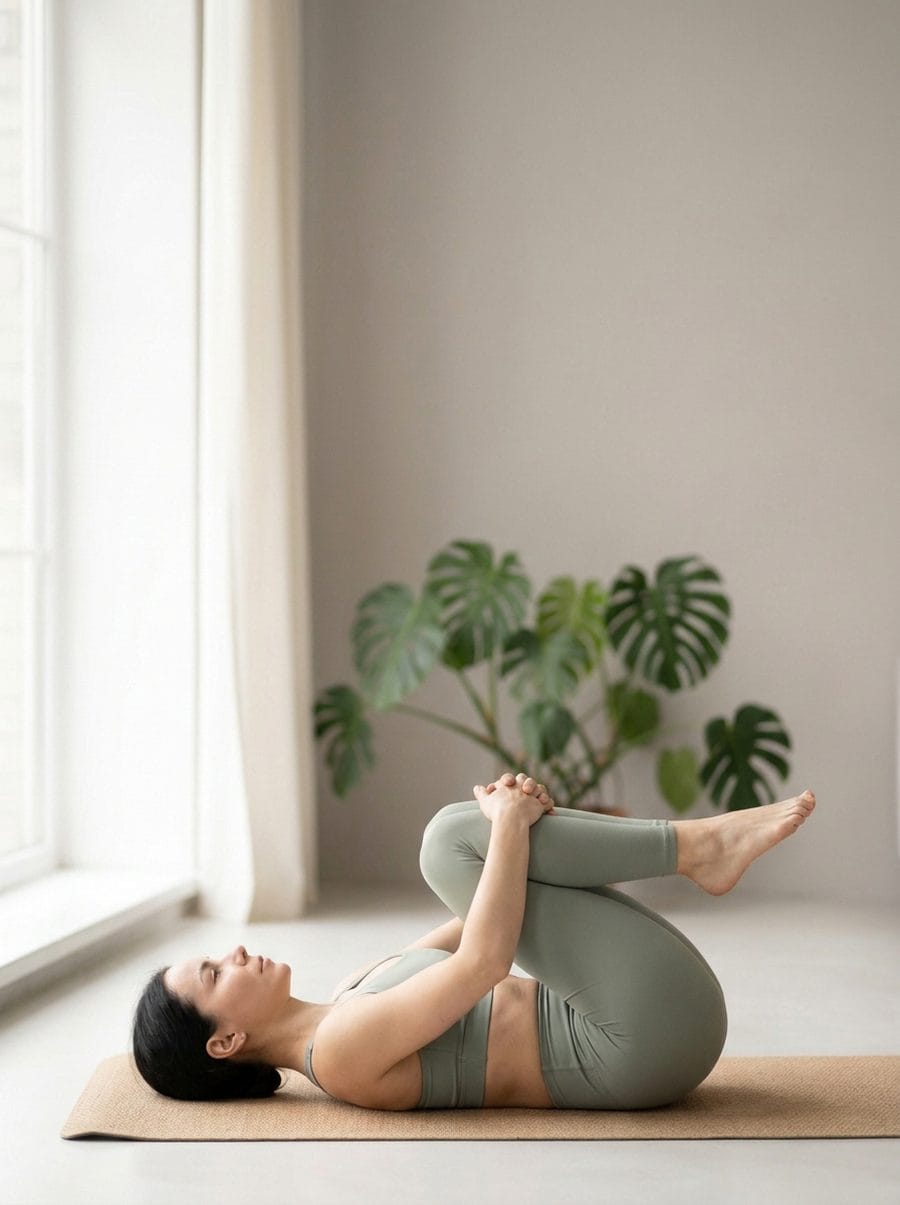
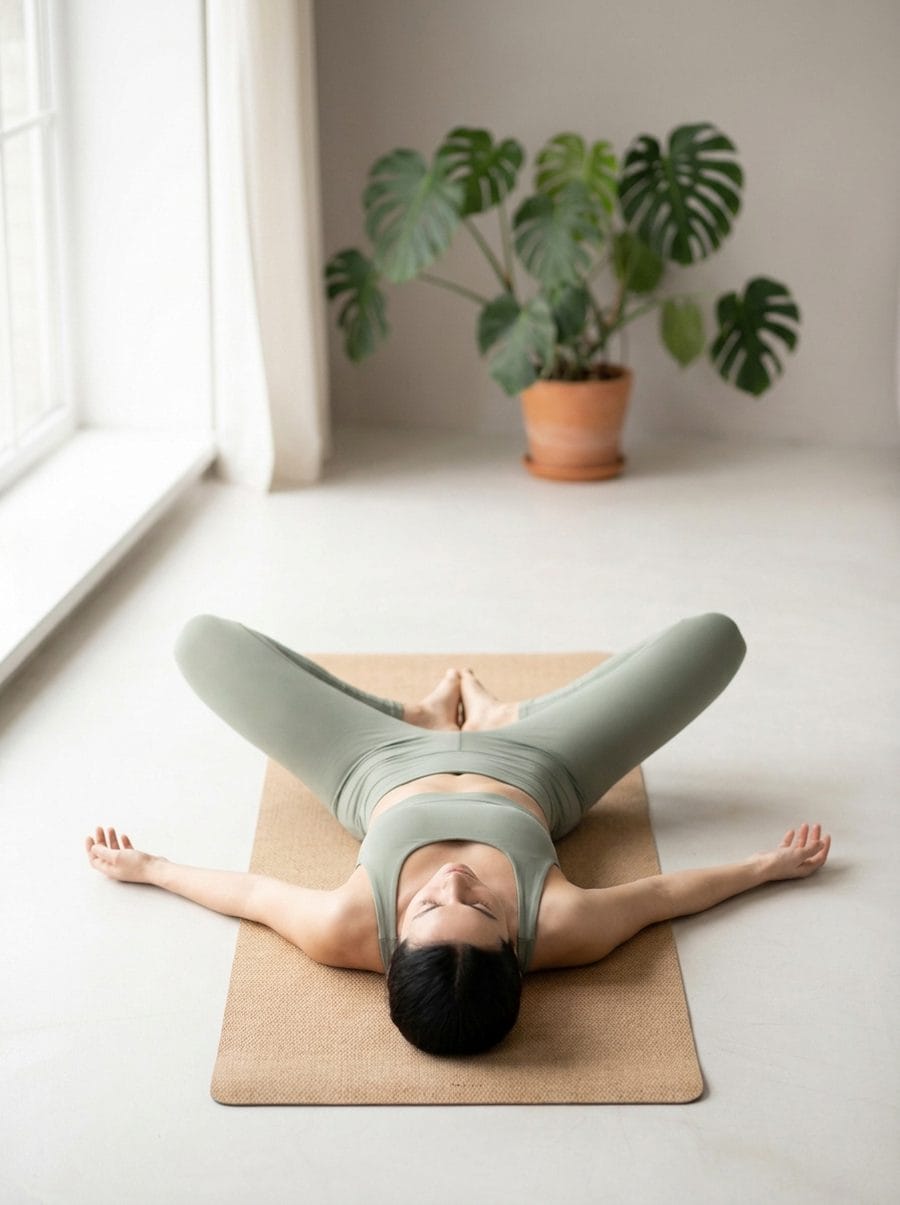
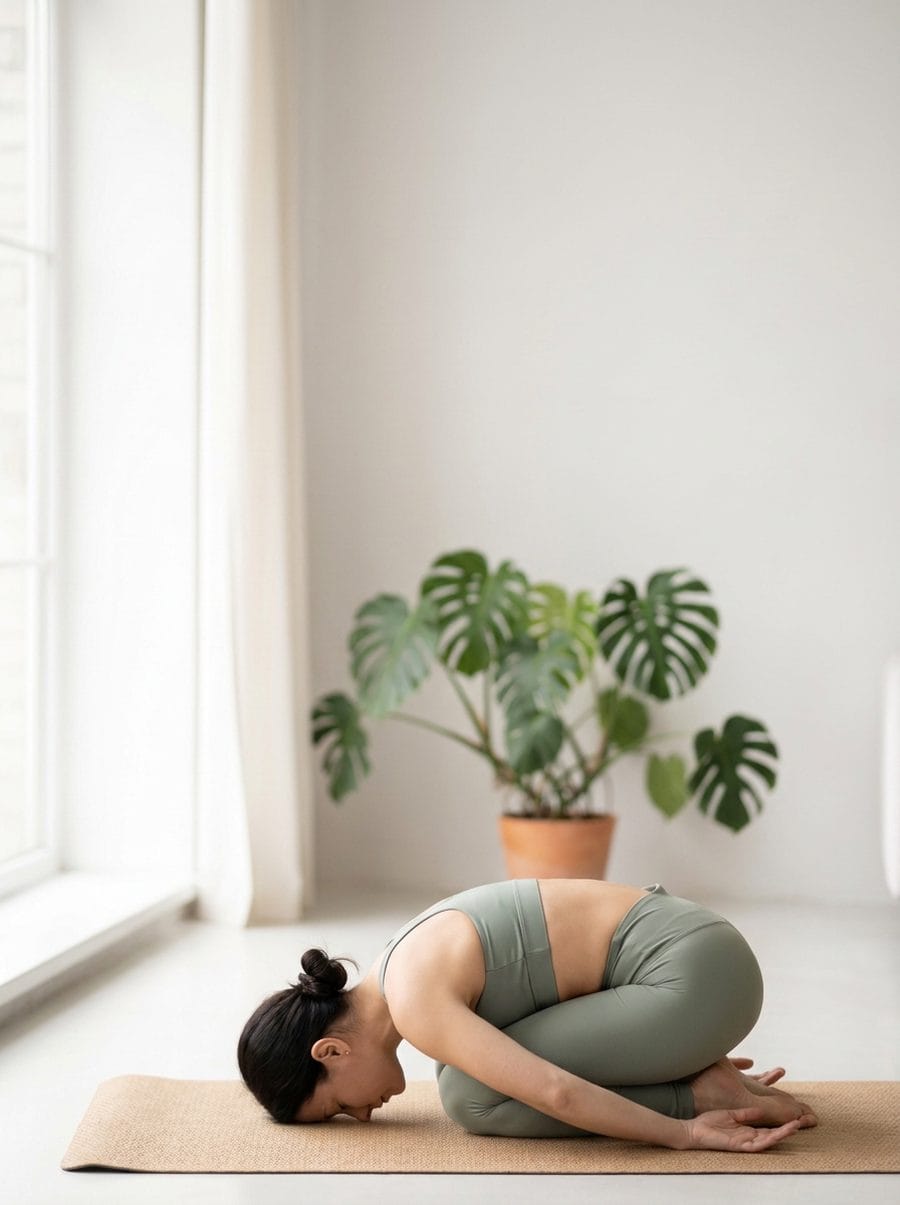
Knees-to-Chest Pose relaxes the lower back, Reclining Butterfly Pose lets your whole body rest, and Crocodile Pose lets your back soften while you lie on your stomach, without any backbend.
Gentle stability
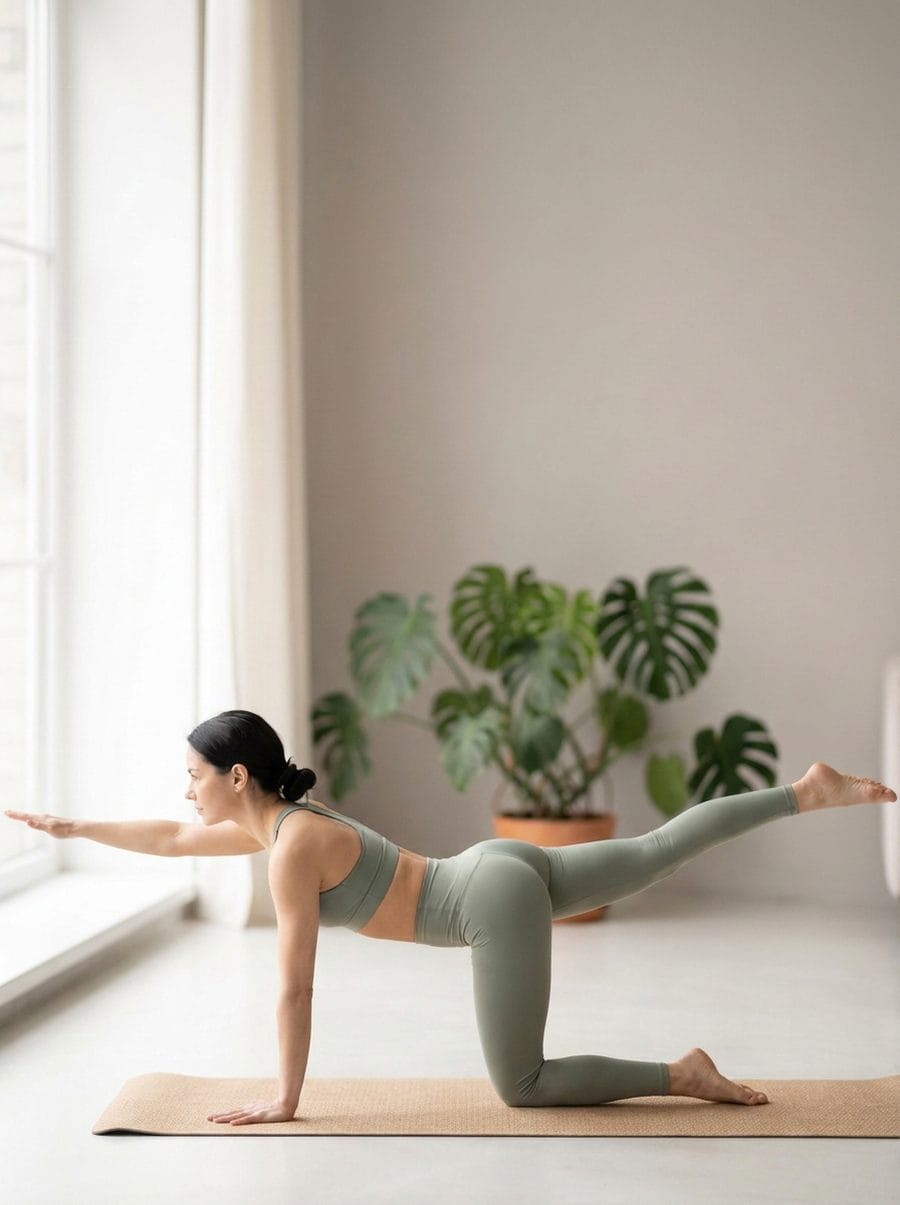
In Bird Dog the deep muscles of your trunk work to keep the back level while an arm and a leg reach out. Moving back and forth in Tabletop to Child's Pose Flow mobilizes the spine with no load on it.
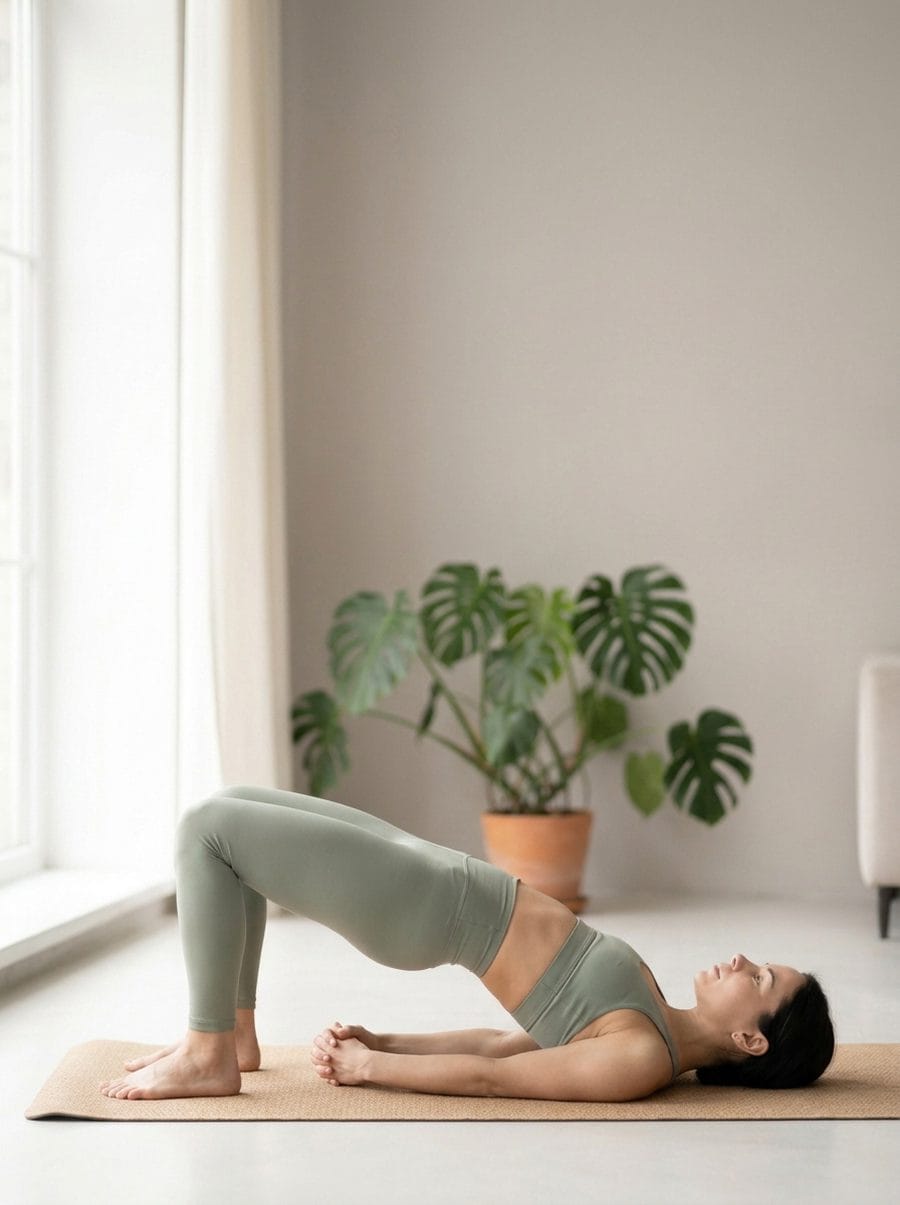
Bridge Pose strengthens the glutes, but it's off the menu in a back flare-up and with a neck injury.
Stretching and rest
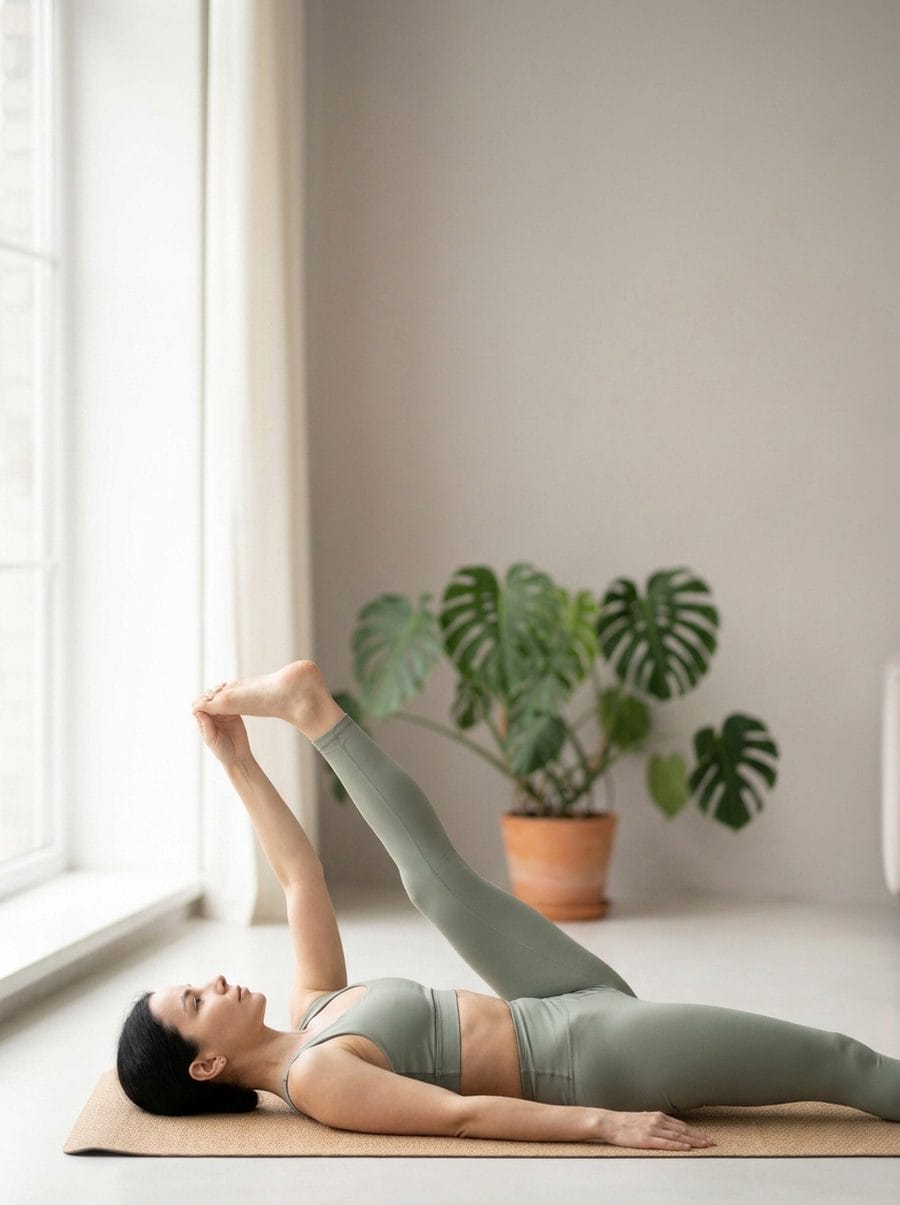
Reclining Hand-to-Big-Toe Pose keeps the whole back on the mat; when it starts to peel away, the app suggests a strap. Relaxation Pose closes any session.

Lower Back After Sitting: what to take out
This 15-minute program takes place almost entirely on the floor. With a lumbar disc herniation, remove two of its 14 steps and soften a few more.
- Remove Locust Flow and Supine Twist Flow. Both carry the "lumbar disc herniation" limit with no qualifier.
- Supine Twist with Eagle Legs: go more gently, as the app advises.
- Bridge Flow: skip it while your lower back pain is flaring.
- Low Lunge: keep it; with lower back pain, stay upright through the chest and go easy on the arch.
Healthy Back, adapted for a disc herniation
This 15-minute, 12-step routine alternates mobility, strengthening and relaxation. For a full walk-through, see Yoga for Back Pain. If your herniation is lumbar, a few changes make it workable.
- Skip Locust Pose and Cobra Pose.
- Standing Forward Fold: knees bent, every time.
- Supine Twist: leave it out while the herniation is acute.
- Bridge Pose: set it aside until a back flare-up calms down.
Safety: yoga poses to avoid with a herniated disc
All the cautions for the poses in this article are listed further down the page. The key points for a disc herniation:
- Lumbar disc herniation. Off the list: Cobra Pose and Locust Pose (plain, flow versions, and Revolved Cobra Pose), Upward-Facing Dog, Seated Forward Fold, every Boat Pose variation, Raised Legs Pose, Revolved Abdomen Pose and Supine Twist Flow.
- Herniation at any level of the spine. The app also excludes Seated Twist, Marichi's Twist, Bow Pose, Camel Pose, Revolved Triangle Pose and Revolved Chair Pose.
- Allowed with a modification. Standing Forward Fold and Standing Cross-Legged Forward Fold stay in with knees bent; Revolved Thunderbolt Pose and Supine Twist with Eagle Legs stay in with a gentler twist.
- Acute phase. Hold off even on the simple Supine Twist.
- Neck (cervical) herniation. The app has no separate flag for it. The safer course is to follow the "neck injuries" limit and skip Shoulder Stand, Plow Pose, Headstand, Fish Pose and Bridge Pose. Don't do the Neck Warm-Up while your neck is acutely painful.
General rules are collected on the Safety and Contraindications page.
Pose cautions in this article
- Pregnancy from the second trimester onward — the pose is done lying on the belly (Crocodile Pose)
- Pregnancy from the second trimester onward — take your knees wider than your belly or skip the pose (Knees-to-Chest Pose)
- Groin discomfort — place supports under your knees (Reclining Butterfly Pose)
- Knee injuries — place a blanket under your knees (Bird Dog, Tabletop to Child's Pose Flow)
- Wrist injuries (Bird Dog)
- Neck injuries (Bridge Pose)
- Flare-up of lower back pain (Bridge Pose)
- Use a strap if your back lifts off the floor (Reclining Hand-to-Big-Toe Pose)
This site is for general information and is not medical advice. If you have pain, an injury, a chronic condition, or are pregnant, check with a qualified professional before practicing.
Questions
Is yoga good for a lumbar herniated disc? It can be, as long as your doctor agrees and you leave out the poses the app rules out for this kind of herniation. For the first weeks, stick to floor poses and stop moving as soon as pain shoots into your leg.
Which poses are off-limits with a herniated disc? Backbends lying on your stomach, seated forward folds with straight legs, Boat Pose and straight-leg lifts, and deep twists. The rest of the pose-by-pose cautions are in the list at the bottom of the page.
Is yoga OK for a bulging disc or degenerative disc disease? The same rules apply as for a herniation: discuss your practice with your doctor first, then choose gentle poses and avoid anything that increases your pain.
What if my back feels worse after yoga? If pain hangs on past 24 hours or radiates into your leg more than before, take a break and go over your sequence with a physical therapist or your doctor.
Sources
- NHS. Slipped disc. National Health Service, page reviewed in 2024.
- Yildirim P, Gultekin A. The Effect of a Stretch and Strength-Based Yoga Exercise Program on Patients with Neuropathic Pain due to Lumbar Disc Herniation. Spine, 2022.
- Pose technique and cautions, and sequence contents: the Hatha Yoga app. More on the How We Prepare Our Content page.
Read next
- Yoga for Arthritis and Osteoporosis: How to Protect Your Joints and Bones7 min read
- Ashtanga Yoga Explained: The Series, the Breath and the Difference from Hatha6 min read
- Ayurveda Explained Simply: The Basics and a Daily Routine (Dinacharya)5 min read
- Balance Exercises: 10 Yoga Poses for Balance and Stability7 min read