 Hatha Yoga
Yoga for High Blood Pressure: Safe Poses, Breathing and Limits
Hatha Yoga editorial team · Updated · 6 min read
You can do yoga with high blood pressure, just not every kind. The app rules out or modifies inversions, deep backbends, head-down folds and breath holds for hypertension. Talk to your doctor before you start, and leave your prescriptions exactly as your doctor set them: yoga doesn't replace them.
Inside: the research, calm poses and breathing, two evening routines, the full list of limits, and the emergency warning signs.
Is yoga good for high blood pressure?
High blood pressure usually causes no symptoms, so many people find out by chance. According to the NHS, a reading of 140/90 or higher at a clinic, or 135/85 or higher at home, generally counts as high blood pressure. Regular physical activity is part of the standard advice for hypertension, along with diet, not smoking and keeping alcohol in check.
NCCIH, the American federal agency for complementary health research, lists severe high blood pressure among the conditions that may call for modifying or avoiding some yoga poses. It also advises beginners to stay away from headstands, shoulder stands and forceful breathing.
What the research shows
A 2025 review pooled 30 randomized trials involving 2,283 people with prehypertension or hypertension. Compared with people on a waitlist, those doing yoga had systolic pressure about 8 mm Hg lower and diastolic about 5 mm Hg lower on average.
Against other active programs, the gap in systolic pressure fell short of statistical significance. The reviewers judged their confidence in these numbers as very low and want bigger, stricter trials.
A 2019 meta-analysis of 49 trials with 3,517 participants found blood pressure in yoga groups averaged about 5/4 mm Hg lower than in control groups. The gap was largest when sessions included breathing techniques and meditation or relaxation.
Warning signs: when to call for help
Call 911 if:
- you have sudden chest pain or a squeezing, pressing discomfort that doesn't go away;
- pain spreads to an arm, your neck, jaw, stomach or back;
- chest pain comes with sweating, nausea, light-headedness or shortness of breath.
Get medical advice promptly if you often have headaches or blurred vision, or chest pain that comes and goes. On the mat, any dizziness, breathlessness, severe headache or chest pain means the session ends there.
How to do yoga safely with hypertension
- Head above the heart. The app rules out folds where the head stays low for a while, or asks you not to drop your head too far.
- No breath holds. With hypertension, the app removes breath retention even from calm pranayama.
- No straining. Leave out arm-strength poses and long holds at your limit. If your face reddens or your breath gets ragged, come out of the pose.
- Slow transitions. Roll to your side to get up from lying down, then pause seated for several breaths before standing.
- Pressure under control. If your blood pressure remains high and isn't controlled, the app takes Legs-Up-the-Wall Pose off the list.
Yoga poses for high blood pressure
Calm seated and reclining poses
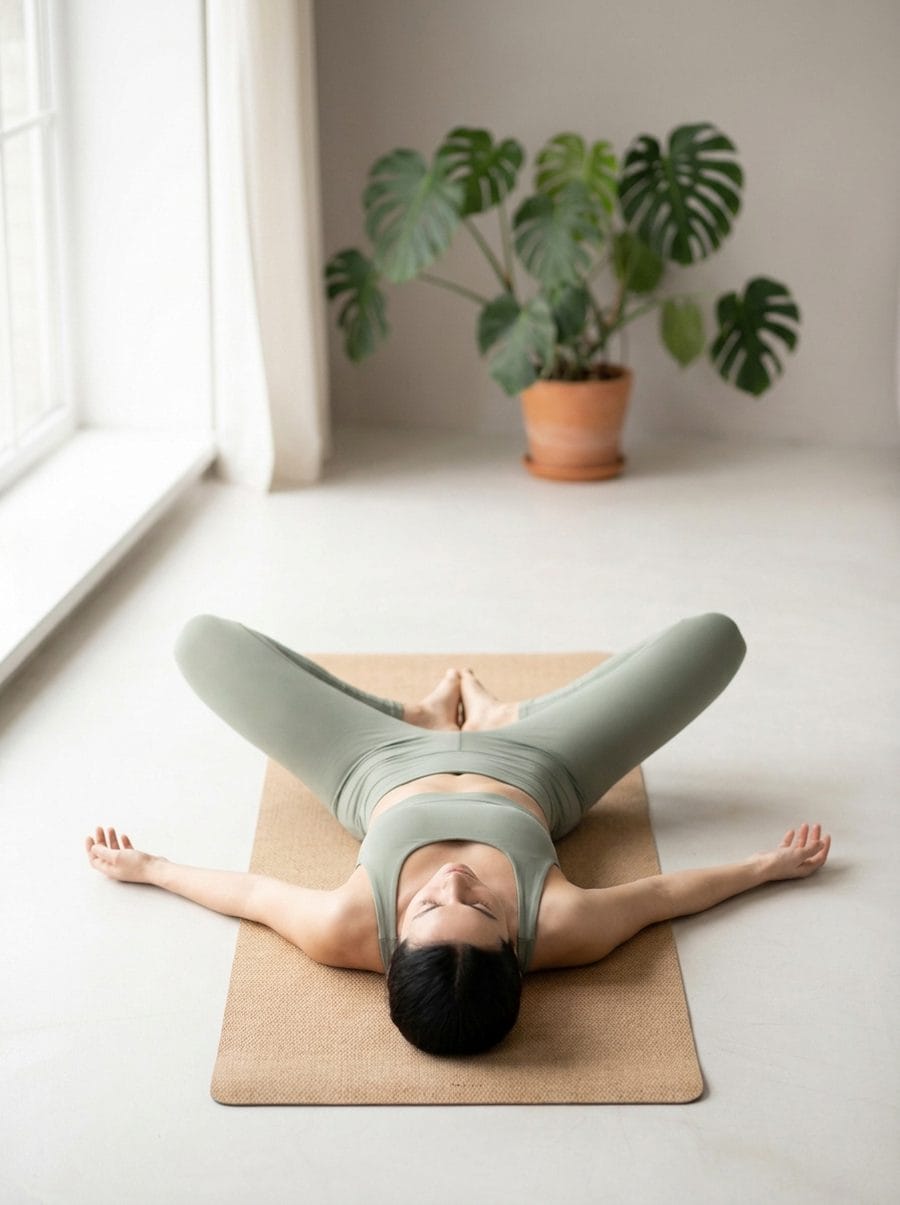
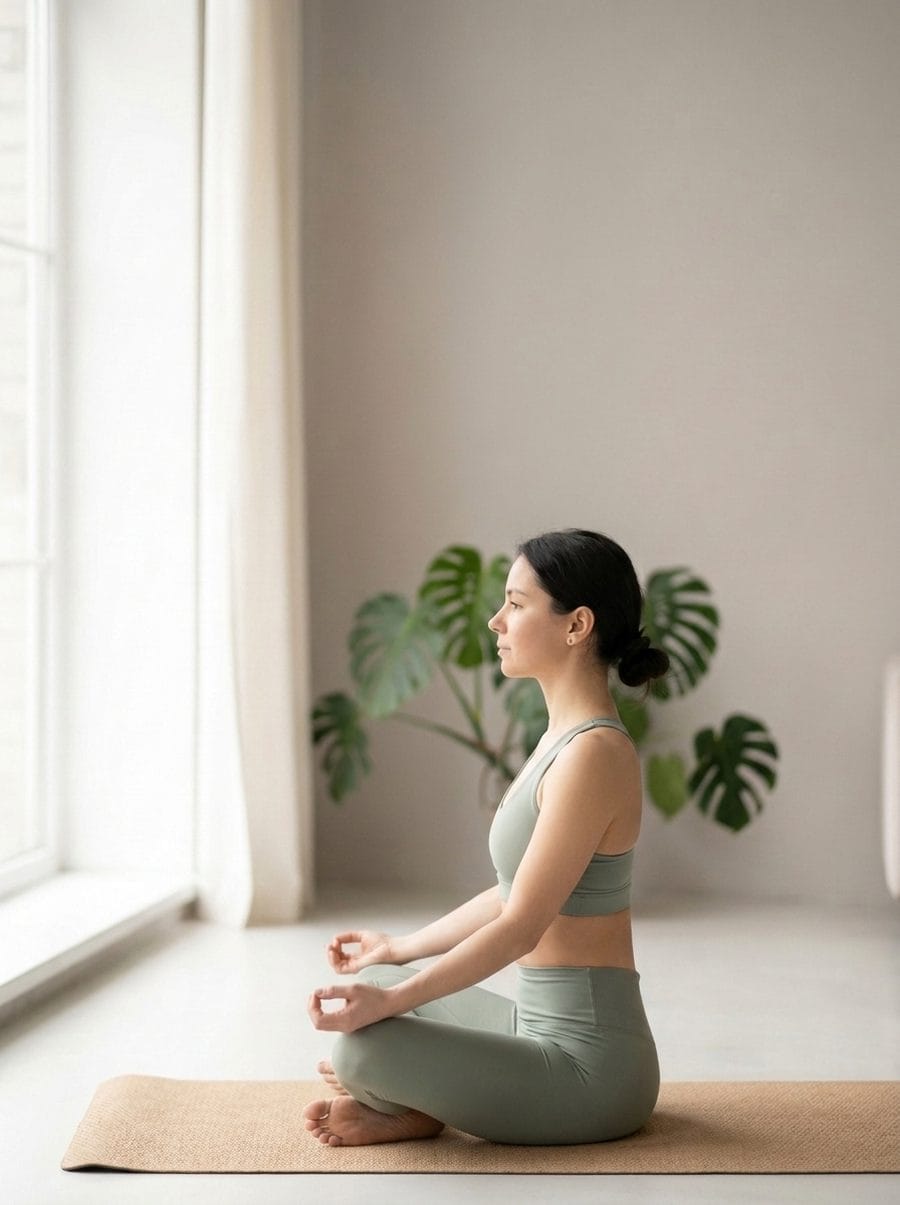
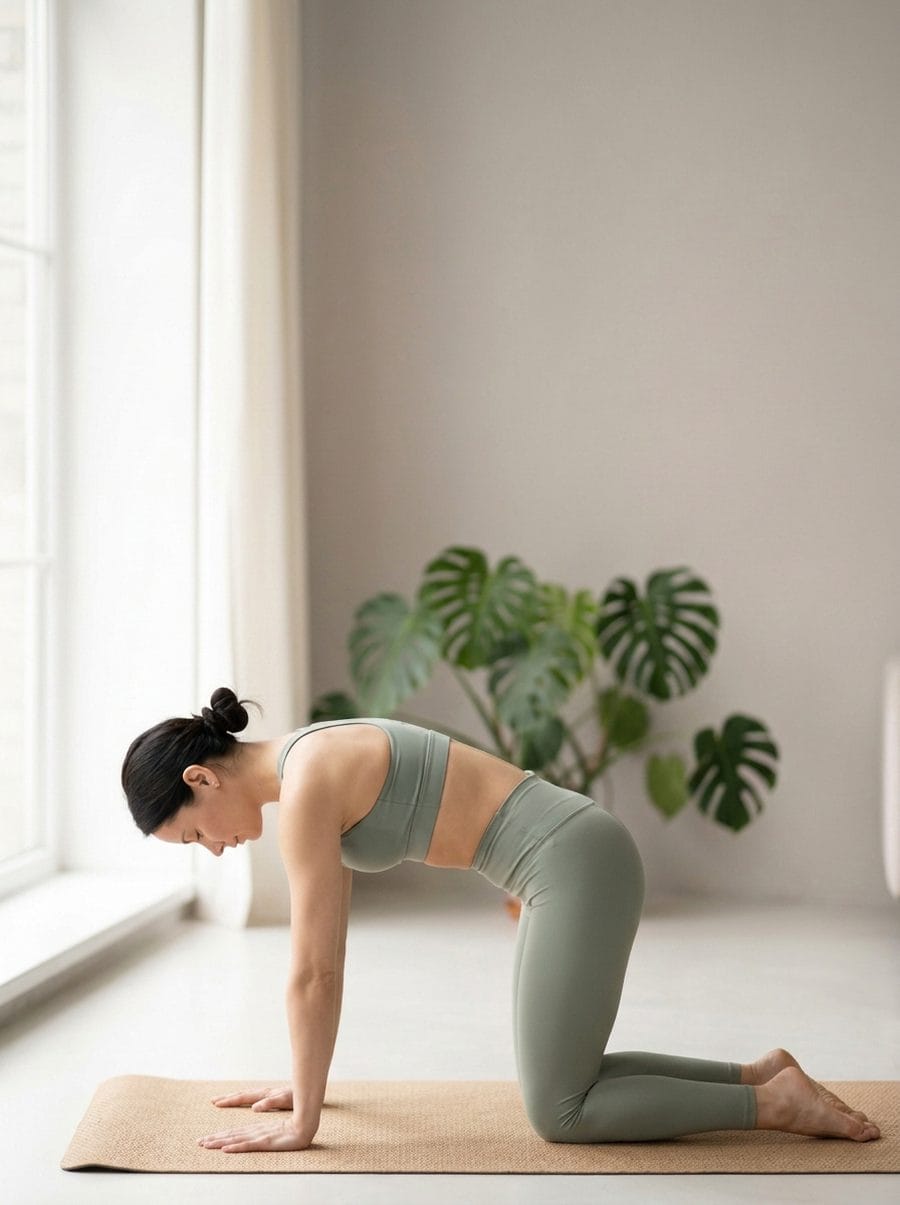
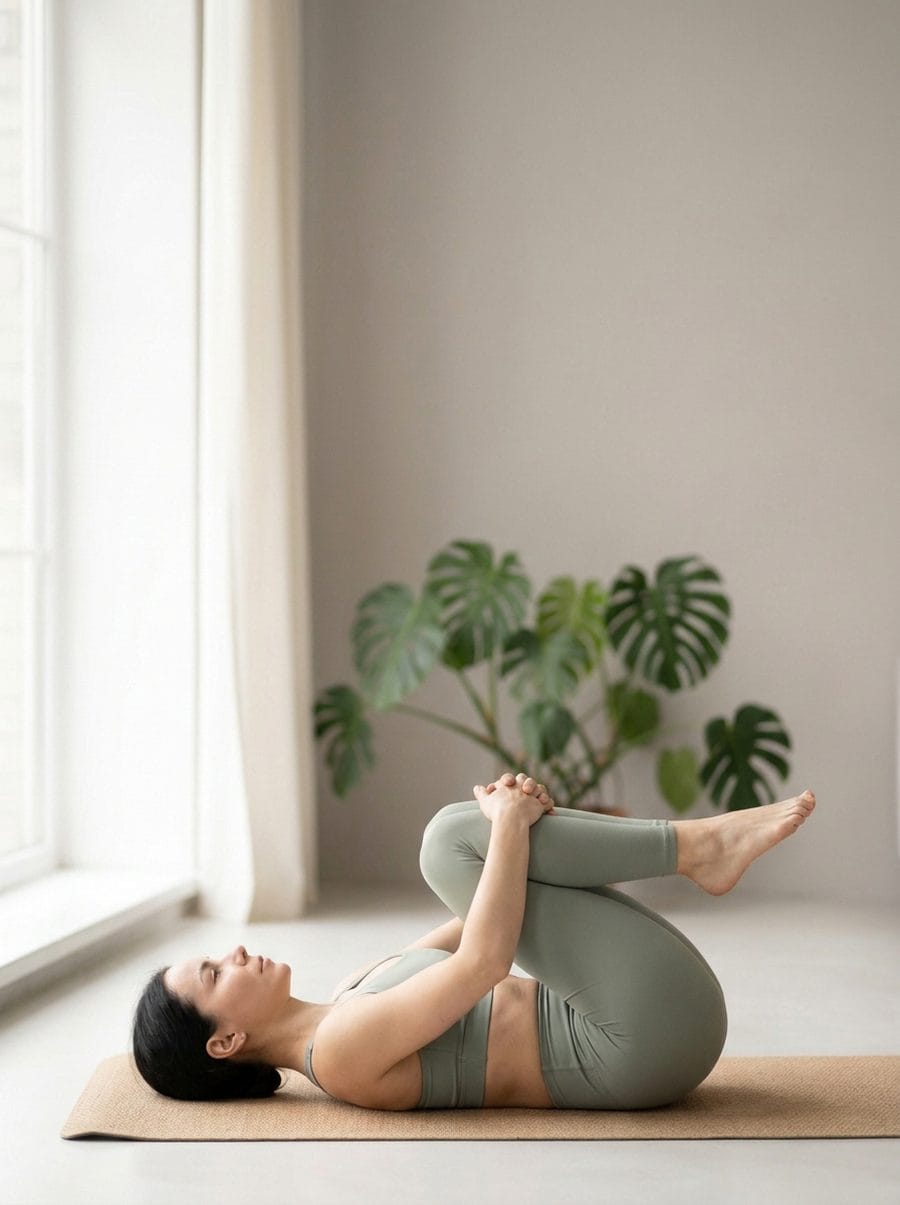
Easy Pose gives you a steady base for breathing practice. Cat-Cow moves the back gently, and Knees-to-Chest Pose and Reclining Butterfly Pose relax you without effort. Supine Twist and Relaxation Pose round off the session.
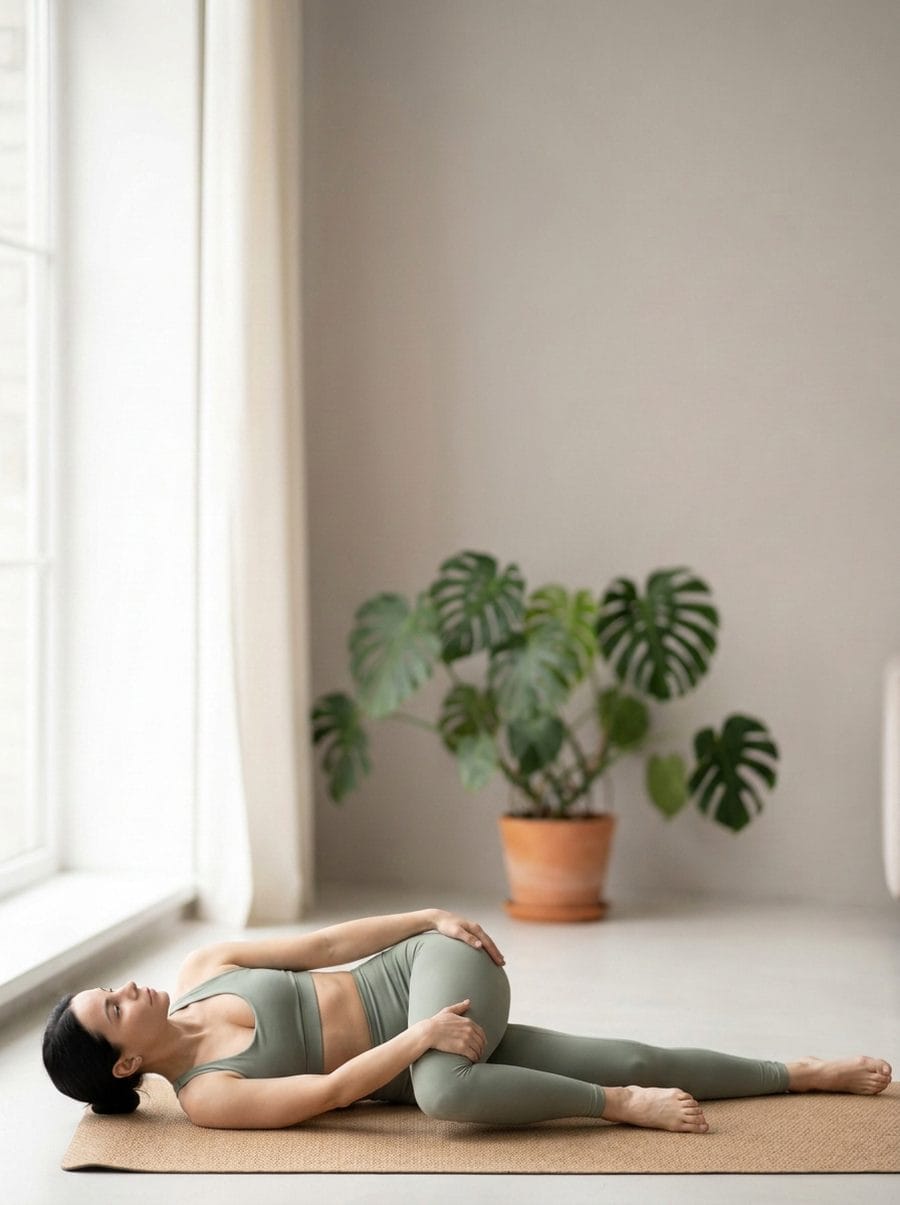

Allowed with a modification
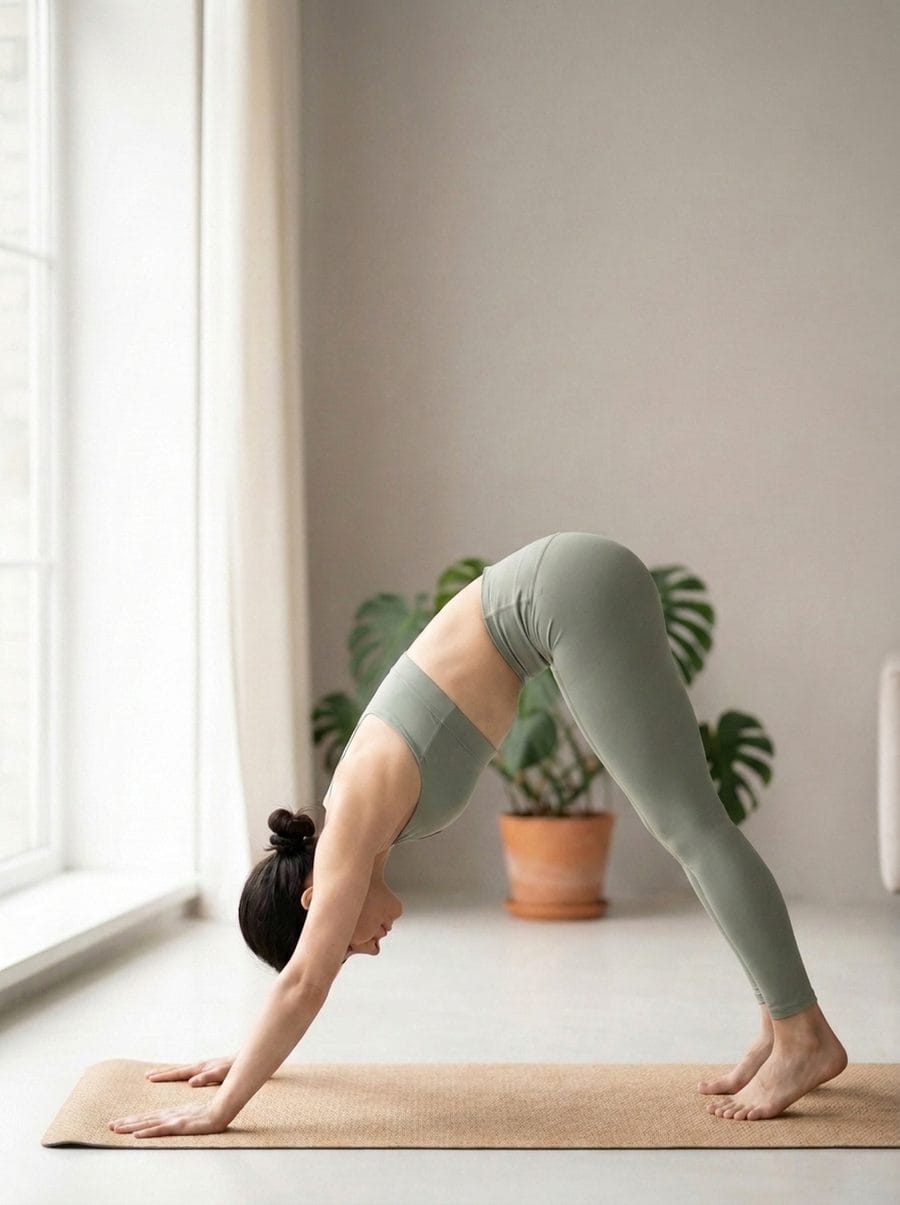
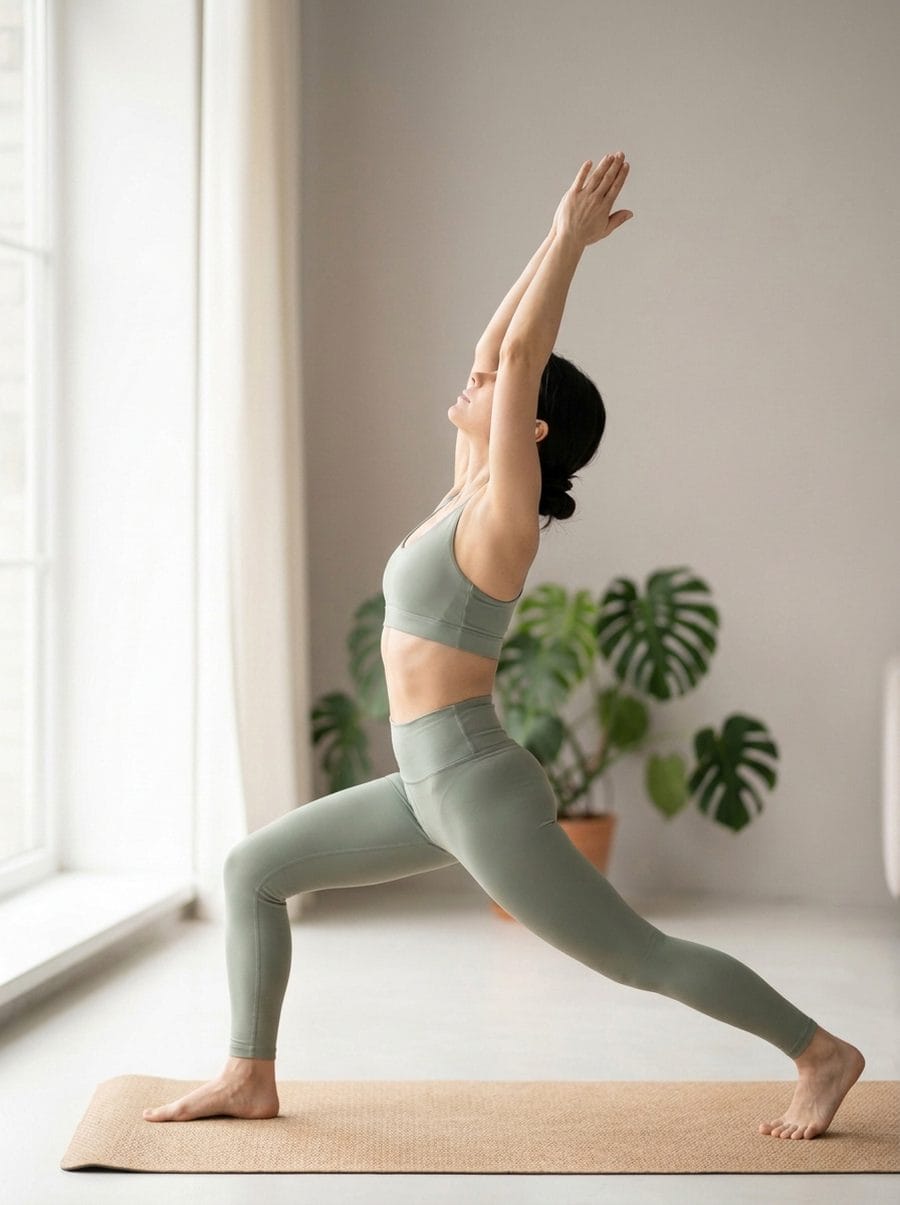
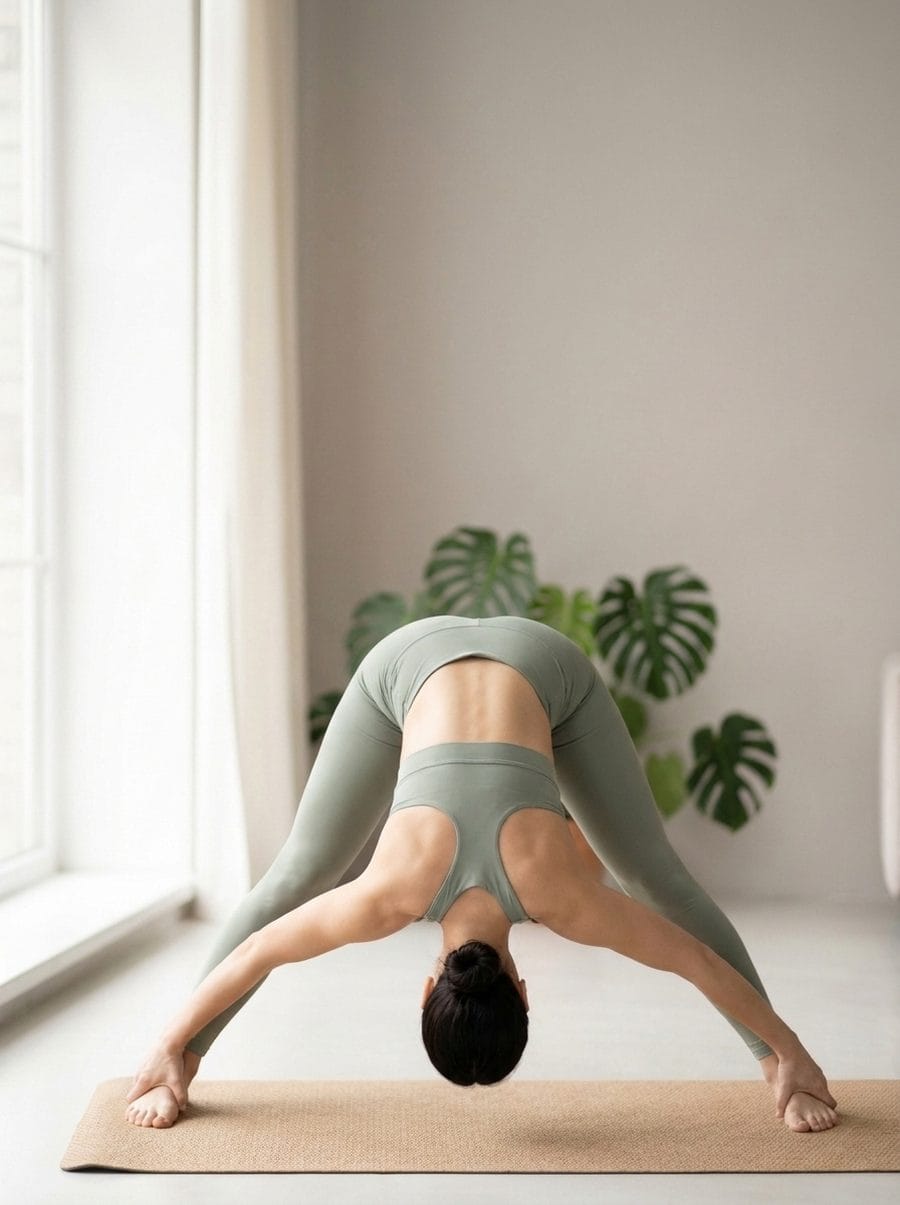
For these poses, the app gives specific advice for high blood pressure. Keep Downward-Facing Dog short. Warrior I works with hands resting on the hips instead of raised overhead. In Wide-Legged Forward Fold, don't let your head drop too far.
Breathing exercises for high blood pressure
In the 2019 meta-analysis, programs with breathing and relaxation showed the clearest difference, so it's worth giving them a few minutes after your poses.
- Full Yogic Breath: a 4-count inhale and 6-count exhale with no holds and no app cautions.
- Coherent Breathing: an even rhythm of 5 counts in and 5 counts out.
- Alternate Nostril Breathing and Box Breathing: with hypertension, practice them without breath retention, as the app specifies. With heart disease, Alternate Nostril Breathing also goes without holds.
- Skull Shining Breath: skip it with hypertension or heart disease.
Evening routines: Evening Unwind and Before Bed
Evening Unwind takes 15 minutes: eight calm poses, finishing with more than four minutes of Relaxation Pose. Its single blood pressure caveat concerns Legs-Up-the-Wall Pose, reserved for people whose hypertension is under control.
Before Bed is shorter, 10 minutes and six reclining poses. The same adjustment applies: with uncontrolled hypertension, move from Supine Twist straight to Relaxation Pose.
Safety: yoga poses to avoid with high blood pressure
Every caution for this article's poses is collected lower on this page. The main limits from the app for high blood pressure:
- Inversions. Shoulder Stand, Plow Pose, Headstand, Handstand and Forearm Stand.
- Deep backbends. Bow Pose, Camel Pose, Wheel Pose, Fish Pose, Pigeon Pose (Backbend), Locust Pose and Locust Flow.
- Head-down folds. Standing Forward Fold, Forward Fold Flow, Standing Cross-Legged Forward Fold and the revolved forward folds.
- Strength and balance work. Warrior III, Three-Legged Dog, Down Dog to Plank Flow, Plank to Chaturanga Flow, Straight-Leg Bridge Pose, One-Legged Bridge Pose and Bridge Pose with Ankle Hold.
- Breathing and cleansing practices. Skull Shining Breath, Kapalabhati and Agnisara Kriya.
Low blood pressure carries a different risk: you can get dizzy when you rise quickly. The app rules out Half Moon Pose, Triangle Pose with Arm Overhead and Cooling Breath, and advises coming out of Triangle Pose slowly. General rules are on the Safety and Contraindications page.
Pose cautions in this article
- Groin discomfort — place supports under your knees (Reclining Butterfly Pose)
- Knee discomfort — sit on a prop (Easy Pose)
- Acute back pain (Cat-Cow)
- Wrist injuries — practice on your fists (Cat-Cow)
- Pregnancy from the second trimester onward — take your knees wider than your belly or skip the pose (Knees-to-Chest Pose)
- Disc herniation in the acute phase (Supine Twist)
- Wrist and shoulder injuries (Downward-Facing Dog)
- High blood pressure — don't stay in the pose long (Downward-Facing Dog)
- Glaucoma (Downward-Facing Dog)
- Knee injuries (Warrior I)
- High blood pressure — you can keep your hands on your hips (Warrior I)
- High blood pressure — don't lower your head too far (Wide-Legged Forward Fold)
- Hamstring injuries (Wide-Legged Forward Fold)
This site is for general information and is not medical advice. If you have pain, an injury, a chronic condition, or are pregnant, check with a qualified professional before practicing.
Questions
Can I do yoga if I have high blood pressure? Yes, once your doctor has okayed it and your pressure is under control. Choose calm poses, breathe without holds, and leave out anything the app flags for high blood pressure.
What yoga poses should be avoided with high blood pressure? Inversions, deep backbends, head-down folds, arm-strength poses and rapid breathing such as Skull Shining Breath.
Can yoga lower blood pressure? In studies, people who practiced had blood pressure a few points lower on average than those who didn't, especially when breathing and relaxation were part of the practice. But the evidence is weak, and yoga is no substitute for medication.
Is yoga OK with low blood pressure? Yes, but rise slowly and drop the three practices the app flags for low blood pressure. If you feel dizzy, sit or lie down.
Sources
- NHS. High blood pressure. National Health Service.
- NCCIH. Yoga: Effectiveness and Safety. National Center for Complementary and Integrative Health.
- Geiger C, et al. A systematic review and meta-analysis of yoga for arterial hypertension. PLoS One, 2025.
- Wu Y, et al. Yoga as Antihypertensive Lifestyle Therapy: A Systematic Review and Meta-analysis. Mayo Clinic Proceedings, 2019.
- Pose technique and cautions, pranayama rhythms, and sequence contents: the Hatha Yoga app. More on the How We Prepare Our Content page.
Read next
- Yoga for Arthritis and Osteoporosis: How to Protect Your Joints and Bones7 min read
- Ashtanga Yoga Explained: The Series, the Breath and the Difference from Hatha6 min read
- Ayurveda Explained Simply: The Basics and a Daily Routine (Dinacharya)5 min read
- Balance Exercises: 10 Yoga Poses for Balance and Stability7 min read